Global Vitamin D Therapy Market
Market Size in USD Billion
CAGR :
% 
 USD
3.77 Billion
USD
9.40 Billion
2025
2033
USD
3.77 Billion
USD
9.40 Billion
2025
2033
 Forecast Period Forecast Period |
2026 –2033 |
 Market Size (Base Year) Market Size (Base Year) |
USD 3.77 Billion |
 Market Size (Forecast Year) Market Size (Forecast Year) |
USD 9.40 Billion |
 CAGR CAGR |
% |
| Major Markets Players |
|
Vitamin D Therapy Market Size
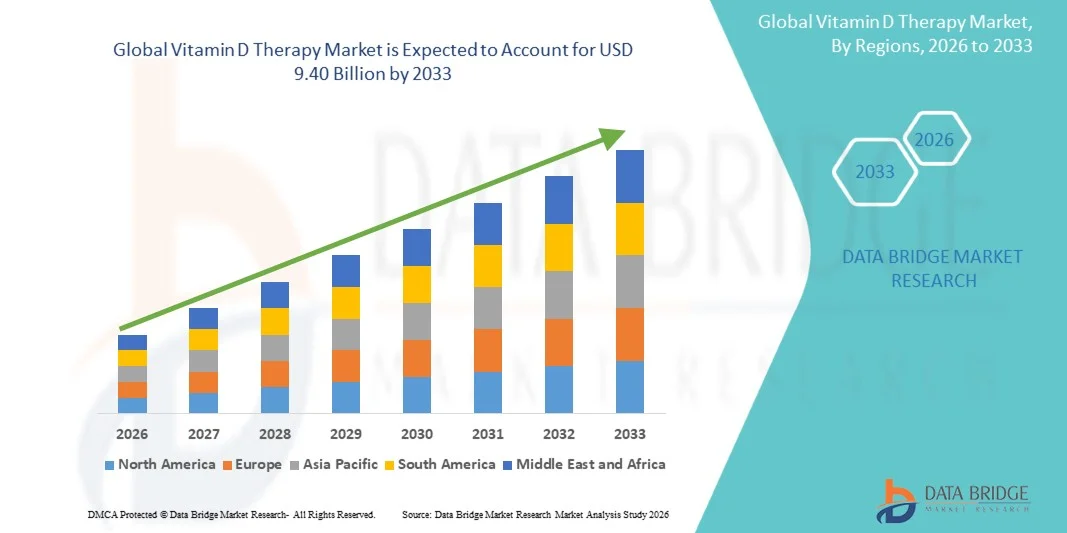
- The global Vitamin D Therapy market size was valued at USD 3.77 billion in 2025 and is expected to reach USD 9.40 billion by 2033, at a CAGR of 12.10% during the forecast period
- The market growth is largely fueled by the increasing prevalence of vitamin D deficiency across the global population, driven by changing lifestyles, limited sun exposure, and growing awareness about the importance of bone and immune health, leading to higher demand for vitamin D therapy solutions
- Furthermore, rising consumer demand for preventive healthcare, dietary supplements, and effective treatment options for conditions such as osteoporosis and immune-related disorders is establishing vitamin D therapy as a key component of modern healthcare. These converging factors are accelerating the uptake of Vitamin D Therapy solutions, thereby significantly boosting the market growth
Vitamin D Therapy Market Analysis
- Vitamin D therapy, widely used for the prevention and treatment of vitamin D deficiency, bone disorders, and immune-related conditions, is becoming an essential component of modern healthcare due to its role in maintaining overall health and wellness
- The escalating demand for Vitamin D therapy is primarily fueled by increasing prevalence of osteoporosis, rickets, and other deficiency-related conditions, along with rising awareness about preventive healthcare and nutritional supplementation
- North America dominated the vitamin D therapy market with the largest revenue share of approximately 39.8% in 2025, characterized by high awareness levels, strong dietary supplement consumption, and well-established healthcare infrastructure, with the U.S. leading in product adoption and availability
- Asia-Pacific is expected to be the fastest growing region in the vitamin D therapy market during the forecast period due to rising healthcare awareness, increasing deficiency rates, growing population, and expanding access to supplements and fortified foods
- The oral segment held the largest market revenue share of 63.5% in 2025, driven by its ease of administration, high patient compliance, and widespread availability in the form of tablets, capsules, and liquid supplements
Report Scope and Vitamin D Therapy Market Segmentation
|
Attributes |
Vitamin D Therapy Key Market Insights |
|
Segments Covered |
|
|
Countries Covered |
North America
Europe
Asia-Pacific
Middle East and Africa
South America
|
|
Key Market Players |
|
|
Market Opportunities |
|
|
Value Added Data Infosets |
In addition to the insights on market scenarios such as market value, growth rate, segmentation, geographical coverage, and major players, the market reports curated by the Data Bridge Market Research also include in-depth expert analysis, patient epidemiology, pipeline analysis, pricing analysis, and regulatory framework. |
Vitamin D Therapy Market Trends
“Growing Emphasis on Preventive Healthcare and Nutritional Supplementation”
- A significant and accelerating trend in the global Vitamin D Therapy market is the increasing emphasis on preventive healthcare and nutritional supplementation to address widespread vitamin D deficiency. Rising awareness about the importance of vitamin D in bone health, immunity, and overall well-being is driving this trend globally
- For instance, healthcare providers across various regions are increasingly recommending vitamin D supplementation for populations at risk, including the elderly, children, and individuals with limited sun exposure
- The growing popularity of fortified foods and dietary supplements is further supporting the expansion of vitamin D therapy across both developed and developing markets
- In addition, ongoing research highlighting the role of vitamin D in reducing the risk of chronic diseases such as osteoporosis, cardiovascular disorders, and certain autoimmune conditions is strengthening its clinical importance
- Pharmaceutical companies are also focusing on developing advanced formulations, including high-dose supplements and combination therapies, to improve patient compliance and treatment outcomes
- This trend toward preventive care and proactive health management is significantly shaping the global Vitamin D Therapy market
Vitamin D Therapy Market Dynamics
Driver
“Increasing Prevalence of Vitamin D Deficiency and Bone Disorders”
- The rising global prevalence of vitamin D deficiency is a major driver for the growth of the Vitamin D Therapy market
- For instance, factors such as sedentary lifestyles, limited outdoor exposure, urbanization, and dietary insufficiencies are contributing to widespread vitamin D deficiency across various age groups worldwide
- Increasing incidences of bone-related disorders such as osteoporosis, rickets, and osteomalacia are further driving the demand for vitamin D-based treatments and supplements
- Growing awareness among healthcare professionals and patients regarding the importance of early diagnosis and supplementation is supporting market growth
- In addition, government initiatives and public health campaigns promoting nutritional awareness and supplementation are contributing to increased adoption
- The expanding geriatric population, which is more susceptible to bone density loss and vitamin deficiencies, is further fueling demand globally
Restraint/Challenge
“Risk of Over-Supplementation and Variability in Diagnosis”
- The risk associated with over-supplementation of vitamin D, including potential toxicity and adverse health effects, remains a key challenge for the market
- A significant issue is the variability in diagnosis and lack of standardized screening practices across regions
- For instance, in some countries, routine vitamin D testing is not widely implemented, leading to either underdiagnosis or excessive supplementation without proper medical guidance
- In addition, differences in recommended dosage guidelines across regions can create confusion among healthcare providers and patients
- Limited awareness in certain populations regarding appropriate dosage and long-term use may also lead to misuse of supplements
- The cost of diagnostic testing in some regions can act as a barrier to accurate assessment and treatment planning
- Addressing these challenges through standardized clinical guidelines, improved awareness, and appropriate monitoring will be essential for sustainable growth of the Vitamin D Therapy market
Vitamin D Therapy Market Scope
The market is segmented on the basis of application, route of administration, end-users, and distribution channel.
• By Application
On the basis of application, the Vitamin D Therapy market is segmented into osteoporosis, rickets, autoimmune disorders, skin diseases, and others. The osteoporosis segment dominated the largest market revenue share of 44.7% in 2025, driven by the widespread prevalence of bone density disorders, particularly among the aging population. Vitamin D plays a critical role in calcium absorption and bone metabolism, making it a cornerstone therapy in osteoporosis management. Increasing geriatric population and rising incidence of fractures globally further support segment dominance. Growing awareness regarding preventive healthcare and bone health is also driving adoption. Physicians frequently prescribe Vitamin D supplements alongside calcium therapies to reduce fracture risk. In addition, government initiatives promoting bone health and nutritional supplementation programs are contributing to market expansion. Technological advancements in formulation, such as high-dose and sustained-release supplements, enhance treatment adherence. The availability of over-the-counter products further supports accessibility. Rising healthcare expenditure globally is also boosting demand in this segment.
The autoimmune disorders segment is expected to witness the fastest CAGR of 10.9% from 2026 to 2033, driven by increasing research linking Vitamin D deficiency with immune system dysfunction. Vitamin D is increasingly being explored for its immunomodulatory properties in conditions such as multiple sclerosis, rheumatoid arthritis, and lupus. Growing awareness among healthcare professionals regarding the role of Vitamin D in immune regulation is accelerating adoption. Rising prevalence of autoimmune diseases globally further supports segment growth. Clinical studies and research initiatives are expanding the therapeutic scope of Vitamin D beyond bone health. In addition, increasing demand for preventive and adjunct therapies is contributing to market expansion. Pharmaceutical companies are focusing on developing targeted formulations for immune-related conditions. As scientific evidence continues to grow, this segment is expected to expand significantly.
• By Route of Administration
On the basis of route of administration, the Vitamin D Therapy market is segmented into oral, parenteral, and others. The oral segment held the largest market revenue share of 63.5% in 2025, driven by its ease of administration, high patient compliance, and widespread availability in the form of tablets, capsules, and liquid supplements. Oral Vitamin D therapy is commonly prescribed for both preventive and therapeutic purposes, making it the most preferred route globally. The availability of over-the-counter oral supplements further strengthens segment dominance. Increasing consumer awareness regarding nutritional deficiencies and self-medication trends also contribute to growth. In addition, oral formulations are cost-effective and suitable for long-term use. Pharmaceutical companies continue to introduce innovative dosage forms, including chewable tablets and sachets, to enhance patient convenience. The strong presence of retail distribution channels further supports accessibility. Rising adoption of preventive healthcare practices is also boosting demand.
The parenteral segment is expected to witness the fastest CAGR of 8.7% from 2026 to 2033, driven by its effectiveness in treating severe Vitamin D deficiencies and conditions requiring rapid correction. Parenteral administration ensures higher bioavailability and faster therapeutic response compared to oral routes. It is particularly preferred in hospital settings for patients with malabsorption disorders or critical illnesses. Increasing hospital admissions for severe deficiencies and chronic conditions further support segment growth. Advancements in injectable formulations and improved healthcare infrastructure are also contributing factors. In addition, growing awareness among healthcare providers regarding the benefits of parenteral therapy is boosting adoption. As demand for targeted and rapid treatment options increases, this segment is expected to expand steadily.
• By End-Users
On the basis of end-users, the Vitamin D Therapy market is segmented into hospitals, homecare, specialty clinics, and others. The hospitals segment accounted for the largest market revenue share of 48.9% in 2025, driven by the availability of comprehensive diagnostic and treatment facilities. Hospitals serve as primary centers for diagnosing Vitamin D deficiency and managing associated disorders such as osteoporosis and rickets. The presence of skilled healthcare professionals ensures accurate diagnosis and appropriate treatment planning. Increasing patient admissions for bone-related disorders and chronic illnesses further contribute to segment dominance. In addition, hospitals provide access to both oral and parenteral therapies under medical supervision. Government investments in healthcare infrastructure and improved access to medical services are also supporting growth. Integration of diagnostic testing with treatment protocols enhances efficiency. The rising burden of chronic diseases further drives demand in hospital settings.
The homecare segment is expected to witness the fastest CAGR of 11.6% from 2026 to 2033, driven by the growing preference for self-care and at-home treatment solutions. Increasing awareness about preventive healthcare and nutritional supplementation is encouraging patients to manage Vitamin D deficiency at home. The availability of user-friendly oral supplements and digital health platforms supports this trend. Rising geriatric population and chronic disease prevalence are also contributing to demand for home-based care. Telemedicine and remote consultation services further facilitate treatment adherence. In addition, convenience, cost-effectiveness, and reduced hospital visits are key factors driving growth. Expansion of e-commerce platforms for healthcare products also supports accessibility. As healthcare shifts toward decentralized models, homecare is expected to grow rapidly.
• By Distribution Channel
On the basis of distribution channel, the Vitamin D Therapy market is segmented into hospital pharmacy, online pharmacy, and retail pharmacy. The retail pharmacy segment dominated the largest market revenue share of 58.2% in 2025, driven by the widespread availability of over-the-counter Vitamin D supplements and high consumer accessibility. Retail pharmacies serve as the primary point of purchase for preventive and maintenance therapies. Increasing consumer awareness about Vitamin D deficiency and self-medication trends further contribute to segment growth. Strong distribution networks and easy product availability across urban and rural areas support dominance. In addition, pharmacists play a key role in guiding consumers regarding supplement usage. The presence of various brands and formulations enhances consumer choice. Rising demand for nutritional supplements globally also boosts retail sales.
The online pharmacy segment is expected to witness the fastest CAGR of 12.3% from 2026 to 2033, driven by the rapid growth of e-commerce and digital healthcare platforms. Online channels offer convenience, competitive pricing, and home delivery services, making them increasingly popular among consumers. Increasing internet penetration and smartphone usage are key factors supporting growth. In addition, consumers benefit from access to a wide range of products and detailed information online. The expansion of digital payment systems and secure transactions further boosts adoption. Growing preference for contactless purchasing, especially post-pandemic, is accelerating demand. Regulatory support for e-pharmacies in various regions also contributes to market expansion. As digital healthcare continues to evolve, online pharmacies are expected to witness significant growth.
Vitamin D Therapy Market Regional Analysis
- North America dominated the vitamin D therapy market with the largest revenue share of approximately 39.8% in 2025, characterized by high awareness levels, strong dietary supplement consumption, and well-established healthcare infrastructure. The region benefits from widespread screening for vitamin deficiencies and strong physician recommendations for supplementation
- Increasing prevalence of vitamin D deficiency, coupled with growing emphasis on preventive healthcare, is driving market growth
- In addition, the availability of a wide range of over-the-counter supplements and fortified foods further supports the expansion of the Vitamin D Therapy market across North America
U.S. Vitamin D Therapy Market Insight
The U.S. vitamin D therapy market captured the largest revenue share within North America in 2025, driven by high product adoption and strong availability of supplements across retail and online channels. The country has a well-established nutraceutical market, with increasing consumer focus on bone health, immunity, and overall wellness. Growing physician recommendations and rising awareness about deficiency-related disorders are further fueling demand.
Europe Vitamin D Therapy Market Insight
The Europe vitamin D therapy market is projected to expand at a substantial CAGR during the forecast period, supported by increasing awareness of vitamin deficiencies and government initiatives promoting public health. Seasonal sunlight limitations in several European countries contribute to higher deficiency rates, encouraging supplementation. In addition, the growing trend of fortified foods and preventive healthcare is driving market growth in the region.
U.K. Vitamin D Therapy Market Insight
The U.K. vitamin D therapy market is anticipated to grow at a noteworthy CAGR, driven by public health recommendations and rising awareness of vitamin D deficiency. Government guidelines encouraging supplementation, particularly during winter months, are boosting product demand. Furthermore, increasing focus on bone health and immunity is supporting market expansion.
Germany Vitamin D Therapy Market Insight
The Germany vitamin D therapy market is expected to expand at a considerable CAGR, fueled by growing health awareness and strong demand for dietary supplements. Germany’s well-developed healthcare system and increasing focus on preventive care are encouraging routine supplementation. In addition, the popularity of fortified foods and nutraceutical products is contributing to market growth.
Asia-Pacific Vitamin D Therapy Market Insight
The Asia-Pacific vitamin D therapy market is poised to grow at the fastest CAGR during the forecast period, driven by rising healthcare awareness, increasing deficiency rates, growing population, and expanding access to supplements and fortified foods. Rapid urbanization and lifestyle changes, including reduced sun exposure, are contributing to higher deficiency prevalence. Government initiatives and improving healthcare access are further accelerating market growth in the region.
Japan Vitamin D Therapy Market Insight
The Japan vitamin D therapy market is gaining momentum due to increasing health consciousness and a growing aging population. Rising focus on bone health, osteoporosis prevention, and immune support is driving demand for vitamin D supplements. In addition, the availability of fortified food products and advanced healthcare infrastructure is supporting market growth.
China Vitamin D Therapy Market Insight
The China vitamin D therapy market accounted for the largest revenue share in Asia-Pacific in 2025, attributed to a large population base, increasing awareness of nutritional deficiencies, and expanding access to healthcare products. Rapid growth in the nutraceutical industry, along with rising demand for fortified foods and supplements, is driving market expansion. Furthermore, government initiatives promoting public health and nutrition are supporting the adoption of vitamin D therapy products.
Vitamin D Therapy Market Share
The Vitamin D Therapy industry is primarily led by well-established companies, including:
- Pfizer Inc. (U.S.)
- GlaxoSmithKline plc (U.K.)
- Sanofi S.A. (France)
- Bayer AG (Germany)
- Abbott (U.S.)
- Amgen Inc. (U.S.)
- Novartis AG (Switzerland)
- Merck & Co., Inc. (U.S.)
- Eli Lilly and Company (U.S.)
- Roche Holding AG (Switzerland)
- DSM Nutritional Products (Netherlands)
- Nature’s Bounty Co. (U.S.)
- NOW Foods (U.S.)
- Herbalife Nutrition Ltd. (U.S.)
- Glanbia plc (Ireland)
- Nestlé Health Science (Switzerland)
- Reckitt Benckiser Group plc (U.K.)
- Perrigo Company plc (Ireland)
- Church & Dwight Co., Inc. (U.S.)
- Jamieson Wellness Inc. (Canada)
Latest Developments in Global Vitamin D Therapy Market
- In February 2021, DSM (now DSM-Firmenich) announced the development of a new vitamin D3 powder formulation designed to improve stability and accelerate product formulation in supplements and therapeutic applications. The innovation enabled faster product development cycles and enhanced bioavailability, supporting broader use of vitamin D therapy in clinical and consumer health settings
- In June 2021, growing clinical interest during the COVID-19 pandemic led to increased investigation of vitamin D supplementation as an adjunct therapy to support immune response and reduce respiratory complications. This period marked a significant expansion in the clinical relevance of vitamin D therapy beyond bone health into immune-related applications
- In September 2023, a randomized controlled clinical trial registered on ClinicalTrials.gov evaluated different dosing regimens of vitamin D3 therapy (5,000 IU vs. 50,000 IU), aiming to optimize treatment strategies for improving serum vitamin D levels. This study contributed to evidence-based dosing protocols and personalized therapy approaches
- In May 2024, scientific and clinical research advancements highlighted the expanding role of vitamin D therapy in managing chronic diseases, including autoimmune disorders, cardiovascular diseases, and metabolic conditions. These findings reinforced the therapeutic importance of vitamin D beyond traditional indications such as osteoporosis and rickets
- In March 2025, a comprehensive review published in MDPI emphasized the broad systemic benefits of vitamin D, including its role in immune modulation, cancer prevention research, and extra-skeletal health. The study strengthened the scientific basis for expanding vitamin D therapy applications across multiple disease areas
- In July 2025, ongoing research advancements focused on improving vitamin D absorption, bioavailability, and delivery mechanisms, including fortified formulations and combination therapies. These developments are supporting more effective and patient-friendly vitamin D treatment strategies
SKU-
Get online access to the report on the World's First Market Intelligence Cloud

- Interactive Data Analysis Dashboard
- Company Analysis Dashboard for high growth potential opportunities
- Research Analyst Access for customization & queries
- Competitor Analysis with Interactive dashboard
- Latest News, Updates & Trend analysis
- Harness the Power of Benchmark Analysis for Comprehensive Competitor Tracking
Research Methodology
Data collection and base year analysis are done using data collection modules with large sample sizes. The stage includes obtaining market information or related data through various sources and strategies. It includes examining and planning all the data acquired from the past in advance. It likewise envelops the examination of information inconsistencies seen across different information sources. The market data is analysed and estimated using market statistical and coherent models. Also, market share analysis and key trend analysis are the major success factors in the market report. To know more, please request an analyst call or drop down your inquiry.
The key research methodology used by DBMR research team is data triangulation which involves data mining, analysis of the impact of data variables on the market and primary (industry expert) validation. Data models include Vendor Positioning Grid, Market Time Line Analysis, Market Overview and Guide, Company Positioning Grid, Patent Analysis, Pricing Analysis, Company Market Share Analysis, Standards of Measurement, Global versus Regional and Vendor Share Analysis. To know more about the research methodology, drop in an inquiry to speak to our industry experts.
Customization Available
Data Bridge Market Research is a leader in advanced formative research. We take pride in servicing our existing and new customers with data and analysis that match and suits their goal. The report can be customized to include price trend analysis of target brands understanding the market for additional countries (ask for the list of countries), clinical trial results data, literature review, refurbished market and product base analysis. Market analysis of target competitors can be analyzed from technology-based analysis to market portfolio strategies. We can add as many competitors that you require data about in the format and data style you are looking for. Our team of analysts can also provide you data in crude raw excel files pivot tables (Fact book) or can assist you in creating presentations from the data sets available in the report.