




Global Whale Meat Market
Market Size in USD Million

 USD
406.22 Million
USD
573.27 Million
2024
2032
USD
406.22 Million
USD
573.27 Million
2024
2032
 Forecast Period Forecast Period |
2025 - 2032 |
 Market Size (Base Year) Market Size (Base Year) |
USD 406.22 Million |
 Market Size (Forecast Year) Market Size (Forecast Year) |
USD 573.27 Million |
 CAGR CAGR |
% |
| Major Markets Players |
|
Whale Meat Market Size
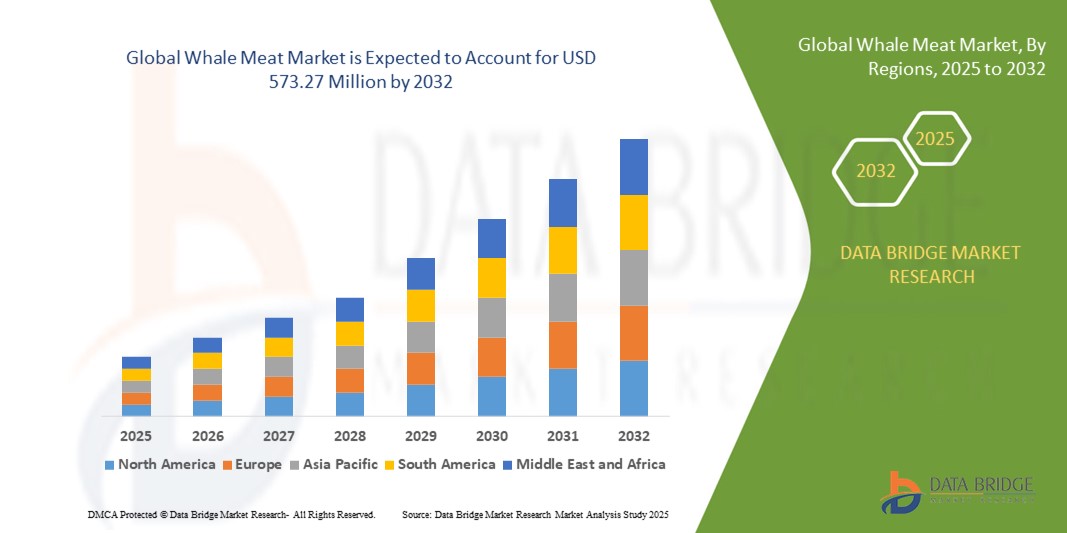
- The global whale meat market size was valued at USD 406.22 million in 2024 and is expected to reach USD 573.27 million by 2032, at a CAGR of 4.4% during the forecast period
- The market growth is largely fueled by sustained cultural demand in key consuming nations such as Japan, Norway, and Iceland, coupled with regulated commercial whaling that ensures consistent supply. Expanding product availability through innovative retail channels such as vending machines and gourmet dining experiences is also stimulating renewed consumer interest, particularly among younger demographics and culinary tourists
- Furthermore, strategic industry investments, such as the launch of modern whaling vessels and diversification into premium whale meat cuts, are enhancing operational efficiency and broadening market reach. These factors are collectively driving the sector’s revival, supporting both domestic consumption and export opportunities
Whale Meat Market Analysis
- Whale meat is a traditional protein source derived from species such as minke, fin, and sei whales, consumed in various forms including sashimi, steaks, bacon, and preserved products. It is valued for its distinctive flavor, high protein content, and cultural significance in regions where whaling remains legally sanctioned
- The escalating demand for whale meat is influenced by the preservation of culinary heritage, the premium positioning of certain cuts in gourmet markets, and targeted promotional efforts by industry stakeholders. Enhanced cold-chain logistics and tourism-driven consumption are further supporting market growth, despite regulatory and ethical challenges
- Asia-Pacific dominated the whale meat market with a share of 45.5% in 2024, due to strong cultural consumption traditions, established whaling industries, and regulated supply channels in countries such as Japan, South Korea, and certain Pacific Island nations
- North America is expected to be the fastest growing region in the whale meat market during the forecast period due to regulated indigenous whaling practices and rising demand in specialty ethnic food markets
- Eaten fresh segment dominated the market with a market share of 49.2% in 2024, due to strong demand in regions where whale meat consumption is embedded in cultural traditions, such as Japan’s sashimi-style servings and Norway’s freshly grilled preparations. Fresh whale meat is prized for its tenderness, distinct flavor profile, and nutritional richness, including high-quality protein and omega-3 fatty acids. The segment benefits from direct-from-source supply chains in coastal whaling regions, ensuring freshness and premium quality
Report Scope and Whale Meat Market Segmentation
|
Attributes |
Whale Meat Key Market Insights |
|
Segments Covered |
|
|
Countries Covered |
North America
Europe
Asia-Pacific
Middle East and Africa
South America
|
|
Key Market Players |
|
|
Market Opportunities |
|
|
Value Added Data Infosets |
In addition to the insights on market scenarios such as market value, growth rate, segmentation, geographical coverage, and major players, the market reports curated by the Data Bridge Market Research also include in-depth expert analysis, pricing analysis, brand share analysis, consumer survey, demography analysis, supply chain analysis, value chain analysis, raw material/consumables overview, vendor selection criteria, PESTLE Analysis, Porter Analysis, and regulatory framework. |
Whale Meat Market Trends
Rising Adoption of Automated Retail Channels for Whale Meat
- Increasing use of automated retail channels such as online stores, vending machines, and advanced cold chain supply enables convenient access to whale meat products, expanding reach beyond traditional physical marketplaces
- For instance, companies such as Maruha Nichiro Corporation have introduced e-commerce platforms combined with automated order fulfillment and cold storage technologies to efficiently distribute whale meat to niche consumer segments in Japan and Nordic countries, adapting to shifting buying behavior
- Growing integration of cold chain logistics and RFID tracking improves product freshness and traceability, enhancing consumer confidence in whale meat quality and safety
- Expansion of specialty seafood retailers leveraging digital and automated sales channels is helping preserve cultural consumption traditions while appealing to younger demographics
- The rise of subscription-based delivery models and meal kit collaborations provides new consumer touchpoints for curated whale meat experiences and value-added products
- Technological innovations in online marketing and social media engagement support increased awareness and acceptance of whale meat within existing and emerging consumer communities
Whale Meat Market Dynamics
Driver
Growing Economic Interests with Relation to Whale Meat
- Economic incentives tied to the whale meat industry, including employment, export revenues, and local community support, are driving continued production and consumption despite ethical and regulatory challenges
- For instance, Japan and Norway continue to invest in sustainable whaling operations and whale meat processing companies such as Kyodo Senpaku Co., Ltd., which contribute significantly to regional economies and maintain steady market demand
- The whale meat sector provides livelihood opportunities in coastal regions, incentivizing governments and stakeholders to support regulated hunting and promote market stability
- Expansion of niche gourmet and traditional food markets fosters premium pricing, supporting profitability in the whale meat value chain
- Trade in whale meat by-products and exports to countries with cultural consumption patterns generates additional economic value beyond domestic consumption. Government subsidies and policy frameworks aimed at balancing economic interests with conservation efforts influence industry resilience and adaptability
Restraint/Challenge
Awareness of Conservative Issues
- Increasing public awareness of conservation, animal welfare, and ethical issues surrounding whaling hampers market growth through consumer activism, regulatory pressure, and import restrictions
- For instance, environmental groups and international bodies such as the International Whaling Commission (IWC) actively campaign against commercial whaling, leading to import bans and negative publicity that affect demand and sales in key markets
- Shifts in younger consumer preferences towards plant-based or alternative proteins reduce potential new market entrants and heighten scrutiny on traditional whale meat consumption
- Complex legal frameworks and international treaties limit hunting quotas and complicate cross-border trade, creating supply uncertainties. Growing media coverage and social discourse around endangered species protection escalate reputational risks for companies involved in whale meat production and distribution
- Challenges in balancing cultural heritage and modern ethical standards require ongoing dialogue and adaptation by industry stakeholders to maintain social license to operate
Whale Meat Market Scope
The market is segmented on the basis of type and product type.
- By Type
On the basis of type, the whale meat market is segmented into Minke Whale, Fin Whale, Sei Whale, Bryde’s Whale, and Others. The Minke Whale segment dominated the largest market revenue share in 2024, driven by its relatively higher population compared to other large whale species and its historical acceptance in key consuming nations such as Japan, Norway, and Iceland. Minke whale meat is valued for its mild flavor, lean texture, and versatility in both raw and cooked preparations, which enhances its appeal across traditional and modern culinary formats. The segment also benefits from established supply chains and regulated quotas, ensuring consistent availability in markets where whaling remains legal. In addition, its lower mercury content compared to larger whale species has increased consumer preference in regions concerned about food safety.
The Fin Whale segment is anticipated to witness the fastest growth rate from 2025 to 2032, fueled by rising demand in niche gourmet markets and its reputation for offering rich, dark, beef-such as meat with high protein content. Although international trade of fin whale meat is highly regulated, certain countries have maintained small but steady consumption patterns, which are now expanding with the growth of luxury dining experiences targeting adventurous consumers. Its rarity and premium positioning contribute to higher market prices, making it attractive to specialized suppliers. Advances in preservation techniques are also enabling longer export viability, allowing this segment to gradually penetrate more global markets despite regulatory constraints.
- By Product Type
On the basis of product type, the whale meat market is segmented into Eaten Fresh, Salted, Wind-dried, and Others. The Eaten Fresh segment held the largest market revenue share of 49.2% in 2024, supported by strong demand in regions where whale meat consumption is embedded in cultural traditions, such as Japan’s sashimi-style servings and Norway’s freshly grilled preparations. Fresh whale meat is prized for its tenderness, distinct flavor profile, and nutritional richness, including high-quality protein and omega-3 fatty acids. The segment benefits from direct-from-source supply chains in coastal whaling regions, ensuring freshness and premium quality. Moreover, fresh whale meat consumption is closely tied to seasonal availability and festivals, which drives spikes in demand at specific times of the year.
The Wind-dried segment is expected to record the fastest CAGR from 2025 to 2032, driven by its long shelf life, unique flavor development during the drying process, and growing appeal among gourmet and heritage food enthusiasts. Wind-dried whale meat, particularly popular in parts of the Arctic and North Atlantic, offers a concentrated nutrient profile and a chewy texture valued for traditional dishes. This preservation method enables transport to distant markets without significant quality loss, opening opportunities for export to specialty food retailers. In addition, the segment is benefiting from increased tourism-driven demand, as travelers seek to experience traditional foods, contributing to higher year-round sales in producing regions.
Whale Meat Market Regional Analysis
- Asia-Pacific dominated the whale meat market with the largest revenue share of 45.5% in 2024, driven by strong cultural consumption traditions, established whaling industries, and regulated supply channels in countries such as Japan, South Korea, and certain Pacific Island nations
- The region benefits from consistent domestic demand, government-regulated quotas, and specialized processing facilities that maintain product quality
- Rising interest in traditional foods among younger consumers and tourism-driven culinary experiences further support market expansion
Japan Whale Meat Market Insight
Japan held the largest share in the Asia-Pacific market in 2024, supported by its long-standing whaling tradition, specialized distribution networks, and strong domestic culinary market. The country’s re-entry into commercial whaling in recent years has ensured a stable supply of minke and other whale species for domestic consumption. Whale meat remains a cultural delicacy served in traditional restaurants, school lunches in certain regions, and seasonal festivals. The Japanese government actively supports whaling fleets and processing industries, while domestic research institutions work to maintain sustainable harvest levels in compliance with local regulations.
South Korea Whale Meat Market Insight
South Korea is witnessing the fastest growth in the Asia-Pacific region, driven by the popularity of whale meat dishes in coastal cities such as Ulsan and Busan. The market benefits from both regulated harvests and incidental catch sales, with strong demand from traditional seafood markets. Culinary tourism plays a significant role, as whale meat is often marketed as a heritage delicacy to visitors. Increasing media coverage and growing interest in traditional Korean cuisine abroad are further boosting demand. The expansion of specialized restaurants and improved preservation techniques are helping the segment reach broader domestic and international audiences.
Europe Whale Meat Market Insight
Europe remains a significant contributor to the global whale meat market, driven by active consumption in whaling nations such as Norway and Iceland. The region benefits from modern processing facilities, regulated quotas, and a focus on sustainable harvesting to maintain marine biodiversity. Whale meat consumption is deeply tied to cultural heritage, with traditional recipes passed down through generations. Rising culinary tourism and demand from niche gourmet markets are further supporting steady sales. Export channels to Asia also play a vital role in the region’s market performance.
Norway Whale Meat Market Insight
Norway’s market is fueled by its strong whaling industry, government-regulated quotas, and advanced cold-chain logistics that ensure year-round supply. Domestic demand remains stable, with whale meat commonly sold in supermarkets and restaurants. The country’s ability to export surplus meat to Japan strengthens its global market position. Technological advancements in processing and preservation have improved meat quality, supporting both domestic and export consumption.
North America Whale Meat Market Insight
North America is expected to grow at the fastest CAGR from 2025 to 2032, supported by regulated indigenous whaling practices and rising demand in specialty ethnic food markets. Consumption is concentrated in Alaska, Canada’s Arctic regions, and Greenland, where whale meat remains an important part of indigenous diets. Growth in artisanal and heritage food markets in urban areas is creating niche demand for legally sourced whale meat. The expansion of cold-chain distribution and e-commerce platforms for specialty foods is further enabling market growth.
U.S. Whale Meat Market Insight
The U.S. market is largely driven by indigenous communities in Alaska under exemptions allowed by international agreements. Whale meat holds deep cultural and nutritional significance, serving as a key source of protein and essential nutrients in remote Arctic areas. While commercial sales are restricted, demand within these communities remains strong, supported by traditional preservation methods such as wind-drying and fermenting. Efforts to document and preserve indigenous culinary heritage are also helping maintain cultural interest in whale meat consumption.
Whale Meat Market Share
The whale meat industry is primarily led by well-established companies, including:
- Thai Union Group (Thailand)
- Trident Seafoods Corporation (U.S.)
- High Liner Foods (Canada)
- Kyodo Senpaku Co. Ltd. (Japan)
- Nippon Suisan Kaisha Ltd. (Japan)
- Toyo Suisan Kaisha Ltd. (Japan)
- Aquachile (Chile)
- Maruha Nichiro Corporation (Japan)
- Clearwater Seafoods (Canada)
- Kyokuyo Co. Ltd. (Japan)
Latest Developments in Global Whale Meat Market
- In December 2024, Japan held its first public auction of fresh fin whale meat in nearly 50 years, with premium tail cuts selling for over ¥200,000 per kilogram (around US $1,300/kg). This rare sale generated strong media attention and also reinforced the positioning of fin whale meat as a luxury product. The exceptionally high prices may encourage greater supplier participation in future auctions and stimulate demand in high-end gourmet markets both domestically and abroad
- In May 2024, Japan launched the Kangei Maru, a state-of-the-art mother ship for commercial whaling, at an investment of around ¥7.5 billion (approx. US $47 million). Equipped with advanced freezing and processing facilities, the vessel can operate for extended periods in distant waters, ensuring steady supply to domestic markets and supporting export opportunities. This move signals a strategic push to modernize Japan’s whaling fleet, potentially increasing both catch capacity and operational efficiency
- In January 2023, a Japanese whaling firm introduced vending machines in Yokohama offering whale sashimi, whale steak, and whale bacon, aiming to reinvigorate demand for whale meat, which has seen a long-term decline and limited supermarket presence. This development is expected to broaden consumer access through innovative retail channels, attract younger buyers intrigued by novelty and convenience, and potentially stimulate sales in urban markets where traditional whale meat shops have diminished
- In January 2023, the Kujira (Whale) Store, an unmanned outlet in the port town of Yokohama near Tokyo, opened with three vending machines dispensing whale sashimi, whale bacon, whale skin, whale steak, and canned whale meat priced between 1,000 yen ($7.70) and 3,000 yen ($23). This expansion of automated retail for whale products may enhance year-round availability, reduce operational costs compared to staffed stores, and help normalize whale meat as an everyday purchase option, supporting gradual market revitalization
SKU-

- Interactive Data Analysis Dashboard
- Company Analysis Dashboard for high growth potential opportunities
- Research Analyst Access for customization & queries
- Competitor Analysis with Interactive dashboard
- Latest News, Updates & Trend analysis
- Harness the Power of Benchmark Analysis for Comprehensive Competitor Tracking
Global Whale Meat Market, Supply Chain Analysis and Ecosystem Framework
To support market growth and help clients navigate the impact of geopolitical shifts, DBMR has integrated in-depth supply chain analysis into its Global Whale Meat Market research reports. This addition empowers clients to respond effectively to global changes affecting their industries. The supply chain analysis section includes detailed insights such as Global Whale Meat Market consumption and production by country, price trend analysis, the impact of tariffs and geopolitical developments, and import and export trends by country and HSN code. It also highlights major suppliers with data on production capacity and company profiles, as well as key importers and exporters. In addition to research, DBMR offers specialized supply chain consulting services backed by over a decade of experience, providing solutions like supplier discovery, supplier risk assessment, price trend analysis, impact evaluation of inflation and trade route changes, and comprehensive market trend analysis.
Data collection and base year analysis are done using data collection modules with large sample sizes. The stage includes obtaining market information or related data through various sources and strategies. It includes examining and planning all the data acquired from the past in advance. It likewise envelops the examination of information inconsistencies seen across different information sources. The market data is analysed and estimated using market statistical and coherent models. Also, market share analysis and key trend analysis are the major success factors in the market report. To know more, please request an analyst call or drop down your inquiry.
The key research methodology used by DBMR research team is data triangulation which involves data mining, analysis of the impact of data variables on the market and primary (industry expert) validation. Data models include Vendor Positioning Grid, Market Time Line Analysis, Market Overview and Guide, Company Positioning Grid, Patent Analysis, Pricing Analysis, Company Market Share Analysis, Standards of Measurement, Global versus Regional and Vendor Share Analysis. To know more about the research methodology, drop in an inquiry to speak to our industry experts.
Data Bridge Market Research is a leader in advanced formative research. We take pride in servicing our existing and new customers with data and analysis that match and suits their goal. The report can be customized to include price trend analysis of target brands understanding the market for additional countries (ask for the list of countries), clinical trial results data, literature review, refurbished market and product base analysis. Market analysis of target competitors can be analyzed from technology-based analysis to market portfolio strategies. We can add as many competitors that you require data about in the format and data style you are looking for. Our team of analysts can also provide you data in crude raw excel files pivot tables (Fact book) or can assist you in creating presentations from the data sets available in the report.












