




Middle East And Africa Virtual Reality Vr Health Market
Market Size in USD Million
CAGR :
% 
 USD
880.43 Million
USD
7,777.02 Million
2025
2033
USD
880.43 Million
USD
7,777.02 Million
2025
2033
 Forecast Period Forecast Period |
2026 –2033 |
 Market Size (Base Year) Market Size (Base Year) |
USD 880.43 Million |
 Market Size (Forecast Year) Market Size (Forecast Year) |
USD 7,777.02 Million |
 CAGR CAGR |
% |
| Major Markets Players |
|
What is the Middle East and Africa Virtual Reality (VR) Health Market Size and Growth Rate?
- The Middle East and Africa virtual reality (VR) health market size was valued at USD 880.43 million in 2025 and is expected to reach USD 7777.02 million by 2033, at a CAGR of 31.30% during the forecast period
- The healthcare industry employs virtual reality throughout its various sectors to offer a higher quality of care and efficiency to patients and medical professionals. VR is being used in everything from surgical preparation to patient illness education and therapy. It brings the opportunity for caregivers to get feedback on the given treatment and care
What are the Major Takeaways of Virtual Reality (VR) Health Market?
- There has been an increasing demand for quality healthcare services as quality improvement is meant for enhancing safety, effectiveness, and efficiency. Thus, extreme demand for quality healthcare services acts as a major driving factor for the growth of Middle East and Africa virtual reality (VR) health market
- U.A.E. dominated the Middle East and Africa virtual reality (VR) health market with the largest revenue share of 39.6% in 2025, supported by strong investments in digital healthcare infrastructure, rapid adoption of advanced medical technologies, and the government’s focus on healthcare innovation
- Saudi Arabia is witnessing the fastest growth rate of 12.37% in the Middle East and Africa region, driven by increasing government investments in healthcare modernization and growing adoption of advanced digital health technologies
- The hardware segment dominated the Virtual Reality (VR) Health market with the largest market revenue share of 46.9% in 2024, primarily due to the widespread adoption of VR headsets, sensors, controllers, and immersive display systems used in healthcare environments
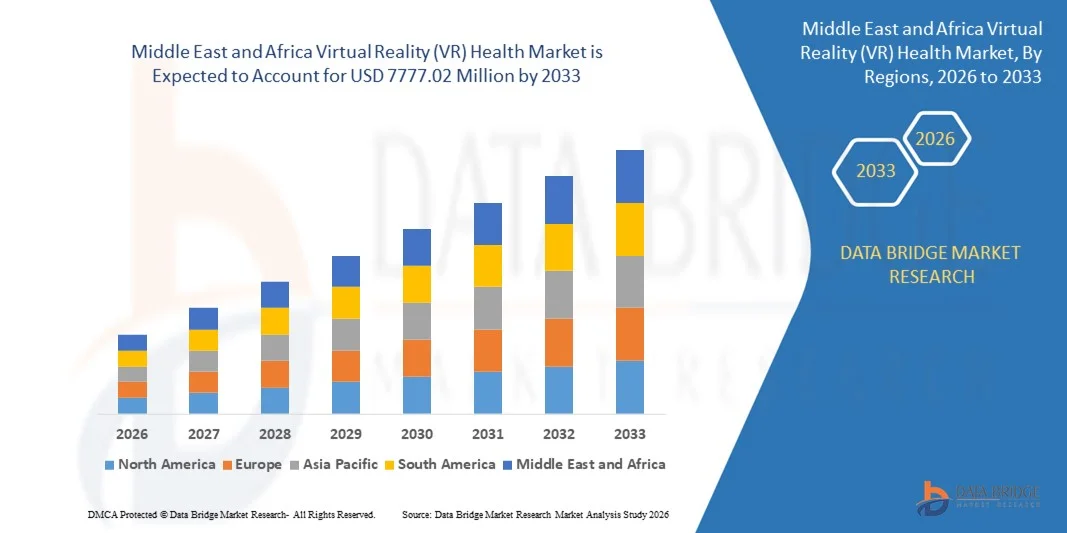
Report Scope and Virtual Reality (VR) Health Market Segmentation
|
Attributes |
Virtual Reality (VR) Health Key Market Insights |
|
Segments Covered |
|
|
Countries Covered |
Middle East and Africa
|
|
Key Market Players |
|
|
Market Opportunities |
|
|
Value Added Data Infosets |
In addition to the insights on market scenarios such as market value, growth rate, segmentation, geographical coverage, and major players, the market reports curated by the Data Bridge Market Research also include in-depth expert analysis, pricing analysis, brand share analysis, consumer survey, demography analysis, supply chain analysis, value chain analysis, raw material/consumables overview, vendor selection criteria, PESTLE Analysis, Porter Analysis, and regulatory framework. |
What is the Key Trend in the Virtual Reality (VR) Health Market?
Growing Adoption of Immersive Therapeutic Applications
- The virtual reality (VR) health market is witnessing a major trend toward the growing adoption of immersive therapeutic applications, which are transforming how healthcare professionals deliver treatment, rehabilitation, and patient engagement
- VR technology is increasingly being used to create immersive environments that help patients manage pain, anxiety, phobias, and post-traumatic stress disorders (PTSD) by simulating controlled therapeutic scenarios under the supervision of medical professionals
- For instance, AppliedVR has developed VR-based therapeutic platforms used in hospitals to reduce chronic pain and anxiety through guided immersive experiences
- Healthcare providers are also using VR for physical rehabilitation and cognitive therapy, where patients perform guided movements and exercises in simulated environments that enhance engagement and accelerate recovery
- For instance, MindMaze provides VR-based neurorehabilitation platforms that help stroke and brain injury patients regain motor and cognitive functions through interactive therapy
- Another important aspect of this trend is the integration of VR with artificial intelligence and motion-tracking systems, allowing therapists to monitor patient performance, track progress, and adjust therapy sessions in real time
- The adoption of immersive therapeutic VR solutions is expected to expand further as healthcare institutions increasingly adopt digital treatment methods to improve patient outcomes and reduce treatment costs
What are the Key Drivers of Virtual Reality (VR) Health Market?
- The rising demand for Virtual Reality (VR) Health solutions is largely driven by the increasing need for advanced medical training and simulation technologies, which allow healthcare professionals to practice complex procedures in safe and controlled environments
- Medical institutions and universities are increasingly integrating VR-based simulation tools to train surgeons, nurses, and medical students without exposing real patients to risks, significantly improving learning outcomes and clinical preparedness
- For instance, Osso VR provides immersive surgical training platforms that enable medical professionals to practice orthopedic procedures through realistic virtual simulations
- The growing demand for minimally invasive surgical training and precision-based medical procedures has further accelerated the adoption of VR simulation technologies across hospitals and medical research centers
- In addition, the rapid expansion of digital healthcare infrastructure and increasing investments in healthcare technology innovation are encouraging hospitals and healthcare providers to adopt VR solutions for training, diagnosis, and treatment support
- For instance, CAE Inc offers VR-based healthcare simulation platforms that allow medical professionals to practice critical clinical scenarios and emergency procedures in immersive environments
- These factors are expected to continue driving the demand for VR health technologies as healthcare systems worldwide prioritize improved training efficiency, patient safety, and advanced treatment methodologies
Which Factor is Challenging the Growth of the Virtual Reality (VR) Health Market?
- One of the biggest challenges in the virtual reality (VR) health market is the high cost associated with VR hardware, software development, and system integration, which can limit adoption among small healthcare providers and developing healthcare systems
- Implementing VR-based healthcare solutions requires specialized equipment such as VR headsets, motion sensors, simulation software, and powerful computing infrastructure, which increases the overall deployment cost for hospitals and training institutions
- For instance, advanced VR medical training systems developed by companies such as ImmersiveTouch require high-performance hardware and custom software integration, making them expensive for smaller clinics and educational institutions
- In addition, healthcare providers must invest in staff training, system maintenance, and content development to ensure effective utilization of VR platforms in clinical and educational environments
- Another challenge is the limited availability of standardized VR medical content and regulatory guidelines, which creates barriers for widespread clinical adoption and certification of VR-based therapies
- These cost and infrastructure challenges can slow down the adoption of VR technologies, particularly in regions with limited healthcare budgets and technological resources
- Addressing these issues through affordable VR hardware, scalable cloud-based platforms, and standardized medical VR frameworks will be crucial for sustaining long-term growth in the VR health market
How is the Virtual Reality (VR) Health Market Segmented?
The market is segmented on the basis of product, technology, application, therapeutic area, end-user, and distribution channel.
- By Product
On the basis of product, the Virtual Reality (VR) Health market is segmented into hardware, software, and services. The hardware segment dominated the Virtual Reality (VR) Health market with the largest market revenue share of 46.9% in 2024, primarily due to the widespread adoption of VR headsets, sensors, controllers, and immersive display systems used in healthcare environments. Hardware devices form the foundation of VR healthcare platforms, enabling the creation of realistic virtual environments for training, therapy, and patient rehabilitation. Hospitals, medical universities, and research institutions are increasingly investing in advanced VR hardware systems to support surgical simulations, patient therapy programs, and medical education. The growing availability of high-performance VR head-mounted displays and motion-tracking devices has further strengthened the adoption of hardware solutions across healthcare facilities.
The software segment is anticipated to witness the fastest CAGR of 21.3% from 2025 to 2032, driven by increasing development of VR-based healthcare applications, AI-powered therapy platforms, and simulation software used for medical training, diagnosis support, and patient treatment programs.
- By Technology
On the basis of technology, the Virtual Reality (VR) Health market is segmented into head-mounted technology, gesture-tracking technology, projector & display walls technology, mobile device-based technology, and others. The head-mounted technology segment dominated the market with the largest revenue share of 41.7% in 2024, owing to its ability to deliver highly immersive virtual environments required for medical simulations, therapeutic treatment, and training applications. Head-mounted displays (HMDs) are widely used in hospitals, rehabilitation centers, and medical training institutions to create realistic 3D environments that allow healthcare professionals and patients to interact with simulated scenarios. The increasing availability of lightweight, high-resolution VR headsets and improved motion-tracking capabilities has significantly improved the user experience and clinical effectiveness of VR healthcare applications.
The gesture-tracking technology segment is expected to witness the fastest CAGR of 20.6% from 2025 to 2032, supported by growing demand for touch-free interaction in medical environments. Gesture-based systems enable healthcare professionals and patients to interact naturally with VR environments, improving rehabilitation therapy and surgical training experiences.
- By Application
On the basis of application, the Virtual Reality (VR) Health market is segmented into medical training and education, virtual reality exposure therapy, surgery, patient care management, rehabilitation, pain management, and others. The medical training and education segment dominated the market with the largest revenue share of 34.5% in 2024, driven by the increasing adoption of VR simulation tools by medical schools, hospitals, and research institutions. VR technology allows healthcare professionals to practice complex medical procedures, anatomical studies, and emergency scenarios in safe and controlled virtual environments. This significantly improves clinical training outcomes while minimizing risks to real patients. Medical institutions are increasingly incorporating VR-based training modules into their curricula to enhance surgical skills and procedural knowledge.
The rehabilitation segment is expected to witness the fastest CAGR of 22.1% from 2025 to 2032, fueled by the growing use of VR therapy in physical rehabilitation programs for stroke patients, neurological disorders, and mobility impairments. VR-guided therapy exercises improve patient engagement and recovery outcomes.
- By Therapeutic Area
On the basis of therapeutic area, the Virtual Reality (VR) Health market is segmented into craniofacial, cardiovascular, ophthalmology, pulmonary, neurological, sleep disorders, phobias, addictions, post-traumatic stress disorder (PTSD), and others. The neurological segment dominated the market with the largest revenue share of 31.4% in 2024, driven by the increasing use of VR technologies in treating neurological conditions such as stroke recovery, cognitive rehabilitation, and brain injury therapy. VR-based neurological rehabilitation programs allow patients to perform guided exercises in immersive environments that stimulate cognitive and motor functions. Healthcare providers are increasingly adopting VR solutions to support long-term rehabilitation and improve patient recovery outcomes.
The post-traumatic stress disorder (PTSD) segment is projected to witness the fastest CAGR of 21.8% from 2025 to 2032, driven by growing use of VR exposure therapy in mental health treatment. VR enables controlled therapeutic environments where patients gradually confront trauma-related triggers under professional supervision.
- By End-User
On the basis of end-user, the Virtual Reality (VR) Health market is segmented into hospitals, clinics, surgical centres, ambulatory surgical centers, diagnostic centers, rehabilitation centers, long-term care facilities, mental health institutions, and others. The hospitals segment dominated the market with the largest revenue share of 39.2% in 2024, as hospitals serve as the primary healthcare facilities where advanced VR technologies are implemented for medical training, surgical planning, rehabilitation, and patient therapy. Large hospitals are increasingly investing in VR healthcare platforms to improve clinical training programs, enhance patient engagement, and support innovative treatment methods.
The rehabilitation centers segment is anticipated to witness the fastest CAGR of 22.5% from 2025 to 2032, driven by the increasing adoption of VR-based therapy programs for patients recovering from neurological injuries, orthopedic surgeries, and mobility disorders. VR rehabilitation solutions improve therapy outcomes through interactive and engaging treatment environments.
- By Distribution Channel
On the basis of distribution channel, the Virtual Reality (VR) Health market is segmented into direct tenders, retail sales, and third-party distributors. The direct tenders segment dominated the market with the largest revenue share of 47.6% in 2024, as hospitals, government healthcare organizations, and research institutions typically procure VR healthcare systems through direct procurement contracts with technology providers. Direct tenders allow healthcare organizations to acquire customized VR solutions tailored to specific clinical applications and training requirements.
The third-party distributor segment is expected to witness the fastest CAGR of 20.9% from 2025 to 2032, supported by the expanding global distribution networks of VR healthcare technology providers. Distributors help vendors reach smaller healthcare facilities, clinics, and rehabilitation centers by offering installation support, technical services, and product integration solutions.
Which Region Holds the Largest Share of the Virtual Reality (VR) Health Market?
- U.A.E. dominated the Middle East and Africa virtual reality (VR) health market with the largest revenue share of 39.6% in 2025, supported by strong investments in digital healthcare infrastructure, rapid adoption of advanced medical technologies, and the government’s focus on healthcare innovation. The country has positioned itself as a regional hub for medical technology and digital health initiatives, with hospitals and healthcare institutions increasingly integrating immersive technologies into medical training, surgical planning, and patient rehabilitation programs. Healthcare facilities across major cities such as Dubai and Abu Dhabi are actively adopting VR platforms to train medical professionals, enhance patient care, and improve treatment outcomes. The presence of advanced healthcare facilities and continuous government initiatives aimed at strengthening healthcare modernization are significantly driving the adoption of VR health technologies across the country
- In the country, the increasing integration of VR-based medical simulation platforms, rehabilitation programs, and mental health therapy applications is significantly accelerating the adoption of Virtual Reality (VR) Health technologies. Hospitals and healthcare institutions are investing in immersive VR tools that enable physicians to visualize anatomical structures, practice surgical techniques, and conduct therapy sessions within controlled virtual environments
- In the U.A.E., the rising focus on smart healthcare systems, digital medical education, and advanced patient care technologies further strengthens the country’s leadership position within the Middle East and Africa Virtual Reality (VR) Health market
Saudi Arabia Virtual Reality (VR) Health Market Insight
Saudi Arabia is witnessing the fastest growth rate of 12.37% in the Middle East and Africa region, driven by increasing government investments in healthcare modernization and growing adoption of advanced digital health technologies. The country’s healthcare sector is undergoing rapid transformation under Vision 2030, which promotes the integration of innovative technologies such as artificial intelligence, telemedicine, and immersive VR solutions within healthcare systems. Hospitals and medical institutions across cities such as Riyadh, Jeddah, and Dammam are increasingly adopting VR technologies for medical training, surgical simulations, and rehabilitation therapies. These solutions enable healthcare professionals to practice complex medical procedures and enhance patient treatment outcomes while reducing clinical risks. In addition, the growing demand for advanced mental health therapies and rehabilitation services is further supporting the adoption of VR-based healthcare platforms.
South Africa Virtual Reality (VR) Health Market Insight
In South Africa, the virtual reality (VR) health market is expanding steadily, supported by the growing adoption of digital healthcare technologies and increasing investments in medical training and rehabilitation solutions. Healthcare institutions across the country are gradually integrating VR-based platforms to enhance medical education, patient therapy, and clinical training programs. Major healthcare facilities in cities such as Johannesburg, Cape Town, and Durban are exploring the use of immersive VR technologies for surgical planning, patient pain management, and physical rehabilitation therapies. Additionally, the growing presence of medical research institutions and increasing awareness of advanced healthcare technologies are encouraging hospitals to adopt VR-based solutions that improve clinical training efficiency and patient engagement, positioning South Africa as an important contributor to the regional Virtual Reality (VR) Health market growth.
Which are the Top Companies in Virtual Reality (VR) Health Market?
The Virtual Reality (VR) Health industry is primarily led by well-established companies, including:
- SyncThink Inc. (U.S.)
- AppliedVR (U.S.)
- Koninklijke Philips N.V. (Netherlands)
- EchoPixel (U.S.)
- Psious (Spain)
- Firsthand Technology Inc (U.S.)
- MindMaze Inc (Switzerland)
- Augmedix, Inc (U.S.)
- VirtaMed AG (Switzerland)
- Vivid Vision, Inc (U.S.)
- Virtually Better Inc (U.S.)
- Osso VR, Inc (U.S.)
- ImmersiveTouch, Inc (U.S.)
- CAE Inc (Canada)
- Google (A Subsidiary of Alphabet Inc) (U.S.)
- Microsoft (U.S.)
- General Electric (U.S.)
- Medical Realities Ltd (U.K.)
- Siemens (Germany)
- Facebook (Meta Platforms, Inc.) (U.S.)
What are the Recent Developments in Global Virtual Reality (VR) Health Market?
- In August 2021, Koninklijke Philips N.V. announced launch of digital experience during the virtual Middle East and Africaan Society of Cardiology (ESC) 2021 Congress. Under this, the company spotlights smart diagnostic and treatment solutions for the customers. This will help the company to enhance their offerings and to grow in the market
- In April 2021, VirtaMed AG announced strategic partnership with ESG Elektroniksystem- und Logistik-GmbH. Under this partnership, both the companies will jointly offer innovative, customer-specific and virtual reality-based simulation solutions for the training and continuing education of physicians and medical service personnel. This will help the company to enhance their sales and to grow in the market
SKU-
Get online access to the report on the World's First Market Intelligence Cloud

- Interactive Data Analysis Dashboard
- Company Analysis Dashboard for high growth potential opportunities
- Research Analyst Access for customization & queries
- Competitor Analysis with Interactive dashboard
- Latest News, Updates & Trend analysis
- Harness the Power of Benchmark Analysis for Comprehensive Competitor Tracking
Research Methodology
Data collection and base year analysis are done using data collection modules with large sample sizes. The stage includes obtaining market information or related data through various sources and strategies. It includes examining and planning all the data acquired from the past in advance. It likewise envelops the examination of information inconsistencies seen across different information sources. The market data is analysed and estimated using market statistical and coherent models. Also, market share analysis and key trend analysis are the major success factors in the market report. To know more, please request an analyst call or drop down your inquiry.
The key research methodology used by DBMR research team is data triangulation which involves data mining, analysis of the impact of data variables on the market and primary (industry expert) validation. Data models include Vendor Positioning Grid, Market Time Line Analysis, Market Overview and Guide, Company Positioning Grid, Patent Analysis, Pricing Analysis, Company Market Share Analysis, Standards of Measurement, Global versus Regional and Vendor Share Analysis. To know more about the research methodology, drop in an inquiry to speak to our industry experts.
Customization Available
Data Bridge Market Research is a leader in advanced formative research. We take pride in servicing our existing and new customers with data and analysis that match and suits their goal. The report can be customized to include price trend analysis of target brands understanding the market for additional countries (ask for the list of countries), clinical trial results data, literature review, refurbished market and product base analysis. Market analysis of target competitors can be analyzed from technology-based analysis to market portfolio strategies. We can add as many competitors that you require data about in the format and data style you are looking for. Our team of analysts can also provide you data in crude raw excel files pivot tables (Fact book) or can assist you in creating presentations from the data sets available in the report.












