


What is the North America Bone Metastasis Market Size and Growth Rate?
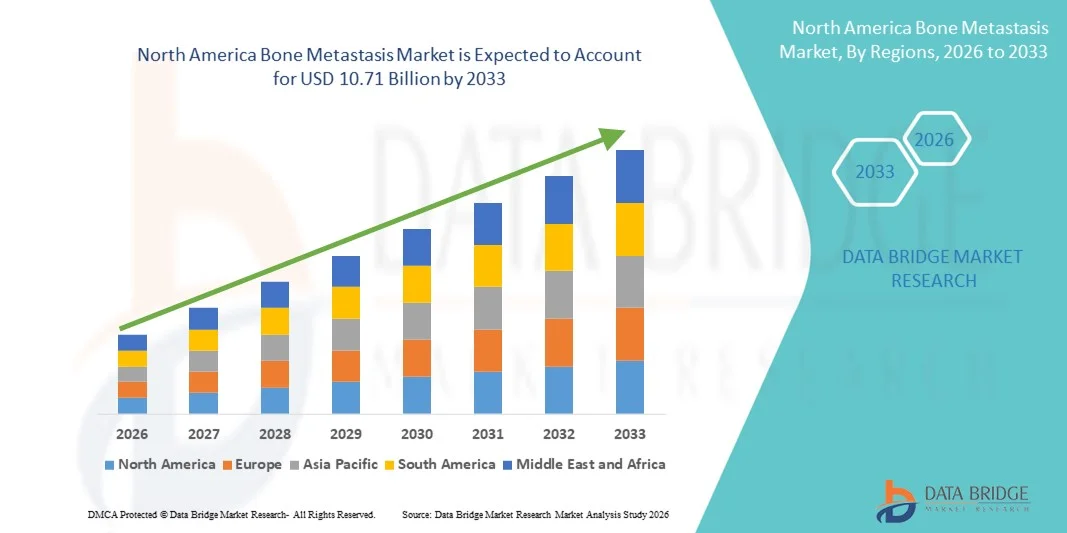
- As per Data Bridge Market Research analysis, the North America bone metastasis market size was valued at USD 5.66 billion in 2025 and is expected to reach USD 10.71 billion by 2033, at a CAGR of 8.30% during the forecast period
- The market growth is largely fueled by the rising prevalence of advanced-stage cancers, including breast, prostate, lung, and kidney cancers, which frequently metastasize to bone, leading to increased demand for effective diagnostic and therapeutic solutions across hospitals and oncology centers
- Furthermore, growing awareness among clinicians and patients, along with advancements in targeted therapies, bone-modifying agents, and supportive care treatments, is accelerating the adoption of bone metastasis management solutions, thereby significantly boosting the overall growth of the Bone Metastasis Market
Market Size & Forecast
- Global Market Value (2025): USD 5.66 billion
- Expected Market Value (2033): USD 10.71 billion
- Forecast CAGR (2026-2033): 8.30%
What are the Major Takeaways of North America Bone Metastasis Market?
- Bone metastasis, a common complication of advanced cancers such as breast, prostate, lung, and kidney cancer, represents a significant clinical challenge, driving the need for effective diagnostic, therapeutic, and supportive care solutions across hospitals and oncology centers
- The escalating demand for bone metastasis treatments is primarily fueled by the rising global cancer burden, increasing life expectancy of cancer patients, and advancements in targeted therapies, bisphosphonates, and radiopharmaceuticals, which are improving patient outcomes and quality of life
- U.S. dominated the bone metastasis market with the largest revenue share of approximately 39.2% in 2025, supported by high cancer prevalence, well-established healthcare infrastructure, early adoption of advanced bone metastasis therapies, and strong presence of major pharmaceutical companies, driving the majority of regional revenue
- Canada is expected to be the fastest-growing country in the bone metastasis market during the forecast period, registering a CAGR of approximately 18.6%, driven by rising cancer awareness, expanding oncology treatment facilities, improved access to advanced diagnostics and therapies, and growing healthcare expenditure focused on metastatic cancer management
- The adult segment dominated the market, accounting for approximately 92.3% of total revenue in 2025
Report Scope and Bone Metastasis Market Segmentation
|
Attributes |
Bone Metastasis Market Key Market Insights |
|
Segments Covered |
|
|
Countries Covered |
North America
|
|
Key Market Players |
|
|
Market Opportunities |
|
|
Value Added Data Infosets |
In addition to the insights on market scenarios such as market value, growth rate, segmentation, geographical coverage, and major players, the market reports curated by the Data Bridge Market Research also include in-depth expert analysis, patient epidemiology, pipeline analysis, pricing analysis, and regulatory framework. |
What is the Key Trend in the North America Bone Metastasis Market?
Advancements in Targeted Therapies and Precision Oncology
- A major and accelerating trend in the global bone metastasis market is the growing adoption of targeted therapies and precision oncology approaches aimed at improving treatment outcomes and minimizing systemic side effects. Advances in molecular biology and cancer genomics are enabling clinicians to better understand tumor-specific pathways involved in bone metastasis, leading to more personalized treatment strategies
- For instance, the increasing use of bone-modifying agents such as denosumab and bisphosphonates, in combination with targeted cancer therapies, has improved the management of skeletal-related events (SREs) in patients with metastatic bone disease. These therapies help reduce fracture risk, spinal cord compression, and bone pain
- Furthermore, ongoing research into novel agents targeting the RANK/RANKL pathway, tumor–bone microenvironment interactions, and osteoclast inhibition is driving innovation in this space. Pharmaceutical companies are actively developing next-generation therapies that aim to slow disease progression while enhancing patients’ quality of life
- The integration of advanced diagnostic imaging techniques, including PET-CT and MRI, is also supporting early detection and precise monitoring of bone metastases, enabling timely therapeutic intervention
- As a result, the shift toward more targeted, mechanism-based treatment approaches is reshaping clinical practice and driving sustained demand within the Bone Metastasis Market across oncology care settings
North America Bone Metastasis Market Dynamics
Driver
Rising Global Cancer Prevalence and Improved Survival Rates
- The increasing global prevalence of cancers such as breast, prostate, lung, and multiple myeloma—conditions with a high propensity to spread to bone—is a primary driver of growth in the Bone Metastasis Market
- Improved early diagnosis and advances in primary cancer treatments have significantly increased patient survival rates, leading to a larger population at risk of developing bone metastases over time
- For instance, advances in systemic cancer therapies have extended patient life expectancy, thereby increasing the need for long-term management of metastatic complications, including bone involvement. This has heightened demand for effective bone-targeted therapies and supportive care solutions
- In addition, growing awareness among clinicians regarding early intervention for skeletal-related events is encouraging the use of preventive and therapeutic treatments, further supporting market expansion
- Expanding access to oncology care, particularly in emerging economies, and increasing healthcare expenditure are also contributing to higher diagnosis and treatment rates of bone metastasis
- Collectively, these factors are driving consistent growth in demand for therapeutics, diagnostics, and supportive care solutions within the Bone Metastasis Market
Restraint/Challenge
High Treatment Costs and Therapy-Related Side Effects
- One of the key challenges restraining the growth of the Bone Metastasis Market is the high cost associated with advanced therapies, including targeted drugs, biologics, and long-term supportive treatments. These therapies often require prolonged administration, placing a substantial financial burden on patients and healthcare systems, particularly in low- and middle-income regions
- For instance, bone-modifying agents such as denosumab (Xgeva) and intravenous bisphosphonates, while clinically effective, have been associated with adverse effects including osteonecrosis of the jaw, hypocalcemia, and renal complications, which can lead to treatment discontinuation or cautious prescribing by clinicians, thereby limiting broader adoption in routine clinical practice
- Limited reimbursement coverage for newer and high-cost therapies in several countries further restricts patient access, slowing market penetration and widening treatment disparities across regions
- Addressing these challenges through the development of cost-effective therapeutic alternatives, improved reimbursement frameworks, and enhanced clinical guidelines for managing side effects will be essential for sustaining long-term growth in the bone metastasis market
How is the North America Bone Metastasis Market Segmented?
The Bone Metastasis market is segmented on basis of disease type, type, route of administration, population type, mode of purchase, end user, and distribution channel.
- By Disease Type
On the basis of disease type, the Bone Metastasis market is segmented into osteoblastic and osteoclastic metastases. The osteoblastic segment dominated the Bone Metastasis market, accounting for approximately 58.6% of the total market revenue in 2025. This dominance is largely driven by the high prevalence of osteoblastic bone lesions among prostate cancer patients, which represent one of the largest cancer populations globally. Osteoblastic metastases are associated with excessive bone formation, requiring continuous clinical monitoring and long-term pharmacological intervention. The segment benefits from the widespread use of bone-targeting agents, hormonal therapies, and radiopharmaceuticals that are routinely prescribed for prostate cancer-related bone complications. In addition, improved survival rates among prostate cancer patients have increased the duration of treatment, thereby expanding cumulative healthcare expenditure. Strong clinical awareness and well-established diagnostic pathways further contribute to higher detection rates. Developed regions, particularly North America and Europe, provide robust reimbursement for osteoblastic metastasis management, reinforcing treatment uptake. Hospital-based care remains the primary setting for management, driving higher procedural and drug-related revenues. Furthermore, frequent imaging follow-ups and pain management therapies increase overall spending. The integration of multidisciplinary oncology care also supports sustained dominance of this segment. Ongoing clinical trials focused on improving skeletal outcomes further strengthen market leadership. Collectively, these factors firmly position osteoblastic metastases as the leading disease type within the Bone Metastasis market.
The osteoclastic segment is expected to witness the fastest growth, registering a CAGR of approximately 9.1% from 2026 to 2033. This accelerated growth is driven by the rising incidence of breast cancer, lung cancer, and multiple myeloma, all of which commonly result in osteoclastic bone destruction. Osteoclastic metastases lead to severe bone resorption, pathological fractures, and debilitating pain, increasing the urgency for aggressive therapeutic intervention. Growing adoption of bisphosphonates and RANK ligand inhibitors is significantly boosting treatment demand. Advancements in targeted oncology therapies are improving disease control, thereby increasing the treated patient pool. Expanding access to oncology services in emerging economies is further enhancing diagnosis rates. Increased physician awareness regarding early skeletal complication management is also contributing to faster growth. In addition, supportive care innovations focused on pain relief and fracture prevention are driving higher utilization. The growing elderly population, which is more susceptible to osteoclastic lesions, further supports expansion. Rising healthcare investments and improving reimbursement frameworks in Asia-Pacific and Latin America are accelerating adoption. Increased participation in clinical trials aimed at reducing skeletal-related events also strengthens growth momentum. These combined factors position osteoclastic metastases as the fastest-growing disease type segment in the Bone Metastasis market.
- By Type
On the basis of type, the Bone Metastasis market is segmented into diagnosis and treatment. The treatment segment dominated the Bone Metastasis market, accounting for approximately 67.4% of the total market revenue in 2025. This dominance is primarily attributed to the continuous and long-term nature of therapeutic interventions required for managing bone metastases. Patients often undergo prolonged treatment regimens involving bisphosphonates, denosumab, chemotherapy, hormonal therapy, radiopharmaceuticals, and pain management drugs. The rising prevalence of advanced-stage cancers has increased reliance on therapeutic solutions rather than standalone diagnostics. In addition, improvements in cancer survival rates have extended treatment durations, significantly boosting cumulative treatment costs. Hospitals and specialty oncology centers drive higher spending through combination therapies and inpatient care. Strong reimbursement coverage for oncology drugs in developed regions further supports market dominance. Pharmaceutical innovation focused on reducing skeletal-related events continues to expand therapeutic options. Increased adoption of targeted therapies also contributes to higher treatment expenditures. The need for repeated dosing and monitoring increases revenue generation. Growing physician preference for early therapeutic intervention further strengthens this segment. Moreover, supportive care therapies such as pain control and fracture prevention add to total treatment costs. Collectively, these factors firmly establish treatment as the leading type segment in the Bone Metastasis market.
The diagnosis segment is expected to register the fastest growth, expanding at a CAGR of approximately 8.6% from 2026 to 2033. This growth is driven by increasing emphasis on early detection of bone metastases to improve patient outcomes. Advances in imaging technologies such as PET-CT, MRI, and bone scintigraphy are significantly enhancing diagnostic accuracy. Rising awareness among clinicians regarding early skeletal complications is encouraging more frequent screening. Expanding cancer screening programs globally are contributing to higher diagnostic volumes. Technological improvements have reduced diagnostic turnaround time, increasing utilization. Growing adoption of AI-assisted imaging tools is also accelerating diagnostic efficiency. Emerging economies are investing heavily in diagnostic infrastructure, supporting market expansion. The shift toward personalized oncology care further increases demand for precise diagnostics. Increasing outpatient diagnostic procedures contribute to volume growth. Improved access to advanced imaging in secondary and tertiary hospitals further fuels demand. Favorable reimbursement for diagnostic imaging in several regions supports uptake. These combined drivers position diagnosis as the fastest-growing type segment.
- By Route of Administration
On the basis of route of administration, the Bone Metastasis market is segmented into oral, parenteral, and others. The parenteral segment dominated the market, capturing approximately 61.9% of the total revenue share in 2025. This dominance is driven by the widespread use of injectable therapies such as bisphosphonates, monoclonal antibodies, and radiopharmaceuticals. Parenteral administration ensures higher bioavailability and rapid therapeutic action, which is critical in advanced cancer care. Most first-line and advanced bone metastasis therapies are delivered intravenously or subcutaneously in clinical settings. Hospital-based oncology protocols heavily rely on parenteral drugs for effective disease control. Strong physician preference for controlled dosing further supports dominance. Higher treatment costs associated with injectables contribute significantly to revenue share. Frequent hospital visits for parenteral therapy increase overall healthcare spending. Established clinical guidelines also favor injectable therapies for managing skeletal-related events. Advanced supportive care infrastructure enables safe administration. Reimbursement policies often favor injectable oncology drugs, reinforcing adoption. The increasing number of infusion centers further strengthens this segment’s leadership.
The oral segment is projected to grow at the fastest rate, registering a CAGR of around 9.4% from 2026 to 2033. Growth is driven by increasing patient preference for convenient, home-based treatment options. Oral therapies improve adherence and quality of life, particularly for long-term cancer management. Advances in oral oncology drug formulations are expanding therapeutic efficacy. Growing availability of oral bisphosphonates and targeted agents supports adoption. The shift toward outpatient care models is accelerating oral drug utilization. Reduced hospitalization requirements lower overall treatment burden. Expanding telemedicine services further support oral therapy monitoring. Emerging markets favor oral drugs due to lower infrastructure requirements. Cost-effectiveness compared to injectables also drives growth. Increased focus on patient-centric care enhances demand. Regulatory approvals for novel oral agents continue to expand the pipeline. These factors collectively position oral administration as the fastest-growing route segment.
- By Population Type
On the basis of population type, the Bone Metastasis market is segmented into children and adults. The adult segment dominated the market, accounting for approximately 92.3% of total revenue in 2025. This dominance is primarily due to the significantly higher incidence of cancer among adult and elderly populations. Most primary cancers that metastasize to bone, such as breast, prostate, lung, and kidney cancers, predominantly affect adults. Longer life expectancy has increased cancer prevalence in older age groups. Adults require prolonged and intensive treatment, driving higher healthcare spending. Advanced-stage cancer diagnoses are more common in adults, increasing bone metastasis risk. Strong clinical focus on adult oncology supports higher diagnosis and treatment rates. Access to specialized oncology care further boosts revenue contribution. Adults undergo frequent imaging, therapeutic interventions, and supportive care. Reimbursement frameworks are more developed for adult oncology treatments. Higher awareness and screening rates also support dominance. Multimodal treatment approaches increase costs. These factors firmly establish adults as the dominant population segment.
The pediatric segment is expected to grow at the fastest CAGR of approximately 7.8% from 2026 to 2033. Growth is driven by improving survival rates among pediatric cancer patients. Advances in pediatric oncology are increasing long-term survivorship, raising the need for bone metastasis management. Enhanced diagnostic capabilities are improving detection in children. Increased research funding for rare pediatric cancers supports market growth. Expansion of specialized pediatric oncology centers contributes to higher treatment access. Growing awareness among clinicians regarding pediatric skeletal complications is boosting diagnosis rates. Improved supportive care protocols enhance treatment outcomes. Government initiatives focused on childhood cancer care support expansion. Development of child-friendly drug formulations also aids adoption. Increasing inclusion of pediatric patients in clinical trials further accelerates growth. These combined factors position pediatrics as the fastest-growing population segment.
- By Mode of Purchase
On the basis of mode of purchase, the Bone Metastasis market is segmented into over-the-counter (OTC) and prescription. The prescription segment dominated the market, holding approximately 89.5% of the total revenue share in 2025. This dominance is due to the highly regulated nature of oncology treatments. Most bone metastasis therapies require physician supervision and hospital administration. Prescription drugs include advanced biologics, chemotherapy agents, and radiopharmaceuticals. Strict regulatory oversight ensures controlled distribution. High treatment complexity necessitates specialist involvement. Reimbursement systems are structured around prescription medications. Hospital formularies primarily drive prescription drug utilization. Frequent monitoring requirements further limit OTC use. Clinical guidelines mandate prescription-based therapy. High costs associated with oncology drugs contribute to revenue dominance. Specialized dosing protocols reinforce prescription reliance. Overall, prescription drugs remain central to bone metastasis management.
The OTC segment is projected to grow at a CAGR of around 6.9% from 2026 to 2033. Growth is driven by rising demand for supportive care products such as pain relievers and supplements. Increasing focus on symptom management supports OTC adoption. Improved patient awareness encourages self-care solutions. Expansion of retail pharmacy networks improves access. Growth in home healthcare supports OTC use. Elderly patients increasingly rely on OTC pain management. E-commerce platforms further boost availability. Complementary therapies are gaining acceptance. Regulatory approvals for supportive OTC products aid growth. Cost considerations also favor OTC options. These factors contribute to steady expansion of the OTC segment.
- By End User
On the basis of end user, the Bone Metastasis market is segmented into hospitals, specialty clinics, home healthcare, ambulatory surgical centers, and others. The hospital segment dominated the market, accounting for approximately 54.7% of total revenue in 2025. Hospitals serve as primary centers for cancer diagnosis and treatment. Advanced imaging and therapeutic infrastructure support complex care. Availability of multidisciplinary oncology teams enhances treatment delivery. Hospitals handle severe and advanced cases, driving higher spending. Reimbursement is strongest in hospital settings. Access to infusion therapies and radiopharmaceuticals supports dominance. Emergency management of skeletal-related events increases hospital utilization. Clinical trial participation also boosts hospital revenues. Strong referral networks contribute to patient inflow. Long inpatient stays add to costs. Overall, hospitals remain the dominant end user.
The home healthcare segment is expected to grow at the fastest CAGR of approximately 10.2% from 2026 to 2033. Growth is driven by the shift toward home-based cancer care. Advances in portable infusion devices support home treatment. Patient preference for comfort and convenience boosts demand. Rising healthcare costs encourage outpatient alternatives. Expansion of home nursing services supports growth. Telehealth integration improves monitoring. Oral therapies further enable home care. Aging populations prefer home-based solutions. Reimbursement models are adapting to support home care. Reduced hospital burden accelerates adoption. These factors position home healthcare as the fastest-growing end-user segment.
- By Distribution Channel
On the basis of distribution channel, the Bone Metastasis market is segmented into direct tender, hospital pharmacies, online pharmacies, retail pharmacies, and others. The hospital pharmacy segment dominated the market, accounting for approximately 49.8% of total revenue in 2025. Hospital pharmacies ensure controlled drug dispensing. They support high-cost oncology therapies. Integration with inpatient services boosts utilization. Reimbursement alignment favors hospital pharmacies. Specialized handling requirements support centralized distribution. Close physician-pharmacist coordination enhances safety. High patient volumes contribute to dominance. Clinical trial drug distribution also flows through hospitals. Advanced inventory management supports efficiency. Regulatory compliance is easier within hospitals. Overall, hospital pharmacies remain the leading channel.
The online pharmacy segment is expected to grow at the fastest CAGR of around 11.3% from 2026 to 2033. Growth is driven by digital healthcare adoption. Convenience and home delivery boost demand. Expansion of e-prescriptions supports growth. Increased internet penetration aids access. Cost transparency attracts patients. Chronic care management supports repeat purchases. Pandemic-driven behavioral shifts continue. Regulatory frameworks are evolving favorably. Growing trust in online platforms aids adoption. These drivers position online pharmacies as the fastest-growing distribution channel.
North America Bone Metastasis Market Regional Analysis
- North America dominated the bone metastasis market with the largest revenue share of approximately 38.5% in 2025, supported by high cancer incidence rates, strong healthcare infrastructure, early adoption of advanced oncology therapies, and the presence of major pharmaceutical companies across the region
- The region benefits from widespread availability of targeted therapies, bone-modifying agents, and advanced diagnostic imaging technologies, enabling early detection and effective management of bone metastases
- Favorable reimbursement frameworks, high healthcare expenditure, and strong awareness among clinicians regarding metastatic bone disease management further reinforce North America’s leadership position in both hospital and specialty oncology settings
U.S. Bone Metastasis Market Insight
The U.S. bone metastasis market accounted for the largest revenue share of approximately 39.2% in 2025, driven by a high prevalence of breast, prostate, lung, and multiple myeloma cancers, which frequently metastasize to bone. The country’s well-established healthcare infrastructure, early adoption of advanced bone metastasis therapies such as RANK ligand inhibitors, next-generation bisphosphonates, and radiopharmaceuticals, and the strong presence of leading pharmaceutical companies continue to support market growth. Extensive clinical trial activity, rapid uptake of novel therapies, and early regulatory approvals for innovative oncology treatments further strengthen the U.S. market position, driving the majority of regional revenue.
Canada Bone Metastasis Market Insight
Canada bone metastasis market is expected to be the fastest-growing country in the Bone Metastasis Market during the forecast period, registering a CAGR of approximately 18.6%. Growth is supported by rising cancer awareness, expanding oncology treatment facilities, improved access to advanced diagnostics and therapies, and growing healthcare expenditure focused on metastatic cancer management. In addition, government initiatives to improve cancer care infrastructure and adoption of novel treatment modalities in clinical settings are further fueling market expansion in the country.
Which are the Top Companies in North America Bone Metastasis Market?
The Bone Metastasis Market industry is primarily led by well-established companies, including:
- Novartis AG (Switzerland)
- Amgen Inc. (U.S.)
- Pfizer Inc. (U.S.)
- Bayer AG (Germany)
- Johnson & Johnson (U.S.)
- Eli Lilly and Company (U.S.)
- F. Hoffmann-La Roche Ltd. (Switzerland)
- AstraZeneca plc (UK)
- Merck & Co., Inc. (U.S.)
- Bristol Myers Squibb (U.S.)
- Sanofi S.A. (France)
- AbbVie Inc. (U.S.)
- GlaxoSmithKline plc (UK)
- Takeda Pharmaceutical Company Limited (Japan)
- Teva Pharmaceutical Industries Ltd. (Israel)
- Boehringer Ingelheim (Germany)
- Ipsen S.A. (France)
- Sun Pharmaceutical Industries Ltd. (India)
- Dr. Reddy’s Laboratories Ltd. (India)
- Cipla Ltd. (India)
Latest Developments in North America Bone Metastasis Market
- In December 2021, the U.S. Food and Drug Administration (FDA) granted “Breakthrough Device” designation to Zetagen Therapeutics for its ZetaMet technology, a novel therapy intended to treat patients with metastatic bone lesions and expedite its clinical development and potential market approval
- In November 2023, Telix, an Australian biotechnology company, announced an offer to acquire Qsam Biosciences for USD 33 million, aiming to expand its radiopharmaceutical portfolio to include a Phase 1 bone cancer radiopharmaceutical targeting cancers that have spread to the bone from breast, lung, prostate, and other organs
- In March 2024, Sandoz disclosed that the U.S. FDA had approved Wyost (denosumab-bbdz), the first biosimilar to the reference bone-targeted drugs Xgeva/Prolia, for the prevention of skeletal-related events in patients with multiple myeloma and solid tumor bone metastases, marking an important regulatory milestone for biosimilar medications in the bone metastasis market
- In June 2025, Shenyang Sunshine Pharmaceutical Co. Ltd announced the initiation of a Phase Ib/IIa clinical trial evaluating the safety, tolerability, and preliminary efficacy of SSS40 injection in patients with moderate-to-severe bone metastatic cancer pain, representing significant progress in developing pain management therapies specific to bone metastasis

- Interactive Data Analysis Dashboard
- Company Analysis Dashboard for high growth potential opportunities
- Research Analyst Access for customization & queries
- Competitor Analysis with Interactive dashboard
- Latest News, Updates & Trend analysis
- Harness the Power of Benchmark Analysis for Comprehensive Competitor Tracking
Data collection and base year analysis are done using data collection modules with large sample sizes. The stage includes obtaining market information or related data through various sources and strategies. It includes examining and planning all the data acquired from the past in advance. It likewise envelops the examination of information inconsistencies seen across different information sources. The market data is analysed and estimated using market statistical and coherent models. Also, market share analysis and key trend analysis are the major success factors in the market report. To know more, please request an analyst call or drop down your inquiry.
The key research methodology used by DBMR research team is data triangulation which involves data mining, analysis of the impact of data variables on the market and primary (industry expert) validation. Data models include Vendor Positioning Grid, Market Time Line Analysis, Market Overview and Guide, Company Positioning Grid, Patent Analysis, Pricing Analysis, Company Market Share Analysis, Standards of Measurement, Global versus Regional and Vendor Share Analysis. To know more about the research methodology, drop in an inquiry to speak to our industry experts.
Data Bridge Market Research is a leader in advanced formative research. We take pride in servicing our existing and new customers with data and analysis that match and suits their goal. The report can be customized to include price trend analysis of target brands understanding the market for additional countries (ask for the list of countries), clinical trial results data, literature review, refurbished market and product base analysis. Market analysis of target competitors can be analyzed from technology-based analysis to market portfolio strategies. We can add as many competitors that you require data about in the format and data style you are looking for. Our team of analysts can also provide you data in crude raw excel files pivot tables (Fact book) or can assist you in creating presentations from the data sets available in the report.













