




North America Thermally Conductive Plastic Market
Market Size in USD Million
CAGR :
% 
 USD
62.38 Million
USD
200.31 Million
2025
2033
USD
62.38 Million
USD
200.31 Million
2025
2033
 Forecast Period Forecast Period |
2026 –2033 |
 Market Size (Base Year) Market Size (Base Year) |
USD 62.38 Million |
 Market Size (Forecast Year) Market Size (Forecast Year) |
USD 200.31 Million |
 CAGR CAGR |
% |
| Major Markets Players |
|
North America Thermally Conductive Plastic Market Size
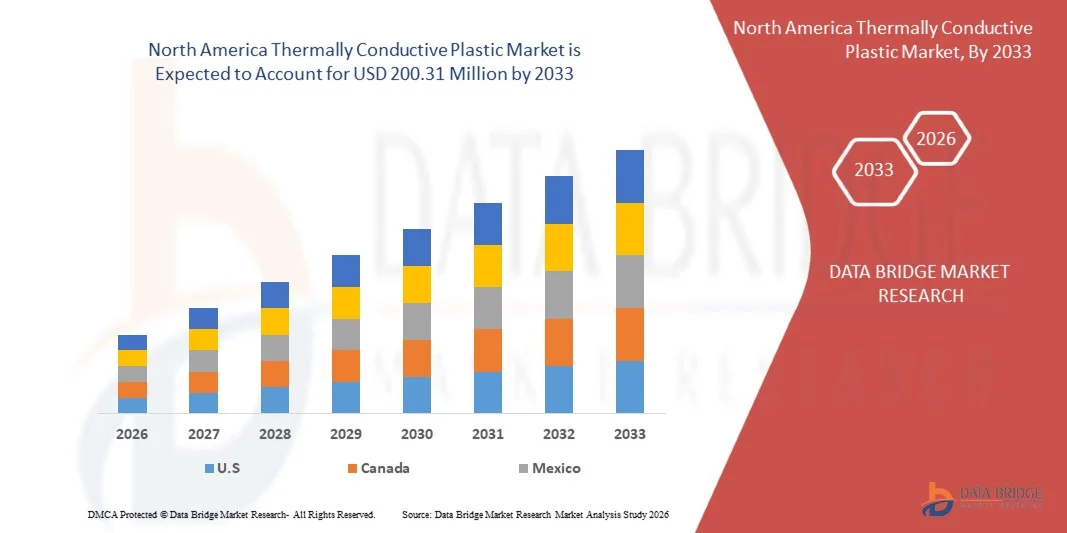
- The North America Thermally Conductive Plastic Market size was valued at USD 62.38 million in 2025 and is expected to reach USD 200.31 million by 2033, at a CAGR of 15.7% during the forecast period
- The market growth is largely driven by the increasing demand for advanced electronic devices and high-performance components in industries such as automotive, consumer electronics, and industrial equipment, which require efficient heat dissipation and lightweight materials
- Furthermore, rising adoption of thermally conductive plastics in electric vehicles and wearable electronics is enhancing device performance and reliability. For instance, companies such as BASF are developing high-performance thermally conductive polymer solutions for automotive battery modules, accelerating the uptake of these materials across multiple sectors
North America Thermally Conductive Plastic Market Analysis
- Thermally conductive plastics, offering efficient heat dissipation, lightweight design, and enhanced durability, are increasingly essential components in modern electronics, automotive, and industrial applications due to their ability to manage thermal performance while maintaining design flexibility
- The escalating demand for thermally conductive plastics is primarily fueled by the growing adoption of electric vehicles, wearable devices, and high-performance electronics, increasing thermal management requirements, and a rising preference for lightweight, corrosion-resistant, and versatile polymer solutions
- U.S. dominated the North America Thermally Conductive Plastic Market in 2025, due to strong adoption in automotive, electronics, and industrial applications, well-established polymer manufacturing capabilities, and increasing demand for lightweight, efficient thermal management materials
- Canada is expected to be the fastest growing country in the North America Thermally Conductive Plastic Market during the forecast period due to increasing adoption in electric vehicles, industrial electronics, and renewable energy systems
- Polyamide segment dominated the market with a market share of 43% in 2025, due to its excellent balance of thermal conductivity, mechanical strength, and chemical resistance. Polyamide-based thermally conductive plastics are widely adopted in electronic housings, LED lighting, and heat-dissipating components due to their ability to efficiently transfer heat while maintaining structural integrity. Manufacturers also favor polyamide for its ease of processing, compatibility with fillers, and versatility across various temperature ranges
Report Scope and North America Thermally Conductive Plastic Market Segmentation
|
Attributes |
Thermally Conductive Plastic Key Market Insights |
|
Segments Covered |
|
|
Countries Covered |
North America
|
|
Key Market Players |
|
|
Market Opportunities |
|
|
Value Added Data Infosets |
In addition to the insights on market scenarios such as market value, growth rate, segmentation, geographical coverage, and major players, the market reports curated by the Data Bridge Market Research also include import export analysis, production capacity overview, production consumption analysis, price trend analysis, climate change scenario, supply chain analysis, value chain analysis, raw material/consumables overview, vendor selection criteria, PESTLE Analysis, Porter Analysis, and regulatory framework. |
North America Thermally Conductive Plastic Market Trends
“Growing Adoption in Electric Vehicles and High-Performance Electronics”
- A significant trend in the thermally conductive plastics market is the rising use of these materials in electric vehicles (EVs), smartphones, laptops, and industrial electronics, driven by the need for efficient heat dissipation while maintaining lightweight and compact designs. This adoption is positioning thermally conductive plastics as key enablers of reliable performance in next-generation electronic and automotive systems
- For instance, BASF supplies high-performance thermally conductive polymer solutions for EV battery modules and power electronics, ensuring consistent heat management and improving component longevity under high thermal loads. Such materials are critical for maintaining safety and performance standards in high-demand applications
- The trend is further supported by the growing miniaturization of electronic devices, where traditional metal heat sinks are less feasible. Thermally conductive plastics offer design flexibility, electrical insulation, and corrosion resistance, making them increasingly preferred in consumer electronics and advanced industrial systems
- Industries such as aerospace and telecommunications are integrating thermally conductive plastics into LED lighting modules, 5G equipment, and avionics components where precise thermal management is crucial for operational stability and device lifespan
- The automotive sector continues to expand its adoption, using thermally conductive plastics in battery packs, charging systems, and electronic control units, which supports lighter vehicle designs and improved energy efficiency
- The market is witnessing overall growth as manufacturers prioritize materials that combine high thermal conductivity, electrical insulation, and mechanical stability. This trend is accelerating investments in research and innovation to develop polymers that meet stringent thermal performance requirements
North America Thermally Conductive Plastic Market Dynamics
Driver
“Rising Demand for Lightweight and Efficient Thermal Management Materials”
- The growing focus on energy efficiency, miniaturization, and compact electronics is driving the demand for thermally conductive plastics that provide reliable heat dissipation while reducing weight and material costs. These materials enhance device safety and performance in applications where overheating can cause failure or reduce lifespan
- For instance, LG Chem has developed thermally conductive polymers for battery modules and LED systems, supporting lighter, more efficient designs in consumer electronics and electric vehicles. Such innovations are contributing to broader market adoption and positioning thermally conductive plastics as essential components in thermal management solutions
- The increasing use of wearable electronics, EV powertrain systems, and industrial automation components is further accelerating demand, as these sectors require materials that can operate under high thermal stress without compromising mechanical strength
- Advancements in polymer chemistry and filler technology are improving the thermal conductivity of plastics, making them viable alternatives to metal heat sinks in various industries. These innovations expand the scope of applications and reduce reliance on traditional, heavier materials
- The focus on sustainable, energy-efficient designs across automotive, electronics, and industrial sectors continues to reinforce this driver. Manufacturers are prioritizing thermally conductive plastics for their ability to meet performance, safety, and environmental objectives simultaneously
Restraint/Challenge
“High Production Costs and Material Processing Complexity”
- The thermally conductive plastics market faces challenges due to the high cost of specialized raw materials such as ceramic or carbon-based fillers, as well as the complexity of manufacturing processes needed to achieve consistent thermal performance. These factors increase production expenses and limit cost competitiveness for some applications
- For instance, Sumitomo Chemical employs advanced compounding and injection molding techniques to produce high-performance thermally conductive polymers. These processes require precise temperature control, skilled operators, and specialized equipment, which elevate operational costs and reduce scalability
- Maintaining uniform filler dispersion and achieving targeted thermal conductivity without compromising mechanical properties adds further complexity to production. Manufacturers must balance performance and processability to meet the strict requirements of automotive, electronics, and industrial applications
- The dependency on advanced processing equipment and specialized knowledge increases supply-side vulnerability and constrains rapid expansion, particularly for smaller players in the market
- Overall, high material costs, process intricacy, and the need for stringent quality control continue to challenge manufacturers in scaling production efficiently while maintaining product reliability and competitive pricing
North America Thermally Conductive Plastic Market Scope
The market is segmented on the basis of resin type and end-user.
• By Resin Type
On the basis of resin type, the North America Thermally Conductive Plastic Market is segmented into polyamide, polycarbonate, polyphenylene sulphide, polybutylene terephthalate, polyetherimide, and others. The polyamide segment dominated the market with the largest market revenue share of 43% in 2025, driven by its excellent balance of thermal conductivity, mechanical strength, and chemical resistance. Polyamide-based thermally conductive plastics are widely adopted in electronic housings, LED lighting, and heat-dissipating components due to their ability to efficiently transfer heat while maintaining structural integrity. Manufacturers also favor polyamide for its ease of processing, compatibility with fillers, and versatility across various temperature ranges. The segment’s dominance is further supported by extensive availability and the cost-effectiveness of polyamide resins, making them a preferred choice for high-volume industrial applications.
The polyphenylene sulphide segment is anticipated to witness the fastest growth rate from 2026 to 2033, fueled by increasing adoption in high-performance automotive and electrical applications. For instance, companies such as Celanese are leveraging PPS-based thermally conductive plastics for components requiring high heat resistance, dimensional stability, and chemical durability. PPS offers excellent performance in harsh environments, including under continuous high temperatures, which is crucial for power electronics, EV battery housings, and industrial machinery components. Rising demand for lightweight, high-strength materials that can replace metals is also contributing to its rapid growth. Enhanced thermal management capabilities, combined with resistance to harsh chemicals and flame retardancy, are further boosting the segment’s adoption in advanced engineering applications.
• By End User
On the basis of end user, the North America Thermally Conductive Plastic Market is segmented into electrical and electronics, automotive, industrial, healthcare, aerospace, and others. The electrical and electronics segment dominated the market with the largest revenue share in 2025, driven by the growing demand for efficient heat dissipation in consumer electronics, LED lighting, and power management devices. Electronic manufacturers prioritize thermally conductive plastics for housings, heat sinks, and connectors to enhance device reliability, prevent overheating, and maintain compact designs. The segment’s dominance is also supported by increased adoption of IoT devices, wearable electronics, and smart home systems requiring lightweight, thermally stable, and electrically insulating materials. The combination of cost-effectiveness, ease of mass production, and compatibility with high-volume electronic components ensures sustained demand within this sector.
The automotive segment is expected to witness the fastest CAGR from 2026 to 2033, fueled by rising adoption in electric vehicles, battery enclosures, and powertrain components. For instance, BASF is developing thermally conductive plastics for EV battery packs and motor housings to manage heat effectively while reducing weight. Automotive OEMs are increasingly seeking materials that can replace metals without compromising thermal management or structural performance. The shift toward electrification and hybridization drives the need for advanced thermally conductive polymers that ensure safety, efficiency, and durability under extreme temperature conditions. Growing regulatory pressures for lightweight, fuel-efficient, and thermally optimized vehicles are further accelerating segment growth.
North America Thermally Conductive Plastic Market Regional Analysis
- U.S. dominated the North America Thermally Conductive Plastic Market with the largest revenue share in 2025, driven by strong adoption in automotive, electronics, and industrial applications, well-established polymer manufacturing capabilities, and increasing demand for lightweight, efficient thermal management materials
- The demand for advanced thermally conductive plastics is supported by large-scale production and innovation initiatives by companies such as BASF and LG Chem, enabling consistent supply for applications including electric vehicle battery modules, LED lighting, and consumer electronics
- The presence of major polymer and additive manufacturers, continuous advancements in thermal management technologies, and integration of thermally conductive plastics into multiple high-performance industries reinforce the U.S. leadership position in the North America market
Canada North America Thermally Conductive Plastic Market Insight
Canada is projected to register the fastest CAGR in the North America Thermally Conductive Plastic Market from 2026 to 2033, supported by increasing adoption in electric vehicles, industrial electronics, and renewable energy systems. Rising use of thermally conductive polymers in LED modules, battery packs, and power electronics is accelerating market growth. The development of advanced polymer processing facilities and collaborations with companies such as Sumitomo Chemical are strengthening production capabilities across the country. Growing emphasis on lightweight materials, sustainable manufacturing, and high-performance thermal management solutions positions Canada as the fastest-growing country in the region during the forecast period.
Mexico North America Thermally Conductive Plastic Market Insight
Mexico is expected to grow steadily from 2026 to 2033, driven by expanding automotive and electronics manufacturing activities and increasing demand for thermally conductive plastics in industrial and consumer applications. The country’s role as a growing manufacturing hub is supporting adoption in high-performance electronics, LED systems, and EV components. Collaborations with global polymer manufacturers and expansion of production facilities are improving supply availability. Major companies such as LG Chem and BASF are strengthening distribution networks in the region. These developments contribute to sustained growth of the North America Thermally Conductive Plastic Market throughout the forecast period.
North America Thermally Conductive Plastic Market Share
The thermally conductive plastic industry is primarily led by well-established companies, including:
- Celanese Corporation (U.S.)
- SABIC (Saudi Arabia)
- BASF SE (Germany)
- DSM (Netherlands)
- RTP Company (U.S.)
- Dow (U.S.)
- Ensinger (Germany)
- KANEKA CORPORATION (Japan)
- TORAY INDUSTRIES, INC. (Japan)
- Mitsubishi Engineering-Plastics Corporation (Japan)
- LANXESS (Germany)
- Imerys (France)
- HELLA GmbH & Co. KGaA (Germany)
- Covestro AG (Germany)
- PolyOne Corporation (now Avient Corporation) (U.S.)
- DuPont (U.S.)
- Saint-Gobain (France)
- Huntsman International LLC (U.S.)
- Woodbridge (Canada)
- Wanhua (China)
Latest Developments in North America Thermally Conductive Plastic Market
- In February 2026, Wacker Chemical Corporation unveiled a new line of next‑generation thermally conductive adhesives tailored for advanced electric vehicle (EV) battery systems at The Battery Show North America 2025 in Detroit, Michigan. These innovative silicone and hybrid adhesive technologies deliver superior heat dissipation and mechanical stability, addressing the growing need for robust thermal management in evolving EV cell‑to‑pack and cell‑to‑chassis architectures. The proprietary hybrid adhesives combine the flexibility and temperature resistance of silicones with the strength of organic polymers, ensuring customizable curing profiles, high thermal conductivity, excellent chemical resistance, and flame retardance
- In January 2025, Celanese Corporation, a leading global producer of thermoplastic polymers, announced the launch of a new line of thermally conductive polyamides designed for high-performance applications in electric vehicles and consumer electronics. The materials feature enhanced thermal conductivity and electrical insulation properties, improving heat management in next-generation EV batteries and power modules. This launch is expected to drive further demand for polyamide-based thermally conductive plastics, supporting the growth of the market
- In October 2024, SABIC unveiled an innovative high-performance thermally conductive plastic material at the International Electronics and Automotive Symposium. The new material combines thermally conductive fillers with a proprietary polymer matrix to provide superior heat dissipation in high-power electronic components and automotive systems. Its ability to replace metal-based solutions offers potential cost and weight reductions in EV powertrains and automotive electronics, enhancing energy efficiency and overall system performance
- In September 2024, BASF SE announced a breakthrough in thermally conductive epoxy-based polymers aimed at enhancing heat management in LED lighting applications and 5G infrastructure. The innovation supports the growing demand for lightweight, cost-effective, and efficient thermal management materials in consumer electronics and telecommunication systems, contributing to the company’s expansion in the thermally conductive plastics market
- In July 2024, Dow introduced a new thermally conductive material specifically designed for use in battery packs for electric vehicles. The material features improved thermal conductivity and enhanced structural stability under high thermal stress, optimizing battery cooling systems and improving EV battery performance. This product is expected to become a key player in the automotive industry's push toward better thermal management solutions for EVs
SKU-
Get online access to the report on the World's First Market Intelligence Cloud

- Interactive Data Analysis Dashboard
- Company Analysis Dashboard for high growth potential opportunities
- Research Analyst Access for customization & queries
- Competitor Analysis with Interactive dashboard
- Latest News, Updates & Trend analysis
- Harness the Power of Benchmark Analysis for Comprehensive Competitor Tracking
North America Thermally Conductive Plastic Market, Supply Chain Analysis and Ecosystem Framework
To support market growth and help clients navigate the impact of geopolitical shifts, DBMR has integrated in-depth supply chain analysis into its North America Thermally Conductive Plastic Market research reports. This addition empowers clients to respond effectively to global changes affecting their industries. The supply chain analysis section includes detailed insights such as North America Thermally Conductive Plastic Market consumption and production by country, price trend analysis, the impact of tariffs and geopolitical developments, and import and export trends by country and HSN code. It also highlights major suppliers with data on production capacity and company profiles, as well as key importers and exporters. In addition to research, DBMR offers specialized supply chain consulting services backed by over a decade of experience, providing solutions like supplier discovery, supplier risk assessment, price trend analysis, impact evaluation of inflation and trade route changes, and comprehensive market trend analysis.
Research Methodology
Data collection and base year analysis are done using data collection modules with large sample sizes. The stage includes obtaining market information or related data through various sources and strategies. It includes examining and planning all the data acquired from the past in advance. It likewise envelops the examination of information inconsistencies seen across different information sources. The market data is analysed and estimated using market statistical and coherent models. Also, market share analysis and key trend analysis are the major success factors in the market report. To know more, please request an analyst call or drop down your inquiry.
The key research methodology used by DBMR research team is data triangulation which involves data mining, analysis of the impact of data variables on the market and primary (industry expert) validation. Data models include Vendor Positioning Grid, Market Time Line Analysis, Market Overview and Guide, Company Positioning Grid, Patent Analysis, Pricing Analysis, Company Market Share Analysis, Standards of Measurement, Global versus Regional and Vendor Share Analysis. To know more about the research methodology, drop in an inquiry to speak to our industry experts.
Customization Available
Data Bridge Market Research is a leader in advanced formative research. We take pride in servicing our existing and new customers with data and analysis that match and suits their goal. The report can be customized to include price trend analysis of target brands understanding the market for additional countries (ask for the list of countries), clinical trial results data, literature review, refurbished market and product base analysis. Market analysis of target competitors can be analyzed from technology-based analysis to market portfolio strategies. We can add as many competitors that you require data about in the format and data style you are looking for. Our team of analysts can also provide you data in crude raw excel files pivot tables (Fact book) or can assist you in creating presentations from the data sets available in the report.












