Global Antidiabetic Combinations Market Segmentation, By Drug Class (Thiazolidinedione and Sulfonylurea Combination, Thiazolidinedione and Biguanide Combination, and Others), Route of Administration (Oral, Injections, and Others), End-Users (Hospitals, Homecare, Speciality Centres, and Others), Distribution Channel (Hospital Pharmacy, Online Pharmacy, and Retail Pharmacy)- Industry Trends and Forecast to 2033
Каков размер рынка противодиабетических комбинаций и темпы роста
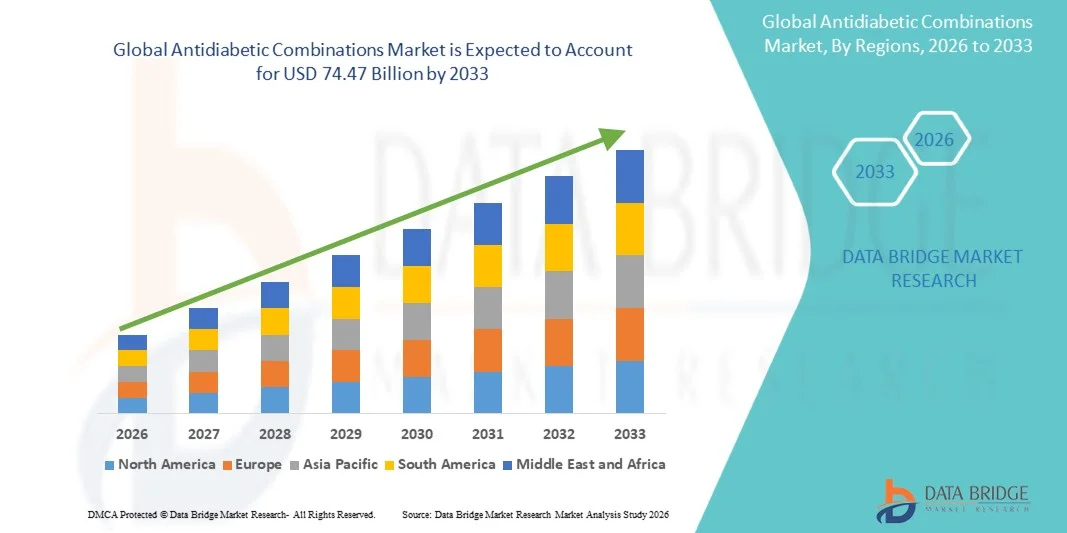
- По данным Data Bridge Market Research Analysis Мировой объем рынка противодиабетических комбинаций был оценен45,00 млрд долларов США в 2025 годуОжидается, что он достигнет74,47 млрд долларов США к 2033 году, вCAGR 6,50%в течение прогнозируемого периода
- Рост рынка в значительной степени подпитывается растущей распространенностью диабета во всем мире в сочетании с растущей потребностью в улучшении гликемического контроля с помощью многомеханических методов лечения, которые объединяют два или более противодиабетических агентов в одну формулу.
- Кроме того, растущее клиническое предпочтение комбинированных методов лечения, которые повышают приверженность лечению, уменьшают нагрузку на таблетки и улучшают терапевтические результаты, ускоряет принятие как в группах 1 типа (в отдельных случаях), так и в группах сахарного диабета 2 типа, особенно в стареющей демографии и урбанизированных регионах.
Размер рынка и прогноз
- Глобальная рыночная стоимость (2025):USD 45,00 млрд.
- Ожидаемая рыночная стоимость (2033):$74,47 млрд.
- Прогноз CAGR (2026–2033):6.50%
Каковы основные выводы рынка антидиабетических комбинаций
- Антидиабетическая комбинированная терапия, которая объединяет два или более понижающих уровень глюкозы агентов в одну формулу, становится все более жизненно важными компонентами современного управления диабетом как в амбулаторных, так и в клинических условиях из-за их улучшенного гликемического контроля, снижения нагрузки на таблетки и лучшей приверженности пациентов, особенно среди пациентов с диабетом 2 типа, которые представляют наибольшую долю обработанного населения во всем мире.
- Растущий спрос на противодиабетические комбинации в первую очередь подпитывается растущей глобальной распространенностью диабета, растущим клиническим акцентом на раннюю интенсификацию терапии и растущим предпочтением комбинаций с фиксированными дозами, которые повышают соответствие лечению, одновременно решая несколько патофизиологических путей одновременно.
- Северная Америка доминировала на рынке противодиабетических комбинаций с самой большой долей дохода в 40% в 2025 году, поддерживаемой высокой распространенностью диабета, передовой инфраструктурой здравоохранения, сильными рамками возмещения и ранним внедрением инновационных методов лечения, причем США лидируют по объемам рецептур, обусловленным широким использованием комбинированных препаратов как в больницах, так и в розничной торговле.
- Ожидается, что Азиатско-Тихоокеанский регион станет самым быстрорастущим регионом на рынке противодиабетических комбинаций в течение прогнозируемого периода из-за быстро растущего населения с диабетом, растущей урбанизации, улучшения доступа к здравоохранению и повышения осведомленности о комбинированных методах лечения в развивающихся странах, таких как Индия и Китай.
- Сегмент ротовой полости доминировал на рынке противодиабетических комбинаций с долей рынка 60,4% в 2025 году, что обусловлено сильным предпочтением врачей комбинаций на основе метформина, простотой введения, экономической эффективностью и более высокой приверженностью пациентов по сравнению с инъекционной комбинированной терапией.
Сфера охвата и сегментация рынка антидиабетических комбинаций
|
Атрибуты |
Антидиабетические комбинации Ключевые идеи рынка |
|
Сегменты покрыты |
|
|
Страны, охваченные |
Северная Америка
Европа
Азиатско-Тихоокеанский регион
Ближний Восток и Африка
Южная Америка
|
|
Ключевые игроки рынка |
|
|
Рыночные возможности |
|
|
Информационные наборы данных с добавленной стоимостью |
|
Каковы основные тенденции на рынке противодиабетических комбинаций
«Растущее применение фиксированных доз комбинированной терапии с расширенными классами лекарств»
- Значительной и ускоряющейся тенденцией на мировом рынке противодиабетических комбинаций является растущее внедрение комбинированных фиксированных доз (FDC), включающих передовые классы лекарств, такие как ингибиторы SGLT2, ингибиторы DPP-4 и агонисты рецепторов GLP-1, для улучшения гликемического контроля и приверженности пациентов.
- Например, широко назначаются такие комбинации, как эмпаглифлозин + метформин и ситаглиптин + метформин, что позволяет осуществлять мультимеханический контроль глюкозы с помощью одной суточной дозы, тем самым упрощая схемы лечения пациентов с диабетом 2 типа.
- Интеграция дополнительных фармакологических механизмов позволяет лучше контролировать уровень глюкозы в крови, а также устранять сопутствующие заболевания, такие как сердечно-сосудистый риск, управление весом и защита почек, что делает эти комбинации клинически предпочтительными в современных рекомендациях по лечению.
- Кроме того, разработка рецептур раз в день и расширенного высвобождения повышает удобство и приверженность пациентов, в то время как фармацевтические компании инвестируют в новые комбинации, которые нацелены на несколько метаболических путей одновременно.
- Кроме того, растущее принятие стратегий эскалации терапии, основанных на руководящих принципах, поощряет более раннее использование комбинированных схем, поскольку медицинские работники стремятся более эффективно предотвращать прогрессирование заболеваний и долгосрочные осложнения.
- Эта тенденция к более комплексной, основанной на фактических данных и ориентированной на пациента комбинированной терапии меняет ожидания лечения при лечении диабета, поскольку поставщики медицинских услуг все чаще предпочитают схемы, которые оптимизируют эффективность, безопасность и долгосрочное лечение заболеваний в различных группах пациентов.
Антидиабетические комбинации Динамика рынка
водитель
«Повышение распространенности диабета и увеличение предпочтения комбинированной терапии»
- Растущая глобальная распространенность диабета в сочетании с растущим клиническим сдвигом в сторону ранней комбинированной терапии для улучшения гликемического контроля является значительным фактором повышенного спроса на противодиабетические комбинации.
- Например, широкое внедрение комбинаций на основе метформина в качестве терапии первой и второй линии отражает развивающиеся руководящие принципы лечения, которые рекомендуют многолекарственные подходы, когда монотерапия не достигает адекватных гликемических целей.
- По мере того, как пациенты проходят через различные стадии диабета, комбинированная терапия обеспечивает повышенную эффективность, нацеливаясь на несколько физиологических путей, включая резистентность к инсулину, поглощение глюкозы и реабсорбцию глюкозы в почках.
- Кроме того, повышение осведомленности среди медицинских работников и пациентов о преимуществах комбинированных методов лечения, таких как снижение сложности лечения, улучшение приверженности и улучшение клинических результатов, поддерживает рост рынка как в развитых, так и в развивающихся странах.
- Растущее бремяожирениеРасстройства, связанные с образом жизни, наряду с расширением доступа к медицинским услугам и фармацевтическим препаратам, также способствуют растущему использованию противодиабетических комбинаций в обычной клинической практике.
- Кроме того, достижения в области фармацевтических исследований и разработок и постоянное внедрение новых комбинаций лекарственных средств позволяют использовать более персонализированные подходы к лечению, адаптированные к метаболическим профилям пациентов.
- Кроме того, поддерживающие клинические рекомендации, рекомендующие комбинированную терапию на ранних стадиях лечения заболеваний, еще больше ускоряют принятие этих методов лечения как в больницах, так и в амбулаторных условиях.
Сдержанность/вызов
«Безопасность, побочные эффекты и высокая стоимость комбинированной терапии»
- Опасения, связанные с потенциальным риском побочных эффектов, взаимодействием лекарственных средств и долгосрочными профилями безопасности многолекарственных антидиабетических комбинаций, представляют собой серьезную проблему для более широкого внедрения на рынке.
- Например, некоторые комбинации, включающие секретагоги инсулина, могут увеличить риск.гипогликемияВ то время как другие классы лекарств могут быть связаны с побочными эффектами, такими как желудочно-кишечные расстройства или инфекции мочевыводящих путей, ограничивая их использование в конкретных группах пациентов.
- Решение этих проблем безопасности путем тщательного отбора пациентов, оптимизации доз и постоянного мониторинга имеет важное значение для обеспечения эффективных и безопасных результатов терапии, особенно у пожилых людей и коморбидных групп населения.
- Кроме того, относительно более высокая стоимость фирменной комбинированной терапии с фиксированной дозой по сравнению с монотерапией или общими альтернативами может выступать в качестве барьера для принятия, особенно в чувствительных к цене и развивающихся регионах с ограниченным покрытием возмещения.
- В то время как доступность дженериков постепенно улучшает доступность, предполагаемые премиальные цены на новые комбинированные методы лечения и ограниченное страховое покрытие в некоторых регионах все еще могут препятствовать широкому распространению среди экономически ограниченных групп пациентов.
- Кроме того, ограниченная осведомленность на некоторых развивающихся рынках о клинических преимуществах передовых комбинированных методов лечения может замедлить темпы внедрения, несмотря на их доступность.
- Кроме того, нормативные сложности, связанные с утверждением комбинаций фиксированных доз, могут задержать запуск продукта и ограничить быстрое расширение инновационных методов лечения на мировом рынке.
Как сегментируется рынок противодиабетических комбинаций
Рынок сегментирован на основе класса лекарств, маршрута введения, конечных пользователей и канала распределения.
- Класс наркотиков
На основе класса препаратов рынок противодиабетических комбинаций сегментирован на тиазолидиндион исульфонилмочевинакомбинация, тиазолидиндион и бигуанид и другие. Сегмент комбинации тиазолидиндиона и бигуанида доминировал на рынке с самой большой долей дохода в 2025 году, в первую очередь благодаря сильной клинической эффективности схем на основе метформина в улучшении чувствительности к инсулину и уменьшении производства глюкозы в печени. Эти комбинации широко назначаются в качестве терапии первой и второй линии при диабете 2 типа из-за их доказанного профиля безопасности, экономической эффективности и обширного знакомства с врачом. Сегмент также выигрывает от глобального внедрения комбинаций фиксированных доз метформина, которые рекомендуются в нескольких клинических рекомендациях. Кроме того, наличие многочисленных фирменных и дженериковых составов также поддерживает широкое использование на развитых и развивающихся рынках.
Ожидается, что в сегменте «другие», включая комбинации, такие как терапия на основе ингибиторов SGLT2 и терапия на основе ингибиторов DPP-4, будут наблюдаться самые быстрые темпы роста в течение прогнозируемого периода, обусловленные увеличением внедрения новых классов лекарств, которые предлагают дополнительные преимущества, такие как снижение веса, защита сердечно-сосудистой системы и преимущества почек. Эти передовые комбинации набирают популярность среди медицинских работников благодаря их многоцелевым механизмам действия и улучшенным клиническим результатам. Рост инвестиций фармацевтических компаний в НИОКР и внедрение инновационных тройных комбинаций с фиксированными дозами еще больше ускоряют рост в этом сегменте. Кроме того, растущая осведомленность пациентов и врачей о преимуществах новых методов лечения способствует их быстрому внедрению как в развитых, так и в развивающихся регионах.
- По маршруту администрации
На основе пути введения рынок противодиабетических комбинаций сегментирован на пероральный, инъекционный и другие. Оральный сегмент доминировал на рынке с самой большой долей дохода в 60,4% в 2025 году, что обусловлено широким предпочтением пероральных комбинаций фиксированных доз среди пациентов и поставщиков медицинских услуг из-за их простоты администрирования, более высокого соответствия и неинвазивного характера. Пероральные комбинации, особенно терапия на основе метформина, обычно используются в качестве лечения первой линии при диабете 2 типа и широко доступны как в фирменных, так и в общих формах. Сегмент также выигрывает от более низкой стоимости по сравнению с инъекционными методами лечения, что делает его более доступным на чувствительных к затратам рынках. Кроме того, пероральные составы часто включаются в стандартные рекомендации по лечению, укрепляя их доминирующее положение на рынке.
Ожидается, что в сегменте инъекций будут наблюдаться самые быстрые темпы роста в течение прогнозируемого периода, обусловленные растущим внедрением инъекционных комбинированных методов лечения, таких как комбинации на основе инсулина и комбинации агонистов рецепторов GLP-1. Эти методы лечения набирают популярность из-за их превосходной эффективности у пациентов с прогрессирующим или плохо контролируемым диабетом. Растущая распространенность ожирения и метаболических расстройств также способствует спросу на инъекционные комбинации, которые предлагают преимущества как гликемического контроля, так и управления весом. Кроме того, достижения в области технологий доставки лекарств, включая еженедельные инъекции и улучшенные перьевые устройства, повышают удобство пациентов и поддерживают рост сегмента.
- конечными пользователями
На основе конечных пользователей рынок противодиабетических комбинаций сегментирован на больницы, центры по уходу на дому, специализированные центры и другие. Сегмент больниц доминировал на рынке с самой большой долей доходов в 2025 году, что обусловлено большим объемом диагностики диабета, начала лечения и лечения сложных случаев, требующих комбинированной терапии. Больницы служат основными пунктами ухода за пациентами с осложнениями или неконтролируемым диабетом, где врачи часто назначают расширенные комбинированные схемы для эффективного управления гликемией. Наличие специализированных медицинских работников и доступ к широкому спектру лекарственных средств также способствует доминированию этого сегмента. Кроме того, больничные аптеки обеспечивают немедленную доступность назначенных комбинированных препаратов, что способствует более высоким показателям использования.
Ожидается, что в сегменте услуг по уходу на дому будут наблюдаться самые быстрые темпы роста в течение прогнозируемого периода, обусловленные растущей тенденцией к самоконтролю диабета и растущим предпочтением амбулаторной помощи. Пациенты все чаще управляют своим состоянием дома, используя назначенные комбинированные методы лечения, поддерживаемые цифровыми инструментами здравоохранения, телемедициной и решениями дистанционного мониторинга. Повышение осведомленности о лечении хронических заболеваний и удобство домашнего лечения поощряют приверженность долгосрочной терапии. Кроме того, расширение услуг домашнего здравоохранения и доступность удобных комбинированных препаратов способствуют быстрому росту этого сегмента.
- Дистрибьюторский канал
На основе канала дистрибуции рынок противодиабетических комбинаций сегментирован в больничную аптеку, онлайн-аптеку и розничную аптеку. Сегмент розничных аптек доминировал на рынке с самой большой долей выручки в 2025 году, что обусловлено его широкой доступностью, сильным присутствием как в городских, так и в сельских районах и удобством для пациентов, нуждающихся в регулярных заправках лекарствами. Розничные аптеки часто являются основным пунктом покупки лекарств от хронических заболеваний, в том числе противодиабетических комбинаций, из-за их близости и доступности как фирменных, так и генерических препаратов. Сегмент также выигрывает от устоявшихся цепочек поставок и прочных отношений с фармацевтическими дистрибьюторами. Кроме того, фармацевты играют ключевую роль в консультировании пациентов и соблюдении медикаментов, что способствует доминированию сегмента.
Ожидается, что в сегменте онлайн-аптек будут наблюдаться самые быстрые темпы роста в течение прогнозируемого периода, обусловленные растущим внедрением новых технологий.электронная торговляплатформы, цифровые медицинские услуги и доставка лекарств на дом. Растущее проникновение интернета, использование смартфонов и предпочтения потребителей в бесконтактных покупках ускоряют переход к онлайн-аптечным каналам. Удобство заказа лекарств онлайн, наряду со скидками и моделями доставки на основе подписки, привлекает все большее число пациентов. Кроме того, расширение телемедицинских услуг и интеграция с цифровыми рецептами повышают доступность и надежность онлайн-аптек, способствуя их быстрому росту.
В каком регионе находится наибольшая доля рынка противодиабетических комбинаций
- Северная Америка доминировала на рынке противодиабетических комбинаций с самой большой долей дохода в 40% в 2025 году, поддерживаемой высокой распространенностью диабета, передовой инфраструктурой здравоохранения, сильными структурами возмещения и ранним внедрением инновационных методов лечения.
- Пациенты и поставщики медицинских услуг в регионе высоко ценят клиническую эффективность, улучшенную приверженность и мультимеханический контроль глюкозы, предлагаемый антидиабетической комбинированной терапией, особенно пероральные комбинации с фиксированной дозой, такие как схемы на основе метформина и новые комбинации ингибиторов SGLT2 или DPP-4.
- Это широкое внедрение также поддерживается высокими расходами на здравоохранение, сильными системами страхования и возмещения, ранним доступом к инновационным лекарствам и присутствием ведущих фармацевтических компаний, устанавливая комбинированные методы лечения в качестве предпочтительного подхода к лечению диабета 2 типа как в условиях проживания, так и в больницах.
Американские антидиабетические комбинации Market Insight
Американский рынок противодиабетических комбинаций занял самую большую долю дохода в Северной Америке в 2025 году, что обусловлено высокой распространенностью диабета и быстрым внедрением передовых схем лечения в медицинских учреждениях. Пациенты и медицинские работники в регионе все чаще отдают приоритет эффективному гликемическому контролю с помощью комбинированной терапии с фиксированной дозой, которая улучшает соблюдение и упрощает сложные графики приема лекарств. Растущее предпочтение ранней комбинированной терапии, поддерживаемое установленными клиническими рекомендациями, способствует дальнейшему росту рынка. Кроме того, широкое распространение инновационных комбинаций лекарственных средств, прочная система возмещения и постоянное одобрение продукции регулирующими органами значительно способствуют расширению рынка противодиабетических комбинаций в США.
Европейский рынок антидиабетических комбинаций
Европейский рынок противодиабетических комбинаций, по прогнозам, будет расширяться при существенном CAGR в течение прогнозируемого периода, в первую очередь из-за растущего бремени диабета и растущего внимания к раннему и эффективному лечению заболеваний. Регион выигрывает от хорошо зарекомендовавших себя систем здравоохранения, сильной нормативной базы и растущего принятия основанных на фактических данных протоколов лечения, которые поощряют использование комбинированной терапии. Европейские поставщики медицинских услуг все чаще назначают комбинации фиксированных доз для повышения приверженности пациентов и снижения сложности лечения. Кроме того, растущее стареющее население и повышение осведомленности в отношении управления диабетом способствуют росту спроса в больницах, клиниках и учреждениях по уходу на дому, поддерживая устойчивый рост рынка.
Британские антидиабетические комбинации Market Insight
Ожидается, что рынок противодиабетических комбинаций в Великобритании будет расти с заметным CAGR в течение прогнозируемого периода, что обусловлено ростом распространенности диабета и сильным акцентом на улучшение результатов лечения пациентов с помощью подходов комбинированной терапии. Национальная служба здравоохранения (NHS) играет решающую роль в продвижении стандартизированных руководящих принципов лечения, которые поощряют использование метформина и других комбинированных методов лечения. Кроме того, повышение осведомленности о заболеваниях, связанных с образом жизни, и растущее принятие профилактических мер в области здравоохранения способствуют расширению рынка. Наличие как фирменных, так и непатентованных комбинированных препаратов, наряду с эффективными сетями дистрибуции, дополнительно поддерживает доступность и охват по всей стране.
Немецкий рынок антидиабетических комбинаций
Ожидается, что в течение прогнозируемого периода рынок антидиабетических комбинаций в Германии будет расширяться на значительном CAGR, чему будет способствовать высокий уровень диабетической популяции и сильный акцент на передовых, основанных на фактических данных методах лечения. Хорошо развитая инфраструктура здравоохранения Германии и акцент на инновации способствуют внедрению новых комбинированных методов лечения, которые предлагают улучшенный гликемический контроль и сердечно-сосудистые преимущества. Врачи в стране все чаще предпочитают комбинации фиксированных доз для повышения приверженности лечению и оптимизации результатов лечения пациентов. Кроме того, наличие ведущих фармацевтических компаний и активная исследовательская деятельность в области лечения диабета способствуют доступности и постоянному развитию инновационных комбинированных препаратов.
Азиатско-Тихоокеанские антидиабетические комбинации Market Insight
Рынок противодиабетических комбинаций в Азиатско-Тихоокеанском регионе будет расти самыми быстрыми темпами в течение прогнозируемого периода, что обусловлено быстрым ростом населения с диабетом, растущей урбанизацией и улучшением доступа к медицинским услугам в таких странах, как Китай, Индия и Япония. Растущая осведомленность региона об управлении диабетом и растущее внедрение современных подходов к лечению значительно повышают спрос на комбинированную терапию. Кроме того, расширение инфраструктуры здравоохранения, рост располагаемых доходов и правительственные инициативы, направленные на улучшение управления хроническими заболеваниями, ускоряют рост рынка. Растущая доступность доступных комбинированных препаратов также повышает доступность более широкой базы пациентов.
Японские антидиабетические комбинации Market Insight
Японский рынок противодиабетических комбинаций набирает обороты из-за старения населения страны, высоких стандартов здравоохранения и сильного внимания к передовым методам лечения. Растущая распространенность диабета 2 типа среди пожилых людей стимулирует спрос на упрощенные схемы лечения, такие как комбинации с фиксированными дозами. Японские поставщики медицинских услуг подчеркивают соответствие пациентов и долгосрочное лечение заболеваний, что поддерживает принятие комбинированной терапии. Кроме того, непрерывные инновации в фармацевтических препаратах и интеграция передовых классов лекарств в комбинированную терапию способствуют росту рынка. Наличие высокоразвитой системы здравоохранения обеспечивает широкую доступность и использование этих методов лечения.
Индийские антидиабетические комбинации Market Insight
Индийский рынок противодиабетических комбинаций обеспечил значительную долю доходов в Азиатско-Тихоокеанском регионе в 2025 году, что связано с быстро растущим населением страны, растущим средним классом и повышением осведомленности об управлении диабетом. Индия является одним из крупнейших рынков диабета во всем мире, стимулируя высокий спрос на экономически эффективные и легкодоступные комбинированные методы лечения. Широкое использование комбинаций фиксированных доз на основе метформина, поддерживаемых как отечественными, так и многонациональными фармацевтическими производителями, является ключевым фактором роста. Кроме того, расширение инфраструктуры здравоохранения, увеличение проникновения розничных и онлайн-аптек и правительственные инициативы по улучшению лечения хронических заболеваний способствуют дальнейшему росту рынка в городских и полугородских регионах.
Каковы основные компании на рынке антидиабетических комбинаций
Индустрия антидиабетических комбинаций в основном возглавляется хорошо зарекомендовавшими себя компаниями, в том числе:
- Merck & Co., Inc. (США)
- Astellas Pharma Inc. (Япония)
- Санофи (Франция)
- Bayer AG (Германия)
- Takeda Pharmaceutical Company Limited (Япония)
- Эбботт (США)
- Novo Nordisk A/S (Дания)
- Eli Lilly & Company (США)
- Boehringer Ingelheim International GmbH (Германия)
- AstraZeneca PLC (Великобритания)
- Pfizer Inc. (США)
- Novartis AG (Швейцария)
- GSK plc (Великобритания)
- Amgen Inc. (США)
- Bristol-Myers Squibb Company (США)
- Biocon Limited (Индия)
- Cipla Limited (Индия)
- Dr. Reddy's Laboratories Limited (Индия)
- Sun Pharmaceutical Industries Limited (Индия)
Каковы последние события на мировом рынке противодиабетических комбинаций
- В сентябре 2025 года Комитет Европейского агентства по лекарственным средствам для медицинского применения (CHMP) рекомендовал одобрение Kyinsu раз в неделю фиксированной дозы комбинации инсулина icodec и семаглутида для взрослых с диабетом 2 типа, что ознаменовало собой значительную нормативную веху для комбинированной терапии в лечении диабета в ЕС.
- В июне 2025 года Novo Nordisk объявила о планах представить обширные новые портфельные данные на научных сессиях ADA 2025, включая исследования, связанные с комбинированной терапией, такой как семаглутид и IcoSema (комбинация базального инсулина икодека и семаглутида), подчеркивая продолжающуюся клиническую разработку и расширение доказательств для комбинированных схем лечения.
- В феврале 2025 года Akums Drugs and Pharmaceuticals запустила комбинированную таблетку Dapagliflozin + Pioglitazone для лечения диабета 2 типа, предлагая терапию двойного действия, которая упрощает лечение и повышает гликемический контроль за пределами стандартного режима.
- В августе 2024 года Novo Nordisk раскрыла планы по подаче заявок на одобрение регулирующих органов для IcoSema (инсулиновый icodec / семаглутид) за пределами США после положительных результатов III фазы, что указывает на глобальные стратегические усилия по расширению для кандидатов на комбинированную терапию.
- В октябре 2023 года Akums Drugs and Pharmaceuticals получила одобрение DCGI на тройное комбинированное лекарство от диабета (ситаглиптин + пиоглитазон + метформин), что стало важной вехой для передовых вариантов комбинированной терапии в Индии.
SKU-
Получите онлайн-доступ к отчету на первой в мире облачной платформе рыночной аналитики
- Интерактивная панель анализа данных
- Панель анализа компании для возможностей с высоким потенциалом роста
- Доступ аналитика-исследователя для настройки и запросов
- Анализ конкурентов с помощью интерактивной панели
- Последние новости, обновления и анализ тенденций
- Используйте возможности сравнительного анализа для комплексного отслеживания конкурентов
Методология исследования
Сбор данных и анализ базового года выполняются с использованием модулей сбора данных с большими размерами выборки. Этап включает получение рыночной информации или связанных данных из различных источников и стратегий. Он включает изучение и планирование всех данных, полученных из прошлого заранее. Он также охватывает изучение несоответствий информации, наблюдаемых в различных источниках информации. Рыночные данные анализируются и оцениваются с использованием статистических и последовательных моделей рынка. Кроме того, анализ доли рынка и анализ ключевых тенденций являются основными факторами успеха в отчете о рынке. Чтобы узнать больше, пожалуйста, запросите звонок аналитика или оставьте свой запрос.
Ключевой методологией исследования, используемой исследовательской группой DBMR, является триангуляция данных, которая включает в себя интеллектуальный анализ данных, анализ влияния переменных данных на рынок и первичную (отраслевую экспертную) проверку. Модели данных включают сетку позиционирования поставщиков, анализ временной линии рынка, обзор рынка и руководство, сетку позиционирования компании, патентный анализ, анализ цен, анализ доли рынка компании, стандарты измерения, глобальный и региональный анализ и анализ доли поставщика. Чтобы узнать больше о методологии исследования, отправьте запрос, чтобы поговорить с нашими отраслевыми экспертами.
Доступна настройка
Data Bridge Market Research является лидером в области передовых формативных исследований. Мы гордимся тем, что предоставляем нашим существующим и новым клиентам данные и анализ, которые соответствуют и подходят их целям. Отчет можно настроить, включив в него анализ ценовых тенденций целевых брендов, понимание рынка для дополнительных стран (запросите список стран), данные о результатах клинических испытаний, обзор литературы, обновленный анализ рынка и продуктовой базы. Анализ рынка целевых конкурентов можно проанализировать от анализа на основе технологий до стратегий портфеля рынка. Мы можем добавить столько конкурентов, о которых вам нужны данные в нужном вам формате и стиле данных. Наша команда аналитиков также может предоставить вам данные в сырых файлах Excel, сводных таблицах (книга фактов) или помочь вам в создании презентаций из наборов данных, доступных в отчете.