



Глобальный сегмент рынка AR Cloud по компонентам (аппаратное обеспечение, программное обеспечение и услуги), размер организации (крупные предприятия и малые и средние предприятия), тип (маркерные AR и Marker-Less AR), развертывание (публичное облако, частное облако и гибридное облако) и конечное использование (автомобильное, аэрокосмическое и оборонное, здравоохранение, производство, розничная торговля, СМИ и развлечения, недвижимость и строительство, ИТ и телекоммуникации и другие) - отраслевые тенденции и прогноз до 2033 года
Каков размер и темпы роста глобального рынка AR Cloud
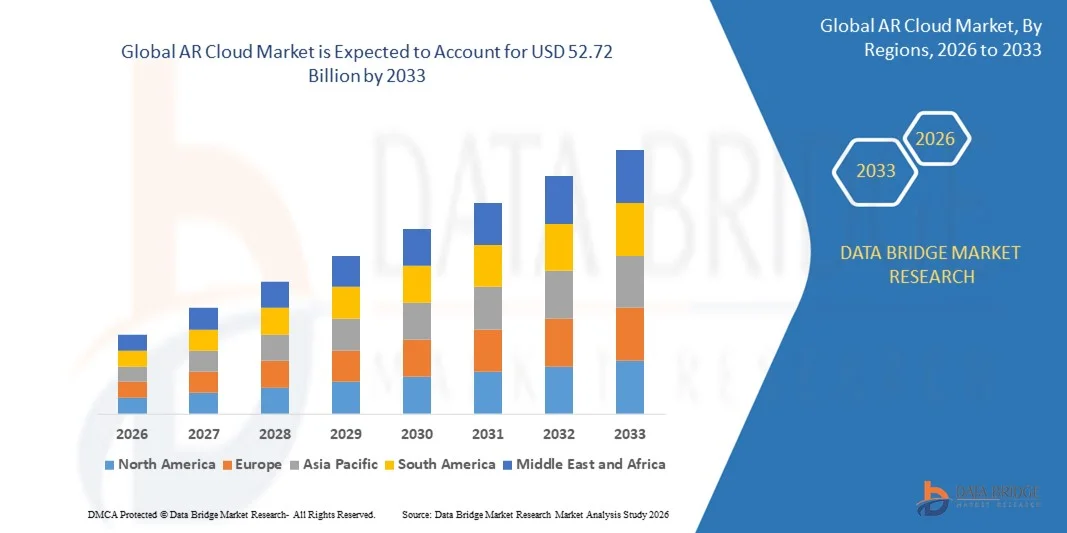
- По данным Data Bridge Market Research Analysis Глобальный объем облачного рынка AR был оценен7,07 млрд долларов в 2025 годуОжидается, что он достигнет52,72 млрд долларов к 2033 году, вCAGR 28,55%в течение прогнозируемого периода
- Быстрый рост обусловлен растущим принятиемДополненная реальностьв умных городах, играх, розничной торговле, здравоохранении и навигации, рост спроса на пространственное отображение в реальном времени и 3D-визуализацию, расширение использования ИИ, компьютерное зрение икраевые вычисленияРаспространение подключения 5G и растущие инвестиции в захватывающий цифровой опыт, все из которых значительно ускоряют расширение рынка AR Cloud
Размер рынка и прогноз
- Глобальная рыночная стоимость (2025)$ 7,07 млрд.
- Ожидаемая рыночная стоимость (2033)$ 52,72 млрд.
- Прогноз CAGR (2026–2033): 28.55%
Каковы основные выводы рынка AR Cloud
- Растущее развертывание смартфонов с поддержкой AR, носимых устройств, планшетов и головных дисплеев, наряду с увеличением научно-исследовательской деятельности в области пространственных вычислений и метаверсных платформ, создает значительные возможности для роста рынка AR Cloud как в развитых, так и в развивающихся странах.
- Однако такие проблемы, как высокие затраты на инфраструктуру, проблемы конфиденциальности и безопасности данных, отсутствие стандартизированных AR-платформ и сложность управления крупномасштабными пространственными данными, могут выступать в качестве ключевых сдерживающих факторов, влияющих на темпы роста рынка.
- Северная Америка доминировала на рынке AR Cloud с долей выручки 32,05% в 2025 году, чему способствовал сильный рост пространственных вычислений, облачной инфраструктуры, интеграции ИИ и внедрения иммерсивных технологий в США и Канаде.
- Ожидается, что Азиатско-Тихоокеанский регион зарегистрирует самый быстрый CAGR в 28,36% с 2026 по 2033 год, что обусловлено быстрой цифровой трансформацией, расширением облачной инфраструктуры, развертыванием 5G и растущим внедрением AR в Китае, Японии, Индии, Южной Корее и Юго-Восточной Азии.
- Сегмент программного обеспечения доминировал на рынке с предполагаемой долей 46,3% в 2025 году, чему способствовало растущее внедрение платформ пространственного картирования, облачных AR-движков, программного обеспечения для визуализации и инструментов распознавания сцен на основе ИИ.
Сфера охвата и сегментация облачного рынка AR
|
Атрибуты |
Обзор рынка Cloud Key |
|
Сегменты покрыты |
|
|
Страны, охваченные |
Северная Америка
Европа
Азиатско-Тихоокеанский регион
Ближний Восток и Африка
Южная Америка
|
|
Ключевые игроки рынка |
|
|
Рыночные возможности |
|
|
Информационные наборы данных с добавленной стоимостью |
В дополнение к информации о рыночных сценариях, таких как рыночная стоимость, темпы роста, сегментация, географическое покрытие и основные игроки, рыночные отчеты, курируемые Data Bridge Market Research, также включают углубленный экспертный анализ, анализ цен, анализ доли бренда, опрос потребителей, анализ демографии, анализ цепочки поставок, анализ цепочки создания стоимости, обзор сырья / расходных материалов, критерии выбора поставщиков, анализ PESTLE, анализ Porter и нормативную базу. |
Каковы основные тенденции на рынке AR Cloud
Быстрый переход к масштабируемой, в режиме реального времени и облачной AR-инфраструктуре
- Облачный рынок AR демонстрирует растущее внедрение облачных пространственных вычислительных платформ в реальном времени, которые обеспечивают постоянный контент AR, крупномасштабное отображение и многопользовательский опыт на устройствах.
- Участники рынка сосредотачиваются на высокопроизводительной обработке пространственных данных, интеграции edge-cloud и понимании сцены на основе ИИ для поддержки захватывающих приложений AR.
- Растущий спрос на легкие, агностические устройства и AR с низкой задержкой ускоряет использование облачного рендеринга и пространственных якорей.
- Например, такие компании, как Microsoft, Google, Niantic, Apple и Meta, расширяют возможности AR Cloud за счет пространственного картирования, VPS, цифровых двойников и локализации на основе ИИ.
- Растущая потребность в сотрудничестве в режиме реального времени, крупномасштабная AR-стойкость и кросс-платформенная совместимость способствуют внедрению в корпоративных и потребительских случаях использования.
- По мере того, как опыт AR станет более захватывающим и масштабируемым, облака AR останутся центральными для пространственных вычислений, разработки метаверсов и цифрового взаимодействия следующего поколения.
Каковы основные драйверы рынка AR Cloud
- Растущий спрос на постоянный, общий и основанный на местоположении опыт AR в играх, розничной торговле, навигации и совместной работе предприятий
- Например, в 2024-2025 годах крупные игроки, такие как Niantic, Microsoft и Apple, расширили экосистемы AR Cloud с помощью VPS, пространственных якорей и обновлений ARKit / ARCore.
- Быстрое внедрение 5G, периферийных вычислений и компьютерного зрения на основе ИИ значительно улучшает производительность и масштабируемость AR Cloud
- Растущее использование цифровых двойников, умных городов и промышленных приложений AR повышает спрос в автомобильном, производственном и секторе недвижимости.
- Растущее проникновение смартфонов с поддержкой AR, умных очков и дисплеев, установленных на голове, расширяет пользовательскую базу AR Cloud
- Поддерживаемый устойчивыми инвестициями в облачную инфраструктуру, пространственный ИИ и иммерсивные технологии, рынок AR Cloud, как ожидается, станет свидетелем сильного долгосрочного роста.
Какой фактор влияет на рост рынка AR Cloud
- Высокие затраты, связанные с крупномасштабным пространственным картированием, облачной обработкой и синхронизацией данных в реальном времени, ограничивают принятие среди небольших разработчиков.
- Например, в течение 2024–2025 годов рост затрат на облачные вычисления и проблемы масштабирования инфраструктуры повлияли на экономику развертывания AR-платформ.
- Сложность управления конфиденциальностью данных, точностью местоположения и синхронизацией в реальном времени между устройствами создает технические проблемы.
- Ограниченная стандартизация и совместимость AR-платформ, устройств и облачных сред замедляют развитие экосистем.
- Конкуренция со стороны ориентированных на устройства AR-решений, автономных AR-фреймворков и запатентованных экосистем создает фрагментацию.
- Чтобы преодолеть эти проблемы, компании инвестируют в экономически эффективные облачные архитектуры, открытые стандарты, оптимизацию ИИ и удобные для разработчиков платформы AR Cloud.
Как сегментируется рынок AR Cloud
Рынок сегментирован на основекомпонент, размер организации, тип, развертывание и конечное использование.
- Компонент
На основе компонента рынок AR Cloud сегментирован на аппаратное обеспечение, программное обеспечение и услуги. Сегмент программного обеспечения доминировал на рынке с долей в 46,3% в 2025 году, чему способствовало растущее внедрение платформ пространственного картирования, облачных AR-движков, программного обеспечения для визуализации и инструментов распознавания сцен на основе ИИ. Программные решения формируют ядро экосистем AR Cloud, обеспечивая локализацию в реальном времени, сохранение контента и многопользовательскую синхронизацию на разных устройствах. Постоянные достижения в области пространственных вычислений, цифровых двойников и аналитики, основанной на ИИ, еще больше поддерживают доминирование сегмента.
Ожидается, что сегмент услуг будет расти самыми быстрыми темпами с 2026 по 2033 год, чему будет способствовать растущий спрос на услуги интеграции, развертывания, обслуживания и настройки AR Cloud. Предприятия в сфере розничной торговли, производства, здравоохранения и проектов умных городов все больше полагаются на управляемые услуги и консалтинг для эффективного развертывания масштабируемых AR-инфраструктур.
- По размеру организации
Исходя из размера организации, рынок AR Cloud сегментирован на крупные предприятия и малые и средние предприятия (МСП). Крупные предприятия доминировали на рынке с долей выручки в 61,8% в 2025 году благодаря своим сильным финансовым возможностям, раннему внедрению иммерсивных технологий и крупномасштабному развертыванию AR Cloud для обучения, цифровых двойников, удаленного сотрудничества и привлечения клиентов. Крупные предприятия используют AR Clouds для повышения операционной эффективности, видимости цепочки поставок и производительности труда.
Сегмент малых и средних предприятий, по прогнозам, станет свидетелем самого быстрого CAGR с 2026 по 2033 год, что обусловлено снижением затрат на облачную инфраструктуру, растущей доступностью AR-платформ на основе SaaS и более широким внедрением AR для маркетинга, визуализации и демонстрации продуктов. Поддерживаемые правительством инициативы по цифровой трансформации и облачная доступность еще больше ускоряют проникновение AR Cloud среди МСП.
- По типу
По типу рынок AR Cloud сегментирован на AR на основе маркеров и AR на основе маркеров. Сегмент AR Marker-Less доминировал на рынке с долей 58,4% в 2025 году, поскольку он обеспечивает более плавный, масштабируемый и захватывающий опыт без использования физических маркеров. AR без маркеров использует технологии SLAM, GPS, AI и компьютерного зрения, что делает его идеальным для навигации, умных городов, розничной торговли и промышленных приложений AR.
Ожидается, что сегмент AR на основе маркеров будет неуклонно расти, особенно в контролируемых средах, таких как производственные полы, образование и обучение техническому обслуживанию, где точность и повторяемость имеют решающее значение. Тем не менее, самый быстрый темп роста остается без маркеров AR из-за растущего спроса на услуги на основе местоположения, постоянного контента AR и крупномасштабных развертываний на открытом воздухе.
- путем развертывания
На основе развертывания рынок AR Cloud сегментирован на публичное облако, частное облако и гибридное облако. Сегмент Public Cloud доминировал на рынке с долей 49,6% в 2025 году, что обусловлено его масштабируемостью, экономичностью, быстрым развертыванием и совместимостью с приложениями AR, требующими обработки данных в реальном времени и глобальной доступности. Публичные облачные платформы широко используются для ориентированных на потребителя AR-сервисов, игр, визуализации розничной торговли и навигационных услуг.
Ожидается, что сегмент гибридного облака будет регистрировать самый быстрый CAGR с 2026 по 2033 год, поскольку предприятия ищут баланс между безопасностью данных и масштабируемостью. Гибридное развертывание позволяет организациям хранить конфиденциальные пространственные данные в частной инфраструктуре, используя ресурсы общедоступного облака для обработки и визуализации, что делает его идеальным для здравоохранения, обороны и промышленного использования.
- Конечным использованием
На основе конечного использования рынок AR Cloud сегментирован на автомобильный, аэрокосмический и оборонный, здравоохранение, производство, розничную торговлю, медиа и развлечения, недвижимость и строительство, ИТ и телекоммуникации и другие. Розничный сегмент доминировал на рынке с долей 34,7% в 2025 году, чему способствовало широкое внедрение решений AR Cloud для виртуальных пробных версий, навигации в магазине, иммерсивной рекламы и персонализированного взаимодействия с клиентами.
Сегмент производства, по прогнозам, будет расти самыми быстрыми темпами с 2026 по 2033 год, чему будет способствовать растущее внедрение цифровых близнецов на AR, удаленная помощь, профилактическое обслуживание и обучение рабочей силы. Увеличение инициатив Industry 4.0 и развертывание интеллектуальных заводов ускоряют интеграцию AR Cloud в глобальных производственных средах.
В каком регионе самая большая доля рынка AR Cloud
- Северная Америка доминировала на рынке AR Cloud с долей дохода 32,05% в 2025 году, чему способствовал сильный рост пространственных вычислений, облачной инфраструктуры, интеграции искусственного интеллекта и внедрения захватывающих технологий в США и Канаде. Высокое проникновение передовых AR-платформ, сильные облачные сервисные экосистемы и раннее принятие решений на основе местоположения и стойких AR продолжают стимулировать спрос на AR-облака в автомобильной визуализации, интеллектуальном производстве, обучении в области здравоохранения, производстве средств массовой информации и вариантах использования совместной работы предприятий.
- Ведущие компании в Северной Америке постоянно совершенствуют платформы AR Cloud с передовым пространственным картографированием, локализацией на основе ИИ, визуализацией в реальном времени и моделями развертывания в облаке, укрепляя технологическое лидерство региона. Устойчивые инвестиции в ИИ, граничные вычисления, 5G и облачную инфраструктуру поддерживают долгосрочное расширение рынка AR Cloud
- Высокая концентрация квалифицированных специалистов, устойчивые экосистемы стартапов и сильное финансирование венчурного капитала еще больше укрепляют лидерство Северной Америки на мировом рынке AR Cloud.
Облачный рынок США Insight
США являются крупнейшим поставщиком в Северной Америке, чему способствует активное внедрение решений AR Cloud в розничной торговле, производстве, обороне, здравоохранении и средствах массовой информации. Быстрое развитие ИИ-ориентированных AR-опытов, цифровых двойников и метаверсных платформ ускоряет спрос. Присутствие крупных технологических компаний, облачных провайдеров и новаторов AR способствует росту рынка.
Канадский облачный рынок Insight
Канада вносит значительный вклад в региональный рост, стимулируемый расширением исследовательских кластеров AR, расширением внедрения иммерсивных технологий и поддерживаемыми правительством программами цифровых инноваций. Университеты, стартапы и предприятия все чаще используют AR Clouds для проектов умных городов, промышленного обучения и приложений визуализации.
Азиатско-Тихоокеанский рынок AR Cloud
Ожидается, что Азиатско-Тихоокеанский регион зарегистрирует самый быстрый CAGR в 28,36% с 2026 по 2033 год, что обусловлено быстрой цифровой трансформацией, расширением облачной инфраструктуры, развертыванием 5G и растущим внедрением AR в Китае, Японии, Индии, Южной Корее и Юго-Восточной Азии. Растущий спрос на иммерсивную розничную торговлю, интеллектуальное производство и услуги AR на основе местоположения ускоряет региональный рост.
Китайский облачный рынок Insight
Китай лидирует в Азиатско-Тихоокеанском регионе благодаря сильной государственной поддержке, масштабным инициативам «умного города» и масштабным инвестициям в AR, AI и облачные вычисления. Высокое внедрение в производство, розничную торговлю и развлечения поддерживает устойчивое расширение рынка.
Японский облачный рынок Insight
Япония демонстрирует устойчивый рост благодаря передовой робототехнике, автомобильным инновациям и точному производству. Упор на надежность и высокопроизводительные иммерсивные решения поддерживает внедрение AR Cloud.
Какие компании занимают лидирующие позиции на рынке AR Cloud
Облачная индустрия AR в основном управляется хорошо зарекомендовавшими себя компаниями, в том числе:
- Microsoft Corporation (США)
- Apple Inc. (США)
- Google LLC (США)
- Magic Leap, Inc. (США)
- Niantic, Inc. (США)
- Snap Inc. (США)
- Vuzix Corporation (США)
- Qualcomm Technologies, Inc. (США)
- PTC Inc. (США)
- Epson America, Inc. (США)
- Ultraleap (Великобритания)
- Nreal (Китай)
- Вуфория (PTC) (США)
- Sony Corporation (Япония)
- Intel Corporation (США)
- Samsung Electronics (Южная Корея)
- Meta Platforms, Inc. (США)
- Huawei Technologies Co., Ltd. (Китай)
- Bosch Sensortec GmbH (Германия)
Каковы последние события на глобальном рынке AR Cloud
- В октябре 2025 года Amazon Web Services, Inc. (AWS) (США) вступила в стратегическое сотрудничество с Esri для интеграции геопространственной платформы ИИ Esri, ArcGIS, с облачной инфраструктурой AWS, что позволило масштабировать геопространственные, AR, VR и AR Cloud приложения в нескольких отраслях, усиливая влияние AWS на рынке AR Cloud и поддерживая масштабируемый, ориентированный на местоположение захватывающий опыт.
- В июле 2025 года Niantic, Inc. (США) объявила о технологическом партнерстве с KOJIMA PRODUCTIONS для обеспечения погружения в AR-опыт с использованием геопространственного ИИ в реальных средах, подчеркнув акцент Niantic на построении постоянного слоя AR Cloud и продемонстрировав приверженность компании сочетанию цифрового и физического опыта.
- В мае 2025 года Google LLC (США) представила обновления своей платформы разработки ARCore, в том числе улучшенные облачные якоря для совместного AR-опыта, обнаружения вертикальной плоскости и улучшенного расширенного распознавания изображений, укрепления возможностей AR-облака Google и обеспечения постоянного общего пространственного контента на устройствах.
- В феврале 2025 года корпорация Майкрософт (США) опубликовала руководство и выборочные инструменты, объединяющие World Locking Tools с Azure Spatial Anchors, демонстрирующие, как создавать стабильные, совместно используемые координационные пространства между устройствами и сессиями и обеспечивающие критически важные строительные блоки для постоянной функциональности AR Cloud.
- В ноябре 2024 года Niantic, Inc. (США) запустила Niantic Spatial Platform, расширив карту Lightship и систему визуального позиционирования (VPS) до одного миллиона мест в производстве, обеспечивая постоянный, общий контент AR в масштабе и укрепляя свои позиции в качестве лидера в решениях для разработчиков AR Cloud.
SKU-
Получите онлайн-доступ к отчету на первой в мире облачной платформе рыночной аналитики

- Интерактивная панель анализа данных
- Панель анализа компании для возможностей с высоким потенциалом роста
- Доступ аналитика-исследователя для настройки и запросов
- Анализ конкурентов с помощью интерактивной панели
- Последние новости, обновления и анализ тенденций
- Используйте возможности сравнительного анализа для комплексного отслеживания конкурентов
Методология исследования
Сбор данных и анализ базового года выполняются с использованием модулей сбора данных с большими размерами выборки. Этап включает получение рыночной информации или связанных данных из различных источников и стратегий. Он включает изучение и планирование всех данных, полученных из прошлого заранее. Он также охватывает изучение несоответствий информации, наблюдаемых в различных источниках информации. Рыночные данные анализируются и оцениваются с использованием статистических и последовательных моделей рынка. Кроме того, анализ доли рынка и анализ ключевых тенденций являются основными факторами успеха в отчете о рынке. Чтобы узнать больше, пожалуйста, запросите звонок аналитика или оставьте свой запрос.
Ключевой методологией исследования, используемой исследовательской группой DBMR, является триангуляция данных, которая включает в себя интеллектуальный анализ данных, анализ влияния переменных данных на рынок и первичную (отраслевую экспертную) проверку. Модели данных включают сетку позиционирования поставщиков, анализ временной линии рынка, обзор рынка и руководство, сетку позиционирования компании, патентный анализ, анализ цен, анализ доли рынка компании, стандарты измерения, глобальный и региональный анализ и анализ доли поставщика. Чтобы узнать больше о методологии исследования, отправьте запрос, чтобы поговорить с нашими отраслевыми экспертами.
Доступна настройка
Data Bridge Market Research является лидером в области передовых формативных исследований. Мы гордимся тем, что предоставляем нашим существующим и новым клиентам данные и анализ, которые соответствуют и подходят их целям. Отчет можно настроить, включив в него анализ ценовых тенденций целевых брендов, понимание рынка для дополнительных стран (запросите список стран), данные о результатах клинических испытаний, обзор литературы, обновленный анализ рынка и продуктовой базы. Анализ рынка целевых конкурентов можно проанализировать от анализа на основе технологий до стратегий портфеля рынка. Мы можем добавить столько конкурентов, о которых вам нужны данные в нужном вам формате и стиле данных. Наша команда аналитиков также может предоставить вам данные в сырых файлах Excel, сводных таблицах (книга фактов) или помочь вам в создании презентаций из наборов данных, доступных в отчете.











