



Global Cancer Stem Cell Therapy Market Segmentation, By Type (Cell Culturing, Cell Separation, Cell Analysis, Molecular Analysis, and Others), Cancer Forms (Breast Cancer, Blood Cancer, Lung Cancer, Brain Cancer, Colorectal Cancer, Pancreatic Cancer, Bladder Cancer, Liver Cancer, and Other Cancer), Application (Stem Cell Based Cancer Therapy and Targeted CSCs)- Industry Trends and Forecast to 2033
Каков размер рынка терапии стволовыми клетками рака и темпы роста
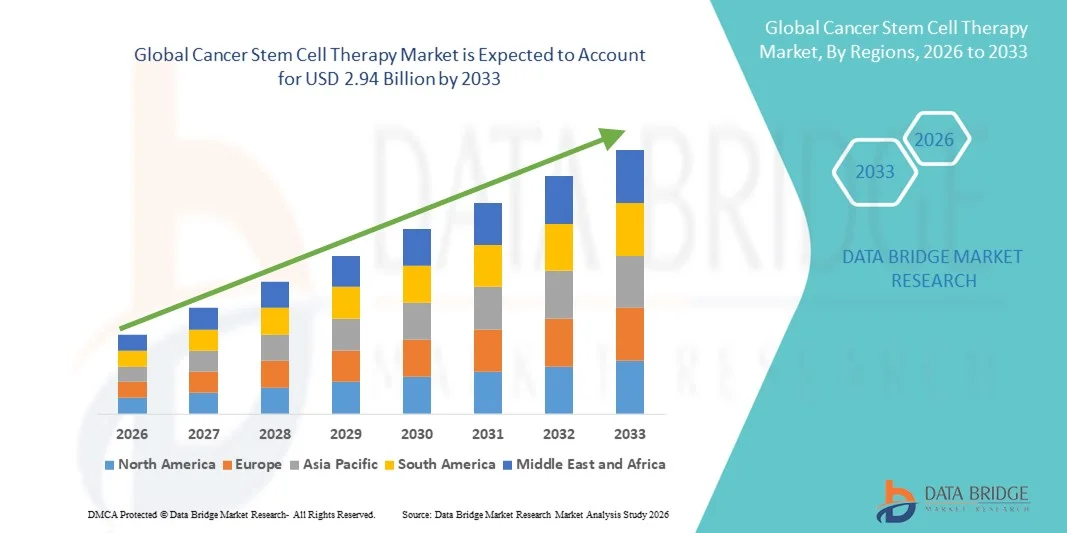
- Согласно анализу Data Bridge Market Research, глобальный размер рынка терапии раковыми стволовыми клетками был оценен как1,41 млрд долларов в 2025 годуОжидается, что он достигнет2,94 млрд долларов к 2033 году, вCAGR 9,65%в течение прогнозируемого периода
- Рост рынка в первую очередь обусловлен увеличением распространенности рака во всем мире в сочетании с ростом заболеваемости.инвестициив передовых исследованиях стволовых клеток и целевых терапевтических решениях. Растущая осведомленность о персонализированной медицине и потенциале терапии стволовыми клетками в улучшении результатов лечения способствует дальнейшему внедрению на рынок.
- Кроме того, технологические достижения в области клеточной изоляции, культуры и методов доставки, наряду с поддерживающей нормативной базой, способствуют развитию и коммерциализации терапии раковыми стволовыми клетками. Эти факторы в совокупности способствуют значительному росту на мировом рынке.
Размер рынка и прогноз
- Глобальная рыночная стоимость (2025):$1,41 млрд.
- Ожидаемая рыночная стоимость (2033):$2,94 млрд.
- Прогноз CAGR (2026–2033):9.65%
Анализ рынка терапии стволовыми клетками рака
- Терапия раковыми стволовыми клетками, предлагающая целенаправленное лечение путем устранения опухолевых клеток, все чаще признается жизненно важной в современной онкологии из-за их потенциала для снижения рецидива, повышения эффективности лечения и улучшения общих результатов лечения пациентов.
- Растущий спрос на эти методы лечения в первую очередь подпитывается растущей распространенностью рака во всем мире, увеличением инвестиций в исследования стволовых клеток и повышенным вниманием к персонализированным подходам к медицине.
- Северная Америка доминировала на рынке терапии раковыми стволовыми клетками с самой большой долей дохода в 38,7% в 2025 году, что обусловлено передовой инфраструктурой здравоохранения, значительными инвестициями в НИОКР, ранним внедрением новых методов лечения и сильным присутствием ключевых игроков рынка в США, поддерживаемых благоприятной нормативной базой, которая ускоряет клинический перевод.
- Ожидается, что Азиатско-Тихоокеанский регион станет самым быстрорастущим регионом на рынке терапии раковыми стволовыми клетками в течение прогнозируемого периода из-за увеличения заболеваемости раком, расширения доступа к здравоохранению, растущих исследовательских инициатив и растущего сотрудничества между местными и глобальными биотехнологическими компаниями.
- Сегмент терапии рака на основе стволовых клеток доминировал на рынке в 2025 году с долей рынка 40,2%, чему способствовала его доказанная эффективность в нацеливании на резистентные раковые клетки и увеличение клинического внедрения в различных типах рака.
Сфера охвата и сегментация рынка терапии стволовыми клетками рака
|
Атрибуты |
Терапия стволовыми клетками рака ключевые рыночные идеи |
|
Сегменты покрыты |
|
|
Страны, охваченные |
Северная Америка
Европа
Азиатско-Тихоокеанский регион
Ближний Восток и Африка
Южная Америка
|
|
Ключевые игроки рынка |
|
|
Рыночные возможности |
|
|
Информационные наборы данных с добавленной стоимостью |
В дополнение к информации о рыночных сценариях, таких как рыночная стоимость, темпы роста, сегментация, географический охват и основные игроки, рыночные отчеты, курируемые Data Bridge Market Research, также включают углубленный экспертный анализ, эпидемиологию пациентов, анализ трубопроводов, анализ цен и нормативную базу. |
Каковы ключевые тенденции на рынке терапии стволовыми клетками рака
Прогресс в персонализированной терапии CSC
- Значительной и ускоряющейся тенденцией на мировом рынке терапии раковыми стволовыми клетками является растущее развитие персонализированных методов лечения, которые нацелены на профили конкретных раковых стволовых клеток пациента, повышая эффективность лечения и уменьшая рецидивы.
- Например, BioRestor Therapeutics разрабатывает индивидуальные методы лечения CSC.гематологическийзлокачественные новообразования путем анализа индивидуальных характеристик опухолевых стволовых клеток для адаптации схем лечения
- Достижения в геномном профилировании ибиомаркерИдентификация позволяет более точно определять методы лечения, прогнозировать реакцию пациента и минимизировать побочные эффекты, тем самым улучшая клинические результаты.
- Интеграция высокопроизводительных инструментов скрининга и молекулярного анализа облегчает быструю идентификацию эффективных терапевтических стратегий, позволяя клиницистам оптимизировать планы лечения пациентов.
- Эта тенденция к более персонализированной и целенаправленной терапии CSC меняет парадигмы лечения онкологии, при этом такие компании, как Fate Therapeutics, пионеры индуцированной плюрипотентной терапии стволовыми клетками (iPSC), адаптированной для конкретных профилей рака.
- Растущее внимание к точной медицине и целенаправленному искоренению рака способствует быстрому внедрению персонализированных методов лечения CSC как в научных, так и в клинических применениях.
- Достижения в прогностических моделях поведения CSC, основанных на ИИ, позволяют исследователям разрабатывать методы лечения, которые предвосхищают эволюцию опухоли, улучшая долгосрочные результаты для пациентов.
Динамика рынка терапии стволовыми клетками рака
водитель
Увеличение распространенности рака и инвестиции в исследования стволовых клеток
- Растущая глобальная заболеваемость раком в сочетании с растущими инвестициями в исследования и разработки стволовых клеток является значительным драйвером рынка терапии раковыми стволовыми клетками.
- Например, в марте 2025 года Celularity, Inc. объявила о многомиллионной финансовой инициативе по расширению клинических испытаний терапии стволовыми клетками, нацеленной на твердые опухоли, поддерживая рост рынка.
- По мере того, как случаи рака продолжают расти, существует повышенный спрос на передовые методы лечения, способные решать проблемы рецидива опухоли и резистентности к лечению, позиционируя CSC-терапию как важное решение.
- Кроме того, поддерживающее государственное и частное финансирование исследований стволовых клеток ускоряет разработку и клинический перевод новых методов лечения.
- Технологические достижения в изоляции, расширении и адресной доставке КЦК повышают терапевтические результаты, стимулируя внедрение в онкологических центрах по всему миру.
- Растущая осведомленность онкологов и пациентов о преимуществах терапии, ориентированной на CSC, способствует дальнейшему расширению рынка как в развитых, так и в развивающихся регионах.
- Например, соглашения о сотрудничестве между биотехнологическими фирмами и академическими больницами способствуют более быстрому клиническому переводу инноваций CSC в реальную терапию.
- Растущая тенденция интеграции CSC-терапии с традиционными схемами химиотерапии и иммунотерапии расширяет применимость лечения и улучшает показатели выживаемости пациентов.
Сдержанность/вызов
Регулирующие проблемы и высокие затраты на лечение
- Строгие нормативные требования и высокая стоимость терапии КЦК создают значительные проблемы для широкого внедрения на рынке.
- Например, задержки в одобрении FDA и EMA для некоторых клинических испытаний замедлили вхождение инновационных методов лечения CSC в основную онкологическую практику.
- Терапия стволовыми клетками требует сложного производства, строгого контроля качества и соблюдения передовых клинических рекомендаций, увеличения сроков разработки и затрат.
- Кроме того, доступ пациентов ограничен из-за премиальных цен на терапию и отсутствия широкого страхового покрытия, что ограничивает внедрение на чувствительных к цене рынках.
- В то время как некоторые компании, такие как Orchard Therapeutics, работают над оптимизацией производства и снижением затрат, доступность остается ключевым барьером для масштабирования этих методов лечения во всем мире.
- Преодоление этих проблем путем гармонизации регулирования, стратегий возмещения и оптимизации затрат на производство будет иметь решающее значение для устойчивого роста рынка.
- Например, потребность в стандартизированных протоколах и более быстрых регуляторных путях имеет решающее значение для обеспечения более широкого доступа к терапии КБК в разных регионах.
- Сложности в долгосрочном хранении и транспортировке стволовых клеток, наряду с поддержанием их жизнеспособности, также ограничивают масштабируемость рынка на развивающихся рынках.
Рынок терапии раковыми стволовыми клетками
Рынок сегментирован на основе типа, форм рака и применения.
- По типу
На основе типа рынок терапии раковыми стволовыми клетками сегментируется на культивирование клеток, разделение клеток, клеточный анализ, молекулярный анализ и другие. Сегмент культивирования клеток доминировал на рынке с самой большой долей дохода в 35,4% в 2025 году, что обусловлено его решающей ролью в расширении и поддержании жизнеспособных стволовых клеток для терапевтических и исследовательских целей. Методы культивирования клеток позволяют ученым производить достаточное количество раковых стволовых клеток (CSC) для доклинических исследований, скрининга лекарств и клинического применения, что делает его фундаментальным компонентом развития терапии CSC. Сегмент выигрывает от непрерывных технологических инноваций в культуральных средах, биореакторах и автоматизированных системах, которые улучшают выход клеток, жизнеспособность и функциональность. Более того, его присутствие в научно-исследовательских лабораториях и биотехнологических компаниях обеспечивает устойчивый спрос. Регулирующие одобрения и стандартизированные протоколы в культивировании клеток еще больше усиливают его доминирование, уменьшая изменчивость и поддерживая воспроизводимость в исследованиях. Этот сегмент широко используется в развитых регионах, таких как Северная Америка и Европа, где передовая исследовательская инфраструктура способствует крупномасштабному культивированию КБК.
Ожидается, что в сегменте разделения ячеек будет наблюдаться самый быстрый темп роста в 22,1% с 2026 по 2033 год, чему способствует растущий спрос на высокоочищенные и целевые популяции CSC. Технологии разделения, такие как флуоресцентно-активированная сортировка клеток (FACS) и магнитно-активированная сортировка клеток (MACS), имеют решающее значение для выделения CSC из гетерогенных образцов опухоли, обеспечивая терапевтическую эффективность и безопасность. Рост также обусловлен растущим акцентом на персонализированные методы лечения и прецизионную медицину, где чистые клеточные популяции необходимы для разработки специфических методов лечения пациентов. Непрерывные инновации в микрофлюидных и автоматизированных платформах разделения также повышают пропускную способность и эффективность. Кроме того, расширение клинических испытаний, направленных на изолированные КЦК, способствует быстрому внедрению. Сегмент набирает обороты в Азиатско-Тихоокеанском регионе и на развивающихся рынках из-за роста инвестиций в передовые биотехнологические объекты.
- По формам рака
На основе форм рака рынок сегментирован на рак молочной железы, рак крови, рак легких, рак мозга, колоректальный рак, рак поджелудочной железы, рак мочевого пузыря, рак печени и другие виды рака. Сегмент рака крови доминировал на рынке с долей 32,8% в 2025 году, в первую очередь из-за доказанного клинического успеха терапии на основе стволовых клеток при гематологических злокачественных новообразованиях, таких как лейкемия и лимфома. Рак крови имеет хорошо установленные протоколы для изоляции, расширения и реинфузии CSC, что делает их основной областью применения для терапии CSC. Обширные текущие клинические испытания, благоприятное нормативное руководство и сильное принятие врача поддерживают устойчивое доминирование на рынке. Кроме того, результаты лечения рака крови у пациентов значительно улучшаются с помощью подходов, ориентированных на CSC. Высокая распространенность гематологических онкологических заболеваний в развитых странах и наличие специализированных лечебных центров еще больше укрепляют лидирующие позиции сегмента.
Сегмент рака легких, как ожидается, станет свидетелем самого быстрого роста с 2026 по 2033 год, обусловленного увеличением заболеваемости и срочной необходимостью инновационных методов лечения для преодоления резистентности к терапии. Целевая терапия CSC показывает перспективы в доклинических и ранних клинических исследованиях опухолей легких, особенно в снижении рецидива и метастазирования. Технологические достижения в области визуализации, молекулярного профилирования и идентификации CSC ускоряют развитие этого сегмента. Растущее внимание к сочетанию терапии CSC с традиционными методами лечения, такими как химиотерапия и иммунотерапия, также способствует росту. Расширение исследований в области онкологии в Азиатско-Тихоокеанском регионе и странах с развивающейся экономикой способствует быстрому освоению рынка в этом сегменте.
- С помощью приложения
На основе применения рынок сегментирован на терапию рака на основе стволовых клеток и целевые КЦК. Сегмент терапии рака на основе стволовых клеток доминировал на рынке с долей 40,2% в 2025 году, что обусловлено его доказанной эффективностью в лечении резистентных опухолей и минимизации рецидива. Подходы на основе стволовых клеток позволяют регенерации нормальных тканей и целенаправленной ликвидации раковых стволовых клеток, что делает их всеобъемлющей терапевтической стратегией. Клиническое усыновление является сильным из-за растущего количества исследований, поддерживающих улучшение результатов лечения пациентов, особенно в крови и солидных опухолях. Кроме того, одобрение регулирующих органов и сотрудничество между биотехнологическими компаниями и больницами повышают доступность и коммерческое принятие. Сегмент хорошо зарекомендовал себя в Северной Америке и Европе, поддерживаемый передовой инфраструктурой здравоохранения и высокими инвестициями в исследования и разработки.
Ожидается, что целевой сегмент CSC будет наблюдать самый быстрый темп роста в 23,4% с 2026 по 2033 год, чему способствует растущий интерес к точной онкологии и терапии, которые специально ингибируют сигнальные пути CSC. Целенаправленные подходы улучшают специфичность лечения и уменьшают побочные эффекты по сравнению с обычными методами лечения. Инновации в молекулярном профилировании, обнаружении биомаркеров и системах доставки лекарств повышают эффективность целенаправленных процедур CSC. Увеличение клинических испытаний, государственное финансирование и растущие партнерские отношения между научно-исследовательскими институтами и биотехнологическими фирмами также поддерживают быстрое внедрение. Сегмент набирает обороты во всем мире, поскольку персонализированная медицина становится центральным направлением в лечении рака.
Региональный анализ рынка терапии стволовыми клетками рака
- Северная Америка доминировала на рынке терапии раковыми стволовыми клетками с самой большой долей дохода в 38,7% в 2025 году, что обусловлено передовой инфраструктурой здравоохранения, значительными инвестициями в НИОКР, ранним внедрением новых методов лечения и сильным присутствием ключевых игроков рынка в США, поддерживаемых благоприятной нормативной базой, которая ускоряет клинический перевод.
- Пациенты и клиницисты в регионе отдают приоритет персонализированным и целевым вариантам лечения, поддерживаемым наличием передовых исследовательских центров, специализированных больниц и опытных специалистов по онкологии.
- Это широкое распространение еще больше усиливается благоприятной нормативной базой, высокими расходами на здравоохранение и сильным присутствием ключевых игроков рынка, что делает Северную Америку ведущим центром как для клинических применений, так и для исследований терапии раковыми стволовыми клетками.
Американский рынок терапии стволовыми клетками рака
Рынок терапии раковыми стволовыми клетками в США занял самую большую долю дохода в 82% в 2025 году в Северной Америке, чему способствовала передовая инфраструктура здравоохранения и раннее внедрение инновационных методов лечения КЦК. Пациенты и врачи все чаще отдают приоритет персонализированным и целенаправленным методам лечения, которые улучшают результаты и уменьшают рецидив. Растущие инвестиции в исследования и разработки в сочетании с присутствием ведущих биотехнологических компаний и центров клинических испытаний способствуют дальнейшему росту рынка. Кроме того, нормативная поддержка со стороны FDA для ускоренного одобрения CSC-терапии значительно способствует расширению рынка. Высокая осведомленность пациентов и принятие новых терапевтических подходов также способствуют широкому признанию онкологических центров.
Европейский рынок терапии стволовыми клетками рака
Прогнозируется, что рынок терапии раковыми стволовыми клетками в Европе будет расширяться при существенном CAGR в течение прогнозируемого периода, в основном за счет роста распространенности рака и правительственных инициатив, поддерживающих передовые методы лечения. Увеличение расходов на здравоохранение, урбанизация и акцент на прецизионную медицину способствуют внедрению методов лечения CSC. Европейские онкологические центры интегрируют подходы, ориентированные на CSC, в стандартные и экспериментальные методы лечения. Пациентов и врачей привлекает потенциал для снижения рецидива опухоли и повышения выживаемости. Сильное сотрудничество между академическими учреждениями и биотехнологическими фирмами способствует дальнейшему развитию клинических исследований и коммерциализации методов лечения КЦК.
Британский рынок терапии стволовыми клетками рака
Ожидается, что рынок терапии раковыми стволовыми клетками в Великобритании будет расти в течение прогнозируемого периода, что обусловлено растущим спросом на передовые методы лечения рака и персонализированную медицину. Повышение осведомленности среди пациентов и онкологов о методах лечения, ориентированных на КЦК, способствует внедрению в больницах и исследовательских центрах. Кроме того, государственное финансирование исследований рака и поддерживающая политика возмещения стимулируют рост. Ожидается, что надежная инфраструктура здравоохранения Великобритании в сочетании с растущим числом клинических испытаний продолжит стимулировать расширение рынка. Интеграция терапии CSC с традиционными схемами химиотерапии и иммунотерапии также повышает эффективность лечения и поглощение.
Немецкий рынок терапии раковыми стволовыми клетками
Ожидается, что в течение прогнозируемого периода рынок терапии раковыми стволовыми клетками в Германии будет расширяться на значительном CAGR, чему способствуют высокие инвестиции в биотехнологические инновации и растущее внедрение точной онкологии. Немецкие больницы и исследовательские центры подчеркивают передовые методы лечения КЦК для снижения рецидива рака и улучшения результатов лечения пациентов. Сотрудничество между местными биотехнологическими компаниями и академическими учреждениями способствует клиническому переводу новых методов лечения. Кроме того, осведомленность об инновационных методах лечения рака и сильной нормативно-правовой базе, поддерживающей безопасные клинические испытания, способствуют принятию. Фокус Германии на технологически продвинутых и устойчивых решениях в области здравоохранения способствует росту рынка.
Азиатско-Тихоокеанский рынок терапии стволовыми клетками рака
Рынок терапии раковыми стволовыми клетками в Азиатско-Тихоокеанском регионе будет расти на самом быстром CAGR в 23% в течение прогнозируемого периода с 2026 по 2033 год, что обусловлено увеличением заболеваемости раком, ростом расходов на здравоохранение и расширением исследовательской инфраструктуры в таких странах, как Китай, Япония и Индия. Растущая осведомленность о методах лечения CSC среди врачей и пациентов способствует внедрению как в жилых, так и в коммерческих медицинских учреждениях. Правительственные инициативы по развитию биотехнологии и персонализированной медицины способствуют дальнейшему росту рынка. Появление региона в качестве центра клинических испытаний и исследований стволовых клеток повышает доступность и доступность терапии. Быстрая урбанизация и внедрение технологий в здравоохранение также способствуют сильному расширению рынка в регионе.
Японский рынок терапии рака стволовыми клетками
Японский рынок терапии раковыми стволовыми клетками набирает обороты благодаря передовой системе здравоохранения страны, высоким инвестициям в исследования и разработки и акценту на персонализированную медицину. Растущая распространенность рака и растущее число клинических испытаний, направленных на КЦК, подпитывают принятие. Интеграция CSC-терапии с традиционными методами лечения и передовой диагностикой улучшает результаты лечения пациентов и уменьшает рецидив. Старение населения Японии и акцент на минимально инвазивные и целевые методы лечения еще больше стимулируют спрос. Кроме того, поддерживающие нормативно-правовые рамки и государственное финансирование исследований в области онкологии способствуют более быстрой коммерциализации методов лечения КБК.
Индийский рынок терапии рака стволовыми клетками
На индийский рынок терапии раковыми стволовыми клетками в 2025 году пришлась самая большая доля доходов рынка в Азиатско-Тихоокеанском регионе, что объясняется ростом заболеваемости раком, расширением инфраструктуры здравоохранения и повышением осведомленности среди пациентов и врачей. Индия становится важным центром клинических исследований ибиотехнологияИнновации с несколькими отечественными компаниями, разрабатывающими CSC-целевую терапию. Правительственные инициативы, способствующие лечению рака и персонализированной медицине, наряду с доступными вариантами терапии, способствуют росту рынка. Быстрая урбанизация, рост располагаемого дохода и доступ к международному сотрудничеству способствуют дальнейшему внедрению в больницах и исследовательских центрах.
Доля рынка терапии раковыми стволовыми клетками
Индустрия терапии стволовыми клетками рака в первую очередь возглавляется хорошо известными компаниями, в том числе:
- Fate Therapeutics, Inc. (США)
- Autolus Therapeutics (США)
- Lineage Cell Therapeutics, Inc. (США)
- BioNTech SE (Германия)
- Gilead Sciences, Inc. (США)
- Адаптиммунная терапия PLC (Великобритания)
- BeOne Medicines (США)
- AbbVie Inc. (США)
- Thermo Fisher Scientific, Inc. (США)
- Miltenyi Biotec (Германия)
- STEMCELL Technologies Inc. (Канада)
- PromoCell GmbH (Германия)
- Lonza Group AG (Швейцария)
- MacroGenics, Inc. (США)
- OncoMed Pharmaceuticals, Inc. (США)
- FUJIFILM Irvine Scientific (США)
- Sino Biological, Inc. (Китай)
- Bionomics Ltd (Австралия)
- MacroGenics, Inc. (США)
- Imugene Ltd (Австралия)
Каковы последние события на мировом рынке терапии стволовыми клетками рака
- В августе 2025 года небольшое раннее исследование Стэнфордской медицины показало, что экспериментальный препарат против антител (брикилимаб) позволил детям, нуждающимся в трансплантации стволовых клеток, избежать токсической химиотерапии / предварительного кондиционирования излучения, улучшая интеграцию донорских клеток.
- В августе 2025 года ЕС санкционировал использование дорокубицела (аллогенных клеток CD34, полученных из пуповины, усиленных UM171) для трансплантации гемопоэтических стволовых клеток, расширяя глобальное регулирующее влияние на терапию стволовыми клетками следующего поколения в лечении рака.
- В июле 2025 года исследователи UCLA сообщили о первом клиническом испытании на людях, демонстрирующем, что перепрограммирование кроветворных стволовых клеток пациента может производить возобновляемые источники противораковых Т-клеток, предлагая новую внутреннюю платформу иммунотерапии для борьбы с устойчивыми раковыми заболеваниями.
- В мае 2025 года новаторское рандомизированное контролируемое исследование показало, что иммунотерапия CAR-T-клеток помогла продвинутым пациентам с солидными опухолями жить на 40% дольше, чем стандартный уход, что стало одним из первых успешных результатов Car-T для солидных раковых заболеваний и сигнализировало о потенциальном расширении за пределы рака крови.
- В апреле 2023 года FDA США одобрило Omisirge (omidubicel-onlv), новую аллогенную клеточную терапию, полученную из пуповинной крови, для улучшения восстановления нейтрофилов и снижения риска заражения у взрослых и педиатрических пациентов с раком крови, перенесшим трансплантацию стволовых клеток пуповинной крови. Это представляет собой ключевую веху для доступности терапии рака на основе стволовых клеток в США.
SKU-
Получите онлайн-доступ к отчету на первой в мире облачной платформе рыночной аналитики

- Интерактивная панель анализа данных
- Панель анализа компании для возможностей с высоким потенциалом роста
- Доступ аналитика-исследователя для настройки и запросов
- Анализ конкурентов с помощью интерактивной панели
- Последние новости, обновления и анализ тенденций
- Используйте возможности сравнительного анализа для комплексного отслеживания конкурентов
Методология исследования
Сбор данных и анализ базового года выполняются с использованием модулей сбора данных с большими размерами выборки. Этап включает получение рыночной информации или связанных данных из различных источников и стратегий. Он включает изучение и планирование всех данных, полученных из прошлого заранее. Он также охватывает изучение несоответствий информации, наблюдаемых в различных источниках информации. Рыночные данные анализируются и оцениваются с использованием статистических и последовательных моделей рынка. Кроме того, анализ доли рынка и анализ ключевых тенденций являются основными факторами успеха в отчете о рынке. Чтобы узнать больше, пожалуйста, запросите звонок аналитика или оставьте свой запрос.
Ключевой методологией исследования, используемой исследовательской группой DBMR, является триангуляция данных, которая включает в себя интеллектуальный анализ данных, анализ влияния переменных данных на рынок и первичную (отраслевую экспертную) проверку. Модели данных включают сетку позиционирования поставщиков, анализ временной линии рынка, обзор рынка и руководство, сетку позиционирования компании, патентный анализ, анализ цен, анализ доли рынка компании, стандарты измерения, глобальный и региональный анализ и анализ доли поставщика. Чтобы узнать больше о методологии исследования, отправьте запрос, чтобы поговорить с нашими отраслевыми экспертами.
Доступна настройка
Data Bridge Market Research является лидером в области передовых формативных исследований. Мы гордимся тем, что предоставляем нашим существующим и новым клиентам данные и анализ, которые соответствуют и подходят их целям. Отчет можно настроить, включив в него анализ ценовых тенденций целевых брендов, понимание рынка для дополнительных стран (запросите список стран), данные о результатах клинических испытаний, обзор литературы, обновленный анализ рынка и продуктовой базы. Анализ рынка целевых конкурентов можно проанализировать от анализа на основе технологий до стратегий портфеля рынка. Мы можем добавить столько конкурентов, о которых вам нужны данные в нужном вам формате и стиле данных. Наша команда аналитиков также может предоставить вам данные в сырых файлах Excel, сводных таблицах (книга фактов) или помочь вам в создании презентаций из наборов данных, доступных в отчете.











