Global Gamma-aminobutyric Acid (GABA) Receptor Agonist Market Segmentation, By Indication (Insomnia, Epilepsy, Spasticity, Anxiety, and Others), Drugs (Zolpidem, Topiramate, Baclofen, and Others), Therapeutics (Bamaluzole, Phenibut, Baclofen, and Gaboxadol), Route of Administration (Oral, Parenteral, Intrathecal, and Others), End Users (Hospitals, Specialty Clinics, and Others), Distribution Channel (Hospital Pharmacy, Retail Pharmacy, and Others)- Industry Trends and Forecast to 2033
Gamma-aminobutyric Acid (GABA) Receptor Agonist Market Size
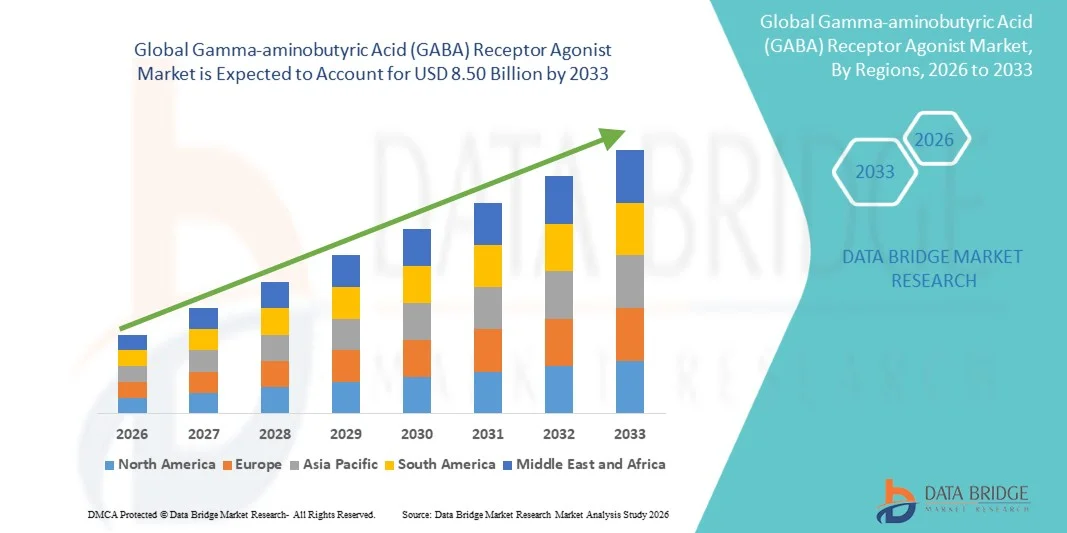
- The global Gamma-aminobutyric Acid (GABA) receptor agonist market size was valued at USD 4.53 billion in 2025 and is expected to reach USD 8.50 billion by 2033, at a CAGR of 8.2% during the forecast period
- The market growth is largely fueled by the increasing prevalence of neurological and psychiatric disorders such as anxiety, epilepsy, insomnia, and muscle spasms, driving demand for effective pharmacological treatments targeting GABA receptors
- Furthermore, advancements in drug development, rising awareness regarding mental health, and growing demand for fast-acting and targeted therapies are positioning GABA receptor agonists as a critical component in central nervous system treatment regimens. These converging factors are accelerating market expansion, thereby significantly boosting the industry's growth
Gamma-aminobutyric Acid (GABA) Receptor Agonist Market Analysis
- Gamma-aminobutyric Acid (GABA) receptor agonists, widely used for modulating central nervous system activity, play a critical role in the treatment of neurological and psychiatric disorders such as anxiety, epilepsy, insomnia, and spasticity, making them essential components of modern therapeutic regimens in both hospital and outpatient settings
- The escalating demand for GABA receptor agonists is primarily fueled by the increasing global burden of mental health disorders, rising prevalence of neurological conditions, and growing awareness regarding early diagnosis and treatment, along with a strong preference for fast-acting and targeted pharmacological therapies
- North America dominated the GABA receptor agonist market with the largest revenue share of 38.7% in 2025, characterized by advanced healthcare infrastructure, high diagnosis rates, and strong presence of leading pharmaceutical companies, with the U.S. witnessing significant adoption driven by increased prescriptions for anxiety, epilepsy, and insomnia treatments as well as continuous drug innovation
- Asia-Pacific is expected to be the fastest growing region in the GABA receptor agonist market during the forecast period due to improving healthcare access, expanding patient population, and increasing awareness regarding mental health and neurological treatments
- Anxiety segment dominated the GABA receptor agonist market with a market share of 36.9% in 2025, driven by the high global prevalence of anxiety disorders, increasing stress-related conditions, and the widespread clinical use of GABA-modulating drugs such as zolpidem, baclofen, and related therapeutics for symptom management
Report Scope and Gamma-aminobutyric Acid (GABA) Receptor Agonist Market Segmentation
|
Attributes |
Gamma-aminobutyric Acid (GABA) Receptor Agonist Key Market Insights |
|
Segments Covered |
|
|
Countries Covered |
North America
Europe
Asia-Pacific
Middle East and Africa
South America
|
|
Key Market Players |
|
|
Market Opportunities |
|
|
Value Added Data Infosets |
In addition to the insights on market scenarios such as market value, growth rate, segmentation, geographical coverage, and major players, the market reports curated by the Data Bridge Market Research also include in-depth expert analysis, patient epidemiology, pipeline analysis, pricing analysis, and regulatory framework |
Gamma-aminobutyric Acid (GABA) Receptor Agonist Market Trends
“Advancements in Targeted CNS Therapies and Drug Innovation”
- A significant and accelerating trend in the global Gamma-aminobutyric Acid (GABA) receptor agonist market is the increasing focus on developing targeted and next-generation CNS therapies with improved efficacy and safety profiles. This evolution of pharmacological innovation is significantly enhancing treatment outcomes and patient compliance
- For instance, drugs such as zolpidem and baclofen are widely used for treating insomnia and spasticity respectively, while newer investigational therapies such as gaboxadol are being explored for improved receptor selectivity and reduced side effects. Similarly, phenibut is gaining attention in certain regions for its anxiolytic properties and therapeutic potential
- Advancements in GABA receptor agonists enable features such as enhanced receptor specificity, reduced sedation effects, and improved pharmacokinetics for better therapeutic outcomes. For instance, some emerging compounds are designed to selectively target receptor subtypes, minimizing adverse effects and improving tolerability. Furthermore, novel drug delivery technologies are enabling more controlled and sustained release of these therapeutics
- The integration of advanced research techniques and drug development platforms facilitates more efficient discovery and optimization of GABA-based treatments. Through a streamlined development pipeline, pharmaceutical companies can accelerate clinical trials and improve the success rate of CNS-targeted therapies, creating a more effective treatment landscape
- This trend towards more precise, safer, and effective neurological treatments is fundamentally reshaping clinical approaches to CNS disorders. Consequently, companies are focusing on developing innovative GABA receptor agonists with enhanced therapeutic profiles and reduced dependency risks for long-term use
- The demand for advanced GABA receptor agonists with improved safety, efficacy, and targeted action is growing rapidly across global healthcare systems, as clinicians and patients increasingly prioritize effective and well-tolerated treatment options
- Growing adoption of personalized medicine approaches is encouraging the development of patient-specific GABA-targeting therapies, improving treatment precision and minimizing adverse effects
Gamma-aminobutyric Acid (GABA) Receptor Agonist Market Dynamics
Driver
“Rising Prevalence of Neurological and Mental Health Disorders”
- The increasing prevalence of neurological and psychiatric disorders, coupled with growing awareness and diagnosis rates, is a significant driver for the heightened demand for GABA receptor agonists
- For instance, in recent years, there has been a notable rise in anxiety, epilepsy, and insomnia cases globally, prompting increased prescription and usage of drugs such as zolpidem, topiramate, and baclofen for effective symptom management. Such developments by healthcare providers are expected to drive the market growth in the forecast period
- As healthcare systems expand their focus on mental health and neurological care, GABA receptor agonists offer proven efficacy in managing symptoms such as seizures, anxiety, and muscle spasticity, providing a compelling therapeutic option over alternative treatments
- Furthermore, the growing investments in CNS drug development and increasing accessibility to treatment in emerging economies are making these therapies more widely available, improving patient outcomes and market penetration
- The convenience of multiple administration routes, including oral, parenteral, and intrathecal delivery, along with improved formulations, are key factors propelling the adoption of GABA receptor agonists in both hospital and outpatient settings
- The trend towards personalized medicine and targeted therapy further contributes to market growth
Restraint/Challenge
“Risk of Side Effects and Regulatory Compliance Challenges”
- Concerns surrounding the potential side effects, dependency risks, and stringent regulatory requirements associated with GABA receptor agonists pose a significant challenge to broader market adoption. As these drugs affect central nervous system activity, they require careful monitoring and controlled usage
- For instance, certain GABA agonists such as benzodiazepine-related drugs and phenibut have been associated with risks of dependency, sedation, and withdrawal symptoms, raising concerns among healthcare providers and regulatory authorities
- Addressing these safety concerns through rigorous clinical trials, improved drug formulations, and strict regulatory compliance is crucial for ensuring patient safety and market acceptance. Companies are increasingly focusing on developing safer alternatives with lower abuse potential and better tolerability profiles
- In addition, the high cost of drug development, lengthy approval timelines, and strict regulatory frameworks can delay product launches and limit market entry for new therapies, particularly for smaller pharmaceutical companies
- While ongoing research and innovation are improving drug safety and efficacy, overcoming these challenges through enhanced pharmacovigilance, regulatory alignment, and continued investment in R&D will be vital for sustained market growth
- Limited awareness and underdiagnosis of neurological and mental health disorders in low- and middle-income regions can restrict timely treatment adoption, thereby hindering overall market expansion
- Potential drug interactions and contraindications with other CNS-active medications create complexities in treatment protocols, requiring careful prescription practices and limiting broader utilization
Gamma-aminobutyric Acid (GABA) Receptor Agonist Market Scope
The market is segmented on the basis of indication, drugs, therapeutics, route of administration, end users, and distribution channel.
- By Indication
On the basis of indication, the GABA receptor agonist market is segmented into insomnia, epilepsy, spasticity, anxiety, and others. The anxiety segment dominated the market with the largest market revenue share of 36.9% in 2025, driven by the high global prevalence of anxiety disorders and increasing stress-related conditions. The growing awareness of mental health issues and rising diagnosis rates have significantly increased the demand for effective anxiolytic treatments. GABA receptor agonists are widely prescribed for their rapid calming effects and proven clinical efficacy in managing anxiety symptoms. The availability of multiple drug options and treatment regimens further supports the dominance of this segment. In addition, increasing healthcare access and patient willingness to seek treatment are contributing to sustained growth in this category.
The epilepsy segment is anticipated to witness the fastest growth rate from 2026 to 2033, fueled by the rising incidence of seizure disorders and advancements in neurological care. Increasing investments in epilepsy treatment and research are promoting the adoption of GABA-targeting drugs for better seizure control. Improved diagnostic capabilities and early intervention strategies are further supporting segment expansion. The development of novel therapeutics with enhanced safety and efficacy profiles is also driving growth. In addition, growing awareness in emerging markets is leading to increased treatment adoption and improved patient outcomes.
- By Drugs
On the basis of drugs, the market is segmented into zolpidem, topiramate, baclofen, and others. The zolpidem segment dominated the market with the largest revenue share in 2025, driven by its widespread use in the treatment of insomnia and sleep disorders. The increasing prevalence of sleep-related issues, particularly among the working population, is significantly boosting demand. Zolpidem is preferred due to its rapid onset of action and effectiveness in improving sleep quality. The growing awareness regarding sleep health and the availability of prescription medications are further supporting segment growth. In addition, continuous product availability and strong physician preference contribute to its dominant position.
The topiramate segment is expected to witness the fastest growth rate from 2026 to 2033, driven by its expanding applications in epilepsy and migraine prevention. Increasing clinical adoption due to its effectiveness in seizure control is a key growth factor. Ongoing research into additional therapeutic uses is also supporting market expansion. The rising burden of neurological disorders globally is further fueling demand for such drugs. In addition, favorable clinical outcomes and growing physician confidence are contributing to its rapid adoption.
- By Therapeutics
On the basis of therapeutics, the market is segmented into bamaluzole, phenibut, baclofen, and gaboxadol. The baclofen segment dominated the market with the largest revenue share in 2025, driven by its established use in managing spasticity and muscle-related disorders. Its effectiveness in reducing muscle stiffness and improving mobility makes it a preferred choice among clinicians. The widespread availability of baclofen across multiple healthcare settings supports its strong market presence. In addition, its use in both oral and intrathecal forms enhances its versatility and adoption. Increasing cases of spinal cord injuries and neurological disorders are further contributing to segment growth.
The gaboxadol segment is anticipated to witness the fastest growth rate from 2026 to 2033, fueled by ongoing research and development activities targeting improved CNS therapies. The potential of gaboxadol in treating sleep and neurological disorders is attracting significant attention. Clinical advancements and trials are expected to support its future adoption. Increasing focus on innovative and targeted therapeutics is further driving this segment. In addition, pharmaceutical companies are investing in next-generation drug development, boosting its growth prospects.
- By Route of Administration
On the basis of route of administration, the market is segmented into oral, parenteral, intrathecal, and others. The oral segment dominated the market with the largest revenue share in 2025, driven by its convenience, ease of administration, and high patient compliance. Oral medications are widely preferred for long-term treatment of neurological and psychiatric conditions. The availability of a wide range of oral formulations further supports segment dominance. In addition, cost-effectiveness and accessibility make oral drugs the first-line treatment option in many cases. Growing outpatient care trends also contribute to the expansion of this segment.
The intrathecal segment is expected to witness the fastest growth rate from 2026 to 2033, driven by its targeted drug delivery mechanism and effectiveness in severe cases. Intrathecal administration allows direct delivery of drugs to the central nervous system, improving therapeutic outcomes. It is particularly beneficial for patients with severe spasticity or those unresponsive to oral medications. Increasing adoption in specialized healthcare settings is supporting growth. In addition, advancements in drug delivery systems are further enhancing segment potential.
- By End Users
On the basis of end users, the market is segmented into hospitals, specialty clinics, and others. The hospitals segment dominated the market with the largest revenue share in 2025, driven by the availability of advanced healthcare infrastructure and specialized medical professionals. Hospitals are the primary centers for diagnosis and treatment of complex neurological disorders. The high volume of patient admissions and access to a wide range of therapies contribute to segment dominance. In addition, hospitals facilitate the use of advanced treatment methods such as intrathecal drug delivery. Increasing healthcare expenditure is further supporting growth in this segment.
The specialty clinics segment is anticipated to witness the fastest growth rate from 2026 to 2033, fueled by the rising demand for focused and specialized neurological care. Specialty clinics offer targeted treatment options and personalized care for patients. The growing preference for outpatient services and shorter treatment durations is driving their adoption. In addition, increased availability of skilled professionals in such clinics is supporting segment expansion. Rising awareness and accessibility are further contributing to growth.
- By Distribution Channel
On the basis of distribution channel, the market is segmented into hospital pharmacy, retail pharmacy, and others. The hospital pharmacy segment dominated the market with the largest revenue share in 2025, driven by the high volume of prescriptions generated within hospital settings. Hospital pharmacies ensure the availability of critical medications for inpatient and outpatient treatments. The integration with hospital systems allows efficient drug dispensing and management. In addition, the presence of specialized drugs within hospital pharmacies supports their dominance. Increasing patient reliance on hospital-based treatment further strengthens this segment.
The retail pharmacy segment is expected to witness the fastest growth rate from 2026 to 2033, driven by increasing accessibility and convenience for patients. Retail pharmacies provide easy access to prescribed medications for long-term treatments such as anxiety and insomnia. The expansion of pharmacy chains and improved distribution networks are supporting segment growth. In addition, growing awareness and patient preference for nearby access points contribute to increased adoption. The shift towards outpatient care is further accelerating the growth of this segment.
Gamma-aminobutyric Acid (GABA) Receptor Agonist Market Regional Analysis
- North America dominated the GABA receptor agonist market with the largest revenue share of 38.7% in 2025, characterized by advanced healthcare infrastructure, high diagnosis rates, and strong presence of leading pharmaceutical companies
- Patients in the region highly value the effectiveness, rapid action, and wide availability offered by GABA receptor agonists for managing conditions such as anxiety, epilepsy, and insomnia across various healthcare settings
- This widespread adoption is further supported by advanced healthcare infrastructure, high healthcare expenditure, and a strong presence of leading pharmaceutical companies, establishing GABA receptor agonists as a preferred therapeutic option for both acute and chronic neurological conditions
U.S. Gamma-aminobutyric Acid (GABA) Receptor Agonist Market Insight
The U.S. GABA receptor agonist market captured the largest revenue share of 80% in 2025 within North America, fueled by the high prevalence of neurological and mental health disorders and the strong presence of advanced healthcare infrastructure. Patients and healthcare providers are increasingly prioritizing effective pharmacological treatments for conditions such as anxiety, epilepsy, and insomnia. The growing preference for fast-acting therapeutics, combined with robust demand for prescription CNS drugs and improved access to healthcare services, further propels the market. Moreover, the increasing focus on mental health awareness and continuous drug innovation is significantly contributing to the market's expansion.
Europe Gamma-aminobutyric Acid (GABA) Receptor Agonist Market Insight
The Europe GABA receptor agonist market is projected to expand at a substantial CAGR throughout the forecast period, primarily driven by rising awareness of mental health and increasing prevalence of neurological disorders. The presence of well-established healthcare systems, coupled with the demand for effective CNS therapies, is fostering market growth. European patients are also inclined toward clinically proven and regulated medications that ensure safety and efficacy. The region is experiencing significant growth across hospital and outpatient care settings, with GABA receptor agonists being widely prescribed for both acute and chronic conditions.
U.K. Gamma-aminobutyric Acid (GABA) Receptor Agonist Market Insight
The U.K. GABA receptor agonist market is anticipated to grow at a noteworthy CAGR during the forecast period, driven by increasing cases of anxiety, insomnia, and epilepsy along with a growing emphasis on mental health care. In addition, rising awareness campaigns and government initiatives aimed at improving mental health services are encouraging treatment adoption. The country’s advanced healthcare infrastructure, alongside strong pharmaceutical distribution networks, is expected to continue to stimulate market growth.
Germany Gamma-aminobutyric Acid (GABA) Receptor Agonist Market Insight
The Germany GABA receptor agonist market is expected to expand at a considerable CAGR during the forecast period, fueled by increasing demand for advanced neurological treatments and strong focus on research and development. Germany’s well-developed healthcare system, combined with its emphasis on innovation and high-quality care, promotes the adoption of effective CNS drugs. The integration of advanced therapeutics into treatment protocols is also becoming increasingly prevalent, with a strong preference for safe and efficient medications aligning with patient and regulatory expectations.
Asia-Pacific Gamma-aminobutyric Acid (GABA) Receptor Agonist Market Insight
The Asia-Pacific GABA receptor agonist market is poised to grow at the fastest CAGR of 8.2% during the forecast period of 2026 to 2033, driven by increasing population, rising prevalence of neurological disorders, and improving healthcare access in countries such as China, Japan, and India. The region's growing focus on mental health, supported by government initiatives and healthcare reforms, is driving the adoption of GABA receptor agonists. Furthermore, as APAC emerges as a key region for pharmaceutical manufacturing, the affordability and availability of these drugs are expanding to a wider patient population.
Japan Gamma-aminobutyric Acid (GABA) Receptor Agonist Market Insight
The Japan GABA receptor agonist market is gaining momentum due to the country’s advanced healthcare system, aging population, and increasing demand for effective neurological treatments. The Japanese market places a significant emphasis on precision medicine, and the adoption of GABA receptor agonists is driven by the rising incidence of age-related neurological conditions. The integration of advanced drug therapies with modern healthcare practices is fueling growth. Moreover, Japan's aging demographic is likely to spur demand for long-term treatment solutions in both hospital and outpatient settings.
India Gamma-aminobutyric Acid (GABA) Receptor Agonist Market Insight
The India GABA receptor agonist market accounted for the largest market revenue share in Asia Pacific in 2025, attributed to the country's large patient pool, increasing awareness of mental health, and improving healthcare infrastructure. India stands as one of the fastest-growing markets for CNS drugs, and GABA receptor agonists are becoming increasingly utilized in hospitals and clinics. The push towards better healthcare access and the availability of affordable generic drugs, alongside strong domestic pharmaceutical manufacturing, are key factors propelling the market in India.
Gamma-aminobutyric Acid (GABA) Receptor Agonist Market Share
The Gamma-aminobutyric Acid (GABA) Receptor Agonist industry is primarily led by well-established companies, including:
- Sanofi (France)
- Teva Pharmaceutical Industries Ltd. (Israel)
- Viatris Inc. (U.S.)
- Sun Pharmaceutical Industries Ltd. (India)
- Cipla Ltd. (India)
- Dr. Reddy’s Laboratories Ltd. (India)
- Aurobindo Pharma Limited (India)
- Lupin Limited (India)
- Torrent Pharmaceuticals Ltd. (India)
- Zydus Lifesciences Limited (India)
- Wockhardt Limited (India)
- Glenmark Pharmaceuticals Limited (India)
- Ipca Laboratories Limited (India)
- Unichem Laboratories Limited (India)
- Orchid Pharma Limited (India)
- Cadila Pharmaceuticals Limited (India)
- Cambrex Corporation (U.S.)
- Zentiva Group, a.s. (Czech Republic)
- Synthon Pharmaceuticals B.V. (Netherlands)
- EUROAPI (France)
What are the Recent Developments in Global Gamma-aminobutyric Acid (GABA) Receptor Agonist Market?
- In November 2024, a study published in Heliyon (Cell Press) emphasized ongoing progress in GABA receptor agonists for insomnia, highlighting the development of newer compounds such as dimdazenil with improved receptor selectivity and reduced side effects. This development reflects the industry’s shift toward safer and more precise sleep disorder treatments, expanding the therapeutic landscape of GABA-based drugs
- In October 2024, a review published in Biochemical Pharmacology (Elsevier) highlighted the growing emergence of novel antidepressants targeting GABAA_AA receptors, emphasizing their faster onset of action and improved efficacy compared to traditional monoaminergic drugs. This development underscores the expanding role of GABA-based therapies in treating major depressive disorders and accelerating innovation in CNS drug development
- In June 2024, clinical observations published in medical literature reported cases of baclofen-induced neurotoxicity in patients with renal impairment, emphasizing the need for dose adjustment and careful monitoring. This finding is influencing prescribing guidelines and reinforcing the importance of patient-specific treatment strategies in GABA agonist usage
- In July 2023, the European Medicines Agency approved ganaxolone, a neuroactive steroid acting on GABAA_AA receptors, for the treatment of rare epileptic disorders, marking a significant advancement in targeted CNS therapies. This approval highlights the growing focus on novel GABA-modulating drugs with improved efficacy for seizure management and reinforces innovation within the neurological therapeutics space
- In August 2021, research published in Neuropsychopharmacology (Nature Publishing Group) demonstrated that the GABAB_BB receptor agonist baclofen shows potential in treating alcohol use disorder by reducing cravings and relapse risk. This finding underscores the expanding application of GABA receptor agonists beyond traditional indications into addiction medicine, supporting further clinical exploration and drug development
SKU-
Получите онлайн-доступ к отчету на первой в мире облачной платформе рыночной аналитики
- Интерактивная панель анализа данных
- Панель анализа компании для возможностей с высоким потенциалом роста
- Доступ аналитика-исследователя для настройки и запросов
- Анализ конкурентов с помощью интерактивной панели
- Последние новости, обновления и анализ тенденций
- Используйте возможности сравнительного анализа для комплексного отслеживания конкурентов
Методология исследования
Сбор данных и анализ базового года выполняются с использованием модулей сбора данных с большими размерами выборки. Этап включает получение рыночной информации или связанных данных из различных источников и стратегий. Он включает изучение и планирование всех данных, полученных из прошлого заранее. Он также охватывает изучение несоответствий информации, наблюдаемых в различных источниках информации. Рыночные данные анализируются и оцениваются с использованием статистических и последовательных моделей рынка. Кроме того, анализ доли рынка и анализ ключевых тенденций являются основными факторами успеха в отчете о рынке. Чтобы узнать больше, пожалуйста, запросите звонок аналитика или оставьте свой запрос.
Ключевой методологией исследования, используемой исследовательской группой DBMR, является триангуляция данных, которая включает в себя интеллектуальный анализ данных, анализ влияния переменных данных на рынок и первичную (отраслевую экспертную) проверку. Модели данных включают сетку позиционирования поставщиков, анализ временной линии рынка, обзор рынка и руководство, сетку позиционирования компании, патентный анализ, анализ цен, анализ доли рынка компании, стандарты измерения, глобальный и региональный анализ и анализ доли поставщика. Чтобы узнать больше о методологии исследования, отправьте запрос, чтобы поговорить с нашими отраслевыми экспертами.
Доступна настройка
Data Bridge Market Research является лидером в области передовых формативных исследований. Мы гордимся тем, что предоставляем нашим существующим и новым клиентам данные и анализ, которые соответствуют и подходят их целям. Отчет можно настроить, включив в него анализ ценовых тенденций целевых брендов, понимание рынка для дополнительных стран (запросите список стран), данные о результатах клинических испытаний, обзор литературы, обновленный анализ рынка и продуктовой базы. Анализ рынка целевых конкурентов можно проанализировать от анализа на основе технологий до стратегий портфеля рынка. Мы можем добавить столько конкурентов, о которых вам нужны данные в нужном вам формате и стиле данных. Наша команда аналитиков также может предоставить вам данные в сырых файлах Excel, сводных таблицах (книга фактов) или помочь вам в создании презентаций из наборов данных, доступных в отчете.