


Global High Content Screening Market, By Product Type (Instruments, Consumables, Software, Services, and Accessories), Application (Primary and Secondary Screening, Target Identification and Validation, Toxicity Studies, Compound Profiling, and Others), Technology (Microscopy, Flow CytometryMass Spectrometry, Western Blotting, ELISA, Immunohistochemistry, and Others), End User (Pharmaceutical and Biotechnology Companies, Academic and Government Institutes, Contract Research Organizations, Laboratories, and Others), Distribution Channel (Direct Tenders and Retail Sales) - Industry Trends and Forecast to 2030.
High Content Screening Market Analysis and Insights
The increasing adoption of HCS globally in research activities such as cell-based analysis and drug discovery has enhanced the demand for the market. The rising government initiatives and funding for drug discovery and related research programs also contribute to market growth. The major market players focus on various service launches and approvals during this crucial period. In addition, the increase in improved advancement of imaging techniques and artificial intelligence with HCS systems also contributes to the rising demand for HCS.
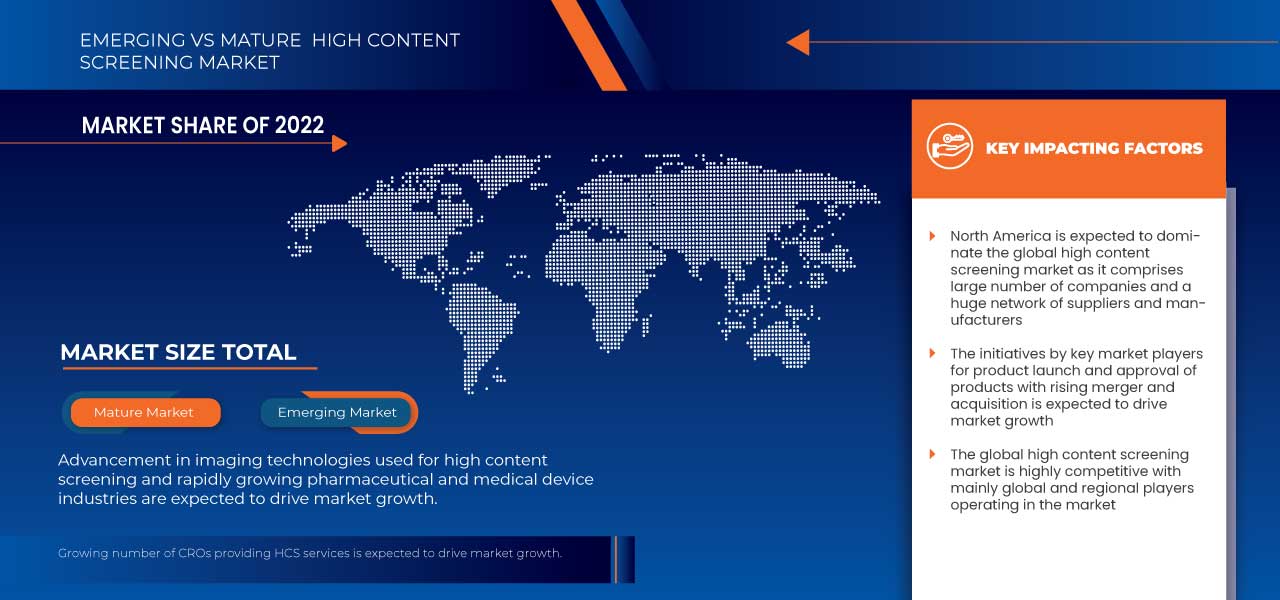
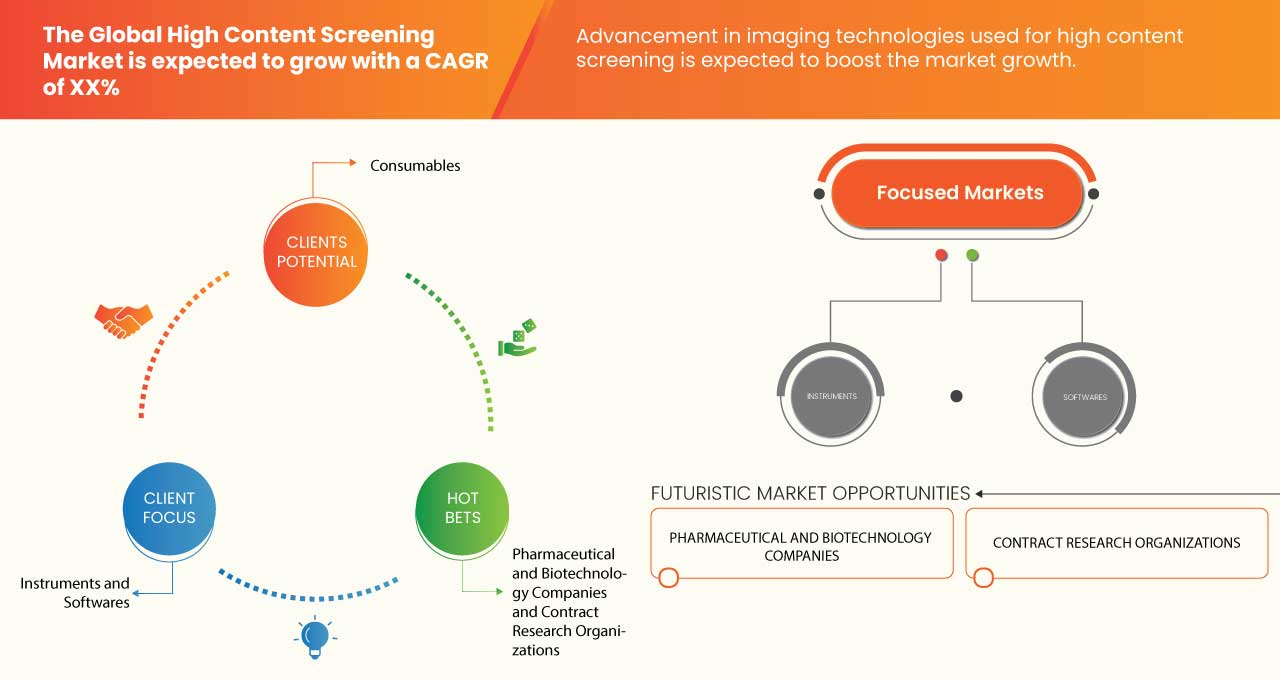
The global high content screening market is expected to grow in the forecast year due to the rise in the number of market players and the availability of advanced technological HCS equipment. Along with this, manufacturers are engaged in the developmental activity for launching advanced, novel, and efficient HCS systems. The increasing development in the field of advanced techniques is further expected to boost market growth. However, difficulties such as the stringent regulations for the production and commercialization of HCS products are expected to restrain market growth in the forecast period.
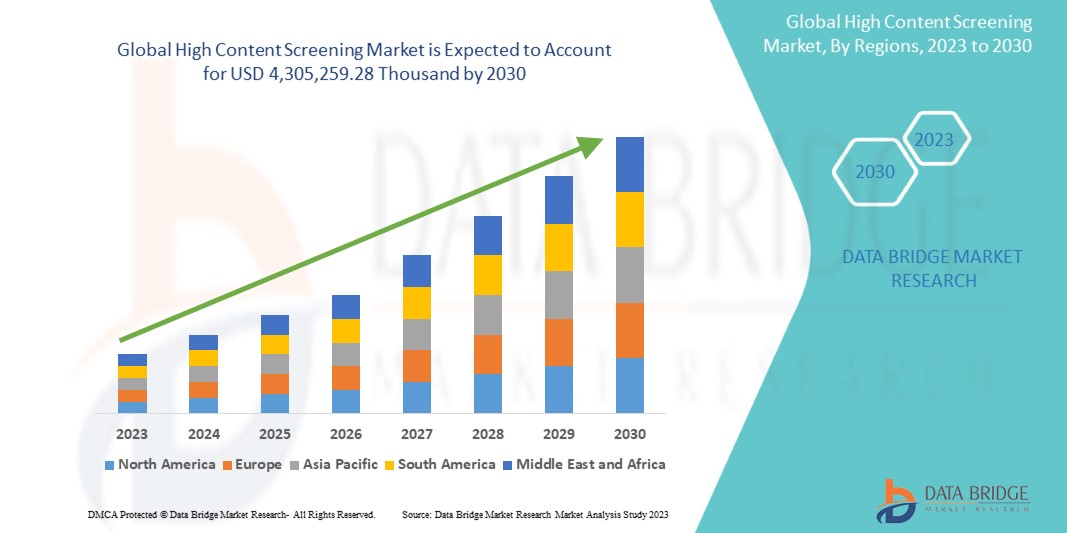
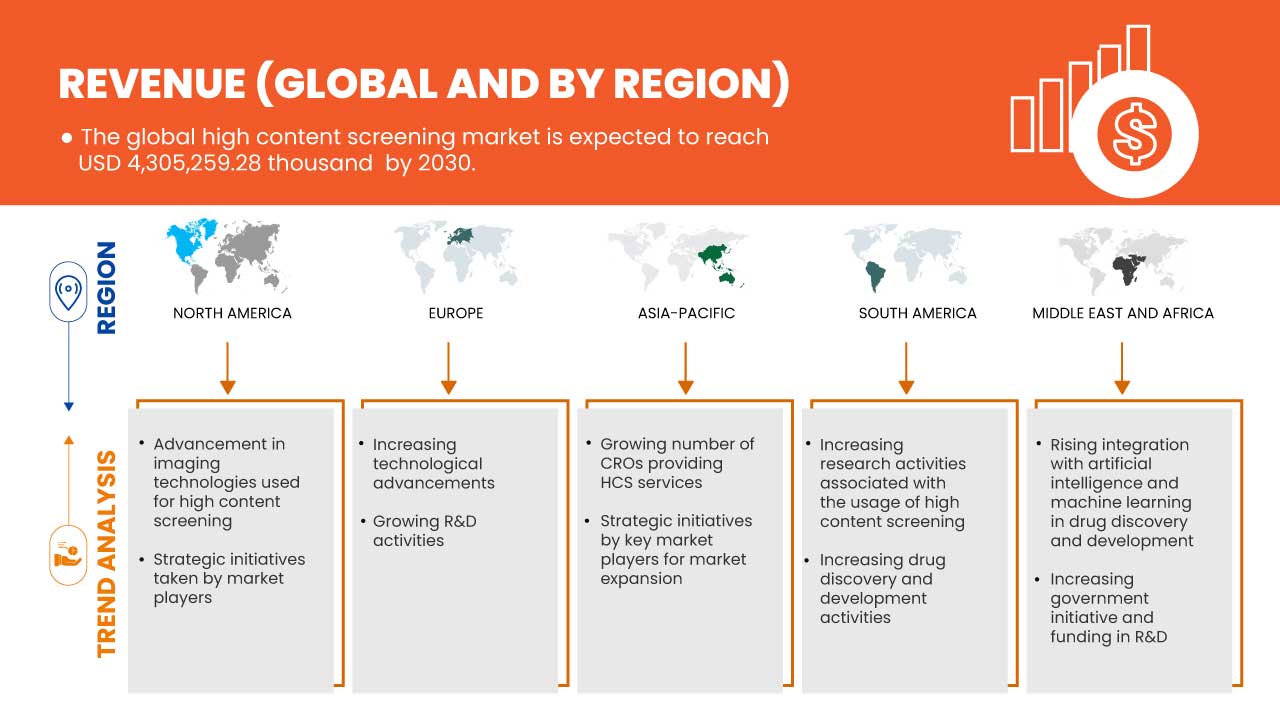
Data Bridge Market Research analyzes that the global high content screening market is expected to reach a value of USD 4,305,259.28 thousand by 2030, at a CAGR of 7.3% during the forecast period.
|
Report Metric |
Details |
|
Forecast Period |
2023 to 2030 |
|
Base Year |
2022 |
|
Historic Years |
2021 (Customizable to 2015 – 2020) |
|
Quantitative Units |
Revenue in Thousand, Pricing in USD |
|
Segments Covered |
By Product Type (Instruments, Consumables, Software, Services, and Accessories), Application (Primary and Secondary Screening, Target Identification and Validation, Toxicity Studies, Compound Profiling, and Other Applications), Technology (Microscopy, Flow Cytometry, Mass Spectrometry, Western Blotting, ELISA, Immunohistochemistry, and Others), End User (Pharmaceutical and Biotechnology Companies, Academic and Government Institutes, Contract Research Organizations, Laboratories, and Others), Distribution Channel (Direct Tenders and Retail Sales) |
|
Countries Covered |
U.S., Canada, Mexico, Germany, France, U.K., Italy, Spain, Russia, Turkey, Belgium, Denmark, Netherlands, Switzerland, Sweden, Poland, Norway, Finland, Rest of Europe, Japan, China, India, South Korea, Australia, New Zealand, Singapore, Thailand, Malaysia, Vietnam, Taiwan, Indonesia, Philippines, Rest of Asia-Pacific, Brazil, Argentina, Rest of South America, South Africa, Saudi Arabia, Bahrain, U.A.E., Kuwait, Oman, Qatar, Egypt, Israel, and Rest of Middle East and Africa |
|
Market Players Covered |
BD, Merck KGaA, Corning Incorporated, Carl Zeiss AG, Sartorius AG, EVIDENT, Zifo RnD Solutions, Axxam S.p.A., Molecular Devices, LLC. (Subsidiary of Danaher Corporation), Thermo Fisher Scientific Inc., PerkinElmer Inc., Bio-Rad Laboratories, Inc., Agilent Technologies, Inc., Yokogawa Electric Corporation, Sysmex Corporation, Genedata AG, De Novo Software, Araceli Biosciences, Miltenyi Biotec, and Aligned Genetics, Inc. among others. |
Market Definition
High-Content Screening (HCS), also known as High-Content Analysis (HCA), is an approach to cell biology that combines automated imaging and quantitative data analysis in a high-throughput format suitable for large-scale applications such as drug discovery and systems biology.
This market refers to the sector of the life sciences industry that focuses on the use of advanced imaging and analysis techniques to study and analyze cellular processes and biological phenomena on a large scale. HCS involves the automated imaging and quantitative analysis of cells or organisms using technologies such as fluorescence microscopy, automated liquid handling systems, and sophisticated image analysis software.
Global High Content Screening Market Dynamics
This section deals with understanding the market drivers, advantages, opportunities, restraints, and challenges. All of this is discussed in detail below:
Driver
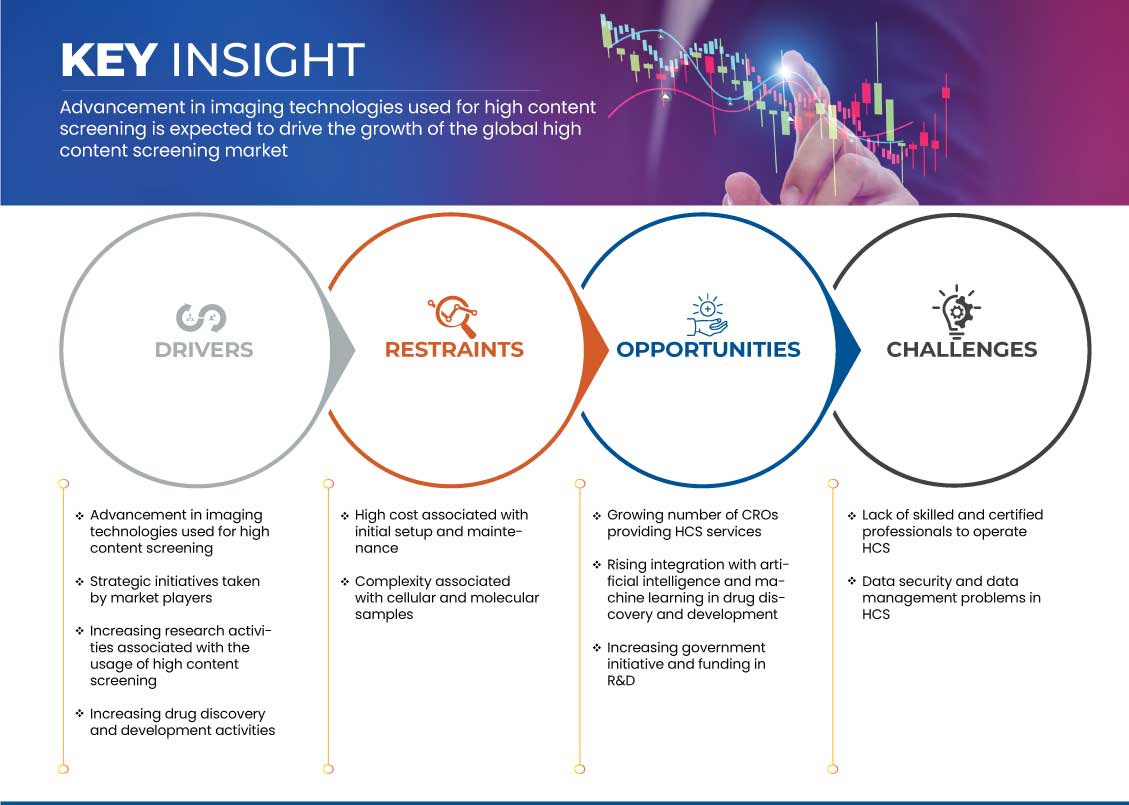
- Advancement in Imaging Technologies Used for High Content Screening
Imaging technologies have been at the forefront of High-Content Screening (HCS), enabling researchers to visualize and analyze cellular processes with unprecedented detail and precision. In addition to high-resolution imaging, there have been significant improvements in imaging speed and throughput. HCS helps in the analysis of a large number of samples, often in high-throughput formats. Imaging technologies have evolved to provide faster acquisition times, enabling researchers to analyze large datasets in a shorter period. High-speed imaging techniques, such as spinning disk confocal microscopy and light-sheet microscopy, allow for rapid image acquisition without compromising image quality, facilitating efficient screening workflows and data analysis.
Over the years, significant advancements have been made in imaging modalities, microscopy techniques, and imaging analysis tools, transforming the landscape of HCS and driving its market expansion.
Restraint
- Complexity Associated with Cellular and Molecular Samples
Cellular and molecular samples are inherently complex, consisting of multiple cellular components, intricate signaling pathways, and dynamic molecular interactions. Analyzing such complexity requires advanced imaging techniques, specialized reagents, and sophisticated algorithms to accurately capture and interpret the data. The complexity associated with cellular and molecular samples presents a significant challenge, which is expected to restrain market growth.
Opportunity
- Rising Integration with Artificial Intelligence and Machine Learning in Drug Discovery and Development
AI techniques, such as machine learning and deep learning, can analyze large volumes of data generated in drug discovery and development processes. By processing diverse datasets, including HTS data, chemical and biological databases, and clinical trial data, AI algorithms can identify patterns, relationships, and trends that may not be readily apparent to human researchers. This can help accelerate the identification of potential drug candidates and optimize the drug discovery process.
Data science and AI are becoming increasingly important in drug discovery and development. In addition to generating new therapeutics, AI speeds up the work of existing drug discovery and clinical teams, helping them to make informed and highly accurate research decisions.
Thus, the integration of AI in drug discovery and development has the potential to accelerate the process, improve success rates, and reduce costs, which is expected to create an opportunity for market growth.
Challenge
- Lack of Skilled & Certified Professionals to Operate HCS
The lack of skilled professionals proficient in operating HCS systems can limit the adoption and utilization of these technologies. Organizations may hesitate to invest in HCS platforms if they do not have the necessary personnel to effectively operate and maintain the equipment.
HCS requires expertise in handling complex imaging systems, data analysis software, and assay optimization. Inexperienced operators may struggle to optimize protocols, leading to suboptimal performance and compromised results. Skilled professionals are crucial for obtaining reliable and high-quality data from HCS assays. Hence, the lack of skilled and certified professionals to operate HCS is expected to pose a challenge to market growth.
Post-COVID-19 Impact Analysis on Global High Content Screening Market
The global high content screening market experienced a mixed impact due to the COVID-19 pandemic. Disruptions in the supply chain and reduced laboratory operations affected the availability and demand for high-content screening systems. However, the increased focus on drug discovery and the urgent need for therapeutics and vaccines drove the demand for these technologies. The adoption of remote work and automation further enhanced the importance of high-content screening systems, enabling researchers to continue their work remotely. Investments in healthcare infrastructure and research and development also contributed to market growth. Overall, the post-COVID-19 period is expected to see continued growth in the market due to the increased emphasis on drug discovery and advanced research tools.
Recent Developments
- In January 2023, Axion BioSystems announced the addition of the Omni Pro 12 to the Omni live-cell imaging product family. The new platform, which features integrated robotics and a multiplate design compatible with any standard incubator, offers enhanced flexibility and efficiency to scientists and drug developers conducting live-cell imaging experiments. This advancement in the imaging technique would help drug discovery be efficient by having live cell imaging experiments.
- In December 2019, Olympus announced the U.S. launch of the scanR HCS station, a cell imaging solution that utilizes Artificial Intelligence (AI) to enable next-generation biological research. It combines the modularity and flexibility of a microscope-based setup with the automation, speed, throughput, and reproducibility of an HCS station. Olympus’ self-learning microscopy technology reduces photo-bleaching and improves acquisition speed, measurement sensitivity, and accuracy, facilitating longer observations with reduced influence on cell viability.
Global High Content Screening Market Scope
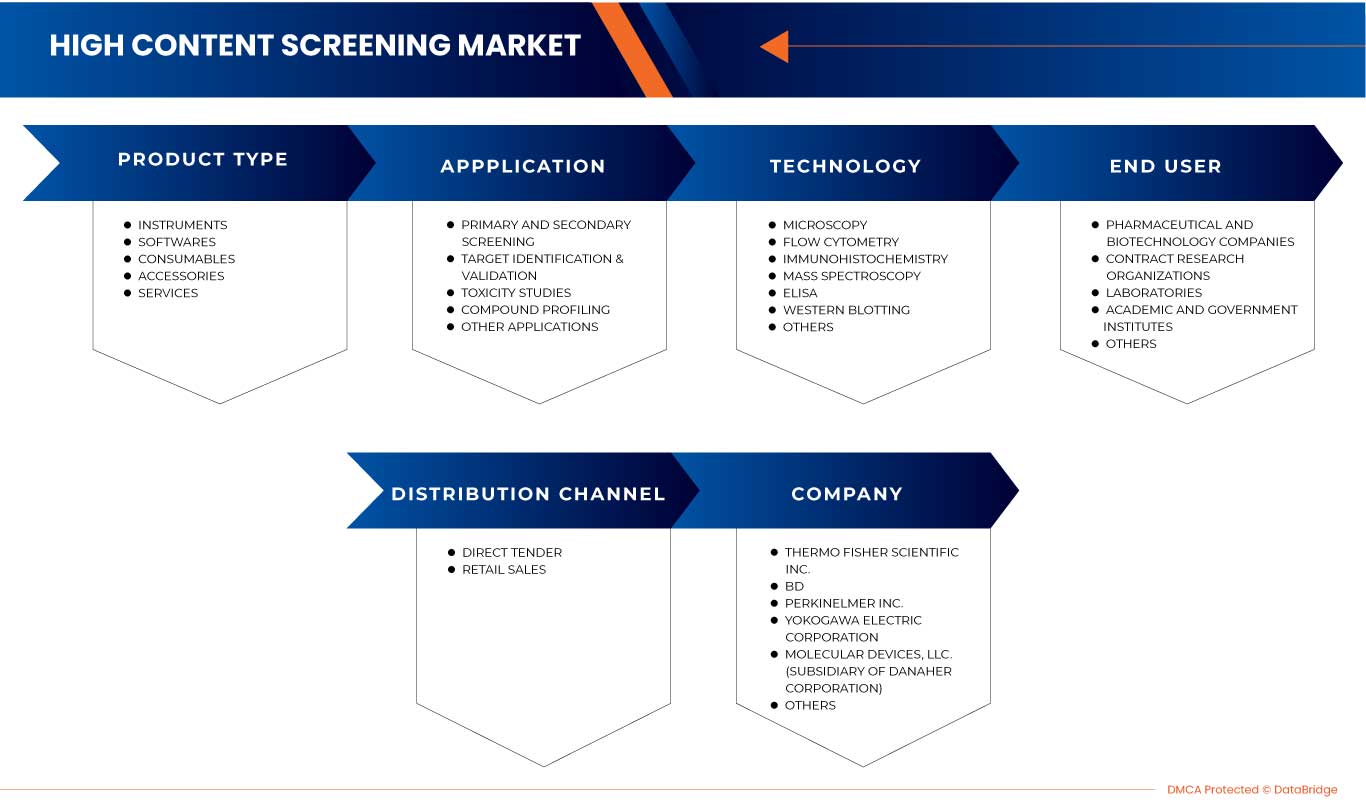
The global high content screening market is segmented into five notable segments based on product type, application, technology, end user, and distribution channel. The growth among segments helps you analyze niche pockets of growth and strategies to approach the market and determine your core application areas and the difference in your target markets.
Product Type
- Instruments
- Consumables
- Software
- Services
- Accessories
On the basis of product type, the market is segmented into instruments, consumables, software, services, and accessories.
Application
- Primary and Secondary Screening
- Target Identification and Validation
- Toxicity Studies
- Compound Profiling
- Others
On the basis of application, the market is segmented into primary and secondary screening, target identification and validation, toxicity studies, compound profiling, and others.
Technology
- microscopy
- Flow Cytometry
- Mass Spectrometry
- western blotting
- ELISA
- Immunohistochemistry
- Others
On the basis of technology, the market is segmented into microscopy, flow cytometry, mass spectrometry, western blotting, ELISA, immunohistochemistry, and others.
End User
- Pharmaceutical and Biotechnology Companies
- Academic and Government Institutes
- Contract Research Organizations
- Laboratories
- Others
On the basis of end user, the market is segmented into pharmaceutical and biotechnology companies, academic and government institutes, contract research organizations, laboratories, and others.
Distribution Channel
- Direct Tenders
- Retail Sales
On the basis of distribution channel, the market is segmented into direct tenders and retail sales.
Global High Content Screening Market Regional Analysis/Insights
The global high content screening market is segmented into five notable segments based on product type, application, technology, end user, and distribution channel.
The countries covered in this market report U.S., Canada, Mexico, Germany, France, U.K., Italy, Spain, Russia, Turkey, Belgium, Denmark, Netherlands, Switzerland, Sweden, Poland, Norway, Finland, rest of Europe, Japan, China, India, South Korea, Australia, New Zealand, Singapore, Thailand, Malaysia, Vietnam, Taiwan, Indonesia, Philippines, rest of Asia-Pacific, Brazil, Argentina, rest of South America, South Africa, Saudi Arabia, Bahrain, U.A.E., Kuwait, Oman, Qatar, Egypt, Israel, and rest of Middle East and Africa.
North America is expected to dominate the market due to the increasing investment in high-content screening. The U.S. is expected to dominate the North America region due to the strong presence of key players. Germany is expected to dominate the Europe region due to the increasing demand from emerging markets and expansion. Japan is expected to dominate the Asia-Pacific region due to increasing customer inclinations toward advanced technological processes.
The country section of the report also provides individual market-impacting factors and changes in regulation in the market domestically that impact the current and future trends of the market. Data points such as new sales, replacement sales, country demographics, regulatory acts, and import-export tariffs are some of the major pointers used to forecast the market scenario for individual countries. Also, the presence and availability of global brands and their challenges faced due to large or scarce competition from local and domestic brands, and the impact of sales channels are considered while providing forecast analysis of the country data.
Competitive Landscape and Global High Content Screening Market Share Analysis
The global high content screening market competitive landscape provides details of competitors. Details included are company overview, company financials, revenue generated, market potential, investment in R&D, new market initiatives, production sites and facilities, company strengths and weaknesses, product launch, product approvals, product width and breadth, application dominance, and product type lifeline curve. The above data points provided are only related to the company’s focus on the market.
Some of the major market players operating in the global high content screening market are BD, Merck KGaA, Corning Incorporated, Carl Zeiss AG, Sartorius AG, EVIDENT, Zifo RnD Solutions, Axxam S.p.A., Molecular Devices, LLC. (Subsidiary of Danaher Corporation), Thermo Fisher Scientific Inc., PerkinElmer Inc., Bio-Rad Laboratories, Inc., Agilent Technologies, Inc., Yokogawa Electric Corporation, Sysmex Corporation, Genedata AG, De Novo Software, Araceli Biosciences, Miltenyi Biotec, and Aligned Genetics, Inc. among others.
SKU-
Получите онлайн-доступ к отчету на первой в мире облачной платформе рыночной аналитики

- Интерактивная панель анализа данных
- Панель анализа компании для возможностей с высоким потенциалом роста
- Доступ аналитика-исследователя для настройки и запросов
- Анализ конкурентов с помощью интерактивной панели
- Последние новости, обновления и анализ тенденций
- Используйте возможности сравнительного анализа для комплексного отслеживания конкурентов
Методология исследования
Сбор данных и анализ базового года выполняются с использованием модулей сбора данных с большими размерами выборки. Этап включает получение рыночной информации или связанных данных из различных источников и стратегий. Он включает изучение и планирование всех данных, полученных из прошлого заранее. Он также охватывает изучение несоответствий информации, наблюдаемых в различных источниках информации. Рыночные данные анализируются и оцениваются с использованием статистических и последовательных моделей рынка. Кроме того, анализ доли рынка и анализ ключевых тенденций являются основными факторами успеха в отчете о рынке. Чтобы узнать больше, пожалуйста, запросите звонок аналитика или оставьте свой запрос.
Ключевой методологией исследования, используемой исследовательской группой DBMR, является триангуляция данных, которая включает в себя интеллектуальный анализ данных, анализ влияния переменных данных на рынок и первичную (отраслевую экспертную) проверку. Модели данных включают сетку позиционирования поставщиков, анализ временной линии рынка, обзор рынка и руководство, сетку позиционирования компании, патентный анализ, анализ цен, анализ доли рынка компании, стандарты измерения, глобальный и региональный анализ и анализ доли поставщика. Чтобы узнать больше о методологии исследования, отправьте запрос, чтобы поговорить с нашими отраслевыми экспертами.
Доступна настройка
Data Bridge Market Research является лидером в области передовых формативных исследований. Мы гордимся тем, что предоставляем нашим существующим и новым клиентам данные и анализ, которые соответствуют и подходят их целям. Отчет можно настроить, включив в него анализ ценовых тенденций целевых брендов, понимание рынка для дополнительных стран (запросите список стран), данные о результатах клинических испытаний, обзор литературы, обновленный анализ рынка и продуктовой базы. Анализ рынка целевых конкурентов можно проанализировать от анализа на основе технологий до стратегий портфеля рынка. Мы можем добавить столько конкурентов, о которых вам нужны данные в нужном вам формате и стиле данных. Наша команда аналитиков также может предоставить вам данные в сырых файлах Excel, сводных таблицах (книга фактов) или помочь вам в создании презентаций из наборов данных, доступных в отчете.











