


Global Recombinant Hormon Biosimilars Marktsegmentierung, Nach Produkttyp (Insulinbiosimilars, Wachstumshormon Biosimilars, Erythropoietin Biosimilars, Follicle-stimulierende Hormone (FSH) Biosimilars, Luteinizing Hormone (LH) Biosimilars, und andere rekombinante Hormone Biosimilars), Anwendung (Diabetes
Was ist die rekombinante Hormon Biosimilars Marktgröße und Wachstumsrate
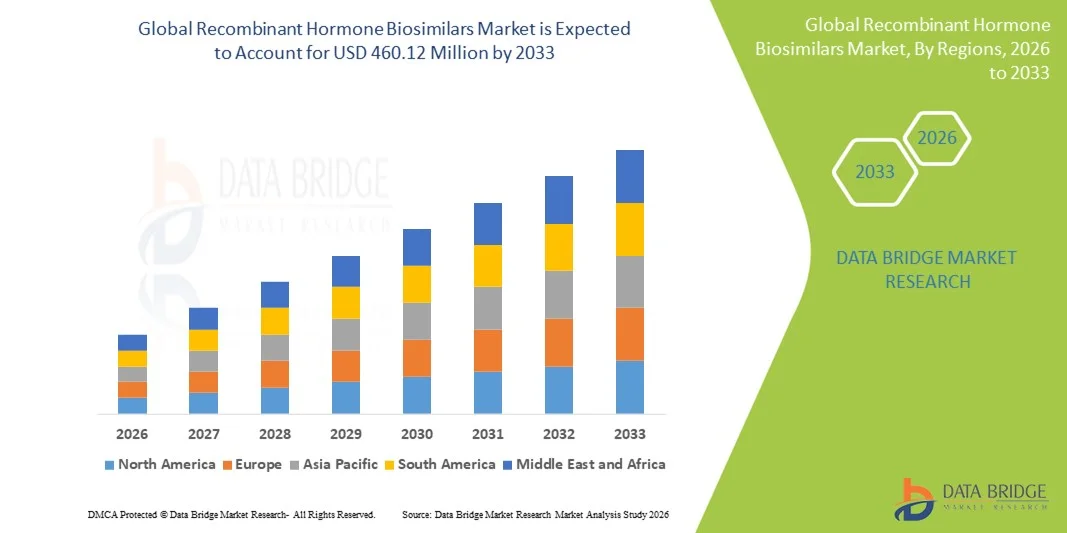
- Wie bei Data Bridge Market Research Analysis wurde die globale rekombinante Hormonbiosimilars Marktgröße bewertet217,80 Mio. USD im Jahr 2025und wird voraussichtlich erreichen460.12 Mio. USD bis 2033, beiCAGR von 9,80%während des Prognosezeitraums
- Das Marktwachstum wird größtenteils durch die zunehmende Prävalenz derDiabetes, hormonelle Störungen und chronische Krankheiten, zusammen mit der wachsenden Einführung von kostengünstigen biosimilar Therapien als Alternativen zu hochpreisigen Originator-Biologen in den entwickelten und aufstrebenden Gesundheitssystemen
- Darüber hinaus laufend Fortschritte inBiopharmazeutikaHerstellung, unterstützende Regulierungswege für Biosimilars und steigende Akzeptanz von rekombinanten Hormonbiosimilars in Krankenhaus- und ambulanten Einstellungen positionieren diese Produkte als bevorzugte therapeutische Optionen, wodurch das Gesamtmarktwachstum deutlich beschleunigt wird
Marktgröße und Prognose
- Globaler Marktwert (2025):217,80 Mio. USD im Jahr 2025
- Voraussichtlicher Marktwert (2033):460.12 Mio. USD bis 2033
- Wettervorhersage CAGR (2026–2033):9.80%
Rekombinante Hormon Biosimilars Marktanalyse
- Rekombinante Hormonbiosimilars, die biologe Medikamente entwickelt, um Referenz rekombinante Hormonprodukte wieInsulin,Wachstumshormon und Erythropoietin sind aufgrund ihrer vergleichbaren klinischen Wirksamkeit, verbesserter Erschwinglichkeit und des erweiterten Einsatzes in Krankenhäusern und ambulanten Pflegeeinstellungen immer wichtigere Bestandteile moderner therapeutischer Regime.
- Die steigende Nachfrage nach rekombinanten Hormonbiosimilars wird in erster Linie durch die zunehmende Prävalenz von Diabetes, hormonellen Defiziten, Anämie und anderen chronischen Erkrankungen sowie den zunehmenden Druck auf Gesundheitssysteme zur Senkung der biologen Behandlungskosten getrieben, ohne die Patientenergebnisse zu beeinträchtigen.
- Nordamerika dominierte den rekombinanten Hormon Biosimilars Markt mit dem größten Umsatzanteil von 41,4% im Jahr 2025, unterstützt durch eine hohe Belastung von chronischen Krankheiten, starke regulatorische Klarheit für Biosimilar-Zulassungen, günstige Erstattungsstrukturen und weit verbreitete Annahme von Biosimilar Insulin undHormontherapienin den USA und Kanada
- Asia-Pacific wird erwartet, dass die am schnellsten wachsende Region während der Prognosezeit, angetrieben von großen Patientenpopulationen, Verbesserung der Gesundheitsinfrastruktur, zunehmendes Bewusstsein für Biosimilars, und Erweiterung der lokalen Fertigungsmöglichkeiten in Ländern wie China und Indien
- Das Segment Insulin Biosimilars dominierte den Markt mit dem größten Marktanteil von 46,9% im Jahr 2025, aufgrund der globalen Diabetes-Epidemie, der hohen Behandlungsanforderungen und der schnellen Substitution hochwertiger Markeninsulinprodukte mit erschwinglicheren Biosimilar Alternativen
Bericht Umfang und rekombinante Hormon Biosimilars Marktsegmentierung
|
Attribute |
Rekombinante Hormon Biosimilars Schlüsselmarkt Insights |
|
Verdeckte Segmente |
|
|
Überarbeitete Länder |
Nordamerika
Europa
Asien-Pazifik
Naher Osten und Afrika
Südamerika
|
|
Key Market Players |
|
|
Marktmöglichkeiten |
|
|
Daten Infos zum Wert hinzugefügt |
Neben den Erkenntnissen über Marktszenarien wie Marktwert, Wachstumsrate, Segmentierung, geographische Erfassung und wichtige Akteure umfassen die Marktberichte, die von der Data Bridge Market Research kuratiert werden, auch eingehende Expertenanalysen, Patientenepidemiologie, Pipelineanalyse, Preisanalyse und regulatorische Rahmenbedingungen. |
Was ist der Haupttrend im rekombinanten Hormon Biosimilars Markt
Rising Regulatory Acceptance und Physician Confidence
- Ein wichtiger und beschleunigter Trend im globalen rekombinanten Hormon Biosimilars-Markt ist die zunehmende regulatorische Zulassung und das wachsende Vertrauen des Arztes in biosimilar Therapien, die durch robuste klinische Vergleichbarkeitsdaten und real-world Nachweise, die Sicherheit und Wirksamkeit unterstützen
- Zum Beispiel mehrere Biosimilar-Insuline und rekombinanteWachstumshormonehaben Zulassungen auf regulierten Märkten erworben, das Vertrauen zwischen Endokrinologen und Krankenhauspharmakisten für den routinemäßigen klinischen Gebrauch verstärkt
- Die zunehmende klinische Vertrautheit mit Biosimilars ermöglicht eine breitere Verschreibung, insbesondere im chronischen Krankheitsmanagement, wo langfristige Behandlung Erschwinglichkeit und Kontinuität der Pflege kritisch sind
- Erhöhte nachvermarktende Überwachungsdaten und Pharmakovigilanzergebnisse stärken das Vertrauen in rekombinante Hormonbiosimilars und unterstützen eine breitere Substitution von Referenzbiologik
- Dieser Trend wird auch von Bildungsinitiativen von Gesundheitsbehörden und Berufsverbänden unterstützt, die die Gleichwertigkeit von Biosimilar betonen und evidenzbasierte Schaltpraktiken fördern
- Dadurch priorisieren Pharmaunternehmen zunehmend rekombinante Hormonbiosimilars in ihren Portfolios, beschleunigen Produktentwicklung Pipelines und Marktdurchdringungsstrategien
- Darüber hinaus begünstigt die Erweiterung von Krankenhausangeboten und zentralisierten Beschaffungsprogrammen Biosimilars über Markenbiologik, die Stärkung der volumenbasierten Adoption
- Digitale Gesundheitsaufzeichnungen und Prescribing-Systeme erleichtern auch die Aufnahme von Biosimilar, indem sie formulierte Empfehlungen an der Pflegestelle ermöglichen
Rekombinante Hormone Biosimilars Marktdynamik
Fahrer
Steigende Krankheit Burden und Kosten-Container Druck in Gesundheitswesen Systeme
- Die zunehmende globale Prävalenz von Diabetes, hormonellen Störungen, Anämie und anderen chronischen Erkrankungen ist ein wichtiger Fahrer, der die Nachfrage nach rekombinanten Hormonbiosimilars beschleunigt
- So hat z.B. die zunehmende Insulinabhängigkeit des Diabetes die Notwendigkeit bezahlbarer Langzeittherapien verstärkt, wodurch Biosimilar Insulin eine bevorzugte Option für Zahler und Anbieter ist
- Eskalierende Gesundheitsausgaben im Zusammenhang mit der Originator-Biologik sind zwingende Regierungen und Versicherer, um Biosimilar-Adoption zur Verbesserung des Patientenzugangs bei gleichzeitiger Kostenkontrolle zu fördern
- Unterstützungspolitische Rückzahlungsrichtlinien und bioähnliche Substitutionsrichtlinien in Krankenhäusern verstärken das Marktwachstum in den entwickelten und aufstrebenden Regionen weiter
- Darüber hinaus trägt die zunehmende Sensibilisierung bei Patienten hinsichtlich der Kostenvorteile und der therapeutischen Äquivalenz von Biosimilars zur nachhaltigen Aufnahme in die Behandlungseinstellungen bei
- Der Ablauf von Patenten für mehrere Blockbuster rekombinante Hormonprodukte eröffnet neue Wege für Biosimilar Markteintritt und Wettbewerb
- Erhöhte Investitionen in die Produktionskapazität von Pharmaunternehmen unterstützen zudem eine breitere Verfügbarkeit und Versorgungsstabilität
Zurückhaltung/Challenge
Komplexe Fertigungsanforderungen und Marktakzeptanzschranken
- Die hochkomplexen Herstellungsverfahren, die für rekombinante Hormonbiosimilars erforderlich sind, stellen wichtige Herausforderungen im Zusammenhang mit Produktionskonsistenz, Skalierbarkeit und Kostenkontrolle dar.
- So können beispielsweise kleinere Variationen in Zelllinien oder Reinigungsprozessen die Vergleichbarkeit der Produkte beeinflussen, die Entwicklungszeiten und die regulatorische Kontrolle erhöhen
- Begrenzte Austauschbarkeitsbezeichnungen und vorsichtiges Prescribing-Verhalten unter einigen Klinikern halten weiterhin schnellere Annahme in bestimmten Märkten zurück
- Darüber hinaus kann eine starke Markentreue gegenüber der Originator-Biologik und Sorgen um das Schalten stabiler Patienten die biosimilare Penetration verlangsamen, insbesondere bei spezialisierten Therapien
- Überwindung dieser Herausforderungen durch fortschrittliche Fertigungstechnologien, klare regulatorische Leitlinien und eine fortgesetzte Medizinerausbildung wird für eine langfristige Markterweiterung entscheidend sein
- Preiswettbewerb unter mehreren Biosimilar-Anbietern kann Margen komprimieren und kleinere Hersteller von anhaltender Marktbeteiligung entmutigen
- Variabilität in regulatorischen und erstattungstechnischen Rahmenbedingungen in Regionen erschweren weitere globale Vermarktungsstrategien für rekombinante Hormonbiosimilars
Rekombinantes Hormon Biosimilars Marktumfang
Der Markt wird auf Basis von Produkttyp, Anwendung und Endverbraucher segmentiert.
- Nach Produkttyp
Auf der Grundlage des Produkttyps wird der rekombinante Hormonbiosimilars-Markt in Insulinbiosimilars, Wachstumshormon Biosimilars segmentiert,ErythropoietinBiosimilars, Follikelstimulierendes Hormon (FSH) Biosimilars, Luteinisierungshormon (LH) Biosimilars und andere rekombinante Hormonbiosimilars. Das Segment Insulin Biosimilars dominierte den Markt mit dem größten Umsatzanteil von 45,9 % im Jahr 2025, angetrieben durch die rapide steigende globale Diabetesbelastung und die lebenslange Natur der Insulintherapie. Insulin Biosimilars bieten signifikante Kosteneinsparungen im Vergleich zu Markeninsulinprodukten und machen sie sehr attraktiv für Zahler, Regierungen und Patienten. Die weit verbreitete Aufnahme von Biosimilar-Insulin in nationale Formeln und Krankenhaus-Beschaffungsprogramme hat die Annahme weiter verstärkt. Zudem sorgen häufige Dosieranforderungen und hohe Patientenvolumen für eine gleichbleibende Nachfrage. Auch die starke regulatorische Unterstützung der biosimilaren Insulinsubstitution in den großen Märkten hat die Segmentherrschaft verstärkt.
Das Wachstumshormon Biosimilars-Segment wird erwartet, dass das schnellste Wachstum während der Prognoseperiode registriert wird, unterstützt durch steigende Diagnoseraten von Kinder- und Erwachsenenwachstum Hormonmangel. Verbessertes Bewusstsein bei Klinikern und Patienten in Bezug auf Biosimilar-Sicherheit und Wirksamkeit beschleunigt die Aufnahme. Kostenvorteile gegenüber Originator Wachstumshormonprodukten erhöhen den Zugang, insbesondere in Schwellenländern. Die zunehmende Verwendung sowohl in der pädiatrischen Endokrinologie als auch in der adulten Stoffwechselstörung trägt weiter zum Wachstum bei. Darüber hinaus ermöglicht die Ausweitung der Erstattungsdeckung eine breitere Akzeptanz in den Gesundheitssystemen.
- Anwendung
Auf Basis der Anwendung wird der Markt in Diabetes-Management, Wachstumsstörungen,AnämieBehandlung, Fruchtbarkeitsbehandlungen und andere. Das Diabetes-Management-Segment hielt den größten Marktanteil im Jahr 2025, aufgrund der hohen und stetig wachsenden Prävalenz von Typ 1 und insulinabhängigem Typ 2 Diabetes weltweit. Langfristige Insulinabhängigkeit macht die Erschwinglichkeit zu einem kritischen Faktor, Positionierung von Biosimilars als bevorzugte therapeutische Optionen. Regierungsinitiativen zur Bekämpfung von Diabetes-bedingten Gesundheitsausgaben beschleunigen den Einsatz von Biosimilar-Insulin. Krankenhäuser und ambulante Kliniken priorisieren zunehmend Biosimilars, um die Behandlungskosten zu senken. Darüber hinaus unterstützt eine starke Patientenverständigung mit Insulintherapien einen schnelleren Wechsel von Markenprodukten.
Das Segment Wachstumsstörungen wird voraussichtlich während der Prognosezeit das am schnellsten wachsende Anwendungssegment sein, das durch verbessertes Screening, Frühdiagnose und steigende Behandlungsraten von Wachstumshormonschwächen getrieben wird. Die Ausweitung des Bewusstseins zwischen Eltern und Gesundheitsdienstleistern in Bezug auf Behandlungsleistungen ist die Nachfrage. Biosimilar-Wachstumshormone verbessern die Erschwinglichkeit, insbesondere in Ländern mit mittleren Einkommen. Die zunehmende Akzeptanz der langfristigen Hormontherapie unterstützt auch das anhaltende Wachstum. Darüber hinaus sind klinische Beweise, die vergleichbare Ergebnisse zu Referenzprodukten zeigen, das Vertrauen der Ärzte stärken.
- Mit dem Endbenutzer
Auf Basis des Endverbrauchers wird der rekombinante Hormonbiosimilars-Markt in Krankenhäuser, Spezialkliniken, Heimpflege-Einstellungen und andere segmentiert. Das Segment Spitäler dominierte den Markt mit dem höchsten Umsatzanteil im Jahr 2025, der von zentralisierten Beschaffungssystemen, hohem Patientenzufluss und formulierungsbasierten Prescribing-Praktiken angetrieben wird. Krankenhäuser spielen eine wichtige Rolle bei der Einleitung biologischer und biosimilarer Therapien, insbesondere für Insulin, Anämie und Wachstumshormonbehandlungen. Favorable Krankenhaus-Tendersysteme priorisieren aufgrund der Kosteneffizienz oft Biosimilars. Das Vorhandensein von multidisziplinären Pflegeteams unterstützt auch das Vertrauen in die Biosimilar-Beschreibung. Darüber hinaus fördern Krankenhaus-basierte Erstattungsstrukturen die Nutzung von Biosimilar.
Das Segment Home Care Settings wird erwartet, dass das schnellste Wachstum während der Prognoseperiode beobachtet wird, unterstützt durch die zunehmende Verschiebung in Richtung Selbstverwaltung von Hormontherapien. Fortschritte bei Injektionsgeräten und Patientenerziehung ermöglichen eine sichere häusliche Behandlung. Die zunehmende Bequemlichkeit und reduzierte Krankenhausbesuche bei chronischen Erkrankungen beschleunigen die Adoption. Insulin- und Wachstumshormontherapien eignen sich besonders gut für die Heimpflege. Die Ausweitung der digitalen Gesundheitsüberwachung und Telemedizin unterstützen das Wachstumspotenzial dieses Segments weiter.
Rekombinante Hormon Biosimilars Markt Regionale Analyse
- Nordamerika dominierte den rekombinanten Hormon Biosimilars Markt mit dem größten Umsatzanteil von 41,4% im Jahr 2025, unterstützt durch eine hohe Belastung von chronischen Krankheiten, starke regulatorische Klarheit für Biosimilar-Zulassungen, günstige Rückerstattungsstrukturen und weit verbreitete Annahme von Biosimilar Insulin und Hormontherapien in den USA und Kanada
- Healthcare-Anbieter und Zahler in der Region legen großen Wert auf kostengünstige Behandlungsalternativen, unter Beibehaltung der klinischen Wirksamkeit, was zu einer wachsenden Akzeptanz von Biosimilar-Insulin, Wachstumshormon und Erythropoietin-Produkten in Krankenhäusern und ambulanten Einstellungen führt
- Diese weit verbreitete Adoption wird weiter unterstützt durch fortgeschrittene Gesundheitsinfrastruktur, günstige Rückerstattungsrahmen, hohes Bewusstsein bei Ärzten und Patienten, und die Präsenz von großen biopharmazeutischen Unternehmen aktiv erweitern Biosimilar-Portfolios, die Schaffung rekombinanten Hormon Biosimilars als bevorzugte therapeutische Option in den USA und Kanada
US-rekombinantes Hormon Biosimilars Markt Insight
Der US-rekombinante Hormon Biosimilars-Markt erfasste den größten Umsatzanteil in Nordamerika im Jahr 2025, angetrieben durch die hohe Prävalenz von Diabetes und hormonellen Störungen und den starken Druck auf Kosten-Eindämmung in biologen Therapien. Healthcare-Anbieter priorisieren zunehmend Biosimilar-Insulin und Wachstumshormon-Produkte, um langfristige Behandlungskosten zu reduzieren und gleichzeitig die therapeutische Wirksamkeit zu erhalten. Das Vorhandensein von etablierten regulatorischen Wegen, günstigen Rückzahlungspolitiken und wachsendem Vertrauen des Arztes in Biosimilars treibt weiterhin das Marktwachstum voran. Darüber hinaus tragen große Patientenpopulationen, die chronische Hormontherapien erfordern, maßgeblich zur anhaltenden Nachfrage bei.
Europa rekombinante Hormon Biosimilars Markt Insight
Der Markt für rekombinante Hormonbiosimilars in Europa wird in der Vorausschätzungsperiode auf einem beträchtlichen CAGR expandiert, vor allem durch die Früherkennung von Biosimilar, starke regulatorische Rahmenbedingungen und zentralisierte Gesundheitssysteme unterstützt. Länder in der gesamten Region fördern aktiv Biosimilars durch Ausschreibungs- und Substitutionspolitik. Europäische Gesundheitssysteme betonen die Erreichbarkeit und den Zugang, die Förderung der weit verbreiteten Verwendung von Biosimilar-Insulin und Erythropoietin-Produkten. Das Wachstum zeigt sich über Krankenhaus- und Ambulanzeinstellungen, unterstützt durch hohe Arztakzeptanz und robuste Pharmakovigilanzsysteme.
U.K. Rekombinantes Hormon Biosimilars Markt Insight
Der US-amerikanische rekombinante Hormon Biosimilars-Markt wird voraussichtlich während der Prognosezeit zu einem bemerkenswerten CAGR wachsen, angetrieben von National Health Service (NHS) Initiativen konzentriert auf die Verringerung der biologen Drogenausgaben. Die verstärkte Einführung von Biosimilar-Insulin- und Wachstumshormontherapien wird durch klare klinische Richtlinien und eine starke institutionelle Unterstützung unterstützt. Die zunehmende Sensibilisierung der Kliniker in Bezug auf Biosimilarsicherheit und Wirksamkeit beschleunigt den Austausch von Originatorprodukten. Darüber hinaus unterstützen die Ziele Kosteneffizienz und langfristige Nachhaltigkeit weiterhin die Markterweiterung.
Deutschland rekombinantes Hormon Biosimilars Markt Insight
Der deutsche rekombinante Hormonbiosimilars-Markt wird mit einem beträchtlichen CAGR expandieren, der durch starke regulatorische Unterstützung, fortgeschrittene Gesundheitsinfrastruktur und hohe biosimilare Penetrationsraten gefördert wird. Die frühe Akzeptanz von Biosimilars in Deutschland hat sie als führender europäischer Markt für Hormonbiosimilar-Adoption positioniert. Krankenhäuser und Krankenkassen fördern aktiv den biosimilaren Gebrauch, um die pharmazeutischen Ausgaben zu kontrollieren. Der Schwerpunkt des Landes auf klinische Beweise und strukturierte Präskribierungspraktiken unterstützt das Marktwachstum weiter.
Asien-Pazifik rekombinant Hormon Biosimilars Markt Insight
Der asiatisch-pazifische rekombinante Hormonbiosimilars-Markt wird während der Prognosezeit mit dem schnellsten CAGR wachsen, angetrieben von großen Patientenpopulationen, zunehmendem Gesundheitszugang und steigendem Bewusstsein für kostengünstige biologische Alternativen. Die rasche Urbanisierung, die Verbesserung der diagnostischen Fähigkeiten und die Ausweitung der Versicherungsdeckung beschleunigen die Adoption in der gesamten Region. Regierungen unterstützen zunehmend die Herstellung und Nutzung von Biosimilar, um Herausforderungen der Erschwinglichkeit zu bewältigen. Darüber hinaus erhöht die Rolle von Asia-Pacific als globaler biopharmazeutischer Fertigungsstandort die Produktverfügbarkeit und Wettbewerbsfähigkeit.
Japan rekombinant Hormon Biosimilars Markt Insight
Der japanische rekombinante Hormon Biosimilars-Markt gewinnt aufgrund der alternden Bevölkerung und der wachsenden Belastung chronischer Krankheiten, die Hormontherapien erfordern, stetige Traktion. Regulatorische Reformen und medizinische Bildungsinitiativen verbessern die Akzeptanz von Biosimilars in der klinischen Praxis. Der starke Fokus Japans auf Qualität, Sicherheit und langfristige Behandlungsergebnisse unterstützt eine allmähliche, aber konsequente Biosimilar-Adoption. Der verstärkte Einsatz von Biosimilar-Insulin und Erythropoietin-Produkten trägt zum Marktwachstum bei.
Indien rekombinante Hormon Biosimilars Markt Insight
Der indische rekombinante Hormon Biosimilars-Markt entfiel auf den größten Umsatzanteil in Asien-Pazifik im Jahr 2025, unterstützt durch eine hohe Prävalenz von Diabetes, starke häusliche Fertigungsfähigkeiten und den Zugang zu erschwinglichen biologen Therapien. Indien ist ein wichtiger Hersteller und Verbraucher von Biosimilars und profitiert von kosteneffizienter Produktion und unterstützenden regulatorischen Rahmenbedingungen. Die Sensibilisierung für das Gesundheitswesen und die Ausweitung der öffentlichen und privaten Gesundheitsversorgung werden von der Adoption getragen. Darüber hinaus verstärken staatliche Initiativen zur Förderung erschwinglicher Behandlungen das langfristige Marktwachstum.
Welche sind die Top-Unternehmen im rekombinanten Hormon Biosimilars Markt
Die rekombinante Hormon Biosimilars-Industrie wird in erster Linie von etablierten Unternehmen geführt, darunter:
- Pfizer Inc. (USA)
- Samsung Bioepis (Südkorea)
- Biocon Biologics Limited (Indien)
- Dr. Reddy’s Laboratories Ltd. (Indien)
- Celltrion, Inc. (Südkorea)
- Intas Pharmaceuticals Ltd. (Indien)
- Gedeon Richter Plc (Ungarn)
- Teva Pharmaceuticals (Israel)
- Amgen Inc. (USA)
- Eli Lilly und Company (USA)
- Sandoz Group AG (Schweiz)
- Fresenius Kabi AG (Deutschland)
- Zentiva (Tschechische Republik)
- Bio-Thera Solutions Ltd. (China)
- LG Chem Ltd. (Südkorea)
- Minapharm Pharmaceuticals (Ägypten)
- Amega Biotech S.A. (Argentinien)
- IVFarmA LLC (Russland)
- Jiangsu Alphamab Biopharmaceuticals Co. Ltd. (China)
- Biomm S.A. (Brasilien)
Was sind die jüngsten Entwicklungen im globalen rekombinanten Hormon Biosimilars Markt
- Im Juli 2025 genehmigte die US Food and Drug Administration (FDA) KirstyTM (Insulin aspart-xjhz), die sie als erstes und einziges austauschbares schnell wirkendes Insulin biosimilar zu NovoLog in den Vereinigten Staaten markierte, deutlich erweiterte erschwingliche Behandlungsoptionen für Menschen mit Diabetes
- Im Juni 2025 kündigte Biocon Biologics an, dass es mehr als 100 Millionen Patronen von rekombinantem menschlichem Insulin an das Ministerium für Gesundheit Malaysias geliefert hatte, was ein beträchtliches Engagement für die Ausweitung des Zugangs in einem aufstrebenden Markt darstellte.
- Im Februar 2025 erhielt Sanofi Aventis U.S. LLCs Merilog (Insulin-aspart-szjj) die Zulassung der US FDA als schnell wirkendes Insulin Biosimilar Referenzen NovoLog, was einen starken Wettbewerb in der US-Insulin-Biosimilar-Raum hinzufügte.
- Im November 2024 verzeichneten die wichtigsten Regulierungsgremien, darunter die Europäische Arzneimittel-Agentur (EMA), eine hohe Anzahl von Biosimilar-Zulassungen in therapeutischen Klassen, darunter Biosimilars, die Hormone wie Insulin und Wachstumshormonprodukte anvisieren, was eine beschleunigte Biosimilar-Adoption und Marktdiversifizierung in Europa widerspiegelt.
- Im Juli 2021 genehmigte die FDA Insulin Glargine-yfgn (Semglee), das erste austauschbare Insulin Biosimilar-Produkt in den Vereinigten Staaten, einen Meilenstein, der den Weg für eine tiefere biosimilar Penetration in der chronischen Hormontherapie ebnete
SKU-
Erhalten Sie Online-Zugriff auf den Bericht zur weltweit ersten Market Intelligence Cloud
- Interaktives Datenanalyse-Dashboard
- Unternehmensanalyse-Dashboard für Chancen mit hohem Wachstumspotenzial
- Zugriff für Research-Analysten für Anpassungen und Abfragen
- Konkurrenzanalyse mit interaktivem Dashboard
- Aktuelle Nachrichten, Updates und Trendanalyse
- Nutzen Sie die Leistungsfähigkeit der Benchmark-Analyse für eine umfassende Konkurrenzverfolgung
Forschungsmethodik
Die Datenerfassung und Basisjahresanalyse werden mithilfe von Datenerfassungsmodulen mit großen Stichprobengrößen durchgeführt. Die Phase umfasst das Erhalten von Marktinformationen oder verwandten Daten aus verschiedenen Quellen und Strategien. Sie umfasst die Prüfung und Planung aller aus der Vergangenheit im Voraus erfassten Daten. Sie umfasst auch die Prüfung von Informationsinkonsistenzen, die in verschiedenen Informationsquellen auftreten. Die Marktdaten werden mithilfe von marktstatistischen und kohärenten Modellen analysiert und geschätzt. Darüber hinaus sind Marktanteilsanalyse und Schlüsseltrendanalyse die wichtigsten Erfolgsfaktoren im Marktbericht. Um mehr zu erfahren, fordern Sie bitte einen Analystenanruf an oder geben Sie Ihre Anfrage ein.
Die wichtigste Forschungsmethodik, die vom DBMR-Forschungsteam verwendet wird, ist die Datentriangulation, die Data Mining, die Analyse der Auswirkungen von Datenvariablen auf den Markt und die primäre (Branchenexperten-)Validierung umfasst. Zu den Datenmodellen gehören ein Lieferantenpositionierungsraster, eine Marktzeitlinienanalyse, ein Marktüberblick und -leitfaden, ein Firmenpositionierungsraster, eine Patentanalyse, eine Preisanalyse, eine Firmenmarktanteilsanalyse, Messstandards, eine globale versus eine regionale und Lieferantenanteilsanalyse. Um mehr über die Forschungsmethodik zu erfahren, senden Sie eine Anfrage an unsere Branchenexperten.
Anpassung möglich
Data Bridge Market Research ist ein führendes Unternehmen in der fortgeschrittenen formativen Forschung. Wir sind stolz darauf, unseren bestehenden und neuen Kunden Daten und Analysen zu bieten, die zu ihren Zielen passen. Der Bericht kann angepasst werden, um Preistrendanalysen von Zielmarken, Marktverständnis für zusätzliche Länder (fordern Sie die Länderliste an), Daten zu klinischen Studienergebnissen, Literaturübersicht, Analysen des Marktes für aufgearbeitete Produkte und Produktbasis einzuschließen. Marktanalysen von Zielkonkurrenten können von technologiebasierten Analysen bis hin zu Marktportfoliostrategien analysiert werden. Wir können so viele Wettbewerber hinzufügen, wie Sie Daten in dem von Ihnen gewünschten Format und Datenstil benötigen. Unser Analystenteam kann Ihnen auch Daten in groben Excel-Rohdateien und Pivot-Tabellen (Fact Book) bereitstellen oder Sie bei der Erstellung von Präsentationen aus den im Bericht verfügbaren Datensätzen unterstützen.











