



Global Social Commerce Market Segmentation, By Business Model (B2C, B2B und C2C), Produkttyp (Personal & Beauty Care, Apparel, Accessoires, Home Produkte, Health Supplements, Food & Beverage, and Others) und Platform/Sales Channel (Video Commerce, Social Network-led Commerce, Social Reselling, Group Buying, and Product Review Platforms) - Branchentrends und Prognose bis 2033
Was ist die Größe und die Wachstumsrate des Sozialhandels
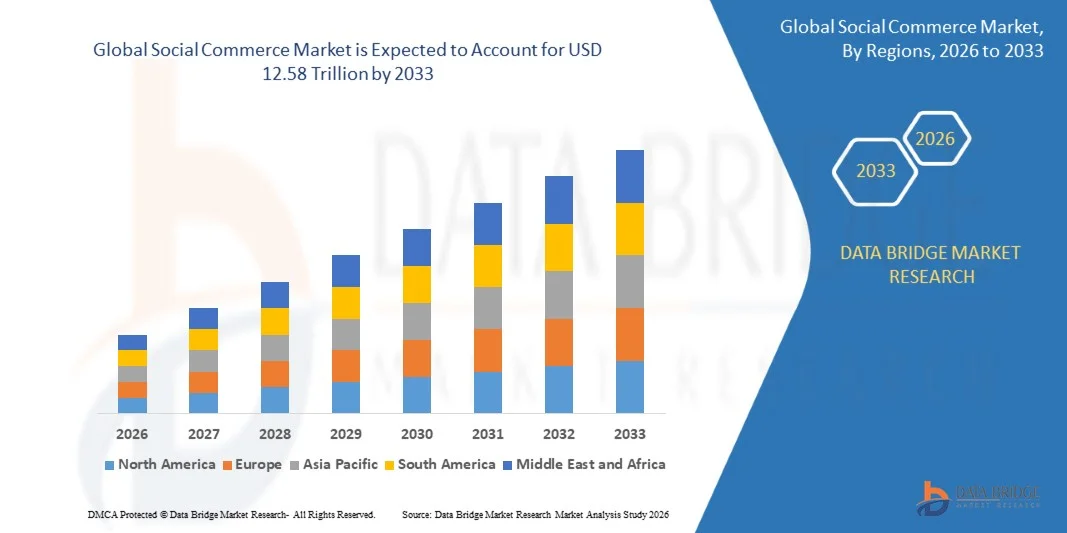
- Wie pro Data Bridge Market Research Analysis Die globale Marktgröße für den sozialen Handel wurde mitUSD 1.55 Billionen in 2025und wird voraussichtlich erreichenUSD 12,58 Trillion von 2033, beiCAGR von 29,84%während des Prognosezeitraums
- Das Marktwachstum wird größtenteils durch den schnellen Ausbau von Social-Media-Plattformen, die Erhöhung der Smartphone-Pension und kontinuierliche Fortschritte indigitale ZahlungTechnologien, die eine tiefere Integration der Einkaufsmöglichkeiten in soziale Netzwerkumgebungen vorantreiben
- Die zunehmende Verbraucherpräferenz für interaktive, personalisierte und bequeme Shopping-Erlebnisse, kombiniert mit dem wachsenden Einfluss von Machern und Peer-Empfehlungen, beschleunigt die Einführung von Social-Commerce-Plattformen, wodurch das Gesamtmarktwachstum deutlich gestärkt wird.
Marktgröße und Prognose
- Globaler Marktwert (2025): USD 1.55 Trillion
- Voraussichtlicher Marktwert (2033): USD 12,58 Trillion
- Wettervorhersage CAGR (2026–2033): 29.84%
Was sind die großen Takeaways des Social Commerce Market
- Social Commerce, der Produkt-Erkennung, Engagement und Einkauf direkt in Social-Media-Plattformen integriert, wird durch seine Fähigkeit, Unterhaltung, Community-Interaktion und nahtlose Transaktionen zu einem entscheidenden Bestandteil moderner digitaler Retail-Strategien.
- Die zunehmende Nachfrage nach Social-Commerce wird in erster Linie durch ein hohes Nutzerengagement auf Social-Plattformen, die Effektivität von Influencer-led und Video-basiertes Marketing und wachsendes Vertrauen in den In-App-Kauf, die gemeinsam das Verbraucherkaufverhalten umgestalten und die Markterweiterung beschleunigen
- Asia-Pacific dominierte den Social-Commerce-Markt mit einem Anteil von 72,1% im Jahr 2025, aufgrund der hohen Social-Media-Durchdringung, der schnellen Smartphone-Adoption und einer starken Kultur des mobilen ersten Einkaufs
- Nordamerika wird voraussichtlich die am schnellsten wachsende Region im Social-Commerce-Markt während der Prognosezeit sein, da schnelle Innovation in sozialen Einkaufsmöglichkeiten und starke Markeninvestitionen in Influencer-Marketing
- Das B2C-Segment dominierte den Markt mit einem Marktanteil von 59,3% im Jahr 2025, aufgrund der starken Präsenz von Marken und Händlern, die direkt an Verbraucher über Social Media-Plattformen verkaufen. Unternehmen nutzen Influencer Marketing, integrierte Checkout-Funktionen und personalisierte Werbung, um höhere Conversion-Raten und Impulskäufe zu steuern. Die Bequemlichkeit der end-to-end-Shopping-Erfahrungen in sozialen Apps stärkt die Dominanz von B2C weiter
Report Scope und Social Commerce Marktsegmentierung
|
Attribute |
Social Commerce Schlüsselmarkt Insights |
|
Verdeckte Segmente |
|
|
Überarbeitete Länder |
Nordamerika
Europa
Asien-Pazifik
Naher Osten und Afrika
Südamerika
|
|
Key Market Players |
|
|
Marktmöglichkeiten |
|
|
Daten Infos zum Wert hinzugefügt |
Neben den Markteinblicken wie Marktwert, Wachstumsrate, Marktsegmente, geographischer Erfassung, Marktteilnehmer und Marktszenario umfasst der vom Data Bridge Market Research Team kuratierte Marktbericht eine tiefgreifende Expertenanalyse, Import/Export-Analyse, Preisanalyse, Produktionsverbrauchsanalyse und pestle-Analyse. |
Was ist der Haupttrend im Social Commerce-Markt
„Growth of Video-Led und Live-Stream Shopping“
- Ein prominenter Trend im Social-Commerce-Markt ist das rasante Wachstum von Video- und Live-Streaming-Shopping-Formaten, die durch steigende Verbraucherpräferenz für interaktive, Echtzeit- und Content-getriebene Einkaufserlebnisse auf Social-Media-Plattformen angetrieben werden. Diese Formate kombinieren Unterhaltung, Produkt-Erkennung und Instant-Kauf, deutlich erhöhen das Nutzerengagement und Conversion-Raten
- So haben Plattformen wie TikTok Shop und Douyin es Marken und Schöpfern ermöglicht, Live-Stream-Vertriebssitzungen durchzuführen, in denen Produkte sofort demonstriert und gekauft werden, was zu höheren durchschnittlichen Bestellwerten und einem stärkeren Impulskaufverhalten führt. Dieser Ansatz hat die Rolle der Schöpfer als Schlüsselvertriebser innerhalb des sozialen Handels-Ökosystems gestärkt
- Video-Led-Commerce gewinnt Traktion, da Kurzform-Videos und Live-Inhalte es Marken ermöglichen, Produktnutzung, Qualität und Vorteile effektiver als statische Listen. Dieses visuelle Geschichtenerzählen verbessert das Vertrauen und reduziert Kauf-Hesitation, insbesondere in Kategorien wie Mode, Schönheit und Lifestyle-Produkte
- Große soziale Plattformen investieren stark in Live-Commerce-Tools, Macher-Monetization-Funktionen und In-App-Checkout-Funktionen, um diesen Trend zu unterstützen. Diese Investitionen beschleunigen den Übergang vom traditionellen E-Commerce zu immersiven sozialen Ersteinkaufsreisen
- Der zunehmende Einfluss von Influencern und Mikro-Kreatoren verstärkt die Adoption von Video-Led-Commerce, da sich die Verbraucher zunehmend auf peer-led Empfehlungen und authentische Inhalte verlassen. Diese Dynamik verändert, wie Marken Marketingbudgets für Social-Commerce-Strategien vergeben
- Die anhaltende Erweiterung von Video- und Live-Streaming-Shopping ist die Positionierung von Social-Commerce-Plattformen als Full-Funnel-Einzelhandels-Kanäle, die ihre Rolle beim Fahren von Entdeckung, Engagement und Direktverkäufen in digitalen Handelsumgebungen stärken
Social Commerce Market Dynamics
Fahrer
„Rising Social Media Penetration and Mobile-First Consumer Behavior“
- Der Social-Commerce-Markt wird stark durch das weit verbreitete Eindringen von Social-Media-Plattformen und die rasante Verschiebung auf das mobile erste Konsumentenverhalten auf den globalen Märkten angetrieben. Erhöhte tägliche Nutzung von Social Apps hat eine natürliche Umgebung geschaffen, um Shopping in routinemäßige digitale Interaktionen zu integrieren
- Zum Beispiel hat Meta Platforms, Inc. Shopping-Funktionen auf Instagram und Facebook eingebettet, so dass Marken Benutzer direkt über Feeds, Geschichten und Walzen erreichen können. Diese Integrationen haben die Produktsicht verbessert und den Weg von der Entdeckung zum Kauf verkürzt
- Die wachsende Verfügbarkeit von erschwinglichen Smartphones und mobilem Internet hat den Zugang zum sozialen Handel, insbesondere in Schwellenländern, erweitert. Verbraucher bevorzugen immer mehr Transaktionen innerhalb von Apps, die sie bereits nutzen, verbessern Komfort und Adoptionsraten
- Mobile-First-Schnittstellen unterstützen Funktionen wie Ein-Klick-Checkout, digitale Geldbörsen und personalisierte Empfehlungen, die Benutzererfahrung verbessern und Wiederholungskäufe fördern. Diese Fähigkeiten treiben höhere Transaktionsvolumina auf sozialen Plattformen
- Der stetige Anstieg der sozialen Mediennutzung in Verbindung mit mobilem Shopping-Verhalten verstärkt den sozialen Handel als Kernwachstumsmotor in der breiteren digitalen Einzelhandelslandschaft
Zurückhaltung/Challenge
„Datenschutzbelange und Vertrauensfragen bei sozialen Transaktionen“
- Der Social-Commerce-Markt steht vor Herausforderungen im Zusammenhang mit Datenschutz und Verbrauchervertrauen bei der Durchführung von Transaktionen direkt in sozialen Plattformen. Die Verarbeitung personenbezogener Daten, Zahlungsinformationen und gezielte Werbung hat die Regulierungs- und Nutzerprüfung erhöht
- Zum Beispiel hat Meta Platforms, Inc. in mehreren Regionen anhaltende regulatorische Aufmerksamkeit in Bezug auf Datenschutzpraktiken ausgesetzt und Plattformen aufgefordert, Transparenz und Compliance-Maßnahmen zu verbessern. Diese Kontrolle erhöht die operative Komplexität und wirkt sich auf die Plattform Glaubwürdigkeit aus
- Verbraucher sind weiterhin vorsichtig über die Weitergabe von Finanzinformationen zu sozialen Apps, insbesondere in Märkten mit zunehmendem Bewusstsein für Datenmissbrauch und Cybersicherheitsrisiken. Diese Hesitation kann die Annahme unter datenbewussten Benutzersegmenten verlangsamen
- Die Gewährleistung einer sicheren Zahlungsabwicklung, Betrugsprävention und transparenter Datennutzungsrichtlinien erfordert kontinuierliche Investitionen in Technologie- und Compliance-Frameworks. Diese Anforderungen erhöhen die Kosten für Plattformen und Händler in sozialen Handelsökosystemen
- Es wird erwartet, dass ständige Bedenken in Bezug auf Privatsphäre und Vertrauen die Plattformgestaltung, das regulatorische Engagement und die Verbraucherannahme beeinflussen und die langfristige Entwicklung des sozialen Handelsmarktes prägen.
Sozialer Handel Markt Anwendungsbereich
Der Markt wird auf Basis von Geschäftsmodell, Produkttyp und Plattform oder Vertriebskanal segmentiert.
• Nach Geschäftsmodell
Auf Basis des Geschäftsmodells wird der Social-Commerce-Markt in B2C, B2B und C2C segmentiert. Das B2C-Segment dominierte den Markt mit dem größten Umsatzanteil von 59,3 % im Jahr 2025, angetrieben durch die starke Präsenz von Marken und Einzelhändlern, die direkt an Verbraucher über Social Media-Plattformen verkaufen. Unternehmen nutzen Influencer Marketing, integrierte Checkout-Funktionen und personalisierte Werbung, um höhere Conversion-Raten und Impulskäufe zu steuern. Die Bequemlichkeit der end-to-end-Shopping-Erlebnisse in sozialen Apps stärkt die Dominanz von B2C.
Das C2C-Segment wird erwartet, dass die schnellste Wachstumsrate von 2026 bis 2033, die durch den schnellen Anstieg der Peer-to-Peer-Verkaufs- und Sozial-Reselling-Modelle. Individuelle Verkäufer nutzen zunehmend soziale Plattformen, um persönliche Netzwerke, Live-Verkäufe und gemeinschaftsbasiertes Vertrauen zu monetarisieren. Niedrige Einstiegsbarrieren und minimale Investitionen im Vorfeld fördern eine breitere Beteiligung und beschleunigen das Wachstum in den aufstrebenden und entwickelten Märkten.
• Nach Produkttyp
Auf der Grundlage des Produkttyps wird der Social-Commerce-Markt in persönliche & Beauty-Pflege, Bekleidung, Accessoires, Heimartikel, Gesundheits-Ergänzungen, Lebensmittel & Getränke und andere segmentiert. Das Segment Personal & Beauty Care dominierte den Markt im Jahr 2025, unterstützt durch hohe visuelle Attraktivität, häufige Produkteinführungen und starke Einflussfaktoren-getriebene Nachfrage. Kurzformvideos, Tutorials und Rezensionen spielen eine entscheidende Rolle bei der Gestaltung von Kaufentscheidungen und beim Fahren von Wiederholungen. Hohe Margen und Markengeschichte tragen weiter zur Segmentführung bei.
Das Bekleidungssegment wird voraussichtlich das schnellste Wachstum von 2026 bis 2033 registrieren, was durch die zunehmende Einführung von Live-Commerce und Echtzeit-Produkt-Showcasing bedingt ist. Verbraucher profitieren von Größenführung, Styling-Tipps und Instant-Feedback während Live-Sessions, was das Vertrauen in Online-Bekleidungskäufe verbessert. Schnelle Trendzyklen und soziale Validierung beschleunigen das Kaufverhalten und unterstützen ein anhaltendes Wachstum.
• Von Plattform/Sales-Kanal
Auf Basis von Plattform und Vertriebskanal wird der Social-Commerce-Markt in Video-Commerce-, Social-Network-led-Commerce-, Social Reselling-, Gruppenkauf- und Produktreview-Plattformen segmentiert. Social Network-led Commerce hielt den größten Marktanteil im Jahr 2025 aufgrund der tiefen Integration von Shopping-Funktionen in weit verbreiteten Social-Media-Plattformen. Direkte Filialfronten, In-App-Zahlungen und Algorithmus-getriebene Produkt-Erkennung verbessern das Nutzerengagement und die Kauffrequenz. Starke Dateneinsichten ermöglichen gezielte Werbeaktionen und stärken die Dominanz.
Das Video-Commerce-Segment wird von 2026 bis 2033 mit dem schnellsten CAGR-Segment bezeugt, das von zunehmender Verbraucherpräferenz für interaktive und immersive Shopping-Erlebnisse angetrieben wird. Live-Streaming und kurze Videos ermöglichen Echtzeit-Produktdemonstrationen und sofortige Kundeninteraktion, erhöhen Vertrauen und Conversion-Raten. Die sich ausweitende Macherwirtschaft und eine verbesserte Streaming-Infrastruktur beschleunigen die Akzeptanz in Regionen weiter.
Sozialmarkt Regionale Analyse
- Asia-Pacific dominierte den Social-Commerce-Markt mit dem größten Umsatzanteil von 72,1% im Jahr 2025, angetrieben durch hohe Social-Media-Durchdringung, schnelle Smartphone-Adoption und eine starke Kultur des mobilen ersten Shoppings
- Die große junge Bevölkerung der Region, die Erweiterung der digitalen Zahlungsinfrastruktur und die weit verbreitete Nutzung von Influencer- und Livestream-Modellen beschleunigen das Marktwachstum
- Die Steigerung der Internetzugangsmöglichkeit, der Plattforminnovation und das zunehmende Vertrauen in soziale Shopping-Ökosysteme in Schwellenländern unterstützen nachhaltige Expansion
China Social Commerce Markt Insight
China hatte 2025 aufgrund seines hoch entwickelten Social Media-Ökosystems und der frühen Einführung des Livestream-Handels den größten Anteil am asiatisch-pazifischen Social-Commerce-Markt. Die starke Integration von Shopping-Features in soziale Plattformen, umfangreiche Schöpferökonomie und weit verbreitete Akzeptanz von In-App-Käufen sind wichtige Wachstumstreiber. Hohe Engagements und nahtlose digitale Zahlungen verstärken weiterhin Chinas Führungsposition.
Indien Social Commerce Market Insight
Indien zeigt das schnellste Wachstum in der Region Asien-Pazifik, die durch schnelles Smartphone-Pension, erschwingliche mobile Daten und die zunehmende Beteiligung von kleinen Verkäufern und Influencern betrieben wird. Die zunehmende Annahme von Social Reselling-Modellen und vernakulären Inhalten erweitert die Reichweite über Metro-Städte hinaus. Steigendes Vertrauen in digitale Zahlungen und starkes Nutzerengagement auf sozialen Plattformen treiben die Marktdynamik weiter voran.
Europa Social Commerce Market Insight
Der europäische Social-Commerce-Markt wächst stetig, unterstützt durch die steigende Annahme von Social-Media-Einkaufsfunktionen und die zunehmende Zusammenarbeit zwischen Marken und Content-Erstellern. Verbraucher zeigen immer mehr Präferenzen für personalisierte und gemeinschaftsorientierte Shopping-Erlebnisse. Starke Datenschutznormen und der Schwerpunkt auf sicheren digitalen Transaktionen bilden Plattformstrategien in der gesamten Region.
Deutschland Sozialmarktaufsicht
Der deutsche Social-Commerce-Markt wird durch hohe Internetdurchdringung, starke E-Commerce-Reife und zunehmende Nutzung von sozialen Plattformen für die Produktentdeckung getrieben. Marken konzentrieren sich auf Qualität, Transparenz und vertrauenswürdige Bewertungen, um Verbraucher zu engagieren. Die Integration von Social Media mit etablierten Online-Handelssystemen unterstützt ein allmähliches, aber konsequentes Wachstum.
US Social Commerce Market Insight
Der US-Markt profitiert von einer digital gesegneten Verbraucherbasis, einer weit verbreiteten Nutzung von sozialen Medien und einem starken Einfluss von kreativ geführten Marketing. Das Wachstum wird durch die zunehmende Einführung von Video-basierten Produktförderung und nahtlosen Checkout-Integrationen unterstützt. Hohes Verbraucherengagement und Vertrauen in digitale Einzelhandelskanäle stärken weiterhin die Marktpräsenz.
Nordamerika Social Commerce Market Insight
Nordamerika wird von 2026 bis 2033 bei der schnellsten CAGR wachsen, angetrieben durch schnelle Innovation in sozialen Shopping-Funktionen und starke Markeninvestitionen in Influencer-Marketing. Ein hohes Einwegeinkommen, eine fortschrittliche digitale Infrastruktur und eine wachsende Akzeptanz des In-App-Kaufs sind wichtige Faktoren. Die Erweiterung von Video-Handel und Live-Shopping-Formate ist eine weitere Steigerung der Adoption.
US Social Commerce Market Insight
Die USA machten im Jahr 2025 den größten Anteil am nordamerikanischen Social-Commerce-Markt aus, unterstützt von einer reifen Social-Media-Landschaft und einer starken Beteiligung von globalen Marken. Erweiterte Werbe-Tools, datengesteuerte Personalisierung und weit verbreitete Nutzung von Influencern erhöhen Conversion-Raten. Kontinuierliche Plattform-Upgrades und ein hohes Verbraucherengagement verfestigen die führende Rolle der USA in der Region.
Welche Region den größten Teil der Social Commerce Market
Die Social-Commerce-Branche wird in erster Linie von etablierten Unternehmen geleitet, darunter:
- Snap, Inc. (USA)
- Xiaohongshu (China)
- Etsy, Inc. (USA)
- Roposo (Indien)
- WeChat / Weixin (China)
- Poshmark, Inc. (USA)
- Trell Shop (Indien)
- Meta Platforms, Inc. (USA)
- Yunji Sharing Technology Co., Ltd. (China)
- Pinterest, Inc. (USA)
- TikTok / Douyin (China)
- Fashnear Technologies Private Limited (Indien)
- Taobao (China)
- Twitter, Inc. (USA)
- Pinduoduo Inc. (China)
Aktuelle Entwicklungen im globalen Social-Commerce-Markt
- Im Mai 2025 hat Alibaba mit Xiaohongshu zusammengearbeitet, um die Integration des sozialen Handels in China zu stärken, wodurch eine direkte Umleitung von content-getriebenen Produktempfehlungen zum Kauf auf Taobao und Tmall ermöglicht wird. Diese Entwicklung verbessert die Nutzerbindungs- und Conversion-Effizienz, was sich durch höhere Click-Through-Raten und eine verstärkte Interaktion auszeichnet, wodurch die Rolle von Content-led-Plattformen bei der Steigerung der Transaktion im sozialen Handelsökosystem gestärkt wird.
- Im Mai 2025 führte Pinterest, Inc. mit AI-generierten Inhalten ein, um die Transparenz und das Vertrauen der Nutzer auf ihrer Plattform zu verbessern. Durch die eindeutige Identifizierung von AI-modifizierten Bildern durch visuelle Tags und fortgeschrittene Erkennungssysteme hat das Unternehmen die Glaubwürdigkeit von Inhalten verbessert, die das Vertrauen der Nutzer, das Vertrauen der Werbetreibenden und das langfristige Engagement in sozialen Entdeckungen und Commerce-getriebenen Umgebungen positiv beeinflussen wird.
- Im April 2025 erweiterte TikTok seine Shop-Funktion auf weiteren europäischen Märkten und baute auf einer starken Performance in den USA und Südostasien. Diese Erweiterung unterstützt die Strategie von TikTok, den In-App-Kauf und den Live-Handel zu skalieren, wodurch Marken breitere Publikum erreichen und das plattformgetriebene Umsatzwachstum in der sich schnell erweiternden sozialen Handelslandschaft Europas beschleunigen können
- Im Februar 2025 kündigte Alibaba eine strategische Partnerschaft mit Apple an, um sein Qwen AI-Modell in iPhone-Dienste in China zu integrieren, um die Personalisierung und Empfehlungsgenauigkeit in digitalen Shopping-Erlebnissen zu verbessern. Dieser Schritt stärkt die Fähigkeiten des sozialen Handels mit AI-getriebenen, wodurch maßgeschneiderte Inhalte, Produkt-Erkennung und höhere Conversion-Raten über das Ökosystem von Alibaba möglich sind.
- Im November 2023 führte Meta Platforms, Inc. die Verbindung zwischen Facebook, Instagram und Amazon ein, um In-App-Shopping-Erfahrungen zu optimieren. Durch die Möglichkeit der Nutzer, Amazon-Käufe direkt innerhalb der Plattformen von Meta abzuschließen, reduzierte diese Integration die Kaufreibung, verbesserte Anzeigenkonvertierungsraten und verstärkte die Rolle der sozialen Plattformen als Full-Funnel-Handelskanäle
SKU-
Erhalten Sie Online-Zugriff auf den Bericht zur weltweit ersten Market Intelligence Cloud

- Interaktives Datenanalyse-Dashboard
- Unternehmensanalyse-Dashboard für Chancen mit hohem Wachstumspotenzial
- Zugriff für Research-Analysten für Anpassungen und Abfragen
- Konkurrenzanalyse mit interaktivem Dashboard
- Aktuelle Nachrichten, Updates und Trendanalyse
- Nutzen Sie die Leistungsfähigkeit der Benchmark-Analyse für eine umfassende Konkurrenzverfolgung
Forschungsmethodik
Die Datenerfassung und Basisjahresanalyse werden mithilfe von Datenerfassungsmodulen mit großen Stichprobengrößen durchgeführt. Die Phase umfasst das Erhalten von Marktinformationen oder verwandten Daten aus verschiedenen Quellen und Strategien. Sie umfasst die Prüfung und Planung aller aus der Vergangenheit im Voraus erfassten Daten. Sie umfasst auch die Prüfung von Informationsinkonsistenzen, die in verschiedenen Informationsquellen auftreten. Die Marktdaten werden mithilfe von marktstatistischen und kohärenten Modellen analysiert und geschätzt. Darüber hinaus sind Marktanteilsanalyse und Schlüsseltrendanalyse die wichtigsten Erfolgsfaktoren im Marktbericht. Um mehr zu erfahren, fordern Sie bitte einen Analystenanruf an oder geben Sie Ihre Anfrage ein.
Die wichtigste Forschungsmethodik, die vom DBMR-Forschungsteam verwendet wird, ist die Datentriangulation, die Data Mining, die Analyse der Auswirkungen von Datenvariablen auf den Markt und die primäre (Branchenexperten-)Validierung umfasst. Zu den Datenmodellen gehören ein Lieferantenpositionierungsraster, eine Marktzeitlinienanalyse, ein Marktüberblick und -leitfaden, ein Firmenpositionierungsraster, eine Patentanalyse, eine Preisanalyse, eine Firmenmarktanteilsanalyse, Messstandards, eine globale versus eine regionale und Lieferantenanteilsanalyse. Um mehr über die Forschungsmethodik zu erfahren, senden Sie eine Anfrage an unsere Branchenexperten.
Anpassung möglich
Data Bridge Market Research ist ein führendes Unternehmen in der fortgeschrittenen formativen Forschung. Wir sind stolz darauf, unseren bestehenden und neuen Kunden Daten und Analysen zu bieten, die zu ihren Zielen passen. Der Bericht kann angepasst werden, um Preistrendanalysen von Zielmarken, Marktverständnis für zusätzliche Länder (fordern Sie die Länderliste an), Daten zu klinischen Studienergebnissen, Literaturübersicht, Analysen des Marktes für aufgearbeitete Produkte und Produktbasis einzuschließen. Marktanalysen von Zielkonkurrenten können von technologiebasierten Analysen bis hin zu Marktportfoliostrategien analysiert werden. Wir können so viele Wettbewerber hinzufügen, wie Sie Daten in dem von Ihnen gewünschten Format und Datenstil benötigen. Unser Analystenteam kann Ihnen auch Daten in groben Excel-Rohdateien und Pivot-Tabellen (Fact Book) bereitstellen oder Sie bei der Erstellung von Präsentationen aus den im Bericht verfügbaren Datensätzen unterstützen.











