



Industria de la Industria de la Industria de la Industria de la Industria de la Industria de la Industria de la Industria de la Industria de la Industria de la Industria de la Industria de la Industria, Industria de la Industria de la Industria de la Industria de la Industria de la Industria de la Industria de la Industria de la Industria de la Industria de la Industria de la Industria de la Industria de la Industria de la Industria de la Industria de la Industria de la Industria de la Industria, Industria de la Industria de la Industria de la Industria de la Industria de la Industria Química
Alemania Safety Footwear Tamaño del mercado
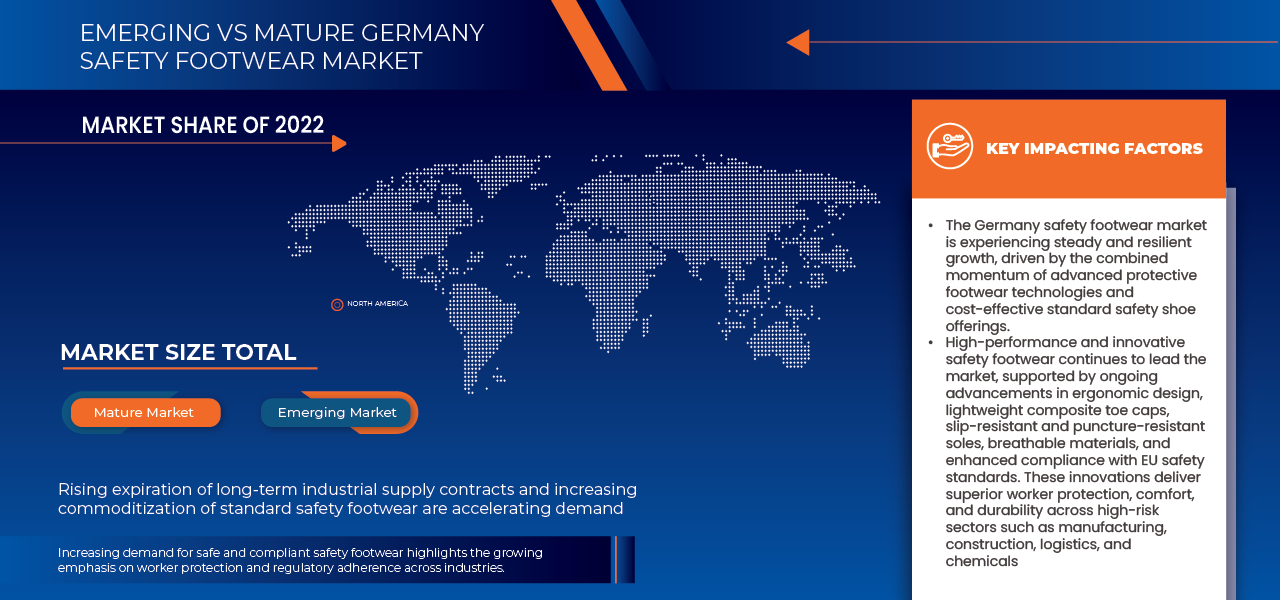
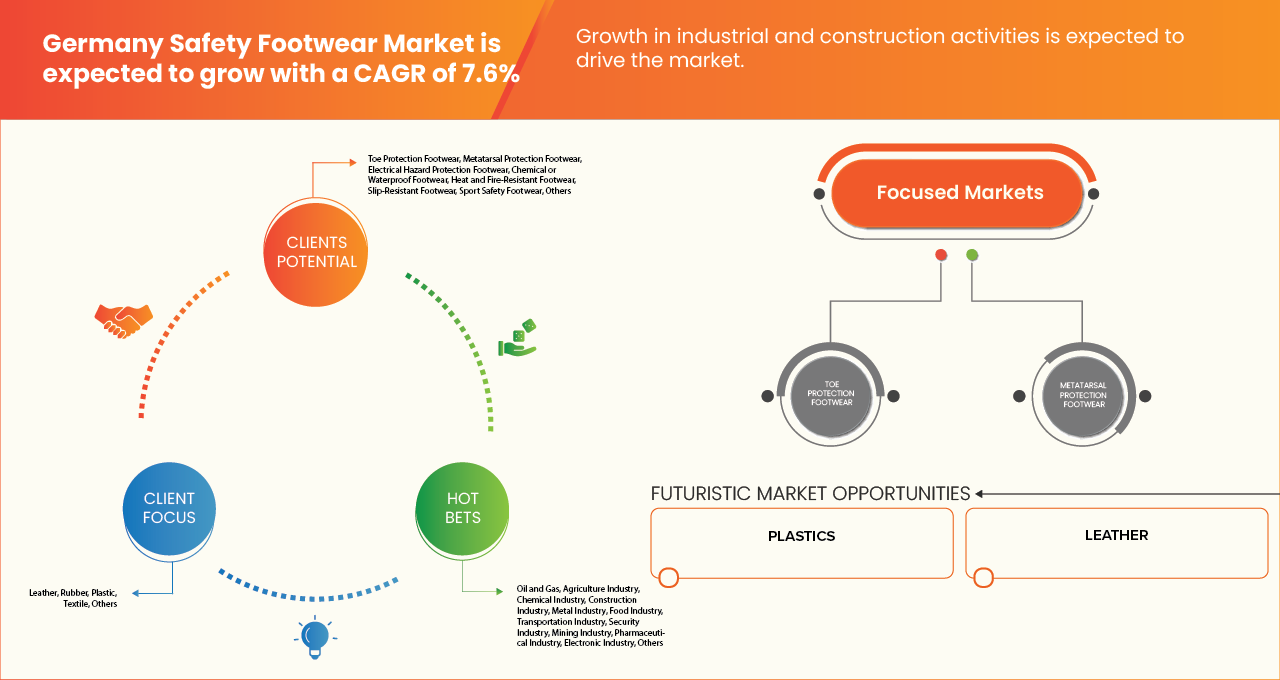
- Según Data Bridge Market Research Analysis, se espera que el mercado de calzado de seguridad de Alemania alcance los USD 1706,01 millones en 2033 de USD 954,94 millones en 2026, creciendo con un CAGR sustancial del 7,6% en el período de previsión de 2026 a 2033.
- El mercado de calzado de seguridad de Alemania está impulsado por una gran mano de obra cualificada, el cumplimiento obligatorio de la seguridad y fuertes redes industriales y logísticas que apoyan la demanda continua.
- Redes
Tamaño del mercado
- Alemania Valor de mercado (2026):USD 954,94 million
- Valor de mercado esperado (2033):USD 1706.01 million
- CAGR prefabricado (2027-2033):7.6%
Alemania Safety Footwear Market Analysis
- El aumento de la actividad en la fabricación, la automoción, la construcción, la logística, la energía y los productos químicos aumenta considerablemente la demanda de calzado de seguridad certificado en Alemania, respaldada por estrictos requisitos de seguridad en el lugar de trabajo.
- El Gobierno y la aplicación de las normas de seguridad ocupacional (EN ISO 20345 y EU PPE Regulation) siguen encomendando el uso de calzado protector en entornos de trabajo peligrosos, sosteniendo una demanda constante de sustitución.
- Los altos costos de trabajo y producción, junto con la presión para equilibrar la comodidad, durabilidad y sostenibilidad, plantean retos de coste para los fabricantes que operan dentro de Alemania.
- Los avances tecnológicos en materiales y diseño, incluidos los compuestos ligeros, las suelas antifatiga, las suelas resistentes al deslizamiento y la construcción ergonómica, están mejorando la comodidad y productividad de los trabajadores, impulsando mejoras de los productos.
- La creciente adopción de canales de ventas digitales, incluidas plataformas de comercio electrónico y modelos directos a consumidores, está mejorando la accesibilidad de los mercados y permitiendo que las marcas lleguen a las PYME y a los trabajadores individuales de manera más eficiente.
- Las tendencias de sostenibilidad y ecodiseño están remodelando el desarrollo de los productos, y los fabricantes utilizan cada vez más materiales reciclados, cuero ambientalmente responsable y procesos de producción eficientes en la energía para cumplir con los objetivos corporativos de ESG.
- Se espera que el segmento de zapatos de seguridad domine el mercado de calzado de seguridad de Alemania, contando con la mayor cuota de mercado del 29,82% en 2026, impulsado por el alto uso en las industrias de construcción, fabricación, logística y automotriz, donde el calzado ligero y todo el día de confort es preferido por las botas pesadas.
Report Scope and Germany Safety Footwear Market Segmentation
|
Atributos |
Alemania Safety Footwear Market Insights |
|
Segmentos cubiertos |
|
|
Países cubiertos |
|
|
Principales jugadores del mercado |
|
|
Oportunidades de mercado |
|
|
Valor añadido Data Infosets |
Además de las ideas sobre escenarios de mercado como el valor de mercado, la tasa de crecimiento, la segmentación, la cobertura geográfica y los principales actores, los informes de mercado comisariados por el Data Bridge Market Research también incluyen análisis profundos de expertos, epidemiología de pacientes, análisis de tuberías, análisis de precios y marco regulatorio |
Alemania Safety Footwear Market Trends
“Aumento de las actividades de desarrollo de infraestructura y construcción sostenida”
- El aumento de las actividades de desarrollo de la infraestructura y los gastos de construcción sostenidos en Alemania son factores clave que apoyan el crecimiento del mercado de calzado de seguridad de Alemania, ya que los proyectos a gran escala aumentan la necesidad de protección de los trabajadores en los lugares de trabajo activos. Se espera que el aumento de la adopción de calzado de seguridad en las instalaciones de fabricación, logística, servicios públicos y gestión de desechos y agua, junto con su función en la reducción de las lesiones en el lugar de trabajo y los costos de indemnización conexos, siga impulsando la expansión del mercado.
- Las principales restricciones que pueden afectar negativamente al mercado de calzado de seguridad de Alemania incluyen preocupaciones relacionadas con la comodidad prolongada del desgaste, problemas potenciales relacionados con la salud o el medio ambiente, y la adopción incoherente de diseños de protección avanzados en pequeñas empresas. La conciencia limitada sobre la selección adecuada de calzado para los peligros específicos del lugar de trabajo también puede restringir la penetración óptima del mercado.
- Se espera que el creciente énfasis en las prácticas de fabricación sostenible y el creciente interés en materiales ecológicos, reciclables y ligeros para calzado de seguridad generen nuevas oportunidades en el mercado de calzado de seguridad de Alemania. Además, las normas más estrictas de seguridad en el trabajo y la atención del gobierno en el bienestar de los trabajadores están alentando a los empleadores a mejorar el equipo de protección. Sin embargo, se espera que la selección o el uso indebidos de calzado de seguridad, la variación de las prácticas de cumplimiento y las fluctuaciones de los precios de materias primas como el cuero, el caucho y los polímeros plantean desafíos para el crecimiento del mercado.
- En marzo de 2022, el grupo uvex amplió su cartera de calzado de seguridad en Alemania mediante la introducción de zapatos de seguridad ergonómicamente optimizados fabricados en sus instalaciones de Lüneburg. Los productos recién lanzados fueron diseñados para mejorar la comodidad del usuario durante largas horas de trabajo, mientras que cumplen con los estándares de seguridad EN ISO, apoyando industrias como la construcción, fabricación y logística. Esta expansión fortaleció la posición de uvex como proveedor doméstico centrado en soluciones de calzado protectora de alta calidad centradas en el trabajador.
- En octubre de 2021, Elten GmbH, fabricante de calzado de seguridad de Alemania, lanzó una nueva gama de zapatos de seguridad ligeros que incorporan materiales transpirables y tecnología única resistente al deslizamiento. La línea de productos se desarrolló en respuesta a la creciente demanda de sectores industriales y de almacenamiento para calzado que reduce la fatiga sin comprometer el rendimiento de seguridad. La introducción apoyó la mejora del cumplimiento de la seguridad en el lugar de trabajo al abordar las preocupaciones relacionadas con la comodidad entre los trabajadores
Alemania Safety Footwear Market Dynamics
Conductor
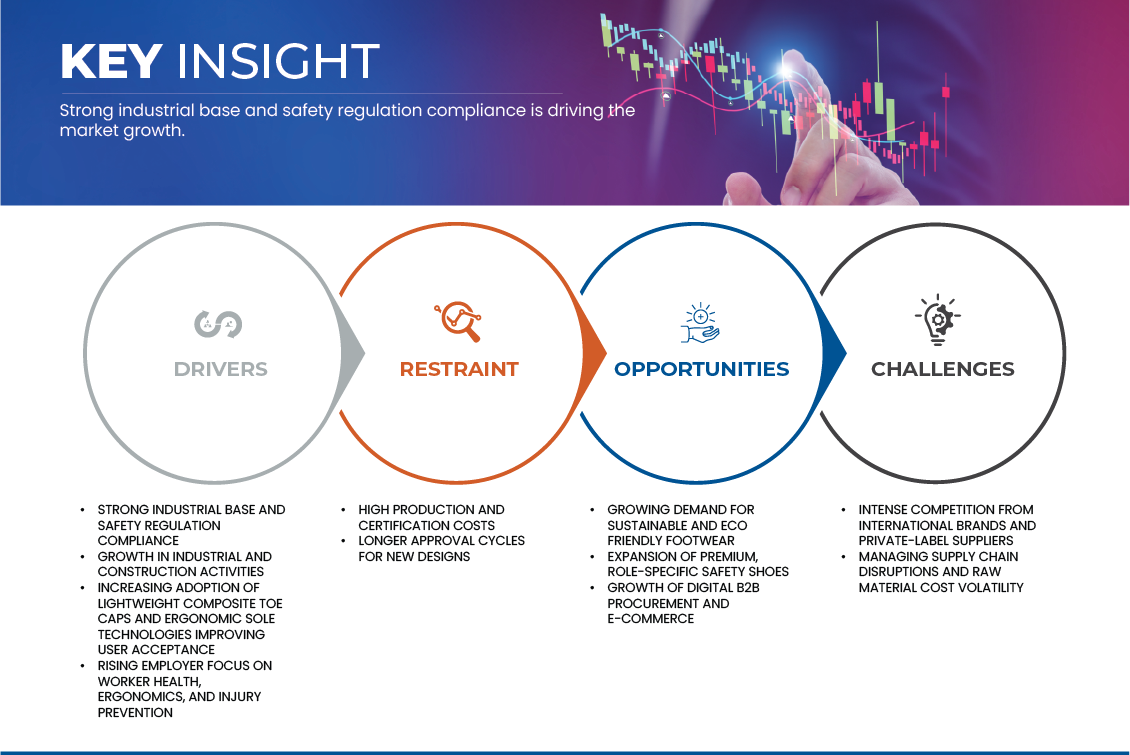
Cumplimiento fuerte de la base industrial y la regulación de la seguridad
- La posición de Alemania como la mayor economía industrial de Europa, apoyada por una sólida base de fabricación que abarca automotriz, maquinaria, construcción, productos químicos, logística y sectores energéticos, ha sido un motor fundamental de la demanda sostenida de calzado de seguridad. Una proporción significativa de la fuerza laboral funciona en entornos con alto riesgo ocupacional, donde el calzado protector no es opcional, sino un requisito reglamentario. This has resulted in safety footwear being embedded as a core component of workplace compliance and risk mitigation strategies across industries.
- La estricta aplicación de las normas de seguridad ocupacional, en particular las normas EN ISO 20345 de la Ley alemana de seguridad y salud ocupacional (Arbeitsschutzgesetz) mantiene el uso de calzado de seguridad certificado que ofrece características tales como protección de los dedos, resistencia al deslizamiento, resistencia a la penetración, propiedades antiestáticas y absorción de energía. Los empleadores son legalmente responsables de proporcionar cumplimientoequipo de protección personal (PPE), que se traduce directamente en una adquisición constante y recurrente de calzado de seguridad. Además, la fuerte presencia de grandes empleadores y sindicatos industriales refuerza aún más la adhesión a las normas de seguridad, limitando la sustitución con alternativas no certificadas o de baja calidad.
- In January 2024, the German Federal Institute for Occupational Safety and Health (BAuA) reiterated that under the Occupational Safety and Health Act (ArbSchG) and the PPE Usage Ordinance (PSA-BV), employers are legally required to provide certified personal protective equipment, including safety footwear, free of charge to employees exposed to workplace hazards. Esta obligación regulatoria sostiene directamente la demanda continua de zapatos de seguridad conformes en los sectores industrial, de construcción, logística y de fabricación de Alemania.
- En marzo de 2023, el Seguro Alemán de Accidentes Sociales (DGUV) actualizó sus normas técnicas para la protección de pies y piernas, destacando el uso obligatorio de calzado de seguridad compatible con EN ISO 20345 en entornos de trabajo de alto riesgo. Estas normas DGUV sirven como referentes legalmente reconocidos para el cumplimiento, reforzando la adquisición estandarizada de calzado de seguridad certificado por los empleadores alemanes.
- En octubre de 2022, la Comisión Europea, a través de su Reglamento PPE (EU) 2016/425, reafirmó que todo calzado de seguridad comercializado en los estados miembros de la UE, incluyendo Alemania, debe cumplir normas armonizadas como EN ISO 20345 y llevar certificación CE. Este marco regulatorio garantiza los requisitos uniformes de seguridad y apoya la reputación de Alemania por la alta calidad y la regulaciónSeguridad industrialequipo.
- En abril de 2024, uvex Safety Group, fabricante de calzado de seguridad basado en Alemania, destacó en su sitio web corporativo que todos los zapatos de seguridad uvex se desarrollan y prueban de acuerdo con las directrices EN ISO 20345 y DGUV. La empresa hizo hincapié en las pruebas internas, el diseño ergonómico y la innovación impulsada por el cumplimiento para cumplir con las estrictas normas de seguridad ocupacional de Alemania, lo que refleja cómo los fabricantes nacionales alinean el desarrollo de productos con la aplicación regulatoria.
- En conclusión, el extenso paisaje industrial de Alemania, combinado con rigurosas regulaciones de seguridad ocupacional, crea un entorno de demanda estructuralmente resistente y no discrecional para calzado de seguridad. La obligación jurídica de cumplir con las normas EN ISO 20345, reforzada por las autoridades nacionales y los reglamentos de la UE, garantiza que el calzado de seguridad certificado siga siendo una categoría de adquisición esencial en lugar de un elemento de costo-opcional. Esta certeza reglamentaria, apoyada por una fuerte supervisión institucional y un comportamiento orientado al cumplimiento del empleador, no sólo sostiene una demanda estable de sustitución, sino que también fomenta la innovación continua del producto por los fabricantes nacionales, consolidando el calzado de seguridad como un segmento a largo plazo impulsado por el cumplimiento dentro del ecosistema industrial alemán.
Restraint/Challenge
Costos altos de producción y certificación
- Los altos costos de producción y certificación siguen siendo una restricción notable en el mercado de calzado de seguridad de Alemania, ya que los fabricantes incurren en gastos sustanciales para garantizar que los productos cumplan con estrictas normas de seguridad y expectativas de calidad. Los calzados de seguridad vendidos en Alemania deben cumplir con EN ISO 20345 y el Reglamento UE PPE (EU) 2016/425, que requiere pruebas de laboratorio extensas para la resistencia al impacto, compresión, resistencia a la penetración, rendimiento deslizante y otros criterios de protección. Estos procesos de certificación implican pruebas repetidas, auditorías de calidad y documentación, todas las cuales aumentan los plazos de desarrollo y las estructuras de costos, especialmente para diseños nuevos o innovadores.
- Los fabricantes también enfrentan costos de materiales elevados debido al uso de componentes premium como tapas de pie compuestas ligeros, suelas resistentes a la punción, sistemas de amortiguación ergonómicos y suelas resistentes al deslizamiento avanzadas. Estos materiales, junto con las inversiones en tecnologías de fabricación automatizadas y capacitación de mano de obra calificada, aumentan los costos de producción de unidades en comparación con el calzado no calzado. Los productores más pequeños y medianos, en particular, pueden luchar por absorber esos gastos, reduciendo su capacidad de competir a precios contra alternativas importadas que ofrezcan protección básica a menores costos unitarios.
- En 2024, según Uvex Safety Group, la inversión en pruebas de laboratorio multietapa y auditorías de calidad interna para zapatos certificados EN ISO 20345 S3 aumentó los costos de producción en más del 10%, destacando la carga financiera de garantizar el cumplimiento manteniendo al mismo tiempo la seguridad avanzada y las características ergonómicas.
- En 2023, ELTEN GmbH informó en su revisión anual de que el aumento de los costes de los tapones compuestos, las suelas resistentes a las puntuaciones y los sistemas de amortiguación ergonómica provocaron un aumento del 12–15% en los costos promedios de producción de unidades para los modelos S3 y ESD, lo que demuestra las presiones de costos asociadas con la adopción de material premium.
- En 2023, el Ministerio Federal de Asuntos Económicos y de Acción sobre el Clima (BMWK) confirmó que los fabricantes de equipos regulados, incluidos los calzados de seguridad, asignan una proporción más alta de presupuestos de R plagaD a procesos de certificación y cumplimiento que segmentos de calzado no regulados, lo que indica problemas de costos operacionales a largo plazo para los productores más pequeños.
- En 2025, según el Grupo HAIX, las inversiones en marcha en las instalaciones de ensayo, la capacitación de los empleados y los órganos de certificación acreditados externos aumentaron los costos generales, especialmente afectando la flexibilidad de fijación de precios para los modelos de calzado de seguridad orientados a la exportación.
- En 2024, el Instituto Federal Alemán de Seguridad y Salud Ocupacional (BAuA) informó que las actualizaciones de las normas EN ISO 20345 y las normas técnicas conexas de DGUV requieren que los fabricantes realicen reevaluación y recertificación periódicas, imponiendo cargas financieras y administrativas recurrentes a los productores de calzado de seguridad.
- En 2024, la Comisión Europea (Reglamento UE PPE 2016/425) señaló que los cambios en las normas de seguridad armonizadas a menudo requerían la recertificación de los modelos de calzado de seguridad existentes, creando costos de cumplimiento recurrentes que restringen la agilidad del mercado, especialmente para los fabricantes de tamaño pequeño y mediano.
- En conclusión, los efectos combinados de los estrictos requisitos de certificación, las obligaciones recurrentes de cumplimiento y el uso de materiales de protección premium siguen ejerciendo una presión financiera significativa sobre los fabricantes de calzado de seguridad en Alemania. Si bien estos costos aseguran un calzado de alta calidad y compatible con la regulación que protege a los trabajadores en los sectores industrial y de construcción, también limitan la flexibilidad de precios y la agilidad del mercado, especialmente para los productores más pequeños y medianos. Como resultado, los elevados costos de producción y certificación siguen siendo una moderación persistente, conformando dinámicas competitivas e influyendo en la estrategia de productos dentro del mercado de calzado de seguridad alemán.
Alemania Safety Footwear Market Scope
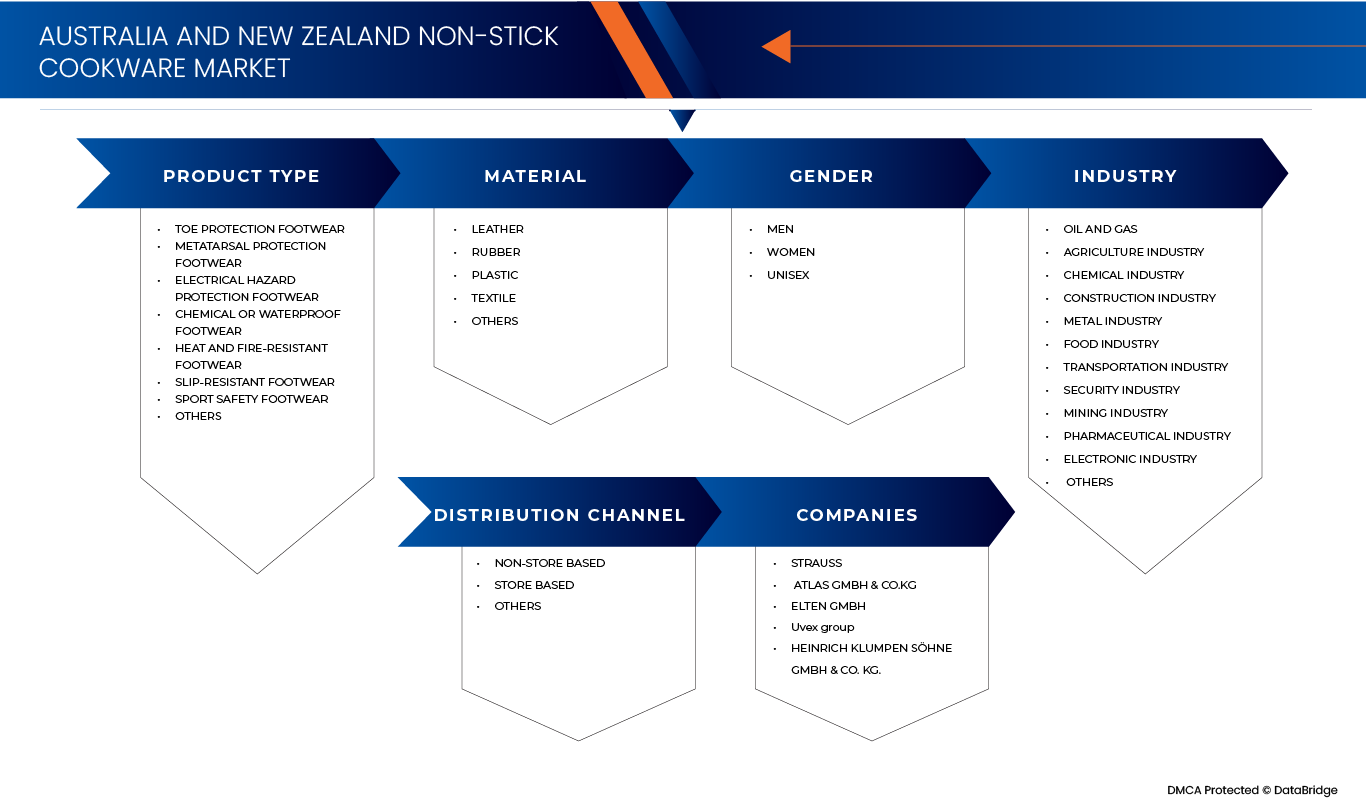
El mercado de calzado de seguridad de Alemania se segmenta en cinco segmentos notables basados en el tipo de producto, género material, industria y canal de distribución
- Por tipo de producto
Sobre la base del tipo de producto, el mercado de calzado de seguridad de Alemania se segmenta en calzado de protección de pies, calzado de protección metatarsal, calzado de protección de peligro eléctrico, calzado químico o impermeable, calzado resistente al calor y al fuego, calzado resistente al deslizamiento, calzado de seguridad deportiva, otros.
En 2026, se espera que el segmento de calzado de protección de los pies domine el mercado de calzado de seguridad de Alemania con una parte del 29,82%, impulsado por su adopción generalizada en las industrias de construcción, fabricación, procesamiento de metales y logística, donde es obligatoria la protección contra los riesgos de impacto y compresión. Además de mantener la mayor cuota de mercado, el calzado de protección de los pies es también el segmento de más rápido crecimiento, apoyado por el aumento de la aplicación de la reglamentación y el aumento de la sensibilización sobre la seguridad en el lugar de trabajo. Estos productos ofrecen una mayor durabilidad, un estricto cumplimiento de las normas europeas de seguridad y una mayor confianza de los trabajadores, lo que hace que el calzado de protección sea un requisito fundamental en entornos industriales de alto riesgo.
- Por material
Sobre la base del material, el mercado de calzado de seguridad de Alemania se segmenta en cuero, caucho, plástico, textil, otros.
En 2026, se espera que el segmento de cuero domine la parte del mercado de seguridad de Alemania del 51,39% debido a su durabilidad superior, transpirabilidad y comodidad, lo que lo hace bien adecuado para el uso industrial prolongado. Calzado de seguridad basado en cuero proporciona una mayor resistencia a la abrasión, mantiene la flexibilidad en condiciones de trabajo variables y apoya el diseño ergonómico de calzado, reforzando su adopción generalizada en la construcción, fabricación y sector industrial pesado.
- Por género
Sobre la base del género, el mercado de calzado de seguridad de Alemania se centra en hombres, mujeres, unisex.
En 2026, se prevé que el segmento masculino dominará la cuota del mercado de calzado de seguridad de Alemania del 71,63% debido a la mayor concentración de mano de obra masculina en los sectores de construcción, fabricación, procesamiento de metales y industrias pesadas. El calzado de seguridad de los hombres es ampliamente adoptado debido a su disponibilidad en una gama más amplia de diseños de protección, capacidades de carga y cumplimiento de estrictas normas de seguridad en el lugar de trabajo. Sin embargo, las mujeres y los segmentos de unisex están ganando una tracción constante con el aumento de la participación de las mujeres en la fuerza de trabajo y la creciente demanda de calzado de seguridad ergonómico e inclusivo de tamaño en diversas industrias en alemán.
- Por industria
Sobre la base de la industria, el mercado de calzado de seguridad de Alemania está segmentado en petróleo y gas, industria agrícola, industria química, industria de la construcción, industria metalúrgica, industria alimentaria, industria del transporte, industria de la seguridad, industria minera, industria farmacéutica, industria electrónica, otros.
En 2026, se prevé que el segmento de la industria de la construcción dominará la cuota del mercado de calzado de seguridad de Alemania del 31,83% debido al desarrollo continuo de la infraestructura, las normas estrictas de seguridad en el lugar de trabajo y la alta exposición de los trabajadores a los peligros mecánicos, eléctricos y relacionados con el deslizamiento en diversos entornos de construcción.
- Por canal de distribución
Sobre la base del canal de distribución, el mercado de calzado de seguridad de Alemania se segmenta en base a tienda, tienda, otros.
En 2026, se prevé que el segmento no basado en la tienda dominará la cuota del mercado de seguridad de Alemania del 63,51% debido a la fuerte presencia de redes de retail organizadas, la fácil accesibilidad para los compradores industriales y comerciales, y la capacidad de proporcionar accesorios y demostraciones personalizados, mientras que el segmento no basado en la tienda está presenciando un crecimiento constante debido a la creciente adopción de plataformas en línea y canales de comercio electrónico para una adquisición conveniente y una selección de productos más amplia.
Alemania Safety Footwear Market Share
Algunos de los principales jugadores que operan en el mercado de ropa de seguridad de Alemania se enumeran a continuación:
- Engelbert Strauss Inc.(Alemania)
- ATLAS GmbH " Co.KG(Alemania)
- ELTEN GmbH (Alemania)
- UVEX Safety Group (Alemania)
- Heinrich Klumpen Söhne GmbH " Co. KG (Alemania)
- Bata Industrials(Países Bajos)
- Aigle(Francia)
- Stabilus Safety GmbH (Alemania)
- LUPOS® Gmbh, (Alemania)
- Zapatos de seguridad FTG Srl (Italia)
- Portwest UC (Irlanda)
- Calzado talan,
- HAIX GROUP (Alemania)
- COFRA S.r.l.(Italia)
Últimas novedades en Alemania Safety Footwear Market
- Durante 2024, Engelbert Strauss continuó su estrategia de lanzamientos bianuales de calzado de seguridad, alineados con colecciones Primavera/Verano y Otoño/Invierno. Estos lanzamientos enfatizaron el diseño moderno, materiales ligeros y el cumplimiento de EN ISO 20345, dirigidos a la construcción, logística y comercios calificados. En 2025, la empresa fortaleció aún más su modelo de comercio electrónico y minorista directo a consumidor en Alemania, apoyado por inversiones en infraestructura logística y centros de experiencia de marca. Durante este período, las iniciativas de sostenibilidad, incluidas las asociaciones de proveedores a largo plazo y la adquisición responsable, siguieron siendo un elemento central.
- En 2024, ATLAS mantuvo su posición como uno de los mayores fabricantes de calzado de seguridad de Europa centrándose en la producción de alta capacidad en su instalación Dortmund, reforzando su posicionamiento “Made in Germany”. A lo largo de 2025, la empresa hizo hincapié en la optimización de procesos, la automatización y la producción de calidad consistente, en lugar de cambios importantes de cartera. ATLAS siguió suministrando grandes clientes industriales en los sectores de construcción, automoción, fabricación y logística, aprovechando la creciente demanda de calzado de seguridad certificado por el cumplimiento.
- En 2024, ELTEN aceleró la aplicación de su estrategia de sostenibilidad ELTEN LOOP, introduciendo modelos adicionales de calzado de seguridad utilizando materiales reciclados y ambientalmente responsables. La empresa fortaleció su posicionamiento en ESG, ganando reconocimiento a través de altas calificaciones de sostenibilidad y RSC, lo que aumentó el atractivo entre compradores corporativos e industriales. En 2025, ELTEN reforzó la visibilidad de la marca mediante la participación en importantes exposiciones de la industria como A+A Düsseldorf, mientras continuaba la innovación incremental en comodidad, durabilidad y ecodiseño dentro de su gama de calzado de seguridad premium.
- Durante 2024, UVEX amplió su enfoque en calzado ligero y ergonómico de seguridad, integrando sistemas únicos avanzados y diseños de reducción de fatiga para soportar largas horas de trabajo en entornos industriales. En 2025, UVEX entró en una nueva fase estratégica tras la inversión privada en equidad, destinada a acelerar el crecimiento, la innovación y la expansión internacional. Se espera que este desarrollo fortalezca la cartera de calzado de seguridad de UVEX a través de una mayor inversión R plagaD, una innovación material sostenible y un mayor alcance del mercado manteniendo al mismo tiempo su patrimonio de ingeniería alemán.
- A lo largo de 2024, HAIX siguió centrándose en calzados de seguridad de alto rendimiento, especialmente para aplicaciones industriales, de utilidad y de emergencia. El desarrollo del producto destacó el rendimiento técnico, durabilidad, resistencia al deslizamiento y comodidad ergonómica. En 2025, HAIX mantuvo su estrategia de refinamiento de productos incrementales en lugar de grandes cambios corporativos, reforzando su reputación como fabricante especializado. La producción europea continua y los estrictos estándares de calidad respaldan una fuerte demanda de usuarios profesionales e industriales en Alemania.
SKU-
Obtenga acceso en línea al informe sobre la primera nube de inteligencia de mercado del mundo

- Panel de análisis de datos interactivo
- Panel de análisis de empresas para oportunidades con alto potencial de crecimiento
- Acceso de analista de investigación para personalización y consultas
- Análisis de la competencia con panel interactivo
- Últimas noticias, actualizaciones y análisis de tendencias
- Aproveche el poder del análisis de referencia para un seguimiento integral de la competencia
Tabla de contenido
1 INTRODUCCIÓN
1.1 OBJETIVOS DEL ESTUDIO
1.2 DEFINICIÓN DEL MERCADO
1.3 Examen general de la situación de la seguridad alemana
1.4 LIMITACIONES
1.5 MARKETS COVERED
2 MARKET SEGMENTATION
2.1 MARKETS COVERED
2.2 ÁMBIÉN GEOGRÁFICO
2.3 AÑOS ESTUDIOS PARA EL ESTUDIO
2.4 CURRENCY AND PRICING
2.5 DBMR TRIPOD DATA VALIDATION MODEL
2.6 MULTIVARIATE MODELLING
2.7 Relaciones públicas con los líderes de la OPINIÓN de KEY
2.8 DBMR MARKET POSITION GRID
2.9 MARKET APPLICATION GRID
2.1 DBMR VENDOR SHARE ANALISIS
2.11 FUERZAS SEGUNDARIAS
2.12 ASUNTOS
RESUMEN EJECUTIVO
4 fotos INSIGHT
4.1 FIVE FORCES DE PORTER
4.1.1 Tres de los nuevos territorios
4.1.2 POWER BARGAINING POWER OF SUPPLIERS
4.1.3 POWER BARGAINING POWER OF BUYERS
4.1.4 THREAT OF SUBSTITUTES
4.1.5 RIVALOR COMPETITIVO
4.2 TRACKER INNOVATION AND STRATEGIC ANALYSIS – GERMANY SAFETY FOOTWEAR MARKET
4.2.1 MAJOR DEALS AND STRATEGIC ALLIANCES ANALYSIS
4.2.2 VENTURAS ÚNICAS
4.2.3 MIRIGROS Y MEDIDAS
4.2.4 LICENCIA Y PARTNERSHIP
4.2.5 COLABORACIONES DE TECNOLOGÍA
4.2.6 Gastos estratégicos
4.2.7 NUMBER OF PRODUCTS IN DEVELOPMENT
4.2.8 ETAPA DEL DESARROLLO
4.2.9 TimeLINES AND MILESTONES
4.2.10 ESTRATEGIAS DE INNOVACIÓN Y METODOLOGÍAS
4.2.11 Asistencia y MITIGACIÓN
4.2.12 FUTURO
4.2.13 CONCLUSIÓN
4.2.14
4.2.15 EXPLANACIÓN: -
4.2.16 EXPLANACIÓN: -
4.3 ANÁLISIS DE CHAIN SUPPLY
4.3.1 INTRODUCCIÓN
4.3.2 Examen general
4.3.3 PROCURACIÓN DE RECURSOS MATERIALES DE RAW
4.3.4 Procesamiento " MANUFACTURACIÓN DE PRODUCTOS (PRODUCCIÓN)
4.3.5 LOGISTICAS DE LA DISTRIBUCIÓN (TRANSPORTACIÓN)
4.3.6 GASTOS LOGISTICOS
4.3.7 RETAIL " COMMERCIAL BUYER CHANNELS (DISTRIBUTION " SALES)
4.3.8 IMPORTANCE OF LOGISTICS SERVICE PROVIDERS
4.3.9 CONCLUSIÓN
4.4 COVERAGE MATERIAL RAW
4.4.1
4.4.2 RUBBER AND THERMOPLASTIC POLYURETHANE (TPU)
4.4.3 METALLES AND COMPOSITE MATERIALS
4.4.4 FABRICES TEXTILES Y SÍNTICOS
4.4.5 CUSHIONING AND SHOCK-ABSORBING MATERIALS
4.5 ANALISIS VALOR CHAIN
4.5.1 FUERZA MATERIAL DE RAW
4.5.2 DESIGN AND PRODUCT DEVELOPMENT
4.5.3 MANUFACTURACIÓN Y PRODUCCIÓN
4.5.4 DISTRIBUCIÓN Y LOGISTICAS
4.5.5 MARKETING AND SALES
4.5.6 APOYO AFTER-SALES
4.5.7
4.6 ANÁLISIS DE LOS GASTOS BREAKDOWN OF THE GERMANY SAFETY FOOTWEAR MARKET
INTRODUCCIÓN
4.6.2 GASTOS MATERIALES DE RAW Y MANUFACTURACIÓN
4.6.3 PACKAGING AND LOGISTICS COSTS
4.6.4 RESEARCH, QUALITY, AND REGULATORY COMPLIANCE COSTS
4.6.5 ASUNTOS AMBIENTES, ENERGÍA Y SOSTENIBILIDAD
4.6.6 EMERGING COST TRENDS
4.6.7 Conclusión
4.7 MARGINS PROFIT SCENARIO OF THE GERMANY SAFETY FOOTWEAR MARKET
INTRODUCCIÓN
4.7.2 GESTIÓN DE LOS GASTOS Y FORMACIÓN DE MARGIN
4.7.3 ESTRATEGIA DE DIFERENCIA DE TECNOLOGÍA Y PRODUCTO
4.7.4 INFLUENCIA DE CHAIN Y DISTRIBUCIÓN
4.7.5 INFLUENCIAS REGULATORIAS Y MACROECONÓMICAS
4.7.6 EMERGING TRENDS AND STRATEGIC RESPONSES
4.7.7 Conclusión
4.8 ANÁLISIS PRINCIPAL
4,9 CRITERIOS DE SELECCIÓN VENDOR
CERTIFICACIÓN
4.9.2 Calidad del producto
4.9.3 ABILIDAD DE CUSTOMIZACIÓN
4.9.4 COST " COMMERCIAL COMPETITIVENESS
4.9.5 PRÁCTICAS REGULATORIAS, SAFETY " SUSTAINABILITY
4.9.6 COLABORACIÓN, FLEXIILIDAD DEL PROGRAMA DE INNOVACIÓN
4.1 BRAND OUTLOOK
4.10.1 COMPANY VS BRAND
4.11 CLIMATE CHANGE SCENARIO
4.11.1 Aspectos ambientales
4.11.2 RESPONSE INDUSTRIA
4.11.3 PALABRAS DE GOBIERNO
4.11.4 RECOMENDACIONES ANÁLISIS
4.12 CONSUMER BUYING BEHAVIOUR
4.13 INTRODUCCIÓN
4.13.1 SHIFT TOWARDS COMFORT, ERGONOMICS AND ADVANCE PROTECTION
4.13.2 EMPHASIS STRONG SOBRE COMPLIENCIA REGULATORIA Y CREDIBILIDAD
4.13.3 Sensibilidad de los poderes públicos y promoción
4.13.4 INFLUENCE OF DISTRIBUTION CHANNELS AND DIGITAL PROCUREMENT
4.13.5 IMPORTANCE OF SUPPLY RELIABILITY AND PRODUCT CONSISTENCY
4.13.6 HABITACIÓN DE SERVICIOS ADOPTADOS
4.13.7 SUSTAINABILIDAD, PRÁCTICAS ÉTICAS Y PREFERENCIAS DE TIPO
4.13.8 INFLUENCE OF INDUSTRY TYPE AND WORKPLACE CULTURE
4.13.9 CONCLUSIÓN
4.14 ANÁLISIS DEL ECOSISTEMA INDUSTRIAL
4.14.1
4.14.2 EMPRESAS MÁSICAS
4.14.3
4.15 AVANCES TECNOLOGICOS
4.15.1 MATERIALES AVANCES Y PROTECCIÓN DE LUZ
4.15.2 ERGONOMIC AND BIOMECHANICAL ENHANCEMENTS
4.15.3 TECNOLOGÍAS PRINCIPALES Y INTEGRACIÓN SENSOR
4.15.4 INNOVACIONES SOSTENIBLES Y FINANCIERAS
4.15.5 MANUFACTURACIÓN DE PRECISIÓN Y DIGITAL DESIGN TOOLS
5 TARIFFS " THEIR IMPACT ON THE GERMANY SAFETY FOOTWEAR MARKET
5.1 INTRODUCCIÓN
5.2 CURRENT TARIFF RATE(S) in GERMANY AND KEY TRADING PARTNER COUNTRIES
5.3 EXPOSICIÓN: PRODUCCIÓN LOCAL VS. RELIENCIA DE IMPORT EN ALEMANIA
5.4 VENDOR SELECTION CRITERIA DYNAMICS in GERMANY
5.5 IMPACT ON THE GERMANY SAFETY FOOTWEAR SUPPLY CHAIN
5.5.1 EJECUCIÓN MATERIAL DE RAW
5.5.2 MANUFACTURACIÓN Y PRODUCCIÓN
5.5.3 LOGISTICAS Y DISTRIBUCIÓN
5.5.4 PRICE PITCHING AND MARKET POSITIONING IN GERMANY
5.6 INDUSTRY PARTICIPANTS: PROACTIVE MOVES IN GERMANY
5.6.1 SUPPLY CHAIN OPTIMIZATION
5.6.2 ESTABLECIMIENTOS DE LA VENTURA
5.7 IMPACT on PRICES IN GERMANY
5.7.1 INCLINACIÓN REGULATORIA AFECTANTE DE ALEMANIA
SITUACIÓN GEOPOLITICA
5.7.2 PartNERSHIPS TRADE RELEVANT TO GERMANY
5.7.2.1 ACUERDOS DE COMERCIO GRATIS
ESTABLECIMIENTOS DE ALIANZA 5.7.2.2
5.7.3 ACCREDITACIÓN DE SITUACIÓN (INCLUDING MFN)
5.7.4 CURSO DOMESTIC DE CORRECCIÓN EN ALEMANIA
5.7.4.1 INCENTIVE SCHEMES TO BOOST PRODUCTION OUTPUTS
5.7.4.2 ESTABLECIMIENTO DE LOS PARQUES INDUSTRIALES Y DE LOS CLIENTES DE MANUFACTURACIÓN
5.8 CONCLUSIÓN
5.8.1 EXPLANACIÓN:-
6 REGULATORIA
6.1 CODES PRODUCTOS
6.2 CERTIFIED STANDARDS
6.3 SAFETY STANDARDS
6.3.1 MATERIAL HANDLING " STORAGE
PRECAUCIONES DE TRANSPORTE
6.3.3 IDENTIFICACIÓN DE HAZARD
7 MARKET OVERVIEW
7.1 DRIVERS
7.1.1 STRONG INDUSTRIAL BASE AND SAFETY REGULATION COMPLIANCE
7.1.2 GROWTH IN INDUSTRIAL AND CONSTRUCTION ACTIVITIES
7.1.3 INCREASING ADOPTION OF LIGHTWEIGHTWEIGHT COMPOSITE TOE CAPS AND ERGONOMIC SOLE TECHNOLOGIES IMPROVING USER ACCEPTANCE
7.1.4 RISING EMPLOYER FOCUS ON WORKER HEALTH, ERGONOMICS, AND INJURY PREVENTION
7.2 RESTRAINTS
7.2.1 GASTOS DE PRODUCCIÓN Y CERTIFICACIÓN
7.2.2 LONGER APPROVAL CYCLES FOR NEW DESIGNS
7.3 OPORTUNIDAD
7.3.1 GROWING DEMAND FOR SUSTAINABLE AND ECO FRIENDLY FOOTWEAR
7.3.2 EXPANSIÓN DE POLÍTICA, ROLE-SPECIFIC SAFETY SHOES
7.3.3 GROWTH OF DIGITAL B2B PROCUREMENT AND E-COMMERCE
7.4
7.4.1 INTENSE COMPETITION from INTERNATIONAL BRANDS AND PRIVATE-LABEL SUPPLIERS
7.4.2 MANAGING SUPPLY CHAIN DISRUPTIONS AND RAW MATERIAL COST VOLATILITY
8 GERMANY SAFETY FOOTWEAR MARKET, BY PRODUCT TYPE
8.1 Examen general
8.2 TOE PROTECTION FOOTWEAR
8.3 METATARSAL PROTECTION FOOTWEAR
8.4 ELECTRICAL HAZARD PROTECTION FOOTWEAR
8,5 CHEMICAL / WATERPROOF FOOTWEAR
8.6 HEAT " FIRE-RESISTANT FOOTWEAR
8.7 FOOTWEAR SLIP-RESISTANT
8.8 SPORT SAFETY FOOTWEAR
8.9 OTROS
9 GERMANY SAFETY FOOTWEAR MARKET, BY MATERIAL
9.1 Examen general
9.2 LEATHER
9.3 RUBBER
9.4 PLASTIC
9.5 TEXTILE
9.6 OTROS
9.6.1 GENUINE LEATHER
9.6.2 LEA TÉCNICA
9.6.3 SÍNTHETIC RUBBER
9.6.4 RUBBER NATURAL
9.6.5 POLYURETHANE (PU) AND POLYURETHANE FOAM
9.6.6 POLYESTER
9.6.7 ACETATE ETHYLENE-VINYL (EVA)
9.6.8 POLYVINYL CHLORIDE (PVC)
9.6.9 OTROS
10 GERMANY SAFETY FOOTWEAR MARKET, BY GENDER
10.1 Examen general
10.2 MEN
10.3 Mujeres
10.4 UNISEX
11 GERMANY SAFETY FOOTWEAR MARKET, BY INDUSTRY
11.1 Examen general
11.2 OIL " GAS
11.2.1 OIL AND GAS, BY APPLICATION
11.2.1.1 SOBRE LA ESFERA
11.2.1.2 OFF SHORE
11.2.2 OIL AND GAS, BY PRODUCT
11.2.2.1 TOE PROTECTION FOOTWEAR
11.2.2.2 METATARSAL PROTECTION FOOTWEAR
11.2.2.3 PROTECCIÓN DE HAZARD ELECTRICAL FOOTWEAR
11.2.2.4 CHEMICAL / WATERPROOF FOOTWEAR
11.2.2.5 HEAT " FIRE-RESISTANT FOOTWEAR
11.2.2.6 FOOTWEAR SLIP-RESISTANT
11.2.2.7 SPORT SAFETY FOOTWEAR
11.2.2.8 Otros
11.3 INDUSTRIA AGRICULTURA
11.3.1 TOE PROTECTION FOOTWEAR
11.3.2 METATARSAL PROTECTION FOOTWEAR
11.3.3 PROTECCIÓN DE HAZARD ELECTRICAL FOOTWEAR
11.3.4 CHEMICAL / WATERPROOF FOOTWEAR
11.3.5 HEAT " FIRE-RESISTANT FOOTWEAR
11.3.6 FOOTWEAR SLIP-RESISTANT
11.3.7 SPORT SAFETY FOOTWEAR
11.3.8 OTROS
11.4 INDUSTRIA CHEMICAL
11.4.1 TOE PROTECTION FOOTWEAR
11.4.2 METATARSAL PROTECTION FOOTWEAR
11.4.3 ELECTRICAL HAZARD PROTECTION FOOTWEAR
11.4.4 CHEMICAL / WATERPROOF FOOTWEAR
11.4.5 HEAT " FIRE-RESISTANT FOOTWEAR
11.4.6 FOOTWEAR SLIP-RESISTANT
11.4.7 SPORT SAFETY FOOTWEAR
11.4.8 Otros
11.5 INDUSTRIA DE CONSTRUCCIÓN
11.5.1 INDUSTRIA DE CONSTRUCCIÓN, POR APLICACIÓN
11.5.1.1 CONSTRUCCIÓN RESIDENTIAL
11.5.1.2 INGINEERING CONSTRUCTION
11.5.1.2.1 ENGINEERING CONSTRUCTION, BY TYPE
11.5.1.2.1.1 ROADWAYS
11.5.1.2.1.2 PIPELINES
11.5.1.2.1.3 BRIDGES
11.5.1.2.1.4 TUNNELS AND DAMS
11.5.1.2.1.5 RAILWAYS
11.5.1.2.1.6 CONSTRUCCIÓN DE AEROPUES
11.5.1.2.1.7
11.5.1.3 CONSTRUCCIÓN COMMERCIAL
11.5.1.3.1 CONSTRUCCIÓN COMMERCIAL, POR TYPE
11.5.1.3.1.1
11.5.1.3.1.2 FACILIDADES HEALTHCARE
11.5.1.3.1.3 INSTITUCIONES DE EDUCACIÓN
11.5.1.3.1.4 HOTELES
11.5.1.3.1.5 RESTAURANTS " BARS
11.5.1.3.1.6
11.5.1.3.1.7 LABORATORIA DE INVESTIGACIÓN
11.5.1.3.1.8
11.5.2 INDUSTRIA DE CONSTRUCCIÓN, POR PRODUCTO
11.5.2.1 TOE PROTECTION FOOTWEAR
11.5.2.2 METATARSAL PROTECTION FOOTWEAR
11.5.2.3 ELECTRICAL HAZARD PROTECTION FOOTWEAR
11.5.2.4 CHEMICAL / WATERPROOF FOOTWEAR
11.5.2.5 HEAT " FIRE-RESISTANT FOOTWEAR
11.5.2.6 FOOTWEAR SLIP-RESISTANT
11.5.2.7 SPORT SAFETY FOOTWEAR
11.5.2.8 Otros
11.6 METAL INDUSTRY
11.6.1 TOE PROTECTION FOOTWEAR
11.6.2 METATARSAL PROTECTION FOOTWEAR
11.6.3 ELECTRICAL HAZARD PROTECTION FOOTWEAR
11.6.4 CHEMICAL / WATERPROOF FOOTWEAR
11.6.5 HEAT " FIRE-RESISTANT FOOTWEAR
11.6.6 SLIP-RESISTANT FOOTWEAR
11.6.7 SPORT SAFETY FOOTWEAR
11.6.8 OTROS
11.7 FOOD INDUSTRY
11.7.1 FOOD
11.7.1.1 META Y ALTERNATIVOS
11.7.1.2 MILK AND MILK PRODUCTS
11.7.1.3 FRUITS AND VEGETABLES
11.7.1.4
11.7.1.5 Otros
11.7.1.6 BEVERAGEs
11.7.1.6.1 BEVERAGE, BY TYPE
11.7.1.6.1.1 NON - ALCOHOLIC
11.7.1.6.1.1.1 AGUA BOTTLED
11.7.1.6.1.1.2 DRINKS SOFT CARBONATED (CSDS)
11.7.1.6.1.1.3 RECURSOS FUNCIONALES
11.7.1.6.1.1.4 VIDAS FRUIT
11.7.1.6.1.1.5 DRINKS SPORTS
11.7.1.6.1.1.6
11.7.1.6.1.2 ALCOHOLIC
11.7.1.6.1.2.1
11.7.1.6.1.2.2
11.7.1.6.1.2.3
11.7.1.6.1.2.4 TEQUILA " COCKTAILS
11.7.1.6.1.2.5 CHAMPAGNE
11.7.1.6.1.2.6
11.7.2 INDUSTRIA FOOD, POR PRODUCTO
11.7.2.1 TOE PROTECTION FOOTWEAR
11.7.2.2 METATARSAL PROTECTION FOOTWEAR
11.7.2.3 ELECTRICAL HAZARD PROTECTION FOOTWEAR
11.7.2.4 CHEMICAL / WATERPROOF FOOTWEAR
11.7.2.5 HEAT " FIRE-RESISTANT FOOTWEAR
11.7.2.6 FOOTWEAR SLIP-RESISTANT
11.7.2.7 SPORT SAFETY FOOTWEAR
11.7.2.8 Otros
11.8 TRANSPORT INDUSTRY
11.8.1 TOE PROTECTION FOOTWEAR
11.8.2 METATARSAL PROTECTION FOOTWEAR
11.8.3 ELECTRICAL HAZARD PROTECTION FOOTWEAR
11.8.4 CHEMICAL / WATERPROOF FOOTWEAR
11.8.5 HEAT " FIRE-RESISTANT FOOTWEAR
11.8.6 FOOTWEAR SLIP-RESISTANT
11.8.7 SPORT SAFETY FOOTWEAR
11.8.8 OTROS
11.9 INDUSTRIA DE SEGURIDAD
11.9.1 TOE PROTECTION FOOTWEAR
11.9.2 METATARSAL PROTECTION FOOTWEAR
11.9.3 ELECTRICAL HAZARD PROTECTION FOOTWEAR
11.9.4 CHEMICAL / WATERPROOF FOOTWEAR
11.9.5 HEAT " FIRE-RESISTANT FOOTWEAR
11.9.6 FOOTWEAR SLIP-RESISTANT
11.9.7 SPORT SAFETY FOOTWEAR
11.9.8 OTROS
11.1 MINING INDUSTRY
11.10.1 TOE PROTECTION FOOTWEAR
11.10.2 METATARSAL PROTECTION FOOTWEAR
11.10.3 ELECTRICAL HAZARD PROTECTION FOOTWEAR
11.10.4 CHEMICAL / WATERPROOF FOOTWEAR
11.10.5 HEAT " FIRE-RESISTANT FOOTWEAR
11.10.6 FOOTWEAR SLIP-RESISTANT
11.10.7 SPORT SAFETY FOOTWEAR
11.10.8 OTROS
11.11 PHARMACEUTICAL INDUSTRY
11.11.1 TOE PROTECTION FOOTWEAR
11.11.2 METATARSAL PROTECTION FOOTWEAR
11.11.3 ELECTRICAL HAZARD PROTECTION FOOTWEAR
11.11.4 CHEMICAL / WATERPROOF FOOTWEAR
11.11.5 HEAT " FIRE-RESISTANT FOOTWEAR
11.11.6 FOOTWEAR SLIP-RESISTANT
11.11.7 SPORT SAFETY FOOTWEAR
11.11.8 Otros
11.12 INDUSTRIA ELECTRONICA
11.12.1 TOE PROTECTION FOOTWEAR
11.12.2 METATARSAL PROTECTION FOOTWEAR
11.12.3 ELECTRICAL HAZARD PROTECTION FOOTWEAR
11.12.4 CHEMICAL / WATERPROOF FOOTWEAR
11.12.5 HEAT " FIRE-RESISTANT FOOTWEAR
11.12.6 FOOTWEAR SLIP-RESISTANT
11.12.7 SPORT SAFETY FOOTWEAR
11.12.8 OTROS
11.13 OTROS
11.13.1 TOE PROTECTION FOOTWEAR
11.13.2 METATARSAL PROTECTION FOOTWEAR
11.13.3 ELECTRICAL HAZARD PROTECTION FOOTWEAR
11.13.4 CHEMICAL / WATERPROOF FOOTWEAR
11.13.5 HEAT " FIRE-RESISTANT FOOTWEAR
11.13.6 FOOTWEAR SLIP-RESISTANT
11.13.7 SPORT SAFETY FOOTWEAR
11.13.8 Otros
12 GERMANY SAFETY FOOTWEAR MARKET, BY DISTRIBUTION CHANNEL
12.1 Examen general
12.2 NON-STORE BASED
12.2.1 COMPANY OWNED WEBSITES
12.2.2 TERCERA PARTE E COMMERCE PLATFORM
12.3 STORE BASED
12.3.1 SUPERMARKETS/HYPERMARKETS
12.3.2 STORES INDUSTRIALES
12.3.3 PRESAS EXCLUSIVAS
12.3.4 RETAILIDADES INDEPENDIENTES
12.3.5 MULTI BRAND STORE
12.3.6 OTROS
12.4 OTROS
13 GERMANY SAFETY FOOTWEAR MARKET, COMPANY LANDSCAPE
13.1 COMPANY SHARE ANALISIS: GERMANY
14 ANÁLISIS DE SWOT
15 COMPANY PROFILE
15.1 ENGELBERT STRAUSS INC
15.1.1 SNAPSHOT
15.1.2 PRODUCTO PORTFOLIO
15.1.3 DESARROLLO RECIENTE
15.2 ATLAS
15.2.1 SNAPSHOT
15.2.2 PRODUCTO PORTFOLIO
15.2.3 DEVEOPMENTO RECIENTE
15.3 ELTEN
15.3.1 SNAPSHOT
15.3.2 PRODUCTO PORTFOLIO
15.3.3 DEVEOPMENTO RECIENTE
15.4 UVEX SAFETY GROUP
15.4.1 SNAPSHOT
15.4.2 PRODUCTO PORTFOLIO
15.4.3 DEVEOPMENTO RECIENTE
15.5 HKS GMBH " CO. KG
15.5.1 SNAPSHOT
15.5.2 PRODUCTO PORTFOLIO
15.5.3 DEVEOPMENTO RECIENTE
15.6 AIGLE (A SUBSIDIARY OF MAUS FRÈRES SA)
15.6.1 SNAPSHOT
15.6.2 PRODUCTO PORTFOLIO
15.6.3 DESARROLLO RECIENTE
15.7 ALBATROS
15.7.1 SNAPSHOT
15.7.2 PRODUCTO PORTFOLIO
15.7.3 DEVEOPMENTO RECIENTE
15.8 ALPHA-TEX ARBEITSSCHUTZ GMBH
15.8.1 SNAPSHOT
15.8.2 PRODUCTO PORTFOLIO
15.8.3 DEVEOPMENTO RECIENTE
15.9 ARBEITSSCHUTZ-EXPRESS (ASX)
15.9.1 SNAPSHOT
15.9.2 PRODUCTO PORTFOLIO
15.9.3 DEVEOPMENTO RECIENTE
15.1 INDUSTRIALES BATA
15.10.1 SNAPSHOT
15.10.2 PRODUCTO PORTFOLIO
15.10.3 DESARROLLO RECIENTE
15.11 COFRA S.R.L.
15.11.1 SNAPSHOT
15.11.2 PRODUCTO PORTFOLIO
15.11.3 DESARROLLO RECIENTE
15.12 FOOTWEAR TALAN
15.12.1 SNAPSHOT
15.12.2 PRODUCTOS PORTFOLIO
15.12.3 DESARROLLO RECIENTE
15.13 FTG SAFETY SHOES SRL
15.13.1 SNAPSHOT
15.13.2 PRODUCTO PORTFOLIO
15.13.3 DESARROLLO RECIENTE
15.14 GRUPO DE HAIX
15.14.1
15.14.2 PRODUCTO PORTFOLIO
15.14.3 DESARROLLO RECIENTE
15.15 LUPOS® GMBH
15.15.1 SNAPSHOT
15.15.2 PRODUCTO PORTFOLIO
15.15.3 DESARROLLO RECIENTE
15.16 LAYER GROBHANDEL
15.16.1 SNAPSHOT
15.16.2 PRODUCTO PORTFOLIO
15.16.3 DEVEOPMENTO RECIENTE
15.17 PORTWEST UC
15.17.1 SNAPSHOT
15.17.2 PRODUCTO PORTFOLIO
15.17.3 DESARROLLO RECIENTE
15.18 SCENOLIA
15.18.1 SNAPSHOT
15.18.2 PRODUCTO PORTFOLIO
15.18.3 DESARROLLO RECIENTE
15.19 STABILUS SAFETY GMBH
15.19.1 SNAPSHOT
15.19.2 PRODUCTO PORTFOLIO
15.19.3 DESARROLLO RECIENTE
15.2 TEXTIL-GROSSHANDEL EU
15.20.1 SNAPSHOT
15.20.2 PRODUCTO PORTFOLIO
15.20.3 DEVEOPMENTO RECIENTE
15.21 HASTEDT ECOMMERCE GMBH
15.21.1
15.21.2 PRODUCTO PORTFOLIO
15.21.3 DESARROLLO RECIENTE
15.22 GROBHANDE STOCKETIK
15.22.1 SNAPSHOT
15.22.2 PRODUCTO PORTFOLIO
15.22.3 DEVEOPMENTO RECIENTE
16 CUESTIÓN
17 INFORMES CONEXOS
Lista de Tablas
CUADRO 1 GERMANY SAFETY FOOTWEAR COST MODEL
CUADRO 2 ANALISIS COMPARATIVO
CUADRO 3 VS DE EMPRESA
Cuadro 4
CUADRO 5 ALEMANIA SAFETY FOOTWEAR MARKET, POR PRODUCT TYPE, 2018-2033 (US$ THOUSAND)
CUADRO 6 ALEMANIA SAFETY FOOTWEAR MARKET, POR PRODUCT TYPE, 2018-2033 (THOUSAND UNITS)
CUADRO 7 ALEMANIA SAFETY FOOTWEAR MARKET, POR MATERIAL, 2018-2033 (US$ THOUSAND)
CUADRO 8 GERMANY LEATHER EN SAFETY FOOTWEAR MARKET, POR TYPE, 2018-2033 (USD THOUSAND)
CUADRO 9 DE ALEMANIA EN MARCO FOOTWEAR SAFETY, POR TYPE, 2018-2033 (US$ THOUSAND)
CUADRO 10 ALEMANIA PLASTICA EN MARCO FOOTWEAR SAFETY, POR TYPE, 2018-2033 (US$ THOUSAND)
CUADRO 11 ALEMANIA SAFETY FOOTWEAR MARKET, POR GENDER, 2018-2033 (US$ THOUSAND)
CUADRO 12 ALEMANIA SAFETY FOOTWEAR MARKET, POR GENDER, 2018-2033 (THOUSAND UNITS)
CUADRO 13 ALEMANIA SAFETY FOOTWEAR MARKET, POR INDUSTRY, 2018-2033 (USD THOUSAND)
CUADRO 14 ALEMANIA SAFETY FOOTWEAR MARKET, POR INDUSTRY, 2018-2033 (THOUSAND UNITS)
CUADRO 15 GERMANY OIL " GAS EN MERCADO FOOTWEAR, POR APLICACIÓN, 2018-2033 (USD THOUSAND)
CUADRO 16 GERMANY OIL " GAS IN SAFETY FOOTWEAR MARKET, POR APLICACIÓN, 2018-2033 (THOUSAND UNITS)
CUADRO 17 GERMANY OIL " GAS EN MERCADO FOOTWEAR, POR PRODUCTO, 2018-2033 (USD THOUSAND)
CUADRO 18 GERMANY OIL " GAS EN MERCADO FOOTWEAR, POR PRODUCTO, 2018-2033 (THOUSAND UNITS)
CUADRO 19 DE ALEMANIA INDUSTRIA AGRICULTURA EN MERCADO FOOTWEAR, POR PRODUCTO, 2018-2033 (USTED)
CUADRO 20 DE ALEMANIA INDUSTRIA AGRICULTURA EN MERCADO FOOTWEAR, POR PRODUCTO, 2018-2033 (THOUSAND UNITS)
CUADRO 21 GERMANY CHEMICAL INDUSTRY IN SAFETY FOOTWEAR MARKET, BY PRODUCT, 2018-2033 (USD THOUSAND)
CUADRO 22 GERMANY CHEMICAL INDUSTRY IN SAFETY FOOTWEAR MARKET, BY PRODUCT, 2018-2033 (THOUSAND UNITS)
CUADRO 23 GERMANY CONSTRUCTION INDUSTRY IN SAFETY FOOTWEAR MARKET, BY APPLICATION, 2018-2033 (USD THOUSAND)
CUADRO 24 DE ALEMANIA DE CONSTRUCCIÓN INDUSTRIA EN MERCADO FOOTWEAR, POR PRODUCTO, 2018-2033 (THOUSAND UNITS)
CUADRO 25 GERMANY ENGINEERING CONSTRUCTION INDUSTRY EN SAFETY FOOTWEAR MARKET, POR TYPE, 2018-2033 (USD THOUSAND)
CUADRO 26 GERMANY ENGINEERING CONSTRUCTION INDUSTRY EN SAFETY FOOTWEAR MARKET, POR TYPE, 2018-2033 (THOUSAND UNITS)
CUADRO 27 GERMANY COMMERCIAL CONSTRUCTION INDUSTRY IN SAFETY FOOTWEAR MARKET, BY TYPE, 2018-2033 (USD THOUSAND)
CUADRO 28 GERMANY COMMERCIAL CONSTRUCTION INDUSTRY IN SAFETY FOOTWEAR MARKET, POR TYPE, 2018-2033 (THOUSAND UNITS)
CUADRO 29 GERMANY CONSTRUCTION INDUSTRY IN SAFETY FOOTWEAR MARKET, BY PRODUCT, 2018-2033 (USD THOUSAND)
CUADRO 30 GERMANY CONSTRUCTION INDUSTRY IN SAFETY FOOTWEAR MARKET, BY PRODUCT, 2018-2033 (THOUSAND UNITS)
CUADRO 31 DE ALEMANIA METAL INDUSTRIA EN MERCADO FOOTWEAR, POR PRODUCTO, 2018-2033 (USD THOUSAND)
CUADRO 32 DE ALEMANIA METAL INDUSTRIA EN MERCADO FOOTWEAR, POR PRODUCTO, 2018-2033 (THOUSAND UNITS)
CUADRO 33 GERMANY FOOD INDUSTRY IN SAFETY FOOTWEAR MARKET, BY TYPE, 2018-2033 (USD THOUSAND)
CUADRO 34 DE ALEMANIA FOOD INDUSTRY EN MARCO DE FOOTWEAR, POR TYPE, 2018-2033 (THOUSAND UNITS)
CUADRO 35 GERMANY FOOD INDUSTRY IN SAFETY FOOTWEAR MARKET, BY FOOD TYPE, 2018-2033 (USD THOUSAND)
CUADRO 36 GERMANY FOOD INDUSTRY EN MARCO DE FOOTWEAR, POR FOOD TYPE, 2018-2033 (THOUSAND UNITS)
CUADRO 37 GERMANY FOOD INDUSTRY EN SAFETY FOOTWEAR MARKET, BY BEVERAGEs TYPE, 2018-2033 (USD THOUSAND)
CUADRO 38 GERMANY FOOD INDUSTRY EN MARCHA DE FOOTWEAR, POR BEVERAGEs TYPE, 2018-2033 (THOUSAND UNITS)
CUADRO 39 DE ALEMANIA FOOD INDUSTRY EN MARCO DE FOOTWEAR, POR NON-ALCOHOLIC, 2018-2033 (USD THOUSAND)
CUADRO 40 GERMANY FOOD INDUSTRY EN MARCHA DE FOOTWEAR, POR NON-ALCOHOLIC, 2018-2033 (THOUSAND UNITS)
CUADRO 41 GERMANY FOOD INDUSTRY EN SAFETY FOOTWEAR MARKET, POR ALCOHOLIC, 2018-2033 (USD THOUSAND)
CUADRO 42 DE ALEMANIA FOOD INDUSTRY EN MARCO DE FOOTWEAR, POR ALCOHOLIC, 2018-2033 (THOUSAND UNITS)
CUADRO 43 GERMANY FOOD INDUSTRY EN MARCO DE FOOTWEAR, POR PRODUCTO, 2018-2033 (USTED)
CUADRO 44 DE ALEMANIA FOOD INDUSTRY EN MARCHA DE FOOTWEAR, POR PRODUCTO, 2018-2033 (THOUSAND UNITS)
CUADRO 45 DE TRANSPORTE DE ALEMANIA INDUSTRIA EN MERCADO FOOTWEAR, POR PRODUCTO, 2018-2033 (USD THOUSAND)
CUADRO 46 INDUSTRIA DE TRANSPORTE ALEMANIA EN MERCADO FOOTWEAR, POR PRODUCTO, 2018-2033 (THOUSAND UNITS)
CUADRO 47 DE SEGURIDAD DE ALEMANIA EN MARCHA DE FOOTWEAR, POR PRODUCTO, 2018-2033 (US$ THOUSAND)
CUADRO 48 DE ALEMANIA INDUSTRIA DE SEGURIDAD EN MERCADO FOOTWEAR, POR PRODUCTO, 2018-2033 (THOUSAND UNITS)
CUADRO 49 GERMANY MINING INDUSTRY EN MARCO DE FOOTWEAR, POR PRODUCTO, 2018-2033 (USD THOUSAND)
CUADRO 50 DE ALEMANIA MINING INDUSTRY EN MERCADO FOOTWEAR, POR PRODUCTO, 2018-2033 (THOUSAND UNITS)
CUADRO 51 GERMANY PHARMACEUTICALS INDUSTRY IN SAFETY FOOTWEAR MARKET, BY PRODUCT, 2018-2033 (USD THOUSAND)
CUADRO 52 GERMANY PHARMACEUTICALS INDUSTRY IN SAFETY FOOTWEAR MARKET, POR PRODUCT, 2018-2033 (THOUSAND UNITS)
CUADRO 53 DE ALEMANIA ELECTRONICAS INDUSTRIA EN MARCHA FOOTWEAR, POR PRODUCTO, 2018-2033 (US$ THOUSAND)
CUADRO 54 DE ALEMANIA ELECTRONICAS INDUSTRIA EN MERCADO FOOTWEAR, POR PRODUCTO, 2018-2033 (THOUSAND UNITS)
CUADRO 55 GERMANY OTHERS INDUSTRY IN SAFETY FOOTWEAR MARKET, BY PRODUCT, 2018-2033 (USD THOUSAND)
CUADRO 56 ALEMANIA OTROS INDUSTRIA EN MARCHA DE FOOTWEAR, POR PRODUCTO, 2018-2033 (THOUSAND UNITS)
CUADRO 57 GERMANY SAFETY FOOTWEAR MARKET, BY DISTRIBUTION CHANNEL, 2018-2033 (USD THOUSAND)
CUADRO 58 GERMANY NON-STORE BASED IN SAFETY FOOTWEAR MARKET, BY TYPE, 2018-2033 (USD THOUSAND)
TABLE 59 GERMANY STORE BASED IN SAFETY FOOTWEAR MARKET, BY TYPE, 2018-2033 (USD THOUSAND)
Lista de figuras
FIGURE 1 GERMANY SAFETY FOOTWEAR MARKET
FIGURE 2 GERMANY SAFETY FOOTWEAR MARKET: DATA TRIANGULATION
FIGURE 3 GERMANY SAFETY FOOTWEAR MARKET: DROC ANALYSIS
FIGURE 4 GERMANY SAFETY FOOTWEAR MARKET: COUNTRY-WISE MARKET ANALYSIS
FIGURE 5 GERMANY SAFETY FOOTWEAR MARKET: COMPANY RESEARCH ANALYSIS
FIGURE 6 GERMANY SAFETY FOOTWEAR MARKET: MULTIVARIATE MODELLING
FIGURE 7 GERMANY SAFETY FOOTWEAR MARKET: INTERVIEW DEMOGRAPHICS
FIGURE 8 GERMANY SAFETY FOOTWEAR MARKET: DBMR MARKET POSITION GRID
FIGURE 9 GERMANY SAFETY FOOTWEAR MARKET APPLICATION COVERAGE GRID
FIGURE 10 GERMANY SAFETY FOOTWEAR MARKET: VENDOR SHARE ANALYSIS
FIGURE 11 GERMANY SAFETY FOOTWEAR MARKET: EXECUTIVE SUMMARY
FIGURE 12 DECISIONES ESTRATEGICAS
FIGURE 13 GERMANY SAFETY FOOTWEAR MARKET: SEGMENTATION
FIGURE 14 SEVEN SEGMENTOS COMPRISE THE GERMANY SAFETY FOOTWEAR MARKET, BY PRODUCT TYPE (2025)
FIGURE 15 STRONG INDUSTRIAL BASE AND SAFETY REGULATION COMPLIANCE EXPECTED TO DRIVE THE GERMANY SAFETY FOOTWEAR MARKET IN THE FORECAST PERIOD of 2026 to 2033
FIGURE 16 TOE PROTECTION FOOTWEAR SEGMENT is EXPECTED TO ACCOUNT FOR THE LARGEST SHARE OF THE GERMANY SAFETY FOOTWEAR MARKET IN 2026 & 2033
FIGURE 17 FIVE FIVE PORTER
FIGURE 18 AÑOS ACTIVIDAD ESTRATEGICA EN EL MERCADO DE ALEMANIA FOOTWEAR (2019–2024)
FIGURE 19 BREAKDOWN OF STRATEGIC DE TYPE IN THE GERMANY SAFETY FOOTWEAR MARKET
FIGURE 20 DISTRIBUTION OF STRATEGIC DEALS BY BUSINESS SEGMENT
FIGURE 21 GERMANY SAFETY FOOTWEAR MARKET, 2018-2033, AVERAGE PRICE (USD/UNIT)
FIGURE 22 VENDOR SELECTION CRITERIA
FIGURE 23 PRODUCTION CAPACITY OUTLOOK AND MARKET SHARE DISTRIBUTION OF KEY MANUFACTURES
FIGURE 24 DRIVERS, RESTRAINTS, OPPORTUNITIES AND CHALLENGES OF GERMANY SAFETY FOOTWEAR MARKET
FIGURE 25 GERMANY SAFETY FOOTWEAR MARKET: BY PRODUCT TYPE, 2025
FIGURE 26 GERMANY SAFETY FOOTWEAR MARKET: BY MATERIAL, 2025
FIGURE 27 GERMANY SAFETY FOOTWEAR MARKET: BY GENDER, 2025
FIGURE 28 GERMANY SAFETY FOOTWEAR MARKET: BY INDUSTRY, 2025
FIGURE 29 GERMANY SAFETY FOOTWEAR MARKET: BY DISTRIBUTION CHANNEL, 2025
FIGURE 30 GERMANY SAFETY FOOTWEAR MARKET: COMPANY SHARE 2025 (%)
FIGURE 31 GERMANY SAFETY FOOTWEAR MARKET, SNAPSHOT (2025)

Metodología de investigación
La recopilación de datos y el análisis del año base se realizan utilizando módulos de recopilación de datos con muestras de gran tamaño. La etapa incluye la obtención de información de mercado o datos relacionados a través de varias fuentes y estrategias. Incluye el examen y la planificación de todos los datos adquiridos del pasado con antelación. Asimismo, abarca el examen de las inconsistencias de información observadas en diferentes fuentes de información. Los datos de mercado se analizan y estiman utilizando modelos estadísticos y coherentes de mercado. Además, el análisis de la participación de mercado y el análisis de tendencias clave son los principales factores de éxito en el informe de mercado. Para obtener más información, solicite una llamada de un analista o envíe su consulta.
La metodología de investigación clave utilizada por el equipo de investigación de DBMR es la triangulación de datos, que implica la extracción de datos, el análisis del impacto de las variables de datos en el mercado y la validación primaria (experto en la industria). Los modelos de datos incluyen cuadrícula de posicionamiento de proveedores, análisis de línea de tiempo de mercado, descripción general y guía del mercado, cuadrícula de posicionamiento de la empresa, análisis de patentes, análisis de precios, análisis de participación de mercado de la empresa, estándares de medición, análisis global versus regional y de participación de proveedores. Para obtener más información sobre la metodología de investigación, envíe una consulta para hablar con nuestros expertos de la industria.
Personalización disponible
Data Bridge Market Research es líder en investigación formativa avanzada. Nos enorgullecemos de brindar servicios a nuestros clientes existentes y nuevos con datos y análisis que coinciden y se adaptan a sus objetivos. El informe se puede personalizar para incluir análisis de tendencias de precios de marcas objetivo, comprensión del mercado de países adicionales (solicite la lista de países), datos de resultados de ensayos clínicos, revisión de literatura, análisis de mercado renovado y base de productos. El análisis de mercado de competidores objetivo se puede analizar desde análisis basados en tecnología hasta estrategias de cartera de mercado. Podemos agregar tantos competidores sobre los que necesite datos en el formato y estilo de datos que esté buscando. Nuestro equipo de analistas también puede proporcionarle datos en archivos de Excel sin procesar, tablas dinámicas (libro de datos) o puede ayudarlo a crear presentaciones a partir de los conjuntos de datos disponibles en el informe.











