



Segmentación del mercado global de prebióticos para la acuicultura, por tipo de producto (probióticos bacterianos, probióticos de levadura, probióticos fúngicos y otros), aplicación (peces, camarones, moluscos y otros), formato (seco, líquido), canal de distribución (en línea, fuera de línea): tendencias de la industria y pronóstico hasta 2033.
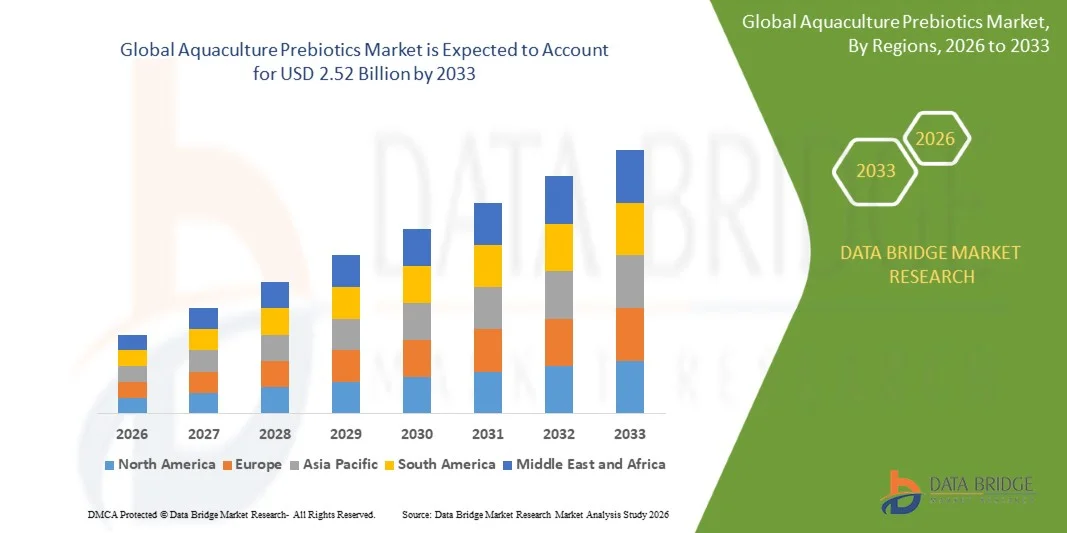
Tamaño del mercado de prebióticos para la acuicultura
- El tamaño del mercado de prebióticos de acuicultura se valoró en USD 1,44 mil millones en 2025 y se espera que alcance los USD 2,52 mil millones para 2033 , con una CAGR del 7,30% durante el período de pronóstico.
- El crecimiento del mercado está impulsado en gran medida por la creciente demanda de prácticas de acuicultura sostenibles y la creciente conciencia sobre los beneficios para la salud de los prebióticos para mejorar la inmunidad, el crecimiento y la productividad general de los peces y camarones.
- Además, los avances en las tecnologías de formulación de alimentos y la adopción de aditivos funcionales están impulsando a los acuicultores a incorporar prebióticos como práctica habitual. Estas tendencias convergentes están acelerando la adopción de soluciones prebióticas para la acuicultura, impulsando así significativamente el crecimiento del mercado.
Análisis del mercado de prebióticos para acuicultura
- Los prebióticos de acuicultura, aditivos alimentarios funcionales que promueven la salud intestinal, la inmunidad y el crecimiento de peces y camarones, son componentes cada vez más vitales de las prácticas acuícolas modernas en sistemas de agua dulce y marinos debido a su papel en la mejora de la productividad, la reducción de brotes de enfermedades y el apoyo a la agricultura sostenible.
- La creciente demanda de prebióticos para la acuicultura está impulsada principalmente por el enfoque creciente en la acuicultura sustentable, el aumento del consumo mundial de productos del mar y la creciente conciencia de los beneficios de los alimentos funcionales para mejorar la salud animal y la rentabilidad de las granjas.
- América del Norte dominó el mercado de prebióticos de acuicultura con la mayor participación en los ingresos del 34,7% en 2025, caracterizada por industrias de acuicultura bien establecidas, adopción temprana de alimentos funcionales y fuertes inversiones en I+D, mientras que Estados Unidos fue testigo de un crecimiento sustancial en la incorporación de alimentos prebióticos, impulsado por innovaciones de fabricantes de alimentos establecidos y nuevas empresas biotecnológicas emergentes.
- Se espera que Asia-Pacífico sea la región de más rápido crecimiento en el mercado de prebióticos de acuicultura durante el período de pronóstico debido a la expansión de las operaciones de acuicultura, la creciente demanda de productos del mar y las crecientes inversiones en tecnologías de alimentación avanzadas.
- El segmento de probióticos bacterianos dominó el mercado con la mayor participación en los ingresos del 45,6 % en 2025, impulsado por su eficacia comprobada para mejorar la salud intestinal, mejorar la inmunidad y promover el crecimiento en una variedad de especies acuáticas de cultivo.
Alcance del informe y segmentación del mercado de prebióticos para acuicultura
|
Atributos |
Prebióticos para la acuicultura: Perspectivas clave del mercado |
|
Segmentos cubiertos |
|
|
Países cubiertos |
América del norte
Europa
Asia-Pacífico
Oriente Medio y África
Sudamerica
|
|
Actores clave del mercado |
|
|
Oportunidades de mercado |
|
|
Conjuntos de información de datos de valor añadido |
Además de los conocimientos sobre escenarios de mercado como valor de mercado, tasa de crecimiento, segmentación, cobertura geográfica y actores principales, los informes de mercado seleccionados por Data Bridge Market Research también incluyen análisis de expertos en profundidad, análisis de precios, análisis de participación de marca, encuesta de consumidores, análisis demográfico, análisis de la cadena de suministro, análisis de la cadena de valor, descripción general de materias primas/consumibles, criterios de selección de proveedores, análisis PESTLE, análisis de Porter y marco regulatorio. |
Tendencias del mercado de prebióticos para la acuicultura
Productividad mejorada mediante la integración de IA y alimentación avanzada
- Una tendencia significativa y en auge en el mercado de prebióticos para la acuicultura es la creciente integración de tecnologías avanzadas de alimentación con inteligencia artificial (IA) y sistemas de acuicultura de precisión. Esta fusión de tecnologías está mejorando significativamente la productividad, el monitoreo y el manejo de enfermedades en las granjas.
- Por ejemplo, las plataformas de gestión de alimentos basadas en IA pueden optimizar las dosis de prebióticos para diferentes especies y etapas de crecimiento, garantizando los máximos beneficios para la salud y reduciendo el desperdicio de alimento. De igual manera, los sensores inteligentes en los sistemas de acuicultura pueden monitorizar la calidad del agua, el comportamiento alimentario y el crecimiento animal en tiempo real, lo que permite ajustar dinámicamente la administración de prebióticos.
- La integración de la IA en la acuicultura permite obtener información predictiva, como la previsión de brotes de enfermedades o el rendimiento del crecimiento, basándose en datos ambientales y biológicos. Por ejemplo, algunas granjas camaroneras modernas utilizan algoritmos de IA para detectar signos tempranos de desequilibrio o estrés intestinal, lo que permite la suplementación prebiótica oportuna para mantener la inmunidad y las tasas de crecimiento.
- La integración fluida de los prebióticos con las plataformas digitales de monitoreo y gestión facilita el control centralizado de las operaciones de la granja. A través de una única interfaz, los acuicultores pueden gestionar los horarios de alimentación, la calidad del agua y la salud animal, creando un entorno acuícola más eficiente, automatizado y basado en datos.
- Esta tendencia hacia sistemas acuícolas más inteligentes, adaptativos e interconectados está transformando radicalmente las expectativas de productividad y sostenibilidad de las explotaciones. En consecuencia, empresas como Cargill y Novozymes están desarrollando soluciones prebióticas basadas en IA con funciones como dosificación predictiva, ajuste automatizado del alimento e integración con software de gestión de explotaciones.
- La demanda de prebióticos combinados con herramientas de gestión impulsadas por IA está creciendo rápidamente en las operaciones de acuicultura tanto a pequeña escala como comerciales, a medida que los productores priorizan cada vez más la eficiencia operativa, la salud animal y el crecimiento sostenible.
Dinámica del mercado de prebióticos para la acuicultura
Conductor
“Necesidad creciente debido a la creciente demanda de prácticas acuícolas sostenibles y saludables”
- El enfoque creciente en prácticas de acuicultura sustentable, junto con la creciente demanda mundial de mariscos de cultivo más saludables y resistentes a las enfermedades, es un impulsor importante para la mayor adopción de prebióticos de acuicultura.
- Por ejemplo, en 2025, Cargill anunció avances en alimentos para camarones enfocados en la salud intestinal, integrando prebióticos especializados para mejorar la inmunidad y las tasas de crecimiento. Se espera que estas iniciativas de empresas clave impulsen el crecimiento del mercado de prebióticos para la acuicultura durante el período de pronóstico.
- A medida que los agricultores se vuelven más conscientes de los riesgos de enfermedades, los desafíos de la calidad del agua y la necesidad de una mayor productividad, los prebióticos ofrecen beneficios específicos, como una mejor salud intestinal, una inmunidad más fuerte y una mejor conversión alimenticia, lo que proporciona una alternativa convincente a los aditivos alimentarios tradicionales o los antibióticos.
- Además, la creciente popularidad de la acuicultura de precisión y de los sistemas de gestión de granjas inteligentes está convirtiendo a los prebióticos en un componente integral de las operaciones de acuicultura modernas, ofreciendo una integración perfecta con plataformas automatizadas de alimentación y monitoreo.
- La conveniencia de incorporar prebióticos en las formulaciones de alimentos existentes, junto con la capacidad de mejorar la productividad y reducir las pérdidas por enfermedades, son factores clave que impulsan la adopción de prebióticos acuícolas tanto en explotaciones a pequeña escala como comerciales. La tendencia hacia prácticas acuícolas más sostenibles y basadas en datos contribuye aún más al crecimiento del mercado.
Restricción/Desafío
Preocupaciones sobre los altos costos y la eficacia variable
- El costo relativamente alto de los suplementos prebióticos especializados, sumado a la variabilidad en su eficacia según las diferentes especies y condiciones de cultivo, representa un desafío significativo para una mayor penetración en el mercado. Los agricultores pueden dudar en adoptar prebióticos si la rentabilidad inmediata es incierta o si el costo del alimento aumenta considerablemente.
- Por ejemplo, las granjas acuícolas más pequeñas en regiones en desarrollo a menudo dependen de alimentos convencionales debido a limitaciones presupuestarias, lo que limita la adopción de soluciones prebióticas de primera calidad.
- Abordar estas inquietudes mediante la demostración de un rendimiento consistente, fórmulas rentables y la formación de los agricultores sobre prácticas óptimas de uso es crucial para generar confianza y fomentar una mayor adopción. Empresas como Novozymes y DSM priorizan los programas de prueba, el soporte técnico y los datos de eficacia en sus estrategias de marketing para tranquilizar a los compradores potenciales.
- Si bien los precios se están volviendo gradualmente más competitivos, la percepción de costos superiores para prebióticos de alta calidad aún puede obstaculizar su adopción generalizada, especialmente entre pequeños agricultores u operaciones con márgenes ajustados.
- Superar estos desafíos a través de líneas de productos asequibles, una demostración clara de los beneficios para la salud y la productividad y la educación continua de los agricultores será vital para el crecimiento sostenido del mercado de prebióticos de acuicultura.
Alcance del mercado de prebióticos para acuicultura
El mercado está segmentado según el tipo de producto, la aplicación, la forma y el canal de distribución.
• Por tipo de producto
Según el tipo de producto, el mercado de prebióticos para acuicultura se segmenta en probióticos bacterianos, probióticos de levadura, probióticos fúngicos y otros. El segmento de probióticos bacterianos dominó el mercado con la mayor participación en los ingresos, con un 45,6 % en 2025, gracias a su probada eficacia para mejorar la salud intestinal, fortalecer la inmunidad y promover el crecimiento de diversas especies acuáticas de cultivo. Los prebióticos bacterianos, como Lactobacillus y Bifidobacterium, se utilizan ampliamente debido a su capacidad para modular la microbiota intestinal y aumentar la eficiencia de conversión alimenticia.
Se espera que el segmento de probióticos de levadura registre la tasa de crecimiento anual compuesta (TCAC) más rápida, del 22,4 %, entre 2026 y 2033, impulsada por la creciente investigación que respalda su papel en la resistencia a enfermedades y la mitigación del estrés en camarones y peces. Los prebióticos a base de levadura también ofrecen beneficios como una mejor absorción de nutrientes, una mejor calidad del agua y compatibilidad con diversas formulaciones de alimentos, lo que los hace cada vez más atractivos para la acuicultura comercial.
• Por aplicación
Según su aplicación, el mercado de prebióticos para acuicultura se segmenta en peces, camarones, moluscos y otros. El segmento de peces representó la mayor participación en los ingresos del mercado, con un 42,8 % en 2025, impulsado por la prevalencia global de la piscicultura y la creciente atención a la mejora de la eficiencia alimentaria, la inmunidad y la resistencia a enfermedades en especies como el salmón, la tilapia y el bagre. Los prebióticos en los alimentos para peces ayudan a optimizar la microbiota intestinal, mejorar la utilización de nutrientes y reducir la dependencia de antibióticos, en consonancia con las prácticas acuícolas sostenibles.
Se espera que el segmento del camarón experimente la tasa de crecimiento anual compuesta (TCAC) más rápida, del 23,1 %, entre 2026 y 2033, impulsada por la creciente demanda de camarón a nivel mundial y la adopción de alimentos suplementados con prebióticos para prevenir enfermedades comunes como el síndrome de la mancha blanca y el síndrome de mortalidad temprana. La creciente concienciación entre los camaronicultores sobre los beneficios del manejo de la salud intestinal está acelerando la adopción de prebióticos en este sector.
• Por formulario
En cuanto a su forma, el mercado de prebióticos para la acuicultura se segmenta en prebióticos secos y líquidos. El segmento seco dominó el mercado con una participación en los ingresos del 57,3 % en 2025, gracias a su fácil incorporación a los piensos peletizados convencionales, su mayor vida útil y su estabilidad en condiciones de procesamiento a alta temperatura. Los prebióticos secos son los preferidos para la fabricación de piensos a gran escala y son compatibles con una amplia gama de especies acuáticas, lo que los convierte en una opción estándar para la acuicultura comercial.
Se espera que el segmento líquido experimente la tasa de crecimiento anual compuesta (TCAC) más rápida, del 21,8 %, entre 2026 y 2033, impulsada por la creciente adopción de soluciones prebióticas líquidas para la aplicación directa en el agua y la suplementación de especies específicas. Los prebióticos líquidos ofrecen ventajas como una rápida absorción, una dosificación precisa y una mayor eficacia en animales acuáticos jóvenes o estresados, lo que impulsa la demanda en la acuicultura intensiva moderna.
• Por canal de distribución
Según el canal de distribución, el mercado de prebióticos para acuicultura se segmenta en canales en línea y fuera de línea. El segmento fuera de línea dominó el mercado con una participación en los ingresos del 62,1 % en 2025, gracias a la fuerte presencia de distribuidores, proveedores de alimentos y tiendas de suministros veterinarios que suministran productos prebióticos directamente a las granjas acuícolas. Los canales fuera de línea se priorizan para compras al por mayor, soporte técnico y disponibilidad inmediata de productos, crucial para las operaciones a gran escala.
Se espera que el segmento en línea experimente la tasa de crecimiento anual compuesta (TCAC) más rápida, del 24,3 %, entre 2026 y 2033, impulsada por la creciente digitalización de la adquisición de alimentos, la creciente penetración del comercio electrónico en los mercados emergentes y la comodidad de la entrega a domicilio. Las plataformas en línea también permiten a los agricultores acceder a una mayor variedad de formulaciones prebióticas, comparar precios y obtener reseñas de productos, lo que impulsa la adopción de prebióticos a través de canales digitales.
Análisis regional del mercado de prebióticos para acuicultura
- América del Norte dominó el mercado de prebióticos para la acuicultura con la mayor participación en los ingresos del 34,7 % en 2025, impulsada por la industria de la acuicultura bien establecida, el enfoque creciente en prácticas agrícolas sostenibles y la creciente adopción de aditivos alimentarios funcionales.
- Los productores de la región valoran mucho los beneficios de los prebióticos, entre ellos una mejor salud intestinal, una mayor inmunidad y mejores índices de conversión alimenticia, que contribuyen a una mayor productividad y a una reducción de los brotes de enfermedades en los peces y camarones de cultivo.
- Esta adopción generalizada está respaldada además por una infraestructura de investigación y desarrollo avanzada, una alta capacidad de inversión y regulaciones estrictas que fomentan prácticas de acuicultura sostenibles, estableciendo a los prebióticos como una solución preferida para operaciones de acuicultura tanto comerciales como a gran escala.
Perspectiva del mercado de prebióticos para la acuicultura en EE. UU.
El mercado estadounidense de prebióticos para la acuicultura captó la mayor participación en los ingresos, con un 81% en 2025, en Norteamérica, impulsado por el consolidado sector acuícola y la creciente adopción de aditivos funcionales para piensos. Los productores priorizan la salud intestinal, la inmunidad y una mejor conversión alimenticia en peces y camarones para impulsar la productividad y reducir los brotes de enfermedades. La creciente tendencia de la acuicultura de precisión, sumada a la demanda de una agricultura sostenible y sin antibióticos, impulsa aún más el mercado de prebióticos. Además, los avances en I+D y la integración con sistemas de alimentación inteligentes contribuyen significativamente a la expansión del mercado.
Perspectiva del mercado europeo de prebióticos para la acuicultura
Se proyecta que el mercado europeo de prebióticos para la acuicultura se expandirá a una tasa de crecimiento anual compuesta (TCAC) sustancial durante el período de pronóstico, impulsado principalmente por las estrictas regulaciones sobre prácticas agrícolas sostenibles y la creciente demanda de productos del mar de alta calidad. La creciente urbanización y la concienciación sobre la acuicultura sostenible están impulsando la adopción de alimentos suplementados con prebióticos. Los productores europeos también se sienten atraídos por los beneficios de una mayor resistencia a las enfermedades y un mayor rendimiento del crecimiento. El mercado está experimentando un crecimiento significativo en la piscicultura y el cultivo de camarones, con la incorporación de prebióticos tanto en operaciones comerciales a gran escala como en pequeñas granjas.
Perspectivas del mercado de prebióticos para la acuicultura en el Reino Unido
Se prevé que el mercado británico de prebióticos para la acuicultura crezca a una tasa de crecimiento anual compuesta (TCAC) notable durante el período de pronóstico, impulsado por un mayor enfoque en la acuicultura sostenible y la mejora de la calidad de los productos del mar cultivados. La preocupación por los brotes de enfermedades y el deseo de obtener mayores rendimientos están animando a los piscicultores y camaroneros a adoptar alimentos enriquecidos con prebióticos. Se espera que el énfasis del Reino Unido en la trazabilidad, la seguridad alimentaria y las innovaciones en alimentos funcionales continúe impulsando el crecimiento del mercado, especialmente en la acuicultura comercial y la producción emergente de productos del mar especializados.
Análisis del mercado de prebióticos para la acuicultura en Alemania
Se espera que el mercado alemán de prebióticos para la acuicultura se expanda a una tasa de crecimiento anual compuesta (TCAC) considerable durante el período de pronóstico, impulsado por la creciente concienciación sobre prácticas acuícolas sostenibles y respetuosas con el medio ambiente. La avanzada infraestructura acuícola alemana y su énfasis en la innovación promueven la adopción de prebióticos para mejorar la salud animal, optimizar el crecimiento y reducir el uso de antibióticos. La integración de prebióticos en alimentos de alto rendimiento es cada vez más frecuente, especialmente en piscifactorías comerciales de peces y camarones, en consonancia con las normas regulatorias y las expectativas de los consumidores de productos del mar seguros y de alta calidad.
Perspectiva del mercado de prebióticos para la acuicultura en Asia-Pacífico
Se prevé que el mercado de prebióticos para la acuicultura en Asia-Pacífico crezca a la tasa de crecimiento anual compuesta (TCAC) más alta, del 24 %, durante el período previsto de 2026 a 2033, impulsado por la rápida urbanización, el aumento del consumo de productos del mar y el incremento de las inversiones en infraestructura acuícola en países como China, India y Japón. La creciente inclinación de la región hacia prácticas acuícolas sostenibles y de alto rendimiento, respaldada por iniciativas gubernamentales que promueven la seguridad alimentaria y las tecnologías avanzadas de alimentación, está impulsando la adopción de prebióticos. Además, a medida que Asia-Pacífico se consolida como un centro para la producción de alimentos para la acuicultura, la asequibilidad y la accesibilidad de los prebióticos se están expandiendo, lo que favorece una mayor adopción entre los pequeños y grandes acuicultores.
Perspectiva del mercado de prebióticos para la acuicultura en Japón
El mercado japonés de prebióticos para la acuicultura está cobrando impulso gracias al enfoque del país en la producción de mariscos de alta calidad y las prácticas acuícolas sostenibles. Los acuicultores adoptan cada vez más prebióticos para mejorar la salud intestinal, la inmunidad y el crecimiento de peces y camarones. La integración de prebióticos con sistemas de alimentación avanzados y herramientas de monitoreo de la calidad del agua está impulsando el crecimiento del mercado. Además, el envejecimiento de la fuerza laboral japonesa impulsa la demanda de soluciones de alimentación eficientes y fáciles de gestionar que reduzcan la intensidad de la mano de obra y garanticen una productividad óptima de las granjas.
Perspectiva del mercado de prebióticos para la acuicultura en China
El mercado chino de prebióticos para la acuicultura representó la mayor participación en los ingresos de Asia-Pacífico en 2025, gracias a la expansión del sector acuícola, el crecimiento de la clase media y la creciente demanda de productos del mar. China es uno de los mayores productores y consumidores de peces y camarones de cultivo a nivel mundial, y los prebióticos son cada vez más populares para mejorar el crecimiento, la inmunidad y la eficiencia alimentaria. Las iniciativas gubernamentales que promueven la acuicultura sostenible, la presencia de importantes fabricantes nacionales de piensos y la disponibilidad de opciones prebióticas asequibles son factores clave que impulsan el crecimiento del mercado en China.
Cuota de mercado de prebióticos para acuicultura
La industria de prebióticos para acuicultura está liderada principalmente por empresas bien establecidas, entre las que se incluyen:
- Cargill (EE. UU.)
- Archer Daniels Midland (ADM) (EE. UU.)
- BASF (Alemania)
- DuPont Nutrition & Biosciences (EE. UU.)
- Novozymes (Dinamarca)
- Productos nutricionales DSM (Países Bajos)
- Beneo (Alemania)
- Lallemand Nutrición Animal (Canadá)
- Adisseo (Francia)
- Alltech (EE. UU.)
- Industrias Evonik (Alemania)
- Nutreco (Países Bajos)
- Phileo de Lesaffre (Francia)
- Biotecnología Kangyuan de Zhejiang (China)
- Grupo Shandong Jiejing (China)
- Guangdong VTR Bio-Tech (China)
- Alimentación de Zhejiang Tianyi (China)
- Pacific Biotech (EE. UU.)
- Grupo BioMar (Dinamarca)
- Blue Ocean Nutrition (EE. UU.)
¿Cuáles son los desarrollos recientes en el mercado de prebióticos para la acuicultura?
- En abril de 2024, Cargill, líder mundial en nutrición animal, lanzó una iniciativa estratégica en el Sudeste Asiático destinada a mejorar la salud y la productividad de peces y camarones de cultivo mediante sus avanzadas soluciones de alimentos prebióticos. Esta iniciativa subraya la dedicación de la compañía a ofrecer productos acuícolas innovadores, con respaldo científico y adaptados a las prácticas agrícolas regionales. Al aprovechar su experiencia global y sus formulaciones de vanguardia, Cargill no solo aborda los desafíos de la producción local, sino que también consolida su posición en el creciente mercado de prebióticos para la acuicultura.
- En marzo de 2024, Novozymes, empresa de biotecnología con sede en Dinamarca, presentó un nuevo prebiótico a base de levadura, diseñado específicamente para el cultivo de camarones en regiones tropicales. Su fórmula mejora la inmunidad y la resistencia al estrés, ayudando a las granjas a reducir los brotes de enfermedades. Este avance pone de manifiesto el compromiso de Novozymes con el desarrollo de soluciones de alimentación funcional de vanguardia que mejoran la sostenibilidad y la productividad de la acuicultura en todas sus operaciones comerciales.
- En marzo de 2024, DSM Nutritional Products implementó con éxito un programa integrado de suplementación prebiótica en colaboración con piscifactorías a gran escala en India, con el objetivo de mejorar el crecimiento y la salud intestinal de tilapias y bagres. Este proyecto aprovecha tecnologías avanzadas de alimentación para promover prácticas acuícolas sostenibles, lo que subraya el enfoque de DSM en mejorar la eficiencia de las piscifactorías y promover una producción de mariscos más segura y saludable.
- En febrero de 2024, Alltech anunció una alianza estratégica con la Asociación de Productores de Camarón del Sudeste Asiático para implementar programas de alimentación con prebióticos en las granjas miembro. Esta colaboración busca mejorar la resistencia a enfermedades, la utilización del alimento y el rendimiento general, facilitando operaciones acuícolas más rentables y sostenibles. La iniciativa destaca el compromiso de Alltech con la innovación y la eficacia operativa en el sector acuícola.
- En enero de 2024, Adisseo, proveedor líder mundial de aditivos para piensos, presentó su línea de prebióticos bacterianos de última generación en la Conferencia Aquaculture Asia 2024. Estos prebióticos, optimizados tanto para especies de agua dulce como marinas, permiten a los acuicultores mejorar la salud intestinal, reforzar el sistema inmunitario y optimizar la conversión alimenticia. Este lanzamiento demuestra la dedicación de Adisseo a la integración de tecnologías nutricionales avanzadas en los piensos para acuicultura, ofreciendo a los productores una mayor eficiencia y sostenibilidad en la producción de mariscos de cultivo.
SKU-
Obtenga acceso en línea al informe sobre la primera nube de inteligencia de mercado del mundo

- Panel de análisis de datos interactivo
- Panel de análisis de empresas para oportunidades con alto potencial de crecimiento
- Acceso de analista de investigación para personalización y consultas
- Análisis de la competencia con panel interactivo
- Últimas noticias, actualizaciones y análisis de tendencias
- Aproveche el poder del análisis de referencia para un seguimiento integral de la competencia
Metodología de investigación
La recopilación de datos y el análisis del año base se realizan utilizando módulos de recopilación de datos con muestras de gran tamaño. La etapa incluye la obtención de información de mercado o datos relacionados a través de varias fuentes y estrategias. Incluye el examen y la planificación de todos los datos adquiridos del pasado con antelación. Asimismo, abarca el examen de las inconsistencias de información observadas en diferentes fuentes de información. Los datos de mercado se analizan y estiman utilizando modelos estadísticos y coherentes de mercado. Además, el análisis de la participación de mercado y el análisis de tendencias clave son los principales factores de éxito en el informe de mercado. Para obtener más información, solicite una llamada de un analista o envíe su consulta.
La metodología de investigación clave utilizada por el equipo de investigación de DBMR es la triangulación de datos, que implica la extracción de datos, el análisis del impacto de las variables de datos en el mercado y la validación primaria (experto en la industria). Los modelos de datos incluyen cuadrícula de posicionamiento de proveedores, análisis de línea de tiempo de mercado, descripción general y guía del mercado, cuadrícula de posicionamiento de la empresa, análisis de patentes, análisis de precios, análisis de participación de mercado de la empresa, estándares de medición, análisis global versus regional y de participación de proveedores. Para obtener más información sobre la metodología de investigación, envíe una consulta para hablar con nuestros expertos de la industria.
Personalización disponible
Data Bridge Market Research es líder en investigación formativa avanzada. Nos enorgullecemos de brindar servicios a nuestros clientes existentes y nuevos con datos y análisis que coinciden y se adaptan a sus objetivos. El informe se puede personalizar para incluir análisis de tendencias de precios de marcas objetivo, comprensión del mercado de países adicionales (solicite la lista de países), datos de resultados de ensayos clínicos, revisión de literatura, análisis de mercado renovado y base de productos. El análisis de mercado de competidores objetivo se puede analizar desde análisis basados en tecnología hasta estrategias de cartera de mercado. Podemos agregar tantos competidores sobre los que necesite datos en el formato y estilo de datos que esté buscando. Nuestro equipo de analistas también puede proporcionarle datos en archivos de Excel sin procesar, tablas dinámicas (libro de datos) o puede ayudarlo a crear presentaciones a partir de los conjuntos de datos disponibles en el informe.











