



Global Carbonated Soft Drinks Market Segmentation, By Flavor (Cola, Lime, Lemon, Orange, and Others), Packaging Type (Bottles and Cans), Distribution Channel (Supermarkets & Hypermarkets, Convenience Stores, Online, and Others) - Industry Trends and Forecast to 2033
Carbonated Soft Drinks Tamaño del mercado
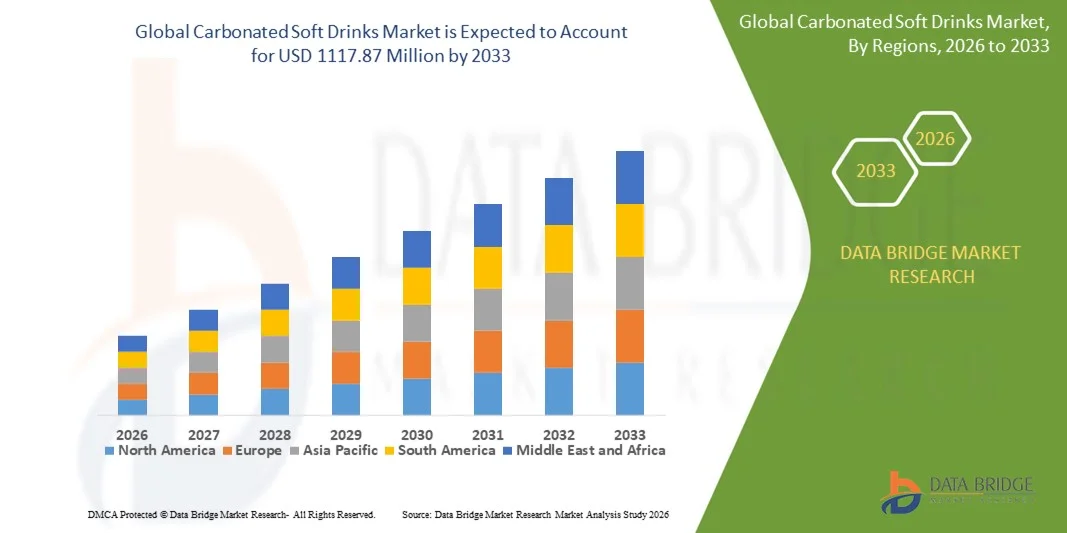
- El tamaño del mercado mundial de bebidas refrescantes carbonatadas se valoró enUSD 697.15 millones en 2025y se espera que alcanceUSD 1117.87 million by 2033, aCAGR of 6.08%durante el período previsto
- El crecimiento del mercado se alimenta en gran medida por el aumento del consumo mundial de bebidas listas para beber, impulsado por el cambio de estilos de vida, la urbanización y la creciente preferencia por opciones de refresco convenientes en todos los grupos de edad
- Además, la fuerte influencia de la marca, la innovación continua del sabor y la amplia disponibilidad en los canales modernos de venta al por menor y servicio alimentario están reforzando la demanda del consumidor. Estos factores combinados están acelerando la frecuencia y el volumen del consumo, lo que contribuye significativamente al crecimiento del mercado de bebidas refrescantes carbonatadas
Carbonated Soft Drinks Market Analysis
- Los refrescos carbonizados son bebidas no alcohólicas infundadas con dióxido de carbono, disponibles en una amplia gama de sabores y formulaciones, y consumidos en entornos residenciales, comerciales y en marcha.
- La creciente demanda de refrescos carbonatados está impulsada principalmente por una fuerte lealtad a la marca, estrategias agresivas de marketing, redes de distribución en expansión y preferencias de consumo en evolución para las variantes de bebidas saboreadas y funcionales
- América del Norte dominaba el mercado de refrescos carbonatados con una participación del 45,5%en 2025, debido al alto consumo per cápita, la fuerte lealtad de la marca y la presencia generalizada de los fabricantes de bebidas establecidos
- Se espera que Asia y el Pacífico sea la región de más rápido crecimiento del mercado de refrescos carbonatados durante el período previsto debido a la rápida urbanización, el aumento de los ingresos desechables y la expansión de la población joven
- El segmento de Cola dominaba el mercado con una cuota de mercado del 45,5% en 2025, debido a su fuerte presencia mundial de marca, preferencia de consumo de larga data y amplia aceptación entre grupos de edad. Las bebidas de Cola se benefician de extensas inversiones de marketing y perfiles de sabor consistentes que refuerzan el consumo repetido. Su fuerte posicionamiento en canales tanto en el comercio como fuera del comercio también soporta grandes volúmenes de ventas. La amplia disponibilidad entre los puntos de precio y los tamaños de los paquetes sigue manteniendo la demanda. El dominio de la cola también es apoyado por su pareja con comidas y ocasiones sociales
Report Scope and Carbonated Soft Drinks Market Segmentation
| Atributos | Carbonated Soft Drinks Key Market Insights |
| Segmentos cubiertos |
|
| Países cubiertos | América del Norte
Europa
Asia y el Pacífico
Oriente Medio y África
América del Sur
|
| Principales jugadores del mercado |
|
| Oportunidades de mercado |
|
| Valor añadido Data Infosets | Además de las ideas sobre escenarios de mercado como el valor de mercado, la tasa de crecimiento, la segmentación, la cobertura geográfica y los principales actores, los informes de mercado comisariados por el Data Bridge Market Research también incluyen análisis profundos de expertos, análisis de precios, análisis de acciones de la marca, análisis de la demografía, análisis de la cadena de suministro, análisis de la cadena de valor, visión general de materias primas/consumibles, criterios de selección de proveedores, análisis de PESTLE Analysis, análisis de PESTLE, análisis, análisis de Porter, análisis de Porter y marco regulador. |
Carbonated Soft Drinks Market Trends
Demanda de aumento para Bebidas Carbonadas de bajo azúcar y Zero-Calorie
- Una tendencia importante en el mercado de refrescos carbonatados es el creciente cambio de consumo hacia opciones de bebidas con bajo azúcar y cero calorías, impulsado por aumentar la conciencia sobre la salud y cambiar las preferencias dietéticas. Los consumidores están reduciendo activamente la ingesta de azúcar mientras todavía buscan el sabor y el refresco asociados con bebidas carbonatadas, que está remodelando carteras de productos en toda la industria.
- Por ejemplo, Coca-Cola ha ampliado sus ofertas de Coca-Cola Zero Sugar y Diet Coke en varias regiones para hacer frente a la creciente demanda de alternativas calóricas reducidas. Estos productos han ganado una fuerte tracción entre consumidores conscientes de la salud, manteniendo la familiaridad de la marca y la consistencia del gusto
- La tendencia se apoya además en los esfuerzos de reformulación que se centran en los edulcorantes alternativos y los perfiles de sabor mejorados para satisfacer las expectativas de los consumidores en evolución. Los fabricantes de bebidas están invirtiendo en investigación para equilibrar el sabor, la boca y la reducción de calorías sin comprometer el atractivo del producto
- Los estantes de cola están cada vez más dominados por variantes de bajo y sin azúcar, lo que refleja una mayor asignación de estantes y un enfoque promocional por los minoristas. Este cambio es alentador la adopción más rápida entre los consumidores que anteriormente limitaron el consumo de bebidas blandas carbonatadas debido a preocupaciones de salud
- La demografía más pequeña está impulsando especialmente esta tendencia, ya que muestran mayor preferencia por la transparencia en el contenido nutricional y los beneficios funcionales. Su comportamiento de compra está influenciando estrategias de marca y acelerando el lanzamiento de bebidas mejor para ti carbonatadas
- El impulso sostenido de las ofertas de bajo azúcar y cero calorías está redefiniendo el posicionamiento competitivo dentro del mercado. Esta tendencia refuerza la demanda a largo plazo al alinear los refrescos carbonatados con las opciones de estilo de vida más saludable, preservando al mismo tiempo el atractivo del mercado masivo
Carbonated Soft Drinks Market Dynamics
Conductor
Strong Brand Loyalty and Extensive Global Distribution Networks
- La fuerte lealtad de la marca y las redes de distribución mundial bien establecidas siguen siendo un motor clave del mercado de bebidas refrescantes carbonatadas, lo que permite una disponibilidad constante de productos y un consumo sostenido en todas las regiones. Las marcas líderes se benefician de décadas de confianza y reconocimiento del consumidor, lo que apoya las compras reiteradas y la demanda estable
- Por ejemplo, PepsiCo aprovecha su extensa red mundial de embotellado y distribución para garantizar una amplia disponibilidad de su cartera de bebidas carbonatadas en supermercados, tiendas de conveniencia y outlets de servicio alimentario. Este alcance permite a la empresa mantener una fuerte penetración de mercado incluso en entornos altamente competitivos
- Las inversiones y los patrocinios de marketing a gran escala refuerzan aún más el apego de la marca y el recuerdo del consumidor. Estos esfuerzos refuerzan las conexiones emocionales con los consumidores y sostienen las preferencias de marca a largo plazo
- La capacidad de distribuir productos de manera eficiente en los mercados urbanos y rurales apoya el crecimiento impulsado por el volumen. Las capacidades logísticas establecidas reducen las perturbaciones de la oferta y aseguran una presencia constante de estanterías
- Dado que el consumo sigue estando estrechamente vinculado a la familiaridad y accesibilidad de la marca, este conductor desempeña un papel central en el apoyo a la resiliencia y la escala del mercado de bebidas refrescantes carbonatadas
Restraint/Challenge
Increasing Health Concerns and Regulatory Pressure on Sugar Content
- El mercado de refrescos carbonatados se enfrenta a desafíos crecientes debido al aumento de las preocupaciones sanitarias y al aumento del escrutinio regulatorio relacionado con el consumo de azúcar. Los gobiernos y las organizaciones de salud están destacando activamente los vínculos entre la ingesta excesiva de azúcar y las enfermedades relacionadas con el estilo de vida, la influencia del comportamiento de los consumidores y las decisiones normativas
- Por ejemplo, la Organización Mundial de la Salud ha recomendado constantemente reducir la ingesta gratuita de azúcar, lo que ha impulsado a varios países a introducir impuestos sobre el azúcar en bebidas carbonatadas. Estas normas han afectado directamente las estrategias de fijación de precios y las pautas de consumo en múltiples mercados
- Se requiere que los fabricantes inviertan considerablemente en los esfuerzos de reformulación y cumplimiento para cumplir las normas reglamentarias. Estos cambios a menudo implican mayores costos relacionados con la fuente de ingredientes, pruebas y actualizaciones de etiquetado
- El cambio de las percepciones de los consumidores hacia las bebidas azucaradas está reduciendo la demanda de bebidas carbonatadas tradicionales de azúcar. Esto crea presión sobre los productos heredados que históricamente aportaron importantes volúmenes de ingresos
- Estas limitaciones normativas y relacionadas con la salud están remodelando dinámicas competitivas y obligando a los jugadores del mercado a adaptarse rápidamente. El desafío sigue influyendo en la planificación estratégica y en las trayectorias de crecimiento a largo plazo dentro del mercado de bebidas refrescantes carbonatadas
Carbonated Soft Drinks Market Scope
El mercado se segmenta sobre la base de sabor, tipo de envase y canal de distribución.
- Por Flavor
Sobre la base del sabor, el mercado de refrescos carbonatados se segmenta en cola, cal, limón, naranja y otros. El segmento de la cola dominó la mayor cuota de ingresos del mercado del 45,5% en 2025, impulsada por su fuerte presencia mundial de marca, preferencia de consumo de larga data y amplia aceptación entre grupos de edad. Las bebidas de Cola se benefician de extensas inversiones de marketing y perfiles de sabor consistentes que refuerzan el consumo repetido. Su fuerte posicionamiento en canales tanto en el comercio como fuera del comercio también soporta grandes volúmenes de ventas. La amplia disponibilidad entre los puntos de precio y los tamaños de los paquetes sigue manteniendo la demanda. El dominio de la cola también es apoyado por su pareja con comidas y ocasiones sociales.
Se prevé que el segmento de limón sea testigo de la tasa de crecimiento más rápida de 2026 a 2033, respaldada por el aumento del interés del consumidor en sabores refrescante y cítricos. Las bebidas carbonatadas con sabor a limón se perciben cada vez más ligeras y más sedantes, lo que apela a los consumidores más jóvenes y conscientes de la salud. Las innovaciones de productos centradas en formulaciones de bajo azúcar y sabor natural están fortaleciendo la adopción. La demanda estacional durante climas más cálidos también contribuye a un mayor consumo. La ampliación de la disponibilidad en los mercados emergentes está acelerando aún más el crecimiento.
- Por tipo de embalaje
Sobre la base del tipo de embalaje, el mercado de refrescos carbonatados se segmenta en botellas y latas. El segmento de botellas representó la mayor cuota de ingresos del mercado en 2025, impulsada por la conveniencia, la re-sealabilidad y la idoneidad para el consumo familiar o multiservicio. Las botellas de plástico y vidrio ofrecen flexibilidad en las variantes de tamaño, soportando tanto las compras de uso único como a granel. Las botellas son ampliamente preferidas en entornos minoristas debido a la facilidad de almacenamiento y transporte. Una fuerte penetración en supermercados y tiendas de conveniencia refuerza aún más el dominio. La visibilidad de la marca mediante el etiquetado y el diseño de embalaje también admite ventas más altas.
Se espera que el segmento de latas registre la tasa de crecimiento más rápida durante el período previsto, respaldada por el aumento de la demanda de un solo servicio y el consumo continuo. Las latas ofrecen un enfriamiento más rápido, una mejor portabilidad y un menor riesgo de contaminación, haciéndolos populares en entornos urbanos. La creciente concentración ambiental en la reciclabilidad está mejorando la percepción de las latas de aluminio. El aumento del consumo mediante máquinas expendedoras y salidas de servicios alimentarios también está impulsando el crecimiento. Las tendencias de la Premiumización están apoyando aún más las ofertas basadas en los bidones.
- Por canal de distribución
Sobre la base del canal de distribución, el mercado de refrescos carbonatados se segmenta en supermercados " hipermercados, tiendas de conveniencia, en línea y otros. Supermercados e hipermercados dominaron la mayor cuota de ingresos del mercado en 2025, impulsada por amplios surtidos de productos y alta caída del consumidor. Estos canales permiten la compra a granel y la fijación de precios promocionales, fomentando ventas de mayor volumen. Fuerte visibilidad de estante y soporte de marketing en tienda compras impulsadas por marca. Las cadenas de suministro establecidas garantizan una disponibilidad constante de productos. La preferencia de los consumidores por una sola compra refuerza aún más el dominio.
Se proyecta que el segmento en línea sea testigo de la tasa de crecimiento más rápida de 2026 a 2033, apoyada por el aumento de la penetración digital y la evolución del comportamiento adquisitivo. Las plataformas en línea proporcionan comodidad, entrega en casa y acceso a una amplia gama de marcas y tamaños de paquetes. Los modelos basados en la suscripción son alentadoras compras de bebidas de repetición. El crecimiento de los servicios de comercio rápido y de alimentos basados en aplicaciones está acelerando la adopción. Los descuentos atractivos y las recomendaciones personalizadas aumentan aún más la expansión de los canales.
Carbonated Soft Drinks Market Regional Analysis
- América del Norte dominaba el mercado de refrescos carbonatados con la mayor cuota de ingresos del 45,5% en 2025, impulsado por un alto consumo per cápita, una fuerte lealtad de marca y la presencia generalizada de fabricantes de bebidas establecidas
- Los consumidores de la región muestran una fuerte preferencia por las bebidas carbonatadas en múltiples ocasiones, con el apoyo de marketing agresivo, innovaciones frecuentes de productos y amplia disponibilidad en canales minoristas y de servicios alimentarios
- Esta preponderancia cuenta además con una infraestructura de distribución bien desarrollada, altos ingresos desechables y la creciente demanda de bebidas convenientes y listas para beber, reforzando el liderazgo de la región en el mercado mundial
U.S. Carbonated Soft Drinks Market Insight
El mercado de refrescos carbonatados de EE.UU. capturó la mayor cuota de ingresos en 2025 dentro de Norteamérica, con el apoyo de la fuerte presencia de marcas globales de bebidas y un ecosistema minorista maduro. El alto consumo de bebidas basadas en la cola, combinado con innovación continua de sabores y diversificación de envases, sigue impulsando la demanda. La expansión de las tiendas de conveniencia y de los servicios alimentarios fortalece aún más el crecimiento del mercado. Además, las actividades de promoción sólidas y la lealtad de los consumidores impulsada por la marca desempeñan un papel fundamental en el mantenimiento de los volúmenes de ventas.
Europa Carbonated Soft Drinks Market Insight
Se proyecta que el mercado de refrescos carbonatados en Europa crecerá en un CAGR constante durante el período previsto, impulsado por el cambio de preferencias de los consumidores y la creciente demanda de bebidas carbonatadas con sabor y bajo azúcar. El aumento de la urbanización y la evolución de los estilos de vida están apoyando el consumo constante en toda Europa occidental y oriental. Los fabricantes se centran cada vez más en la reformulación y las ofertas premium para ajustarse a las normas reglamentarias y las expectativas de los consumidores. La región muestra un crecimiento equilibrado entre canales minoristas y en tránsito.
U.K. Carbonated Soft Drinks Market Insight
Se espera que el mercado de refrescos carbonatados de U.K. registre un crecimiento notable durante el período previsto, impulsado por una fuerte demanda de bebidas carbonatadas sin sabor y azúcar. La concienciación y las medidas reglamentarias sobre el contenido de azúcar influyen en la innovación de los productos y en la diversificación de las carteras. Los consumidores siguen favoreciendo bebidas carbonatadas para consumo social y doméstico. Las estrategias de penetración y precios promocionales del país apoyan aún más la expansión del mercado.
Alemania Carbonated Soft Drinks Market Insight
Se prevé que el mercado de refrescos carbonatados de Alemania se expanda en una CAGR moderada, con el apoyo de un alto consumo de bebidas carbonatadas y una fuerte preferencia por variantes de sabor y fruta. La base de fabricación de bebidas bien establecida de Alemania y las redes de distribución eficientes apoyan el suministro constante. Aumentar la demanda de envases y botellas reciclables sostenibles influye en la dinámica del mercado. El enfoque en la calidad y la transparencia de ingredientes se ajusta a las expectativas de los consumidores en evolución.
Asia-Pacífico Carbonated Soft Drinks Market Insight
Se espera que el mercado de refrescos carbonatados de Asia y el Pacífico crezca en la CAGR más rápida durante el período previsto, impulsado por la rápida urbanización, el aumento de los ingresos desechables y la expansión de la población joven. El aumento de la occidentalización de las dietas y la creciente exposición a las marcas mundiales de bebidas están acelerando el consumo. La expansión de los formatos minoristas modernos y las tiendas de conveniencia apoya aún más el crecimiento del mercado. Los fabricantes están introduciendo activamente sabores específicos para la región para captar la demanda local.
Japón Carbonated Soft Drinks Market Insight
El mercado de refrescos carbonatados de Japón es testigo de un crecimiento constante debido a la fuerte demanda de consumidores de sabores innovadores y bebidas carbonatadas premium. El mercado se beneficia de tecnologías avanzadas de embalaje y de una alta diferenciación de productos. Las bebidas carbonatadas se consumen ampliamente en máquinas expendedoras, tiendas de conveniencia y enchufes de servicio alimentario. La preferencia por los tamaños de paquetes más pequeños y las variantes de bebidas funcionales sigue dando forma a las tendencias del mercado.
China Carbonated Soft Drinks Market Insight
El mercado de refrescos carbonatados de China representó la mayor cuota de ingresos en Asia-Pacífico en 2025, impulsada por la rápida urbanización, una creciente población de clase media y una fuerte penetración de la marca. El aumento del consumo entre los consumidores más jóvenes y la creciente demanda de bebidas carbonatadas con sabor son factores clave del crecimiento. La expansión del comercio electrónico y los canales comerciales modernos está mejorando significativamente la accesibilidad de los productos. Los fabricantes nacionales fuertes y las estrategias de precios competitivos están acelerando aún más la expansión del mercado.
Carbonated Soft Drinks Market Share
La industria de refrescos carbonatados está dirigida principalmente por empresas bien establecidas, incluyendo:
- Coca-Cola (Estados Unidos)
- PepsiCo (Estados Unidos)
- Dr Pepper Snapple Group (Estados Unidos)
- Nestlé S.A. (Suiza)
- Monster Beverage Corporation (Estados Unidos)
- Red Bull GmbH (Austria)
- Britvic plc (U.K.)
- Keurig Dr Pepper Inc. (U.S.)
- Fanta (Estados Unidos)
- Asahi Group Holdings, Ltd. (Japón)
- Danone S.A. (Francia)
- Suntory Holdings Limited (Japón)
- The Kraft Heinz Company (U.S.)
- Tingyi Holding Corp. (China)
Últimas novedades en el mercado mundial de bebidas suaves carbonatadas
- En noviembre de 2025, Coca-Cola (EE.UU.) entró en una asociación estratégica con una empresa líder en tecnología para fortalecer sus capacidades de marketing digital, con un impacto directo en el compromiso del consumidor y posicionamiento de marca. La colaboración permite el uso de análisis avanzados y la personalización basada en datos, permitiendo a Coca-Cola adaptar las campañas de marketing más precisamente a las preferencias de los consumidores. Se espera que este enfoque aumente la lealtad de la marca, mejore la eficiencia de la campaña y apoye el crecimiento sostenido de la cuota de mercado en un paisaje de bebidas refrescantes altamente competitivo. Las ideas más profundas del consumidor también pueden guiar futuras innovaciones de sabor y producto
- En septiembre de 2025, PepsiCo (Estados Unidos) introdujo una nueva cartera de refrescos carbonatados orgánicos, reforzando su enfoque estratégico en las tendencias de consumo impulsadas por la salud y el bienestar. Este desarrollo expande la presencia de PepsiCo en el segmento de bebidas premium y orgánicas, que está ganando tracción entre consumidores conscientes de la salud. Mediante la diversificación de sus ofertas de refrescos carbonatados, la empresa está posicionada para atraer nuevos segmentos de clientes mientras fortalece su ventaja competitiva. El movimiento también apoya la resiliencia de la cartera a largo plazo en el cambio de las preferencias de los consumidores
- En agosto de 2025, Keurig Dr Pepper (EE.UU.) anunció inversiones en soluciones de embalaje sostenible para su cartera de refrescos carbonatados, con el objetivo de reducir el uso de plástico y mejorar la reciclabilidad. Se espera que esta iniciativa aumente la percepción de la marca entre los consumidores conscientes del medio ambiente y armonice a la empresa con expectativas normativas y de sostenibilidad cambiantes. La mejora de la eficiencia del embalaje también puede contribuir a la optimización de costos con el tiempo. El enfoque de la sostenibilidad apoya la competitividad del mercado a largo plazo y la confianza de los consumidores
- En julio de 2025, el Dr. Pepper Snapple Group (Estados Unidos) amplió su huella de distribución en el sudeste asiático para aprovechar la creciente demanda de bebidas carbonatadas en las economías emergentes. Esta expansión refuerza el acceso de la empresa a mercados de alto crecimiento caracterizados por una creciente urbanización y poblaciones de consumidores jóvenes. Es probable que las capacidades de distribución mejoradas mejoren la disponibilidad de productos y la visibilidad de la marca en toda la región. Como resultado, la empresa está posicionada para captar la cuota de mercado incremental y reforzar su estrategia de crecimiento global
- En junio de 2025, la Coca-Cola Company (EE.UU.) lanzó bebidas carbonatadas con sabor específico para la región en mercados selectos de Asia y el Pacífico para abordar las preferencias locales del gusto. Se espera que esta estrategia de producto localizada impulse mayores tasas de aceptación y juicio de los consumidores en diversos mercados regionales. La adaptación de los sabores a las preferencias culturales aumenta la diferenciación competitiva y fortalece la penetración del mercado regional. La iniciativa apoya el crecimiento del volumen y refuerza la adaptabilidad de Coca-Cola en mercados globales dinámicos
SKU-
Obtenga acceso en línea al informe sobre la primera nube de inteligencia de mercado del mundo

- Panel de análisis de datos interactivo
- Panel de análisis de empresas para oportunidades con alto potencial de crecimiento
- Acceso de analista de investigación para personalización y consultas
- Análisis de la competencia con panel interactivo
- Últimas noticias, actualizaciones y análisis de tendencias
- Aproveche el poder del análisis de referencia para un seguimiento integral de la competencia
Metodología de investigación
La recopilación de datos y el análisis del año base se realizan utilizando módulos de recopilación de datos con muestras de gran tamaño. La etapa incluye la obtención de información de mercado o datos relacionados a través de varias fuentes y estrategias. Incluye el examen y la planificación de todos los datos adquiridos del pasado con antelación. Asimismo, abarca el examen de las inconsistencias de información observadas en diferentes fuentes de información. Los datos de mercado se analizan y estiman utilizando modelos estadísticos y coherentes de mercado. Además, el análisis de la participación de mercado y el análisis de tendencias clave son los principales factores de éxito en el informe de mercado. Para obtener más información, solicite una llamada de un analista o envíe su consulta.
La metodología de investigación clave utilizada por el equipo de investigación de DBMR es la triangulación de datos, que implica la extracción de datos, el análisis del impacto de las variables de datos en el mercado y la validación primaria (experto en la industria). Los modelos de datos incluyen cuadrícula de posicionamiento de proveedores, análisis de línea de tiempo de mercado, descripción general y guía del mercado, cuadrícula de posicionamiento de la empresa, análisis de patentes, análisis de precios, análisis de participación de mercado de la empresa, estándares de medición, análisis global versus regional y de participación de proveedores. Para obtener más información sobre la metodología de investigación, envíe una consulta para hablar con nuestros expertos de la industria.
Personalización disponible
Data Bridge Market Research es líder en investigación formativa avanzada. Nos enorgullecemos de brindar servicios a nuestros clientes existentes y nuevos con datos y análisis que coinciden y se adaptan a sus objetivos. El informe se puede personalizar para incluir análisis de tendencias de precios de marcas objetivo, comprensión del mercado de países adicionales (solicite la lista de países), datos de resultados de ensayos clínicos, revisión de literatura, análisis de mercado renovado y base de productos. El análisis de mercado de competidores objetivo se puede analizar desde análisis basados en tecnología hasta estrategias de cartera de mercado. Podemos agregar tantos competidores sobre los que necesite datos en el formato y estilo de datos que esté buscando. Nuestro equipo de analistas también puede proporcionarle datos en archivos de Excel sin procesar, tablas dinámicas (libro de datos) o puede ayudarlo a crear presentaciones a partir de los conjuntos de datos disponibles en el informe.











