


Global Chemical Licensing Market Segmentation, By Type (C2 Derivatives, C1 Derivatives, C3 Derivatives, C4 Derivatives, and Others), End-use Industry (Petrochemicals, Oil & Gas, Inorgic Chemicals, Agrochemicals, Organic Chemicals, Pharmaceuticals, and Others)- Industry Trends and Forecast to 2033
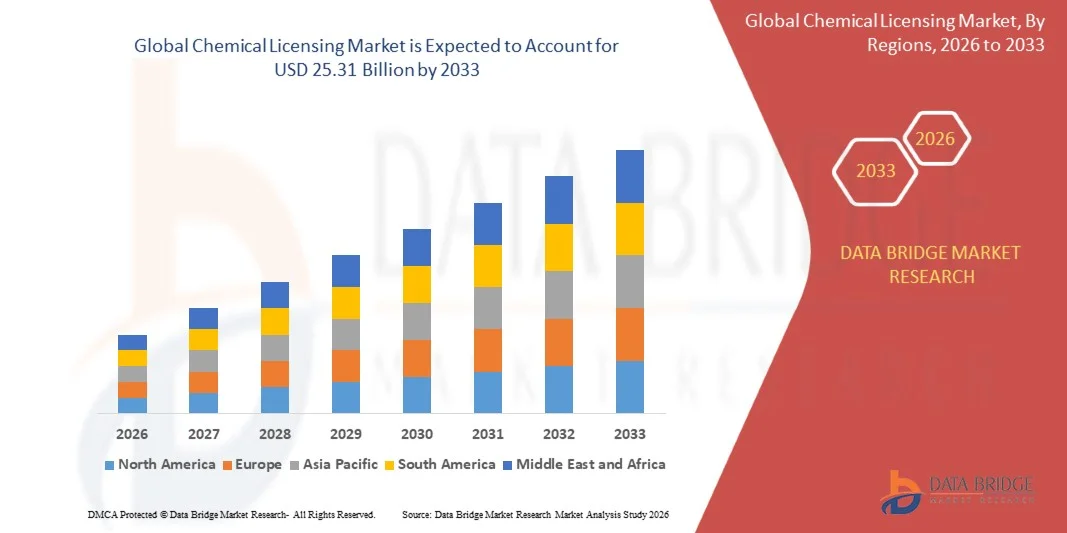
Tamaño del mercado de licencias químicas
- El tamaño del mercado mundial de licencias químicas se valoró enUSD 14.57 billion in 2025y se espera que alcanceUSD 25.31 mil millones en 2033, aCAGR of 7.15%durante el período previsto
- El crecimiento del mercado se ve impulsado en gran medida por el aumento de la demanda de procesos químicos avanzados, tecnologías de producción sostenibles y la rápida expansión de los productos químicos especializados y de rendimiento
- El aumento de las inversiones en petroquímicas, polímeros y química verde, junto con la necesidad de soluciones de fabricación rentables y eficientes, están apoyando aún más el crecimiento del mercado
Chemical Licensing Market Analysis
- El mercado de licencias químicas es testigo de un crecimiento constante, ya que los fabricantes recurren cada vez más a las tecnologías con licencia para reducir los costos de R plagaD, reducir los plazos de comercialización y mejorar la eficiencia operacional
- La creciente atención a la sostenibilidad, el cumplimiento reglamentario y la adopción de tecnologías innovadoras de procesos es fomentar la colaboración entre los licenciantes y los productores químicos en múltiples industrias de uso final
- América del Norte dominaba el mercado de licencias químicas con la mayor cuota de ingresos en 2025, impulsada por la fuerte presencia de los principales productores químicos, las capacidades avanzadas de R plagaD y la adopción temprana de tecnologías licenciadas en petroquímicos y productos químicos especializados
- Se espera que la región de Asia y el Pacífico sea testigo de la tasa de crecimiento más alta del mundolicencias químicasmercado, impulsado por el aumento de la producción química, las inversiones extranjeras y la creciente demanda de tecnologías eficientes y sostenibles
- El segmento de derivados C2 llevó a cabo la mayor cuota de ingresos del mercado en 2025, impulsada por una amplia demanda de productos basados en etileno, como el polietileno y el óxido de etileno en la fabricación de petroquímicos y plásticos. Las tecnologías derivadas C2 licenciadas son ampliamente adoptadas debido a su eficacia probada, escalabilidad y fuerte integración con cadenas de valor químico aguas abajo
Report Scope and Chemical Licensing Market Segmentation
| Atributos | Licencias Químicas Mercado Clave Insights |
| Segmentos cubiertos |
|
| Países cubiertos | América del Norte
Europa
Asia y el Pacífico
Oriente Medio y África
América del Sur
|
| Principales jugadores del mercado |
|
| Oportunidades de mercado |
|
| Valor añadido Data Infosets | Además de las ideas sobre escenarios de mercado como el valor de mercado, la tasa de crecimiento, la segmentación, la cobertura geográfica y los principales actores, los informes de mercado comisariados por el Data Bridge Market Research también incluyen análisis de exportaciones de importaciones, visión general de la capacidad de producción, análisis de consumo de producción, escenario de cambio climático, análisis de la cadena de suministro, análisis de la cadena de valor, visión general de materias primas/consumibles, criterios de selección de proveedores, análisis PESTLE Analysis, análisis, análisis de PESTLE, análisis de valores y análisis de valores. |
Tendencias del mercado de licencias químicas
“La creciente demanda de tecnologías químicas avanzadas, sostenibles y rentables”
• El creciente interés en la eficiencia, la sostenibilidad y la rápida comercialización está dando forma significativa al mercado de licencias químicas, ya que los fabricantes buscan tecnologías probadas para reducir el gasto de capital y los riesgos operacionales. La concesión de licencias químicas está ganando tracción debido a su capacidad de proporcionar acceso a tecnologías avanzadas de procesos, mejorar el rendimiento y garantizar el cumplimiento de la normativa sin un amplio compromiso interno. Esta tendencia fortalece la adopción entre petroquímicos, productos químicos especializados y materiales de rendimiento, alentando a los licenciantes a ampliar y mejorar sus carteras de tecnología
• El creciente énfasis en la reducción sostenible de la fabricación y las emisiones ha acelerado la demanda de tecnologías con licencia que apoyen la química verde, la eficiencia energética y un menor impacto ambiental. Los productores químicos están adoptando cada vez más procesos autorizados para cumplir con normas ambientales más estrictas y objetivos de sostenibilidad corporativa, lo que impulsa la colaboración entre los proveedores de tecnología y los fabricantes de productos químicos para desarrollar soluciones más limpias y eficientes
• Las tendencias de digitalización y optimización de procesos influyen en las decisiones de licencias, con licenciantes que integran herramientas digitales, automatización de procesos y monitoreo de rendimiento en paquetes autorizados. Estos factores ayudan a los licenciatarios a mejorar la eficiencia operacional, minimizar el tiempo de inactividad y mejorar el rendimiento general de las plantas, al tiempo que permite a los licenciantes diferenciar las ofertas en un mercado competitivo
• Por ejemplo, en 2024, los licenciantes tecnológicos de EE.UU. y Europa ampliaron los acuerdos de concesión de licencias para procesos avanzados de polímero, hidrógeno y productos químicos especializados para apoyar iniciativas de producción sostenibles. Estos acuerdos se vieron impulsados por el aumento de la demanda de tecnologías de baja emisión y alta eficiencia, con la adopción en nuevos proyectos e iniciativas de ampliación de la capacidad a nivel mundial
• Si bien la demanda de licencias químicas sigue creciendo, la expansión sostenida del mercado depende de la innovación continua, la protección de la propiedad intelectual y la capacidad de adaptar las tecnologías a diversas materias primas y reglamentos regionales. Los licenciantes también se centran en modelos de licencias flexibles y apoyo técnico a largo plazo para mejorar el valor de los licenciatarios
Dinámica del mercado de licencias químicas
Conductor
“Growing Need for Efficient and Sustainable Chemical Production”
• Aumentar la demanda de procesos químicos eficientes, escalables y respetuosos con el medio ambiente es un factor importante para el mercado de licencias químicas. Los fabricantes dependen cada vez más de las tecnologías con licencia para cumplir con los objetivos de producción, reducir los plazos de desarrollo y cumplir con las normas reglamentarias en evolución. Esta tendencia también impulsa la innovación en la intensificación de procesos y el diseño modular de plantas
• Ampliar aplicaciones en petroquímicos, polímeros, fertilizantes, productos químicos especializados y hidrógeno verde están influenciando el crecimiento del mercado. Las tecnologías autorizadas permiten a los productores optimizar la utilización de materia prima, mejorar la calidad de los productos y mejorar la seguridad, apoyando el despliegue industrial a gran escala. El cambio mundial hacia la producción química sostenible y circular refuerza aún más esta tendencia
• Los productores químicos participan activamente en asociaciones de concesión de licencias para acceder a tecnologías patentadas, conocimientos técnicos y apoyo en curso a los procesos. Estas colaboraciones ayudan a reducir el riesgo tecnológico y garantizar una ejecución más rápida de proyectos, al tiempo que fomentan relaciones a largo plazo entre licenciantes y licenciatarios
• Por ejemplo, en 2023, las principales empresas químicas de Asia y el Oriente Medio concertaron acuerdos de concesión de licencias con proveedores de tecnología europeos y estadounidenses para procesos químicos petroquímicos y especializados avanzados. Estos acuerdos apoyaron la ampliación de la capacidad y los proyectos de modernización alineados con los objetivos de sostenibilidad y eficiencia
• Aunque la fuerte demanda apoya el crecimiento del mercado, la adopción más amplia depende de condiciones favorables de inversión, adaptabilidad tecnológica y viabilidad económica a largo plazo. La inversión continua en innovación, integración digital y desarrollo de procesos sostenibles será fundamental para mantener la competitividad en el mercado mundial de licencias químicas
Restraint/Challenge
“Sus costos de licencia y riesgos de propiedad intelectual”
• El alto costo asociado con las tasas de licencias, las regalías y la personalización tecnológica sigue siendo un reto clave, especialmente para los pequeños y medianos productores químicos. Estos costos pueden limitar la adopción en mercados sensibles a los precios y la viabilidad de proyectos de impacto, especialmente durante períodos de incertidumbre económica
• Las preocupaciones relacionadas con la protección de la propiedad intelectual y la fuga de tecnología también restringen el crecimiento del mercado. Los licenciantes deben garantizar salvaguardias IP robustas, mientras que los licenciatarios pueden enfrentar restricciones a la modificación del proceso y la transferencia de tecnología, afectando la flexibilidad operacional
• Complejidad regulatoria y diferencias regionales en los requisitos de cumplimiento. La adaptación de las tecnologías licenciadas a las regulaciones locales, la disponibilidad de materias primas y la infraestructura pueden aumentar los plazos y costos de los proyectos. Las empresas a menudo necesitan más apoyo de ingeniería y consultoría para hacer frente a estos desafíos
• Por ejemplo, en 2024, los productores químicos de partes de Asia sudoriental y África informaron de retrasos en la adopción de licencias debido a altos costos iniciales, aprobaciones reglamentarias y preocupaciones sobre obligaciones de regalías a largo plazo. Estos factores también influyeron en las decisiones de inversión para nuevas plantas y expansiones químicas
• Hacer frente a estos desafíos requerirá modelos de licencias flexibles, marcos mejorados de protección IP y una mayor colaboración entre licenciadores, reguladores y fabricantes. El desarrollo de tecnologías eficaces en función de los costos, la oferta de soluciones modulares y adaptables y la mejora del apoyo técnico serán esenciales para desbloquear el potencial de crecimiento a largo plazo del mercado mundial de licencias químicas
Chemical Licensing Market Scope
El mercado se segmenta sobre la base de la industria de tipo y uso final
• Por tipo
Sobre la base del tipo, el mercado de licencias químicas se segmenta en derivados C2, derivados C1, derivados C3, derivados C3, derivados C4 y otros. El segmento de derivados C2 llevó a cabo la mayor cuota de ingresos del mercado en 2025, impulsada por una amplia demanda de productos basados en etileno, como el polietileno y el óxido de etileno en la fabricación de petroquímicos y plásticos. Las tecnologías de derivación C2 licenciadas son ampliamente adoptadas debido a su eficacia probada, escalabilidad y fuerte integración con cadenas de valor químico aguas abajo.
Se espera que el segmento de derivados C1 sea testigo de la tasa de crecimiento más rápida de 2026 a 2033, impulsada por el aumento de las inversiones en productos químicos basados en metanol, hidrógeno y combustibles sostenibles. La licencia derivada C1 está ganando tracción debido a la creciente concentración en la utilización del carbono, las iniciativas de transición energética y la demanda de tecnologías flexibles que pueden operar en diversas materias primas.
• Por industria de uso final
Sobre la base de la industria del uso final, el mercado de licencias químicas se segmenta en petroquímicas, gas " petróleo " , productos químicos inorgánicos, agroquímicos, productos químicos orgánicos, productos farmacéuticos y otros. El segmento petroquímicos mantuvo la mayor cuota de ingresos del mercado en 2025, impulsada por continuas expansiones de capacidad, modernización de plantas existentes y fuerte demanda de polímeros e intermediarios. La concesión de licencias permite a los productores petroquímicos adoptar procesos avanzados y reducir los riesgos de desarrollo y el tiempo a mercado.
Se espera que el segmento farmacéutico sea testigo de la tasa de crecimiento más rápida de 2026 a 2033, impulsada por el aumento de la demanda de productos químicos de alta pureza, ingredientes farmacéuticos activos y intermediarios especializados. Las tecnologías autorizadas apoyan el cumplimiento de normas reglamentarias estrictas y permiten una producción farmacéutica eficiente, coherente y escalable.
Chemical Licensing Market Regional Analysis
• América del Norte dominaba el mercado de licencias químicas con la mayor cuota de ingresos en 2025, impulsada por la fuerte presencia de los principales productores químicos, las capacidades avanzadas de R plagaD y la adopción temprana de tecnologías licenciadas en petroquímicos y productos químicos especializados
• Las empresas de la región enfatizan la eficiencia del proceso, el cumplimiento de la normativa y el acceso a tecnologías patentadas para mantener la competitividad y reducir el tiempo al mercado
• Esta preponderancia cuenta además con una alta inversión de capital, una base industrial madura y una innovación continua en tecnologías de procesos, posicionando la concesión de licencias químicas como estrategia crítica para la producción química a gran escala y especialidad
Mercado de Licencias Químicas
El mercado estadounidense de licencias químicas capturó la mayor cuota de ingresos en 2025 dentro de América del Norte, con el apoyo de amplias inversiones en expansión de la capacidad petroquímica y optimización de procesos. Los fabricantes químicos dependen cada vez más de las tecnologías con licencia para mejorar el rendimiento, la eficiencia energética y el rendimiento de sostenibilidad. La estrecha colaboración entre los proveedores de tecnología y los productores, junto con normas ambientales estrictas, sigue acelerando la adopción de procesos licenciados avanzados en múltiples segmentos químicos.
Europe Chemical Licensing Market Insight
Se espera que el mercado europeo de licencias químicas sea testigo de la tasa de crecimiento más rápida de 2026 a 2033, impulsada principalmente por normas ambientales estrictas y la creciente demanda de procesos químicos de baja emisión y eficiencia energética. Los fabricantes europeos están adoptando activamente tecnologías licenciadas para cumplir con objetivos de sostenibilidad manteniendo al mismo tiempo una alta eficiencia de producción. La región muestra una fuerte demanda en las industrias especializadas de productos químicos, farmacéuticos y materiales avanzados.
U.K. Chemical Licensing Market Insight
Se espera que el mercado de licencias químicas de los Estados Unidos sea testigo de la tasa de crecimiento más rápida de 2026 a 2033, impulsada por el aumento de la concentración en la fabricación sostenible y la producción química impulsada por la innovación. El énfasis del país en productos químicos especializados, farmacéuticos y química verde es alentar a las empresas a licenciar tecnologías de procesos avanzadas. Las iniciativas gubernamentales de apoyo y una fuerte colaboración académica-industria contribuyen aún más al crecimiento del mercado.
Alemania Mercado de Licencias Químicas
Se espera que el mercado de licencias químicas de Alemania sea testigo de la tasa de crecimiento más rápida de 2026 a 2033, alimentada por su sólida base de fabricación química y su liderazgo en la ingeniería de procesos. Las empresas alemanas priorizan tecnologías de alta eficiencia, ambientalmente compatibles, impulsando la demanda de soluciones de licencias avanzadas. La integración de procesos autorizados con iniciativas de digitalización y automatización refuerza aún más la adopción de mercados en los sectores industrial y químico especializado.
Mercado de Licencias Químicas de Asia y el Pacífico
Se espera que el mercado de licencias químicas de Asia y el Pacífico sea testigo de la tasa de crecimiento más rápida de 2026 a 2033, impulsada por la rápida industrialización, la expansión de la capacidad y el aumento de la demanda de productos químicos en las industrias de uso final. Países como China, India y Japón están adoptando cada vez más tecnologías con licencia para escalar la producción, mejorar la calidad y cumplir con las normas ambientales. Las ventajas de los costos de la región y la creciente huella de fabricación siguen atrayendo a los licenciadores de tecnología mundial.
Japan Chemical Licensing Market Insight
Se espera que el mercado de licencias químicas de Japón sea testigo de la tasa de crecimiento más rápida de 2026 a 2033 debido a la fuerte concentración del país en productos químicos especializados de alto valor y materiales avanzados. Los fabricantes japoneses enfatizan la precisión, eficiencia y sostenibilidad, lo que conduce a una mayor adopción de procesos autorizados. La integración de tecnologías licenciadas con sistemas de automatización y control digital está apoyando aún más el crecimiento del mercado.
China Mercado de Licencias Químicas
El mercado de licencias químicas de China representó la mayor cuota de ingresos del mercado en Asia Pacífico en 2025, atribuida a la expansión masiva de la capacidad, el rápido crecimiento industrial y la fuerte demanda en los petroquímicos y los productos químicos subyacentes. El impulso del país hacia la autosuficiencia, las tecnologías de producción menos contaminantes y la modernización de las plantas químicas está acelerando la adopción de procesos autorizados. La fuerte demanda nacional y las asociaciones con los licenciantes mundiales siguen impulsando la expansión del mercado en China.
Mercado de licencias químicas Compartir
La industria de licencias químicas está dirigida principalmente por empresas bien establecidas, incluyendo:
- Exxon Mobil Corporation (Estados Unidos)
- BASF SE (Alemania)
- Dow Inc. (U.S.)
- LyondellBasell Industries Holdings B.V. (Países Bajos)
- Mitsubishi Chemical Corporation (Japón)
- Chevron Phillips Chemical Company LLC (Estados Unidos)
- Johnson Matthey plc (U.K)
- Eastman Chemical Company (Estados Unidos)
- Mitsui Chemicals, Inc. (Japón)
- Sumitomo Chemical Co. (Japón)
Novedades en el mercado mundial de licencias químicas
- In May 2025, Mitsubishi Chemical, through its subsidiary MU Ionic Solutions Corporation, entered into a patent licensing agreement with CATL. El tipo de desarrollo es tecnología y licencias de patentes centradas en la innovación de baterías de iones de litio. El acuerdo permite al CATL acceder a la tecnología de control interfacial MP1 de próxima generación. Esto permite mejorar el rendimiento de batería, la eficiencia y la durabilidad. El acuerdo fortalece la competencia y acelera el avance tecnológico en el mercado mundial de vehículos eléctricos y almacenamiento energético
- En mayo de 2025, Himadri Speciality Chemical firmó un acuerdo de licencia de tecnología con la empresa australiana Sicona. El desarrollo implica la concesión de licencias exclusivas de la tecnología de unnodo de silicio-carbono para la India. Esto permite la producción local y comercialización de materiales avanzados de batería de iones de litio. El acuerdo apoya las capacidades de fabricación nacional y reduce la dependencia de las importaciones. Impacta positivamente el ecosistema de la batería india y fortalece la resiliencia de la cadena de suministro
- En marzo de 2025, Mitsubishi Chemical Group firmó un acuerdo de licencia con SNF Group. El tipo de desarrollo es la concesión de licencias de tecnología de procesos para la producción de N-vinylformamide. El acuerdo permite a SNF fabricar comercialmente NVF utilizado en polímeros funcionales. Esto aumenta la capacidad de producción de productos químicos especializados y aplicaciones de polímeros aguas abajo. El movimiento apoya la expansión del mercado en segmentos industriales y químicos de alto rendimiento
- En noviembre de 2024, ExxonMobil concertó un acuerdo de licencia con Neuvokas Corporation. El desarrollo se centra en sublicensing composite rebar manufacturing technology outside North America. Esto permite una adopción más amplia de la barra de GFRP en los mercados mundiales de construcción. El acuerdo apoya la modernización de la infraestructura y mejoras de durabilidad. Amplia el alcance de ExxonMobil en materiales avanzados y soluciones de construcción
- En abril de 2024, KBR formó una alianza con Sumitomo Chemical para convertirse en el socio de licencias exclusivo para el óxido de propileno por tecnología de cumene. El tipo de desarrollo es la concesión de licencias de tecnología estratégica. Esto permite un despliegue más amplio de procesos avanzados de producción de óxido de propileno. El acuerdo apoya el crecimiento de las aplicaciones de poliuretano en los sectores de construcción y automoción. Fortalece la difusión tecnológica y la penetración del mercado en productos químicos especializados
SKU-
Obtenga acceso en línea al informe sobre la primera nube de inteligencia de mercado del mundo

- Panel de análisis de datos interactivo
- Panel de análisis de empresas para oportunidades con alto potencial de crecimiento
- Acceso de analista de investigación para personalización y consultas
- Análisis de la competencia con panel interactivo
- Últimas noticias, actualizaciones y análisis de tendencias
- Aproveche el poder del análisis de referencia para un seguimiento integral de la competencia
Metodología de investigación
La recopilación de datos y el análisis del año base se realizan utilizando módulos de recopilación de datos con muestras de gran tamaño. La etapa incluye la obtención de información de mercado o datos relacionados a través de varias fuentes y estrategias. Incluye el examen y la planificación de todos los datos adquiridos del pasado con antelación. Asimismo, abarca el examen de las inconsistencias de información observadas en diferentes fuentes de información. Los datos de mercado se analizan y estiman utilizando modelos estadísticos y coherentes de mercado. Además, el análisis de la participación de mercado y el análisis de tendencias clave son los principales factores de éxito en el informe de mercado. Para obtener más información, solicite una llamada de un analista o envíe su consulta.
La metodología de investigación clave utilizada por el equipo de investigación de DBMR es la triangulación de datos, que implica la extracción de datos, el análisis del impacto de las variables de datos en el mercado y la validación primaria (experto en la industria). Los modelos de datos incluyen cuadrícula de posicionamiento de proveedores, análisis de línea de tiempo de mercado, descripción general y guía del mercado, cuadrícula de posicionamiento de la empresa, análisis de patentes, análisis de precios, análisis de participación de mercado de la empresa, estándares de medición, análisis global versus regional y de participación de proveedores. Para obtener más información sobre la metodología de investigación, envíe una consulta para hablar con nuestros expertos de la industria.
Personalización disponible
Data Bridge Market Research es líder en investigación formativa avanzada. Nos enorgullecemos de brindar servicios a nuestros clientes existentes y nuevos con datos y análisis que coinciden y se adaptan a sus objetivos. El informe se puede personalizar para incluir análisis de tendencias de precios de marcas objetivo, comprensión del mercado de países adicionales (solicite la lista de países), datos de resultados de ensayos clínicos, revisión de literatura, análisis de mercado renovado y base de productos. El análisis de mercado de competidores objetivo se puede analizar desde análisis basados en tecnología hasta estrategias de cartera de mercado. Podemos agregar tantos competidores sobre los que necesite datos en el formato y estilo de datos que esté buscando. Nuestro equipo de analistas también puede proporcionarle datos en archivos de Excel sin procesar, tablas dinámicas (libro de datos) o puede ayudarlo a crear presentaciones a partir de los conjuntos de datos disponibles en el informe.











