



Global Employee Performance Management Market Segmentation, By Deployment (On-Premises and Cloud), Enterprises (Small and Medium Enterprises, and Large Enterprises), Type (Performance Appraisal Systems, 360-Degree Feedback Tools, Goal Setting and Tracking Platforms33, Continuous Feedback Systems, and Other Types), Industry Vertical (BFSI, Manufacturing, Healthcare
¿Cuál es la tasa de tamaño y crecimiento del mercado de gestión de rendimiento de los empleados
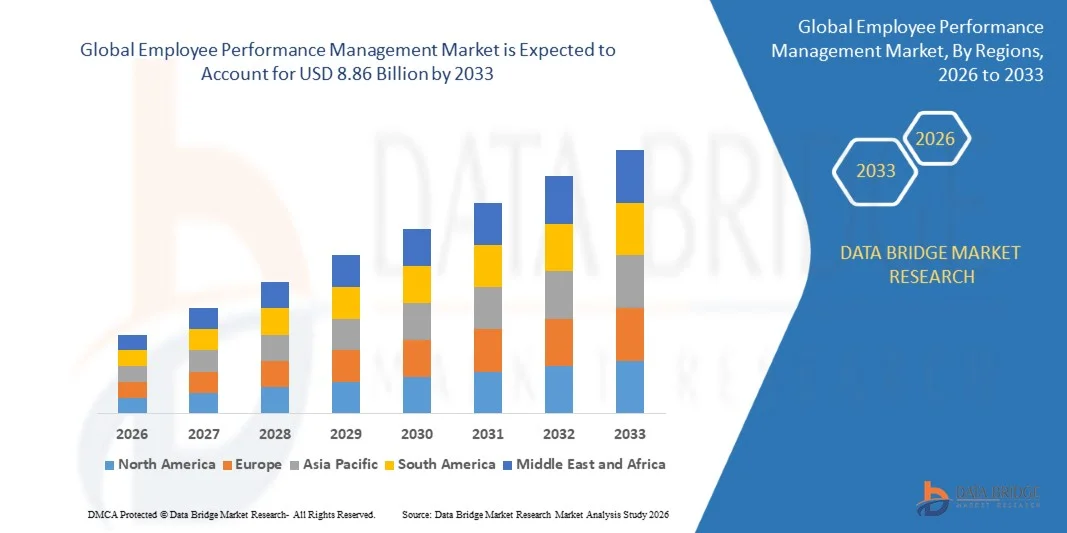
- Según Data Bridge Market Research Analysis, el tamaño del mercado mundial de gestión del rendimiento de los empleados se valoró enUSD 3.54 billion in 2025y se espera que alcanceUSD 8.86 mil millones en 2033, aCAGR of 12.14%durante el período previsto
- El crecimiento del mercado se ve impulsado en gran medida por la creciente adopción de soluciones digitales de recursos humanos y plataformas de gestión del desempeño basadas en la nube en todas las organizaciones
- El aumento de la atención en el compromiso de los empleados, la optimización de la productividad y la retroalimentación continua del rendimiento está apoyando aún más la expansión del mercado
Tamaño del mercado
- Valor mundial del mercado (2025):USD 3.54 billion
- Valor de mercado esperado (2033):8.86 millones de dólares
- CAGR prefabricado (2026–2033):12.14%
¿Cuáles son los principales Takeaways of Employee Performance Management Market
- El mercado está siendo testigo de una fuerte adopción a medida que las organizaciones pasan de los sistemas tradicionales de evaluación a los marcos de seguimiento y gestión de objetivos continuos
- La integración de la IA, el análisis y la automatización en el software de gestión de la actuación profesional está mejorando la transparencia, la precisión y la eficiencia de la planificación de la fuerza de trabajo
- América del Norte dominaba el mercado de gestión de la actuación profesional con la mayor proporción de ingresos del 38,50% en 2025, impulsada por la creciente adopción de soluciones digitales de recursos humanos, la creciente demanda de optimización de la productividad de la fuerza de trabajo y el aumento de la conciencia sobre los sistemas de gestión de la actuación profesional
- Se espera que la región de Asia y el Pacífico sea testigo de la tasa de crecimiento más alta del mundogestión del desempeño de los empleadosmercado, impulsado por la ampliación de la infraestructura de tecnología de la información, el aumento de la digitalización de la fuerza de trabajo y el aumento de la adopción de plataformas basadas en la nube de recursos humanos y gestión del desempeño
- El segmento Cloud celebró la mayor cuota de ingresos del mercado en 2025, impulsada por su escalabilidad, eficacia en función de los costos y facilidad de integración con los sistemas de RRH existentes. Las soluciones de gestión del rendimiento basadas en la nube permiten el acceso a los datos en tiempo real, la gestión remota de la fuerza de trabajo y las actualizaciones sin obstáculos, lo que hace que sean una opción preferida entre las organizaciones que adoptan estrategias digitales de RRH.
Elaboración del mercado de la gestión de la actuación profesional
|
Atributos |
Gestión del desempeño de los empleados |
|
Segmentos cubiertos |
|
|
Países cubiertos |
América del Norte
Europa
Asia y el Pacífico
Oriente Medio y África
América del Sur
|
|
Principales jugadores del mercado |
|
|
Oportunidades de mercado |
|
|
Valor añadido Data Infosets |
Además de las ideas del mercado, como el valor de mercado, la tasa de crecimiento, los segmentos de mercado, la cobertura geográfica, los jugadores de mercado y el escenario de mercado, el informe del mercado comisariado por el equipo de Investigación del Mercado de Datos del Puente incluye análisis profundo de expertos, análisis de importaciones/exportaciones, análisis de precios, análisis de consumo de producción y análisis de plagas. |
¿Cuál es la tendencia clave en el mercado de gestión del rendimiento de los empleados
“Rising Adoption of Digital And Continuous Performance Management Solutions”
• El cambio cada vez mayor de las evaluaciones anuales tradicionales a los modelos continuos de evaluación de la actuación profesional está dando forma significativa al mercado de gestión de la actuación profesional de los empleados, ya que las organizaciones buscan retroalimentación en tiempo real, alineación de objetivos y mejora de la productividad de la fuerza de trabajo. Las plataformas de gestión del rendimiento digital están ganando fuerza debido a su capacidad de rastrear objetivos, supervisar el progreso y apoyar el desarrollo de los empleados en curso. Esta tendencia está fortaleciendo la adopción en todas las empresas de todos los tamaños, alentando a los proveedores a mejorar la funcionalidad de las plataformas y la experiencia de los usuarios
• El mayor hincapié en la participación de los empleados, la gestión remota de la fuerza de trabajo y los entornos de trabajo flexibles ha acelerado la demanda de herramientas de gestión del desempeño integradas con la colaboración y los sistemas de recursos humanos. Las organizaciones están adoptando activamentebasado en la nubesoluciones que permiten a los administradores realizar exámenes virtuales, seguir KPIs y proporcionar comentarios instantáneos. Esto también ha dado lugar a una mayor inversión en plataformas habilitadas para móviles para apoyar a equipos dispersos geográficamente
• Los conocimientos de rendimiento basados en datos y la analítica influyen en la toma de decisiones, con organizaciones que aprovechan los tableros de control, la analítica predictiva y las recomendaciones impulsadas por IA para identificar deficiencias de habilidad y empleados de alto rendimiento. Estas capacidades ayudan a mejorar las estrategias de desarrollo de talentos y la planificación de la sucesión, al tiempo que aumentan la transparencia y la rendición de cuentas en los equipos
• Por ejemplo, en 2024, varias empresas mundiales ampliaron el uso de plataformas de gestión de la actuación profesional habilitadas para AI para apoyar la fuerza de trabajo híbrida y planes de desarrollo de empleados personalizados. Estos despliegues se centraron en mejorar la participación, reducir los prejuicios en las evaluaciones y armonizar los objetivos individuales con los objetivos de organización, contribuyendo a aumentar las tasas de retención de los empleados
• Si bien la adopción está aumentando, el crecimiento sostenido del mercado depende de la personalización de las plataformas, la integración perfecta con los ecosistemas de recursos humanos existentes y la garantía de la seguridad y el cumplimiento de los datos. Los proveedores se centran en soluciones escalables, interfaces fáciles de usar e innovación continua para atender las necesidades institucionales y las expectativas de la fuerza de trabajo cambiantes
Employee Performance Management Market Dynamics
Conductor
“Growing Focus on Employee Engagement and Data-Driven Workforce Management”
• Aumentar el enfoque organizativo para mejorar la participación de los empleados, la productividad y la retención es un factor importante para el mercado de gestión del desempeño de los empleados. Las empresas están adoptando cada vez más plataformas digitales para sustituir los procesos de evaluación manual, permitiendo la retroalimentación continua, el seguimiento de objetivos y la visibilidad del rendimiento en los equipos. This shift supports more agile and responsive labour management practices
• Ampliar el uso de la analítica y la IA en los sistemas de gestión del desempeño influye en el crecimiento del mercado permitiendo a las organizaciones tomar decisiones informadas relacionadas con promociones, capacitación y compensación. Estos instrumentos ayudan a determinar las tendencias de desempeño, las deficiencias de aptitudes y las necesidades futuras de mano de obra, apoyando la planificación estratégica a largo plazo
• Las empresas están integrando activamente soluciones de gestión del desempeño con HRIS, sistemas de gestión del aprendizaje y plataformas de nómina para crear ecosistemas de RRH unificados. Estos enfoques integrados mejoran la eficiencia operacional y aumentan la experiencia general de los empleados, impulsando aún más la adopción
• Por ejemplo, en 2023, varias organizaciones multinacionales informaron de una mejora de la productividad y el compromiso después de implementar un software de gestión continua del rendimiento con funciones de retroalimentación y análisis en tiempo real. Estas soluciones apoyaron la alineación de objetivos entre los departamentos y mejoraron la eficacia de la gestión
• Aunque la fuerte demanda apoya el crecimiento, la implementación exitosa depende de la gestión del cambio, la adopción del usuario y la capacitación efectiva. Las organizaciones deben invertir en la incorporación de empleados y la optimización del sistema para realizar plenamente los beneficios de las soluciones de gestión del desempeño
Restraint/Challenge
“Data Privacy Concerns and Resistance To System Adoption”
• Las preocupaciones de privacidad y seguridad de los datos siguen siendo un reto clave, ya que las plataformas de gestión del desempeño de los empleados manejan información personal y profesional sensible. Las organizaciones deben cumplir las normas de protección de datos, aumentar la complejidad de la aplicación y los costos operacionales, en particular para las empresas multinacionales
• La resistencia al cambio entre empleados y gerentes puede limitar la adopción, especialmente en las organizaciones que pasan de los sistemas de evaluación tradicionales. La falta de familiaridad con las herramientas digitales y las preocupaciones sobre la vigilancia constante puede reducir la aceptación y el compromiso de los usuarios
• Los desafíos de integración con sistemas heredados también pueden dificultar el crecimiento del mercado, ya que los entornos informáticos complejos aumentan el tiempo y los costos de despliegue. Las organizaciones más pequeñas pueden hacer frente a limitaciones presupuestarias, limitando el acceso a soluciones avanzadas de gestión de la actuación profesional
• Por ejemplo, en 2024, algunas empresas de tamaño medio informaron de la demora en la aplicación del software de gestión del desempeño debido a preocupaciones sobre seguridad de datos, complejidad del sistema y resistencia de los empleados. Estos desafíos afectaron los plazos de despliegue y el rendimiento de la inversión
• Hacer frente a estos desafíos requerirá medidas robustas de seguridad de datos, comunicación transparente y diseño de sistemas centrados en el usuario. Los proveedores y las organizaciones deben colaborar para proporcionar capacitación, personalización y apoyo a la gestión del cambio a fin de desbloquear el potencial de crecimiento a largo plazo del mercado mundial de gestión del desempeño de los empleados
¿Cómo se aumenta el mercado de gestión de la actuación profesional
El mercado se segmenta sobre la base del despliegue, las empresas, el tipo y la industria vertical.
• Despliegue
Sobre la base del despliegue, el mercado de gestión del desempeño de los empleados se segmenta en On-Premises y Cloud. El segmento Cloud celebró la mayor cuota de ingresos del mercado en 2025, impulsada por su escalabilidad, eficacia en función de los costos y facilidad de integración con los sistemas de RRH existentes. Las soluciones de gestión del rendimiento basadas en la nube permiten el acceso a los datos en tiempo real, la gestión remota de la fuerza de trabajo y las actualizaciones perfectas, lo que hace que sean una opción preferida entre las organizaciones que adoptan estrategias digitales de RRH.
Se espera que el segmento On-Premises sea testigo de la tasa de crecimiento más rápida de 2026 a 2033, impulsada por el aumento de la demanda de grandes empresas con estrictasseguridad de los datos, cumplimiento y requisitos de personalización. Las organizaciones que operan en industrias reguladas están optando por soluciones locales para mantener un mayor control sobre los datos de los empleados sensibles y los procesos de rendimiento interno, apoyando el crecimiento de los segmentos durante el período previsto.
• Por Empresas
Sobre la base de las empresas, el mercado de gestión de la actuación profesional de los empleados se centra en pequeñas y medianas empresas y grandes empresas. El segmento de las grandes empresas representó la mayor parte de los ingresos del mercado en 2025, apoyada por estructuras complejas de mano de obra, presupuestos superiores de recursos humanos, y la necesidad de análisis avanzados del desempeño y sistemas de retroalimentación continua. Las grandes organizaciones dependen cada vez más de instrumentos estructurados de gestión del desempeño para mejorar la productividad y armonizar los objetivos de los empleados con los objetivos empresariales.
Se espera que el segmento de las pequeñas y medianas empresas sea testigo de la tasa de crecimiento más rápida de 2026 a 2033, impulsada por una creciente digitalización y una mayor conciencia de los marcos estructurados de evaluación del desempeño. Las PYMES están adoptando soluciones de gestión de la actuación basada en la nube y basadas en la suscripción para mejorar la participación de los empleados, racionalizar las evaluaciones y apoyar la escalabilidad de las empresas.
• Por tipo
Sobre la base del tipo, el mercado de gestión del desempeño de los empleados se segmenta en sistemas de evaluación de rendimiento, herramientas de retroalimentación de 360 grados, plataformas de configuración y seguimiento de objetivos, sistemas de retroalimentación continua y otros tipos. Performance Appraisal Systems celebró la mayor cuota de ingresos del mercado en 2025, ya que siguen siendo un componente básico de las prácticas de recursos humanos en todas las organizaciones. Estos sistemas permiten evaluaciones estandarizadas, documentación del desempeño y cumplimiento de las políticas de organización.
Se espera que el segmento Continuous Feedback Systems sea testigo de la tasa de crecimiento más rápida de 2026 a 2033, impulsada por el cambio hacia la gestión del desempeño ágil y la participación de los empleados en tiempo real. Las organizaciones se están alejando cada vez más de los exámenes anuales hacia modelos de retroalimentación continuos para mejorar la transparencia, la motivación y la retención de la fuerza de trabajo.
• Por Industria Vertical
Sobre la base de verticales de la industria, el mercado de gestión del desempeño de los empleados se segmenta en BFSI, Fabricación, Salud, Telecomunicaciones y Otros. El segmento BFSI dominó la cuota de ingresos del mercado en 2025, respaldada por un fuerte enfoque en la productividad de la fuerza de trabajo, el cumplimiento reglamentario y los incentivos basados en el desempeño. Las instituciones financieras utilizan ampliamente instrumentos de gestión del desempeño para hacer un seguimiento de la eficiencia de los empleados y la calidad de los servicios.
Se espera que el segmento de atención de la salud sea testigo de la tasa de crecimiento más rápida de 2026 a 2033, impulsada por el aumento de la complejidad de la fuerza de trabajo, la creciente adopción de soluciones digitales de recursos humanos y la necesidad de un seguimiento continuo del desempeño. Las organizaciones de atención de la salud están aplicando sistemas de gestión de la actuación profesional para aumentar la eficiencia del personal, mejorar los resultados de los pacientes y garantizar el cumplimiento de las normas.
¿Qué región tiene el mercado de gestión del rendimiento de los empleados
• América del Norte dominaba el mercado de gestión del desempeño de los empleados con la mayor cuota de ingresos del 38,50% en 2025, impulsada por la creciente adopción de soluciones digitales de RRH, la creciente demanda de optimización de la productividad de la fuerza de trabajo y el aumento de la conciencia sobre los sistemas de gestión del rendimiento
• Organizaciones de la región altamente valoradas plataformas de gestión de rendimiento basadas en la nube e integradas que proporcionan análisis en tiempo real, seguimiento de objetivos e información de compromiso de los empleados
• Esta adopción generalizada cuenta además con una infraestructura avanzada de tecnología de la información, una elevada alfabetización digital y una tendencia creciente a adoptar decisiones basadas en datos, estableciendo soluciones de gestión del desempeño de los empleados como instrumentos esenciales tanto para las PYME como para las grandes empresas
U.S. Employee Performance Management Market Insight
El mercado de gestión del desempeño de los empleados de Estados Unidos captó la mayor cuota de ingresos en 2025 dentro de América del Norte, alimentada por la adopción de software de RRH basado en la nube y el cambio hacia sistemas de retroalimentación continua. Las empresas están priorizando cada vez más el compromiso de los empleados, la productividad y la retención mediante herramientas digitales de rendimiento. La creciente preferencia por los sistemas de evaluación basados en objetivos y análisis, junto con la integración con los programas de RRH y nómina, impulsa el crecimiento del mercado. Además, la atención prestada a la gestión remota de la fuerza de trabajo y el seguimiento del desempeño en tiempo real contribuye significativamente a la expansión del mercado.
Europe Employee Performance Management Market Insight
Se espera que el mercado europeo de gestión de la actuación profesional sea testigo de la tasa de crecimiento más rápida de 2026 a 2033, impulsada principalmente por normas laborales estrictas, la demanda de sistemas de evaluación estandarizados y el aumento de la digitalización de la fuerza laboral. Las organizaciones están adoptando instrumentos avanzados de gestión de la actuación profesional para aumentar la productividad de los empleados, armonizar los objetivos con los objetivos empresariales y garantizar el cumplimiento. Las empresas europeas también están aprovechando soluciones basadas en IA y analíticas para apoyar iniciativas de desarrollo y compromiso de los empleados.
U.K. Employee Performance Management Market Insight
Se espera que el mercado de gestión de la actuación profesional de los empleados de los Estados Unidos sea testigo de la tasa de crecimiento más rápida de 2026 a 2033, alimentada por la tendencia creciente de la transformación digital de los recursos humanos y el énfasis en la satisfacción y retención de los empleados. Las empresas están implementando cada vez más plataformas basadas en la nube, sistemas de retroalimentación continua y herramientas de evaluación de 360 grados para mejorar la productividad de la fuerza laboral. Además, se espera que la infraestructura de TI robusta y la adopción generalizada de soluciones de SaaS sigan impulsando el crecimiento del mercado.
Germany Employee Performance Management Market Insight
Se espera que el mercado de gestión del desempeño de los empleados de Alemania sea testigo de la tasa de crecimiento más rápida de 2026 a 2033, impulsada por el aumento de las inversiones en tecnología de recursos humanos y la demanda de análisis del desempeño y sistemas de evaluación automatizados. Las organizaciones están haciendo hincapié en el desarrollo de los empleados y la alineación del desempeño con los objetivos corporativos. La creciente adopción de ecosistemas digitales de RRH y la integración con las soluciones de nómina y gestión de talentos promueve la expansión del mercado en múltiples sectores, como la fabricación, la BFSI y la atención de la salud.
Asia-Pacific Employee Performance Management Market Insight
Se espera que el mercado de gestión de la actuación profesional de los empleados de Asia y el Pacífico sea testigo de la tasa de crecimiento más rápida de 2026 a 2033, impulsada por la digitalización rápida, la expansión de las PYME y la creciente demanda de participación de los empleados y la optimización de la productividad en países como China, la India y el Japón. Las iniciativas gubernamentales que apoyan el desarrollo de las aptitudes de la fuerza de trabajo, junto con la creciente adopción de instrumentos de gestión de la actuación profesional basados en la nube y habilitados para móviles, son más alentadoras para el crecimiento del mercado.
Japan Employee Performance Management Market Insight
Se espera que el mercado de gestión del desempeño de los empleados de Japón sea testigo de la tasa de crecimiento más rápida de 2026 a 2033 debido a que el país se centra en la productividad de la fuerza de trabajo, la adopción tecnológica y una fuerza de trabajo de envejecimiento que requiere sistemas eficientes de evaluación del desempeño. Las organizaciones están integrando cada vez más las soluciones de gestión del desempeño con las plataformas de análisis de recursos humanos, nómina de sueldos y capacitación. Los sistemas continuos de retroalimentación y seguimiento de objetivos están ganando fuerza para mejorar la participación y retención de los empleados.
China Employee Performance Management Market Insight
El mercado de gestión del desempeño de los empleados de China representó la mayor cuota de ingresos en Asia Pacífico en 2025, atribuida a la gran base empresarial del país, la rápida transformación digital y el creciente enfoque en la productividad y el compromiso de los empleados. Las empresas de múltiples sectores, incluyendo BFSI, fabricación y salud, están adoptando cada vez más plataformas de gestión de rendimiento basadas en la nube y sistemas de evaluación basados en análisis. La integración de la IA y soluciones habilitadas para móviles, junto con la creciente conciencia sobre la gestión del talento, impulsa el mercado en China.
¿Cuáles son las mejores empresas en el mercado de gestión del rendimiento de los empleados
The Employee Performance Management industry is primarily led by well-established companies, including:
- Workday, Inc. (U.S.)
- Salesforce (Estados Unidos)
- SAP SE (Alemania)
- Oracle Corporation (Estados Unidos)
- ADP, LLC (Estados Unidos)
- Ceridian (Canadá)
- Ultimate Software (Estados Unidos)
- Kronos Incorporated (U.S.)
- Cornerstone OnDemand (Estados Unidos)
- Saba Software (Estados Unidos)
- Halogen Software (Canadá)
- Infor (Estados Unidos)
- SuccessFactors (Alemania)
- Lumesse (Reino Unido)
- BambooHR (U.S.)
¿Cuáles son los últimos desarrollos en Employee Performance Management Market
- En octubre de 2024, Nextiva, proveedor líder de gestión unificada de la experiencia del cliente (UCXM), lanzó Nextiva Workforce Scheduling, una mejora de su suite de gestión del compromiso de empleados en la plataforma Nextiva Unified-CXM. La nueva característica está diseñada para que las organizaciones del centro de contacto automaticen tareas de personal, incluyendo pronóstico, planificación, programación, cumplimiento, seguimiento de asistencia y monitoreo del desempeño. Este desarrollo mejora la eficiencia de la programación, mejora el compromiso de los empleados y permite un mejor seguimiento del desempeño, en última instancia potenciando la productividad y apoyando el crecimiento en el mercado de gestión del desempeño de los empleados
- En julio de 2024, Salesforce, líder mundial en soluciones de CRM impulsadas por AI, se asoció con Workday, Inc., un proveedor superior de gestión organizativa, para introducir un agente avanzado de servicio de empleados de AI. El agente de AI automatiza tareas rutinarias, proporciona soporte personalizado y proporciona información basada en datos para mejorar la eficiencia de los empleados. Al integrar el Agente de Salesforce y Einstein AI con la plataforma de Workday, las organizaciones pueden simplificar las operaciones de servicio de los empleados y optimizar los procesos de gestión del desempeño, fortaleciendo el mercado general de gestión del desempeño de los empleados
SKU-
Obtenga acceso en línea al informe sobre la primera nube de inteligencia de mercado del mundo

- Panel de análisis de datos interactivo
- Panel de análisis de empresas para oportunidades con alto potencial de crecimiento
- Acceso de analista de investigación para personalización y consultas
- Análisis de la competencia con panel interactivo
- Últimas noticias, actualizaciones y análisis de tendencias
- Aproveche el poder del análisis de referencia para un seguimiento integral de la competencia
Metodología de investigación
La recopilación de datos y el análisis del año base se realizan utilizando módulos de recopilación de datos con muestras de gran tamaño. La etapa incluye la obtención de información de mercado o datos relacionados a través de varias fuentes y estrategias. Incluye el examen y la planificación de todos los datos adquiridos del pasado con antelación. Asimismo, abarca el examen de las inconsistencias de información observadas en diferentes fuentes de información. Los datos de mercado se analizan y estiman utilizando modelos estadísticos y coherentes de mercado. Además, el análisis de la participación de mercado y el análisis de tendencias clave son los principales factores de éxito en el informe de mercado. Para obtener más información, solicite una llamada de un analista o envíe su consulta.
La metodología de investigación clave utilizada por el equipo de investigación de DBMR es la triangulación de datos, que implica la extracción de datos, el análisis del impacto de las variables de datos en el mercado y la validación primaria (experto en la industria). Los modelos de datos incluyen cuadrícula de posicionamiento de proveedores, análisis de línea de tiempo de mercado, descripción general y guía del mercado, cuadrícula de posicionamiento de la empresa, análisis de patentes, análisis de precios, análisis de participación de mercado de la empresa, estándares de medición, análisis global versus regional y de participación de proveedores. Para obtener más información sobre la metodología de investigación, envíe una consulta para hablar con nuestros expertos de la industria.
Personalización disponible
Data Bridge Market Research es líder en investigación formativa avanzada. Nos enorgullecemos de brindar servicios a nuestros clientes existentes y nuevos con datos y análisis que coinciden y se adaptan a sus objetivos. El informe se puede personalizar para incluir análisis de tendencias de precios de marcas objetivo, comprensión del mercado de países adicionales (solicite la lista de países), datos de resultados de ensayos clínicos, revisión de literatura, análisis de mercado renovado y base de productos. El análisis de mercado de competidores objetivo se puede analizar desde análisis basados en tecnología hasta estrategias de cartera de mercado. Podemos agregar tantos competidores sobre los que necesite datos en el formato y estilo de datos que esté buscando. Nuestro equipo de analistas también puede proporcionarle datos en archivos de Excel sin procesar, tablas dinámicas (libro de datos) o puede ayudarlo a crear presentaciones a partir de los conjuntos de datos disponibles en el informe.











