


アジア太平洋地域の SiC パワー半導体市場、タイプ別 (MOSFET、ハイブリッド モジュール、ショットキー バリア ダイオード (SBDS)、IGBT、バイポーラ接合トランジスタ (BJT)、ピン ダイオード、接合 FET (JFET)、その他)、電圧範囲 (301~900 V、901~1700 V、1701 V 以上)、ウェハー サイズ (6 インチ、4 インチ、2 インチ、6 インチ以上)、ウェハー タイプ (SiC エピタキシャル ウェハー、ブランクSiC ウェハー)、アプリケーション (電気自動車 (EV)、太陽光発電、電源、産業用モーター ドライブ、EV 充電インフラストラクチャ、RF デバイス、その他)、垂直 (自動車、公共事業およびエネルギー、産業、輸送、IT および通信、民生用電子機器、航空宇宙および防衛、商業、その他) の 2030 年までの業界動向と予測。
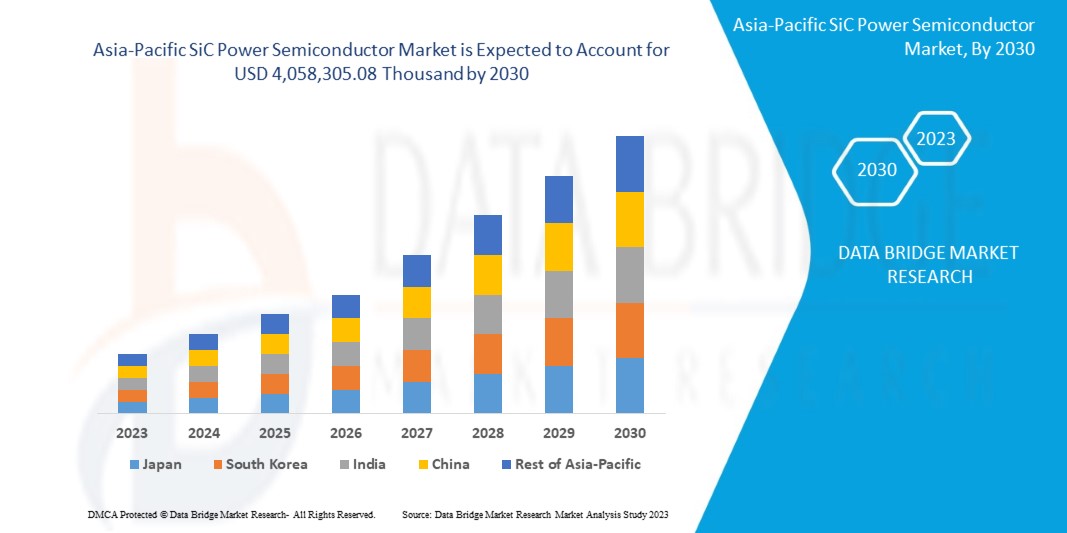
アジア太平洋SiCパワー半導体市場分析とサイズ
SiCパワー半導体は、最も有価な半導体であり、電子機器の最良の選択と考えられています。 これらSiCパワー半導体は、国内、商用、産業分野、各種分野に応用されています。 SiCのパワー半導体はSiCのディスクリート装置およびSiCのベアダイのような2種類の装置で利用できます。 技術の進歩により、SiCのディスクリート機器の普及がより高速になりました。 SiCパワー半導体の重要な特性は、電力を効率的に使用し、熱伝導性の高い特性です。 SiCパワー半導体は、通信、エネルギー、電力、再生可能エネルギー発電、その他複数の場所で使用されています。 SiCパワー半導体は、パワーエレクトロニクスで、個人間の優先権を獲得しています。 アジア・パシフィックSiCパワー半導体市場におけるSiCパワー半導体の需要が高まっています。 そのためには、アジア・パシフィック・シー・パワー・半導体市場における事業拡大に向けて、様々な市場プレイヤーが新製品を導入し、パートナーシップを構築しています。
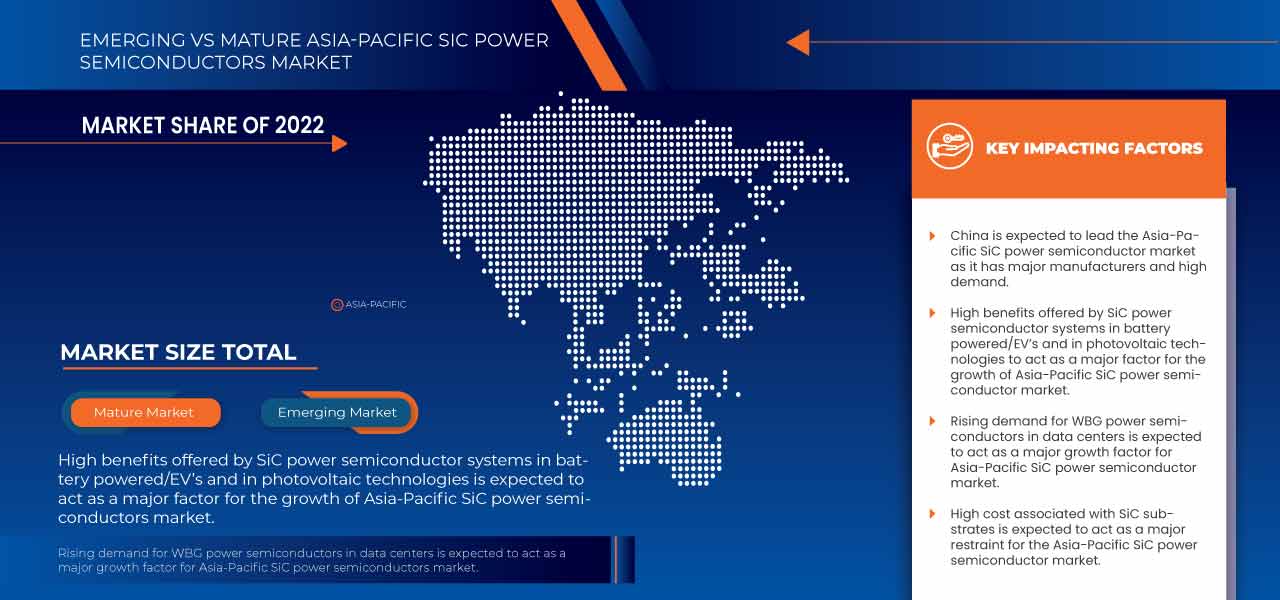
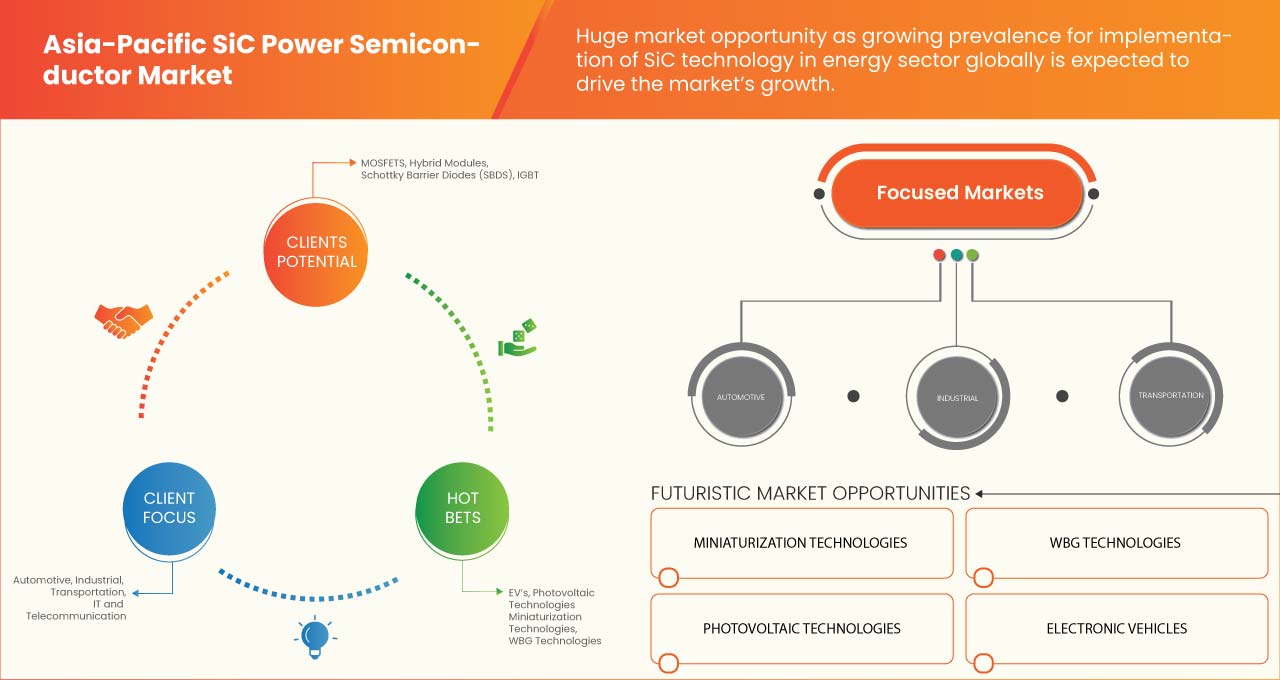
データブリッジ市場調査では、アジア・パシフィック SiC パワー半導体市場は、予測期間の 25.9% の CAGR で、2030 年までに USD 4,058,305.08 千の値に達すると予想されます。 アジア・パシフィック SiC パワー半導体市場レポートでは、価格分析、特許分析、技術の進歩を総合的にカバーしています。
|
レポートメトリック |
インフォメーション |
|
予測期間 |
2023年~2030年 |
|
基礎年 |
2022 |
|
歴史の年 |
2021年(2020-2016年にカスタマイズ可能) |
|
定量ユニット |
USD Thousand、単位の容積、USD の価格の収入 |
|
カバーされる区分 |
タイプ(MOSFETS、ハイブリッドモジュール、ショットキーバリアダイオード(SBDS)、IGBT、バイポーラジャンクショントランジスタ(BJT)、ピンダイオード、ジャンクションフェット(JFET)、その他)、電圧範囲(301-900 V、901-1700 V、1701 V以上)、ウェーハサイズ(6インチ、4インチ、2インチ以上)、ウェーハタイプ(SiCエピキシャルウエファー、ブランクシーウェーハ、その他)、電気車両、その他、電気機器、電気機器、電気機器、電気機器、電気機器、電気機器、電気機器、電気機器、電気機器、電気機器、電気機器、電気機器、電気機器、電気機器、電気機器、電気機器、電気機器、電気機器、電気機器、電気機器、電気機器、電気機器、電気機器、電気機器、電気機器、電気機器、電気機器、電気機器、電気機器、電気機器、電気機器、電気機器、電気機器、電気機器、電気機器、電気機器、電気機器、電気機器、電気機器、電気機器、電気機器、電気機器、電気機器、電気機器、電気機器、電気機器、電気機器、電気機器、電気 |
|
カバーされた国 |
日本、中国、韓国、インド、オーストラリア、ニュージーランド、香港、台湾、シンガポール、タイ、インドネシア、マレーシア、フィリピン、ベトナム、アジア・太平洋の残り |
|
カバーされる市場プレーヤー |
株式会社WOLFSPEED, INC., STMicroelectronics, 株式会社ローム, 富士電機株式会社, 三菱電機株式会社, テキサスインスツルメンツ株式会社, インフィニオンテクノロジーズAG, セミクロンダンフォス, 厦門パワーウェイアドバンストマテリアル株式会社, 株式会社レネサス電子株式会社, 東芝電子デバイス・ディバイス株式会社, マイクロチップテクノロジー株式会社, 半導体コンポーネントインダストリーズ, LLC, NXPセミコンダクター, ユナイテッドサイク, セミコンダクツ株式会社, パワーシステムズ株式会社, パワーシステムズ株式会社, 半導体デバイス, 半導体デバイス, 半導体, 半導体, 半導体, 半導体, 半導体, 半導体, 半導体, 半導体, 半導体, 半導体, 半導体, 半導体, 半導体, 半導体, 半導体, 半導体, 半導体, 半導体, 半導体, 半導体, 半導体, 半導体, 半導体, 半導体, 半導体, 半導体, 半導体, 半導体, 半導体, 半導体, 半導体, 半導体, 半導体, 半導体, 半導体, 半導体, 半導体, 半導体, 半導体, 半導体, 半導体 |
市場定義
SiCパワー半導体は、炭素とシリコンを含む半導体の種類を指し、非常に高い電圧と温度で動作させます。 SiCパワー半導体は、強固な材料だけでなく、非常に硬い材料の製造に使用できます。 テレコミュニケーション、エネルギー、パワー、自動車、再生可能エネルギーなどの各種分野でSiCパワー半導体を実装し、さまざまな分野に展開できます。 基本的には、アプリケーション領域を広げた熱伝導性が高いためと考えられています。 SiCパワー半導体は、無線通信において主に適用可能な高周波電源装置と見なされる装置です。 SiC半導体は、絶縁破壊フィールドの強度10倍、熱伝導率3倍、シリコン半導体と比較して3倍のバンドギャップを提供します。 高性能・効率性に優れたSiC半導体は市場を追い越しました。 SiC パワー半導体は、高電圧および電流で動作し、高温での効率性に加えて、低抵抗性を提供します。 従って炭化ケイ素の組合せは半導体のよりよい、最適選択であることを証明しました。
アジアパシフィック SiC パワー半導体市場ダイナミクス
このセクションでは、市場ドライバ、利点、機会、拘束、および課題を理解しています。 以下について詳しく説明しています。
ドライバー
- SiCパワー半導体のアドベント
半導体材料としてSiCの非常に有用な特性があります。 インバータ、モータードライブ、バッテリー充電器、シリコンカーバイド(SiC)などのアプリケーションでは、パワー密度の向上、冷却の低減、システム全体のコストの削減など、多くの利点があります。 これらの利点は、SiC パワー半導体を高効率なステージで実現するのに十分です。
逆回復段階でSiCによって失われたエネルギーは、材料の効率性に大きな違いをもたらすシリコンによって失われたエネルギーの1%だけである。 テール電流の仮想欠如は、より速いターンオフを可能にし、損失を下げます。 吐出するエネルギーが少ないため、より高い周波数で切り替え、効率性を向上させることができるSiCデバイス。 より有効で、小型およびより低い重量のシスコ他の材料と比較すると、より高い評価されたソリューションまたはより小さい設計を作成することができ、冷却要件を削減します。 そこで、SiCパワー半導体の出現は、アジア太平洋SiCパワー半導体市場の成長を牽引する大きな要因です。
- 電子車両のライジング浸透
世界は急速に変化し、再生可能エネルギーへの転換が進んでいます。 すべてのセクター、市場プレイヤー、政府機関は、電気自動車のインフラを構築し、電気自動車の需要を増大させるために、より一層集中しています。
国際エネルギー機関(IEA)の情報によると、2021年に16.5万台の電気自動車が運行され、わずか3年で旅行が始まり、2020年と比較しても大きな数です。 中国の電気自動車の売上高が増加し、中国で倍増し、欧州で増加し、2021年に米国でピックアップ。 このデータは、市場におけるEVの普及に著しい増加があることを示しています。これは、アジア太平洋SiCパワー半導体市場だけでなく、環境に積極的に影響を及ぼす可能性があります。 SiCは高圧で非常に能率的であり、従来の車のタンクを満たすのに匹敵する高速バッテリー充電時間を可能にします。 炭化ケイ素の力電子工学は800ボルト ドライブ システムのサージを可能にし、より大きい範囲のより軽いEVsのための方法を舗装します。
コミュニティ
- SiCメーカーによる戦略的パートナーシップと買収
戦略的パートナーシップと買収を創出する様々な組織や市場プレイヤーがあります。 アジアパシフィックSiCパワー半導体市場の成長に大きなプラスの影響を生み出しています。 このコラボレーションの結果は、技術や市場へのアクセスを得るために、新しい競合他社の低コストのルートになるよう協力しています。
合弁事業は、特定の目標を達成するためにリソースと専門知識をプールする2つ以上の企業を含みます。 アジア・パシフィック・シー・パワー・半導体市場の成長にプラスの影響を及ぼすべく、互いに協調し合った多くの組織がいます。
拘束/チャレンジ
- SiCウェーハ製造に関する課題
SiCウエハは、電気・熱性に優れた半導体材料です。 幅広い用途に理想的な高性能半導体です。 高い熱抵抗に加えて、非常に高い硬度を備えています。 SiCウェーハメーカーに直面する加工チャレンジはたくさんあります。 SiCの基質の製造の間に起こることができる主要な欠陥は結晶の積み重ねの欠陥、マイクロ管、ピット、傷、汚れおよび表面の粒子です。 これらの要因は、100mmウェーハよりも150mmウェーハでより頻繁に検出されたSiCデバイスの性能に悪影響を及ぼします。 SiCは世界で3番目に硬い複合材料であり、非常に脆弱であり、その生産はサイクルタイム、コスト、ダイシング性能に関する複雑な課題に直面しています。 200mmのウエハに切り替えても重要な課題を盛り込むことを予測する効果があります。 実際には、欠陥の必然的に高密度に直面している基質の同じ質を保証する必要があります。
アジア太平洋 SiC パワー半導体市場への影響
SiCパワー半導体業界は、製造施設やサービスが閉鎖したため、ロックダウンやCOVID-19政府の法律により、需要が減少したと指摘した。 民間開発や公共開発も中止となりました。 また、SiCパワー半導体の製造工程で使用される原料のサプライチェーンの停止、特に影響を受けました。 貿易および輸送に関するさまざまな産業および規制の厳しい政府規制は、2020年および2021年の最初の2四半期に、SiCパワー半導体の市場の成長にデントを引き起こしたトップ要因の一部でした。 SiCパワー半導体製造は、世界各地の政府による規制を遅らせたため、2020年第3四半期の需要に応えなかった。 また、自動車・防衛産業におけるSiCパワー半導体製品に対する高需要・要求、医療分野、および油圧用途の検討が進んでいます。 石油およびガス産業および自動車の生産の再開;更に世界のSiC力の半導体のための上昇の要求に燃料を供給しました。 従って、これは要求のハイキングにだけでなく、プロダクトのコストを増加しました。
最近の開発
- 2022年12月、STMicroelectronicsとSoitec(Euronext Paris)は、革新的な半導体材料の設計と製造において、シリコンカーバイド(SiC)基質に関する次の段階を発表しました。SeitecのSiC基質技術は、STの次の18か月にわたって計画されています。 この協力の目標は、今後200mmの基質製造のためのSoitecのSmartSiC技術のSTによって採用され、その装置およびモジュールの製造事業に供給し、中期に期待される容積の生産。 同社は、アジア・パシフィック・シック・パワー・半導体市場の成長だけでなく、金融の拡大にも貢献します。
- 2022年7月、セミクロン・ダンフォスと京都に拠点を置くROHMセミコンダクターは、パワーモジュールのシリコンカーバイド(SiC)の実装に関して10年以上にわたり協業してきました。 最近では、自動車用SEMIKRONのeMPackモジュールで、SiC MOSFETの最新4世代のSiC MOSFETが完全に認定されました。 したがって、両方の企業は、世界中の顧客のニーズに対応しています。 同社の財務を強化し、アジア太平洋SiCパワー半導体市場の成長にプラスの影響を及ぼす。
アジア太平洋SiCパワー半導体市場スコープ
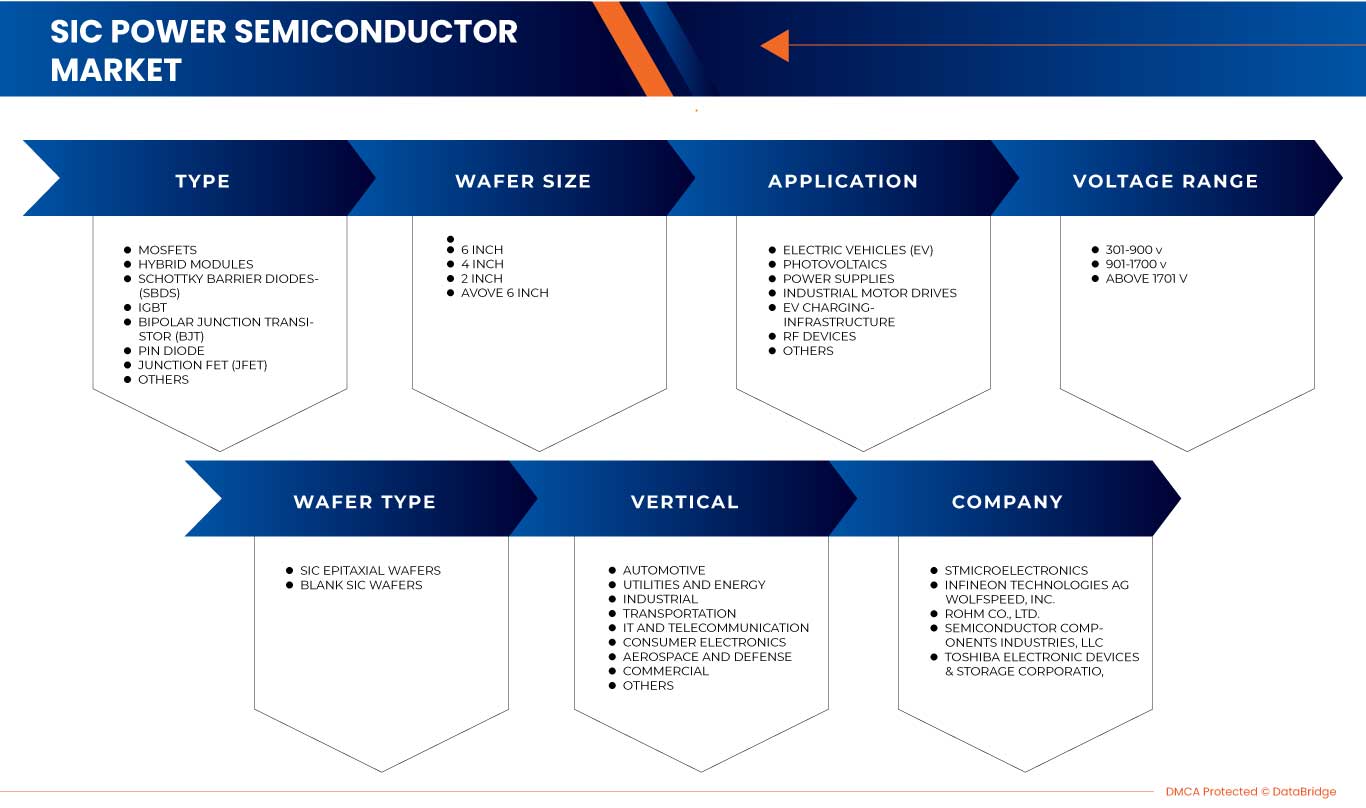
アジアパシフィック SiC パワー半導体市場は、タイプ、電圧範囲、ウエハサイズ、ウエハタイプ、アプリケーション、縦型に基づいてセグメント化されます。 これらのセグメント間の成長は、業界における熱心な成長セグメントを分析し、価値ある市場概観と市場情報を提供して、コア市場アプリケーションを特定するための戦略的決定を支援します。
タイプ別
- モスフェッツ
- ハイブリッドモジュール
- ショットキーバリアダイオード(SBDS)
- IGBTについて
- バイポーラジャンクショントランジスタ(BJT)
- ピン ダイオード
- ジャンクションFET(JFET)
- その他
種類に基づいて、アジア太平洋 SiC パワー半導体市場は、MOSFETS、ハイブリッドモジュール、ショットキーバリアダイオード(SBDS)、IGBT、バイポーラジャンクショントランジスタ(BJT)、ピンダイオード、ジャンクション FET(JFET)などに分けられます。
電圧範囲によって
- 301-900 Vの
- 901-1700ボルト
- 1701 V以上
電圧範囲に基づいて、アジア太平洋 SiC パワー半導体市場は、301-900 V、901-1700 V、および 1701 V を超えるセグメント化されます。
ウエファーサイズ別
- 6インチ
- 4インチ
- 2インチ
- 6インチ以上
ウエハサイズに基づき、アジア太平洋SiCパワー半導体市場は6インチ、4インチ、2インチ、6インチ以上に分けられます。
ウエファータイプ別
- SiCエピタキシャルウエファー
- ブランクSiCウエハ
ウエハ型をベースに、アジア・パシフィックSiCパワー半導体市場をSiCエピタキシャルウエファー、ブランクSiCウエハに分割。
用途別
- 電気自動車(EV)
- 太陽光発電
- パワーサプライ
- 産業モーター ドライブ
- EV充電インフラ
- RF装置
- その他
用途に応じて、アジア太平洋のSicパワー半導体市場は、電気自動車(EV)、太陽光発電、電源、産業用モータードライブ、EV充電インフラ、RFデバイスなどに分けられます。
縦並び
- 自動車産業
- ユーティリティとエネルギー
- 産業
- 交通アクセス
- ITと通信
- 消費者エレクトロニクス
- 航空宇宙と防衛
- 商業施設
- その他
アジアパシフィックSiCパワー半導体市場は、自動車、ユーティリティ、エネルギー、産業、輸送、IT、通信、家電、航空宇宙、防衛、商用、その他に分けられます。
アジアパシフィック SiC パワー半導体市場 地域分析/インサイト
アジアパシフィックSiCパワー半導体市場は分析され、市場規模のインサイトやトレンドは、地域、タイプ、電圧範囲、ウエハサイズ、ウエハタイプ、アプリケーション、および上記基準として垂直に供給されます。
日本、中国、韓国、インド、オーストラリア、ニュージーランド、香港、台湾、シンガポール、タイ、インドネシア、マレーシア、フィリピン、ベトナム、アジア・太平洋、その他アジア・太平洋地域におけるアジア・太平洋地域における市場調査レポート
2023年、中国は、国内のエレクトロニクス市場規模や業界全体の生産拠点としての地位により、アジア・パシフィック・SiCのパワー半導体市場をドミネーションし、市場の成長のための運転因子として機能することが期待されています。
また、レポートの領域セクションでは、市場の現状と市場の将来の傾向に影響を与える市場の規制における個々の市場影響要因と変化も提供します。 ダウンストリームや上流値のチェーン分析、技術的な傾向、およびポーターの5つの力分析などのデータポイントは、個々の国のための市場シナリオを予測するために使用されるポインターのいくつかです。 また、地域や国内ブランドから大規模または希少な競争に直面するアジア太平洋ブランドやその課題の存在と可用性、国内の関税の影響、および取引ルートは、地域のデータの予測分析を提供しながら考慮されます。
競争力のある風景とアジア太平洋SiCパワー半導体市場シェア分析
アジアパシフィックSiCパワー半導体市場競争力のある景観は、競合他社の詳細情報を提供します。 概要、企業財務、収益発生、市場可能性、研究開発への投資、新市場イニシアチブ、アジア太平洋プレゼンス、生産拠点、設備、生産能力、企業強度、弱点、製品起動、製品幅、およびアプリケーション優位性。 上記のデータポイントは、アジア・パシフィック・SiCパワー・セミコンダクター・マーケットに関連した企業にのみ関連しています。
アジア太平洋SiCパワー半導体市場で動作する主要なプレーヤーの中には、WOLFSPEED, INC., STMicroelectronics, 株式会社ローム, 富士電機株式会社, 三菱電機株式会社, テキサスインスツルメンツ株式会社, インフィニオンテクノロジーズAG, セミクロンダフォス, 厦門パワーウェイアドバンストマテリアル株式会社, 株式会社レネッサス電子株式会社, 東芝電子デバイス&STORAGE株式会社, チップス株式会社, マイクロチップス株式会社, セミクロンダフォス, 半導体デバイス, 半導体デバイス, 半導体デバイス, 半導体, 半導体, 半導体, 半導体, 半導体, 半導体, 半導体, 半導体, 半導体, 半導体, 半導体, 半導体, 半導体, 半導体, 半導体, 半導体, 半導体, 半導体, 半導体, 半導体, 半導体, 半導体, 半導体, 半導体, 半導体, 半導体, 半導体, 半導体, 半導体, 半導体, 半導体, 半導体, 半導体, 半導体, 半導体, 半導体, 半導体, 半導体, 半導体, 半導体, 半導体, 半導体, 半導体, 半導体,
SKU-
世界初のマーケットインテリジェンスクラウドに関するレポートにオンラインでアクセスする

- インタラクティブなデータ分析ダッシュボード
- 成長の可能性が高い機会のための企業分析ダッシュボード
- カスタマイズとクエリのためのリサーチアナリストアクセス
- インタラクティブなダッシュボードによる競合分析
- 最新ニュース、更新情報、トレンド分析
- 包括的な競合追跡のためのベンチマーク分析のパワーを活用
目次
1 はじめに
1.1 研究の目的
1.2 市場の定義
1.3 アジア太平洋地域のSICパワー半導体市場の概要
1.4 通貨と価格
1.5 制限
1.6 対象市場
2 市場セグメンテーション
2.1 対象市場
2.2 研究期間の考慮
2.3 地理的範囲
2.4 DBMR TRIPODデータ検証モデル
2.5 主要なオピニオンリーダーとの一次インタビュー
2.6 DBMR市場ポジショングリッド
2.7 ベンダーシェア分析
2.8 多変量モデリング
2.9 タイプカーブ
2.1 市場アプリケーションカバレッジグリッド
2.11 二次資料
2.12 仮定
3 概要
4つのプレミアムインサイト
5 市場概要
5.1 ドライバー
5.1.1 SiCパワー半導体の登場
5.1.2 電気自動車の普及率の上昇
5.1.3 太陽光発電技術の利用増加
5.1.4 半導体産業の成長
5.1.5 データセンターにおけるWBGパワー半導体の導入増加
5.2 拘束
5.2.1 SiC基板に関連する高コスト
5.3 機会
5.3.1 SICメーカーによる戦略的提携と買収
5.3.2 北米と欧州におけるサプライチェーンの能力の拡大
5.3.3 エネルギー分野におけるSIC技術の導入
5.3.4 半導体市場を活性化するための政府/企業による強力な取り組みと投資。
5.4 課題
5.4.1 SiCウェーハ製造に関する問題
5.4.2 サプライチェーンの混乱によるシリコンカーバイド半導体の不足
6 アジア太平洋地域のSICパワー半導体市場(タイプ別)
6.1 概要
6.2 MOSFET
6.3 ハイブリッドモジュール
6.4 ショットキーバリアダイオード(SBDS)
6.5 IGBT
6.6 バイポーラ接合トランジスタ(BJT)
6.7 ピンダイオード
6.8 接合型FET(JFET)
6.9 その他
7 アジア太平洋地域のSICパワー半導体市場(電圧範囲別)
7.1 概要
7.2 301-900V
7.3 901-1700V
7.4 1701 V 以上
8 アジア太平洋地域のSICパワー半導体市場(ウェハサイズ別)
8.1 概要
8.2 6インチ
8.3 4インチ
8.4 2インチ
8.5 6インチ以上
9 アジア太平洋地域のSICパワー半導体市場(ウェーハタイプ別)
9.1 概要
9.2 SiCエピタキシャルウェーハ
9.3 ブランクSICウェーハ
10 アジア太平洋地域のSICパワー半導体市場(用途別)
10.1 概要
10.2 電気自動車
10.3 太陽光発電
10.4 電源
10.5 産業用モータードライブ
10.6 EV充電インフラ
10.7 RFデバイス
10.8 その他
11 アジア太平洋地域のSICパワー半導体市場(業種別)
11.1 概要
11.2 自動車
11.3 ユーティリティとエネルギー
11.4 工業
11.5 輸送
11.6 ITと通信
11.7 民生用電子機器
11.8 航空宇宙および防衛
11.9 商業
11.1 その他
12 アジア太平洋地域のSICパワー半導体市場(地域別)
12.1 アジア太平洋
12.1.1 中国
12.1.2 日本
12.1.3 韓国
12.1.4 インド
12.1.5 台湾
12.1.6 オーストラリアとニュージーランド
12.1.7 シンガポール
12.1.8 タイ
12.1.9 インドネシア
12.1.10 マレーシア
12.1.11 フィリピン
12.1.12 ベトナム
12.1.13 その他のアジア太平洋地域
13 アジア太平洋地域のSICパワー半導体市場、企業概要
13.1 企業シェア分析: アジア太平洋
14 SWOT分析
15 企業プロフィール
15.1 STマイクロエレクトロニクス
15.1.1 会社概要
15.1.2 収益分析
15.1.3 企業株式分析
15.1.4 製品ポートフォリオ
15.1.5 最近の動向
15.2 インフィニオンテクノロジーズAG
15.2.1 会社概要
15.2.2 収益分析
15.2.3 企業株式分析
15.2.4 製品ポートフォリオ
15.2.5 最近の動向
15.3 ウルフスピード株式会社
15.3.1 会社のスナップショット
15.3.2 収益分析
15.3.3 企業株式分析
15.3.4 製品ポートフォリオ
15.3.5 最近の動向
15.4 ローム株式会社
15.4.1 会社のスナップショット
15.4.2 収益分析
15.4.3 企業株式分析
15.4.4 製品ポートフォリオ
15.4.5 最近の動向
15.5 セミコンダクターコンポーネントインダストリーズLLC
15.5.1 会社のスナップショット
15.5.2 収益分析
15.5.3 企業株式分析
15.5.4 製品ポートフォリオ
15.5.5 最近の動向
15.6 アレグロマイクロシステムズ株式会社
15.6.1 会社のスナップショット
15.6.2 収益分析
15.6.3 企業株式分析
15.6.4 製品ポートフォリオ
15.6.5 最近の動向
15.7 富士電機株式会社
15.7.1 会社のスナップショット
15.7.2 収益分析
15.7.3 製品ポートフォリオ
15.7.4 最近の動向
15.8 ジェネシックセミコンダクター株式会社
15.8.1 会社のスナップショット
15.8.2 製品ポートフォリオ
15.8.3 最近の動向
15.9 日立パワーデバイス株式会社
15.9.1 会社のスナップショット
15.9.2 製品ポートフォリオ
15.9.3 最近の動向
15.1 リトルヒューズ株式会社
15.10.1 会社のスナップショット
15.10.2 収益分析
15.10.3 製品ポートフォリオ
15.10.4 最近の動向
15.11 マイクロチップテクノロジー株式会社
15.11.1 会社のスナップショット
15.11.2 収益分析
15.11.3 製品ポートフォリオ
15.11.4 最近の動向
15.12 三菱電機株式会社
15.12.1 会社のスナップショット
15.12.2 収益分析
15.12.3 製品ポートフォリオ
15.12.4 最近の動向
15.13 NXPセミコンダクター
15.13.1 会社概要
15.13.2 収益分析
15.13.3 デザインポートフォリオ
15.13.4 最近の動向
15.14 ルネサスエレクトロニクス株式会社
15.14.1 会社概要
15.14.2 収益分析
15.14.3 製品ポートフォリオ
15.14.4 最近の動向
15.15 セミクロンダンフォス
15.15.1 会社概要
15.15.2 製品ポートフォリオ
15.15.3 最近の動向
15.16 セミック株式会社
15.16.1 会社概要
15.16.2 製品ポートフォリオ
15.16.3 最近の動向
15.17 テキサスインスツルメンツ株式会社
15.17.1 会社概要
15.17.2 収益分析
15.17.3 製品ポートフォリオ
15.17.4 最近の動向
15.18 東芝デバイス&ストレージ株式会社
15.18.1 会社概要
15.18.2 製品ポートフォリオ
15.18.3 最近の動向
15.19 ユナイテッドシック
15.19.1 会社概要
15.19.2 製品ポートフォリオ
15.19.3 最近の動向
15.2 厦門パワーウェイ先端材料株式会社
15.20.1 会社概要
15.20.2 製品ポートフォリオ
15.20.3 最近の動向
16 アンケート
17 関連レポート
表のリスト
表1 アジア太平洋地域のSICパワー半導体市場、タイプ別、2021年~2030年(千米ドル)
表2 アジア太平洋地域のSiCパワー半導体市場におけるMOSFET、地域別、2021年~2030年(千米ドル)
表3 アジア太平洋地域のSICパワー半導体市場におけるハイブリッドモジュール、地域別、2021年~2030年(千米ドル)
表4 アジア太平洋地域のショットキーバリアダイオード(SBDS)のSICパワー半導体市場、地域別、2021年~2030年(千米ドル)
表5 アジア太平洋地域のIGBT in SICパワー半導体市場、地域別、2021-2030年(千米ドル)
表6 アジア太平洋地域のSICパワー半導体市場におけるバイポーラ接合トランジスタ(BJT)、地域別、2021年~2030年(千米ドル)
表7 アジア太平洋地域のSICパワー半導体市場におけるPINダイオード、地域別、2021年~2030年(千米ドル)
表8 アジア太平洋地域のSICパワー半導体市場における接合FET(JFET)、地域別、2021年~2030年(千米ドル)
表9 アジア太平洋地域のSICパワー半導体市場におけるその他企業、地域別、2021年~2030年(千米ドル)
表10 アジア太平洋地域のSICパワー半導体市場、電圧範囲別、2021年~2030年(千米ドル)
表11 アジア太平洋地域の301-900V SICパワー半導体市場、地域別、2021-2030年(千米ドル)
表12 アジア太平洋地域の901-1700VのSICパワー半導体市場、地域別、2021-2030年(千米ドル)
表13 アジア太平洋地域の1701V以上のSiCパワー半導体市場、地域別、2021年~2030年(千米ドル)
表14 アジア太平洋地域のSICパワー半導体市場、ウェーハサイズ別、2021年~2030年(千米ドル)
表15 アジア太平洋地域の6インチSiCパワー半導体市場、地域別、2021年~2030年(千米ドル)
表16 アジア太平洋地域4インチSiCパワー半導体市場、地域別、2021年~2030年(千米ドル)
表17 アジア太平洋地域2インチSiCパワー半導体市場、地域別、2021年~2030年(千米ドル)
表18 アジア太平洋地域の6インチ以上のSiCパワー半導体市場、地域別、2021年~2030年(千米ドル)
表19 アジア太平洋地域のSICパワー半導体市場、ウェーハタイプ別、2021年~2030年(千米ドル)
表20 アジア太平洋地域のSICパワー半導体市場におけるSICエピタキシャルウェーハ、地域別、2021年~2030年(千米ドル)
表21 アジア太平洋地域のSICパワー半導体市場におけるブランクSICウェーハ、地域別、2021年~2030年(千米ドル)
表22 アジア太平洋地域のSICパワー半導体市場、用途別、2021年~2030年(千米ドル)
表23 アジア太平洋地域の電気自動車(EV)向けSICパワー半導体市場、地域別、2021年~2030年(千米ドル)
表24 アジア太平洋地域の太陽光発電用SiCパワー半導体市場、地域別、2021年~2030年(千米ドル)
表25 アジア太平洋地域のSICパワー半導体市場における電源、地域別、2021年~2030年(千米ドル)
表26 アジア太平洋地域の産業用モータードライブのSICパワー半導体市場、地域別、2021年~2030年(千米ドル)
表27 アジア太平洋地域のEV充電インフラ向けSICパワー半導体市場、地域別、2021年~2030年(千米ドル)
表28 アジア太平洋地域のRFデバイスSICパワー半導体市場、地域別、2021-2030年(千米ドル)
表29 アジア太平洋地域のSICパワー半導体市場におけるその他企業、地域別、2021年~2030年(千米ドル)
表30 アジア太平洋地域のSICパワー半導体市場、業界別、2021年~2030年(千米ドル)
表31 アジア太平洋地域の自動車用SiCパワー半導体市場、地域別、2021年~2030年(千米ドル)
表32 アジア太平洋地域の公益事業およびエネルギー向けSICパワー半導体市場、地域別、2021年~2030年(千米ドル)
表33 アジア太平洋地域の産業用SiCパワー半導体市場、地域別、2021年~2030年(千米ドル)
表34 アジア太平洋地域の輸送用SiCパワー半導体市場、地域別、2021年~2030年(千米ドル)
表35 アジア太平洋地域のITおよび通信向けSICパワー半導体市場、地域別、2021年~2030年(千米ドル)
表36 アジア太平洋地域の民生用電子機器向けSICパワー半導体市場、地域別、2021年~2030年(千米ドル)
表37 アジア太平洋地域の航空宇宙および防衛向けSICパワー半導体市場、地域別、2021年~2030年(千米ドル)
表38 アジア太平洋地域の商業用SICパワー半導体市場、地域別、2021年~2030年(千米ドル)
表 39 アジア太平洋地域の SiC パワー半導体市場におけるその他企業、地域別、2021-2030 年 (千米ドル)
表40 アジア太平洋地域のSICパワー半導体市場、国別、2021年~2030年(千米ドル)
表41 アジア太平洋地域のSICパワー半導体市場、タイプ別、2021年~2030年(千米ドル)
表42 アジア太平洋地域のSICパワー半導体市場、電圧範囲別、2021年~2030年(千米ドル)
表43 アジア太平洋地域のSICパワー半導体市場、ウェーハサイズ別、2021年~2030年(千米ドル)
表44 アジア太平洋地域のSICパワー半導体市場、ウェーハタイプ別、2021年~2030年(千米ドル)
表45 アジア太平洋地域のSICパワー半導体市場、アプリケーション別、2021年~2030年(千米ドル)
表46 アジア太平洋地域のSICパワー半導体市場、業界別、2021年~2030年(千米ドル)
表47 中国SICパワー半導体市場、タイプ別、2021-2030年(千米ドル)
表48 中国SICパワー半導体市場、電圧範囲別、2021-2030年(千米ドル)
表49 中国のSICパワー半導体市場、ウェーハサイズ別、2021年~2030年(千米ドル)
表50 中国SICパワー半導体市場、ウェーハタイプ別、2021-2030年(千米ドル)
表51 中国SICパワー半導体市場、用途別、2021-2030年(千米ドル)
表52 中国SICパワー半導体市場、業種別、2021年~2030年(千米ドル)
表53 日本SICパワー半導体市場、タイプ別、2021-2030年(千米ドル)
表54 日本SICパワー半導体市場、電圧範囲別、2021-2030年(千米ドル)
表55 日本SICパワー半導体市場、ウェーハサイズ別、2021年~2030年(千米ドル)
表56 日本SICパワー半導体市場、ウェーハタイプ別、2021年~2030年(千米ドル)
表57 日本SICパワー半導体市場、用途別、2021年~2030年(千米ドル)
表58 日本SICパワー半導体市場、産業別、2021年~2030年(千米ドル)
表59 韓国のSICパワー半導体市場、タイプ別、2021-2030年(千米ドル)
表60 韓国のSICパワー半導体市場、電圧範囲別、2021-2030年(千米ドル)
表61 韓国のSICパワー半導体市場、ウェーハサイズ別、2021年~2030年(千米ドル)
表62 韓国のSICパワー半導体市場、ウェーハタイプ別、2021年~2030年(千米ドル)
表63 韓国のSICパワー半導体市場、用途別、2021年~2030年(千米ドル)
表64 韓国のSICパワー半導体市場、業種別、2021年~2030年(千米ドル)
表65 インドのSICパワー半導体市場、タイプ別、2021-2030年(千米ドル)
表66 インドのSICパワー半導体市場、電圧範囲別、2021-2030年(千米ドル)
表67 インドSICパワー半導体市場、ウェーハサイズ別、2021-2030年(千米ドル)
表68 インドSICパワー半導体市場、ウェーハタイプ別、2021-2030年(千米ドル)
表 69 インド SiC パワー半導体市場、アプリケーション別、2021-2030 年 (千米ドル)
表 70 インドの SIC パワー半導体市場、業種別、2021-2030 年 (千米ドル)
表71 台湾のSICパワー半導体市場、タイプ別、2021年~2030年(千米ドル)
表72 台湾のSICパワー半導体市場、電圧範囲別、2021年~2030年(千米ドル)
表73 台湾のSICパワー半導体市場、ウェーハサイズ別、2021年~2030年(千米ドル)
表74 台湾のSICパワー半導体市場、ウェーハタイプ別、2021年~2030年(千米ドル)
表 75 台湾の SIC パワー半導体市場、アプリケーション別、2021-2030 年 (千米ドル)
表 76 台湾の SIC パワー半導体市場、業種別、2021-2030 年 (千米ドル)
表 77 オーストラリアとニュージーランドの SIC パワー半導体市場、タイプ別、2021-2030 年 (千米ドル)
表 78 オーストラリアとニュージーランドの SIC パワー半導体市場、電圧範囲別、2021-2030 年 (千米ドル)
表 79 オーストラリアとニュージーランドの SIC パワー半導体市場、ウェーハサイズ別、2021-2030 年 (千米ドル)
表80 オーストラリアとニュージーランドのSICパワー半導体市場、ウェーハタイプ別、2021年~2030年(千米ドル)
表81 オーストラリアとニュージーランドのSICパワー半導体市場、用途別、2021年~2030年(千米ドル)
表82 オーストラリアとニュージーランドのSICパワー半導体市場、業種別、2021年~2030年(千米ドル)
表83 シンガポールのSICパワー半導体市場、タイプ別、2021-2030年(千米ドル)
表84 シンガポールのSICパワー半導体市場、電圧範囲別、2021-2030年(千米ドル)
表85 シンガポールのSICパワー半導体市場、ウェーハサイズ別、2021年~2030年(千米ドル)
表86 シンガポールのSICパワー半導体市場、ウェーハタイプ別、2021年~2030年(千米ドル)
表 87 シンガポールの SIC パワー半導体市場、アプリケーション別、2021-2030 年 (千米ドル)
表88 シンガポールのSICパワー半導体市場、業界別、2021年~2030年(千米ドル)
表89 タイのSICパワー半導体市場、タイプ別、2021年~2030年(千米ドル)
表90 タイのSICパワー半導体市場、電圧範囲別、2021-2030年(千米ドル)
表91 タイのSICパワー半導体市場、ウェーハサイズ別、2021年~2030年(千米ドル)
表92 タイのSICパワー半導体市場、ウェーハタイプ別、2021年~2030年(千米ドル)
表93 タイのSICパワー半導体市場、用途別、2021年~2030年(千米ドル)
表94 タイのSICパワー半導体市場、業界別、2021年~2030年(千米ドル)
表95 インドネシアのSICパワー半導体市場、タイプ別、2021-2030年(千米ドル)
表96 インドネシアのSICパワー半導体市場、電圧範囲別、2021-2030年(千米ドル)
表97 インドネシアのSICパワー半導体市場、ウェーハサイズ別、2021年~2030年(千米ドル)
表98 インドネシアのSICパワー半導体市場、ウェーハタイプ別、2021年~2030年(千米ドル)
表99 インドネシアのSICパワー半導体市場、用途別、2021年~2030年(千米ドル)
表 100 インドネシアの SIC パワー半導体市場、業種別、2021-2030 年 (千米ドル)
表 101 マレーシアの SIC パワー半導体市場、タイプ別、2021-2030 年 (千米ドル)
表 102 マレーシアの SIC パワー半導体市場、電圧範囲別、2021-2030 年 (千米ドル)
表 103 マレーシアの SIC パワー半導体市場、ウェーハサイズ別、2021-2030 年 (千米ドル)
表 104 マレーシアの SIC パワー半導体市場、ウェーハタイプ別、2021-2030 年 (千米ドル)
表 105 マレーシアの SIC パワー半導体市場、アプリケーション別、2021-2030 年 (千米ドル)
表 106 マレーシアの SIC パワー半導体市場、業種別、2021-2030 年 (千米ドル)
表 107 フィリピンの SIC パワー半導体市場、タイプ別、2021-2030 年 (千米ドル)
表 108 フィリピンの SIC パワー半導体市場、電圧範囲別、2021-2030 年 (千米ドル)
表 109 フィリピンの SIC パワー半導体市場、ウェーハサイズ別、2021-2030 年 (千米ドル)
表 110 フィリピンの SIC パワー半導体市場、ウェーハタイプ別、2021-2030 年 (千米ドル)
表 111 フィリピンの SIC パワー半導体市場、アプリケーション別、2021-2030 年 (千米ドル)
表 112 フィリピンの SIC パワー半導体市場、業種別、2021-2030 年 (千米ドル)
表113 ベトナムのSICパワー半導体市場、タイプ別、2021-2030年(千米ドル)
表114 ベトナムのSICパワー半導体市場、電圧範囲別、2021-2030年(千米ドル)
表115 ベトナムのSICパワー半導体市場、ウェーハサイズ別、2021年~2030年(千米ドル)
表116 ベトナムのSICパワー半導体市場、ウェーハタイプ別、2021年~2030年(千米ドル)
表 117 ベトナム SIC パワー半導体市場、アプリケーション別、2021-2030 年 (千米ドル)
表 118 ベトナムの SIC パワー半導体市場、業種別、2021-2030 年 (千米ドル)
表 119 その他のアジア太平洋地域の SIC パワー半導体市場、タイプ別、2021-2030 年 (千米ドル)
図表一覧
図1 アジア太平洋地域のSICパワー半導体市場:セグメンテーション
図2 アジア太平洋地域のSICパワー半導体市場:データ三角測量
図3 アジア太平洋地域のSICパワー半導体市場:DROC分析
図4 アジア太平洋地域のSICパワー半導体市場:地域市場分析
図5 アジア太平洋地域のSICパワー半導体市場:企業調査分析
図6 アジア太平洋地域のSICパワー半導体市場:インタビュー人口統計
図7 アジア太平洋SICパワー半導体市場:DBMR市場ポジショングリッド
図8 アジア太平洋地域のSICパワー半導体市場:ベンダーシェア分析
図9 アジア太平洋地域のSICパワー半導体市場:多変量モデリング
図10 アジア太平洋地域のSICパワー半導体市場:タイプ曲線
図11 アジア太平洋地域のSICパワー半導体市場:市場アプリケーション範囲グリッド
図12 アジア太平洋地域のSICパワー半導体市場:セグメンテーション
図13 市場における電気自動車の普及率の上昇が、2023年から2030年の予測期間におけるアジア太平洋地域のSICパワー半導体市場の成長を牽引すると予想される
図14 MOSFETセグメントは、2023年と2030年にアジア太平洋地域のSICパワー半導体市場で最大のシェアを占めると予想されています。
図15 アジア太平洋地域のSICパワー半導体市場の推進要因、制約要因、機会、課題
図16 アジア太平洋地域のSICパワー半導体市場:タイプ別、2022年
図17 アジア太平洋地域のSICパワー半導体市場:電圧範囲、2022年
図18 アジア太平洋地域のSICパワー半導体市場:ウェーハサイズ別、2022年
図19 アジア太平洋地域のSICパワー半導体市場:ウェーハタイプ別、2022年
図20 アジア太平洋地域のSICパワー半導体市場:アプリケーション別、2022年
図21 アジア太平洋地域のSICパワー半導体市場:業種別、2022年
図22 アジア太平洋地域のSICパワー半導体市場:スナップショット(2022年)
図23 アジア太平洋地域のSICパワー半導体市場:国別(2022年)
図24 アジア太平洋地域のSICパワー半導体市場:国別(2023年および2030年)
図25 アジア太平洋地域のSICパワー半導体市場:国別(2022年および2030年)
図26 アジア太平洋地域のSICパワー半導体市場:タイプ別(2023-2030年)
図27 アジア太平洋地域のSICパワー半導体市場:企業シェア2022(%)

調査方法
データ収集と基準年分析は、大規模なサンプル サイズのデータ収集モジュールを使用して行われます。この段階では、さまざまなソースと戦略を通じて市場情報または関連データを取得します。過去に取得したすべてのデータを事前に調査および計画することも含まれます。また、さまざまな情報ソース間で見られる情報の不一致の調査も含まれます。市場データは、市場統計モデルと一貫性モデルを使用して分析および推定されます。また、市場シェア分析と主要トレンド分析は、市場レポートの主要な成功要因です。詳細については、アナリストへの電話をリクエストするか、お問い合わせをドロップダウンしてください。
DBMR 調査チームが使用する主要な調査方法は、データ マイニング、データ変数が市場に与える影響の分析、および一次 (業界の専門家) 検証を含むデータ三角測量です。データ モデルには、ベンダー ポジショニング グリッド、市場タイムライン分析、市場概要とガイド、企業ポジショニング グリッド、特許分析、価格分析、企業市場シェア分析、測定基準、グローバルと地域、ベンダー シェア分析が含まれます。調査方法について詳しくは、お問い合わせフォームから当社の業界専門家にご相談ください。
カスタマイズ可能
Data Bridge Market Research は、高度な形成的調査のリーダーです。当社は、既存および新規のお客様に、お客様の目標に合致し、それに適したデータと分析を提供することに誇りを持っています。レポートは、対象ブランドの価格動向分析、追加国の市場理解 (国のリストをお問い合わせください)、臨床試験結果データ、文献レビュー、リファービッシュ市場および製品ベース分析を含めるようにカスタマイズできます。対象競合他社の市場分析は、技術ベースの分析から市場ポートフォリオ戦略まで分析できます。必要な競合他社のデータを、必要な形式とデータ スタイルでいくつでも追加できます。当社のアナリスト チームは、粗い生の Excel ファイル ピボット テーブル (ファクト ブック) でデータを提供したり、レポートで利用可能なデータ セットからプレゼンテーションを作成するお手伝いをしたりすることもできます。











