



Asia-Pacific Wearable Devices in Sports Market Segmentation, By Component (Hardware and Software), Product Type (Pedometers, fitness & Heart Rate Monitors, Smart Fabrics, Smart Camera, Shot Trackers, and Others), Site (Headband, Handheld, Arm & Wrist, Clip, Shoe Sensor, and Others), Application (Step Counts, Calorie Burnt, Heart Rate Monitoring, Sleep Tracking, and Others), End User (Sports Centers, Fitness Centers, Homecare Settings, and Others), Distribution Channel (Independent Retail Store, Hypermarket/Supermarket, Brand Store, and Online Sale Channel)- Industry Trends and Forecast to 2033
スポーツ市場規模と成長率のアジア太平洋ウェアラブルデバイスとは何ですか
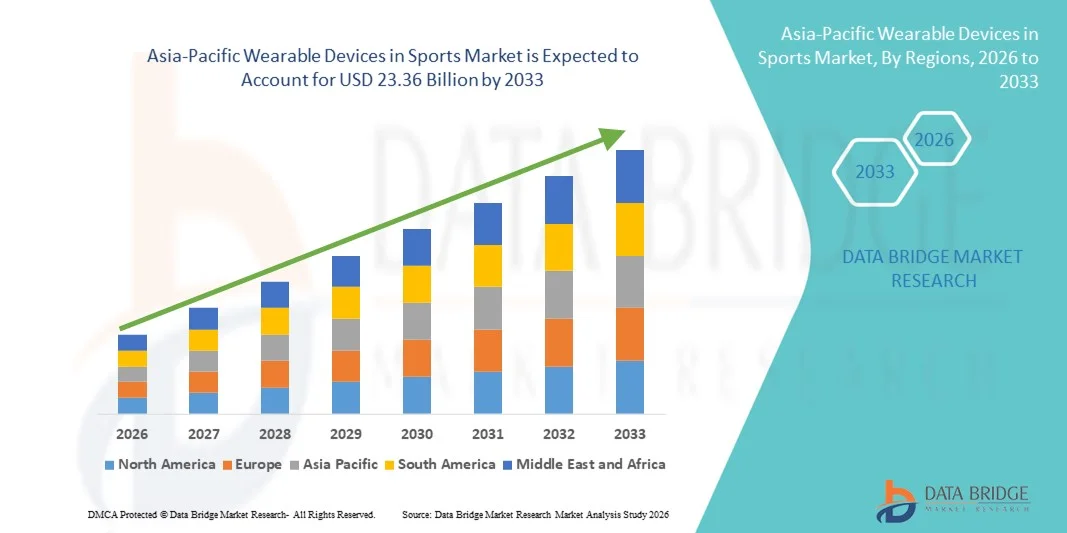
- データブリッジ市場調査分析により、アジア・パシフィックのスポーツマーケット規模のウェアラブルデバイスが評価されました。2025年のUSD 5.58億そして到達する予定2033年(昭和40年), お問い合わせ19.6%のCAGR予報期間中
- 市場成長は、主にスポーツやフィットネス活動への参加の増加によって駆動されます, 性能の最適化と健康監視の意識を高めるとともに、専門家やアマチュアの選手を横断して、
- また、スマートセンサー、AI対応の分析、スポーツ組織、フィットネスセンター、消費者が追跡するリアルタイムパフォーマンスの採用は、トレーニング、怪我防止、パフォーマンス向上のための重要なツールとしてウェアラブルなスポーツデバイスを配置し、市場全体の成長を著しく加速
市場規模と予測
- グローバル市場価値 (2025):米ドル 5.58 億
- 期待される市場価値 (2033):米ドル 23.36 億
- 予測CAGR (2026-2033):19.6%
スポーツ市場におけるアジア太平洋ウェアラブルデバイスの主要なテイクアウトは何ですか
- スポーツのウェアラブルな機器, 物理的な活動のデジタルトラッキングを有効にします, 健康メトリック, 運動性能, アジア・パシフィック地域全体でますますます不可欠になっています。 プロとレクリエーションスポーツ リアルタイムのインサイトを配信する能力, パフォーマンスの最適化, データ主導のトレーニングサポート
- ウェアラブルなスポーツ機器の需要は、主に健康とフィットネスの意識を高め、スポーツや身体活動への参加を増加させ、スマートフォンやデジタルプラットフォームでサポートされているコネクテッドフィットネス技術の採用を拡大することによって駆動されます。
- 中国は2025年に38.6%の収益シェアを持つスポーツ市場でアジア太平洋のウェアラブルデバイスを支配し、大規模なコンシューマーベース、強力な国内製造エコシステム、スマートフィットネス技術の迅速な採用、都市の人口とプロのスポーツ環境を横断したフィットネス&心拍数モニターの普及を支援しました。
- インドは、増加の使い捨て収入、増加の若者の人口、増加スポーツ参加、および手頃な価格のウェアラブルフィットネスデバイスの普及による予測期間の中で最速成長国であることが期待されます
- フィットネス&心拍数モニターは、2025年に41.3%の市場シェアを持つスポーツ市場でアジアパシフィックのウェアラブルデバイスを支配し、心拍数の監視、カロリーのバーントトラッキング、およびステップカウントのアプリケーションに対する強力な要求によって駆動され、アマチュアユーザーとプロのスポーツ選手の両方の使いやすさ
スポーツ市場セグメントにおけるスコープとアジア太平洋ウェアラブルデバイス
|
アトリビュート |
スポーツ・キー・マーケット・インサイトにおけるアジア太平洋ウェアラブルデバイス |
|
カバーされる区分 |
|
|
カバーされた国 |
アジアパシフィック
|
|
主要市場プレイヤー |
|
|
マーケットチャンス |
|
|
付加価値データインフォセットを追加 |
市場価値、成長率、セグメンテーション、地理的カバレッジ、主要なプレーヤーなどの市場シナリオに関する洞察に加えて、Data Bridge Market Researchがキュレーションした市場レポートには、詳細なエキスパート分析、患者疫学、パイプライン分析、価格設定分析、規制フレームワークも含まれています。 |
スポーツ市場におけるアジア太平洋ウェアラブルデバイスにおける重要なトレンドとは
「AI駆動性能分析とコネクテッドスポーツエコシステム」
- スポーツ市場でのアジア太平洋ウェアラブルデバイスにおける主要な急速に強化された傾向は、人工知能(AI)、データ分析、クラウドコネクティビティの統合で、アスリートやフィットネス愛好家のためのパーソナライズされたパフォーマンスの洞察とリアルタイムの健康監視を提供
- 例えば、XiaomiやHuaweiなどのブランドからウェアラブルなスポーツデバイスがAIベースのアルゴリズムを統合し、心拍数の分散性、活動強度、回復パターンを分析し、ユーザーはトレーニングを最適化し、怪我リスクを削減することができます。
- スポーツウェアラブルにおけるAIインテグレーションにより、適応型トレーニングの推奨事項、生体認証データにおける異常検知、疲労や性能低下に関する予測的インサイトなどの機能が可能になります。 たとえば、高度なフィットネス&心拍モニターは、ワークアウト中に検出された異常な心拍数パターンが検出されたときにインテリジェントなアラートを提供できます。
- モバイルアプリケーションとデジタルフィットネスプラットフォームを備えたウェアラブルなスポーツ機器のシームレスな統合により、パフォーマンスデータ、トレーニング履歴、および健康メトリックを1つのインターフェイスで一元化し、よりコネクティッドでデータ主導のフィットネス体験をサポート
- インテリジェント、コネクティッド、および分析主導のスポーツウェアラブルへのこのシフトは、プロフェッショナルなスポーツとレクリエーションのフィットネス、メーカーを奨励し、AI対応センサーとソフトウェア能力を継続的に革新するユーザー期待を再構築しています
- 性能のベンチマークおよび傷害の防止のための専門のスポーツのチーム、コーチおよび訓練のアカデミーによる身につけられる装置の成長された使用は高度のスポーツのウェアラブルの採用の補強です
- また、オンラインフィットネスコミュニティおよびサブスクリプションベースのコーチングプラットフォームの拡張は、データ共有、リモートトレーニング、リアルタイムパフォーマンスフィードバックをサポートするウェアラブルの需要を増幅しています。
スポーツマーケットダイナミクスのアジア太平洋ウェアラブルデバイス
ドライバー
「健康意識の向上とスポーツ活動への参加強化」
- 健康、フィットネス、予防ウェルネスの普及啓発、アジア・太平洋諸国のプロスポーツやレクリエーションスポーツへの参加の高まりを組み合わせ、スポーツのウェアラブル機器の需要を燃料とする主要なドライバーです。
- 例えば、中国やインドなどの国における政府主導のフィットネス・イニシアチブやスポーツリーグの拡大は、身体活動、心拍数、全体的なパフォーマンスを追跡するためのウェアラブルデバイスを採用する個人を奨励しています
- 消費者は、アクティブなライフスタイルを維持し、健康指標を監視することに焦点を合わせるにつれて、ウェアラブルなスポーツデバイスは、リアルタイムトラッキング、パフォーマンス分析、長期にわたる健康に関する洞察などの貴重な機能を提供します
- また、スマートフォンやデジタルフィットネスプラットフォームの普及が進んでおり、ウェアラブルなスポーツデバイスは、日々のルーチンによりアクセスしやすく、多様な年齢層の採用を強化しています。
- 継続的な監視、パーソナライズされたフィードバック、およびデータ主導のトレーニングサポートの利便性は、アジア太平洋地域における都市および半都市市場におけるスポーツにおけるウェアラブル機器の採用を加速しています。
- 使い捨ての収入を上げ、エントリーレベルのウェアラブルデバイスの手頃な価格性を向上させることは、特に若い人口の中で、より広い消費者の採用を可能にします
- フィットネスインフルエンサー、デジタルヘルスキャンペーン、スポーツイベントの高まりは、消費者がウェアラブルなスポーツテクノロジーに投資する動機です。
拘束/チャレンジ
「データプライバシーの懸念と高度なウェアラブル技術のコスト」
- データのプライバシーとセキュリティに関する懸念は、これらのデバイスが機密個人や健康関連情報を収集するので、スポーツのウェアラブルデバイスの広範な採用に著しい挑戦をポーズします
- たとえば、データ侵害の報告や、パーソナルフィットネスデータの誤用が増加し、ウェアラブルデバイスメーカーがユーザーの情報を格納、プロセス、共有する方法に関する消費者の間で懸念が高まっています。
- 強力なデータ暗号化、透明性のあるプライバシーポリシー、および地域データ保護規則の遵守を通じて、これらの懸念に対処することは、消費者の信頼と自信の構築に不可欠です。
- また、AIを活用した分析や特殊なセンサーを備えた高度なウェアラブルスポーツデバイスの比較的高いコストは、新興アジア市場における価格に敏感な消費者の採用を制限することができます。
- 手頃な価格性は、基本的なフィットネストラッカーの可用性を向上していますが、高度な機能を提供するプレミアムウェアラブルデバイスは、依然として採用障壁に直面している可能性があり、長期的な市場成長のために重要なコスト最適化と価値重視のイノベーションを作る
- 限られた電池の生命および頻繁な充満のための必要性は連続的な性能および睡眠の追跡の適用のためにユーザーの便利、特に減らすことができます
- また、デバイスやプラットフォーム間での標準化の欠如は、相互運用性やデータの一貫性を強化し、統合スポーツや健康監視ソリューションを求めるユーザーのための課題を創出することができます。
スポーツ市場におけるアジア太平洋ウェアラブルデバイスは
市場は、コンポーネント、製品タイプ、サイト、アプリケーション、エンドユーザー、および流通チャネルに基づいてセグメント化されます。
- コンポーネント別
コンポーネントをベースに、スポーツ市場でのアジア太平洋ウェアラブルデバイスは、ハードウェアとソフトウェアに分けられます。 ハードウェアセグメントは、2025年に市場を支配し、フィットネストラッカー、心拍数モニター、歩数計、センサー対応のスポーツ機器などの物理的な機器の需要が高い。 ハードウェアコンポーネントは、運動、バイオメトリクス、および生理学的性能に関するデータ収集に責任があるので、ウェアラブルなスポーツソリューションの基礎を形成します。 中国などの国におけるセンサー技術や大規模製造能力の豊かさを増加させ、ハードウェアの採用を強化しました。 また、消費者は通常、デバイス精度、耐久性、快適性を優先し、全体的な市場収益におけるハードウェアの優位性を強化します。
ソフトウェアセグメントは、AI主導の分析、クラウドベースのプラットフォーム、およびモバイルフィットネスアプリケーションの導入により燃料供給された2026から2033までの最速の成長率を登録することが期待されます。 ソフトウェアソリューションは、高度なデータ解釈、パーソナライズされたトレーニングインサイト、および長期的なパフォーマンストラッキングを可能にし、ウェアラブルデバイスの価値を大幅に高めます。 サブスクリプションベースのフィットネスプラットフォームとデジタルコーチングサービスの統合を成長させ、ソフトウェアの需要を加速しています。 さらに、継続的なアップデートと機能強化により、ソフトウェアは、急速に成長する軌跡をサポートし、再発収益の流れを回復させます。
- 製品タイプ別
プロダクト タイプに基づいて、市場は歩数計、適性及び心拍数のモニター、スマートな生地に分けられます、スマートカメラ、ショットトラッカーなど。 フィットネス&心拍数モニターセグメントは、41.3%の市場シェアで2025年に市場を支配し、アマチュアユーザーとプロのスポーツ選手の間で広範な使用を支持しています。 これらのデバイスは、心拍数、カロリーバーント、活動強度、耐久性レベルなどの重要な指標を提供し、幅広い消費者ベースに適しています。 スマートフォンやフィットネスアプリとの相性が向上しました。 また、アジア太平洋諸国における心血管の健康の認知度を高め、フィットネスや心拍数モニタリング機器の需要が高まっています。
スマートファブリックのセグメントは、プロスポーツとパフォーマンス重視のトレーニング環境の採用率を高めることで、予測期間中に最も急速に成長するように設計されています。 スマートファブリックは、センサーを衣服に直接統合し、筋肉活動、姿勢、運動効率の継続的かつ非集中的な監視を可能にします。 スポーツ科学やウェアラブルイノベーションへの投資は、この分野で製品開発を加速しています。 技術の成熟と生産コストが低下するにつれて、スマートファブリックはより広い商用採用を得るために期待されます。
- サイトマップ
当サイトでは、スポーツ市場でのアジア太平洋ウェアラブルデバイスをヘッドバンド、ハンドヘルド、アーム&リスト、クリップ、シューズセンサーなどに分けています。 腕及び手首の区分は2025年に市場を支配しましたり、首輪のフィットネス バンドおよびスマートなスポーツの腕時計の普及によって支えられます。 これらの装置は、日々の摩耗やスポーツ活動に適した、使いやすさ、快適性、継続的なモニタリングを提供します。 ステップカウント、心拍数、睡眠パターンなどの複数のパラメータを追跡する能力は、強力な消費者の好みに貢献します。 また、頻繁な製品の発売と設計強化がこのセグメントの優位性を強化しました。
2026年から2033年にかけては、ランニング、サッカー、バスケットボールなどのパフォーマンス中心スポーツの普及率が増加し、最も速い成長率を目撃することが期待されています。 シューセンサーは、ストライドの長さ、足圧、動きの動的に正確なデータを提供し、パフォーマンス改善と怪我防止のための貴重な洞察を提供します。 プロのスポーツ選手やスポーツトレーニングセンターによる成長は、需要を加速しています。 省力化とワイヤレス接続の高度化は、さらにセグメントの成長をサポートします。
- 用途別
用途に応じて、市場はステップカウント、カロリーバーント、心拍数監視、睡眠追跡などに分かれています。 心拍数監視セグメントは、2025年に市場を支配しました。心拍数はフィットネス性能、耐久性、全体的な健康評価のための重要な指標です。 リアルタイムの心拍数の追跡を提供する身につけられるスポーツ装置はトレーニング、訓練の会合および競争のスポーツの間に広く利用されています。 生活習慣病の早期増大は、さらなる需要が高まっています。 AIベースのアラートとパフォーマンス分析との統合により、セグメントのリーダーシップポジションにも貢献します。
睡眠追跡セグメントは、選手やフィットネス意識の消費者の間で回復、休息、全体的なウェルネスの上昇意識によって運転、予測期間中に最速成長することが期待されています。 睡眠の質データは、トレーニングスケジュールを最適化し、疲労関連の怪我を防止するためにますます使用されています。 先進的な眠りステージ分析を提供するウェアラブルデバイスは、アジア太平洋市場を横断して牽引しています。 全体的な健康管理に対する成長の焦点は、さらなる採用を加速することが期待されます。
- エンドユーザーによる
エンドユーザーに基づいて、市場はスポーツセンター、フィットネスセンター、ホームケア設定などに分かれています。 ホームケア設定セグメントは、パーソナルフィットネス、ホームワークアウト、セルフ監視のためのウェアラブルスポーツデバイスの成長採用によって駆動され、2025年に市場を支配しました。 消費者は、モバイルアプリやオンラインフィットネスプログラムによってサポートされ、独立して活動レベルと健康指標を追跡することを好む。 自宅でのトレーニングルーチンの上昇は、さらなる需要を強化しています。 手頃な価格のウェアラブルデバイスと使いやすさは、ホームケアの設定を最大のエンドユーザーセグメントにしました。
予測期間中、スポーツセンターのセグメントは、性能分析、運動監視、怪我防止のためのウェアラブルの使用の増加による燃料化が最速で成長することが期待されます。 プロフェッショナルなスポーツ組織とトレーニングアカデミックは、ウェアラブルテクノロジーを構造化されたコーチングプログラムに統合しています。 データ主導のトレーニング方法は、標準の練習になっています, 採用を加速. アジア・パシフィック諸国のスポーツインフラへの投資拡大により、この分野における急速な成長を支えています。
- 流通チャネル
流通チャネルに基づいて、市場は独立した小売店、スーパーマーケット/スーパーマーケット、ブランド ストア、およびオンライン販売チャネルに分けられます。 オンライン販売チャネルは2025年に市場を支配し、電子商取引プラットフォームおよび直接消費者販売モデルの急速な拡大によって支えられました。 オンライン チャネルは、幅広い製品範囲、競争力のある価格設定、製品情報やレビューへの容易なアクセスを提供します。 アジア・パシフィック諸国のスマートフォンやインターネットの普及拡大に伴い、オンライン販売を強化しています。 プロモーション割引やデジタルマーケティング戦略もチャネル優勢に貢献しました。
ブランドストアのセグメントは、2026年から2033年にかけて最も急速に成長し、本物の製品、ハンズオン体験、アフターサポートの消費者の好みを増加させています。 ブランドの店は製造業者が装置の使用の高度の特徴をショーケースし、消費者を教育することを可能にします。 スポーツウェアラブルのブランド認知度を高め、プレミアムなポジショニングは、排他的な店で足場を加速しています。 高成長率を維持するために、都市センターのブランド所有の出口の拡大が期待されています。
スポーツマーケット地域分析におけるアジア太平洋ウェアラブルデバイス
- 中国は2025年に38.6%の収益シェアを持つスポーツ市場でアジア太平洋のウェアラブルデバイスを支配し、大規模なコンシューマーベース、強力な国内製造エコシステム、スマートフィットネス技術の迅速な採用、都市の人口とプロのスポーツ環境を横断したフィットネス&心拍数モニターの普及を支援しました。
- 中国での消費者は、ウェアラブルなスポーツデバイスによって提供されるリアルタイムのパフォーマンストラッキング、心拍数監視、および活動分析をますます重要視し、フィットネス愛好家、アマチュアユーザー、およびプロのスポーツ選手の幅広い採用をサポート
- この強力な市場位置は、ディスポーザブルな収入、急速な都市化、広範なスマートフォンの普及、そして地域および国際的なブランドからの費用効果が大きい身につけられる装置の可用性を高めることによってさらに支持され、地域でスポーツウェアラブルな採用のための一流のハブとして中国を確立します
スポーツマーケットインサイトにおける中国ウェアラブルデバイス
スポーツ市場における中国ウェアラブルデバイスは、2025年にアジア・パシフィックで最大の収益シェアを捉え、大規模なコンシューマーベース、強力な国内製造能力、およびフィットネスおよび性能追跡技術の急速な採用によって燃料を供給しました。 消費者は、ウェアラブルデバイスによる健康監視、スポーツパフォーマンスの最適化、データドリブンなトレーニングを優先しています。 手頃な価格のフィットネス&心拍数モニターの広範な可用性、強力なスマートフォンの浸透とAI対応のエコシステムと組み合わせ、市場成長を推進し続けています。 また、大手の国内ブランドやデジタルフィットネスプラットフォームとの統合も、中国におけるスポーツウェアラブル市場の拡大に大きく貢献しています。
スポーツマーケットインサイトにおける日本ウェアラブルデバイス
スポーツ市場における日本のウェアラブル機器は、国の先進技術エコシステムが支え、精密健康監視に強い焦点を合わせ、予測期間中に注目すべきCAGRで成長することを期待しています。 日本の消費者は、デジタルプラットフォームでウェアラブル機器の精度、信頼性、シームレスな統合に重要視しています。 スポーツウェアラブルの採用は、フィットネス活動のエンゲージメントを高め、パフォーマンストラッキングのためのコネクティッドデバイスの使用を成長させることによって駆動されます。 また、日本の高齢化人口は、健康監視、怪我防止、レクリエーションやプロスポーツの回復管理をサポートするウェアラブルソリューションの需要を奨励しています。
スポーツマーケットインサイトインドウェアラブルデバイス
2025年にアジア・パシフィックで大きな収益シェアを占めるスポーツマーケットのインドウェアラブルデバイス。急速な都市化、大きなユース人口、スポーツやフィットネス活動への参加が増えています。 手頃な価格のフィットネストラッカーや心拍数モニターの人気は、ホームケア設定とフィットネスセンター全体で採用を加速しています。 使い捨て収入の上昇、デジタル決済エコシステムの拡大、オンライン販売チャネルの強力な浸透は、市場成長をさらに支援しています。 フィットネス、スポーツ開発、デジタルヘルスを促進する政府の取り組みは、インドのスポーツウェアラブル機器の運転需要の重要な役割を果たしています。
スポーツマーケットインサイトオーストラリアウェアラブルデバイス
スポーツ市場でのオーストラリアのウェアラブルデバイスは、高健康意識、屋外スポーツへの強い参加、フィットネス技術の広範な採用によって支えられた安定した成長を経験しています。 消費者は、高度に使用ウェアラブルデバイス 活動レベルを監視します, 心拍数, プロとレクリエーションスポーツの両方にわたって回復性能. 充実したフィットネスセンターとスポーツトレーニング施設の存在は、高度な性能追跡ウェアラブルの需要を促進しています。 また、モバイルヘルスアプリケーションやデジタルコーチングプラットフォームを備えたウェアラブルデバイスの統合により、オーストラリアでの市場拡大を強化しています。
スポーツ市場におけるアジア太平洋ウェアラブル機器のトップ企業は
スポーツ産業のアジア太平洋ウェアラブルデバイスは、主に、以下のような広範な企業が主導しています。
- アップル株式会社(アメリカ)
- サムスン電子株式会社(韓国)
- 株式会社ガーミン(スイス)
- 小米科技株式会社(中国)
- ホアウェイテクノロジーズ株式会社(中国)
- 極電オイ(フィンランド)
- スント・オイ(フィンランド)
- ゼップヘルス株式会社(中国)
- ダイニングSA(フランス)
- 株式会社オムロン(日本)
- 株式会社カシオコンピュータ(日本)
- ソニーグループ株式会社(日本)
- 株式会社ゴワイ(米国)
- NOISE MOGULS, LLC(米国)
- boAtライフスタイル株式会社(インド)
- エイサー株式会社(台湾)
- パナソニックホールディングス株式会社(日本)
- フジツ株式会社(日本)
- LG電子株式会社(韓国)
- 株式会社HTC(台湾)
スポーツ市場におけるアジア太平洋ウェアラブルデバイスにおける最近の開発とは
- 2026年1月、アニマル・スター・アリナ・サバレンカは、オーストラリア・オープンで手首式フィットネストラッカーの禁止を公正に批判し、アジア・パシフィックのアスリートやグローバルのアスリートが、Wooopなどのウェアラブルなスポーツ機器を使用して、規制問題の発生を阻止するという注目を浴びています。
- 2025年10月、インドのウェアラブルテクノロジー企業は、国内のウェアラブルな販売として、国際市場やプレミアムセグメントを拡大し、アジア・パシフィックのメーカーによる戦略的なシフトを反映し、ハイエンドのスポーツやフィットネスウェアラブルをグローバルに展開する取り組みを発表しました。
- メタ・コネクト2025年9月、Metaはオークリー・メタ・ヴァンガード・スポーツ・メガネとフィットネス・アプリのインテグレーション(Stravaなど)を含む次世代ウェアラブル・テクノロジーのスイートを強調し、スマート・ウェアラブルとスポーツ・パフォーマンス・トラッキング・プラットフォーム間のコンバージェンスがAPACオーディエンスに関連した成長を遂げました。
- 2025年5月、米国に拠点を置くウェアラブルブランドWhoopは、Whoop 5.0とWhoop MGデバイスを立ち上げました。これにより、拡張電池寿命、ECG心臓スクリーニング、および血圧のインサイトが搭載され、ユーザーにとってより深い健康とパフォーマンスの追跡を実現し、アジア太平洋フィットネスやスポーツ消費者に関連する強化されたセンサーと分析能力を強調しています。
- 2023年6月、ウェアラブルデバイス株式会社(以下、当社)は、アジア・パシフィック・テクノロジー・ショーケース(以下、アジア・パシフィック・テクノロジー・ショーケース)が、AI対応型のMutraウェアラブル・センシング技術、クロスボーダーのコラボレーションと、潜在的なスポーツ・アプリケーションによるジェスチャー・ベースのウェアラブルにおけるイノベーションの根本的展開について発表しました。
SKU-
世界初のマーケットインテリジェンスクラウドに関するレポートにオンラインでアクセスする

- インタラクティブなデータ分析ダッシュボード
- 成長の可能性が高い機会のための企業分析ダッシュボード
- カスタマイズとクエリのためのリサーチアナリストアクセス
- インタラクティブなダッシュボードによる競合分析
- 最新ニュース、更新情報、トレンド分析
- 包括的な競合追跡のためのベンチマーク分析のパワーを活用
調査方法
データ収集と基準年分析は、大規模なサンプル サイズのデータ収集モジュールを使用して行われます。この段階では、さまざまなソースと戦略を通じて市場情報または関連データを取得します。過去に取得したすべてのデータを事前に調査および計画することも含まれます。また、さまざまな情報ソース間で見られる情報の不一致の調査も含まれます。市場データは、市場統計モデルと一貫性モデルを使用して分析および推定されます。また、市場シェア分析と主要トレンド分析は、市場レポートの主要な成功要因です。詳細については、アナリストへの電話をリクエストするか、お問い合わせをドロップダウンしてください。
DBMR 調査チームが使用する主要な調査方法は、データ マイニング、データ変数が市場に与える影響の分析、および一次 (業界の専門家) 検証を含むデータ三角測量です。データ モデルには、ベンダー ポジショニング グリッド、市場タイムライン分析、市場概要とガイド、企業ポジショニング グリッド、特許分析、価格分析、企業市場シェア分析、測定基準、グローバルと地域、ベンダー シェア分析が含まれます。調査方法について詳しくは、お問い合わせフォームから当社の業界専門家にご相談ください。
カスタマイズ可能
Data Bridge Market Research は、高度な形成的調査のリーダーです。当社は、既存および新規のお客様に、お客様の目標に合致し、それに適したデータと分析を提供することに誇りを持っています。レポートは、対象ブランドの価格動向分析、追加国の市場理解 (国のリストをお問い合わせください)、臨床試験結果データ、文献レビュー、リファービッシュ市場および製品ベース分析を含めるようにカスタマイズできます。対象競合他社の市場分析は、技術ベースの分析から市場ポートフォリオ戦略まで分析できます。必要な競合他社のデータを、必要な形式とデータ スタイルでいくつでも追加できます。当社のアナリスト チームは、粗い生の Excel ファイル ピボット テーブル (ファクト ブック) でデータを提供したり、レポートで利用可能なデータ セットからプレゼンテーションを作成するお手伝いをしたりすることもできます。











