



世界の食品認証市場のセグメンテーション、リスク別(高リスク食品と低リスク食品)、タイプ別(ISO 22000、BRC、SQF、IFS、HALAL、KOSHER、フリーフロム認証、HACCP、ビーガン、その他)、用途別(ベーカリー製品、菓子製品、ベビーフード、肉・鶏肉製品、インスタント食品、ナッツ・ドライフルーツ、牛乳・乳製品、タバコ、蜂蜜、紅茶・コーヒー、シリアル、穀物・豆類、ハーブ・スパイス、その他)、カテゴリー別(オーガニック食品認証と持続可能な食品認証)、エンドユーザー別(生産者、メーカー、小売業者、食品サービス組織、その他) - 2032年までの業界動向と予測
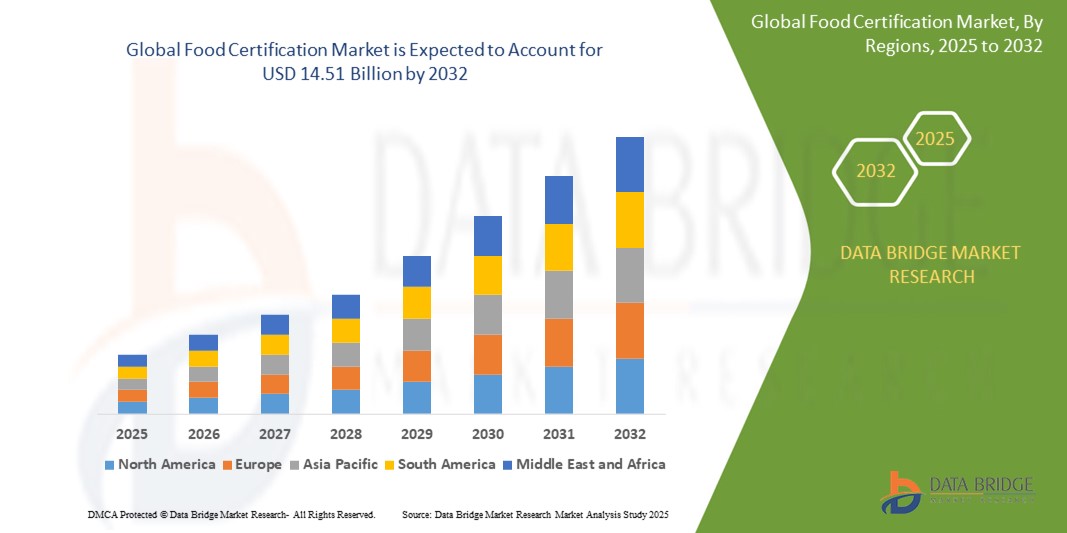
食品認証市場規模
- 世界の食品認証市場規模は2024年に71億2000万米ドルと評価され、予測期間中に9.31%のCAGRで成長し、2032年には145億1000万米ドルに達すると予想されています。
- 市場の成長は、食品の安全性、品質、トレーサビリティに関する消費者の意識の高まりと、食中毒や汚染の発生率の増加により、世界のサプライチェーン全体で認証製品の需要が高まっていることが主な要因です。
- さらに、厳格な規制枠組みと輸出コンプライアンス要件により、食品生産者と加工業者は公認の認証基準を採用せざるを得なくなり、認証の普及が促進され、業界の成長が大幅に促進されています。
食品認証市場分析
- 食品認証とは、第三者機関が食品が特定の基準や規制に準拠していることを評価・検証するプロセスです。食品が安全性、品質、法的要求事項の遵守に関する基準を満たしていることを保証し、消費者や企業に認証食品の安全性と品質に対する信頼を提供します。
- 食品認証の需要の高まりは、主に食品の安全性に対する懸念の高まり、クリーンラベルや倫理的に調達された製品に対する消費者の嗜好の高まり、そして公認認証システムによる世界市場へのアクセスの必要性によって促進されている。
- 厳格な食品安全規制、品質保証に対する消費者の高い需要、確立された認証機関の存在により、ヨーロッパは2024年に38.5%のシェアで食品認証市場を支配しました。
- アジア太平洋地域は、急速な都市化、食品輸出の増加、中国、インド、東南アジアにおける中流階級の消費者意識の高まりにより、予測期間中に食品認証市場で最も急速に成長する地域になると予想されています。
- 有機食品認証セグメントは、無農薬、非遺伝子組み換え、環境に配慮した食品に対する消費者の需要の高まりにより、67.4%の市場シェアを占め、市場を席巻しました。政府やNGOは、特に欧州と北米において、より健康的な食生活と環境に配慮した農業慣行を促進するため、有機ラベルの普及を推進しています。
レポートの範囲と食品認証市場のセグメンテーション
|
属性 |
食品認証の主要市場洞察 |
|
対象セグメント |
|
|
対象国 |
北米
ヨーロッパ
アジア太平洋
中東およびアフリカ
南アメリカ
|
|
主要な市場プレーヤー |
|
|
市場機会 |
|
|
付加価値データ情報セット |
データブリッジマーケットリサーチがまとめた市場レポートには、市場価値、成長率、セグメンテーション、地理的範囲、主要プレーヤーなどの市場シナリオに関する洞察に加えて、専門家による詳細な分析、価格設定分析、ブランドシェア分析、消費者調査、人口統計分析、サプライチェーン分析、バリューチェーン分析、原材料/消耗品の概要、ベンダー選択基準、PESTLE分析、ポーター分析、規制の枠組みも含まれています。 |
食品認証市場の動向
「クリーンラベルと倫理的認証の需要の高まり」
- A prominent trend in the global food certification market is the increasing demand for clean-label and ethical food certifications, reflecting consumer preference for transparency, safety, and sustainability
- For instance, certifications such as Organic, Non-GMO, and Fair Trade are gaining traction as food producers align with evolving consumer values and stricter sourcing standards
- Major retailers and brands are expanding their certified product lines to meet rising demand for ethically sourced and health-conscious food items, especially in North America and Europe
- This shift is compelling manufacturers to seek third-party verification for quality and ethical claims, reshaping product development and marketing strategies
- Food service providers are also responding by incorporating certified ingredients into menus to appeal to informed and environmentally aware consumers
- As this trend accelerates, certification bodies are expanding service portfolios, including region-specific and dietary-specific certifications such as vegan and allergen-free
Food Certification Market Dynamics
Driver
“Stringent Global Food Safety Regulations”
- The growing implementation of strict food safety regulations by governments and international agencies is a key driver of the food certification market
- For instance, regulatory frameworks such as the FDA’s FSMA in the U.S. and the EU’s General Food Law demand rigorous safety standards, pushing companies to adopt certifications for compliance and credibility. Certifications such as ISO 22000, HACCP, and BRC provide structured frameworks for managing food safety hazards and meeting cross-border regulatory requirements
- This is particularly vital in global trade, where certified suppliers gain competitive advantages and smoother entry into international markets
- Large retailers and food manufacturers often require certified suppliers to reduce liability risks and ensure traceability, encouraging certification adoption throughout the value chain
- In response, certification providers are partnering with digital platforms to streamline auditing, documentation, and renewal processes for global compliance
Restraint/Challenge
“High Certification Costs and Resource Burden on SMEs”
- One of the significant challenges in the food certification market is the high cost and complexity of certification for small and medium enterprises (SMEs)
- For instance, many small food producers in Asia and Africa struggle to obtain global certifications such as BRC or ISO due to financial and logistical constraints
- Certification involves expenses such as audits, infrastructure upgrades, consultant fees, and ongoing compliance management, often straining SME budgets
- Lack of access to training, qualified personnel, and digital tracking systems further complicates their ability to meet documentation and traceability requirements. This inhibits equitable participation in certified global food supply chains, despite growing demand for diverse and local food products
- To address this, governments and NGOs are initiating funding and capacity-building programs, while certifiers are exploring modular and region-specific schemes for affordability and accessibility
Food Certification Market Scope
The market is segmented on the basis of risk, type, application, category, and end user.
• By Risk
On the basis of risk, the food certification market is segmented into high-risk foods and low-risk foods. The high-risk foods segment accounts for the largest market revenue share in 2024, driven by stringent safety regulations and the elevated potential for contamination in products such as meat, poultry, seafood, and dairy. These food categories are highly susceptible to microbial growth and require rigorous certification to comply with food safety standards, boost consumer confidence, and reduce liability for producers and retailers. The growing consumer demand for transparency in labeling and the need for traceability in global food supply chains further intensify the demand for certifications in high-risk categories.
The low-risk foods segment is projected to witness the fastest CAGR from 2025 to 2032, as awareness of food safety expands beyond traditionally regulated categories. Products such as grains, dried fruits, and packaged snacks are increasingly seeking certifications to meet export requirements and appeal to health-conscious consumers. The adoption of certifications in low-risk segments is also fueled by retailers and e-commerce platforms emphasizing verified and clean-label products.
• By Type
On the basis of type, the food certification market is segmented into ISO 22000, BRC, SQF, IFS, HALAL, KOSHER, Free-From Certifications, HACCP, Vegan, and Others. The ISO 22000 segment holds the largest market revenue share in 2024, supported by its global recognition and applicability across the entire food supply chain. Its structured framework for food safety management makes it a preferred standard among multinational food manufacturers aiming for international compliance and operational consistency.
The HALAL segment is expected to witness the fastest growth from 2025 to 2032, driven by rising demand from Muslim-majority countries and growing halal food preferences in non-Islamic regions. Increasing consumer awareness about halal standards, ethical sourcing, and religious compliance is prompting food producers worldwide to pursue halal certification to expand their market reach and gain competitive advantage.
• By Application
食品認証市場は、用途別に、ベーカリー製品、菓子製品、ベビーフード、食肉・鶏肉製品、インスタント食品、ナッツ・ドライフルーツ、牛乳・乳製品、タバコ、蜂蜜、紅茶・コーヒー、シリアル、穀物・豆類、ハーブ・スパイス、その他に分類されます。食肉・鶏肉製品セグメントは、これらの製品の高リスクな性質と、加工・流通段階全体におけるトレーサビリティ、衛生コンプライアンス、病原体管理の重要性に牽引され、2024年の市場収益シェアの大部分を占めました。このセグメントの認証は、特に米国やEUなどの規制市場において、輸出承認と消費者の安心のために不可欠です。
ベビーフード分野は、原材料の純度に対する親の関心の高まりと、高品質で安全認証を受けた乳児用栄養食品への需要の高まりを背景に、2025年から2032年にかけて最も高いCAGRで成長すると予測されています。ベビーフードの認証は、政府の規制やオーガニックやアレルゲンフリー製品への需要の高まりによっても強化されています。
• カテゴリー別
食品認証市場は、カテゴリー別にオーガニック食品認証とサステナブル食品認証に分類されます。オーガニック食品認証セグメントは、無農薬、非遺伝子組み換え、環境に配慮した食品に対する消費者需要の高まりを背景に、2024年には67.4%という最大の市場シェアを獲得しました。特に欧米では、政府やNGOがオーガニック認証の普及に力を入れており、健康的な食生活と環境に配慮した農業慣行の促進を目指しています。
持続可能な食品認証セグメントは、企業のESGへの取り組みや、気候変動に配慮した社会的責任のある調達への関心の高まりを背景に、2025年から2032年にかけて最も急速な成長を遂げると予測されています。生物多様性の保全、倫理的な労働、資源効率に重点を置いた認証は、持続可能性目標の達成を目指す生産者と小売業者の両方の間で注目を集めています。
• エンドユーザーによる
食品認証市場は、エンドユーザーに基づいて、生産者、製造業者、小売業者、食品サービス組織、その他に分類されます。食品加工業者や包装食品メーカーが市場へのアクセス、ブランドの信頼性向上、規制および品質保証要件への適合を目的として認証取得を推進しているため、製造業者セグメントは2024年の市場収益シェアを牽引しました。認証は、メーカーがリコールを削減し、消費者の信頼を築き、世界中の流通業者や小売業者とのパートナーシップを確保するのに役立ちます。
食品サービス組織セグメントは、衛生および調達慣行に関する顧客と当局の監視強化により、2025年から2032年にかけて最も高いCAGRで成長すると予想されています。レストラン、ケータリングサービス、そして業務用厨房では、サービスの差別化、品質の保証、そして人通りの多い公共環境における食品安全規制への準拠を目的として、食品認証の導入がますます進んでいます。
食品認証市場の地域分析
- 厳格な食品安全規制、品質保証に対する消費者の高い需要、確立された認証機関の存在により、ヨーロッパは2024年に38.5%という最大の収益シェアで食品認証市場を支配しました。
- この地域では持続可能性、有機ラベル、トレーサビリティが重視されており、市場へのアクセスと消費者の信頼を得るには食品認証が不可欠です。
- EU食品法などの支援的な規制枠組みと、認証基準の広範な小売施行により、生産者から小売業者まで、サプライチェーン全体での採用がさらに促進されます。
ドイツ食品認証市場の洞察
ドイツの食品認証市場は、構造化された食品規制システムと、持続可能性、透明性、品質を重視する消費者基盤に支えられ、2024年には欧州で最大の収益シェアを占めました。ドイツの生産者と輸出業者は、厳格な国内および国際基準を満たすために、EUオーガニック、IFS、HACCPなどの認証をますます導入しています。ビーガン認証やアレルゲンフリー認証製品の需要の高まりと、食品加工産業の強力な存在感も、市場拡大に寄与しています。
英国食品認証市場の洞察
英国の食品認証市場は、食品の原産地と安全性に関する消費者意識の高まりを背景に、予測期間中に高いCAGRで成長すると予測されています。ブレグジット後の規制移行により、食品事業者は取引の継続性を維持するために、国際的に認められた認証の導入を迫られています。スーパーマーケット、食品サービス事業者、そしてグローバル展開を目指す輸出業者の間で、ハラール、BRC、そして持続可能な食品認証の需要が高まっています。
アジア太平洋地域の食品認証市場に関する洞察
アジア太平洋地域の食品認証市場は、中国、インド、東南アジアにおける急速な都市化、食品輸出の増加、そして中流階級の消費者意識の高まりを背景に、2025年から2032年にかけて最も高いCAGRで成長すると予測されています。食品安全基準の強化に向けた政府の取り組みの強化と国際貿易協定への支持は、認証の導入を加速させています。拡大する加工食品セクターと、認証オーガニック製品およびハラール製品の需要が相まって、この地域の食品産業は大きく変貌を遂げつつあります。
中国食品認証市場の洞察
中国の食品認証市場は、食品安全法の厳格な施行と、認証を受けた高品質な食品への需要の急増に牽引され、2024年にはアジア太平洋地域において最大の収益シェアを占めました。世界の食品輸出における中国の重要な役割と、健康志向の消費者の増加は、ISO 22000、HACCP、オーガニック認証といった認証の普及を促進しています。国内市場におけるより高い基準への取り組みは、国家認証プログラムの出現によってさらに後押しされています。
インドの食品認証市場の洞察
The India food certification market is expected to grow at the highest CAGR in Asia-Pacific during the forecast period, driven by increasing regulatory scrutiny, rising health awareness, and export-oriented production. The implementation of FSSAI regulations and consumer demand for transparency are encouraging food manufacturers, processors, and retailers to seek third-party certifications. Growth in certified organic, vegan, and clean-label products is especially notable across urban markets and e-commerce platforms.
Food Certification Market Share
The food certification industry is primarily led by well-established companies, including:
- GFSI (France)
- UL LLC (U.S.)
- SCS Global Services (U.S.)
- Lloyd's Register Group Services Limited (U.K.)
- Eagle Certification Group (Canada)
- GROUPE ECOCERT (France)
- NSF International (U.S.)
- BRCGS (U.K.)
- Bureau Veritas (France)
- SGS SA (Switzerland)
- Intertek Group Plc (U.K.)
- TÜV NORD GROUP (Germany)
- DNV GL (Norway)
- DEKRA (Germany)
- Mérieux NutriSciences (France)
- Eurofins Scientific (Luxembourg)
- ALS Limited (Australia)
- AsureQuality (New Zealand)
- Control Union Certifications Germany gmbh (Germany)
- FoodChain ID Group Inc (U.S.)
- Kiwa (Netherlands)
Latest Developments in Global Food Certification Market
- In June 2025, SGS announced the launch of "The PLEDGE on Food Waste Certification", a globally recognized certification program aimed at helping food service providers reduce food waste, enhance operational efficiency, and strengthen sustainability efforts. This move highlights the growing emphasis on food waste management as part of comprehensive food certification strategies and is expected to gain traction among hospitality and food service chains committed to ESG goals
- In May 2025, Revant Himatsingka, popularly known as Food Pharmer, introduced Food Pharmer 2.0, launching his own brand alongside a proprietary food certification rollout. The initiative aims to bring greater transparency to packaged food ingredients, offering consumers easy-to-understand certifications focused on health, safety, and nutrition labeling. This consumer-centric approach is likely to influence younger, health-aware demographics and push brands toward cleaner formulations
- In November 2022, SCS Global Services introduced its plant-based certification program, SCS-109 Standard. This initiative supports plant-based alternatives and acknowledges innovation in various consumer products such as food, beverages, CBD, and body care items. Certification guarantees the absence of animal-derived ingredients, with a minimum requirement of 95% plant-based ingredients for human and animal consumption products and 50% for body care products
- In November 2022, SGS SA launched the SGS Food Contact Product Certification Mark, aiding manufacturers in demonstrating product compliance, safety, and performance. Addressing both mandatory and voluntary safety requirements, the mark enhances traceability and consumer trust, streamlining market access. Recognized in markets such as the U.S. U.K., Switzerland, European Union, and China, it provides a competitive edge
- In September 2022, Intertek Group PLC launched the Intertek Vegan Certification, a new vegan food certification mark designed to instill confidence in product claims. Going beyond standard label reviews, this program assesses the suitability of food products for vegan and plant-based consumers. It employs Intertek's ATIC approach for comprehensive third-party verification through auditing, testing, inspection, and training, providing a robust framework for authenticating vegan claims
SKU-
世界初のマーケットインテリジェンスクラウドに関するレポートにオンラインでアクセスする

- インタラクティブなデータ分析ダッシュボード
- 成長の可能性が高い機会のための企業分析ダッシュボード
- カスタマイズとクエリのためのリサーチアナリストアクセス
- インタラクティブなダッシュボードによる競合分析
- 最新ニュース、更新情報、トレンド分析
- 包括的な競合追跡のためのベンチマーク分析のパワーを活用
調査方法
データ収集と基準年分析は、大規模なサンプル サイズのデータ収集モジュールを使用して行われます。この段階では、さまざまなソースと戦略を通じて市場情報または関連データを取得します。過去に取得したすべてのデータを事前に調査および計画することも含まれます。また、さまざまな情報ソース間で見られる情報の不一致の調査も含まれます。市場データは、市場統計モデルと一貫性モデルを使用して分析および推定されます。また、市場シェア分析と主要トレンド分析は、市場レポートの主要な成功要因です。詳細については、アナリストへの電話をリクエストするか、お問い合わせをドロップダウンしてください。
DBMR 調査チームが使用する主要な調査方法は、データ マイニング、データ変数が市場に与える影響の分析、および一次 (業界の専門家) 検証を含むデータ三角測量です。データ モデルには、ベンダー ポジショニング グリッド、市場タイムライン分析、市場概要とガイド、企業ポジショニング グリッド、特許分析、価格分析、企業市場シェア分析、測定基準、グローバルと地域、ベンダー シェア分析が含まれます。調査方法について詳しくは、お問い合わせフォームから当社の業界専門家にご相談ください。
カスタマイズ可能
Data Bridge Market Research は、高度な形成的調査のリーダーです。当社は、既存および新規のお客様に、お客様の目標に合致し、それに適したデータと分析を提供することに誇りを持っています。レポートは、対象ブランドの価格動向分析、追加国の市場理解 (国のリストをお問い合わせください)、臨床試験結果データ、文献レビュー、リファービッシュ市場および製品ベース分析を含めるようにカスタマイズできます。対象競合他社の市場分析は、技術ベースの分析から市場ポートフォリオ戦略まで分析できます。必要な競合他社のデータを、必要な形式とデータ スタイルでいくつでも追加できます。当社のアナリスト チームは、粗い生の Excel ファイル ピボット テーブル (ファクト ブック) でデータを提供したり、レポートで利用可能なデータ セットからプレゼンテーションを作成するお手伝いをしたりすることもできます。











