Global Fortified Juices Market Size, Share and Trends Analysis Report
Market Size in USD Billion
CAGR :
%
USD
7.61 Billion
USD
12.60 Billion
2024
2032
| 2025 –2032 | |
| USD 7.61 Billion | |
| USD 12.60 Billion | |
|
|
|
|
Global Fortified Juices Market Segmentation, By Type (Fruit Juices, Vegetable Juices, and Blended/Mixed Juices), Fortifying Ingredient (Vitamins, Minerals, Probiotics, and Others), Distribution Channel (Store-Based and Non-Store-Based) - Industry Trends and Forecast to 2032
Fortified Juices Market Size
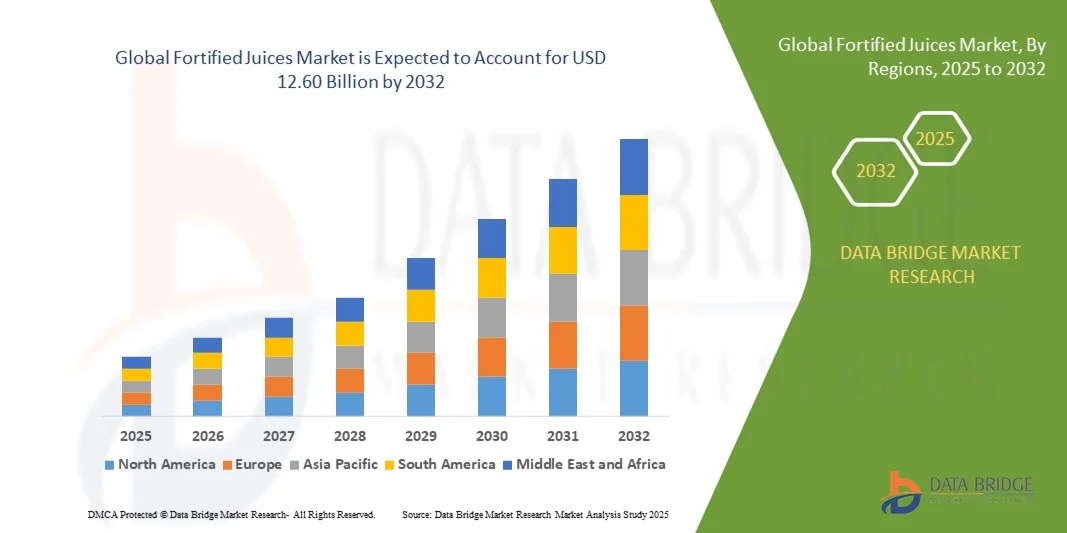
- The global fortified juices market size was valued at USD 7.61 billion in 2024 and is expected to reach USD 12.60 billion by 2032, at a CAGR of 6.50% during the forecast period
- The market growth is largely fueled by increasing health consciousness and the rising demand for functional beverages that provide additional nutritional benefits such as vitamins, minerals, and probiotics. Consumers are increasingly opting for fortified juices as convenient alternatives to supplements, addressing concerns related to immunity, energy, and digestive health
- Furthermore, growing prevalence of lifestyle-related disorders, changing dietary patterns, and strong product innovation from leading beverage companies are accelerating the adoption of fortified juices, thereby significantly boosting the industry’s growth
Fortified Juices Market Analysis
- Fortified juices are nutrient-enriched beverages formulated by adding vitamins, minerals, probiotics, or other functional ingredients to enhance their health benefits. These juices are designed to cater to consumers seeking preventive healthcare solutions, offering a balance of refreshment, taste, and nutrition in a ready-to-drink format
- The escalating demand for fortified juices is primarily fueled by rising consumer preference for immunity-boosting products, expanding urbanization with busier lifestyles, and increasing availability of fortified juice options across both retail and online distribution channels
- North America dominated the fortified juices market with a share of over 30% in 2024, due to high consumer awareness of functional beverages and increasing demand for convenient nutrition solutions
- Asia-Pacific is expected to be the fastest growing region in the fortified juices market during the forecast period due to rapid urbanization, rising disposable incomes, and shifting consumer lifestyles in countries such as China, India, and Japan
- Fruit juices segment dominated the market with a market share of 45.5% in 2024, due to their widespread consumer acceptance and strong association with natural nutrition. Fruit juices are often preferred for their palatable taste, high vitamin content, and ability to serve as a daily health supplement. Consumers increasingly perceive fortified fruit juices as a convenient way to boost immunity and overall wellness without altering their dietary habits. The segment also benefits from extensive product innovation, including functional flavors, fortified variants, and organic options, reinforcing its market leadership
Report Scope and Fortified Juices Market Segmentation
|
Attributes |
Fortified Juices Key Market Insights |
|
Segments Covered |
|
|
Countries Covered |
North America
Europe
Asia-Pacific
Middle East and Africa
South America
|
|
Key Market Players |
|
|
Market Opportunities |
|
|
Value Added Data Infosets |
In addition to the insights on market scenarios such as market value, growth rate, segmentation, geographical coverage, and major players, the market reports curated by the Data Bridge Market Research also include in-depth expert analysis, pricing analysis, brand share analysis, consumer survey, demography analysis, supply chain analysis, value chain analysis, raw material/consumables overview, vendor selection criteria, PESTLE Analysis, Porter Analysis, and regulatory framework. |
Fortified Juices Market Trends
Growing Demand for Functional, Immunity-Boosting Beverages
- The growing consumer interest in functional beverages with added health benefits is strongly driving the demand for fortified juices. With immunity and overall wellness becoming a top priority, juices enriched with vitamins, minerals, antioxidants, and probiotics are increasingly viewed as convenient solutions for daily nutrition
- For instance, PepsiCo’s Tropicana brand has expanded its fortified juice portfolio with offerings enriched with Vitamin C and D, specifically targeting immunity-conscious consumers. This development highlights how multinational players are positioning fortified juices as essential wellness beverages in response to shifting consumer health preferences
- Fortified juices are gaining popularity among health-conscious consumers seeking alternatives to carbonated soft drinks. By combining hydration with nutritional enrichment, these juices cater to both taste and functionality, positioning them as versatile products suitable for all age groups
- The trend is particularly strong in urban markets where busy lifestyles drive the preference for ready-to-drink formats. Functional fortified juices provide a quick and accessible source of nutrients, supporting on-the-go consumption without compromising health goals
- The rising preventive healthcare mindset is further propelling fortified juice innovation. Companies are leveraging superfruits such as acerola, pomegranate, and acai to create antioxidant-rich products that support immunity, digestion, and energy levels
- In summary, the rising demand for functional and immunity-boosting beverages is reshaping the juice industry. Fortified juices are emerging as key drivers of the health and wellness segment, combining convenience with nutrition to meet evolving consumer expectations
Fortified Juices Market Dynamics
Driver
Rising Cases of Nutritional Deficiencies
- The global increase in nutritional deficiencies is a significant driver accelerating the fortified juices market. Lacking essential vitamins and minerals has become a common health issue, especially in developing regions, creating a strong demand for fortified foods and beverages to bridge dietary gaps
- For instance, Dabur launched fortified juice products in India enriched with Vitamin D and iron to address prevalent deficiencies in the population. This demonstrates how manufacturers are aligning product innovation with regional health requirements to expand market reach while solving nutritional challenges
- Vitamin and iron deficiencies, particularly among children and women, have created a pressing need for accessible solutions. Fortified juices serve as an effective medium for nutrient delivery since they are widely consumed and can be adapted to local taste preferences while providing added nutritional value
- Governments and health organizations are increasingly encouraging food and beverage fortification through public health policies. This regulatory support amplifies the usage of fortified juices as part of preventive care programs and helps raise awareness at the consumer level
- Overall, rising cases of nutritional deficiencies are reinforcing the importance of fortified juices as an everyday health solution. Their ability to combine consumer appeal with nutritional correction ensures their growing relevance in both developed and emerging markets
Restraint/Challenge
High Production and Pricing Constraints
- The high cost of production is one of the major challenges faced by the fortified juices market. Incorporating premium additives such as vitamins, probiotics, or plant-based extracts demands specialized formulation, quality testing, and preservation processes, all of which increase production expenses
- For instance, brands such as Innocent Drinks in Europe have priced their fortified juices at a premium, limiting their reach in highly price-sensitive consumer segments. This highlights how affordability remains a key obstacle in expanding market penetration despite rising demand
- The complexity of ensuring uniform fortification without compromising on taste, texture, and shelf stability further escalates processing costs. This adds to manufacturing challenges, especially for companies attempting large-scale production in competitive price-driven markets
- Price constraints also become a barrier for wider adoption in developing nations, where budget-conscious consumers may opt for traditional juices instead of paying extra for fortified versions. This creates a gap between awareness and actual consumption of fortified products
- In conclusion, high production and pricing hurdles are restricting the broader uptake of fortified juices despite their health benefits. Addressing these issues through cost-effective ingredients, innovative technologies, and targeted subsidies will be essential to improving accessibility and driving long-term market expansion
Fortified Juices Market Scope
The market is segmented on the basis of type, fortifying ingredient, and distribution channel.
- By Type
On the basis of type, the fortified juices market is segmented into fruit juices, vegetable juices, and blended/mixed juices. The fruit juices segment dominated the largest market revenue share of 45.5% in 2024, driven by their widespread consumer acceptance and strong association with natural nutrition. Fruit juices are often preferred for their palatable taste, high vitamin content, and ability to serve as a daily health supplement. Consumers increasingly perceive fortified fruit juices as a convenient way to boost immunity and overall wellness without altering their dietary habits. The segment also benefits from extensive product innovation, including functional flavors, fortified variants, and organic options, reinforcing its market leadership.
The blended/mixed juices segment is anticipated to witness the fastest growth rate from 2025 to 2032, fueled by rising health consciousness and the trend of combining multiple fruits and vegetables for enhanced nutritional benefits. Blended juices cater to consumers seeking a more comprehensive nutrient intake in a single serving and offer opportunities for flavor experimentation and differentiation. Their versatility and growing appeal in urban and health-focused markets are accelerating adoption, particularly among millennials and fitness enthusiasts seeking functional beverages.
- By Fortifying Ingredient
On the basis of fortifying ingredient, the market is segmented into vitamins, minerals, probiotics, and others. The vitamins segment held the largest market revenue share in 2024, supported by strong consumer awareness of vitamin deficiencies and the benefits of supplementation through fortified beverages. Vitamin-fortified juices are widely recognized for boosting immunity, energy, and overall wellness, making them a preferred choice for families, working professionals, and health-conscious consumers. Continuous product innovations in vitamin blends, delivery formats, and flavor enhancement further drive consumer adoption and reinforce market dominance.
The probiotics segment is expected to witness the fastest CAGR from 2025 to 2032, driven by increasing consumer focus on gut health and digestive wellness. Probiotic-fortified juices offer functional benefits, such as improving digestion, enhancing immunity, and supporting overall health, which align with the rising trend of preventive healthcare. Growing awareness campaigns, research-backed health claims, and inclusion in daily routines are boosting the segment’s appeal across urban and health-conscious populations.
- By Distribution Channel
On the basis of distribution channel, the fortified juices market is segmented into store-based and non-store-based channels. The store-based segment dominated the largest market revenue share in 2024, driven by the extensive availability of fortified juices in supermarkets, hypermarkets, and convenience stores. Consumers often prefer physical stores for the ability to inspect packaging, check nutritional labels, and access a wide variety of flavors and brands in a single visit. Retail promotions, in-store sampling, and established brand presence contribute to sustained dominance of the store-based channel.
The non-store-based segment is anticipated to witness the fastest growth rate from 2025 to 2032, fueled by the rapid rise of e-commerce, online grocery platforms, and home delivery services. Increasing digital penetration and consumer preference for convenience are driving online sales, especially among younger, tech-savvy demographics. The ability to subscribe for regular deliveries, access detailed product information, and explore new or niche fortified juice offerings is accelerating adoption in this channel.
Fortified Juices Market Regional Analysis
- North America dominated the fortified juices market with the largest revenue share of over 30% in 2024, driven by high consumer awareness of functional beverages and increasing demand for convenient nutrition solutions
- Rising health concerns such as obesity, diabetes, and vitamin deficiencies are encouraging consumers to incorporate fortified juices into their daily diets. The region’s well-established food and beverage industry, combined with innovative product launches and strong marketing campaigns, is further enhancing adoption
- The preference for ready-to-drink fortified options that provide immunity-boosting and energy-enhancing benefits is consolidating North America’s leadership in the market
U.S. Fortified Juices Market Insight
The U.S. fortified juices market captured the largest revenue share in 2024 within North America, fueled by growing consumer inclination toward functional foods and beverages. Heightened focus on preventive healthcare and lifestyle-related health management is driving demand for vitamin- and probiotic-enriched juices. Strong retail distribution networks, combined with the rising influence of health-conscious millennials, support market growth. Additionally, the adoption of clean-label, organic, and low-sugar fortified juices is gaining momentum, catering to evolving consumer preferences.
Europe Fortified Juices Market Insight
Europe fortified juices market is projected to expand at a substantial CAGR throughout the forecast period, supported by a rising demand for nutrient-enriched beverages and stringent regulatory focus on food fortification. Growing awareness about digestive health, immunity, and sustainable nutrition is encouraging consumers to shift from conventional juices to fortified alternatives. The region is witnessing strong demand across urban populations, with increasing penetration in both retail and HoReCa (hotel, restaurant, café) sectors. Product innovation in flavors and packaging is also playing a critical role in consumer adoption.
U.K. Fortified Juices Market Insight
The U.K. fortified juices market is anticipated to grow at a noteworthy CAGR during the forecast period, driven by rising health consciousness and the preference for convenient nutrition options. Increasing prevalence of vitamin deficiencies and growing awareness of gut health are fueling demand for vitamin- and probiotic-enriched juices. Additionally, the U.K.’s strong e-commerce infrastructure and expanding availability of fortified juices in online grocery platforms are accelerating consumer adoption.
Germany Fortified Juices Market Insight
The Germany fortified juices market is expected to expand at a considerable CAGR during the forecast period, driven by strong consumer emphasis on healthy living and balanced diets. The country’s robust food and beverage industry, coupled with demand for natural and organic fortification, is fostering growth. Germany’s focus on sustainability and eco-friendly packaging also enhances the appeal of fortified juice brands, making them a preferred choice among environmentally conscious consumers.
Asia-Pacific Fortified Juices Market Insight
Asia-Pacific fortified juices market is poised to grow at the fastest CAGR during the forecast period of 2025 to 2032, driven by rapid urbanization, rising disposable incomes, and shifting consumer lifestyles in countries such as China, India, and Japan. Growing concerns over nutritional deficiencies and an expanding middle-class population are fueling demand for fortified juices as a daily health supplement. Government initiatives promoting food fortification, along with the growing presence of domestic and international brands, are further propelling regional growth.
Japan Fortified Juices Market Insight
The Japan fortified juices market is gaining momentum due to the country’s strong emphasis on functional foods and beverages. Rising demand for convenient, nutrient-rich drinks is driving growth, particularly among urban working professionals. Japan’s aging population is also supporting demand for fortified juices that enhance immunity, energy, and digestive health. The popularity of innovative flavors and technologically advanced packaging is further boosting adoption.
China Fortified Juices Market Insight
The China fortified juices market accounted for the largest market revenue share in Asia-Pacific in 2024, attributed to a rapidly growing middle class, expanding health awareness, and high acceptance of fortified beverages. Government-led nutrition programs and the push towards healthier lifestyles are fueling demand for fortified juice products. Strong domestic manufacturing capabilities, combined with the availability of affordable fortified juice options, are making China a leading consumer base in the region.
Fortified Juices Market Share
The fortified juices industry is primarily led by well-established companies, including:
- Red Bull (Austria)
- PepsiCo, Inc. (U.S.)
- Nestlé (Switzerland)
- Kraft Foods (U.S.)
- General Mills (U.S.)
- Campbell Soup Co. (U.S.)
- Monster Beverage Corporation (U.S.)
- The Coca-Cola Company (U.S.)
- ADM (U.S.)
- DuPont (U.S.)
- LycoRed Ltd. (Israel)
- Fortitech, Inc. (U.S.)
- BASF SE (Germany)
- Nutratech, Inc. (U.S.)
- Maxinutrition (U.K.)
- Glanbia (Ireland)
- Clif Bar & Company (U.S.)
- Universal Nutrition (U.S.)
- SunOpta, Inc. (Canada)
- Dr Pepper Snapple Group Inc. (U.S.)
- Groupe Danone (France)
- Tata Tea (India)
- GSK (U.K.)
- RushNet (U.S.)
- Jivita LLC (U.S.)
- Old Orchard Brands (U.S.)
- Cadbury Schweppes (U.K.)
- Taut (U.S.)
- Hain Celestial (U.S.)
Latest Developments in Global Fortified Juices Market
- In September 2025, Tropicana launched Tropicana Essentials, a new line of orange juice blends positioned as a more affordable alternative to premium orange juices. This development strengthens Tropicana’s presence in the mid-priced fortified juice segment, addressing growing consumer demand for value-driven options without compromising on nutrition. By maintaining nutrient fortification and familiar flavor profiles, the brand is expected to expand its consumer base, particularly among price-sensitive buyers, thereby boosting market penetration in both developed and emerging economies
- In August 2025, Rasna Pvt. Ltd., the world’s largest manufacturer of instant beverages, launched Jumpin, a 100% Indian-made ready-to-drink (RTD) fruit juice. Timed with India’s 79th Independence Day, the launch aligned with the national “Be Indian, Buy Indian” campaign, reinforcing consumer preference for locally sourced, self-reliant products. This strategic entry into the RTD fortified juice category diversifies Rasna’s portfolio and also taps into the surging demand for indigenous, affordable, and health-oriented beverages in India, bolstering the country’s fortified juices market growth
- In June 2024, PepsiCo introduced Tropicana Health+, a fortified juice range enriched with immunity-boosting vitamins and minerals across select Asia-Pacific markets. This innovation is designed to cater to the rising consumer focus on preventive healthcare and wellness post-pandemic. By combining functional benefits with trusted branding, PepsiCo is expected to capture a larger share of the health-conscious demographic, enhancing product differentiation in highly competitive juice markets across Asia-Pacific
- In November 2023, Minute Maid, a Coca-Cola brand, expanded its fortified juice portfolio with the launch of vitamin-enriched fruit blends in Europe. This expansion capitalized on the region’s strong demand for nutrient-rich beverages and stringent regulations encouraging food fortification. By offering innovative flavor combinations with added vitamins, Minute Maid is strengthening its competitive positioning in Europe while addressing evolving consumer preferences for both taste and functionality
- In March 2021, Arla Foods Ingredients highlighted the potential of its Lacprodan® ISO.Clear, a protein ingredient designed to bring the benefits of protein fortification to juice drinks. This innovation opened opportunities for manufacturers to meet consumer demand for beverages that combine taste, refreshment, and nutritional value. By addressing concerns around high sugar content in traditional juices, Arla positioned its ingredient as a solution to enhance product value, paving the way for functional, protein-enriched juice formulations in the fortified beverages sector
SKU-
世界初のマーケットインテリジェンスクラウドに関するレポートにオンラインでアクセスする

- インタラクティブなデータ分析ダッシュボード
- 成長の可能性が高い機会のための企業分析ダッシュボード
- カスタマイズとクエリのためのリサーチアナリストアクセス
- インタラクティブなダッシュボードによる競合分析
- 最新ニュース、更新情報、トレンド分析
- 包括的な競合追跡のためのベンチマーク分析のパワーを活用
調査方法
データ収集と基準年分析は、大規模なサンプル サイズのデータ収集モジュールを使用して行われます。この段階では、さまざまなソースと戦略を通じて市場情報または関連データを取得します。過去に取得したすべてのデータを事前に調査および計画することも含まれます。また、さまざまな情報ソース間で見られる情報の不一致の調査も含まれます。市場データは、市場統計モデルと一貫性モデルを使用して分析および推定されます。また、市場シェア分析と主要トレンド分析は、市場レポートの主要な成功要因です。詳細については、アナリストへの電話をリクエストするか、お問い合わせをドロップダウンしてください。
DBMR 調査チームが使用する主要な調査方法は、データ マイニング、データ変数が市場に与える影響の分析、および一次 (業界の専門家) 検証を含むデータ三角測量です。データ モデルには、ベンダー ポジショニング グリッド、市場タイムライン分析、市場概要とガイド、企業ポジショニング グリッド、特許分析、価格分析、企業市場シェア分析、測定基準、グローバルと地域、ベンダー シェア分析が含まれます。調査方法について詳しくは、お問い合わせフォームから当社の業界専門家にご相談ください。
カスタマイズ可能
Data Bridge Market Research は、高度な形成的調査のリーダーです。当社は、既存および新規のお客様に、お客様の目標に合致し、それに適したデータと分析を提供することに誇りを持っています。レポートは、対象ブランドの価格動向分析、追加国の市場理解 (国のリストをお問い合わせください)、臨床試験結果データ、文献レビュー、リファービッシュ市場および製品ベース分析を含めるようにカスタマイズできます。対象競合他社の市場分析は、技術ベースの分析から市場ポートフォリオ戦略まで分析できます。必要な競合他社のデータを、必要な形式とデータ スタイルでいくつでも追加できます。当社のアナリスト チームは、粗い生の Excel ファイル ピボット テーブル (ファクト ブック) でデータを提供したり、レポートで利用可能なデータ セットからプレゼンテーションを作成するお手伝いをしたりすることもできます。