Global Skin Care Devices Market Size, Share and Trends Analysis Report
Market Size in USD Billion
CAGR :
%
USD
12.01 Billion
USD
30.82 Billion
2024
2032
| 2025 –2032 | |
| USD 12.01 Billion | |
| USD 30.82 Billion | |
|
|
|
|
Global Skin Care Devices Market Segmentation, By Product Type (Skincare Diagnostic Devices and Skincare Treatment Devices), Application (Skin Rejuvenation, Disease Diagnosis and Treatment, Hair Removal, Skin Tightening and Body Contouring, Cellulite Reduction, and Damage Repair), Distribution Channel (Direct and Indirect), End User (Dermatology Clinics, Hospitals, and Spas and Salons) - Industry Trends and Forecast to 2032
What is the Global Skin Care Devices Market Size and Growth Rate?
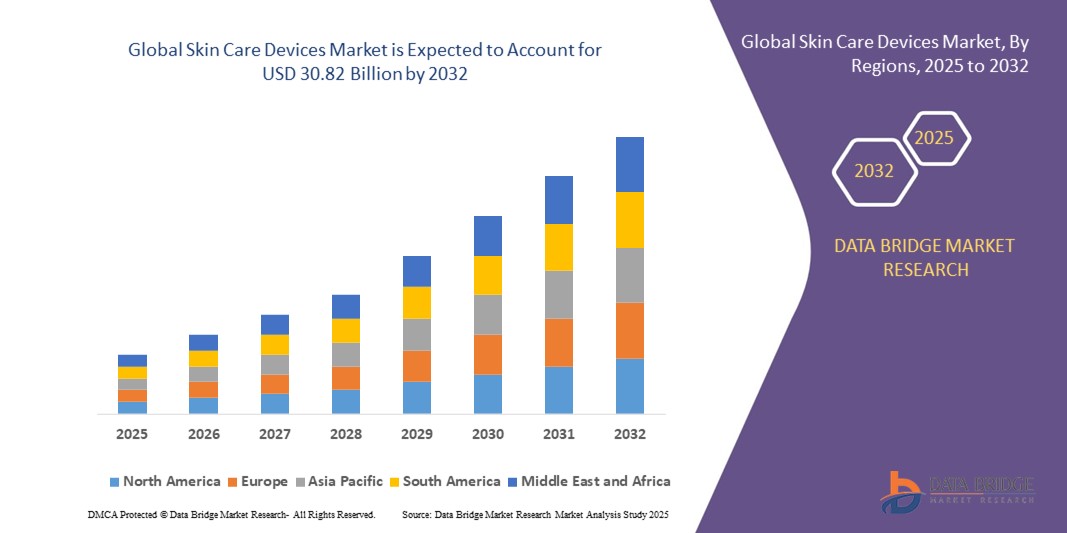
- The global skin care devices market size was valued at USD 12.01 billion in 2024 and is expected to reach USD 30.82 billion by 2032, at a CAGR of 12.5% during the forecast period
- Skin is that the outer covering of the human or animal’s body. It's the most important organ of the body and performs varied functions such as protecting us from several harmful components as well as microbes, facultative the sensations of warmth, cold and bit and regulation our body temperatures
What are the Major Takeaways of Skin Care Devices Market?
- Rising adoption of skin care devices because of their in-depth role in aesthetics and increasing incidences of skin disorders worldwide are key factors driving the growth of the skin care devices market
- In addition, at-home tending merchandise hold the largest market share, because of rising demand from toning, anti-aging, and different tending devices. In addition, producing cost-effective and technologically advanced devices, increasing adoption of minimally invasive and non-invasive treatments, untearable treatments, and increasing awareness concerning new technologies in skin care business are major factors refuelling the growth of the worldwide shopper skin care devices market over the forecast amount
- North America dominated the skin care devices market with the largest revenue share of 42.36% in 2024, driven by rising demand for advanced beauty technologies, professional aesthetic procedures, and at-home skin care solutions
- The Asia-Pacific skin care devices market is expected to grow at the fastest CAGR of 12.12% during 2025–2032, fueled by rising disposable incomes, rapid urbanization, and expanding beauty-conscious middle-class populations
- The skincare treatment devices segment dominated the market with the largest revenue share of 68.4% in 2024, driven by the rising consumer demand for non-invasive treatments such as laser therapy, light-based therapy, and microdermabrasion
Report Scope and Skin Care Devices Market Segmentation
|
Attributes |
Skin Care Devices Key Market Insights |
|
Segments Covered |
|
|
Countries Covered |
North America
Europe
Asia-Pacific
Middle East and Africa
South America
|
|
Key Market Players |
|
|
Market Opportunities |
|
|
Value Added Data Infosets |
In addition to the insights on market scenarios such as market value, growth rate, segmentation, geographical coverage, and major players, the market reports curated by the Data Bridge Market Research also include in-depth expert analysis, pricing analysis, brand share analysis, consumer survey, demography analysis, supply chain analysis, value chain analysis, raw material/consumables overview, vendor selection criteria, PESTLE Analysis, Porter Analysis, and regulatory framework. |
What is the Key Trend in the Skin Care Devices Market?
Enhanced Personalization Through AI and Smart Integration
- A major trend in the global skin care devices market is the integration of artificial intelligence (AI), IoT connectivity, and smart assistant compatibility to deliver personalized skincare routines and treatment outcomes. Devices are increasingly designed to analyze user skin conditions and adapt treatments in real time
- For instance, FOREO’s AI-enabled facial cleansing brushes integrate with smartphone apps to assess skin hydration levels and tailor cleansing modes accordingly, while Nu Skin’s LumiSpa iO connects with a mobile app to provide personalized skincare guidance and progress tracking
- AI-enabled skin care devices can detect subtle changes in the skin such as fine lines, acne patterns, or pigmentation and adjust treatment intensity. Some advanced models even recommend complementary skincare products
- The integration with smart assistants such as Alexa and Google Assistant enables hands-free operation and scheduling, making skincare routines more convenient and consistent for users
- Companies such as L’Oréal and Philips are investing in AI-driven beauty tech, including smart mirrors and connected skincare tools, to deliver a more holistic and data-driven skincare experience
- This trend of personalized, connected, and intelligent skincare solutions is redefining user expectations, driving consumer adoption, and shaping the competitive landscape of the skin care devices market
What are the Key Drivers of Skin Care Devices Market?
- The rising prevalence of skin disorders such as acne, eczema, and hyperpigmentation, combined with growing consumer focus on anti-aging solutions, is significantly driving demand for skin care devices
- For instance, in May 2024, Lumenis launched its Stellar M22 multi-application platform, designed to treat over 30 skin conditions including vascular lesions, pigmentation, and hair removal, showcasing the market’s move toward versatile treatment devices
- Increasing awareness about personal grooming, wellness, and preventive skincare is encouraging consumers to invest in advanced at-home and professional devices
- The surge in demand for non-invasive cosmetic procedures and minimally painful treatment options is further supporting market expansion
- In addition, the rapid adoption of e-commerce channels, alongside influencers promoting skincare gadgets on social media, is making these devices more accessible worldwide
- The combination of medical-grade efficacy, convenience of at-home use, and rising affordability is fueling widespread adoption across residential and commercial (dermatology clinics, spas, salons) segments
Which Factor is Challenging the Growth of the Skin Care Devices Market?
- High device costs and safety concerns remain key barriers to adoption in both developed and emerging markets. Advanced technologies such as laser-based skin rejuvenation, radiofrequency devices, and AI-enabled gadgets often come at a premium, limiting their reach among price-sensitive consumers
- For instance, while entry-level devices such as Silk’n hair removal gadgets are relatively affordable, high-end solutions such as Fraxel and Cynosure’s laser-based platforms can be prohibitively expensive for at-home users
- Safety risks, including potential skin burns, irritation, or ineffective results from improper usage, also discourage consumer confidence, especially in regions with limited professional guidance
- Furthermore, concerns over data privacy in AI-driven devices that collect skin health information may restrain adoption in privacy-sensitive markets
- Addressing these challenges requires manufacturers to focus on affordability, clear safety guidelines, regular product testing, and transparent data practices
- Companies investing in low-cost, portable, and easy-to-use devices, combined with strong consumer education campaigns, are best positioned to overcome these barriers and sustain long-term growth
How is the Skin Care Devices Market Segmented?
The market is segmented on the basis of product type, application, distribution channel, and end user.
- By Product Type
On the basis of product type, the skin care devices market is segmented into skincare diagnostic devices and skincare treatment devices. The skincare treatment devices segment dominated the market with the largest revenue share of 68.4% in 2024, driven by the rising consumer demand for non-invasive treatments such as laser therapy, light-based therapy, and microdermabrasion. These devices are widely adopted across dermatology clinics and spas, owing to their effectiveness in addressing wrinkles, pigmentation, and acne. Increasing home-use treatment devices from brands such as FOREO and Silk’n are also supporting growth in this category.
The skincare diagnostic devices segment is anticipated to witness the fastest CAGR of 22.1% from 2025 to 2032, propelled by advancements in AI and imaging technologies that enable precise skin condition assessments. These devices are increasingly used for personalized skincare regimens and preventive care. Growing demand for early detection of skin disorders and consumer interest in customized skincare solutions are driving this trend.
- By Application
On the basis of application, the skin care devices market is segmented into skin rejuvenation, disease diagnosis and treatment, hair removal, skin tightening and body contouring, cellulite reduction, and damage repair. The hair removal segment dominated the market with the largest revenue share of 34.7% in 2024, fueled by the widespread popularity of laser and light-based home-use devices. Increasing demand for long-term hair removal solutions over traditional shaving or waxing methods continues to drive this segment.
The skin rejuvenation segment is expected to record the fastest CAGR of 20.6% from 2025 to 2032, supported by the rising demand for anti-aging solutions and preventive skincare routines. Consumers are increasingly investing in devices that address fine lines, uneven skin tone, and texture irregularities. In addition, technological advancements such as RF-based skin tightening and LED light therapies are enhancing outcomes, further accelerating adoption across both professional and home-use applications.
- By Distribution Channel
On the basis of distribution channel, the skin care devices market is segmented into direct and indirect channels. The indirect channel dominated the market with the largest revenue share of 59.3% in 2024, attributed to the wide availability of devices through e-commerce platforms, retail stores, and beauty product distributors. Online retail has been a key driver, offering consumers access to a wide variety of products, competitive pricing, and the convenience of home delivery.
The direct channel is projected to grow at the fastest CAGR of 18.4% from 2025 to 2032, driven by manufacturers’ focus on strengthening direct-to-consumer sales through company-owned websites and exclusive outlets. Direct channels also allow companies to deliver personalized consultations, subscription-based skincare programs, and bundled services. Increasing consumer trust in purchasing directly from manufacturers, alongside brand loyalty strategies, is expected to accelerate growth in this segment throughout the forecast period.
- By End User
On the basis of end user, the skin care devices market is segmented into dermatology clinics, hospitals, and spas and salons. The dermatology clinics segment dominated the market with the largest revenue share of 41.2% in 2024, driven by the availability of advanced devices for disease diagnosis, treatment, and high-efficacy cosmetic procedures. Patients prefer dermatology clinics for professional-grade results, particularly for treatments such as acne therapy, pigmentation reduction, and scar management.
The spas and salons segment is anticipated to grow at the fastest CAGR of 19.7% from 2025 to 2032, boosted by rising consumer interest in non-invasive beauty procedures and the growing culture of self-care. Spas and salons are increasingly adopting devices for skin tightening, rejuvenation, and body contouring, offering affordable alternatives to clinical procedures. The expansion of urban lifestyle services and wellness-focused beauty centers is expected to further fuel demand in this segment.
Which Region Holds the Largest Share of the Skin Care Devices Market?
- North America dominated the skin care devices market with the largest revenue share of 42.36% in 2024, driven by rising demand for advanced beauty technologies, professional aesthetic procedures, and at-home skin care solutions
- Consumers in the region highly value convenience, anti-aging solutions, and technologically advanced non-invasive treatments, which significantly boosts the adoption of skin care devices
- This leadership is further reinforced by high disposable incomes, strong presence of key manufacturers, and growing awareness of personal aesthetics, making North America the prime hub for skin care innovation
U.S. Skin Care Devices Market Insight
The U.S. skin care devices market captured 81% revenue share in 2024 within North America, driven by increasing consumer focus on anti-aging and wellness. The popularity of at-home beauty devices, alongside rising demand for professional dermatology and aesthetic treatments, is accelerating growth. The adoption of AI-enabled diagnostic tools, portable devices, and smart beauty systems also contributes to the U.S. market’s dominance.
Europe Skin Care Devices Market Insight
The Europe skin care devices market is projected to expand at a significant CAGR during the forecast period, fueled by growing beauty consciousness, aging population, and stringent safety regulations governing medical-grade aesthetic devices. European consumers are increasingly drawn toward non-invasive beauty procedures and home-use devices offering convenience and clinical-such as results. The region is also witnessing rapid expansion in dermatology clinics, spas, and wellness centers, contributing to higher device adoption rates.
U.K. Skin Care Devices Market Insight
The U.K. skin care devices market is expected to grow steadily, driven by high demand for anti-aging solutions, personalized beauty care, and home-use devices. Rising concerns about skin health, pollution effects, and preventive care are also influencing consumer choices. In addition, the U.K.’s strong e-commerce ecosystem and high awareness of advanced technologies continue to fuel adoption.
Germany Skin Care Devices Market Insight
The Germany skin care devices market is anticipated to grow at a notable CAGR, driven by strong demand for innovative, sustainable, and clinically tested beauty solutions. German consumers prefer eco-conscious, technology-driven, and dermatologically validated devices, aligning with the country’s emphasis on precision and quality. Widespread adoption across dermatology clinics and home-use categories is reinforcing market growth.
Which Region is the Fastest Growing in the Skin Care Devices Market?
The Asia-Pacific skin care devices market is expected to grow at the fastest CAGR of 12.12% during 2025–2032, fueled by rising disposable incomes, rapid urbanization, and expanding beauty-conscious middle-class populations. The presence of major manufacturing hubs in China, Japan, and South Korea, along with government support for technological innovation, is making APAC a leader in affordable and advanced devices.
Japan Skin Care Devices Market Insight
The Japan skin care devices market is witnessing strong growth due to the country’s tech-savvy culture, beauty-centric lifestyle, and rising demand for non-invasive devices. Integration of IoT-enabled, AI-powered, and multifunctional devices is accelerating adoption, particularly in home-use categories. In addition, the aging population’s preference for user-friendly anti-aging solutions supports consistent market demand.
China Skin Care Devices Market Insight
The China skin care devices market accounted for the largest revenue share in APAC in 2024, driven by its expanding middle class, rapid digitalization, and strong domestic production base. China is one of the largest consumers of beauty devices globally, with widespread adoption across residential, commercial, and professional skin care segments. The push for smart cities, advanced e-commerce penetration, and affordable device availability continues to drive market growth.
Which are the Top Companies in Skin Care Devices Market?
The skin care devices industry is primarily led by well-established companies, including:
- Nu Skin (U.S.)
- CANDELA CORPORATION (U.S.)
- Silk’n (Israel)
- TRIA BEAUTY (U.S.)
- Curallux LLC. (U.S.)
- Termosalud (Spain)
- FOREO (Sweden)
- Tech4Beauty (Germany)
- Koninklijke Philips N.V. (Netherlands)
- Conair Corporation (U.S.)
- Lumenis (Israel)
- Cynosure (U.S.)
- Sciton, Inc. (U.S.)
- Fotona (Slovenia)
- Procter & Gamble (U.S.)
- Colgate-Palmolive Company (U.S.)
- LUTRONIC (South Korea)
- STRATA Skin Sciences (U.S.)
- NuFACE (U.S.)
- Spectrum Brands, Inc. (U.S.)
- Cutera (U.S.)
- Merz North America, Inc. (U.S.)
- El.En. S.p.A. (Italy)
- YA-MAN LTD. (Japan)
- Panasonic Corporation (Japan)
- Alma Lasers (Israel)
- Bausch Health Companies Inc. (Canada)
What are the Recent Developments in Global Skin Care Devices Market?
- In October 2022, Promoitalia, a cosmetic product company, introduced iWave, a unique body microwave contouring device that has demonstrated safe and effective outcomes in fat reduction. This launch highlights the brand’s focus on innovative body care solutions and is expected to enhance its presence in the aesthetic devices market
- In June 2022, Cynosure rolled out the Elite iQ platform across the U.S., Europe, and Australia, featuring patented Skintel technology for personalized laser hair removal and skin revitalization treatments. This advancement is set to attract a new customer base and further strengthen Cynosure’s market share
- In November 2021, Lancer Skincare, the Beverly Hills-based global skincare brand, collaborated with tech startup ByondXR to unveil The Virtual Lancer Dermatology Shop, offering customers a curated digital experience that mirrors the benefits of in-clinic visits. This initiative reflects the brand’s commitment to digital transformation and customer engagement.
- In October 2020, Scottish skin tech company Cutitronics expanded its European operations ahead of its commercial debut, focusing on collaborations with leading skincare brands in the region.This strategic expansion positions the company for greater visibility and partnerships in the competitive skincare technology market
SKU-
世界初のマーケットインテリジェンスクラウドに関するレポートにオンラインでアクセスする

- インタラクティブなデータ分析ダッシュボード
- 成長の可能性が高い機会のための企業分析ダッシュボード
- カスタマイズとクエリのためのリサーチアナリストアクセス
- インタラクティブなダッシュボードによる競合分析
- 最新ニュース、更新情報、トレンド分析
- 包括的な競合追跡のためのベンチマーク分析のパワーを活用
調査方法
データ収集と基準年分析は、大規模なサンプル サイズのデータ収集モジュールを使用して行われます。この段階では、さまざまなソースと戦略を通じて市場情報または関連データを取得します。過去に取得したすべてのデータを事前に調査および計画することも含まれます。また、さまざまな情報ソース間で見られる情報の不一致の調査も含まれます。市場データは、市場統計モデルと一貫性モデルを使用して分析および推定されます。また、市場シェア分析と主要トレンド分析は、市場レポートの主要な成功要因です。詳細については、アナリストへの電話をリクエストするか、お問い合わせをドロップダウンしてください。
DBMR 調査チームが使用する主要な調査方法は、データ マイニング、データ変数が市場に与える影響の分析、および一次 (業界の専門家) 検証を含むデータ三角測量です。データ モデルには、ベンダー ポジショニング グリッド、市場タイムライン分析、市場概要とガイド、企業ポジショニング グリッド、特許分析、価格分析、企業市場シェア分析、測定基準、グローバルと地域、ベンダー シェア分析が含まれます。調査方法について詳しくは、お問い合わせフォームから当社の業界専門家にご相談ください。
カスタマイズ可能
Data Bridge Market Research は、高度な形成的調査のリーダーです。当社は、既存および新規のお客様に、お客様の目標に合致し、それに適したデータと分析を提供することに誇りを持っています。レポートは、対象ブランドの価格動向分析、追加国の市場理解 (国のリストをお問い合わせください)、臨床試験結果データ、文献レビュー、リファービッシュ市場および製品ベース分析を含めるようにカスタマイズできます。対象競合他社の市場分析は、技術ベースの分析から市場ポートフォリオ戦略まで分析できます。必要な競合他社のデータを、必要な形式とデータ スタイルでいくつでも追加できます。当社のアナリスト チームは、粗い生の Excel ファイル ピボット テーブル (ファクト ブック) でデータを提供したり、レポートで利用可能なデータ セットからプレゼンテーションを作成するお手伝いをしたりすることもできます。