


世界の車両軽量化市場:コンポーネント別(フレーム、ホイール、バンパーおよびフェンダー、エンジンおよび排気管、燃料タンク、トランスミッション、ドア、ボンネットおよびトランクリッド、シート、計器パネル)、材質別(金属、複合材料、プラスチック、エラストマー)、用途別(ホワイトボディ、シャーシおよびサスペンション、パワートレイン、クロージャー、内装、その他)、車両別(PC、LCV、HCV)、電気自動車およびハイブリッド車(BEV、HEV、PHEV、トラック、バス) - 2032年までの業界動向および予測
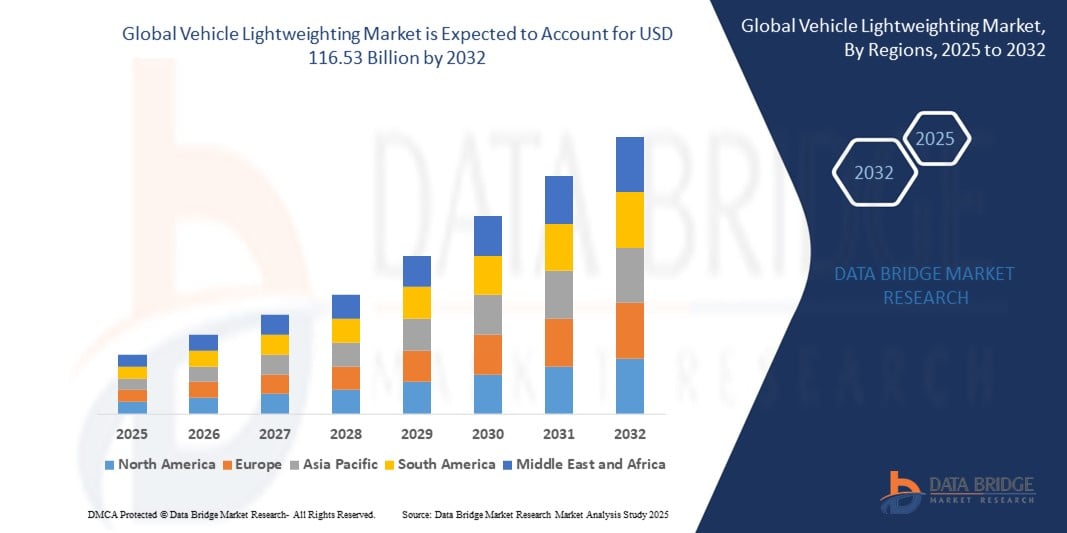
車両軽量化市場規模
- 世界の車両軽量化市場規模は2024年に956.4億米ドルと評価され、予測期間中に5.50%のCAGRで成長し、2032年までに1165.3億米ドルに達すると予想されています。
- 自動車業界からの軽量素材の需要の増加、燃費重視の傾向、車両重量の軽減と燃費および炭素排出目標の達成に役立つ革新的な素材への高いニーズが、車両軽量化市場を牽引する主な要因となっています。
車両軽量化市場分析
- 車両の軽量化とは、車両に使用されている重い材料を、同様の特性を持つ軽量な材料に置き換えるプロセスを指します。このプロセスは、車両の耐久性や強度を補うものではありません。軽量化には、適切な部品を適切な箇所から適切な材料に置き換えるための慎重な検討と設計分析が必要です。
- 燃料費と走行距離の急増、燃費効率の向上、そして厳しい排ガス規制の施行に伴うCO2排出量削減のための軽量車両の大量生産が、車両軽量化市場の成長を加速させています。車両重量の削減に効果があることが知られている高度に自動化された生産サイクルにおいて、コスト効率を重視して鋼鉄やアルミニウムよりも複合材料が好まれる傾向、そして排出基準を満たすための製品や製造手順の変更が、車両軽量化市場に影響を与えています。
- 北米は、電気自動車やハイブリッド軽自動車に対する消費者の嗜好の高まりと、グリーンモビリティを促進する政府のインセンティブにより、2025年には42.01%という最大の収益シェアで車両軽量化市場を支配します。
- アジア太平洋地域は、急速な都市化、可処分所得の増加、そして中国、インド、日本といった国々における自動車製造拠点の強化に牽引され、予測期間中、車両軽量化市場において最も急速な成長を遂げる地域になると予想されています。燃費効率が高く、環境に配慮した車両への需要の高まりは、この地域の市場発展を大きく加速させると予想されます。
- フレームセグメントは、予測期間中、車両軽量化市場において24.9%という最大の市場シェアを占めると予想されています。このセグメントの優位性は、業界がよりクリーンな代替エネルギーへの移行を徐々に進める中で、特にディーゼル商用車およびユーティリティ車両において、軽量フレームが提供する性能と燃費の向上に大きく起因しています。
レポートの範囲と車両軽量化市場のセグメンテーション
|
属性 |
車両軽量化の主要市場洞察 |
|
対象セグメント |
|
|
対象国 |
北米
ヨーロッパ
アジア太平洋
中東およびアフリカ
南アメリカ
|
|
主要な市場プレーヤー |
|
|
市場機会 |
|
|
付加価値データ情報セット |
データブリッジマーケットリサーチがまとめた市場レポートには、市場価値、成長率、セグメンテーション、地理的範囲、主要プレーヤーなどの市場シナリオに関する洞察に加えて、輸出入分析、生産能力概要、生産消費分析、価格動向分析、気候変動シナリオ、サプライチェーン分析、バリューチェーン分析、原材料/消耗品概要、ベンダー選択基準、PESTLE分析、ポーター分析、規制枠組みも含まれています。 |
車両軽量化市場の動向
「自動車における効率性と持続可能性の推進」
- 世界の車両軽量化市場において、車両重量の軽減を目的とした先進材料や革新的な設計技術の導入が加速しており、これは重要なトレンドとなっています。これは、燃費向上、性能向上、そして厳しい排出ガス規制への適合といったニーズによって推進されています。
- For instance, automakers are increasingly incorporating high-strength steel and aluminum alloys in vehicle structures to achieve weight reduction without compromising safety. Similarly, the use of carbon fiber composites in high-performance vehicles and select structural components is growing, offering significant weight savings.
- Advancements in material science are enabling the development of novel lightweight plastics and composites with enhanced strength and durability. Furthermore, innovative joining technologies, such as adhesive bonding and laser welding, facilitate the use of dissimilar lightweight materials in vehicle construction.
- The shift towards electrification is further amplifying the importance of lightweighting, as reducing vehicle mass directly translates to increased battery range and overall efficiency in electric vehicles. This necessitates the integration of lightweight materials across various vehicle subsystems.
- This trend towards lighter, more efficient vehicles is fundamentally reshaping material choices and manufacturing processes in the automotive industry. Consequently, material suppliers and automotive manufacturers are investing heavily in research and development of cost-effective lightweighting solutions.
- The demand for vehicle lightweighting solutions is growing rapidly across all vehicle segments, from passenger cars to commercial vehicles, as the benefits of reduced weight become increasingly apparent in terms of fuel economy, performance, and environmental impact.
Vehicle Lightweighting Market Dynamics
Driver
“Growing Need Due to Stringent Emission Regulations and Electric Vehicle Adoption”
- The increasing stringency of global emission regulations mandating lower greenhouse gas emissions from vehicles, coupled with the accelerating adoption of electric vehicles, is a significant driver for the heightened demand for vehicle lightweighting.
- For instance, government mandates like the Corporate Average Fuel Economy (CAFE) standards in the United States and similar regulations in Europe and Asia Pacific incentivize automakers to reduce vehicle weight to improve fuel efficiency and lower emissions.
- As consumers increasingly demand longer driving ranges and improved efficiency in electric vehicles, lightweighting becomes crucial to offset the weight of batteries and maximize performance. Automakers are actively seeking lightweight materials and designs to achieve these goals.
- Furthermore, the growing consumer preference for performance and agility in vehicles also drives the adoption of lightweighting, as reduced mass contributes to better acceleration, handling, and braking.
- The increasing focus on sustainability and reducing the overall environmental footprint of vehicles throughout their lifecycle further propels the adoption of lightweight materials and manufacturing processes.
Restraint/Challenge
“Concerns Regarding High Material Costs and Manufacturing Complexity”
- Concerns surrounding the high cost of some advanced lightweight materials, such as carbon fiber and certain specialty alloys, pose a significant challenge to broader market penetration in mass-market vehicles. The economic viability of these materials for high-volume production remains a key consideration for automakers.
- For instance, while carbon fiber offers significant weight savings, its high production cost limits its widespread use to premium and performance-oriented vehicles. Similarly, advanced aluminum alloys can be more expensive than traditional steel.
- Addressing these cost concerns through innovative manufacturing processes, economies of scale, and the development of more cost-effective lightweight alternatives is crucial for wider adoption. Material suppliers are actively working on reducing the cost of advanced lightweight materials.
- Additionally, the complex manufacturing and assembly processes associated with some lightweight materials, such as joining dissimilar materials and handling composites, can present challenges for automakers. This may require investments in new equipment and training.
- While advancements in manufacturing technologies are ongoing, the integration of novel lightweight materials into existing production lines can be complex and require significant engineering expertise and process optimization. Overcoming these manufacturing hurdles is vital for the widespread implementation of vehicle lightweighting strategies.
Vehicle Lightweighting Market Scope
The market is segmented on the component, material, application, vehicle and electric and hybrid vehicle.
|
Segmentation |
Sub-Segmentation |
|
By Component |
|
|
By Material |
|
|
By Application |
|
|
By Vehicle |
|
|
By Electric and Hybrid Vehicle |
|
Vehicle Lightweighting Market Scope
The market is segmented on the basis component, material, application, vehicle and electric and hybrid vehicle.
- By Component
On the basis of component, the vehicle lightweighting market is segmented into frames, wheels, bumpers and fenders, engines and exhausts, fuel tanks, transmissions, doors, hood and trunk lid, seats, instrument panels. The frames segment dominates the largest market revenue share of 24.9% in 2025, driving the vehicle lightweighting market due to the substantial weight contribution of the vehicle's structural frame. Automakers are increasingly employing advanced lightweight materials like high-strength steel, aluminum alloys, and composites in frame construction to achieve considerable weight reduction, directly improving fuel efficiency and vehicle performance. This shift is crucial for meeting stringent emission regulations and enhancing EV range.
ホイールセグメントは、軽量ホイールによるバネ下質量と回転慣性の低減により、2025年から2032年にかけて19.7%という最も高い成長率を達成すると予測されています。自動車メーカーは、ホイール製造において、軽量アルミ合金、マグネシウム、さらには炭素繊維複合材の採用をますます増やしています。こうした変化は燃費向上、加速性能と制動性能の向上、そしてハンドリングと乗り心地の向上をもたらし、特にEVにおいて、軽量ホイールは車両全体の軽量化と性能最適化の重要な戦略となっています。
- 素材別
材料別に見ると、車両軽量化市場は金属、複合材、プラスチック、エラストマーに分類されます。 2025年には金属が最大の市場収益シェアを占めました。燃費効率と排出量削減への需要の高まりを背景に、高強度鋼、アルミニウム、マグネシウム、チタン合金といった軽量金属の採用が進んでいます。これらの金属は、重要な構造部品や車体部品において、強度と軽量化のバランスを実現し、従来型車両と電気自動車の両方において、車両全体の軽量化と性能向上に大きく貢献します。
複合材料分野は、従来の金属に比べて大幅な軽量化が可能なことから、2025年から2032年にかけて最も高いCAGRを達成すると予想されています。燃費向上と電気自動車の航続距離延長に対する需要の高まりにより、車体パネル、構造部品、内装材における炭素繊維強化ポリマー(CFRP)とガラス繊維強化ポリマー(GFRP)の使用が増加しています。これらの材料は高い強度対重量比を有しており、安全性と性能を維持しながら大幅な軽量化を実現する上で不可欠です。
- アプリケーション別
車両軽量化市場は、用途別にホワイトボディ、シャーシおよびサスペンション、パワートレイン、クロージャー、内装、その他に分類されます。自動車メーカーがホワイトボディにおいて、重量のある鋼板部品を高張力鋼、アルミニウム、複合材などの軽量素材に積極的に置き換えていることから、2025年にはホワイトボディが最大の市場収益シェアを占めました。この大幅な軽量化は燃費向上に直接つながり、車両ダイナミクスを向上させ、電気自動車の航続距離を最大化するために不可欠です。
シャーシおよびサスペンションセグメントは2025年においても大きな市場シェアを占めており、シャーシおよびサスペンションシステムの軽量化は車両軽量化市場における重要な焦点となっています。重い鋼板部品をより軽量なアルミニウム合金や先進複合材に置き換えることで、バネ下重量が軽減されます。これにより、ハンドリング性能が向上し、乗り心地も向上し、従来型車両の燃費向上とEVの航続距離延長に貢献します。
- 車で
車両ベースでは、車両軽量化市場はPC、LCV、HCVに分類されます。PCセグメントは2024年に最大の市場収益シェアを占め、2025年から2032年にかけて最も高いCAGR(年平均成長率)を記録すると予想されています。乗用車(PC)セグメントは、厳しい排出ガス規制と燃費効率に対する消費者の需要により、車両軽量化の主要な推進力となっています。自動車メーカーは、車両システム全体にわたって軽量素材を積極的に採用することで総重量を削減し、内燃機関車の燃費向上と電気自動車の航続距離の延長を図り、市場の魅力を高めています。
車両軽量化市場の地域分析
- 北米は、厳しい燃費規制、強力な自動車製造基盤、従来型車両と電気自動車の両方における軽量素材の採用増加に牽引され、2024年には40.01%という最大の収益シェアで車両軽量化市場を支配します。
- この地域の消費者とメーカーは、企業平均燃費(CAFE)基準の達成と電気自動車の航続距離と性能向上のため、軽量化を最優先に考えています。大手自動車OEMと材料サプライヤーの存在に加え、先進的な軽量化技術の研究開発への多額の投資が、市場の成長をさらに促進しています。
米国車両軽量化市場の洞察
米国の車両軽量化市場は、厳格な排出ガス規制と電気自動車の生産増加に後押しされ、2025年には北米で最大の収益シェア(81%)を獲得しました。自動車業界は燃費向上と電気自動車の航続距離延長に注力しており、車両製造において高強度鋼、アルミニウム、複合材といった軽量素材の使用量増加が求められています。さらに、政府の優遇措置や、より効率的な車両を求める消費者の需要も市場拡大に貢献しています。
欧州の車両軽量化市場に関する洞察
欧州の車両軽量化市場は、主に欧州グリーンディールなどの厳格な環境規制と電気自動車の生産増加に牽引され、予測期間を通じて大幅なCAGRで拡大すると予測されています。炭素排出量の削減と燃費向上への注力により、様々な車両セグメントで軽量素材の採用が求められています。さらに、先端材料に関する積極的な研究開発活動と、OEMと材料サプライヤーの連携が、新車生産とアフターマーケットの両方で市場の成長を促進しています。
英国の車両軽量化市場洞察
The U.K. Vehicle Lightweightingmarket is anticipated to grow at a noteworthy CAGR during the forecast period, driven by the national emission reduction targets and the rising adoption of electric vehicles. The government's push towards electrification and stricter fuel economy standards are encouraging automakers to incorporate lightweight materials in vehicle design and manufacturing. Furthermore, investments in advanced manufacturing technologies and a growing awareness of the benefits of lightweighting are stimulating market growth.
Germany Vehicle LightweightingMarket Insight
The German Vehicle Lightweightingmarket is expected to expand at a considerable CAGR during the forecast period, fueled by country's strong automotive industry, emphasis on technological innovation, and stringent environmental regulations. As a major global automotive hub, Germany is at the forefront of adopting lightweight materials and technologies to enhance vehicle efficiency and reduce emissions. The increasing production of premium and electric vehicles, which heavily rely on lightweighting, further propels market growth.
Asia-Pacific Vehicle LightweightingMarket Insight
The Asia-Pacific Vehicle Lightweightingmarket is poised to grow at the fastest CAGR of over 24% in 2025, driven by increasing automotive production, rising disposable incomes, and government initiatives promoting fuel efficiency and electric vehicle adoption in countries such as China, Japan, and India. The region's rapid industrialization and growing vehicle demand necessitate the use of lightweight materials to meet emission standards and improve vehicle performance. Furthermore, APAC's emergence as a major automotive manufacturing hub and the increasing availability of cost-effective lightweighting solutions are key growth drivers.
Japan Vehicle Lightweighting Market Insight
The Japan Vehicle Lightweighting market is gaining momentum due to the country's focus on technological advancement, stringent fuel efficiency standards, and the growing adoption of hybrid and electric vehicles. Japanese automakers are actively investing in research and development of advanced lightweight materials and technologies to improve vehicle performance and reduce environmental impact. The emphasis on high-quality and fuel-efficient vehicles further drives the demand for lightweighting solutions.
China Vehicle Lightweighting Market Insight
The China Vehicle Lightweighting market accounted for the largest market revenue share in Asia Pacific in 2025, attributed to the country's massive automotive production volume, stringent New Energy Vehicle (NEV) mandates, and increasing focus on fuel efficiency. As the world's largest automotive market, China's push towards electrification and stricter emission regulations necessitates the widespread adoption of lightweight materials in both conventional and electric vehicles. The presence of numerous domestic and international automotive manufacturers, coupled with government support for lightweighting technologies, are key factors propelling market growth.
Vehicle Lightweighting Market Share
The Vehicle Lightweighting industry is primarily led by well-established companies, including:
- Dow Chemical Company
- Arconic
- Aleris Corporation
- 3M
- Trelleborg AB
- Samvardhana Motherson Group
- Faurecia
- Magna International Inc.
- ZF Friedrichshafen AG
- Fiat Chrysler Automobiles
- Benteler International
- CHASSIX
- GF Casting Solutions
- Freudenberg Group
- General Motors
- BASF SE
- Asahi Kasei Corporation
- ContiTech AG
- Evonik Industries AG
Latest Developments in Global Vehicle Lightweighting Market
- In March 2025, ArcelorMittal Partnered with Renault for the Emblème project, demonstrating XCarb® steel's potential in reducing the body-in-white weight of a concept vehicle. This collaboration showcased how recycled and renewably produced steel can significantly lower the carbon footprint of automotive manufacturing while achieving lightweighting goals crucial for future mobility solutions. The initiative highlights the synergy between material innovation and sustainable vehicle design.
- May 2025, At The Battery Show Europe, BASF presented its lightweighting solutions, including Ultramid® Expand. This innovative engineering plastic is designed for battery cell holders in electric vehicles, offering a lighter alternative to traditional materials. By reducing the overall weight of the battery pack, Ultramid® Expand contributes to improved energy efficiency and extended driving range in EVs, showcasing BASF's role in advancing electric mobility.
- August 2024 Toray's introduction of a new high-performance carbon fiber, while initially targeted at wind turbine blades, underscores their continuous innovation in lightweight composite materials. These advancements in strength and weight reduction are highly relevant to the automotive industry, where carbon fiber offers significant potential for lightweighting vehicle structures and components, ultimately improving performance and fuel efficiency across various vehicle types.
- October 2021, Gestamp's purchase of ArcelorMittal's XCarb® steel certificates signify a commitment to sustainability within the automotive supply chain. As a major Tier 1 supplier, Gestamp's adoption of lower-carbon footprint steel directly encourages the use of environmentally responsible lightweight materials in vehicle manufacturing, contributing to a more sustainable automotive industry and aligning with global environmental goals.
SKU-
世界初のマーケットインテリジェンスクラウドに関するレポートにオンラインでアクセスする

- インタラクティブなデータ分析ダッシュボード
- 成長の可能性が高い機会のための企業分析ダッシュボード
- カスタマイズとクエリのためのリサーチアナリストアクセス
- インタラクティブなダッシュボードによる競合分析
- 最新ニュース、更新情報、トレンド分析
- 包括的な競合追跡のためのベンチマーク分析のパワーを活用
調査方法
データ収集と基準年分析は、大規模なサンプル サイズのデータ収集モジュールを使用して行われます。この段階では、さまざまなソースと戦略を通じて市場情報または関連データを取得します。過去に取得したすべてのデータを事前に調査および計画することも含まれます。また、さまざまな情報ソース間で見られる情報の不一致の調査も含まれます。市場データは、市場統計モデルと一貫性モデルを使用して分析および推定されます。また、市場シェア分析と主要トレンド分析は、市場レポートの主要な成功要因です。詳細については、アナリストへの電話をリクエストするか、お問い合わせをドロップダウンしてください。
DBMR 調査チームが使用する主要な調査方法は、データ マイニング、データ変数が市場に与える影響の分析、および一次 (業界の専門家) 検証を含むデータ三角測量です。データ モデルには、ベンダー ポジショニング グリッド、市場タイムライン分析、市場概要とガイド、企業ポジショニング グリッド、特許分析、価格分析、企業市場シェア分析、測定基準、グローバルと地域、ベンダー シェア分析が含まれます。調査方法について詳しくは、お問い合わせフォームから当社の業界専門家にご相談ください。
カスタマイズ可能
Data Bridge Market Research は、高度な形成的調査のリーダーです。当社は、既存および新規のお客様に、お客様の目標に合致し、それに適したデータと分析を提供することに誇りを持っています。レポートは、対象ブランドの価格動向分析、追加国の市場理解 (国のリストをお問い合わせください)、臨床試験結果データ、文献レビュー、リファービッシュ市場および製品ベース分析を含めるようにカスタマイズできます。対象競合他社の市場分析は、技術ベースの分析から市場ポートフォリオ戦略まで分析できます。必要な競合他社のデータを、必要な形式とデータ スタイルでいくつでも追加できます。当社のアナリスト チームは、粗い生の Excel ファイル ピボット テーブル (ファクト ブック) でデータを提供したり、レポートで利用可能なデータ セットからプレゼンテーションを作成するお手伝いをしたりすることもできます。











