



世界の創傷デブリードマン機器市場のセグメンテーション、製品別(ハイドロサージカル、低周波超音波、機械的、幼虫療法など)、方法別(自己融解、外科的、酵素、機械的、ウジ)、創傷タイプ別(外科的創傷、糖尿病性潰瘍、火傷、褥瘡、静脈性潰瘍など)、エンドユーザー別(病院、創傷ケアセンター、外来センター、 在宅医療、診療所、地域医療) - 2032年までの業界動向と予測
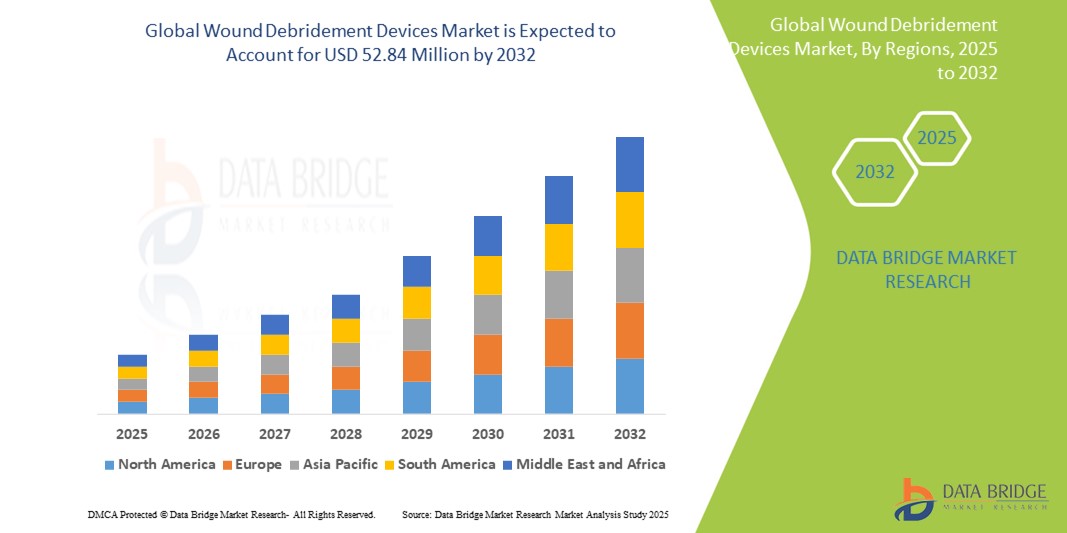
創傷デブリードマン機器市場規模
- 世界の創傷デブリードマン機器市場規模は2024年に3,417万米ドルと評価され、予測期間中に 5.60%のCAGRで成長し、2032年には5,284万米ドル に達すると予想されています。
- 市場の成長は、創傷デブリードマン機器と高度な創傷ケア技術の採用の増加と技術進歩によって主に推進されており、病院と在宅ケアの両方の環境でデジタル化が進んでいます。
- さらに、糖尿病性足潰瘍、褥瘡、静脈性下肢潰瘍といった慢性創傷の罹患率の上昇、高齢化、糖尿病発症率の上昇により、高度な創傷デブリードマンソリューションが現代の標準治療として確立されつつあります。これらの要因が重なり、創傷デブリードマンデバイスソリューションの普及が加速し、業界の成長を大きく後押ししています。
創傷デブリードマン機器市場分析
- 創傷デブリードマン装置は、機械的、酵素的、または自己溶解的に死んだ組織を除去するもので、治癒を促進し、感染リスクを減らし、包括的な創傷ケアプロトコルとシームレスに統合する効果の向上により、病院と家庭の両方の環境で現代の創傷ケア管理のますます重要な要素となっています。
- 創傷デブリードマン機器の需要の高まりは、主に、高度な創傷ケア技術の普及、消費者の間での慢性創傷の増加、そして効果的で効率的なデブリードマン方法への嗜好の高まりによって促進されています。
- 北米は、2025年に40.01%の最大の収益シェアで創傷デブリードマン機器市場を支配しており、高度な創傷ケア技術の早期導入、高い医療費、主要な業界プレーヤーの強力な存在が特徴です。
- アジア太平洋地域は、医療意識とアクセスの向上、可処分所得の増加、慢性疾患の罹患率の増加により、予測期間中に創傷デブリードマン機器市場において年平均成長率24.1%で最も急速に成長する地域になると予想されています。
- 酵素セグメントは、選択的な組織除去とさまざまな創傷タイプでの使いやすさに対する確立された評判により、2025年に43.2%の市場シェアで創傷デブリードマンデバイス市場を支配すると予想されています。
レポートの範囲と創傷デブリードマン機器市場のセグメンテーション
|
属性 |
創傷デブリードマン機器の主要市場分析 |
|
対象セグメント |
|
|
対象国 |
北米
ヨーロッパ
アジア太平洋
中東およびアフリカ
南アメリカ
|
|
主要な市場プレーヤー |
|
|
市場機会 |
|
|
付加価値データ情報セット |
データブリッジマーケットリサーチがまとめた市場レポートには、市場価値、成長率、セグメンテーション、地理的範囲、主要プレーヤーなどの市場シナリオに関する洞察に加えて、輸出入分析、生産能力概要、生産消費分析、価格動向分析、気候変動シナリオ、サプライチェーン分析、バリューチェーン分析、原材料/消耗品概要、ベンダー選択基準、PESTLE分析、ポーター分析、規制枠組みも含まれています。 |
創傷デブリードマン機器市場動向
「AIとデジタルの融合による利便性の向上」
- A significant and accelerating trend in the global wound debridement devices market is the deepening integration with digital technologies and data analytics platforms. This fusion of technologies is significantly enhancing user convenience and control over their wound management
- For instance, advanced wound imaging devices seamlessly integrate with digital platforms, allowing clinicians to track wound healing progress with precision. Similarly, data from connected dressings can be accessed via secure interfaces, offering a discreet wound management solution
- Digital integration in wound debridement enables features such as analyzing wound characteristics to potentially suggest optimal debridement methods and providing more intelligent alerts based on healing trajectories. For instance, some AI-powered platforms utilize machine learning to improve wound assessment accuracy over time and can send intelligent notifications if healing stalls or complications are detected. Furthermore, remote monitoring capabilities offer users and clinicians the ease of hands-free operation, allowing them to track and manage wounds remotely using digital interfaces
- The seamless integration of wound debridement data with electronic health records and broader healthcare platforms facilitates centralized control over various aspects of the patient's care environment. Through a single interface, users can manage their wound care alongside medication adherence, activity levels, and other health metrics, creating a unified and proactive healing experience
- This trend towards more intelligent, intuitive, and interconnected wound management systems is fundamentally reshaping user expectations for healthcare. Consequently, companies such as Smith+Nephew and Medtronic are developing digitally-enabled wound debridement solutions with features such as remote monitoring of wound status and data analytics compatibility with hospital EHR systems
- The demand for wound debridement devices that offer seamless digital and data integration is growing rapidly across both hospital and home care sectors, as healthcare providers and patients increasingly prioritize convenience and comprehensive digital health functionality
Wound Debridement Devices Market Dynamics
Driver
“Growing Need Due to Rising Chronic Wound Prevalence and Advanced Healthcare Adoption”
- The increasing prevalence of chronic wounds among homeowners and businesses (referring to care facilities and home healthcare), coupled with the accelerating adoption of advanced healthcare ecosystems, is a significant driver for the heightened demand for wound debridement devices
- For instance, in April 2024, Smith+Nephew announced the launch of a new enzymatic debridement solution with enhanced efficacy, looking forward to integrating state-of-the-art formulations into their existing portfolio. Such strategies by key companies are expected to drive the Wound Debridement Devices industry growth in the forecast period
- As consumers (patients and healthcare providers) become more aware of the challenges associated with chronic wounds and seek enhanced solutions for their management, advanced debridement devices offer features such as targeted tissue removal, reduced healing times, and infection control benefits, providing a compelling upgrade over traditional wound care methods
- Furthermore, the growing popularity of advanced wound care protocols and the desire for interconnected healthcare solutions are making sophisticated debridement devices an integral component of these systems, offering seamless integration with other wound care products and platforms
- The convenience of effective and efficient debridement, remote monitoring capabilities for healthcare professionals, and the ability to manage wound care through advanced medical devices are key factors propelling the adoption of wound debridement devices in both hospital and home healthcare sectors. The trend towards advanced wound management practices and the increasing availability of user-friendly debridement options further contribute to market growth
Restraint/Challenge
“Concerns Regarding Infection Risks and High Treatment Costs”
- Concerns surrounding the potential for infection during debridement procedures and the overall high cost of advanced wound care pose a significant challenge to broader market penetration. As wound debridement involves tissue removal, there is a risk of introducing infections if proper sterilization and techniques are not followed, raising anxieties among patients and healthcare providers
- For instance, reports of post-debridement infections have made some patients and clinicians hesitant to adopt more aggressive or advanced wound debridement solutions
- Addressing these infection control concerns through stringent sterilization protocols, advanced antimicrobial technologies, and comprehensive training for healthcare professionals is crucial for building patient and provider trust. Companies such as Mölnlycke and Coloplast emphasize their sterile packaging and infection prevention features in their product offerings to reassure potential users
- In addition, the relatively high initial cost of some advanced wound debridement devices and therapies compared to traditional dressings can be a barrier to adoption for price-sensitive healthcare facilities and patients, particularly in developing regions or for budget-constrained individuals. While basic debridement tools remain available, premium technologies such as NPWT or advanced biologics often come with a higher price tag
- Overcoming these challenges through enhanced infection control measures, clear communication of the benefits of advanced debridement, and the development of more cost-effective wound debridement options will be vital for sustained market growth
Wound Debridement Devices Market Scope
The market is segmented on the basis of product, method, wound type, and end user.
- By Product
On the basis of product, the wound debridement devices market is segmented into hydrosurgical, low-frequency ultrasound, mechanical, larval therapy, and others. The mechanical segment dominates the largest market revenue share in 2025, driven by its established use in various wound types and ease of application. Healthcare providers often prioritize mechanical debridement for its direct and effective removal of non-viable tissue. The market also sees strong demand for mechanical methods due to their accessibility and applicability across different healthcare settings.
The hydrosurgical segment is anticipated to witness the fastest growth rate of 21.7% from 2025 to 2032, fueled by increasing adoption in hospitals and specialized wound care centers. Hydrosurgical devices offer precise and selective debridement, minimizing damage to surrounding healthy tissue, and their integration with advanced wound management protocols provides clinicians with enhanced control and outcomes. The effectiveness in complex wounds and the growing availability of advanced hydrosurgical systems also contribute to their rising popularity.
- By Method
On the basis of method, the wound debridement devices market is segmented into autolytic, surgical, enzymatic, mechanical, and maggot. The enzymatic method held the largest market revenue share of 43.2% in 2025, driven by its ability to selectively target and break down necrotic tissue without harming viable tissue, and the ease of application in various wound care settings. Enzymatic debridement is a popular choice for its non-invasive nature and effectiveness in chronic wounds.
The surgical segment is expected to witness the fastest CAGR from 2025 to 2032, driven by the increasing need for rapid and aggressive debridement in severe or infected wounds, particularly in hospital settings. Surgical debridement offers immediate removal of devitalized tissue and is often a critical step in managing complex wound cases.
- By Wound Type
On the basis of wound type, the wound debridement devices market is segmented into surgical wounds, diabetic ulcers, burns, pressure ulcers, venous ulcers, and others. The diabetic ulcers segment held the largest market revenue share in 2025, driven by the rising prevalence of diabetes globally and the associated increase in diabetic foot ulcers requiring advanced wound care and debridement. The growing awareness of the complications of diabetic ulcers and the need for effective management strategies contribute to this dominance.
The burns segment is expected to witness the fastest CAGR from 2025 to 2032, favored for the critical role of early and effective debridement in improving patient outcomes and reducing the risk of infection in burn injuries. Advances in burn care and the availability of specialized debridement techniques for burn wounds are driving this growth.
- By End User
エンドユーザーに基づいて、創傷デブリードマン機器市場は、病院、創傷ケアセンター、外来センター、在宅医療、診療所、地域医療に分類されます。病院セグメントは、外科手術、外傷症例、そして高度なデブリードマン療法を必要とする複雑な慢性創傷の管理の多さに牽引され、2024年には最大の市場収益シェアを占めました。病院は、急性期および専門創傷ケアの中心的な拠点です。
在宅医療分野は、在宅で創傷ケアを受ける患者の増加、家庭での使用に適したユーザーフレンドリーなデブリードマン製品の普及、そして慢性創傷に対する在宅ケアの費用対効果と利便性の高さにより、2025年から2032年にかけて最も高いCAGRを達成すると予想されています。患者中心のケアへの移行と遠隔医療サービスの発展も、この成長をさらに後押しするでしょう。
創傷デブリードマン機器市場の地域分析
- 北米は、高度な創傷ケアと管理の需要の高まりと、洗練されたデブリードマン技術の認知度の高まりにより、2024年には創傷デブリードマン機器市場で最大の収益シェア40.01%を占め、市場を支配しています。
- 同地域の医療従事者と患者は、従来の方法と比較して、高度なデブリードマン機器が提供する有効性、治癒結果の改善、感染リスクの低減を高く評価しています。
- この広範な採用は、医療費の高騰、技術的に進歩した医療インフラ、そして低侵襲で効果的な創傷治療への関心の高まりによってさらに支えられており、急性および慢性創傷管理の両方において、高度なデブリードマンソリューションが好まれるアプローチとして確立されている。
米国創傷デブリードマン機器市場に関する洞察
米国の創傷デブリードマン機器市場は、高度な創傷ケア技術の急速な普及と在宅医療の拡大を背景に、2025年には北米で最大の収益シェア73.2%を獲得しました。医療提供者は、効果的かつ効率的なデブリードマンソリューションによる患者アウトカムの向上をますます重視しています。高度な創傷管理プロトコルへの関心の高まりと、低侵襲技術および在宅ケアオプションへの堅調な需要が相まって、創傷デブリードマン機器業界をさらに推進しています。さらに、創傷ケアにおけるデジタルヘルス技術とデータ分析の統合が進んでいることも、市場の拡大に大きく貢献しています。
欧州創傷デブリードマン機器市場に関する洞察
欧州の創傷デブリードマン機器市場は、予測期間を通じて大幅なCAGRで拡大すると予測されています。これは主に、厳格な医療規制と、病院および在宅医療における高度な創傷管理へのニーズの高まりによるものです。高齢化の進展と高度な医療機器への需要が相まって、スマートデブリードマン技術の導入が促進されています。欧州の医療制度は、これらの機器が提供する費用対効果と患者転帰の改善にも注目しています。この地域では、病院、創傷ケアセンター、在宅医療のあらゆる分野で著しい成長が見られ、高度なデブリードマンが標準治療と専門治療の両方に組み込まれています。
英国の創傷デブリードマン機器市場に関する洞察
英国の創傷デブリードマン機器市場は、高度な創傷ケアの普及と、創傷管理におけるより高い有効性と利便性への要望に牽引され、予測期間中に注目すべきCAGRで成長すると予想されています。さらに、慢性創傷の蔓延と効果的な治療の必要性に対する懸念から、病院と在宅医療提供者の両方が高度なデブリードマンソリューションを選択するようになっています。英国では、革新的な医療技術の導入と堅固な医療インフラの整備が、引き続き市場の成長を刺激すると予想されます。
ドイツにおける創傷デブリードマン機器市場の洞察
ドイツの創傷デブリードマン機器市場は、高度な創傷ケアの利点に対する認識の高まりと、技術的に高度な患者中心のソリューションへの需要の高まりを背景に、予測期間中に大幅なCAGRで拡大すると予想されています。ドイツの充実した医療制度は、イノベーションと品質へのこだわりと相まって、特に病院や専門クリニックにおいて、高度なデブリードマン機器の導入を促進しています。高度なデブリードマンと包括的な創傷管理プロトコルの統合もますます普及しつつあり、現地の医療基準に適合した、効果的でエビデンスに基づいたソリューションが強く求められています。
アジア太平洋地域の創傷デブリードマン機器市場に関する洞察
アジア太平洋地域の創傷デブリードマン機器市場は、中国、日本、インドなどの国々におけるヘルスケア意識の高まり、可処分所得の増加、そして技術進歩に牽引され、2025年には24.1%という最も高いCAGRで成長すると見込まれています。この地域では、医療へのアクセス向上を促進する政府の取り組みに支えられ、先進医療への関心が高まっており、高度なデブリードマン技術の導入が進んでいます。さらに、アジア太平洋地域が医療機器および部品の製造拠点として台頭するにつれ、創傷デブリードマン機器の価格とアクセス性は、より幅広い患者層と医療提供者層に広がりつつあります。
日本における創傷デブリードマン機器市場に関する洞察
The Japan wound debridement devices market is gaining momentum due to the country’s high-tech culture, rapid aging population, and demand for convenience in healthcare. The Japanese market places a significant emphasis on quality and patient comfort, and the adoption of advanced debridement is driven by the increasing number of chronic wound cases and the need for effective, less invasive treatments. The integration of advanced debridement with other IoT-enabled healthcare devices and remote monitoring systems is fueling growth. Moreover, Japan's aging population is likely to spur demand for easier-to-use, effective wound care solutions in both residential and healthcare facilities.
China Wound Debridement Devices Market Insight
The China wound debridement devices market is expected to witness the highest compound annual growth rate (CAGR) of 7.8% in the market, attributed to the country's expanding middle class, rapid urbanization, and high rates of technological adoption in healthcare. China stands as one of the largest markets for medical devices, and advanced wound debridement is becoming increasingly popular in hospitals, clinics, and home healthcare settings. The push towards improved healthcare infrastructure and the availability of affordable wound debridement devices options, alongside strong domestic manufacturers, are key factors propelling the market in China.
Wound Debridement Devices Market Share
The wound debridement devices industry is primarily led by well-established companies, including:
- Smith+Nephew (U.K.)
- Medtronic (Ireland)
- Zimmer Biomet (U.S.)
- Integra LifeSciences Corporation (U.S.)
- Abbott (U.S.)
- B. Braun SE (Germany)
- Mölnlycke Health Care AB (Sweden)
- Coloplast Group (Denmark)
- Organogenesis Inc. (U.S.)
- Bioventus LLC. (U.S.)
- Hollister Incorporated (U.S.)
- Lohmann & Rauscher GmbH & Co. KG (Germany)
- Arobella Medical (U.S.)
- Essity Aktiebolag (Sweden)
- Advanced Medical Solutions Group plc (U.K.)
- Brightwake Ltd (U.K.)
- BioMonde (U.K.)
- DeRoyal Industries, Inc. (U.S.)
- Italia Medica SRL (Italy)
- Söring GmbH (Germany)
- Olympus Corporation (Japan)
Latest Developments in Global Wound Debridement Devices Market
- In July 2024, Mölnlycke Health Care announced a USD 15 million investment in MediWound Ltd., a global leader in next-generation enzymatic therapeutics for non-surgical wound debridement. This strategic investment aligns with Mölnlycke's strategy to bring radical innovations into the wound care space and provide alternative solutions to traditional debridement, aiming to improve clinical outcomes and patient experience
- In April 2024, Mölnlycke also signed an agreement to acquire P.G.F. Industry Solutions GmbH, the Austrian manufacturer of Granudacyn wound cleansing and moisturising solutions. This acquisition further strengthens Mölnlycke's portfolio in wound care, including products that support the debridement process by cleansing the wound bed
- In September 2023, Medtronic launched its SurgiSleeve Wound Protector, which, while primarily a wound protector, plays a role in facilitating better surgical site exposure and protection during procedures, which can indirectly support effective debridement and wound management by minimizing contamination
- In October 2023, Zimmer Biomet highlighted new product introductions and advancements in its portfolio for musculoskeletal healthcare during its 2023 financial reports, often including surgical instruments and tools that support effective wound debridement in orthopedic procedures. While a specific debridement tool launch wasn't individually highlighted in their public summaries, their ongoing innovation in surgical solutions is relevant
SKU-
世界初のマーケットインテリジェンスクラウドに関するレポートにオンラインでアクセスする

- インタラクティブなデータ分析ダッシュボード
- 成長の可能性が高い機会のための企業分析ダッシュボード
- カスタマイズとクエリのためのリサーチアナリストアクセス
- インタラクティブなダッシュボードによる競合分析
- 最新ニュース、更新情報、トレンド分析
- 包括的な競合追跡のためのベンチマーク分析のパワーを活用
調査方法
データ収集と基準年分析は、大規模なサンプル サイズのデータ収集モジュールを使用して行われます。この段階では、さまざまなソースと戦略を通じて市場情報または関連データを取得します。過去に取得したすべてのデータを事前に調査および計画することも含まれます。また、さまざまな情報ソース間で見られる情報の不一致の調査も含まれます。市場データは、市場統計モデルと一貫性モデルを使用して分析および推定されます。また、市場シェア分析と主要トレンド分析は、市場レポートの主要な成功要因です。詳細については、アナリストへの電話をリクエストするか、お問い合わせをドロップダウンしてください。
DBMR 調査チームが使用する主要な調査方法は、データ マイニング、データ変数が市場に与える影響の分析、および一次 (業界の専門家) 検証を含むデータ三角測量です。データ モデルには、ベンダー ポジショニング グリッド、市場タイムライン分析、市場概要とガイド、企業ポジショニング グリッド、特許分析、価格分析、企業市場シェア分析、測定基準、グローバルと地域、ベンダー シェア分析が含まれます。調査方法について詳しくは、お問い合わせフォームから当社の業界専門家にご相談ください。
カスタマイズ可能
Data Bridge Market Research は、高度な形成的調査のリーダーです。当社は、既存および新規のお客様に、お客様の目標に合致し、それに適したデータと分析を提供することに誇りを持っています。レポートは、対象ブランドの価格動向分析、追加国の市場理解 (国のリストをお問い合わせください)、臨床試験結果データ、文献レビュー、リファービッシュ市場および製品ベース分析を含めるようにカスタマイズできます。対象競合他社の市場分析は、技術ベースの分析から市場ポートフォリオ戦略まで分析できます。必要な競合他社のデータを、必要な形式とデータ スタイルでいくつでも追加できます。当社のアナリスト チームは、粗い生の Excel ファイル ピボット テーブル (ファクト ブック) でデータを提供したり、レポートで利用可能なデータ セットからプレゼンテーションを作成するお手伝いをしたりすることもできます。











