



Global Frozen Sauces Market Segmentation, By Product (Cooking Sauces, and Dips), Distribution Channel (Online and Offline) - Industry Trends and Forecast to 2033
글로벌 냉동 소스 시장 규모와 성장률은 무엇입니까
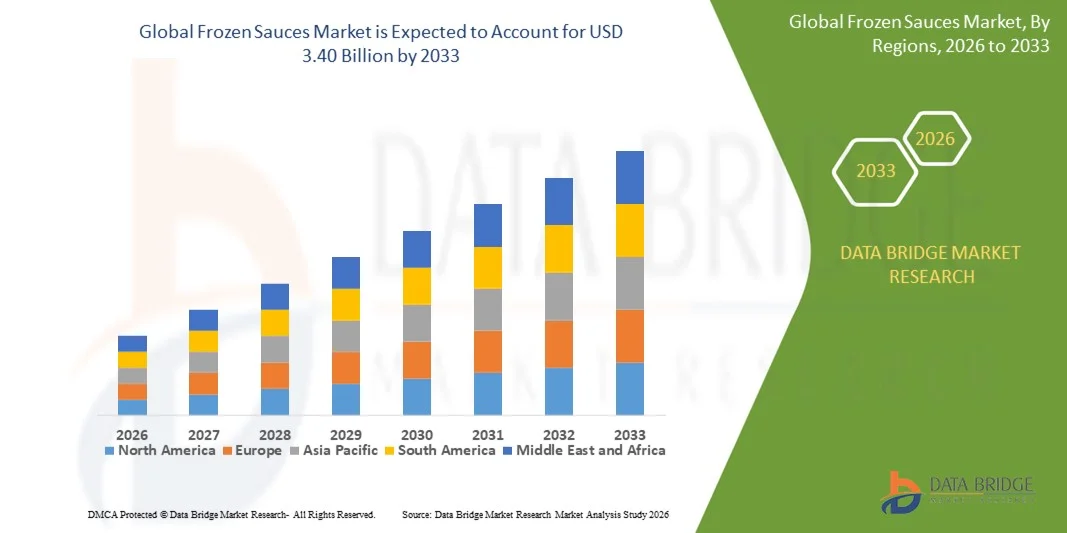
- Data Bridge Market Research Analysis에 따라 글로벌 냉동 소스 시장 규모가 평가되었습니다.2025년 USD 1.88억견적 요청2033년 USD 3.40억, 에 의해7.70%의 CAGR예측 기간
- 미국 아시아 요리의 인기를 증가 시켰습니다. 다른 소스, 드레싱 및 주요 드라이버가 시장 성장을 확장하는 역할을하는 구성 요소의 다양한 맛에 대한 수요를 증가, 또한 급속한 도시화에 상승, 멀티-큐리티 문화의 성장 소비자 관심을 결합하는 주요 요인은 냉동 소스 시장 성장을 구동하는 주요 요인입니다
시장 크기 & Forecast
- 글로벌 시장 가치 (2025):100억
- 예상 시장 가치 (2033):미화 50억
- 캐스트 CAGR (2026–2033):7.70%
냉동 소스 시장의 주요 테이크 아웃은 무엇입니까
- 시장의 연구 및 개발 활동에 대한 상승은 냉동 소스 시장 제조업체를위한 새로운 기회를 만들 것입니다
- 그러나 연구 및 개발 활동과 관련된 높은 비용은 주요 요인은 구속으로 행동하고 예측 기간에 냉동 소스 시장의 성장에 더 도전합니다.
- 아시아 태평양은 중국, 일본, 인도, 대한민국, 동남아시아의 냉동 식품 산업의 성장에 의해 구동 2025 년 약 38.25%의 예상 수입 점유율을 가진 냉동 소스 시장을 지배했다
- 북미는 2026년부터 2033년까지 8.25%의 가장 빠른 CAGR를 등록 할 것으로 예상되며 편리한 식사 솔루션, 냉동 식품의 강력한 침투 및 미국과 캐나다 전역의 민족 및 프리미엄 소스의 소비를 증가시킵니다.
- 요리 소스 세그먼트는 2025 년 약 62%의 추정된 점유율을 가진 시장을 지배했습니다, 이 제품은 가정 요리에서 널리 이용됩니다, foodservice 출구, 및 소형 준비 시간을 가진 완전한 식사 준비를 위한 빠른 서비스 대중음식점
보고서 범위 및 냉동 소스 시장 세그먼트
|
관련 기사 |
냉동 소스 키 시장 통찰력 |
|
Segments 적용 |
|
|
국가 덮음 |
북아메리카
·
아시아 태평양
중동 및 아프리카
대한민국
|
|
핵심 시장 선수 |
|
|
시장 기회 |
|
|
Value 추가 데이터 Infosets |
시장 가치, 성장률, 세그먼트, 지리적 범위 및 주요 플레이어와 같은 시장 시나리오에 대한 통찰력 외에도 데이터 브리지 시장 연구에 의해 큐레이터는 심층적 인 전문가 분석, 가격 분석, 브랜드 공유 분석, 소비자 설문 조사, 인구 분석, 공급망 분석, 가치 사슬 분석, 원료/소비자 개요, 공급업체 선택, PESTLE 분석, 포터 분석 및 규제 프레임 워크를 포함합니다. |
냉동 소스 시장에서 중요한 추세는 무엇입니까
편리한 이동, 깨끗한 라벨 및 프리미엄 냉동 소스 솔루션 제공
- 냉동 소스 시장은 준비, 부분 제어 및 맛, 질감 및 영양 가치를 보존하는 빠른 냉동 소스의 채택을 목격하고 있습니다.
- 제조업체는 고급 냉동 기술을 통해 확장 된 유통 기한을 유지하면서 청정 라벨 정립에 점점 집중하고 있습니다.
- 작업 전문가 및 도시 소비자 중의 편의 식품에 대한 수요가 소매 및 식품 서비스 채널에서 냉동 소스의 사용을 가속화하고 있습니다.
- 예를 들어, 주요 식품 회사는 민족, 미식가 및 식물 기반 냉동 소스의 포트폴리오를 확대하여 진화하는 맛 선호도를 확대합니다.
- QSRs, 클라우드 주방 및 식사 키트 서비스의 상승 침투는 표준화 된 냉동 소스 솔루션을위한 일관된 수요를 구동
- 소비자는 질의 비교 없이 편익을 추구합니다, 언 소스는 신선하고 선반 안정되어 있는 소스에 선호한 대안이 되고 있습니다
냉동 소스 시장의 주요 드라이버는 무엇입니까
- 소비자 수요가 편리하고, 일정한 맛과 품질을 제공하는 시간 절약 조리 솔루션
- 예를 들어 최근 몇 년 동안 식품 브랜드는 냉동 소스 라인을 확장하여 레스토랑 스타일 식사를 가정에서 지원했습니다.
- 아시아, 이탈리아, 멕시코, 중동의 맛을 포함한 글로벌 요리의 인기를 얻고 냉동 소스 소비를 높입니다.
- IQF 및 blast-freezing 기술의 발전은 제품 안정성, 맛 유지 및 재고 수명을 향상시킵니다.
- 식품 서비스 운영자가 준비 시간과 운영 비용을 줄이기 위해 냉동 소스의 채택을 증가
- 냉동 식품 인프라 및 콜드 체인 물류의 성장에 의해 지원, 냉동 소스 시장은 꾸준한 장기 성장을 목격 할 것으로 예상된다
어떤 요인은 냉동 된 소스 시장의 성장을 훔치는
- 콜드 체인 저장 및 운송에 대한 높은 의존은 물류 및 유통 비용을 증가
- 예를 들어, 에너지 가격 및 2024-2025 년 동안 냉수 비용의 변동은 여러 냉동 식품 제조업체에 대한 이익 마진에 영향을 미쳤습니다.
- 냉동 제품은 냉방 또는 수제 대안이 채택보다 덜 신선하다 일부 지역에서 소비자 인식
- 식품 라벨 제작, 보존 및 깨끗한 라벨 준수와 관련된 규제 과제
- 선반 테이블 소스, 냉장 소스 및 신선한 식사 키트의 강렬한 경쟁은 가격 압력을 만듭니다.
- 이러한 도전을 극복하기 위해, 회사는 깨끗한 라벨 혁신, 효율적인 콜드 체인 관리 및 냉동 소스의 글로벌 채택을 확장하기 위해 프리미엄 포지셔닝에 투자하고 있습니다.
냉동 된 소스 시장은 어떻게 세그먼트
시장은 기초에 세그먼트제품 및 유통 채널.
- 제품정보
제품의 기초에, 언 소스 시장은 요리 소스 및 복각으로 구분됩니다. 요리 소스 세그먼트는 2025 년 약 62%의 추정된 점유율을 가진 시장을 지배했습니다, 이 제품은 가정 요리에서 널리 이용됩니다, foodservice 출구, 및 소형 준비 시간을 가진 완전한 식사 준비를 위한 빠른 서비스 대중음식점. 파스타 소스, gravies, 카레베이스 및 민족 소스와 같은 냉동 요리 소스는 맛, 확장 된 재고 유효 기간 및 사용의 용이성, 소비자 및 상업적인 부엌에서 매우 선호합니다. 고급 냉동 기술을 통해 맛과 질감을 유지하는 능력은 더 강한 채택을 지원합니다.
딥스 세그먼트는 2026년부터 2033년까지 가장 빠른 CAGR로 성장할 것으로 예상되며, 냉동 치즈 딥, 살사, hummus 및 스낵, 파티 및 캐주얼 다이닝 행사에 대한 수요가 늘어나고 있습니다. 편의 용품, 프리미엄 식욕제 및 식품 서비스 혁신의 성장은 전 세계적으로 냉동 딥에 대한 수요를 가속화하고 있습니다.
- 유통 채널
유통 채널의 기초에, 냉동 소스 시장은 오프라인 및 온라인으로 구분됩니다. 오프라인 세그먼트는 슈퍼마켓, 하이퍼 마켓, 편의점 및 식품 서비스 유통업체의 강력한 존재에 의해 지원되는 2025 년에 약 70 ~ 72%의 점유율을 가진 시장을 지배했습니다. 소비자는 즉각적인 제품 가용성, 온도 제어 저장 및 브랜드와 향을 비교할 수있는 능력 때문에 오프라인 채널을 선호합니다. 소매 냉동 인프라 및 강력한 공급 업체 설립 - 소매 관계를 더 오프라인 지배력을 강화하십시오.
온라인 세그먼트는 전자 상거래 식료품 플랫폼의 급속한 성장에 의해 구동되는 2026년에서 2033년까지 가장 빠른 CAGR를 등록하기 위하여 계획되고, 직접 소비자 음식 상표 및 개량한 찬 사슬 근수. 디지털 채택, 홈 배달 편의성 상승, 구독 기반 냉동 식품 서비스는 전세계 냉동 소스의 온라인 판매를 크게 향상.
어떤 지역은 냉동 소스 시장의 가장 큰 주식을 보유
- 아시아 태평양은 중국, 일본, 인도, 대한민국, 동남 아시아 전역의 냉동 식품 산업의 성장에 의해 구동 2025 년 약 38.25%의 예상 수입 점유율을 가진 냉동 소스 시장을 지배했다. 작업 인구의 참여를 증가, 식이 요법 습관을 변경, 그리고 준비-to-cook 및 준비-to-eat 식사 구성 요소에 대한 선호도는 냉동 요리 소스에 대한 수요를 크게 향상하고 가구와 딥을 통해회사 소개회사연혁
- 콜드 체인 인프라 확장, 냉동 침투 개선, 민족 및 퓨전 소스를 제공하는 지역 식품 제조업체의 강력한 존재는 더 지원 시장 지배력을 제공합니다. 아시아 요리의 인기를 전 세계적으로 강화하고 지역의 냉동 소스의 생산 및 수출
- 정부는 지역 제조 시설의 다국적 브랜드에 의해 투자 증가와 함께 식품 가공을 지원하는 이니셔티브, reinforce Asia-Pacific의 리더십
중국 냉동 소스 시장 통찰력
중국은 급속하게 냉동 식품 분야, 대형 도시 인구, 편리한 식사 솔루션에 대한 수요 증가에 의해 지원하는 아시아 태평양의 가장 큰 기여자입니다. 강한 소매 및 식품 서비스 확장과 함께 서양 및 팬 - 아시아 요리의 채택, 냉동 소스 소비를 구동하는 계속.
일본 냉동 소스 시장 통찰력
일본은 우수한 품질의 냉동 식품, 강력한 냉수 인프라 및 부분 제어, 시간 절약 식사 구성 요소에 대한 선호도에 대한 높은 수요로 구동되는 꾸준한 성장을 보여줍니다. 현대 냉동 기술 지원 일관된 시장 수요와 결합 된 전통 소스.
인도 냉동 소스 시장 통찰력
인도는 도시화, 일어나는 처분할 수 있는 소득 및 조직 소매와 QSR 사슬의 급속한 확장 때문에 고성장 시장으로 신중합니다. 냉동 gravies, 카레베이스 및 국제 소스의 합격은 채택을 가속화합니다.
북미 냉동 소스 시장
북미는 2026년부터 2033년까지 8.25%의 가장 빠른 CAGR를 등록 할 것으로 예상되며 편리한 식사 솔루션, 냉동 식품의 강력한 침투 및 미국과 캐나다 전역의 민족 및 프리미엄 소스의 소비를 증가시킵니다. 빠른 서비스 레스토랑, 바쁜 가구 및 식사 키트 제공 업체의 높은 수요는 깨끗한 라벨, 유기 및 식물 기반 냉동 소스에 혁신과 결합하여 신속한 시장 성장을 지원합니다. 고급 콜드 체인 물류, 높은 냉동 소유권 및 강력한 브랜드 존재는 지역 확장을 가속화합니다.
미국 냉동 소스 시장 통찰력
미국은 냉동 편의 식품, 강력한 식품 서비스 수요 및 지속적인 제품 혁신의 높은 소비로 지역 성장을 선도합니다. 글로벌 맛, 프리미엄 재료, 간편한 식사에 대한 선호도는 지속적인 시장 확장을 주도하고 있습니다.
캐나다 냉동 소스 시장 통찰력
캐나다는 냉동 준비-cook 제품에 대한 수요 증가에 의해 꾸준히 기여하고, 다문화 식품 선호도 확장, 강력한 소매 냉동 인프라. 품질, 지속 가능성 및 건강 지향 냉동 소스에 대한 상승 초점은 시장의 성장을 강화합니다.
언 소스 시장에서 최고의 회사입니까
냉동 소스 산업은 주로 잘 설립 된 회사에 의해 주도된다 :
- Nestlé (스위스)
- Kraft Heinz Company (미국)
- General Mills Inc. (미국)
- Mars, 통합 (미국)
- 맥도날드 (미국)
- Conagra Foodservice, Inc. (미국)
- Kroger Co. (미국)
- Hormel Foods Corporation (미국)
- McCormick & Company, Inc. (미국)
- Del Monte Food, Inc. (미국)
- 주식회사 Kikkoman
- Tas Gourmet (호주)
- CSC 브랜드 L.P. (미국)
- Frito-Lay 북미, Inc. (미국)
- Bolton 그룹 (이탈리아)
- Edward & Sons (미국)
- Ken's Foods, Inc. (미국)
- 제한 없음, LLC. (미국)
- 윌리엄스 식품 (미국)
- 구운 소스 (U.K.)
- CaJohns Fiery 음식 (미국)
SKU-
세계 최초의 시장 정보 클라우드 보고서에 온라인으로 접속하세요

- 대화형 데이터 분석 대시보드
- 높은 성장 잠재력 기회를 위한 회사 분석 대시보드
- 사용자 정의 및 질의를 위한 리서치 분석가 액세스
- 대화형 대시보드를 통한 경쟁자 분석
- 최신 뉴스, 업데이트 및 추세 분석
- 포괄적인 경쟁자 추적을 위한 벤치마크 분석의 힘 활용
연구 방법론
데이터 수집 및 기준 연도 분석은 대규모 샘플 크기의 데이터 수집 모듈을 사용하여 수행됩니다. 이 단계에는 다양한 소스와 전략을 통해 시장 정보 또는 관련 데이터를 얻는 것이 포함됩니다. 여기에는 과거에 수집한 모든 데이터를 미리 검토하고 계획하는 것이 포함됩니다. 또한 다양한 정보 소스에서 발견되는 정보 불일치를 검토하는 것도 포함됩니다. 시장 데이터는 시장 통계 및 일관된 모델을 사용하여 분석하고 추정합니다. 또한 시장 점유율 분석 및 주요 추세 분석은 시장 보고서의 주요 성공 요인입니다. 자세한 내용은 분석가에게 전화를 요청하거나 문의 사항을 드롭하세요.
DBMR 연구팀에서 사용하는 주요 연구 방법론은 데이터 마이닝, 시장에 대한 데이터 변수의 영향 분석 및 주요(산업 전문가) 검증을 포함하는 데이터 삼각 측량입니다. 데이터 모델에는 공급업체 포지셔닝 그리드, 시장 타임라인 분석, 시장 개요 및 가이드, 회사 포지셔닝 그리드, 특허 분석, 가격 분석, 회사 시장 점유율 분석, 측정 기준, 글로벌 대 지역 및 공급업체 점유율 분석이 포함됩니다. 연구 방법론에 대해 자세히 알아보려면 문의를 통해 업계 전문가에게 문의하세요.
사용자 정의 가능
Data Bridge Market Research는 고급 형성 연구 분야의 선두 주자입니다. 저희는 기존 및 신규 고객에게 목표에 맞는 데이터와 분석을 제공하는 데 자부심을 느낍니다. 보고서는 추가 국가에 대한 시장 이해(국가 목록 요청), 임상 시험 결과 데이터, 문헌 검토, 재생 시장 및 제품 기반 분석을 포함하도록 사용자 정의할 수 있습니다. 기술 기반 분석에서 시장 포트폴리오 전략에 이르기까지 타겟 경쟁업체의 시장 분석을 분석할 수 있습니다. 귀하가 원하는 형식과 데이터 스타일로 필요한 만큼 많은 경쟁자를 추가할 수 있습니다. 저희 분석가 팀은 또한 원시 엑셀 파일 피벗 테이블(팩트북)로 데이터를 제공하거나 보고서에서 사용 가능한 데이터 세트에서 프레젠테이션을 만드는 데 도움을 줄 수 있습니다.











