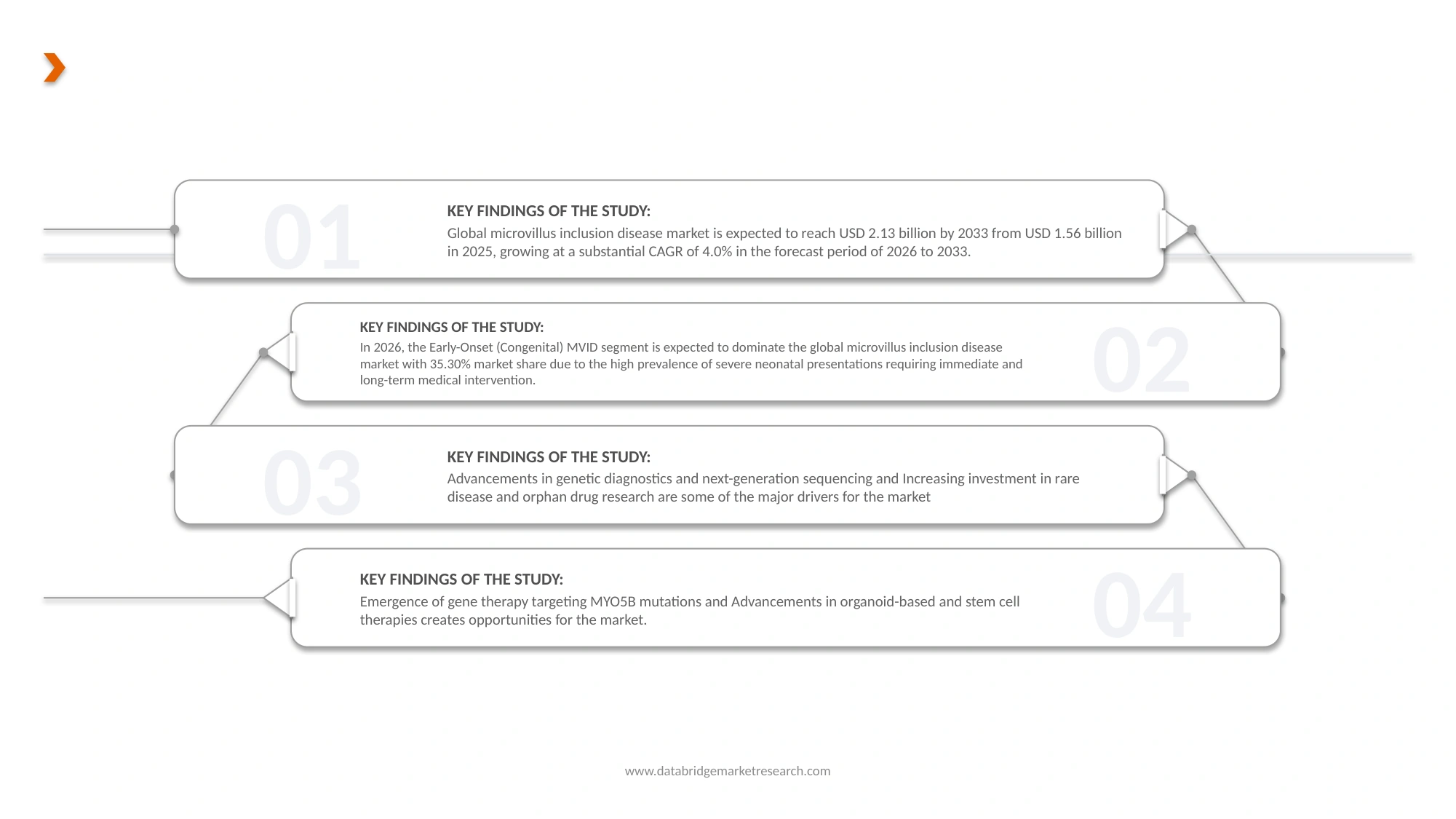
These advanced technologies enable precise identification of genetic mutations, such as those in the MYO5B gene, which are responsible for the condition. Early and accurate diagnosis is critical for a rare and life-threatening disorder like MVID, as it allows for prompt clinical intervention and improved patient management. Additionally, enhanced diagnostic capabilities support the development of targeted and personalized treatment approaches, increasing the adoption of specialized therapies. As healthcare systems increasingly integrate these cutting-edge tools, they improve detection rates and expand treatment possibilities, thereby acting as a key driver for the global MVID market.
Access Full Report @ https://www.databridgemarketresearch.com/reports/global-microvillus-inclusion-disease-market
Data Bridge market research analyses that Global Microvillus Inclusion Disease Market is expected to reach USD 2.13 billion by 2033 from USD 1.56 billion in 2025, growing at a substantial CAGR of 4.0% in the forecast period of 2026 to 2033.
Key Findings of the Study
Increasing Investment in Rare Disease and Orphan Drug Research
Governments, biotechnology companies, and research institutions are allocating substantial funding toward the development of innovative therapies, including gene-based and cell-based treatments targeting underlying genetic causes such as MYO5B mutations. Favorable regulatory frameworks, along with incentives such as market exclusivity, tax credits, and accelerated approval pathways, are strengthening industry participation in ultra-rare disease segments. These initiatives are expanding research pipelines and improving access to advanced therapeutic options for patients with limited treatment availability. The continuous rise in funding and policy support is accelerating innovation and treatment development, thereby acting as a strong driver for the global MVID market.
Report Scope and Market Segmentation
|
Report Metric
|
Details
|
|
Forecast Period
|
2026 to 2033
|
|
Base Year
|
2025
|
|
Historic Years
|
2024 (Customizable to 2018-2023)
|
|
Quantitative Units
|
Revenue in USD billion
|
|
Segments Covered
|
By Disease Type / Clinical Presentation (Early-Onset (Congenital) MVID, Genetic Subtypes, Non-Syndromic MVID, Syndromic MVID, and Late-Onset / Atypical MVID) By Treatment Type (Nutritional Support, Surgical & Advanced Interventions, Pharmacological Management, Emerging & Pipeline Therapies) By Route of Administration (Intravenous (IV), Oral, Subcutaneous, Enteral, and Others) By Diagnosis Type (Genetic Testing, Definitive Diagnostics, Laboratory Testing, Imaging & Support Diagnostics) By End User (Hospitals, Pediatric Specialty Clinics, Home Healthcare Settings (TPN Administration), Transplant Centers, Research Institutes & Academic Centers, Others) By Patient Demographics (Neonates, Infants, Pediatric (Long-Term Survivors)) By Distribution Channel (Hospital Pharmacies, Specialty Pharmacies, Direct Procurement, Online Pharmacies, and Others)
|
|
Countries Covered
|
North America
Europe
Asia-Pacific
Middle East and Africa
South America
|
|
Market Players Covered
|
|
|
Data Points Covered in the Report
|
In addition to the insights on market scenarios such as market value, growth rate, segmentation, geographical coverage, and major players, the market reports curated by the Data Bridge Market Research also include in-depth expert analysis, geographically represented company-wise production and capacity, network layouts of distributors and partners, detailed and updated price trend analysis and deficit analysis of supply chain and demand.
|
Segment Analysis
Global Microvillus Inclusion Disease Market is categorized into seven notable segments which are based on disease type / clinical presentation, treatment type, route of administration, diagnosis type, end user, patient demographics, and distribution channel.
- On the basis of Disease Type / Clinical Presentation, the Global Microvillus Inclusion Disease Market is segmented into Early-Onset (Congenital) MVID, Genetic Subtypes, Non-Syndromic MVID, Syndromic MVID, Late-Onset / Atypical MVID
In 2026, the Early-Onset (Congenital) MVID segment is expected to dominate the market
In 2026, the Early-Onset (Congenital) MVID segment is expected to dominate the Global Microvillus Inclusion Disease Market with 35.30% market share due to the high prevalence of severe neonatal presentations requiring immediate and long-term medical intervention. Most diagnosed cases occur within the first days or months of life, leading to early dependence on total parenteral nutrition, intensive hospitalization, and specialized pediatric care. Increasing awareness among neonatologists, improvements in genetic diagnostics, and rising adoption of advanced supportive therapies are further contributing to the dominance of this segment in the global market.
- On the basis of Treatment Type, the Global Microvillus Inclusion Disease Market is segmented into Nutritional Support, Surgical & Advanced Interventions, Pharmacological Management, and Emerging & Pipeline Therapies
In 2026, the nutritional support segment is expected to dominate the market
In 2026, the Nutritional Support segment is expected to dominate the market with 69.68% market share due to the critical dependence of Microvillus Inclusion Disease patients on long-term nutritional management for survival. Since the disease severely impairs intestinal absorption, most patients require continuous total parenteral nutrition (TPN) and specialized nutritional formulations from infancy. The absence of widely approved curative therapies, increasing use of home-based TPN systems, and growing focus on improving pediatric nutritional outcomes are further driving demand for nutritional support therapies. Additionally, advancements in customized nutrient formulations and supportive care infrastructure continue to strengthen segment dominance globally
- On the basis of Route of Administration, the Global Microvillus Inclusion Disease Market is segmented into Intravenous (IV), Oral, Subcutaneous, Enteral, and Others.
In 2026, the Subcutaneous segment is expected to dominate the market
In 2026, the Subcutaneous segment is expected to dominate the market with 63.08% market share due to the increasing use of subcutaneous anti-secretory and supportive therapies that provide improved convenience, reduced hospitalization requirements, and enhanced long-term disease management. Several medications used in Microvillus Inclusion Disease management, including octreotide-based therapies, are commonly administered through the subcutaneous route for better patient compliance and sustained therapeutic effects. Growing preference for home-based care, reduced risk of intravenous complications, and advancements in self-administration delivery systems are further supporting the dominance of the subcutaneous segment in the global market.
- On the basis of Diagnosis Type, Global Microvillus Inclusion Disease Market is segmented into Genetic Testing, Definitive Diagnostics, Laboratory Testing, and Imaging & Support Diagnostics.
In 2026, the Genetic Testing segment is expected to dominate the market
In 2026, the Genetic Testing segment is expected to dominate the Global Microvillus Inclusion Disease Market with 40.81% market share due to the growing adoption of advanced molecular diagnostic technologies for early and accurate disease identification. Increasing awareness regarding MYO5B and other associated genetic mutations has accelerated the use of postnatal and prenatal genetic screening in high-risk populations. Genetic testing enables faster confirmation of diagnosis compared to invasive procedures, supporting timely clinical intervention and personalized treatment planning. Additionally, expanding availability of next-generation sequencing technologies and rising demand for carrier screening are further strengthening the dominance of this segment globally.
- On the basis of End User, Global Microvillus Inclusion Disease Market is segmented into Hospitals, Pediatric Specialty Clinics, Home Healthcare Settings (TPN Administration), Transplant Centers, Research Institutes & Academic Centers, and Others.
In 2026, the Hospitals segment is expected to dominate the market
In 2026, the Hospitals segment is expected to dominate the Global Microvillus Inclusion Disease Market with 40.13% market share due to the need for intensive multidisciplinary care and continuous clinical monitoring in patients with severe gastrointestinal complications. Most Microvillus Inclusion Disease patients require prolonged hospitalization for total parenteral nutrition administration, electrolyte management, infection control, and neonatal intensive care support. Hospitals also provide access to advanced diagnostic technologies, pediatric gastroenterologists, transplant services, and emergency interventions essential for disease management. Additionally, increasing availability of specialized pediatric care units and improved hospital-based nutritional support infrastructure are further contributing to segment dominance.
- On the basis of Patient Demographics, Global Microvillus Inclusion Disease Market is segmented into Neonates, Infants, and Pediatric (Long-Term Survivors).
In 2026, the Neonates segment is expected to dominate the market
In 2026, the Neonates segment is expected to dominate the Global Microvillus Inclusion Disease Market with 54.21% market share due to the predominantly congenital nature of the disease, with symptoms typically appearing within the first days of life. Severe neonatal diarrhea, dehydration, malabsorption, and rapid nutritional deterioration often require immediate hospitalization and intensive supportive care. Early diagnosis in neonatal intensive care units, increasing use of genetic testing, and dependence on long-term total parenteral nutrition contribute significantly to healthcare utilization in this population. Additionally, rising awareness among pediatric specialists is supporting earlier detection and management of neonatal cases globally.
- On the basis of Distribution Channel, the Global Microvillus Inclusion Disease Market is segmented into Hospital Pharmacies, Specialty Pharmacies, Direct Procurement, Online Pharmacies, and Others.
In 2026, the Hospital Pharmacy segment is expected to dominate the market
In 2026, the Hospital Pharmacy segment is expected to dominate the Microvillus Inclusion Disease Market with 44.30% market share due to the high dependence on hospital-based treatment and specialized medication management for critically ill patients. Most therapies used in Microvillus Inclusion Disease, including total parenteral nutrition components, electrolyte replacements, antibiotics, and anti-secretory agents, are administered and monitored within hospital settings. Hospital pharmacies ensure immediate access to complex formulations, sterile nutritional preparations, and emergency supportive medications required for neonatal and pediatric care. Additionally, the growing number of specialized pediatric hospitals and multidisciplinary treatment centers is further strengthening the dominance of this segment globally
Major Players
Baxter International Inc. (U.S.), Fresenius SE & Co. KGaA (Germany), B. Braun SE (Germany), Nestlé Health Science (Switzerland), Nutricia (Danone Group) (Netherlands), Ipsen Pharma (France), Gedeon Richter Plc. (Hungary), Abbott Laboratories (U.S.), Novartis AG (Switzerland), Chiesi Farmaceutici S.p.A. (Italy), Laboratoire Aguettant (France), Sichuan Kelun Pharmaceutical Co., Ltd. (China), Kate Farms (U.S.), Hexagon Nutrition Ltd. (India), Pfizer Inc. (U.S.), Jaguar Health (U.S.), Sun Pharmaceutical Industries Ltd. (India), Luoxin Pharmaceuticals Group Stock Co., Ltd. (China), Ajinomoto Cambrooke, Inc. (U.S.), Teva Pharmaceutical Industries Ltd. (Israel), Phebra Pty Ltd (Australia), Nutrisens Medical Italia (Italy), Otsuka Pharmaceutical India Private Limited (Japan), Aculife Healthcare Pvt. Ltd. (India), Functional Formularies (U.S.), Kenvue (U.S.), Novus Lifesciences Pvt. Ltd. (India), USV Private Limited (India), Pentagon Labs Ltd. (India), Oscar Remedies Private Limited (India), Pristine Organics (India), and Emyris (India).among others.
Latest Developments in Microvillus inclusion disease Market
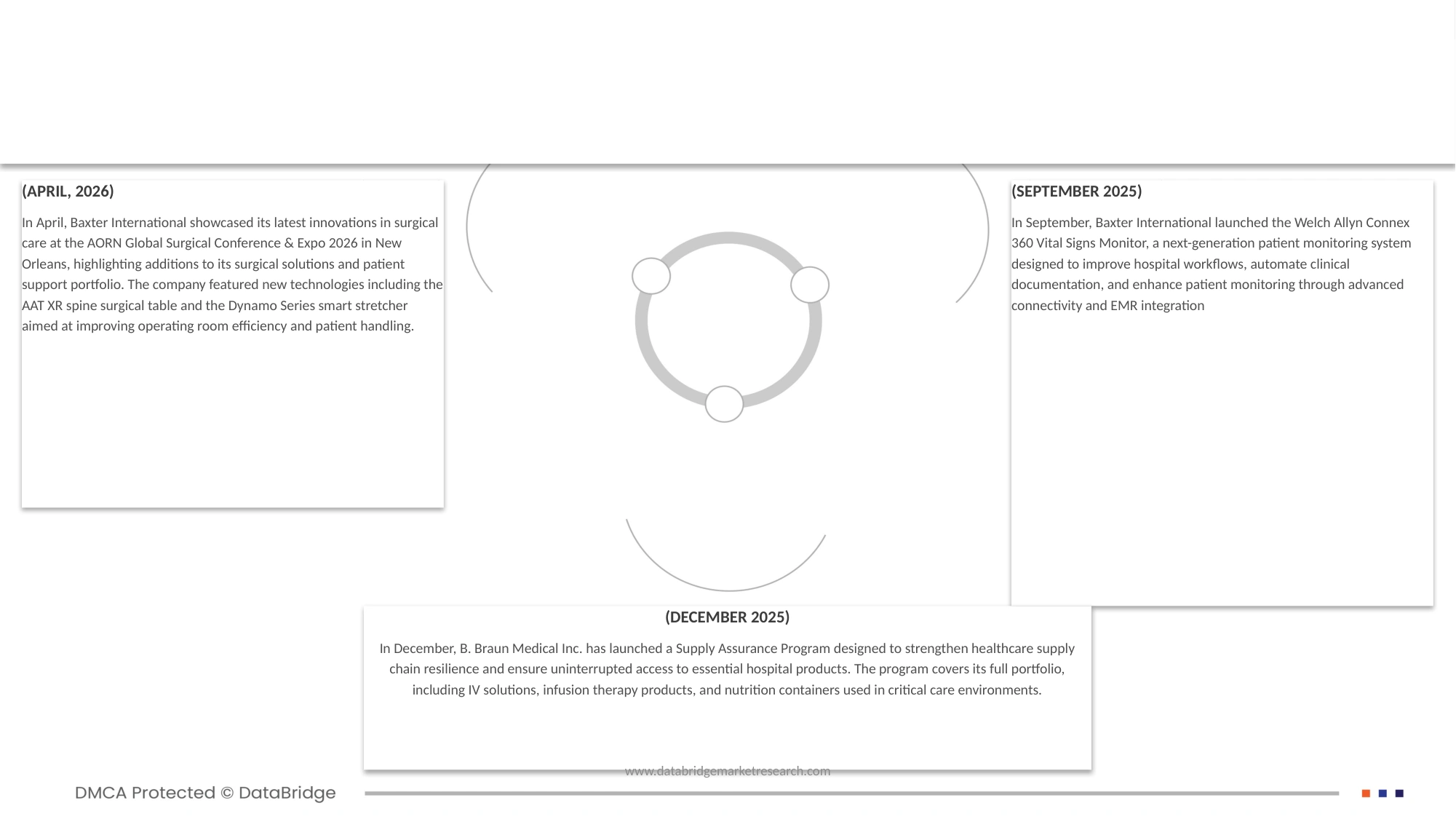
- In April, Baxter International showcased its latest innovations in surgical care at the AORN Global Surgical Conference & Expo 2026 in New Orleans, highlighting additions to its surgical solutions and patient support portfolio. The company featured new technologies including the AAT XR spine surgical table and the Dynamo Series smart stretcher aimed at improving operating room efficiency and patient handling. These advancements are expected to strengthen Baxter’s market position by enhancing surgical workflow efficiency, improving patient safety outcomes, and supporting broader adoption of its advanced perioperative solutions.
- In October 2024, B. Braun Medical Inc. announced plans to increase IV fluid production by 20% at its U.S. facilities to address nationwide shortages and strengthen hospital supply continuity for infusion therapy and nutrition support products. This expansion supports healthcare providers by improving availability of critical IV and clinical nutrition supplies during high-demand periods. It will benefit B. Braun by strengthening its position in the hospital infusion and nutrition market, increasing product availability, and building long-term trust with healthcare providers.
- In February, Nestlé Health Science announced the inclusion of its nutritional products under an exceptional reimbursement framework within Portugal’s public health system, allowing eligible products to be partially or fully covered by the National Health Service. This regulatory decision strengthens patient access to clinical nutrition solutions and supports integration of medical nutrition into formal healthcare reimbursement pathways. This will benefit the company by improving product accessibility, expanding prescription-based demand, and reinforcing its position within the reimbursed clinical nutrition market
- In May, Danone is investing €70 million in France to expand its Steenvoorde plant for Nutricia oral nutritional supplements. The project boosts capacity for patients with disease-related malnutrition and includes sustainability upgrades like a biomass boiler to reduce emissions and improve efficiency. This investment will strengthen Danone’s medical nutrition capacity, supporting long-term growth in a high-demand healthcare nutrition segment.
For more detailed information about the global microvillus inclusion disease market report, click here – https://www.databridgemarketresearch.com/reports/global-microvillus-inclusion-disease-market