



Alemanha Segurança Calçado Mercado, Por tipo de produto (Tégua de proteção, Calçado de proteção Metatarsal, Calçado de proteção de risco elétrico, Calçado químico ou impermeável, Calçado resistente ao calor ou ao fogo, Calçado resistente ao escorregamento, Calçado de segurança do esporte, Outros), Material (Leather, Borracha, Plástico, Têxtil, Outros), Gênero (Homens, Mulheres, Unisex), Indústria (Óleo e Gás, Indústria Agrícola, Indústria Química, Indústria Construção, Indústria Metalífera, Indústria Alimentar, Indústria Transporte, Indústria de Segurança, Indústria Mineira, Indústria Farmacêutica, Indústria Eletrônica, Outros), Canal de Distribuição (Non-Store Based, Loja, Outros) - Tendências e Previsão da Indústria para 2033
Tamanho do mercado de calçados de segurança Alemanha
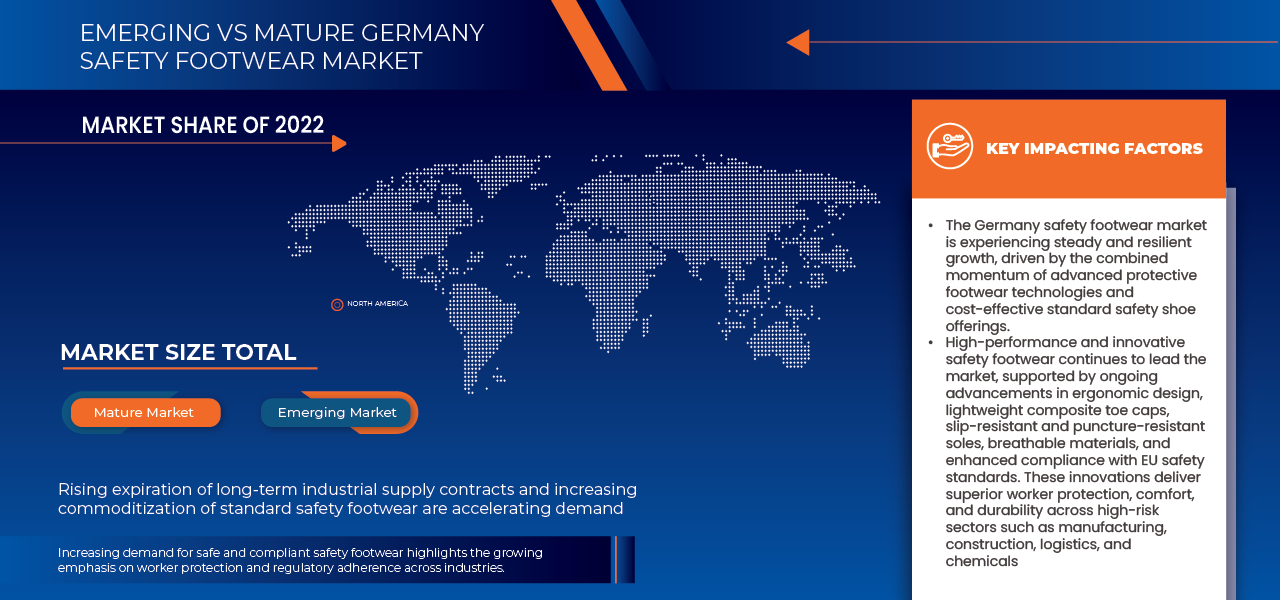
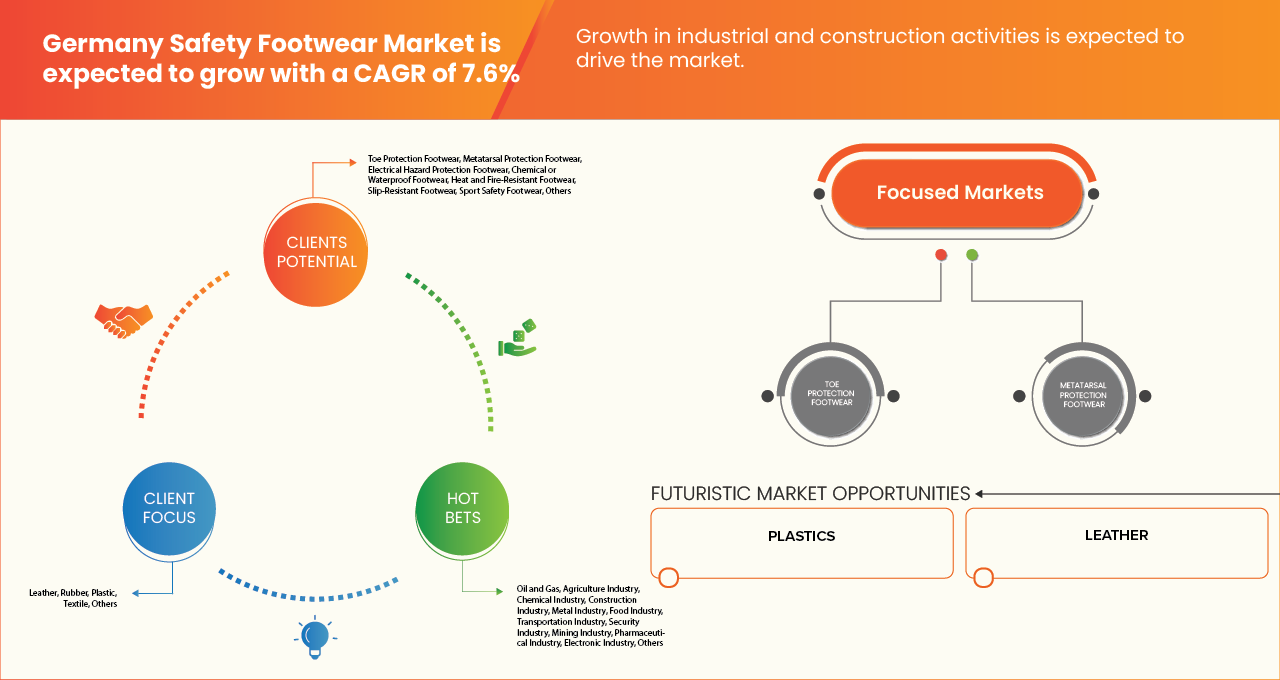
- De acordo com a Data Bridge Market Research Analysis, o mercado de calçados de segurança da Alemanha deverá chegar a USD 1706,01 milhões até 2033 de USD 954,94 milhões em 2026, crescendo com um CAGR substancial de 7,6% no período de previsão de 2026 a 2033.
- O mercado de calçados de segurança da Alemanha é impulsionado por uma grande força de trabalho qualificada, conformidade de segurança obrigatória e fortes redes industriais e logísticas que suportam a demanda contínua.
- Redes
Tamanho e previsão do mercado
- Alemanha Valor de mercado (2026):954,94 milhões de USD
- Valor de mercado previsto (2033):1706,01 milhões de USD
- Previsão CAGR (2027-2033):7.6%
Alemanha Análise do mercado de calçados de segurança
- A atividade crescente na fabricação, indústria automobilística, construção, logística, energia e produtos químicos está aumentando significativamente a demanda por calçados de segurança certificados em toda a Alemanha, apoiados por rigorosos requisitos de segurança no local de trabalho.
- A aplicação das normas de segurança no trabalho pelo Governo e pela indústria (EN ISO 20345 e EU PPE Regulation) continua a exigir a utilização de calçado de protecção em ambientes de trabalho perigosos, mantendo uma procura de substituição consistente.
- Altos custos de trabalho e produção, juntamente com pressão para equilibrar conforto, durabilidade e sustentabilidade, colocam desafios de custos para os fabricantes que operam na Alemanha.
- Avanços tecnológicos em materiais e design, incluindo compósitos leves, solas anti-fadiga, solas resistentes ao deslizamento e construção ergonômica, estão aumentando o conforto e produtividade dos trabalhadores, impulsionando atualizações de produtos.
- A adopção crescente de canais de vendas digitais, incluindo plataformas de comércio electrónico e modelos directamente ao consumidor, está a melhorar a acessibilidade ao mercado e a permitir que as marcas cheguem mais eficazmente às PME e aos trabalhadores individuais.
- As tendências de sustentabilidade e design ecológico estão reformulando o desenvolvimento do produto, com os fabricantes usando cada vez mais materiais reciclados, couro ambientalmente responsável e processos de produção eficientes em termos energéticos para atender às metas da ESG corporativa.
- Espera-se que o segmento de calçados de segurança domine o Mercado de Calçados de Segurança da Alemanha, representando a maior parte de mercado de 29,82% em 2026, impulsionado pela alta utilização nas indústrias de construção, fabricação, logística e automotiva, onde calçado leve e todo o dia é preferido sobre botas pesadas.
Segmentação do mercado de calçados de segurança
|
Atributos |
Alemanha Segurança Calçado Mercado Insights |
|
Segmentos Cobertos |
|
|
Países abrangidos |
|
|
Jogadores do mercado chave |
|
|
Oportunidades de Mercado |
|
|
Informações sobre o Valor Adicionado |
Além dos insights sobre cenários de mercado, como valor de mercado, taxa de crescimento, segmentação, cobertura geográfica e principais atores, os relatórios de mercado curados pela Data Bridge Market Research também incluem análise de especialistas de profundidade, epidemiologia de pacientes, análise de pipelines, análise de preços e marco regulatório |
Alemanha Tendências do mercado de calçados de segurança
“Aumento das actividades de desenvolvimento de infra-estruturas e construção sustentável“
- O aumento das actividades de desenvolvimento de infra-estruturas e as despesas de construção sustentadas em toda a Alemanha são factores fundamentais para o crescimento do mercado alemão do calçado de segurança, uma vez que os projectos em grande escala aumentam a necessidade de protecção dos trabalhadores em locais de trabalho activos. Prevê-se que o aumento da adoção de calçados de segurança entre as instalações de fabricação, logística, serviços públicos e gestão de resíduos e água, juntamente com o seu papel na redução de lesões no local de trabalho e custos de compensação associados, conduza ainda mais à expansão do mercado.
- As principais restrições que podem afectar negativamente o mercado alemão do calçado de segurança incluem preocupações relacionadas com o conforto prolongado do desgaste, potenciais problemas de saúde ou ambientais relacionados com materiais e adoção inconsistente de projetos de proteção avançados em empresas menores. A sensibilização limitada para a selecção adequada de calçados para riscos específicos no local de trabalho pode também restringir a penetração óptima no mercado.
- Prevê-se que a crescente ênfase nas práticas de fabrico sustentáveis e o crescente interesse em materiais ecológicos, recicláveis e leves para calçado de segurança criem novas oportunidades no mercado alemão de calçado de segurança. Além disso, regulamentos mais rigorosos em matéria de segurança no trabalho e o enfoque do governo no bem-estar dos trabalhadores estão a incentivar os empregadores a melhorar as artes de protecção. No entanto, a seleção inadequada ou o uso de calçado de segurança, a variação nas práticas de conformidade e as flutuações nos preços das matérias-primas, como couro, borracha e polímeros, devem colocar desafios ao crescimento do mercado.
- Em março de 2022, o grupo uvex expandiu seu portfólio de calçados de segurança na Alemanha, introduzindo sapatos de segurança ergonomicamente otimizados fabricados em sua instalação em Lüneburg. Os produtos recém-lançados foram projetados para melhorar o conforto do usuário durante longas horas de trabalho, respeitando as normas de segurança EN ISO, apoiando indústrias como construção, fabricação e logística. Esta expansão reforçou a posição da uvex como fornecedor doméstico focado em soluções de calçado de proteção de alta qualidade, centradas no trabalhador.
- Em outubro de 2021, a Elten GmbH, fabricante alemã de calçados de segurança, lançou uma nova gama de sapatos de segurança leves que incorporam materiais respiráveis e tecnologia de sola resistente ao deslizamento. A linha de produtos foi desenvolvida em resposta à crescente demanda de setores industriais e de armazenamento de calçados que reduz a fadiga sem comprometer o desempenho de segurança. A introdução apoiou a melhoria da conformidade com a segurança no local de trabalho, ao mesmo tempo que aborda preocupações relacionadas com o conforto entre os trabalhadores
Alemanha Segurança Calçado Mercado Dinâmica
Controlador
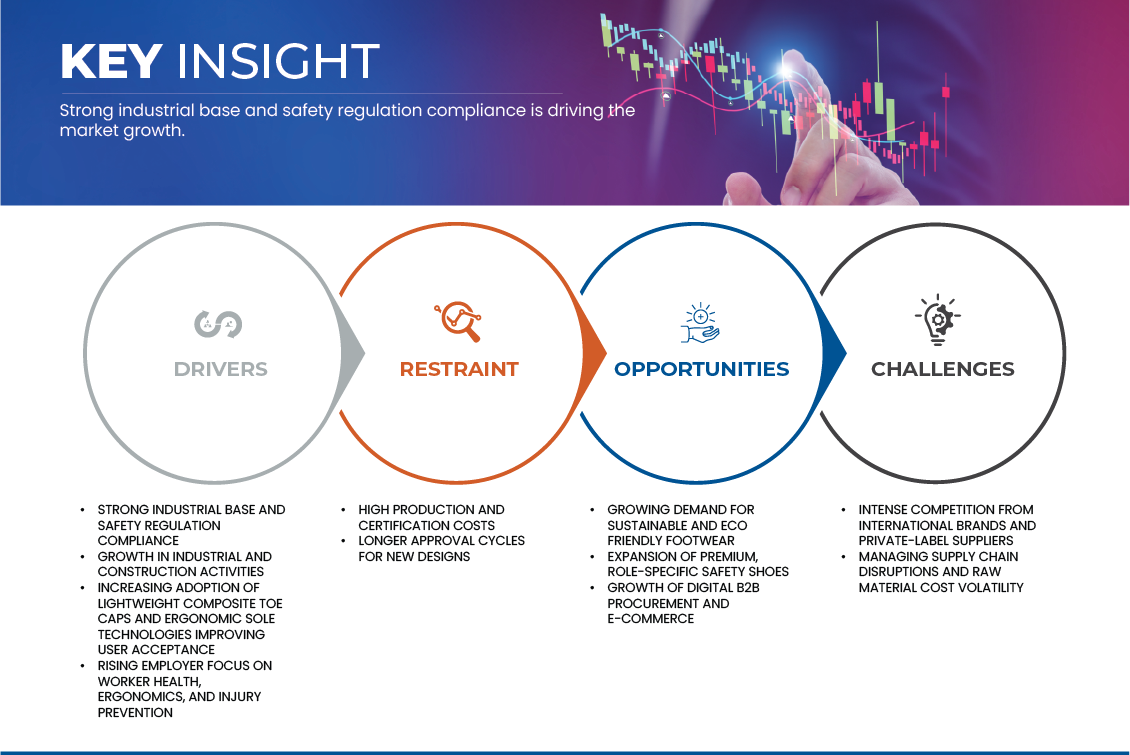
Base industrial forte e conformidade da regulamentação de segurança
- A posição da Alemanha como a maior economia industrial da Europa, apoiada por uma forte base de fabrico que abrange os sectores automóvel, das máquinas, da construção, dos produtos químicos, da logística e da energia, tem sido um motor fundamental da procura sustentada de calçados de segurança. Uma parte significativa da mão-de-obra opera em ambientes com risco profissional elevado, em que o calçado de protecção não é opcional, mas sim uma exigência regulamentar. Isso resultou em o calçado de segurança ser incorporado como um componente central da conformidade no local de trabalho e estratégias de redução de riscos entre as indústrias.
- A estrita aplicação das normas de segurança no trabalho — nomeadamente as normas EN ISO 20345 ao abrigo da Lei Alemã sobre Segurança e Saúde no Trabalho (Arbeitsschutzgesetz) — determina o uso de calçados de segurança certificados que oferecem características como protecção dos dedos, resistência ao deslizamento, resistência à penetração, propriedades antiestáticas e absorção de energia. Os empregadores são legalmente responsáveis por fornecer conformidadeequipamento de protecção individual (PPE), que se traduz diretamente em aquisição consistente e recorrente de calçado de segurança. Além disso, a forte presença alemã de grandes empregadores e sindicatos industriais reforça ainda mais a adesão às normas de segurança, limitando a substituição por alternativas não certificadas ou de baixa qualidade.
- Em janeiro de 2024, o Instituto Federal Alemão de Segurança e Saúde no Trabalho (BAuA) reiterou que, nos termos da Lei de Segurança e Saúde no Trabalho (ArbSchG) e da Portaria de Uso do PPE (PSA-BV), os empregadores são legalmente obrigados a fornecer equipamentos de proteção individual certificados, incluindo calçado de segurança, gratuitamente aos funcionários expostos a riscos no local de trabalho. Essa obrigação regulatória sustenta diretamente a demanda contínua por calçados de segurança compatíveis nos setores industrial, de construção, logística e manufatura da Alemanha.
- Em março de 2023, a German Social Accident Insurance (DGUV) atualizou suas regras técnicas para proteção de pés e pernas, enfatizando o uso obrigatório de calçados de segurança conformes com a EN ISO 20345 em ambientes de trabalho de alto risco. Estas regras DGUV servem de referência legal para o cumprimento, reforçando a aquisição padronizada de calçados de segurança certificados pelos empregadores alemães.
- Em outubro de 2022, a Comissão Europeia, através do seu Regulamento EPI (UE) 2016/425, reafirmou que todo o calçado de segurança comercializado nos Estados-Membros da UE, incluindo a Alemanha, deve cumprir normas harmonizadas, tais como a EN ISO 20345 e a certificação CE. Este quadro regulamentar garante requisitos uniformes de desempenho em matéria de segurança e apoia a reputação da Alemanha em termos de qualidade e regulaçãosegurança industrialequipamento.
- Em abril de 2024, o uvex Safety Group, fabricante de calçados de segurança alemão, destacou em seu site corporativo que todos os sapatos de segurança uvex são desenvolvidos e testados de acordo com as diretrizes EN ISO 20345 e DGUV. A empresa enfatizou os testes internos, o design ergonômico e a inovação orientada para o cumprimento das rigorosas normas de segurança ocupacional da Alemanha, refletindo como os fabricantes nacionais alinham o desenvolvimento de produtos com a aplicação da regulamentação.
- Em conclusão, a vasta paisagem industrial da Alemanha, combinada com regras de segurança profissional rigorosamente aplicadas, cria um ambiente estruturalmente resistente e não discriminatório de procura de calçado de segurança. A obrigação legal de cumprir as normas EN ISO 20345, reforçadas pelas autoridades nacionais e pela regulamentação a nível da UE, garante que o calçado de segurança certificado continua a ser uma categoria essencial de contratos públicos e não um item facultativo para os custos. Esta certeza regulamentar, apoiada pela forte supervisão institucional e pelo comportamento do empregador orientado para a conformidade, não só sustenta a procura de substituição estável, mas também incentiva a inovação contínua dos produtos pelos fabricantes nacionais, solidificando o calçado de segurança como um segmento a longo prazo e orientado para a conformidade no ecossistema industrial da Alemanha.
Restrição/Desafio
Custos elevados de produção e certificação
- Os elevados custos de produção e certificação continuam a ser uma restrição notável no mercado alemão do calçado de segurança, uma vez que os fabricantes suportam despesas substanciais para garantir que os produtos cumprem normas de segurança rigorosas e expectativas de qualidade. O calçado de segurança vendido na Alemanha deve cumprir as normas EN ISO 20345 e o Regulamento EPI da UE (UE) 2016/425, exigindo testes laboratoriais extensivos para resistência ao impacto, compressão, resistência à penetração, desempenho de deslizamento e outros critérios de proteção. Esses processos de certificação envolvem testes repetidos, auditorias de qualidade e documentação, todos os quais aumentam os prazos de desenvolvimento e estruturas de custos, especialmente para projetos novos ou inovadores.
- Os fabricantes também enfrentam custos elevados de material devido ao uso de componentes premium, tais como tampas de dedão compostas leves, meias solas resistentes à punção, sistemas de amortecimento ergonômicos e solas avançadas resistentes ao deslizamento. Estes materiais, juntamente com investimentos em tecnologias de fabrico automatizadas e formação de mão-de-obra qualificada, impulsionam os custos de produção mais elevados do que o calçado não classificado. Os pequenos e médios produtores, em particular, podem lutar para absorver essas despesas, reduzindo sua capacidade de competir sobre o preço contra alternativas importadas que oferecem proteção básica a custos unitários mais baixos.
- Em 2024, de acordo com o uvex Safety Group, o investimento em testes laboratoriais em várias fases e auditorias internas de qualidade para sapatos certificados EN ISO 20345 S3 aumentou os custos de produção em mais de 10%, destacando o fardo financeiro de garantir a conformidade, mantendo a segurança avançada e as características ergonômicas.
- Em 2023, a ELTEN GmbH relatou, em sua revisão anual, que o aumento dos custos de tampas compostas, meias-solas resistentes à punção e sistemas ergonómicos de amortecimento levaram a um aumento de 12–15% nos custos médios de produção unitários para modelos S3 e ESD, demonstrando as pressões de custo associadas à adoção de material premium.
- Em 2023, o Ministério Federal da Economia e da Ação Climática (BMWK) alemão confirmou que os fabricantes de EPI regulamentados, incluindo calçado de segurança, atribuem uma proporção mais elevada de orçamentos de I&D aos processos de certificação e conformidade do que os segmentos de calçado não regulamentados, indicando desafios de custos operacionais a longo prazo para os produtores menores.
- Em 2025, de acordo com o Grupo HAIX, os investimentos contínuos em instalações de teste, treinamento de funcionários e organismos de certificação externos credenciados aumentaram os custos gerais, particularmente afetando a flexibilidade de preços para modelos de calçados de segurança orientados para exportação.
- Em 2024, o Instituto Federal Alemão de Segurança e Saúde Ocupacional (BAuA) informou que as atualizações das normas EN ISO 20345 e as regras técnicas relacionadas DGUV exigem que os fabricantes realizem uma reavaliação periódica e recertificação, impondo encargos financeiros e administrativos recorrentes aos produtores de calçado de segurança.
- Em 2024, a Comissão Europeia (Regulamento EPI da UE 2016/425) observou que as alterações às normas de segurança harmonizadas exigem frequentemente uma nova certificação dos modelos de calçado de segurança existentes, criando custos de conformidade recorrentes que restringem a agilidade do mercado, especialmente para os fabricantes de pequenas e médias dimensões.
- Em conclusão, o impacto combinado de requisitos rigorosos de certificação, obrigações de conformidade recorrentes e a utilização de materiais de proteção premium continuam a exercer uma pressão financeira significativa sobre os fabricantes de calçado de segurança na Alemanha. Embora esses custos garantam calçados de alta qualidade e conformes com a regulamentação, que protegem os trabalhadores nos setores industrial e da construção, eles também limitam a flexibilidade de preços e a agilidade do mercado, especialmente para produtores menores e médios. Consequentemente, os elevados custos de produção e certificação continuam a ser uma restrição persistente, moldando a dinâmica competitiva e influenciando a estratégia dos produtos no mercado alemão do calçado de segurança.
Alemanha Segurança Calçado Mercado Âmbito
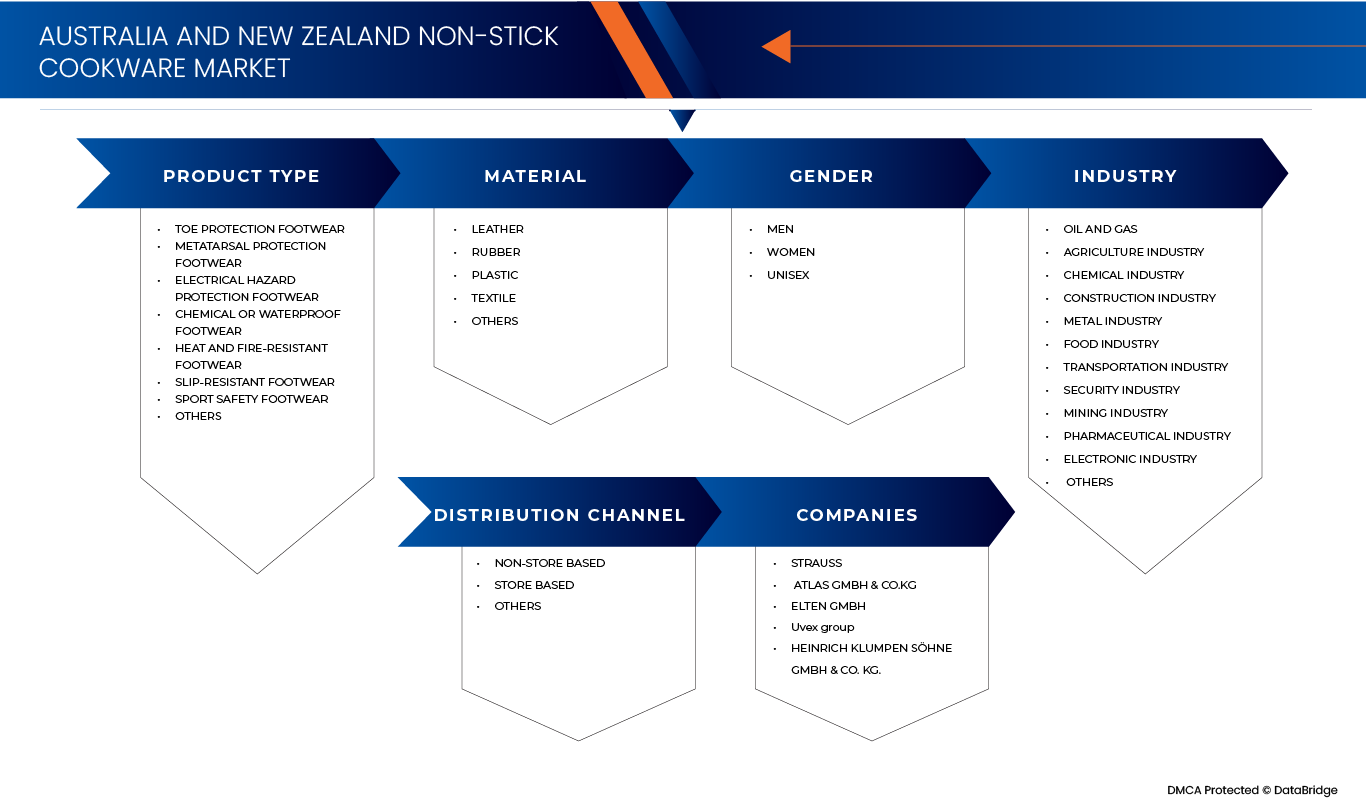
O mercado alemão de calçados de segurança é segmentado em cinco segmentos notáveis com base no tipo de produto, gênero de material, indústria e canal de distribuição
- Por tipo de produto
Com base no tipo de produto, o mercado alemão do calçado de segurança é segmentado em calçado de protecção dos pés, calçado de protecção do metatarso, calçado de protecção dos perigos eléctricos, calçado químico ou impermeável, calçado resistente ao calor e ao fogo, calçado resistente ao deslizamento, calçado de segurança do desporto, outros.
Em 2026, espera-se que o segmento de calçado de proteção dos pés domine o mercado de calçados de segurança da Alemanha com uma quota de 29,82%, impulsionado pela sua adoção generalizada nas indústrias de construção, fabricação, processamento de metais e logística, onde a proteção contra os riscos de impacto e compressão é obrigatória. Além de deter a maior quota de mercado, o calçado de protecção dos pés é também o segmento de crescimento mais rápido, apoiado pelo aumento da aplicação da regulamentação e pelo aumento da sensibilização para a segurança no local de trabalho. Estes produtos oferecem maior durabilidade, cumprimento rigoroso das normas de segurança europeias e maior confiança dos trabalhadores, tornando o calçado de protecção dos pés um requisito fundamental em ambientes industriais de alto risco.
- Por Material
Com base no material, o mercado alemão do calçado de segurança é segmentado em couro, borracha, plástico, têxteis, outros.
Em 2026, espera-se que o segmento de couro domine a quota de mercado da Alemanha Safety Footwear de 51,39% devido à sua maior durabilidade, respirabilidade e conforto, tornando-o adequado para uso industrial prolongado. O calçado de segurança baseado em couro proporciona maior resistência à abrasão, mantém flexibilidade em diferentes condições de trabalho e apoia o design ergonómico do calçado, reforçando a sua adoção generalizada através da construção, fabricação e setor industrial pesado.
- Por Sexo
Com base no género, o mercado alemão de calçado de segurança é segmentado em homens, mulheres e unissexo.
Em 2026, prevê-se que o segmento masculino domine a quota de mercado da Alemanha Safety Footwear de 71,63% devido à maior concentração da força de trabalho masculina nos setores de construção, fabricação, processamento de metais e indústria pesada. O calçado de segurança masculino é amplamente adotado devido à sua disponibilidade em uma ampla gama de projetos de proteção, capacidades de suporte de carga e cumprimento de rigorosas normas de segurança no local de trabalho. No entanto, as mulheres e os segmentos unissex estão a ganhar força constante, com o aumento da participação da mão-de-obra feminina e a crescente procura de calçados de segurança ergonómicos, incluindo dimensões, em diversas indústrias alemãs.
- Por Indústria
Com base na indústria, o mercado de calçados de segurança da Alemanha é segmentado em petróleo e gás, indústria agrícola, indústria química, indústria da construção, indústria metalúrgica, indústria de alimentos, indústria de transporte, indústria de segurança, indústria de mineração, indústria farmacêutica, indústria eletrônica, outros.
Em 2026, prevê-se que o segmento da indústria da construção domine a quota de mercado da Alemanha Safety Footwear de 31,83% devido ao desenvolvimento contínuo de infraestrutura, regulamentos rigorosos de segurança no local de trabalho e alta exposição dos trabalhadores a riscos mecânicos, elétricos e de deslizamento em diversos ambientes de construção.
- Por Canal de Distribuição
Com base no canal de distribuição, o mercado alemão de calçado de segurança é segmentado em não-armazenagem, com base em lojas, outros.
Em 2026, prevê-se que o segmento não-armazenagem domine a quota de mercado da Alemanha Safety Footwear de 63,51% devido à forte presença de redes de varejo organizadas, fácil acessibilidade para compradores industriais e comerciais, e a capacidade de fornecer acessórios e demonstrações personalizadas, enquanto o segmento não-armazenagem está testemunhando crescimento constante devido ao aumento da adoção de plataformas on-line e canais de comércio eletrônico para aquisição conveniente e seleção de produtos mais ampla.
Alemanha Segurança Calçado Market Share
Alguns dos principais operadores do mercado alemão de calçados de segurança estão listados abaixo:
- Engelbert Strauss Inc.(Alemanha)
- ATLAS GmbH & Co.KG(Alemanha)
- ELTEN GmbH (Alemanha)
- Grupo de Segurança UVEX (Alemanha)
- Heinrich Klumpen Söhne GmbH & Co. KG (Alemanha)
- Indústrias Bata(Países Baixos)
- Aigle(França)
- Stabilus Safety GmbH (Alemanha)
- LUPOS® Gmbh, (Alemanha)
- Sapatos de segurança FTG Srl, (Itália)
- Portwest UC (Irlanda)
- Talão de calçado,
- GRUPO HAIX (Alemanha)
- COFRA S.r.l. (Itália)
Últimos desenvolvimentos na Alemanha Segurança Calçado Mercado
- Durante 2024, Engelbert Strauss continuou sua estratégia de lançamentos bianuais de calçados de segurança, alinhados com as coleções Primavera/Verão e Outono/Inverno. Esses lançamentos enfatizaram design moderno, materiais leves e conformidade EN ISO 20345, visando construção, logística e ofícios qualificados. Em 2025, a empresa reforçou ainda mais seu modelo de varejo direto ao consumidor e comércio eletrônico na Alemanha, apoiado por investimentos em infraestrutura logística e centros de experiência de marca. As iniciativas de sustentabilidade, incluindo parcerias de fornecedores de longo prazo e fornecimentos responsáveis, permaneceram como foco central ao longo desse período.
- Em 2024, a ATLAS manteve a sua posição como um dos maiores fabricantes europeus de calçado de segurança, centrando-se na produção de alta capacidade na sua instalação Dortmund, reforçando o seu posicionamento “Made in Germany”. Ao longo de 2025, a empresa enfatizou a otimização de processos, automação e produção de qualidade consistente, ao invés de grandes mudanças de portfólio. A ATLAS continuou a fornecer grandes clientes industriais nos setores de construção, indústria automobilística, manufatura e logística, beneficiando-se do aumento da demanda por calçados de segurança certificados.
- Em 2024, a ELTEN acelerou a implementação da sua estratégia de sustentabilidade ELTEN LOOP, introduzindo modelos adicionais de calçado de segurança utilizando materiais reciclados e ambientalmente responsáveis. A empresa reforçou seu posicionamento no ESG, ganhando reconhecimento por meio de altas classificações de sustentabilidade e RSE, o que aumentou o apelo entre compradores corporativos e industriais. Em 2025, a ELTEN reforçou a visibilidade da marca através da participação em grandes exposições industriais, como a A+A Düsseldorf, enquanto continuou a inovação incremental em conforto, durabilidade e design ecológico dentro de sua gama de calçados de segurança premium.
- Durante o ano de 2024, a UVEX expandiu seu foco em calçados de segurança leves e ergonómicos, integrando sistemas de sola avançados e projetos redutores de fadiga para suportar longas horas de trabalho em ambientes industriais. Em 2025, a UVEX entrou em uma nova fase estratégica após o investimento em capital privado, visando acelerar o crescimento, a inovação e a expansão internacional. Espera-se que este desenvolvimento fortaleça a carteira de calçados de segurança da UVEX através de um maior investimento em I&D, de uma inovação material sustentável e de um amplo alcance do mercado, mantendo simultaneamente o seu património de engenharia alemão.
- Ao longo de 2024, a HAIX continuou a se concentrar em calçados de segurança de alto desempenho, especialmente para aplicações industriais, de utilidade e de serviços de emergência. O desenvolvimento do produto enfatizou o desempenho técnico, durabilidade, resistência ao deslizamento e conforto ergonômico. Em 2025, a HAIX manteve sua estratégia de refinamento incremental de produtos em vez de grandes mudanças corporativas, reforçando sua reputação como fabricante especialista. A continuação da produção europeia e padrões de qualidade rigorosos apoiaram uma forte procura de utilizadores profissionais e industriais na Alemanha.
SKU-
Obtenha acesso online ao relatório sobre a primeira nuvem de inteligência de mercado do mundo

- Painel interativo de análise de dados
- Painel de análise da empresa para oportunidades de elevado potencial de crescimento
- Acesso de analista de pesquisa para personalização e customização. consultas
- Análise da concorrência com painel interativo
- Últimas notícias, atualizações e atualizações Análise de tendências
- Aproveite o poder da análise de benchmark para um rastreio abrangente da concorrência
Índice
1 INTRODUÇÃO
1.1 OBJECTIVOS DO ESTUDO
1.2 DEFINIÇÃO DE MERCADO
1.3 SÍNTESE DO MERCADO DA SEGURANÇA ALEMANHA
1.4 LIMITAÇÕES
1.5 MERCADOS ABRANGADOS
2 SEGMENTAÇÃO DO MERCADO
2.1 MERCADOS COBERTOS
2.2 ÂMBITO GEOGRÁFICO
2.3 ANOS CONSIDERADOS PARA O ESTUDO
2.4 MOEDA E PREÇOS
2.5 MODELO DE VALIDAÇÃO DE DADOS TRIPOD DBRR
2.6 MODELIZAÇÃO MULTIVARIADA
2.7 INTERVENÇÕES PRIMÁRIAS COM OPINIÇÕES-CHAVE
2.8 GRIDE DE POSIÇÃO DO MERCADO DA DBRR
2.9 GRIDE DE CAPA DE APLICAÇÃO DO MERCADO
2. 1 ANÁLISE DA PARTICIPAÇÃO DOS VENDANTES
2.11 FONTES SEGUNDÁRIAS
2.12 ASSUNTOS
3 RESUMO
4 INSIGHT
4.1 5 FORÇAS DO PORTRO
4.1.1 AMEAÇA DAS NOVAS ENTRADAS
4.1.2 PROPOSTA DE COMERCIALIZAÇÃO DOS FORNECIMENTOS
4.1.3 COMERCIALIZAÇÃO DE COMPRAÇÕES
4.1.4 AMEAÇA DOS SUBSTITUTOS
4.1.5 RIVALRIA COMPETITTIVA
4.2 TRACTOR DE INOVAÇÃO E ANÁLISE ESTRATÉGICA – MERCADO DA SEGURANÇA ALEMANHA
4.2.1 ANALISE DAS ALIANÇAS ESTRATÉGICAS
4.2.2 EMPRESAS COMUNS
4.2.3 RISCOS E AQUISIÇÕES
4.2.4 LICENÇA E PARCERIA
4.2.5 COLABORAÇÕES TECNOLOGIA
4.2.6 DIVOS ESTRATÉGICOS
4.2.7 NÚMERO DE PRODUTOS NO DESENVOLVIMENTO
4.2.8 Fase do DESENVOLVIMENTO
4.2.9 Cronologias e milhas
4.2.10 ESTRATÉGIAS E MÉTODOS DE INOVAÇÃO
4.2.11 AVALIAÇÃO DOS RISCOS E MITIGAÇÃO
4.2.12 FUTUROS
4.2.13 CONCLUSÃO
4.2.14 EXPOSIÇÃO: -
4.2.15 EXPOSIÇÃO: -
4.2.16 EXPOSIÇÃO: -
4. 3 ANÁLISE DA CHAIN
4.3.1 INTRODUÇÃO
4.3.2 VISÃO GERAL
4.3.3 ORÇAMENTO E CONTRATOS MATERIAIS RAW
4.3.4 TRANSFORMAÇÃO E FABRICO DO PRODUTO (PRODUÇÃO)
4.3.5 LOGÍSTICAS DA CHAIN & DISTRIBUIÇÃO (TRANSPORTAÇÃO)
4.3.6 CUSTO LOGÍSTICO
4.3.7 CANAIS DE RETALHO E DE COMERCIALIZAÇÃO (DISTRIBUIÇÃO & VENDAS)
4.3.8 IMPORTÂNCIA DOS SERVIÇOS DE LOGÍSTICA
4.3.9 CONCLUSÃO
4.4 COBERTURA MATERIAL RAW
4.4.1 LEATER
4.4.2 RUBBER E POLYURETHANE TERMOPLASTICO (TPU)
4.4.3 METAIS E MATERIAIS COMPOSTOS
4.4.4 FÁBRICOS TÊXTEIS E SINTÉTICOS
4.4.5 MATÉRIAS DE CONDUÇÃO E DE ABASTECIMENTO
4. 5 ANÁLISE DA CHAIN VALOR
4.5.1 ORIGEM MATERIAL RAW
4.5.2 DESIGN E DESENVOLVIMENTO DO PRODUTO
4.5.3 FABRICAÇÃO E PRODUÇÃO
4.5.4 DISTRIBUIÇÃO E LOGÍSTICA
4.5.5 COMERCIALIZAÇÃO E VENDA
4.5.6 APOIO AO APÓS AS VENDAS
4.5.7 CONCLUSÃO
4.6 REPARTIÇÃO DA ANÁLISE DOS CUSTOS DO MERCADO DA SEGURANÇA ALEMANHA
4.6.1 INTRODUÇÃO
4.6.2 DESPESAS DE MATERIAL E DE FABRICO RAW
4.6.3 DESPESAS DE ACONDICIONAMENTO SECUNDÁRIO
4.6.4 DESPESAS DE INVESTIGAÇÃO, QUALIDADE E REGULAMENTAÇÃO
4.6.5 DESPESAS AMBIENTAIS, DE ENERGIA E DE SUSTENTABILIDADE
4.6.6 EMERGÊNCIA DOS CUSTOS
4.6.7 CONCLUSÃO
4.7 CENÁRIO DE MARGENS PROFISSIONAIS DO MERCADO DA SEGURANÇA ALEMANHA
4.7.1 INTRODUÇÃO
4.7.2 GESTÃO DOS CUSTOS E FORMAÇÃO DE MARGEM
4.7.3 DIFERENCIAÇÃO DA TECNOLOGIA E ESTRATÉGIA DO PRODUTO
4.7.4 INFLUÊNCIA DA CHAIN E DA DISTRIBUIÇÃO
4.7.5 INFLUÊNCIAS REGULAMENTARES E MACROECONÓMICAS
4.7.6 EMERGÊNCIAS E RESPOSTAS ESTRATÉGICAS
4.7.7 CONCLUSÃO
4. 8 ANÁLISE PRICÁRIA
4.9 CRITÉRIOS DE SELECÇÃO DE VENDOR
4.9.1 CONFORMIDADE DE CERTIFICAÇÃO
4.9.2 QUALIDADE DO PRODUTO
4.9.3 HABILIDADE ADUANEIRA
4.9.4 COST & COMPETITIVIDADE COMERCIAL
4.9.5 PRÁTICAS DE REGULAMENTAÇÃO, SEGURANÇA E SUSTENTABILIDADE
4.8.6 FLEXIBILIDADE DA COLABORAÇÃO, INOVAÇÃO E PROGRAMA
4.1 OUTLOOK
4.10.1 EMPRESA VS VISÃO GERAL
4.11 ALTERAÇÕES CLIMÁTICAS CENÁRIO
4.11.1 QUESTÕES AMBIENTAIS
4.11.2 RESPOSTA DA INDÚSTRIA
4.11.3 PAPEL DO GOVERNO
4.11.4 RECOMENDAÇÕES DE ANÁLISE
4.12 COMPRAÇÕES DE CONSUMIDORES
4.13 INTRODUÇÃO
4.13.1 Em relação ao conforto, à ergonomia e à protecção do progresso
4.13.2 ENFÁSIA REFORÇADA SOBRE A CONFORMIDADE REGULAMENTAR E A CREDIBILIDADE DA FRANÇA
4.13.3 SENSITIVIDADE DE PREÇOS E EXECUÇÃO DE CONTRATOS
4.13.4 INFLUÊNCIA DOS CANAIS DE DISTRIBUIÇÃO E CONTRATOS DIGITOS
4.13.5 IMPORTÂNCIA DA RESISTÊNCIA AO FORNECIMENTO E CONSISTÊNCIA DO PRODUTO
4.13.6 PAPEL DOS SERVIÇOS ADIADOS AO VALOR
4.13.7 SUSTENTABILIDADE, PRÁTICAS ÉTICAS E PREFERÊNCIAS DE PRÉMIO
4.13.8 INFLUÊNCIA DO TIPO DE INDÚSTRIA E CULTURA DE LOCAL DE TRABALHO
4.13.9 CONCLUSÃO
4.14 ANÁLISE DO ECOSSISTEMA DA INDÚSTRIA
4.14.1 EMPRESAS PROMINENTES
4.14.2 Pequenas e médias empresas
4.14.3 Utilizadores finais
4.15 AVANCAMENTOS TECNOLÓGICOS
4.15.1 MATERIAIS AVANÇADOS E PROTECÇÃO DA PELE LUZ
4.15.2 MELHORES ERGONÓMICOS E BIOMECÂNICOS
4.15.3 TECNOLOGIAS E INTEGRAÇÃO DOS SENSores
4.15.4 INOVAÇÕES SUSTENTÁVEIS E ECONÓMICAS
4.15.5 FABRICAÇÃO DE PRECISÕES E PROJECTOS DIGITAIS
5 TArifAS E SEU IMPACTO NO MERCADO DA SEGURANÇA ALEMANHA
5.1 INTRODUÇÃO
5.2 TAXAS ANUAIS DOS PAÍSES PARCEIROS DA ALEMANHA E DOS PAÍSES PARCEIROS-CHAVE
5.3 OUTLOOK: PRODUÇÃO LOCAL VS. CONFIANÇA DE IMPORTAÇÃO NA ALEMANHA
5.4 CRITÉRIOS DE SELECÇÃO DE VENDOR DINÂMICA NA ALEMANHA
5.5 IMPACTO SOBRE A CHAIN DE FORNECIMENTO DE SEGURANÇA DA ALEMANHA
5.5.1 CONTRATOS MATERIAIS RAW
5.5.2 FABRICAÇÃO E PRODUÇÃO
5.5.3 LOGÍSTICA E DISTRIBUIÇÃO
5.5.4 PREÇOS E POSIÇÃO DO MERCADO NA ALEMANHA
5.6 PARTICIPANTES DA INDÚSTRIA: MOVIMENTOS PROACTIVOS NA ALEMANHA
5.6.1 OPTIMIZAÇÃO DA CHAINA DE FORNECIMENTO
5.6.2 ESTABELECIMENTOS DE EMPRESAS COMUM
5.7 IMPACTO SOBRE PREÇOS NA ALEMANHA
5.7.1 INCLINAÇÃO REGULAMENTAR QUE AFEITA A ALEMANHA
5.7.1 SITUAÇÃO GEOPOLÍTICA
5.7.2 PARCERIAS COMERCIAIS RELEVANTES À ALEMANHA
5.7.2.1 ACORDOS DE COMÉRCIO LIVRE
ESTABELECIMENTOS DE ALIANÇA
5.7.3 ACREDITAÇÃO DE ESTATUTO (INCLUINDO NMF)
5.7.4 CURSO DOMÉSTICO DE CORREÇÃO NA ALEMANHA
5.7.4.1 REGIMES INCENTIVOS A FAVOR DE PRODUÇÃO
5.7.4.2 ESTABELECIMENTO DOS PARQUES INDUSTRIAIS E ALIMENTARES FABRICANTES
5.8 CONCLUSÃO
5.8.1 EXPLICAÇÃO:
6 COBERTURA REGULAMENTAR
6.1 CÓDIGOS DO PRODUTO
6.2 NORMAS CERTIFICADAS
6.3 NORMAS DE SEGURANÇA
6.3.1 MATERIAL E ARMAZENAMENTO
6.3.2 TRANSPORTES E CUIDADOS
6.3.3 IDENTIFICAÇÃO DE RISCOS
7 VISÃO GERAL DO MERCADO
7.1 CONDUTORES
7.1.1 CONFORMIDADE ENTRE A BASE INDUSTRIAL E O REGULAMENTO DE SEGURANÇA
7.1.2 CRESCIMENTO DAS ACTIVIDADES INDUSTRIAIS E DE CONSTRUÇÃO
7.1.3 AUMENTAR A APROVAÇÃO DOS CÁPSULAS DE LUZ E DAS TECNOLOGIAS DE SOLE ERGONÔMICAS PARA MELHORAR A ACEITAÇÃO DOS UTILIZADORES
7.1.4 FUNCIONAMENTO DOS TRABALHADORES NO DOMÍNIO DA SAÚDE DOS TRABALHADORES, DA Ergonomia e DA PREVENÇÃO DO PREJUÍZO
7.2 RESTRUÇÕES
7.2.1 CUSTOS DE PRODUÇÃO E DE CERTIFICAÇÃO ALTOS
7.2.2 CICLOS DE HOMOLOGAÇÃO PARA NOVOS DESENHOS
7.3 OPORTUNIDADE
7.3.1 PROCURA DE CRESCIMENTO PARA AS VESTIAS AMIGÁVEIS SUSTENTÁVEIS E ECO
7.3.2 Expansão dos sapatos de segurança do tipo «Plate»
7.3.3 CRESCIMENTO DOS CONTRATOS DIGITAIS B2B E E-COMÉRCIO
7.4 DESAFIOS
7.4.1 CONCORRÊNCIA INTENSA DAS GRANDES INTERNACIONAIS E DOS PROVENIENTES DE TRABALHO PRIVADO
7.4.2 MANIGENÇÃO DAS DIVULGAÇÕES RELATIVAS AO FORNECIMENTO E VOLATILIDADE DO CUSTO MATERIAL RAW
8 MERCADO DA SEGURANÇA DA ALEMANHA POR TIPO DE PRODUTO
8.1 VISÃO GERAL
8,2 THE PROTECTION FOOTWEAR
8.3 Vestimentas de proteção metatarsal
8.4 Vestimenta de proteção de perigo elétrico
8.5 QUÍMICA/PROVA DE ÁGUA
8.6 Vestidos de pés resistentes ao calor e ao fogo
8.7 Vestimenta de pés resistente ao SLIP
8.8 Calças de segurança do desporto
8.9 OUTRAS
9 MERCADO DA SEGURANÇA DA ALEMANHA POR MATERIAL
9.1 VISÃO GERAL
9.2 LEATER
9.3 RUBBER
9.4 PLASTIC
9.5 TÊXTILO
9,6 OUTRAS
9.6.1 LEATER GENUINO
9.6.2 LEATER SINTÉTICO
9.6.3 RUBEIRA SINTÉTICA
9.6.4 RUBHER NATURAL
9.6.5 POLIURETHANE (PU) E POLIURETHANE FOAM
9.6.6 POLIESTRE
ACETATO DE 9.6.7 ETILENO-VINILO (EVA)
CLORIDA DE POLÍVINIL (PVC)
9.6.9 OUTROS
10 MERCADO DA SEGURANÇA ALEMANHA
10.1 VISÃO GERAL
10.2 HOMENS
10.3 MULHERES
10.4 UNISEX
11 MERCADO DA SEGURANÇA ALEMANHA POR INDÚSTRIA
11.1 VISÃO GERAL
11.2 ÓLEO & GÁS
11.2.1 ÓLEO E GÁS, POR APLICAÇÃO
11.2.1.1 EM TERCEIRO
11.2.1.2 OFF SHORE
11.2.2 ÓLEO E GÁS, POR PRODUTO
11.2.2.2.1.
Vestidos de proteção metatarsal
11.2.2.3 ELETRÓNICO PARA A PROTECÇÃO DE PERIGOS
QUÍMICA/PRODUÇÃO DE ÁGUA
11.2.2.5 AQUECIMENTO E VESTUAGEM RESISTENTE AO FOGO
Vestidos de pés resistentes ao SLIP
11.2.2.7 Calças de segurança do desporto
11.2.2.8 OUTRAS
11.3 INDÚSTRIA AGRICULTURA
11.1 TÉCNICAS DE PROTECÇÃO
Vestidos de proteção metatarsal 11.3.2
11.3.3 VESTIDO DE PROTECÇÃO ELETRÓNICA DE PERIGOS
11.3.4 QUÍMICA/PRODUÇÃO DE ÁGUA
11.3.5 Aquecedor e roupa de cama resistente ao fogo
11.3.6 Vestimenta de pés resistente ao SLIP
11.3.7 Calças de segurança desportiva
11.3.8 OUTROS
11.4 INDÚSTRIA QUÍMICA
11.4.1 TÓPICO DE PROTECÇÃO
11.4.2 Calças de proteção metatarsal
11.4.3 Vestimentas de protecção de riscos eléctricos
11.4.4 QUÍMICA/PRODUÇÃO DE ÁGUA
11.4.5 AQUECIMENTO E FUTURO RESISTENTE
11.4.6 Vestimenta de pés resistente ao SLIP
11.4.7 Vestimentas de segurança desportiva
11.4.8 OUTROS
11.5 INDÚSTRIA DE CONSTRUÇÃO
11.5.1 INDÚSTRIA DE CONSTRUÇÃO, POR APLICAÇÃO
11.5.1.1 CONSTRUÇÃO RESIDENCIAL
11.5.1.2 CONSTRUÇÃO DE ENGENHARIA
11.5.1.2.1 CONSTRUÇÃO DE ENGENHARIA, POR TIPO
11.5.1.2.1.1 Estradas
11.5.1.2.1.2 PIPELINAS
11.5.1.2.1.3 PONTES
11.5.1.2.1.4 TUNNEIS E DAMS
11.5.1.2.1.5 Vias férreas
CONSTRUÇÃO DO AEROPORTO
11.5.1.2.1.7 OUTROS
11.5.1.3 CONSTRUÇÃO COMERCIAL
11.5.1.3.1 CONSTRUÇÃO COMERCIAL, POR TIPO
11.5.1.3.1.1 OFICIAIS
11.5.1.3.1.2 FACILIDADES DE SAÚDE
INSTITUIÇÕES DE EDUCAÇÃO
11.5.1.3.1.4 HOTELES
11.5.1.3.1.5 RESTAURANTES E BARROS
RECURSOS
11.5.1.3.1.7. LABORATÓRIOS DE INVESTIGAÇÃO
11.5.1.3.1.8 OUTROS
11.5.2 INDÚSTRIA DE CONSTRUÇÃO, POR PRODUTO
11.5.2.1.
Vestidos de proteção metatarsal
11.5.2.3 Calças de proteção de perigo elétrico
11.5.2.4 QUÍMICA/PRODUÇÃO DE ÁGUA
11.5.2.5 CAVALO E CAVALO RESISTENTE AO FOGO
Vestimenta de pés resistente ao SLIP
11.5.2.7 Calças de segurança desportiva
11.5.2.8 OUTRAS
11,6 INDÚSTRIA METAL
11.6.1 VESTIDO DE PROTECÇÃO
Vestidos de proteção metatarsal 11.6.2
11.6.3 Vestimenta de proteção de perigo elétrico
11.6.4 QUÍMICA/PRODUÇÃO DE ÁGUA
11.6.5 CAVALO E VESTUAGEM RESISTENTE AO FOGO
11.6.6 Vestimenta de pés resistente ao SLIP
11.6.7 Calças de segurança desportiva
11.6.8 OUTROS
11.7 INDÚSTRIA ALIMENTAR
11.7.1 ALIMENTOS
11.7.1.1 CARNE E ALTERNATIVAS
11.7.1.2 LEITE E PRODUTOS LEITE
FRUTOS E PRODUTOS HORTÍCOLAS
11.7.1.4 PRODUTOS GRÁFICOS
11.7.1.5 OUTROS
11.7.1.6 BEBÉGIOS
11.7.1.6.1 BEVERAGEM, POR TIPO
11.7.1.6.1.NÃO - ALCOÓLICO
ÁGUA FRASCO
11.7.1.6.2.1.2 BEBIDOS SOFOS CARBONADOS (CSDS)
BEBIDAS FUNCIONAIS
BEBÉRIAS DE FRUTOS
11.7.1.6.1.1.5 DURAÇÃO DE DESPORTOS
11.7.1.6.1.6 OUTROS
11.7.1.6.1.2 ALCOÓLICO
11.7.1.6.1.2.1 CERVEJA
ESPÍRITOS
11.7.1.6.1.2.3 VINHOS
11.7.1.6.1.2.4 TEQUILA E COCKTAILS
11.7.1.6.1.2.5 CHAMPAGNE
OUTROS
11.7.2 INDÚSTRIA ALIMENTAR, POR PRODUTO
11.7.2.1 TÓPICO DE PROTECÇÃO
11.7.2.2
11.7.2.3
11.7.2.4 QUÍMICA/PRODUTO DE ÁGUA
11.7.2.5 Aquecedor e incêndio
11.7.2.6 VESTUAGEM RESISTENTE AO SLIP
11.7.2.7 Calças de segurança desportiva
11.7.2.8 OUTROS
11.8 INDÚSTRIA DOS TRANSPORTES
11.8.1 THE PROTECTION FOOTWEAR
11.8.2 Vestimenta de proteção metatarsal
11.8.3 VESTUÁRIO DE PROTECÇÃO ELETRÓNICA DE PERIGOS
11.8.4 QUÍMICA/PRODUTO DE ÁGUA
11.8.5 AQUECIMENTO E FUTURO RESISTENTE
11.8.6 VESTUÁRIOS RESISTENTES AO SLIP
11.8.7 Calças de segurança desportiva
11.8.8 OUTROS
11.9 INDÚSTRIA DE SEGURANÇA
11.9.1 THE PROTECTION FOOTWEAR
Vestidos de proteção metatarsal 11.9.2
11.9.3 Vestimentas de protecção de riscos eléctricos
11.9.4 QUÍMICA/PRODUÇÃO DE ÁGUA
11.9.5 AQUECER E FOGO
11.9.6 Vestimenta de pés resistente ao SLIP
11.9.7 Calças de segurança do desporto
11.9.8 OUTRAS
11.1 INDÚSTRIA MINEIRA
11.10.1 Vestimentas de protecção
11.10.2
11.10.3 Vestimentas de protecção de riscos eléctricos
11.10.4 QUÍMICA/PRODUÇÃO DE ÁGUA
11.10.5 AQUECIMENTO E FUTURO RESISTENTE
11.10.6.
11.10.7 Calças de segurança desportiva
11.10.8 OUTROS
11.11 INDÚSTRIA FARMACÊUTICA
11.11.1 Roupas de protecção
11.11.2 Calças de proteção metatarsal
11.11.3 Calças de proteção de perigo elétrico
11.11.4
11.11.5 AQUECIMENTO E FOGO
11.11.6 VESTUÁRIOS RESISTENTES AO SLIP
11.11.7 Calças de segurança desportiva
11.11.8 OUTROS
11.12 INDÚSTRIA ELETRÓNICA
11.12.1 TÓPICO DE PROTECÇÃO
Vestidos de proteção metatarsal 11.12.2
11.12.3 Vestimenta de proteção de perigo elétrico
QUÍMICA/PRODUÇÃO DE ÁGUA
11.12.5 AQUECER E RESISTENTE AO FOTO
11.12.6 Vestimenta de pé resistente ao SLIP
11.12.7 Calças de segurança desportiva
11.12.8 OUTROS
11.13 OUTRAS
11.13.1.
11.13.2 Vestimenta de proteção metatarsal
11.13.3 VESTUÁRIO DE PROTECÇÃO ELETRÓNICA DE PERIGOS
11.13.4 QUÍMICA/PRODUÇÃO DE ÁGUA
11.13.5 Calças de aquecimento e de incêndio
11.13.6 VESTUÁRIOS RESISTENTES AO SLIP
11.13.7 Calças de segurança desportiva
11.13.8 OUTROS
12 MERCADO DA SEGURANÇA DA ALEMANHA POR CANAL DE DISTRIBUIÇÃO
12.1 VISÃO GERAL
12.2 BASEADO NON-STORE
12.2.1 SOCIEDADES PRÓPRIAS
12.2.2 TERCEIRA PARTE
12.3 CONSERVAÇÃO BASEADA
12.3.1 SUPERMARKETS/HIPERMARKETS
12.3.2 CONSERVAÇÕES INDUSTRIAIS
12.3.3 MEMBROS EXCLUSIVOS
12.3.4 RETALHANTES INDEPENDENTES
12.3.5 MULTI BRAND MANT
12.3.6 OUTRAS
12,4 OUTRAS
13 MERCADO DA SEGURANÇA ALEMANHA
13.1 ANÁLISE DA PARTICIPAÇÃO DA EMPRESA: ALEMANHA
14 ANÁLISE SWOT
15 PERFIL DA EMPRESA
15.1 ENGELBERT STRAUSS INC
15.1.1 EMPRESA SNAPSHOT
15.1.2 PRODUTO PORTFÓLIO
15.1.3 DESENVOLVIMENTO RECENTE
15.2 ATLAS
15.2.1 EMPRESA SNAPSHOT
15.2.2 PRODUTO PORTFOLIO
15.2.3 DESENVOLVIMENTO RECENTE
15.3 ELTEN
15.3.1 EMPRESA SNAPSHOT
15.3.2 PRODUTO PORTFOLIO
15.3.3 DESENVOLVIMENTO RECENTE
15.4 GRUPO DE SEGURANÇA UVEX
15.4.1 EMPRESA SNAPSHOT
15.4.2 PRODUTO PORTFOLIO
15.4.3 DESENVOLVIMENTO RECENTE
15.5 HKS GMBH & CO. KG
15.5.1 EMPRESA SNAPSHOT
15.5.2 PRODUTO PORTFOLIO
15.5.3 DESENVOLVIMENTO RECENTE
15.6 AIGLE (A SUBSIDIÁRIO DE MAUS FRÈRES SA)
15.6.1 EMPRESA SNAPSHOT
15.6.2 PRODUTO PORTFÓLIO
15.6.3 DESENVOLVIMENTO RECENTE
15.7 ALBATROS
15.7.1 EMPRESA SNAPSHOT
15.7.2 PRODUTO PORTFÓLIO
15.7.3 DESENVOLVIMENTO RECENTE
15.8 ALFA-TEX ARBEITSSCHUTZ GMBH
15.8.1 EMPRESA SNAPSHOT
15.8.2 PRODUTO PORTFÓLIO
15.8.3 DESENVOLVIMENTO RECENTE
15.9 ARBEITSSCHUTZ-EXPRESS (ASX)
15.9.1 EMPRESA SNAPSHOT
15.9.2 PRODUTO PORTFOLIO
15.9.3 DESENVOLVIMENTO RECENTE
15.1 INDUSTRIAIS BATA
15.10.1 EMPRESA SNAPSHOT
15.10.2 PRODUTO PORTFÓLIO
15.10.3 DESENVOLVIMENTO RECENTE
15.11 COFRA S.R.L.
15.11.1 EMPRESA SNAPSHOT
15.11.2 PRODUTO PORTFÓLIO
15.11.3 DESENVOLVIMENTO RECENTE
15.12 TÁLANO DE CABEÇA
15.12.1 EMPRESA SNAPSHOT
15.12.2 PRODUTO PORTFÓLIO
15.12.3 DESENVOLVIMENTO RECENTE
15.13 SHOES DE SEGURANÇA DA FTG
15.13.1 EMPRESA SNAPSHOT
15.13.2 PRODUTO PORTFÓLIO
15.13.3 DESENVOLVIMENTO RECENTE
15.14 GRUPO HAIX
15.14.1 EMPRESA SNAPSHOT
15.14.2 PRODUTO PORTFOLIO
15.14.3 DESENVOLVIMENTO RECENTE
15.15 LUPOS® GMBH
15.15.1 EMPRESA SNAPSHOT
15.15.2 PRODUTO PORTFÓLIO
15.15.3 DESENVOLVIMENTO RECENTE
15.16 GROBHANDEL LAYER
15.16.1 EMPRESA SNAPSHOT
15.16.2 PRODUTO PORTFOLIO
15.16.3 DESENVOLVIMENTO RECENTE
15.17 PORTWEST UC
15.17.1 EMPRESA SNAPSHOT
15.17.2 PRODUTO PORTFÓLIO
15.17.3 DESENVOLVIMENTO RECENTE
15.18 CENÓLIA
15.18.1 EMPRESA SNAPSHOT
15.18.2 PRODUTO PORTFÓLIO
15.18.3 DESENVOLVIMENTO RECENTE
15.19 SEGURANÇA DE ESTABILUS GMBH
15.19.1 EMPRESA SNAPSHOT
15.19.2 PRODUTO PORTFÓLIO
15.19.3 DESENVOLVIMENTO RECENTE
15.2 TEXTIL-GROSSHANDEL UE
15.20.1 EMPRESA SNAPSHOT
15.20.2 PRODUTO PORTFÓLIO
15.20.3 DESENVOLVIMENTO RECENTE
15.21 ECOMÉRCIO ATUALIZADO
15.21.1 EMPRESA SNAPSHOT
15.21.2 PRODUTO PORTFÓLIO
15.21.3 DESENVOLVIMENTO RECENTE
15.22 GROBÂNDEO ESTOCKETIK
15.22.1 EMPRESA SNAPSHOT
15.22.2 PRODUTO PORTFOLIO
15.22.3 DESENVOLVIMENTO RECENTE
16 QUESTIONÁRIO
17 RELATÓRIOS RELACIONADOS
Lista de Tabela
QUADRO 1 MODELO DE DESPESAS DE SEGURANÇA DA ALEMANHA
QUADRO 2 ANÁLISE COMPRATIVA
QUADRO 3 EMPRESA VS VISÃO GERAL
QUADRO 4 MATRIXA DE PREFERÊNCIA DOS CONSUMIDORES
QUADRO 5 MERCADO DA SEGURANÇA DA ALEMANHA POR TIPO DE PRODUTO, 2018-2033 (USD MIL)
QUADRO 6 MERCADO DA SEGURA ALEMANHA, POR TIPO DE PRODUTO, 2018-2033 (TAIS UNIDADES)
QUADRO 7 MERCADO DA SEGURANÇA DA ALEMANHA, POR MATERIAL, 2018-2033 (USD MIL)
QUADRO 8 LEATER DA ALEMANHA NO MERCADO DAS VENDAS DE SEGURANÇA, POR TIPO, 2018-2033 (USD MIL)
QUADRO 9 ALEMANHA NO MERCADO DAS VENDAS DE SEGURANÇA, POR TIPO, 2018-2033 (USD MIL)
QUADRO 10
QUADRO 11 MERCADO DA SEGURANÇA DA ALEMANHA
QUADRO 12 MERCADO DA SEGURANÇA DA ALEMANHA
QUADRO 13 MERCADO DA SEGURANÇA DA ALEMANHA, POR INDÚSTRIA, 2018-2033 (USD MIL)
QUADRO 14 MERCADO DA SEGURANÇA DA ALEMANHA POR INDÚSTRIA, 2018-2033 (em milhares de unidades)
QUADRO 15 ÓLEO E GÁS ALEMANHA NO MERCADO DE GESTÃO DE SEGURANÇA, POR PEDIDO, 2018-2033 (USD THOUSAND)
QUADRO 16 ÓLEO E GÁS ALEMANHA NO MERCADO DE GÁS NO DOMÍNIO DA SEGURANÇA
QUADRO 17 ÓLEO E GÁS ALEMANHA NO MERCADO DAS VAGAS DE SEGURANÇA, POR PRODUTO, 2018-2033 (MIL DEUS)
QUADRO 18 ÓLEO E GÁS ALEMANHA NO MERCADO DAS VAGAS DE SEGURANÇA, POR PRODUTO, 2018-2033 (em milhares de unidades)
QUADRO 19 INDÚSTRIA DE AGRICULTURA DA ALEMANHA NO MERCADO DA SEGURA NO DOMÍNIO DA VIDA POR PRODUTO, 2018-2033 (USD MIL)
QUADRO 20 INDÚSTRIA DA AGRICULTURA ALEMANHA NO MERCADO DA SEGURANÇA NO DOMÍNIO DA VIDA, POR PRODUTO, 2018-2033 (TAIS UNIDADES)
QUADRO 21 INDÚSTRIA QUÍMICA DA ALEMANHA NO MERCADO DA SEGUÊNCIA DA VIDA, POR PRODUTO, 2018-2033 (USD MIL)
QUADRO 22 INDÚSTRIA QUÍMICA DA ALEMANHA NO MERCADO DE VIDAS DE SEGURANÇA, POR PRODUTO, 2018-2033 (em milhares de unidades)
QUADRO 23 INDÚSTRIA DE CONSTRUÇÃO DA ALEMANHA NO MERCADO DA SEGURA, POR PEDIDO, 2018-2033 (em milhares de USD)
QUADRO 24 INDÚSTRIA DE CONSTRUÇÃO DA ALEMANHA NO MERCADO DA SEGURA, POR PRODUTO, 2018-2033 (TAIS UNIDADES)
QUADRO 25 INDÚSTRIA DE CONSTRUÇÃO DE ENGENHARIA ALEMANHARIA NO MERCADO DAS VESTUAÇÕES DE SEGURANÇA, POR TIPO, 2018-2033 (USD MIL)
QUADRO 26 INSTRUÇÃO DA ALEMANHA INDÚSTRIA DE CONSTRUÇÃO NO MERCADO DAS VESTUAÇÕES DE SEGURANÇA, POR TIPO, 2018-2033 (em milhares de unidades)
QUADRO 27 INDÚSTRIA DE CONSTRUÇÃO COMERCIAL DA ALEMANHA NO MERCADO DA SEGURA, POR TIPO, 2018-2033 (em milhares de USD)
QUADRO 28 INDÚSTRIA DE CONSTRUÇÃO COMERCIAL DA ALEMANHA NO MERCADO DA SEGURA, POR TIPO, 2018-2033 (TAIS UNIDADES)
QUADRO 29 INDÚSTRIA DE CONSTRUÇÃO DA ALEMANHA NO MERCADO DA SEGURA, POR PRODUTO, 2018-2033 (em milhares de USD)
QUADRO 30 INDÚSTRIA DE CONSTRUÇÃO DA ALEMANHA NO MERCADO DA SEGURA DO FOTWEAR, POR PRODUTO, 2018-2033 (TAIS UNIDADES)
QUADRO 31 INDÚSTRIA DE METAIS DA ALEMANHA NO MERCADO DE SEGUNDOS DE SEGURANÇA, POR PRODUTO, 2018-2033 (em milhares de USD)
QUADRO 32 INDÚSTRIA DE METAIS DA ALEMANHA NO MERCADO DE VENDAS DE SEGURANÇA, POR PRODUTO, 2018-2033 (em milhares de unidades)
QUADRO 33 INDÚSTRIA ALEMANHA DE ALIMENTOS NO MERCADO DE GESTÃO DE SEGURANÇA, POR TIPO, 2018-2033 (USD mil)
QUADRO 34 INDÚSTRIA ALIMENTAR DA ALEMANHA NO MERCADO DA SEGURA, POR TIPO, 2018-2033 (em milhares de unidades)
QUADRO 35 INDÚSTRIA ALEMANHA DE ALIMENTOS NO MERCADO DA SEGURA, POR TIPO DE ALIMENTOS, 2018-2033 (USD MIL)
QUADRO 36 INDÚSTRIA ALIMENTAR DA ALEMANHA NO MERCADO DE GESTÃO DE SEGURANÇA, POR TIPO DE ALIMENTOS, 2018-2033 (em milhares de unidades)
QUADRO 37 INDÚSTRIA ALIMENTAR DA ALEMANHA NO MERCADO DA SEGURA, POR TIPO DE BEBÉGIOS, 2018-2033 (USD MIL)
QUADRO 38 INDÚSTRIA ALIMENTAR DA ALEMANHA NO MERCADO DE GESTÃO DE SEGURANÇA, POR TIPO DE BEBÊS, 2018-2033 (em milhares de unidades)
QUADRO 39 INDÚSTRIA ALIMENTAR DA ALEMANHA NO MERCADO DA SEGURANÇA NO DOMÍNIO DA GESTÃO DO ALIMENTO, POR NÃO ALCOLÓGICO, 2018-2033 (USD MIL)
QUADRO 40 INDÚSTRIA ALIMENTAR DA ALEMANHA NO MERCADO DE GESTÃO DE SEGURANÇA, POR NÃO ALCOLÓGICA, 2018-2033 (TAIS UNIDADES)
QUADRO 41 INDÚSTRIA ALEMANHA DE ALIMENTOS NO MERCADO DA SEGURANÇA DAS EMPRESAS, POR ALCOHOLIC, 2018-2033 (USD MIL)
QUADRO 42 INDÚSTRIA ALIMENTAR DA ALEMANHA NO MERCADO DA SEGURANÇA NO DOMÍNIO DA SEGURA, POR ALCOÓLICO, 2018-2033 (em milhares de unidades)
QUADRO 43 INDÚSTRIA ALEMANHA DE ALIMENTOS NO MERCADO DA SEGURANÇA DA VIDA, POR PRODUTO, 2018-2033 (USD mil)
QUADRO 44 INDÚSTRIA ALIMENTAR DA ALEMANHA NO MERCADO DA SEGURANÇA NO DOMÍNIO DA VIDA, POR PRODUTO, 2018-2033 (EM milhares de unidades)
QUADRO 45 INDÚSTRIA DE TRANSPORTES ALEMANHA NO MERCADO DA SEGURANÇA NO DOMÍNIO DA VIDA, POR PRODUTO, 2018-2033 (USD mil)
QUADRO 46 INDÚSTRIA DE TRANSPORTES ALEMANHA NO MERCADO DA SEGURANÇA NO DOMÍNIO DA VIDA, POR PRODUTO, 2018-2033 (em milhares de unidades)
QUADRO 47 INDÚSTRIA DE SEGURANÇA DA ALEMANHA NO MERCADO DA SEGURA, POR PRODUTO, 2018-2033 (em milhares de USD)
QUADRO 48 INDÚSTRIA DE SEGURANÇA DA ALEMANHA NO MERCADO DA SEGURA DE VENDA, POR PRODUTO, 2018-2033 (em milhares de unidades)
QUADRO 49 INDÚSTRIA MÍNIMA DA ALEMANHA NO MERCADO DAS VENDAS DE SEGURANÇA, POR PRODUTO, 2018-2033 (USD mil)
QUADRO 50 INDÚSTRIA DE MENÇÃO DA ALEMANHA NO MERCADO DA VIDA DE SEGURANÇA, POR PRODUTO, 2018-2033 (em milhares de unidades)
QUADRO 51 INDÚSTRIA DE PRODUTOS FARMACÊUTICOS DA ALEMANHA NO MERCADO DA VIDA DE SEGURANÇA, POR PRODUTO, 2018-2033 (em milhares de USD)
QUADRO 52 INDÚSTRIA FARMACÊUTICA DA ALEMANHA NO MERCADO DA VIDA DE SEGURANÇA, POR PRODUTO, 2018-2033 (em milhares de unidades)
QUADRO 53 INDÚSTRIA ELECTRÓNICA DA ALEMANHA NO MERCADO DA SEGURA, POR PRODUTO, 2018-2033 (USD MIL)
QUADRO 54 INDÚSTRIA ELETRÓNICA DA ALEMANHA NO MERCADO DA SEGURANÇA NO DOMÍNIO DA VENDA, POR PRODUTO, 2018-2033 (em milhares de unidades)
QUADRO 55 OUTROS INDÚSTRIAS DA ALEMANHA NO MERCADO DA VIDA DE SEGURANÇA, POR PRODUTO, 2018-2033 (em milhares de USD)
QUADRO 56 OUTROS INDÚSTRIAS ALEMANHAS NO MERCADO DE VIDAS DE SEGURANÇA, POR PRODUTO, 2018-2033 (em milhares de unidades)
QUADRO 57 MERCADO DA SEGURANÇA DA ALEMANHA
QUADRO 58 DA ALEMANHA NON-STORE BASEADO NO MERCADO DA SEGURA, POR TIPO, 2018-2033 (USD MIL)
QUADRO 59 ALEMANHA COM BASE NO MERCADO DE GESTÃO DE SEGURANÇA, POR TIPO, 2018-2033 (USD MIL)
Lista de Figura
FIGURA 1 MERCADO DA SEGURANÇA DA ALEMANHA
FIGURA 2 MERCADO DA SEGURANÇA ALEMANHA
FIGURA 3 MERCADO DA SEGURANÇA ALEMANHA
FIGURA 4 MERCADO DA SEGURANÇA DA ALEMANHA: ANÁLISE DO MERCADO DO PAÍS
FIGURA 5 MERCADO DA SEGURANÇA DA ALEMANHA: ANÁLISE DA INVESTIGAÇÃO DA EMPRESA
FIGURA 6 MERCADO DA SEGURANÇA ALEMANHA
FIGURA 7 MERCADO DE SEGURANÇA DA ALEMANHA
FIGURA 8 MERCADO DA SEGURANÇA DA ALEMANHA
FIGURA 9 MERCADO DA SEGURANÇA DA ALEMANHA
FIGURA 10 MERCADO DA SEGURANÇA ALEMANHA
FIGURA 11 MERCADO DA SEGURANÇA DA ALEMANHA
FIGURA 12 DECISÕES ESTRATÉGICAS
FIGURA 13 MERCADO DE SEGURANÇA DA ALEMANHA: SEGMENTAÇÃO
FIGURA 14 SETE SEGMENTOS COMPRIM O MERCADO DA SEGURANÇA DA ALEMANHA POR TIPO DE PRODUTO (2025)
FIGURA 15 BASE INDUSTRIAL FORTE E REGULAMENTAÇÃO DE SEGURANÇA CONFORMIDADE ESPECÍFICA PARA CONDUTAR O MERCADO DE SEGURANÇA ALEMANHA NO PERÍODO PREVISTO DE 2026 a 2033
FIGURA 16 O SEGMENTO DE PROTECÇÃO DOS TÉCNICAS ESPERA-SE EM CONTA PARA A PARTICIPAÇÃO MAIS LARGESTA DO MERCADO DE SEGUROS DE SEGURANÇA ALEMANHA EM 2026 E 2033
FIGURA 17
FIGURA 18 ANOS DE ACTIVIDADE ESTRATÉGICA NO MERCADO DA SEGURANÇA DA ALEMANHA (2019-2024)
FIGURA 19 REPARTIÇÃO DOS TRATAMENTOS ESTRATÉGICOS POR TIPO NO MERCADO DA SEGURANÇA ALEMANHA
FIGURA 20 DISTRIBUIÇÃO DE TRATAMENTOS ESTRATÉGICOS POR SECTOR DAS EMPRESAS
FIGURA 21 MERCADO DA SEGURANÇA DA ALEMANHA, 2018-2033, PREÇO MÉDIO (USD/UNIT)
FIGURA 22 CRITÉRIOS DE SELEÇÃO DE VEDORES
FIGURA 23 DESPESAS DE CAPACIDADE DA PRODUÇÃO E DISTRIBUIÇÃO DA PARTICIPAÇÃO DO MERCADO DOS FABRICANTES-CHAVE
FIGURA 24 DIRECTORES, RESTRANÇAS, OPORTUNIDADES E DESAFIOS DO MERCADO DA SEGURANÇA ALEMANHA
FIGURA 25 MERCADO DA SEGURANÇA DA ALEMANHA: POR TIPO DE PRODUTO, 2025
FIGURA 26 MERCADO DA SEGURANÇA DA ALEMANHA
FIGURA 27 MERCADO DA SEGURANÇA DA ALEMANHA: POR GÉNERO, 2025
FIGURA 28 MERCADO DA SEGURANÇA ALEMANHA: POR INDÚSTRIA, 2025
FIGURA 29 MERCADO DE SEGURANÇA DA ALEMANHA: POR CANAL DE DISTRIBUIÇÃO, 2025
FIGURA 30 MERCADO DA SEGURANÇA DA ALEMANHA
FIGURA 31 MERCADO DA SEGURANÇA ALEMANHA

Metodologia de Investigação
A recolha de dados e a análise do ano base são feitas através de módulos de recolha de dados com amostras grandes. A etapa inclui a obtenção de informações de mercado ou dados relacionados através de diversas fontes e estratégias. Inclui examinar e planear antecipadamente todos os dados adquiridos no passado. Da mesma forma, envolve o exame de inconsistências de informação observadas em diferentes fontes de informação. Os dados de mercado são analisados e estimados utilizando modelos estatísticos e coerentes de mercado. Além disso, a análise da quota de mercado e a análise das principais tendências são os principais fatores de sucesso no relatório de mercado. Para saber mais, solicite uma chamada de analista ou abra a sua consulta.
A principal metodologia de investigação utilizada pela equipa de investigação do DBMR é a triangulação de dados que envolve a mineração de dados, a análise do impacto das variáveis de dados no mercado e a validação primária (especialista do setor). Os modelos de dados incluem grelha de posicionamento de fornecedores, análise da linha de tempo do mercado, visão geral e guia de mercado, grelha de posicionamento da empresa, análise de patentes, análise de preços, análise da quota de mercado da empresa, normas de medição, análise global versus regional e de participação dos fornecedores. Para saber mais sobre a metodologia de investigação, faça uma consulta para falar com os nossos especialistas do setor.
Personalização disponível
A Data Bridge Market Research é líder em investigação formativa avançada. Orgulhamo-nos de servir os nossos clientes novos e existentes com dados e análises que correspondem e atendem aos seus objetivos. O relatório pode ser personalizado para incluir análise de tendências de preços de marcas-alvo, compreensão do mercado para países adicionais (solicite a lista de países), dados de resultados de ensaios clínicos, revisão de literatura, mercado remodelado e análise de base de produtos . A análise de mercado dos concorrentes-alvo pode ser analisada desde análises baseadas em tecnologia até estratégias de carteira de mercado. Podemos adicionar quantos concorrentes necessitar de dados no formato e estilo de dados que procura. A nossa equipa de analistas também pode fornecer dados em tabelas dinâmicas de ficheiros Excel em bruto (livro de factos) ou pode ajudá-lo a criar apresentações a partir dos conjuntos de dados disponíveis no relatório.











