


Segmentação do mercado global de embalagens cosméticas antifalsificação por tecnologia (tecnologia de embalagem com autenticação, tecnologia de embalagem com rastreamento), formato da embalagem (frascos, potes, tubos, sachês, bombas e dispensadores e outros), material (vidro, papelão, metal, plástico, polietileno (PE), polipropileno (PP), tereftalato de polietileno (PET) e outros) e aplicação (cuidados com a pele, cuidados com o cabelo, maquiagem, fragrâncias e cuidados com as unhas) - Tendências e previsões do setor até 2033.
Qual é o tamanho e a taxa de crescimento do mercado global de embalagens cosméticas anti-contrafacção
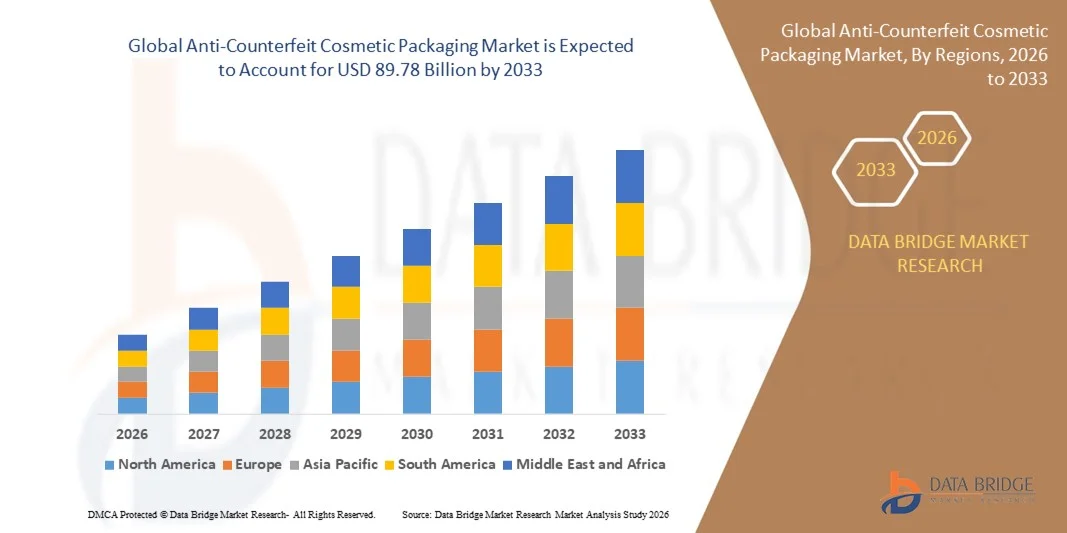
- Como por Data Bridge Market Análise de pesquisa que o mercado global de embalagens cosméticas anti-falsificação foi avaliado em43,76 mil milhões de dólares em 2025e espera-se alcançar89,78 mil milhões de USD até 2033, em umaCAGR de 9,4%durante o período de previsão
- O mercado de embalagens cosméticas anti-contrafacção está aumentando em demanda devido ao aumento das leis e regulamentos aplicados pelos governos. Além disso, o alto crescimento da indústria-mãe e tecnologia de rastreamento e rastreamento para preservar uma cadeia de suprimentos proficiente em todo o mundo também está altamente impactando o crescimento da embalagem cosmética anti-contrafeito
Quais são as principais takeaways do mercado de embalagens cosméticas anti-contrafacção
- Prevê-se igualmente que o rápido aumento do foco dos fabricantes na proteção da marca e das tecnologias inovadoras para a verificação dos produtos cosméticos originais floresça a procura do mercado de embalagens cosméticas anti-contrafacção, devido às razões acima referidas, e prevê-se igualmente que cresça substancialmente durante o período previsto.
- Além disso, espera-se que o aumento das preocupações em matéria de diluição da identidade da marca por parte dos principais fabricantes de todo o mundo e a crescente inovação tecnológica na produção de embalagens altamente seguras para utilização nas indústrias de aplicações impulsionem também o crescimento do mercado de embalagens cosméticas anti-contrafacção
- A América do Norte dominou o mercado de embalagens cosméticas anti-falsificação com uma participação de 43,24% em 2025, impulsionada pelo alto consumo de cosméticos premium, fortes regulamentos de proteção de marcas e adoção generalizada de tecnologias avançadas de autenticação e rastreamento em todos os EUA e Canadá
- Asia-Pacific é projetado para registrar o CAGR mais rápido de 9,21% de 2026 a 2033, impulsionado pelo rápido crescimento no consumo de cosméticos, expansão da população de classe média, e aumento de incidentes falsificados em toda China, Índia, Japão, Coreia do Sul e Sudeste Asiático
- A Authentication Packaging Technology dominou o mercado com uma participação estimada de 58,6% em 2025, impulsionada pelo uso generalizado de hologramas, tintas de segurança, selos evidentes, códigos QR e marcas de água digitais para permitir a verificação instantânea do produto pelos consumidores e varejistas
Segmentação do mercado de embalagens cosméticas anti-contrafacção
|
Atributos |
Anti-contrafeito Cosmético Embalagem Principais Insights Mercado |
|
Segmentos Cobertos |
|
|
Países abrangidos |
América do Norte
Europa
Ásia- Pacífico
Médio Oriente e África
América do Sul
|
|
Jogadores do mercado chave |
|
|
Oportunidades de Mercado |
|
|
Informações sobre o Valor Adicionado |
Além dos insights sobre cenários de mercado, como valor de mercado, taxa de crescimento, segmentação, cobertura geográfica e principais atores, os relatórios de mercado curados pela Data Bridge Market Research também incluem análise de especialistas em profundidade, análise de preços, análise de compartilhamento de marca, inquérito ao consumidor, análise demografia, análise da cadeia de suprimentos, análise da cadeia de valor, visão geral da matéria-prima/consumíveis, critérios de seleção de fornecedores, Análise de PESTLE, Análise de Porter e marco regulatório. |
Qual é a tendência chave no mercado de embalagens cosméticas anti-contrafeito
Aumentando o deslocamento para soluções de embalagem cosméticas inteligentes, rastreadas e digitalmente habilitadas
- O mercado de embalagens cosméticas anti-contrafeito está assistindo à adoção crescente de tecnologias de embalagens inteligentes, como códigos QR, RFID, NFC, hologramas e marcas d'água digitais para melhorar a autenticação do produto e a proteção da marca
- Os fabricantes estão integrando serialização, recursos evidentes e ferramentas de verificação baseadas em dispositivos móveis para permitir o rastreamento em tempo real e autenticação de nível de consumidor
- A crescente demanda por soluções de segurança leves, econômicas e escaláveis está impulsionando a adoção em todo mercado de massa e marcas de cosméticos premium
- Por exemplo, empresas como Avery Dennison, SICPA, AlpVision, 3M e CCL Industries estão expandindo portfólios com tintas avançadas, rótulos e plataformas de autenticação digital
- Aumentar a necessidade de transparência da cadeia de suprimentos de ponta a ponta, detecção de falsificações e conformidade regulatória está acelerando a adoção de embalagens conectadas e habilitadas para nuvem
- Como os produtos cosméticos enfrentam riscos crescentes de falsificação, o Anti-Counterfeit Cosmetic Packaging permanecerá crítico para a integridade da marca, confiança do consumidor e adesão regulatória
Quais são os principais drivers do mercado de embalagens cosméticas anti-contrafacção
- Os incidentes crescentes de cosméticos falsificados, que representam sérios riscos para a segurança do consumidor e a reputação da marca, estão a conduzir a procura de soluções de embalagem seguras
- Por exemplo, em 2024-2025, as principais marcas de cosméticos e fornecedores de embalagens adotaram tecnologias de serialização e autenticação digital para atender às iniciativas globais de proteção da marca
- A expansão crescente do comércio electrónico, do comércio transfronteiriço e das plataformas de beleza online aumenta a vulnerabilidade a produtos falsos, aumentando a procura de embalagens anti-contrafacção
- Avanços em tecnologias de impressão, marcadores forenses e etiquetas inteligentes melhoraram o desempenho de segurança, reduzindo os custos de implementação
- Aumentar a conscientização do consumidor sobre a autenticidade do produto, segurança de ingredientes e transparência de marca apoia o crescimento do mercado
- Apoiado por regulamentos rigorosos e crescentes investimentos na proteção da marca, o mercado de embalagens cosméticas Anti-Counterfeit deverá testemunhar um crescimento sustentado a longo prazo
Que fator está desafiando o crescimento do mercado de embalagens cosméticas anti-contrafacção
- Altos custos associados com tecnologias avançadas de autenticação, como RFID, tintas forenses e adoção de limites de rastreamento baseados em blockchain entre pequenas e médias marcas de cosméticos
- Por exemplo, durante 2024-2025, o aumento dos custos de integração de matéria-prima e tecnologia aumentou as despesas globais de embalagem para vários fabricantes
- Complexidade na integração de sistemas de autenticação digital com linhas de embalagem existentes e cadeias de suprimentos cria desafios operacionais
- Consciência limitada e experiência técnica nos mercados emergentes
- Disponibilidade de recursos de segurança de imitação de baixo custo reduz a diferenciação e a eficácia de soluções genuínas
- Para enfrentar esses desafios, as empresas estão se concentrando em projetos de segurança otimizados em custos, soluções modulares e plataformas de verificação amigáveis ao consumidor para expandir a adoção global de Anti-Cosmetic Packaging
Como é segmentado o mercado de embalagens cosméticas anti-contrafeito
O mercado é segmentado com base emtecnologia, formato de embalagem, material e aplicação.
- Por Tecnologia
Com base na tecnologia, o mercado de embalagens cosméticas anti-contrafacção é segmentado em Tecnologia de Embalagem de Autenticação e Tecnologia de Embalagem Track e Trace. A tecnologia de embalagem de autenticação dominou o mercado com uma participação estimada em 58,6% em 2025, impulsionada pelo uso generalizado de hologramas, tintas de segurança, selos evidentes, códigos QR e marcas de água digitais para permitir a verificação instantânea do produto por consumidores e varejistas. Essas soluções são econômicas, fáceis de integrar em linhas de embalagem existentes e amplamente adotadas em marcas de cosméticos de massa e premium.
O segmento Track and Trace Packaging Technology deverá crescer no CAGR mais rápido de 2026 para 2033, apoiado pela adoção crescente de sistemas de serialização, RFID, NFC e blockchain habilitados. O aumento do foco regulatório na transparência da cadeia de suprimentos e a crescente penetração no comércio eletrônico estão acelerando a demanda por soluções de rastreamento de produtos em tempo real.
- Por formatação
Com base no formato de embalagem, o mercado é segmentado em garrafas, jarras, tubos, saquetas, bombas e dispensadores, e outros. As garrafas dominaram o mercado com uma participação de 34,2% em 2025, pois são amplamente utilizadas em produtos de cuidados com a pele, cuidados com o cabelo e fragrâncias e oferecem ampla área de superfície para integrar etiquetas de segurança, hologramas e etiquetas inteligentes. As garrafas são preferidas para produtos cosméticos premium onde a proteção da marca e a autenticação visual são críticas.
Prevê-se que o segmento Bombas e Dispensadores registre o crescimento mais rápido entre 2026 e 2033, impulsionado pelo aumento do uso em produtos dermatológicos e cuidados de pele premium. A crescente demanda por sistemas de dosagem controlados por adulteração, higiene e recarga suporta ainda mais a adoção de recursos avançados anti-contrafação neste segmento.
- Por Material
Com base no material, o mercado de embalagens cosméticas anti-contrafacção é segmentado em vidro, papelão, metal, plástico, polietileno (PE), polipropileno (PP), tereftalato de polietileno (PET) e outros. Plástico, incluindo PE, PP e PET, dominou o mercado com uma participação de 46,9% em 2025, devido à sua natureza leve, eficiência de custos, flexibilidade de design e compatibilidade com recursos avançados de segurança, como etiquetas incorporadas e impressão digital. A embalagem plástica suporta a produção de cosméticos de alto volume, mantendo uma proteção eficaz da marca.
Espera-se que o segmento Glass cresça no CAGR mais rápido durante o período de previsão, impulsionado pelo aumento da demanda por embalagens cosméticas de luxo, sustentáveis e premium. O vidro oferece proteção superior contra adulteração e aumenta a autenticidade do produto percebido e o valor da marca.
- Por Aplicação
Com base na aplicação, o mercado é segmentado em Skincare, Hair Care, Makeup, Fragrância e Cuidados de unhas. O segmento Skincare dominou o mercado com uma participação de 41,7% em 2025, apoiada pelo alto consumo de produtos, lançamentos de produtos premium e forte preocupação do consumidor com a segurança e autenticidade dos produtos. As soluções anti-contrafacção são amplamente utilizadas em soros, cremes e produtos dermatológicos para evitar a imitação e garantir a confiança do consumidor.
O segmento de maquiagem é projetado para crescer no CAGR mais rápido de 2026 para 2033, impulsionado pela rápida inovação do produto, alta visibilidade da marca e aumento de incidentes falsificados em cosméticos coloridos. Expandir as vendas online e a demanda orientada por influenciadores acelera ainda mais a necessidade de soluções avançadas de embalagens cosméticas anti-contrafacção.
Qual região detém a maior parte do mercado de embalagens cosméticas anti-contrafacção
- A América do Norte dominou o mercado de embalagens cosméticas anti-falsificação com uma participação de 43,24% em 2025, impulsionado pelo alto consumo de cosméticos premium, fortes regulamentos de proteção de marcas e adoção generalizada de tecnologias avançadas de autenticação e rastreamento em todos os EUA e Canadá. Aumentar as preocupações em relação aos produtos de beleza falsificados, juntamente com uma supervisão regulamentar rigorosa e uma forte sensibilização dos consumidores, continuam a alimentar a procura de soluções de embalagem cosmética seguras
- Empresas líderes na América do Norte estão ativamente implementando RFID, NFC, códigos QR, selos evidentes e tecnologias de autenticação digital para proteger a integridade da marca e segurança do consumidor. Investimentos contínuos em embalagens inteligentes, impressão digital e tecnologias de serialização fortalecem a liderança de mercado da região
- Forte presença de marcas cosméticas globais, infraestrutura de embalagem avançada e inovação sustentada em materiais de embalagem e recursos de segurança reforçam ainda mais o domínio da América do Norte
U.S. Anti-Counterfeit Cosmetic Packaging Market Insight
Os EUA são o maior contribuinte da América do Norte, apoiado por uma indústria de cosméticos robusta, alta penetração de produtos premium, e aplicação rigorosa contra produtos falsificados. A crescente demanda por embalagens seguras em produtos de cuidados com a pele, maquiagem e fragrância, juntamente com a rápida adoção de etiquetas inteligentes e ferramentas de verificação digital, continua a impulsionar o crescimento do mercado.
Canadá Anti-contrafeito Cosmético Embalagem Mercado Insight
O Canadá contribui significativamente para o crescimento regional, impulsionado pelo aumento da demanda por cosméticos de marca limpa, aumento das vendas de e-commerce e crescente conscientização da autenticidade do produto. Os quadros regulamentares de apoio e a adopção de tecnologias avançadas de embalagem reforçam a expansão do mercado.
Mercado de embalagens cosméticas anticontrafacção Ásia-Pacífico
Asia-Pacific é projetado para registrar o CAGR mais rápido de 9,21% de 2026 a 2033, impulsionado pelo rápido crescimento do consumo de cosméticos, expansão da população de classe média, e aumento de incidentes falsificados em toda a China, Índia, Japão, Coreia do Sul e Sudeste Asiático. A crescente demanda por soluções de embalagem seguras, inteligentes e rastreáveis acelera a adoção.
China Anti-Counterfeit Cosmetic Packaging Market Insight
A China lidera o mercado Ásia-Pacífico devido à produção cosmética em larga escala, marcas nacionais fortes e iniciativas governamentais para combater produtos falsificados. O uso crescente de tecnologias de autenticação digital e serialização aumenta a demanda do mercado.
Japão Anti-Counterfeit Cosmetic Packaging Market Insight
O Japão mostra crescimento constante apoiado pelo consumo de cosméticos premium, forte foco na garantia de qualidade e adoção de tecnologias avançadas de embalagem para garantir a autenticidade do produto.
Índia Anti-contrafait Cosmetic Packaging Market Insight
A Índia está emergindo como um mercado de alto crescimento, impulsionado pela rápida expansão do setor de cosméticos, aumento das vendas on-line e crescente conscientização dos riscos de falsificação. Iniciativas governamentais e crescentes investimentos de marca apoiam ainda mais a adoção.
Quais são as principais empresas no mercado de embalagens cosméticas anti-contrafacção
A indústria de embalagens cosméticas anti-contrafacção é liderada principalmente por empresas bem estabelecidas, incluindo:
- Avery Dennison Corporation(EUA)
- Indústrias CCL(Canadá)
- 3M (EUA)
- DuPont (EUA)
- SICPA Holding SA(Suíça)
- Systech International (EUA)
- ITL – Soluções Inteligentes de Etiquetas (U.K.)
- Grupo SML(Hong Kong)
- ACG (Índia)
- TruTag Technologies, Inc.(EUA)
- Ciências Aplicadas do DNA (EUA)
- MicroTag Temed Ltd. (Israel)
- Avient Corporation (EUA)
- VINSAK (Índia)
- Soluções de Impressão Projetadas (EUA)
- Ampacet Corporation (EUA)
- AlpVision (Suíça)
- Arjo Solutions (França)
- Origin Pharma Embalagem (U.K.)
- NeuroTags (U.K.)
Quais são os recentes desenvolvimentos no mercado global de embalagens cosméticas anticontrafacção
- Em abril de 2024, Avery Dennison anunciou a expansão de sua gama AD Pure, introduzindo um portfólio de inlays e tags totalmente livres de plástico PET e produzidos com tecnologia inovadora de fabricação de antenas onde antenas e chips são aplicados diretamente no papel, tornando-os 100% livres de plástico, um movimento que fortalece significativamente a estratégia de embalagem e rotulagem orientadas para a sustentabilidade da empresa
- Em janeiro de 2024, Avery Dennison lançou o AD 2Metal Rock M781 RFID tag, projetado para executar de forma confiável em ambientes severos e permitir a marcação de superfícies metálicas, líquidas e não metálicas difíceis, com uma estrutura fina e flexível adequada para aplicações curvas e planas, reforçando sua liderança em soluções RFID de alto desempenho
- Em outubro de 2023, a Avery Dennison Corporation assinou um acordo para adquirir o Silver Crystal Group, uma empresa bem estabelecida de personalização de roupas esportivas que serve canais de e-commerce, diretamente ao comércio, aumentando as capacidades de Avery Dennison em serviços de marca de vestuário e personalização digital
- Em maio de 2023, a SATO Holdings Corporation anunciou que sua subsidiária SATO International America, Inc., adquiriu a Stafford Press, Inc., uma especialista baseada em Redmond em etiquetas e rótulos de horticultura a pedido, reforçando a posição da SATO no mercado norte-americano de etiquetagem de especialidades
- Em abril de 2023, a Avery Dennison Corporation adquiriu a LG Group, Inc., também conhecida como Lion Brothers, um designer e fabricante de enfeites de marca de vestuário de Maryland, expandindo sua pegada em soluções de decoração de vestuário e branding premium
- Em abril de 2023, a CCL Industries Inc., anunciou a aquisição da eAgile Inc. juntamente com a propriedade intelectual da Alert Systems ApS, ampliando seu portfólio de tecnologias inteligentes de etiquetagem e segurança de embalagens
- Em janeiro de 2023, a Avery Dennison Corporation anunciou a aquisição da Thermopatch, líder em etiquetas de lavanderia industrial, transferências de calor e emblemas têxteis, apoiando a estratégia da empresa para acelerar o crescimento de soluções de embelezamento externo
- Em novembro de 2022, o SATO fez parceria com a Loftware para lançar a primeira solução de codificação e registro de tags RFID baseada em nuvem do mundo, marcando um grande avanço na rotulagem conectada, rastreabilidade e gerenciamento de RFID de nível empresarial
- Em maio de 2022, a CCL Industries Inc. anunciou a aquisição da Floramedia Group B.V., uma empresa baseada em Westzaan especializada em criação de etiquetas e etiquetas com operações em sete países, fortalecendo a horticultura global da CCL e marcando presença
- Em março de 2022, a Zebra Technologies Corporation anunciou a aquisição da Matrox Imaging, desenvolvedora de componentes e sistemas avançados de visão de máquina, aprimorando as capacidades da Zebra em automação, inspeção e captura inteligente de dados
- Em fevereiro de 2022, a Avery Dennison Corporation anunciou a aquisição da TexTrace AG, uma desenvolvedora de tecnologia especializada em produtos RFID tecidos e de malha para vestuário, reforçando sua liderança em soluções RFID incorporadas para vestuário e têxteis
- Em janeiro de 2022, a Avery Dennison Corporation anunciou a aquisição da Rietveld (RTVPRINT), uma fornecedora de serviços completos europeus de soluções de embelezamento e métodos avançados de impressão para marcas esportivas de desempenho e equipe, ampliando ainda mais suas capacidades globais de fabricação e aplicação de vestuário
SKU-
Obtenha acesso online ao relatório sobre a primeira nuvem de inteligência de mercado do mundo

- Painel interativo de análise de dados
- Painel de análise da empresa para oportunidades de elevado potencial de crescimento
- Acesso de analista de pesquisa para personalização e customização. consultas
- Análise da concorrência com painel interativo
- Últimas notícias, atualizações e atualizações Análise de tendências
- Aproveite o poder da análise de benchmark para um rastreio abrangente da concorrência
Metodologia de Investigação
A recolha de dados e a análise do ano base são feitas através de módulos de recolha de dados com amostras grandes. A etapa inclui a obtenção de informações de mercado ou dados relacionados através de diversas fontes e estratégias. Inclui examinar e planear antecipadamente todos os dados adquiridos no passado. Da mesma forma, envolve o exame de inconsistências de informação observadas em diferentes fontes de informação. Os dados de mercado são analisados e estimados utilizando modelos estatísticos e coerentes de mercado. Além disso, a análise da quota de mercado e a análise das principais tendências são os principais fatores de sucesso no relatório de mercado. Para saber mais, solicite uma chamada de analista ou abra a sua consulta.
A principal metodologia de investigação utilizada pela equipa de investigação do DBMR é a triangulação de dados que envolve a mineração de dados, a análise do impacto das variáveis de dados no mercado e a validação primária (especialista do setor). Os modelos de dados incluem grelha de posicionamento de fornecedores, análise da linha de tempo do mercado, visão geral e guia de mercado, grelha de posicionamento da empresa, análise de patentes, análise de preços, análise da quota de mercado da empresa, normas de medição, análise global versus regional e de participação dos fornecedores. Para saber mais sobre a metodologia de investigação, faça uma consulta para falar com os nossos especialistas do setor.
Personalização disponível
A Data Bridge Market Research é líder em investigação formativa avançada. Orgulhamo-nos de servir os nossos clientes novos e existentes com dados e análises que correspondem e atendem aos seus objetivos. O relatório pode ser personalizado para incluir análise de tendências de preços de marcas-alvo, compreensão do mercado para países adicionais (solicite a lista de países), dados de resultados de ensaios clínicos, revisão de literatura, mercado remodelado e análise de base de produtos . A análise de mercado dos concorrentes-alvo pode ser analisada desde análises baseadas em tecnologia até estratégias de carteira de mercado. Podemos adicionar quantos concorrentes necessitar de dados no formato e estilo de dados que procura. A nossa equipa de analistas também pode fornecer dados em tabelas dinâmicas de ficheiros Excel em bruto (livro de factos) ou pode ajudá-lo a criar apresentações a partir dos conjuntos de dados disponíveis no relatório.











