



Segmentação do Mercado Global de Culturas para Queijo, por Produto (Cheddar, Continental, Pasta Filata/Mozzarella, Cottage, Propionic, Soft, Grana e Branco em Salmoura), Tipo (Cultura Mesofílica, Cultura Termofílica, Cultura Iniciadora, Cultura Não Iniciadora e Probióticos), Categoria (Queijo Fresco, Queijo Macio e Queijo Duro), Culturas (Maturação, Culturas Protetoras e Kosher), Aplicação (Cepas e Misturas de Culturas), Canal de Vendas (Lojas Especializadas, Venda Direta em Lojas, Venda Online por Terceiros e Outros Canais de Vendas) - Tendências e Previsões do Setor até 2033
Qual é o tamanho e a taxa de crescimento do mercado global da cultura do queijo
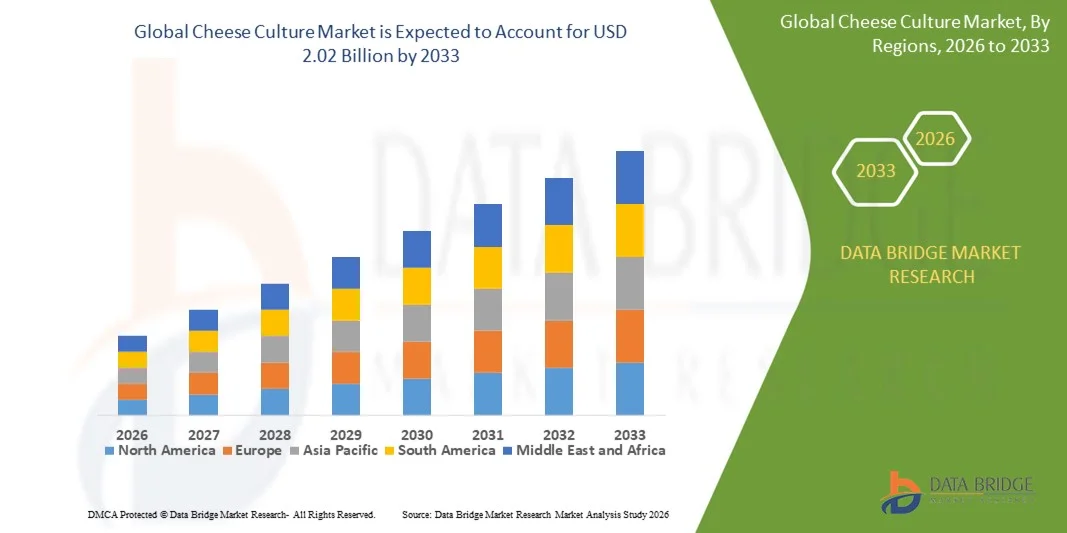
- A dimensão global do mercado da cultura do queijo foi avaliada emUSD 1,27 mil milhões em 2025e espera-se alcançarUSD 2,02 mil milhões até 2033, em umaCAGR de 6,00%durante o período de previsão
- O aumento do consumo de alimentos prontos para consumo e de produtos de snacks salgados, especialmente entre a população activa, é um factor importante que contribui para o crescimento do mercado
- A crescente sensibilização dos clientes conscientes da saúde para as várias funcionalidades e os benefícios de saúde a curto e longo prazo para o bem-estar global da cultura do queijo como boas bactérias conhecidas como probióticos ajuda a restaurar a saúde intestinal e tem várias enzimas digestivas é estimada para contribuir para o crescimento do mercado da cultura do queijo
Quais são os principais produtos da cultura do queijo
- Espera-se que a fácil disponibilidade de culturas de queijo de forma suave e consistente aumente a procura do mercado de cultura de queijo
- No entanto, o queijo é uma das principais fontes de gordura saturada que aumenta o colesterol LDL prejudicial, aumentando assim as possibilidades de doenças cardíacas que se projecta actuar como uma restrição, enquanto as pessoas intolerantes à lactose em todo o mundo é projectada para desafiar o crescimento do mercado da cultura de queijo
- A América do Norte dominou o mercado da cultura de queijos com uma quota de receita de 41,23% em 2025, impulsionada pelo alto consumo de queijo, infraestrutura avançada de processamento de laticínios e forte presença de fabricantes industriais de queijos nos EUA e Canadá
- Asia-Pacific é projetado para registrar o CAGR mais rápido de 7,42% de 2026 a 2033, impulsionado pelo aumento rápido do consumo de queijo, ocidentalização de dietas, expansão das cadeias de serviços alimentares e crescimento da capacidade de processamento de leite em toda a China, Índia, Japão, Coreia do Sul e Sudeste Asiático
- O segmento de pasta filata/mozzarella dominou o mercado com uma participação de 31,6% em 2025, impulsionado pelo seu uso extensivo em pizza, fast food e refeições prontas para comer globalmente
Relatório Escopo e Cultura do Queijo Segmentação do Mercado
|
Atributos |
Cultura do queijo Principais perspectivas do mercado |
|
Segmentos Cobertos |
|
|
Países abrangidos |
América do Norte
Europa
Ásia- Pacífico
Médio Oriente e África
América do Sul
|
|
Jogadores do mercado chave |
|
|
Oportunidades de Mercado |
|
|
Informações sobre o Valor Adicionado |
Além dos insights sobre cenários de mercado, como valor de mercado, taxa de crescimento, segmentação, cobertura geográfica e principais atores, os relatórios de mercado curados pela Data Bridge Market Research também incluem análise de especialistas em profundidade, análise de preços, análise de compartilhamento de marca, inquérito ao consumidor, análise demografia, análise da cadeia de suprimentos, análise da cadeia de valor, visão geral da matéria-prima/consumíveis, critérios de seleção de fornecedores, Análise de PESTLE, Análise de Porter e marco regulatório. |
Qual é a tendência chave no mercado da cultura do queijo
Aumento da demanda por culturas de queijo especializado e limpo-label
- O mercado de culturas de queijo está testemunhando a adoção crescente de culturas de arranque e adjuvantes especializados projetados para melhorar o sabor, textura, controle de maturação e consistência na produção de queijo industrial e artesanal
- Os fabricantes estão cada vez mais desenvolvendo culturas específicas de estirpes, orientadas para regiões e focadas em aplicações para apoiar diversas variedades de queijos, como cheddar, mozzarella, feta, parmesão e queijos especiais
- Aumentar a preferência do consumidor por produtos lácteos limpos, naturais e minimamente processados está impulsionando a demanda por culturas com aditivos reduzidos e formulações não-GMO
- Por exemplo, empresas como Chr. Hansen, DSM-Firmenich, Lallemand e BIOPROX estão expandindo portfólios de culturas de queijos mesófilos, termófilos e probióticos para atender às exigências de sabor e funcionalidade em evolução
- Maior foco na otimização de textura, extensão de prateleira e eficiência de fermentação está acelerando a adoção de misturas de cultura avançadas
- À medida que o consumo global de queijo aumenta e a diferenciação dos produtos se torna crítica, as culturas de queijo estão emergindo como um motor principal de inovação no processamento de leite
Quais são os principais condutores do mercado de cultura de queijo
- Aumento da demanda global por queijo e produtos lácteos fermentados, apoiados pela urbanização, dietas ocidentalizadas e crescente consumo de proteínas
- Por exemplo, em 2024-2025, empresas como DSM-Firmenich e Chr. Hansen introduziram culturas aprimoradas que permitem fermentação mais rápida, rendimentos consistentes e melhor desenvolvimento de sabor
- Expansão da fabricação industrial de queijo, restaurantes de serviço rápido e produtos alimentares prontos para consumo está aumentando a adoção em larga escala da cultura
- A crescente popularidade de queijos artesanais, especializados e premium está impulsionando a demanda por variedades de cultura personalizadas e específicas da região
- Aumentar o foco na segurança alimentar, consistência de lote e eficiência de produção está incentivando os processadores de leite a adotar culturas padronizadas de alto desempenho
- Apoiado pela inovação na ciência microbiana e na tecnologia de fermentação, espera-se que o mercado das culturas de queijo testemunhe um crescimento constante a longo prazo
Que fator está desafiando o crescimento do mercado da cultura do queijo
- Altos custos de cepas de cultura especializadas e proprietárias limitam a adoção entre produtores de queijo artesanal e de pequena escala
- Por exemplo, as culturas premium que oferecem um prazo de validade prolongado ou um amadurecimento acelerado requerem frequentemente um investimento inicial mais elevado e condições de armazenagem controladas
- A sensibilidade das culturas à temperatura, manuseio e armazenamento aumenta a logística e a dependência da cadeia fria
- Os requisitos de aprovação regulamentar e a conformidade com a rotulagem para culturas microbianas variam entre as regiões, aumentando a complexidade do tempo para o mercado
- Experiência técnica limitada entre pequenos produtores em relação à seleção da cultura e otimização da fermentação pode impactar resultados de desempenho
- Apesar desses desafios, espera-se que os esforços contínuos de otimização de custos, suporte técnico e padronização da cultura melhorem a acessibilidade e a adoção de culturas de queijo globalmente
Como é o mercado de cultura de queijo segmentado
O mercado é segmentado com base emproduto, tipo, categoria, culturas, aplicação e canal de vendas.
- Por Produto
Com base no produto, o mercado de cultura de queijo é segmentado em cheddar, continental, filata de massas/mozzarella, casa de campo, propiônico, macio, graná, e queijos brancos. O segmento de pasta filata/mozzarella dominou o mercado com uma participação de 31,6% em 2025, impulsionada pelo seu uso extensivo em pizza, fast food e refeições prontas para comer globalmente. A crescente demanda das cadeias QSR e dos fabricantes de alimentos congelados aumentou significativamente o consumo de cultura para a produção de mozzarella. Culturas usadas neste segmento focam na extensibilidade, comportamento de fusão e textura consistente.
Espera-se que o segmento de queijo graná cresça no CAGR mais rápido de 2026 para 2033, apoiado pelo aumento do consumo de queijos idosos premium, como parmesão e grana padano. Ciclos de maturação mais longos e rigorosos requisitos de qualidade estão impulsionando a demanda por culturas de maturação avançada que melhoram o desenvolvimento do sabor, a estabilidade do rendimento e a eficiência da maturação.
- Por Tipo
Com base no tipo, o mercado é segmentado em cultura mesófilo, cultura termofílica, cultura inicial, cultura não inicial e probióticos. O segmento de cultura inicial dominou o mercado com uma participação de 42,3% em 2025, uma vez que as culturas iniciais formam a base da fermentação do queijo controlando a acidificação, a formação de texturas e a consistência do sabor. Eles são amplamente utilizados em toda a produção de queijo industrial e artesanal devido à confiabilidade e desempenho padronizado.
O segmento de probióticos é projetado para crescer ao mais rápido CAGR de 2026 a 2033, impulsionado pelo crescente interesse do consumidor em alimentos funcionais e produtos lácteos que melhoram a saúde intestinal. A incorporação de cepas probióticas no queijo oferece benefícios para a saúde, mantendo o sabor e a vida útil, tornando-os cada vez mais atraentes para as marcas de queijo premium e focadas na saúde.
- Por Categoria
Com base na categoria, o mercado da cultura do queijo é segmentado em queijo fresco, queijo macio e queijo duro. O segmento de queijo fresco teve a maior participação de mercado de 38,9% em 2025, atribuída ao alto consumo de produtos como cottage cheese, cream cheese e ricotta. Ciclos curtos de fermentação, altos volumes de produção e crescente demanda por produtos lácteos frescos de alta proteína estão apoiando a demanda de cultura neste segmento.
O segmento de queijo duro é esperado para testemunhar o crescimento mais rápido de 2026 para 2033, impulsionado pelo aumento da popularidade de queijos idosos e premium. A produção de queijo duro requer formulações precisas de cultura para maturação controlada, profundidade de sabor e desenvolvimento de textura, aumentando a demanda por culturas avançadas e específicas de deformação.
- Por Culturas
Com base em culturas, o mercado é segmentado em culturas de maturação, culturas protetoras e culturas kosher. O segmento de culturas de maturação dominou o mercado com uma participação de 45,1% em 2025, uma vez que essas culturas desempenham um papel fundamental no desenvolvimento de sabor, aroma e textura durante a maturação do queijo. São amplamente utilizados em queijos semi-duras e duros onde o envelhecimento é essencial.
Espera-se que o segmento de culturas protetoras cresça no CAGR mais rápido de 2026 para 2033, impulsionado pelo aumento do foco na preservação natural e produção de queijo de marca limpa. Culturas de proteção inibem organismos de deterioração e patógenos, ajudando os fabricantes a prolongar a vida útil, reduzindo a dependência em conservantes químicos.
- Por Aplicação
Com base na aplicação, o mercado da cultura do queijo é segmentado em estirpes e culturas compostas. O segmento de compostos de culturas dominou o mercado com uma participação funcional de 100% em 2025, pois a composição permite a personalização de múltiplas cepas para alcançar o comportamento de fermentação desejado, perfis de sabor e resultados texturais. Os processadores de leite dependem cada vez mais de culturas compostas para atender aos requisitos de diferenciação do produto e consistência do lote.
O mesmo segmento também deve crescer constantemente em um CAGR de 2026 a 2033, apoiado pela crescente demanda por soluções de cultura sob medida entre produtores de queijos industriais, artesanais e especializados.
- Por Canal de Vendas
Com base no canal de vendas, o mercado é segmentado em lojas de especialidade, loja direta, terceiros on-line, e outros canais de vendas. O segmento de loja direta dominou o mercado com uma participação de 41,7% em 2025, impulsionada por contratos de fornecimento a longo prazo entre fabricantes de cultura e grandes processadores de leite. As vendas diretas garantem suporte técnico, fornecimento consistente e soluções de cultura personalizadas.
O segmento on-line de terceiros é projetado para crescer no CAGR mais rápido de 2026 para 2033, alimentado pelo aumento da adoção entre pequenos fabricantes de queijos, artesanais e domésticos. Maior disponibilidade de culturas através de plataformas de comércio eletrônico e redes globais de distribuição está expandindo a acessibilidade e o alcance do mercado.
Qual região detém a maior parte do mercado de cultura de queijo
- A América do Norte dominou o mercado da cultura de queijos com uma parte de receita de 41,23% em 2025, impulsionada pelo alto consumo de queijo, infraestrutura avançada de processamento de leite e forte presença de fabricantes de queijos industriais nos EUA e Canadá. A adoção ampla de culturas de arranque e adjuvante padronizadas suporta qualidade consistente, produção em larga escala e conformidade regulatória em toda a região
- Os principais produtores de cultura estão continuamente introduzindo cepas avançadas para melhor desenvolvimento de sabor, controle de textura, otimização de produtividade e extensão de vida útil, fortalecendo a liderança tecnológica da América do Norte
- Fortes ecossistemas de I&D, elevada procura por parte dos consumidores de produtos naturais e de queijos de marca limpa e investimentos sustentados na inovação dos produtos lácteos reforçam ainda mais o domínio do mercado da região
U.S. Cheese Culture Market Insight
Os EUA são os maiores contribuintes da América do Norte, apoiados pelo alto consumo de mozzarella, cheddar e queijos especiais, juntamente com uma indústria de processamento de leite bem estabelecida. A crescente demanda de restaurantes de serviço rápido, fabricantes de alimentos embalados e marcas de queijo de varejo está aumentando a adoção de culturas personalizadas de arranque, maturação e proteção. Forte presença de fornecedores de cultura global, logística avançada de cadeia fria e inovação contínua em produtos de queijo probióticos e de marca limpa impulsionam o crescimento do mercado
Canadá Queijo Cultura Mercado Visão
O Canadá contribui significativamente para o crescimento regional, impulsionado pela demanda constante de queijos naturais e especiais, cooperativas leiteiras fortes e sistemas de produção de leite regulamentados. O foco crescente na consistência de qualidade, na vida útil prolongada e no processamento sustentável de produtos lácteos está apoiando a adoção de culturas avançadas de queijo. Os regulamentos de segurança alimentar apoiados pelo governo e os programas de inovação reforçam ainda mais a expansão do mercado.
Mercado de Cultura do Queijo Ásia-Pacífico
Projeta-se que a Ásia-Pacífico registre o CAGR mais rápido de 7,42% de 2026 a 2033, impulsionado pelo rápido aumento do consumo de queijo, ocidentalização de dietas, expansão de cadeias de serviços alimentares e aumento da capacidade de processamento de leite em toda a China, Índia, Japão, Coreia do Sul e Sudeste Asiático. Aumentar a adoção de mozzarella e queijo processado em pizzas, produtos de padaria e alimentos prontos para comer está alimentando a demanda por culturas iniciais e termofílicas. A expansão das instalações locais de fabricação de queijo, o aumento da renda disponível e a crescente conscientização dos produtos lácteos funcionais e probióticos estão acelerando o crescimento do mercado em toda a região.
China Cheese Cultura Mercado Visão
A China é o maior contribuinte na Ásia-Pacífico devido ao rápido crescimento no consumo de alimentos processados, à expansão da produção nacional de queijo e ao forte investimento na infraestrutura leiteira moderna. O uso crescente de culturas para aplicações de mussarela, creme de queijo e queijo processado está impulsionando a adoção do mercado.
Japão Queijo Cultura Mercado Visão
O Japão mostra um crescimento constante, apoiado pela demanda por queijos premium, de alta qualidade e rigorosos padrões de segurança alimentar. Advanced fermentation expertise e preferência por perfis de sabor consistente impulsionam a adoção de culturas especializadas e amadurecendo.
Índia Queijo Cultura Mercado Visão
A Índia está emergindo como um mercado de alto crescimento, impulsionado pela rápida expansão das cadeias de pizza, aplicações de padaria e produtos de queijo embalados. Os investimentos crescentes na transformação dos produtos lácteos e o aumento da procura de culturas de arranque economicamente eficientes estão a acelerar a adopção.
Coreia do Sul Queijo Cultura Mercado Insight
A Coreia do Sul contribui fortemente devido ao aumento do consumo de queijos processados e de estilo ocidental, ao crescimento dos alimentos de conveniência e à forte ênfase na qualidade e segurança dos alimentos. A crescente demanda por produtos funcionais e probióticos de queijo apoia a expansão contínua do mercado.
Quais são as principais empresas no mercado de cultura de queijo
A indústria da cultura do queijo é liderada principalmente por empresas bem estabelecidas, incluindo:
- Culturas para a saúde(EUA)
- Chr. Hansen Holding A/S (Dinamarca)
- Home Make It (EUA)
- Nova Inglaterra Companhia de Fornecimento de Queijo(EUA)
- Grupo GEA Aktiengesellschaft(Alemanha)
- DSM (Países Baixos)
- Dairy Connection, Inc.(EUA)
- BIOPROX(França)
- Hjemmeriet (Dinamarca)
- Lallemand Inc. (Canadá)
- Vivolac (EUA)
- Mooreland Cheesemaking LTD (U.K.)
- Biena Snacks (EUA)
- Faça Cheese Inc. (EUA)
- KPM Analytics (EUA)
- Sabores elegantes (Índia)
- Siemens (Alemanha)
- Benny Impex (Índia)
SKU-
Obtenha acesso online ao relatório sobre a primeira nuvem de inteligência de mercado do mundo

- Painel interativo de análise de dados
- Painel de análise da empresa para oportunidades de elevado potencial de crescimento
- Acesso de analista de pesquisa para personalização e customização. consultas
- Análise da concorrência com painel interativo
- Últimas notícias, atualizações e atualizações Análise de tendências
- Aproveite o poder da análise de benchmark para um rastreio abrangente da concorrência
Metodologia de Investigação
A recolha de dados e a análise do ano base são feitas através de módulos de recolha de dados com amostras grandes. A etapa inclui a obtenção de informações de mercado ou dados relacionados através de diversas fontes e estratégias. Inclui examinar e planear antecipadamente todos os dados adquiridos no passado. Da mesma forma, envolve o exame de inconsistências de informação observadas em diferentes fontes de informação. Os dados de mercado são analisados e estimados utilizando modelos estatísticos e coerentes de mercado. Além disso, a análise da quota de mercado e a análise das principais tendências são os principais fatores de sucesso no relatório de mercado. Para saber mais, solicite uma chamada de analista ou abra a sua consulta.
A principal metodologia de investigação utilizada pela equipa de investigação do DBMR é a triangulação de dados que envolve a mineração de dados, a análise do impacto das variáveis de dados no mercado e a validação primária (especialista do setor). Os modelos de dados incluem grelha de posicionamento de fornecedores, análise da linha de tempo do mercado, visão geral e guia de mercado, grelha de posicionamento da empresa, análise de patentes, análise de preços, análise da quota de mercado da empresa, normas de medição, análise global versus regional e de participação dos fornecedores. Para saber mais sobre a metodologia de investigação, faça uma consulta para falar com os nossos especialistas do setor.
Personalização disponível
A Data Bridge Market Research é líder em investigação formativa avançada. Orgulhamo-nos de servir os nossos clientes novos e existentes com dados e análises que correspondem e atendem aos seus objetivos. O relatório pode ser personalizado para incluir análise de tendências de preços de marcas-alvo, compreensão do mercado para países adicionais (solicite a lista de países), dados de resultados de ensaios clínicos, revisão de literatura, mercado remodelado e análise de base de produtos . A análise de mercado dos concorrentes-alvo pode ser analisada desde análises baseadas em tecnologia até estratégias de carteira de mercado. Podemos adicionar quantos concorrentes necessitar de dados no formato e estilo de dados que procura. A nossa equipa de analistas também pode fornecer dados em tabelas dinâmicas de ficheiros Excel em bruto (livro de factos) ou pode ajudá-lo a criar apresentações a partir dos conjuntos de dados disponíveis no relatório.











