


Segmentação do mercado de embalagem global de fluxo, por material (Plastic, papel, e folha de alumínio), aplicação (Snacks embalados, chocolate e confeitaria, produtos de padaria, dispositivos médicos e produtos de higiene pessoal), uso final (Alimentos e bebidas, medicina e farmácia, cosméticos e cuidados pessoais, produtos industriais, produtos domésticos, alimentos para animais de estimação e suprimentos, e produtos de tabaco) - Tendências e previsões da indústria para 2033
Tamanho do mercado de embalagem Flow Wrap
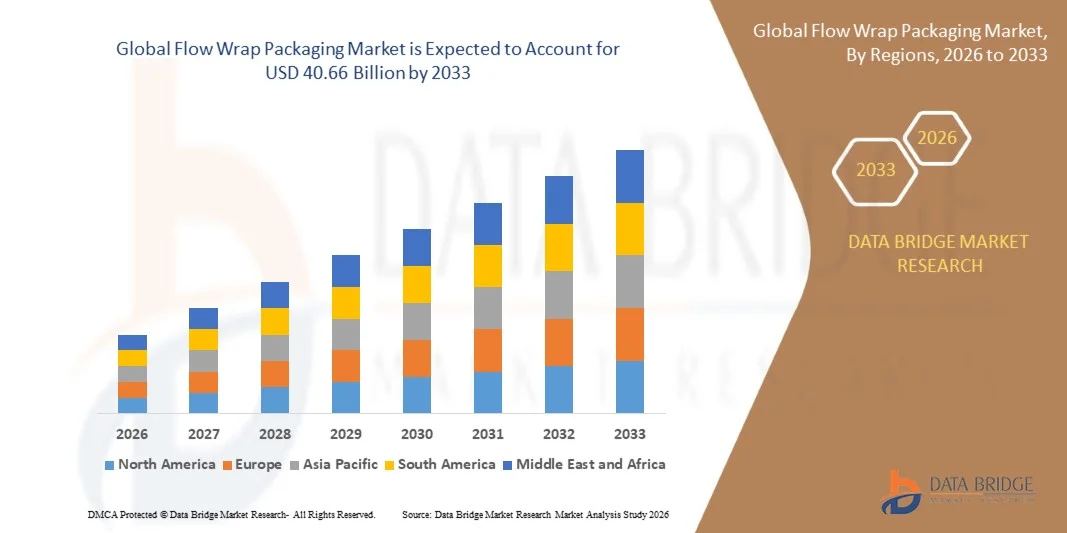
- O tamanho global do mercado de embalagens de embalagem de fluxo foi avaliado em26,90 mil milhões de USD em 2025e espera-se alcançar40,66 mil milhões de USD até 2033, em umaCAGR de 5,30%durante o período de previsão
- O crescimento do mercado é em grande parte impulsionado pela crescente demanda por soluções de embalagem flexíveis entre os setores de alimentos, confeitaria, padaria, laticínios e cuidados pessoais, apoiados por avanços em máquinas de embalagem de alta velocidade e inovação de materiais que melhoram a eficiência, a vida útil e a proteção de produtos
- Além disso, a crescente ênfase nas embalagens rentáveis, o aumento do consumo de produtos embalados e em curso e a adoção crescente de materiais recicláveis e desmontáveis reforçam a embalagem de envoltório de fluxo como um formato preferencial. Estes factores combinados estão a acelerar a penetração do mercado nas economias desenvolvidas e emergentes, reforçando assim o crescimento global da indústria
Análise do mercado de embalagens Flow Wrap
- A embalagem Flow wrap é um formato de embalagem flexível no qual os produtos são envoltos em uma película contínua e selados longitudinal e transversalmente, oferecendo embalagem de alta velocidade, apresentação uniforme e proteção de barreira eficaz. É amplamente utilizado para aplicações de embalagem única e múltipla devido à sua versatilidade e compatibilidade com linhas de produção automatizadas
- A crescente demanda por embalagens de envoltório de fluxo é principalmente suportada pelo crescimento do consumo de alimentos embalados, expansão dos canais de varejo e comércio eletrônico e crescente foco em inovações materiais orientadas para a sustentabilidade que equilibrem o desempenho, eficiência de custos e conformidade regulatória
- Asia-Pacific dominava o mercado de embalagens de envoltório de fluxo com uma parte de40,90% em 2025, devido ao alto consumo de alimentos embalados, expansão das populações urbanas e rápido crescimento dos setores de varejo e comércio eletrônico organizados
- A América do Norte deve ser a região de crescimento mais rápido no mercado de embalagens de envoltório de fluxo durante o período de previsão devido à alta demanda por alimentos de conveniência, crescimento em refeições prontas para comer e aumento da automação em operações de embalagem
- O segmento plástico dominou o mercado com uma quota de mercado de 60,96% em 2025, devido à sua alta flexibilidade, integridade do selo, resistência à umidade e eficiência de custo em linhas de embalagem de alta velocidade. Embrulhos de fluxo plástico são amplamente preferidos para prolongar a vida útil e manter a visibilidade do produto, particularmente em alimentos produzidos em massa e itens de cuidados pessoais. Sua compatibilidade com equipamentos de embalagem automatizados e forte desempenho de barreira contra contaminantes continua a reforçar a dominância em todos os mercados globais
Segmentação de Mercados de Esquadra de Relatórios e Estoque de Fluxos
| Atributos | Flow Wrap Embalagem Principais Insights do Mercado |
| Segmentos Cobertos |
|
| Países abrangidos | América do Norte
Europa
Ásia- Pacífico
Médio Oriente e África
América do Sul
|
| Jogadores do mercado chave |
|
| Oportunidades de Mercado |
|
| Informações sobre o Valor Adicionado | Além dos insights sobre cenários de mercado, como valor de mercado, taxa de crescimento, segmentação, cobertura geográfica e principais atores, os relatórios de mercado curados pela Data Bridge Market Research também incluem análise de importação, visão geral da capacidade de produção, análise do consumo de produção, análise de tendências de preços, cenário de mudança climática, análise da cadeia de suprimentos, análise da cadeia de valor, visão geral da matéria-prima/consumíveis, critérios de seleção de fornecedores, Análise de PESTLE, Análise de Porter e quadro regulatório. |
Tendências do mercado de embalagem Flow Wrap
“Shift Para Materiais Recicláveis e Papel-Based Flow Wrap”
- Uma tendência significativa no mercado de embalagens de encaixotamento de fluxo é a aceleração da mudança para estruturas de encaixotamento de fluxo recicláveis, baseadas em papel e monomateriais, impulsionadas pelo aumento dos compromissos de sustentabilidade dos proprietários de marcas e pelo reforço dos regulamentos sobre resíduos de embalagens plásticas. Os fabricantes estão cada vez mais redesenhando formatos de revestimento de fluxo para atender aos padrões de reciclabilidade, mantendo a usinabilidade e a proteção de produtos em aplicações de alimentos e bens de consumo
- Por exemplo, em abril de 2024, a Cox & Co introduziu a embalagem de papel para o seu produto de chocolate de origem única, eliminando o plástico e permitindo a reciclagem à beira-mar, mantendo um prazo mínimo de validade de 12 meses. Este desenvolvimento demonstra como os enrolamentos de fluxo de papel estão ganhando viabilidade comercial em segmentos de alimentos premium sem comprometer o desempenho
- O setor de alimentos e produtos de confeitaria está adotando ativamente alternativas de enrolamento de fluxo recicláveis para se alinhar com metas de economia circular e quadros de responsabilidade estendida do produtor. Esta mudança está influenciando a inovação de material focada em soluções de fibra e monomaterial compatíveis com as linhas de embrulho de fluxo de alta velocidade existentes
- Os produtores de embalagens estão investindo em pesquisas para melhorar as propriedades de barreira e selar a integridade de materiais de embalagem de fluxo sustentável. Estes esforços visam colmatar a lacuna de desempenho entre laminados plásticos tradicionais e alternativas recicláveis
- Os varejistas e as marcas de consumo estão cada vez mais priorizando formatos de embalagem que comunicam claramente reciclabilidade aos usuários finais. Isto reforça a procura de estruturas materiais simplificadas que apoiem a confiança dos consumidores e o cumprimento da regulamentação
- O mercado está em constante transição para soluções sustentáveis de revestimento de fluxo que equilibram o impacto ambiental, o desempenho funcional e a eficiência de custo. Esta tendência está reforçando a mudança estrutural de longo prazo na seleção de materiais em toda a indústria global de embalagens de empacotamento de fluxo
Dinâmica do mercado de embalagens Flow Wrap
Controlador
“Demanda crescente para embalagens de alta velocidade e custo-eficiente”
- A crescente demanda por soluções de embalagem de alta velocidade e custo-eficiente em alimentos, padarias, lanches e indústrias de cuidados pessoais é um fator chave para apoiar o mercado de embalagens de empacotamento de fluxo. Formatos de enrolamento de fluxo permitem produção rápida, uso reduzido de material e apresentação consistente de produtos, tornando-os altamente atraentes para fabricação em larga escala
- Por exemplo, empresas como Huhtamaki e Mondi fornecem soluções de embalagem de fluxo de embalagem projetadas para compatibilidade com linhas de embalagem automatizadas de alto rendimento utilizadas por marcas de alimentos globais. Estas soluções ajudam os fabricantes a melhorar o rendimento, mantendo a qualidade das embalagens e a eficiência operacional
- A expansão do consumo de alimentos embalados e de conveniência está aumentando a dependência em sistemas de embalagem que suportam operações contínuas de alto volume. A embalagem de envoltório de fluxo atende a esses requisitos, permitindo selagem rápida e tempo de parada mínimo
- Os fabricantes estão sob pressão crescente para otimizar os custos de embalagem em meio a flutuações dos preços da matéria-prima. Formatos de envoltório de fluxo suportam estratégias de redução de materiais que ajudam a controlar os gastos totais com embalagens
- Este foco sustentado na velocidade, eficiência e controle de custos continua posicionando a embalagem de envoltório de fluxo como uma solução preferencial em categorias de produtos de consumo de alto crescimento
Restrição/Desafio
“Performance e limitações de vida útil de materiais sustentáveis”
- O mercado de embalagens de enrolamento de fluxo enfrenta desafios relacionados ao desempenho e às limitações de vida útil de materiais sustentáveis e recicláveis quando comparados com laminados plásticos tradicionais multicamadas. Alcançar barreiras adequadas de umidade, oxigênio e graxa continua sendo uma preocupação crítica para aplicações de alimentos e produtos de confeitaria
- Por exemplo, a Innovia Films destacou considerações de armazenamento e sensibilidade à temperatura para seus filmes de revestimento de fluxo ultra-baixa densidade, que requerem condições controladas para manter a integridade do material durante longos períodos. Tais restrições podem limitar a adoção em regiões com condições climáticas variáveis
- Estruturas de revestimento de fluxo de papel e monomaterial muitas vezes enfrentam trocas entre reciclabilidade e desempenho de barreira. Isso pode afetar a frescura do produto e restringir a adequação para certos produtos sensíveis à umidade ou à estabilidade de prateleira
- Os fabricantes devem investir em revestimentos adicionais, tratamentos ou engenharia de materiais para melhorar o desempenho de revestimento de fluxo sustentável. Estes requisitos podem aumentar a complexidade da produção e retardar a comercialização em larga escala
- Esses desafios relacionados ao desempenho continuam a moderar o ritmo de adoção de material sustentável em embalagens de empacotamento de fluxo. Superar essas limitações é fundamental para alcançar uma penetração mais ampla no mercado, ao mesmo tempo que atende as expectativas ambientais e funcionais
Flow Wrap Packaging Market Scope
O mercado é segmentado com base em material, aplicação e utilização final.
• Por Material
Com base no material, o mercado de embalagens de envoltório de fluxo é segmentado em plástico, papel e folha de alumínio. O segmento plástico dominou a maior quota de receita de mercado de 60,96% em 2025, apoiada pela sua alta flexibilidade, integridade do selo, resistência à umidade e eficiência de custo em linhas de embalagem de alta velocidade. Embrulhos de fluxo plástico são amplamente preferidos para prolongar a vida útil e manter a visibilidade do produto, particularmente em alimentos produzidos em massa e itens de cuidados pessoais. Sua compatibilidade com equipamentos de embalagem automatizados e forte desempenho de barreira contra contaminantes continua a reforçar o domínio em todos os mercados globais.
Espera-se que o segmento de papel testemunhe a taxa de crescimento mais rápida de 2026 a 2033, impulsionada pelo aumento dos mandatos de sustentabilidade e compromissos de marca com embalagens recicláveis e biodegradáveis. A crescente preferência dos consumidores pela embalagem ecoconsciente e os avanços nas tecnologias de papel revestido e de barreira estão acelerando a adoção. Embrulhos de fluxo baseados em papel são cada vez mais utilizados onde percepção ambiental e conformidade regulatória são fatores críticos de compra.
• Por Aplicação
Com base na aplicação, o mercado de embalagens embaladas é segmentado em petiscos embalados, chocolate e confeitaria, produtos de padaria, dispositivos médicos e produtos de higiene pessoal. Os lanches embalados foram responsáveis pela participação dominante na receita em 2025, devido à alta frequência de consumo, demanda por controle de porções e necessidade de maior frescura durante a distribuição. Os formatos de enrolamento de fluxo suportam a produção de alto volume, preservando textura e sabor, tornando-os integrais às operações de fabricação de lanches em todo o mundo.
O segmento de dispositivos médicos é projetado para crescer no ritmo mais rápido durante o período de previsão, impulsionado pelo aumento dos requisitos de esterilização e rigorosos padrões de embalagem. A embalagem de revestimento de fluxo oferece evidência de adulteração, controle de contaminação e compatibilidade com sistemas de barreira estéril. A expansão da infraestrutura de saúde e o aumento do consumo de dispositivos médicos de uso único estão acelerando ainda mais o crescimento neste segmento.
• Por utilização final
Com base no uso final, o mercado de embalagens embaladas de fluxo é segmentado em alimentos e bebidas, medicamentos, cosméticos e cuidados pessoais, produtos industriais, produtos domésticos, alimentos para animais de estimação e suprimentos, e produtos de tabaco. O segmento de alimentos e bebidas dominou o mercado em 2025, apoiado pela produção em larga escala de alimentos prontos para consumo e crescente demanda por formatos de embalagem higiênicos convenientes. As soluções de envoltório de fluxo permitem selagem, marca e estabilidade de prateleira eficientes, tornando-as essenciais para os fabricantes de alimentos.
Prevê-se que o segmento médico e farmacêutico registre o crescimento mais rápido de 2026 para 2033, impulsionado pelo aumento do escrutínio regulatório e pela demanda por soluções de embalagem seguras e compatíveis. A embalagem Flow wrap suporta rastreabilidade, proteção do produto e apresentação estéril, que são fundamentais para aplicações farmacêuticas e médicas. O crescimento dos gastos globais em saúde e exportações médicas continua a fortalecer a perspectiva desse segmento.
Análise regional do mercado de embalagens Flow Wrap
- A Ásia-Pacífico dominou o mercado de embalagens de encaixotamento de fluxo com a maior parcela de receita de 40,90% em 2025, impulsionada pelo alto consumo de alimentos embalados, expansão das populações urbanas e rápido crescimento dos setores de varejo e comércio eletrônico organizados
- A forte base de fabricação da região, a disponibilidade de materiais de embalagem flexíveis de baixo custo e o aumento dos investimentos em linhas de embalagem automatizadas estão acelerando a expansão do mercado
- A crescente demanda por alimentos de conveniência, o crescente foco na extensão da vida útil e as iniciativas governamentais de apoio às indústrias de processamento de alimentos estão contribuindo para a adoção sustentada de embalagens de embalagens de embalagem de fluxo
China Flow Wrap Packaging Market Insight
A China detinha a maior participação no mercado de embalagens de embalagem de fluxo Ásia-Pacífico em 2025, apoiada pela sua indústria massiva de alimentos e bebidas, ecossistema de fabricação em larga escala e forte consumo doméstico de lanches embalados, padaria e produtos de confeitaria. As capacidades avançadas de fabricação de máquinas de embalagem do país, o modelo de produção orientado para a exportação e os investimentos contínuos em infraestrutura de embalagem automatizada são os principais fatores de crescimento. A expansão da logística do comércio eletrónico e dos formatos de embalagem prontos para venda a retalho reforça ainda mais a procura.
Índia Flow Wrap Packaging Market Insight
A Índia está assistindo ao crescimento mais rápido na região Ásia-Pacífico, impulsionado pela rápida expansão dos setores de alimentos embalados, padaria, laticínios e farmacêuticos. O crescimento do varejo organizado, a urbanização crescente e a crescente demanda por formatos de embalagem higiênicos de uma única serva estão acelerando a adoção de embalagens de empacotamento de fluxo. As iniciativas governamentais de apoio à infraestrutura de processamento de alimentos e o crescimento das marcas nacionais de FMCG estão impulsionando ainda mais a expansão do mercado.
Europe Flow Wrap Packaging Market Insight
O mercado europeu de embalagens de envoltório de fluxo está em constante expansão, apoiado pela forte procura de embalagens sustentáveis, padrões de embalagem de alta qualidade e automação avançada na fabricação. A região enfatiza filmes recicláveis, eficiência de materiais e sistemas de embalagem de alta velocidade, especialmente em alimentos, confeitaria e embalagens farmacêuticas. O crescimento é ainda apoiado pela pressão regulamentar para soluções de embalagem ecológicas e inovação tecnológica na concepção de máquinas.
Alemanha Flow Wrap Packaging Market Insight
O mercado alemão de embalagens de envoltório de fluxo é impulsionado pela sua liderança na fabricação de máquinas de embalagem, fortes capacidades de automação industrial e avançada indústria de processamento de alimentos. O foco do país na precisão de engenharia, sistemas eficientes em termos de energia e integração de fábricas inteligentes está fortalecendo a adoção de tecnologias de alto desempenho de revestimento de fluxo. A demanda é particularmente forte em aplicações de padaria, confeitaria e embalagens industriais.
U.K. Flow Wrap Embalagem Mercado Insight
O mercado do Reino Unido é apoiado por uma indústria de alimentos embalada madura, cadeias de suprimentos de varejo fortes e foco crescente em embalagens flexíveis sustentáveis. O crescimento das marcas de alimentos de marca privada, a demanda por embalagens controladas por porções e os investimentos em linhas de embalagem automatizadas estão impulsionando a expansão do mercado. A ênfase crescente nos formatos de embalagem recicláveis e monomateriais está a apoiar a adopção.
América do Norte Flow Wrap Packaging Market Insight
A América do Norte está projetada para crescer no CAGR mais rápido de 2026 para 2033, impulsionada pela alta demanda por alimentos de conveniência, crescimento em refeições prontas para comer e aumento da automação em operações de embalagem. Forte foco na otimização da produtividade, redução do custo de trabalho e tecnologias de embalagem inteligentes está acelerando a adoção. A expansão do comércio electrónico e a procura de embalagens de protecção duradouras apoiam ainda mais o crescimento do mercado.
U.S. Flow Wrap Packaging Market Insight
Os Estados Unidos representaram a maior participação no mercado norte-americano em 2025, apoiado por sua grande indústria de alimentos embalados, infraestrutura avançada de embalagens e forte presença de FMCG global e empresas farmacêuticas. A alta adoção de máquinas automáticas de envoltório de fluxo, a demanda por linhas de produção de alta velocidade e o foco na eficiência operacional são os principais fatores de crescimento. Os crescentes investimentos em materiais de embalagem sustentáveis e sistemas de fabricação inteligentes fortalecem ainda mais a posição do mercado dos EUA.
Flow Wrap Packaging Market Share
A indústria de embalagens de enrolamento de fluxo é liderada principalmente por empresas bem estabelecidas, incluindo:
- Amcor plc (Suíça)
- Constantia Flexibles Group (Áustria)
- Corporação Aérea Selada (EUA)
- Huhtamäki Oyj (Finlândia)
- Billerud AB (Suécia)
- Mondi plc (U.K.)
- Sonoco Products Company (EUA)
- Glenroy, Inc. (EUA)
- Coveris Holdings S.A. (Áustria)
- Winpak Ltd. (Canada)
- KM Packaging Services Ltd.
- Embalagem flexível Polysack Ltd. (Israel)
- ePac Holdings, LLC. (EUA)
- Grupo Asteria (Pacote da PrintCo NV) (Bélgica)
Mais recentes desenvolvimentos no mercado global de embalagens embaladas
- Em abril de 2024, a Cox & Co avançou o mercado de embalagens de empacotamento de fluxo, substituindo o plástico compostável por embalagens totalmente baseadas em papel, reforçando a mudança da indústria em direção a soluções recicláveis de kerbside. Este movimento responde diretamente à pressão crescente do consumidor para embalagens sem plástico, ao mesmo tempo em que demonstra que as embalagens de fluxo de papel ainda podem proporcionar um mínimo de 12 meses de vida útil para produtos de chocolate. A transição também é comercialmente significativa, uma vez que a redução de 35% nos custos de embalagem ajuda as marcas a compensar os preços voláteis do cacau, fortalecendo o caso econômico para a adoção de embrulho de fluxo sustentável em segmentos de confeitaria premium
- Em 2023, Huhtamaki expandiu sua pegada de embalagem de envoltório de fluxo investindo em uma nova fábrica na China, posicionando-se mais perto dos mercados de bens de consumo da Ásia Pacífico de alto crescimento. Este investimento melhora a eficiência regional da cadeia de suprimentos e permite uma personalização mais rápida para alimentos locais e marcas de FMCG, apoiando a demanda acelerada por formatos de embalagem flexíveis de alto volume. A mudança destaca como a expansão da capacidade na Ásia Pacífico está se tornando uma alavanca competitiva chave no mercado global de embalagens de embalagem de empacotamento de fluxo
- Em novembro de 2022, a Innovia Films influenciou a inovação de material no mercado de embalagens de envoltório de fluxo com o lançamento de um filme de ultra baixa densidade projetado para aplicações de sorvete. A alta resistência à punção do filme reduz o dano do produto e o desperdício de alimentos, enfrentando um desafio de desempenho crítico em embalagens de cadeia fria. Sua capacidade de manter a integridade por até seis meses, sob condições controladas, demonstra como filmes enfraquecidos podem equilibrar a redução de material com durabilidade funcional
- Em setembro de 2022, a Mondi introduziu estruturas recicláveis de revestimento monomaterial para embalagens de alimentos, acelerando a transição do mercado para longe de laminados plásticos multicamadas que são difíceis de reciclar. Essas soluções se alinham às diretrizes de reciclagem global em evolução, mantendo as propriedades de barreira necessárias para a frescura e o prazo de validade. O desenvolvimento apoia os proprietários de marcas buscando o cumprimento de regulamentos de responsabilidade estendida do produtor e compromissos de sustentabilidade
- Em junho de 2021, a Amcor reforçou o mercado de embalagens de envoltório de fluxo, lançando soluções de envoltório de fluxo reciclável de alta barreira para lanches e produtos de confeitaria. Este desenvolvimento permitiu que as marcas cumprissem metas de reciclagem sem sacrificar a maquinabilidade em linhas de embrulho de fluxo de alta velocidade existentes. A inovação ressalta como a compatibilidade com a infraestrutura de embalagem atual continua sendo um fator decisivo na adoção em larga escala de formatos de envoltório de fluxo sustentável
SKU-
Obtenha acesso online ao relatório sobre a primeira nuvem de inteligência de mercado do mundo

- Painel interativo de análise de dados
- Painel de análise da empresa para oportunidades de elevado potencial de crescimento
- Acesso de analista de pesquisa para personalização e customização. consultas
- Análise da concorrência com painel interativo
- Últimas notícias, atualizações e atualizações Análise de tendências
- Aproveite o poder da análise de benchmark para um rastreio abrangente da concorrência
Metodologia de Investigação
A recolha de dados e a análise do ano base são feitas através de módulos de recolha de dados com amostras grandes. A etapa inclui a obtenção de informações de mercado ou dados relacionados através de diversas fontes e estratégias. Inclui examinar e planear antecipadamente todos os dados adquiridos no passado. Da mesma forma, envolve o exame de inconsistências de informação observadas em diferentes fontes de informação. Os dados de mercado são analisados e estimados utilizando modelos estatísticos e coerentes de mercado. Além disso, a análise da quota de mercado e a análise das principais tendências são os principais fatores de sucesso no relatório de mercado. Para saber mais, solicite uma chamada de analista ou abra a sua consulta.
A principal metodologia de investigação utilizada pela equipa de investigação do DBMR é a triangulação de dados que envolve a mineração de dados, a análise do impacto das variáveis de dados no mercado e a validação primária (especialista do setor). Os modelos de dados incluem grelha de posicionamento de fornecedores, análise da linha de tempo do mercado, visão geral e guia de mercado, grelha de posicionamento da empresa, análise de patentes, análise de preços, análise da quota de mercado da empresa, normas de medição, análise global versus regional e de participação dos fornecedores. Para saber mais sobre a metodologia de investigação, faça uma consulta para falar com os nossos especialistas do setor.
Personalização disponível
A Data Bridge Market Research é líder em investigação formativa avançada. Orgulhamo-nos de servir os nossos clientes novos e existentes com dados e análises que correspondem e atendem aos seus objetivos. O relatório pode ser personalizado para incluir análise de tendências de preços de marcas-alvo, compreensão do mercado para países adicionais (solicite a lista de países), dados de resultados de ensaios clínicos, revisão de literatura, mercado remodelado e análise de base de produtos . A análise de mercado dos concorrentes-alvo pode ser analisada desde análises baseadas em tecnologia até estratégias de carteira de mercado. Podemos adicionar quantos concorrentes necessitar de dados no formato e estilo de dados que procura. A nossa equipa de analistas também pode fornecer dados em tabelas dinâmicas de ficheiros Excel em bruto (livro de factos) ou pode ajudá-lo a criar apresentações a partir dos conjuntos de dados disponíveis no relatório.











