


Segmentação do mercado global de embalagens para alimentos por tipo (garrafas, potes, latas, caixas, copos e recipientes), embalagem (embalagens flexíveis e embalagens rígidas), material (papelão, plástico, metal e vidro), aplicação (produtos de moagem de grãos, laticínios, frutas e vegetais, produtos de panificação, produtos cárneos processados e outros) - Tendências e previsões do setor até 2033
Qual é o tamanho do mercado de recipientes de alimentos e taxa de crescimento
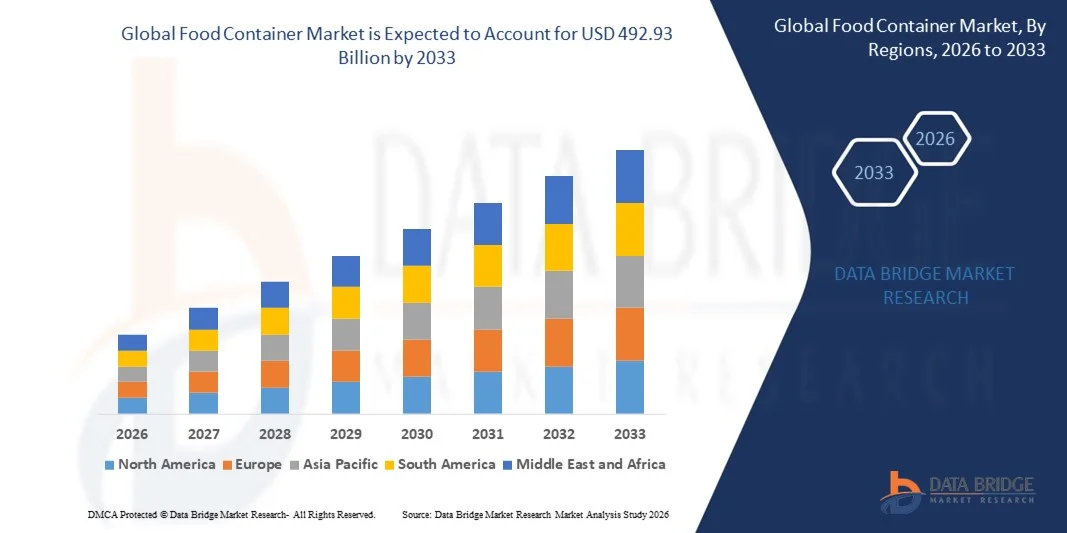
- Como por Data Bridge Market Research Analysis o tamanho global do mercado de contêineres alimentares foi avaliado emUSD 346.62 mil milhões em 2025e espera-se alcançar492,93 mil milhões de USD até 2033, em umaCAGR de 4,50%durante o período de previsão
- O crescimento do mercado é amplamente alimentado pela crescente demanda de soluções de embalagem de alimentos convenientes entre famílias, restaurantes e serviços de entrega de alimentos
- Aumento do consumo de produtos alimentares prontos para consumo e de consumo, juntamente com a expansão doentrega de alimentos onlineAs plataformas apoiam ainda mais o crescimento do mercado
Tamanho e previsão do mercado
- Valor de mercado global (2025):USD 346.62 mil milhões em 2025
- Valor de mercado previsto (2033):492,93 mil milhões de USD até 2033
- Previsões CAGR (2026-2033):4.50%
Análise do Mercado de Contentores de Alimentos
- O mercado está testemunhando um crescimento constante devido à crescente necessidade de soluções de embalagem seguras, duráveis e portáteis que ajudem a preservar a qualidade dos alimentos e impeçam a contaminação durante o armazenamento e transporte
- Além disso, a rápida expansão da indústria de serviços alimentares, o aumento da urbanização e a crescente preferência por soluções de embalagem eco-friendly e reutilizáveis estão contribuindo para a crescente demanda de embalagens de alimentos em aplicações residenciais e comerciais
- A América do Norte dominou o mercado de contêineres de alimentos com a maior parcela de receita de 38,75% em 2025, impulsionada pela crescente demanda por soluções de embalagem convenientes e sustentáveis nos setores de serviços alimentares e varejo
- A região Ásia-Pacífico deverá testemunhar a maior taxa de crescimento no mundorecipiente para alimentosmercado, impulsionado pelo aumento da demanda das economias emergentes, rápida expansão dos setores de varejo e serviço alimentar, e adoção crescente de soluções de embalagens alimentares sustentáveis e inovadoras
- O segmento de garrafas teve a maior quota de receita de mercado em 2025 impulsionada pelo seu uso extensivo em bebidas, molhos, óleos comestíveis e produtos alimentares líquidos. Garrafas oferecem vedação segura, manuseio conveniente e proteção eficaz contra contaminação, tornando-as amplamente preferidas por fabricantes e consumidores
Segmentação de Mercado de Contentores de Alimentos e Escopo de Relatório
|
Atributos |
Insights do mercado chave do recipiente de alimentos |
|
Segmentos Cobertos |
|
|
Países abrangidos |
América do Norte
Europa
Ásia- Pacífico
Médio Oriente e África
América do Sul
|
|
Jogadores do mercado chave |
|
|
Oportunidades de Mercado |
|
|
Informações sobre o Valor Adicionado |
Além dos insights de mercado, como valor de mercado, taxa de crescimento, segmentos de mercado, cobertura geográfica, atores de mercado e cenário de mercado, o relatório de mercado curado pela equipe de Pesquisa do Mercado da Ponte de Dados inclui análise de especialistas em profundidade, análise de importação/exportação, análise de preços, análise de consumo de produção e análise de pilão. |
Qual é o tamanho do mercado de recipientes de alimentos e taxa de crescimento
A crescente demanda por embalagens alimentares convenientes e sustentáveis
- A crescente demanda por soluções de embalagem de alimentos convenientes e confiáveis está moldando significativamente o mercado de contêineres de alimentos, pois consumidores e prestadores de serviços de alimentos buscam opções de armazenamento seguras e práticas para refeições preparadas e retiradas. Recipientes de alimentos são amplamente utilizados para manter a frescura, prevenir a contaminação e garantir o transporte fácil de produtos alimentares, tornando-os essenciais em restaurantes, serviços de catering e aplicações domésticas
- O rápido crescimento das plataformas de entrega de alimentos online e dos serviços de takeaway acelerou a procura de recipientes de alimentos duráveis e portáteis. Restaurantes e cozinhas em nuvem exigem soluções de embalagem que mantenham a qualidade e a temperatura dos alimentos durante o trânsito, oferecendo projetos leves e à prova de vazamentos. Esta tendência está incentivando os fabricantes a desenvolver projetos inovadores de contêineres que melhoram a funcionalidade e a conveniência do usuário
- As tendências de sustentabilidade também influenciam o mercado, com ênfase crescente em materiais de embalagem biodegradáveis, recicláveis e reutilizáveis. Os consumidores e as autoridades reguladoras estão incentivando a adoção de recipientes de alimentos ecológicos feitos de materiais à base de papel, plásticos compostáveis e outras alternativas sustentáveis. Estes desenvolvimentos estão a levar os fabricantes a adoptarem práticas de produção eco-consciente e a reduzirem a dependência dos plásticos tradicionais de utilização única
- Por exemplo, em 2024, empresas como a Amcor, na Suíça, e a Tetra Pak, na Suécia, introduziram soluções sustentáveis de embalagens de alimentos destinadas a melhorar a reciclabilidade e reduzir o impacto ambiental. Essas inovações foram amplamente adotadas por empresas de serviços alimentares e varejistas buscando opções de embalagem ambientalmente responsáveis, mantendo a segurança e a qualidade dos produtos.
- Enquanto a demanda por contêineres de alimentos continua crescendo, a expansão sustentada do mercado depende de melhorar a sustentabilidade do material, aumentar a durabilidade e manter a produção econômica. Os fabricantes estão focados em iniciativas de pesquisa e desenvolvimento para criar soluções de embalagem que equilibrem funcionalidade, responsabilidade ambiental e acessibilidade para adoção mais ampla do mercado
Dinâmica do Mercado de Containers de Alimentos
Controlador
Cada vez mais demanda para levar eAlimentos prontos para comerEmbalagem
- Aumentar a preferência dos consumidores por alimentos de conveniência e refeições de consumo é um dos principais motores do mercado de contêineres alimentares. Estilos de vida urbanos e horários de trabalho movimentados têm aumentado a confiança em refeições prontas para comer e embalados, incentivando restaurantes e plataformas de entrega de alimentos a adotar soluções de embalagem duradouras e seguras. Os recipientes de alimentos desempenham um papel vital na manutenção da higiene, frescura e portabilidade dos alimentos
- Expandir as indústrias de serviços alimentares, incluindo restaurantes de serviço rápido, cafés e cozinhas em nuvem, também estão contribuindo para o crescimento do mercado. Essas empresas exigem grandes quantidades de soluções de embalagem para apoiar as operações diárias e garantir serviços de entrega de alimentos eficientes. Recipientes de alimentos permitem às empresas gerenciar elevados volumes de pedidos, mantendo a qualidade e apresentação de alimentos
- Os fabricantes estão desenvolvendo ativamente projetos inovadores de contêineres com melhores mecanismos de vedação, retenção de temperatura e materiais leves. Estas inovações ajudam as empresas a reduzir os resíduos de embalagens e a melhorar a experiência global dos consumidores. Ao mesmo tempo, as empresas estão promovendo materiais sustentáveis para atender às crescentes preocupações ambientais e exigências regulamentares
- Por exemplo, em 2023, empresas como a Nestlé na Suíça e a PepsiCo nos EUA aumentaram o uso de recipientes de alimentos recicláveis e reutilizáveis em suas linhas de produtos prontos para comer e levar. Estas iniciativas foram introduzidas para melhorar a sustentabilidade e reduzir os resíduos de embalagens, mantendo simultaneamente a segurança dos produtos e a estabilidade das prateleiras
- Embora a crescente demanda por alimentos takeaway suporte o crescimento do mercado, a adoção generalizada depende de materiais de embalagem de baixo custo, cadeias de suprimentos eficientes e cumprimento das regulamentações ambientais. A inovação contínua em tecnologia de embalagem sustentável será crucial para satisfazer os requisitos em evolução do mercado global de contentores alimentares
Restrição/Desafio
Preocupações ambientais e restrições regulamentares em embalagens plásticas
- As preocupações ambientais associadas aos resíduos de plástico representam um grande desafio para o mercado dos recipientes alimentares. Recipientes de plástico tradicionais contribuem significativamente para a poluição ambiental e a acumulação de aterros, levando os governos e as autoridades reguladoras a introduzirem regulamentos mais rigorosos sobre embalagens de plástico de uso único
- As políticas regulatórias em vários países estão incentivando a transição para materiais de embalagem recicláveis e biodegradáveis. Embora esses regulamentos apoiem a sustentabilidade ambiental, eles também aumentam os custos de conformidade para os fabricantes e exigem investimento significativo em materiais alternativos e processos de produção
- Os desafios da cadeia de suprimentos e de fornecimento de materiais também podem impactar a disponibilidade e o custo de soluções de embalagem ecológicas. Materiais sustentáveis, como plásticos biodegradáveis, fibras moldadas e embalagens à base de papel, muitas vezes requerem técnicas especializadas de produção e matérias-primas, o que pode aumentar os custos globais de fabricação
- Por exemplo, em 2024, os operadores de serviços alimentares de países como a Alemanha e o Canadá comunicaram custos operacionais mais elevados associados à passagem de recipientes plásticos convencionais para alternativas biodegradáveis. O cumprimento da regulamentação ambiental e a adoção de materiais sustentáveis certificados também aumentaram as despesas de aquisição e produção para fornecedores de embalagens
- Enfrentar esses desafios exigirá inovação em materiais sustentáveis, melhor infraestrutura de reciclagem e esforços colaborativos entre fabricantes, reguladores e empresas de serviços alimentares. O desenvolvimento de soluções de embalagem ecológicas eficazes em termos de custos e o aumento da sensibilização dos consumidores para os contentores alimentares sustentáveis serão essenciais para o crescimento do mercado a longo prazo.
Âmbito do mercado de contentores de alimentos
O mercado é segmentado com base no tipo, embalagem, material e aplicação.
- Por Tipo
Com base no tipo, o mercado de recipientes de alimentos é segmentado em garrafas, jarras, latas, caixas, copos e banheiras. O segmento de garrafas teve a maior quota de receita de mercado em 2025 impulsionada pelo seu uso extensivo em bebidas, molhos, óleos comestíveis e produtos alimentares líquidos. Garrafas oferecem vedação segura, manuseio conveniente e proteção eficaz contra contaminação, tornando-as amplamente preferidas por fabricantes e consumidores.
Espera-se que o segmento de copos testemunhe a taxa de crescimento mais rápida de 2026 a 2033, impulsionada pelo crescente consumo de alimentos prontos para consumo, sobremesas e produtos à base de leite. Copos são comumente usados para embalagens de itens como iogurte, sorvete e refeições instantâneas, oferecendo conveniência e controle de porções. O aumento da procura de comida e de consumo em curso está a apoiar ainda mais o crescimento deste segmento.
- Por Embalagem
Com base na embalagem, o mercado de contêineres de alimentos é segmentado em embalagens flexíveis e embalagens rígidas. O segmento de embalagens rígidas representou a maior quota de receita do mercado em 2025 devido à sua durabilidade, resistência e capacidade de proporcionar maior proteção para produtos alimentares durante o armazenamento e transporte. Recipientes rígidos são amplamente utilizados em alimentos embalados, bebidas e produtos alimentícios processados, pois ajudam a manter a integridade do produto e a estabilidade da prateleira.
Espera-se que o segmento de embalagem flexível testemunhe a taxa de crescimento mais rápida de 2026 a 2033, impulsionada pela sua estrutura leve, eficiência de custo e uso reduzido de material. Soluções de embalagem flexíveis são cada vez mais adotadas para lanches, alimentos processados e refeições prontas para comer, pois oferecem conveniência, fácil armazenamento e melhor eficiência de transporte.
- Por Material
Com base no material, o mercado de recipientes de alimentos é segmentado em papelão, plástico, metal e vidro. O segmento plástico teve a maior quota de receita de mercado em 2025 impulsionada pela sua versatilidade, propriedades leves e custo-benefício. Recipientes plásticos são amplamente utilizados em aplicações de embalagens de alimentos devido à sua durabilidade, resistência à umidade e capacidade de ser moldado em várias formas e tamanhos.
Espera-se que o segmento de cartão testemunhe a taxa de crescimento mais rápida de 2026 a 2033 devido à crescente demanda por materiais de embalagem sustentáveis e recicláveis. Recipientes de papelão estão ganhando popularidade como alternativas ecológicas para embalagens plásticas, apoiadas por iniciativas regulatórias e crescente conscientização dos consumidores sobre soluções de embalagens ecológicas.
- Por Aplicação
Com base na aplicação, o mercado de contêineres de alimentos é segmentado em Produtos de Moagem de Grãos, Bens Lácteos, Frutas e Legumes, Produtos de Padaria, Produtos Processados de Carne e Outros. O segmento de produtos lácteos detinha a maior participação de receita de mercado em 2025 impulsionada pelo alto consumo de leite embalado, iogurte, queijo e outros produtos à base de leite. Os recipientes de alimentos desempenham um papel fundamental na manutenção da frescura, higiene e prazo de validade dos produtos lácteos.
Espera-se que o segmento de produtos de padaria testemunhe a taxa de crescimento mais rápida de 2026 a 2033, impulsionada pelo aumento do consumo de pães embalados, bolos, bolos e lanches. A crescente demanda por produtos de padaria convenientes e prontos para consumo, combinada com o crescimento das padarias de varejo e serviços de entrega de alimentos on-line, está aumentando ainda mais a demanda por recipientes de alimentos especializados neste segmento.
Análise Regional do Mercado de Contentores de Alimentos
- A América do Norte dominou o mercado de contêineres de alimentos com a maior parte de receita de 38,75% em 2025, impulsionada pelo aumento da demanda por convenientes eembalagem sustentávelsoluções em todos os sectores dos serviços alimentares e retalhistas
- Os consumidores da região valorizam muito a durabilidade, versatilidade e atributos eco-friendly oferecidos por recipientes de alimentos modernos, que suportam controle de porções, eficiência de armazenamento e maior prazo de validade
- Esta adopção generalizada é ainda apoiada por elevados rendimentos disponíveis, estilos de vida movimentados e crescente sensibilização para as normas de segurança e higiene dos alimentos, estabelecendo os contentores alimentares como essenciais para o uso comercial e doméstico
U.S. Food Container Market Insight
O mercado de contêineres de alimentos dos EUA captou a maior parte de receita em 2025 na América do Norte, alimentada pelo aumento da demanda por refeições prontas para comer, comida e serviços de entrega. Consumidores e operadores de serviços alimentares estão priorizando contêineres que garantem frescura, conveniência e cumprimento das normas de segurança. A adopção de soluções inovadoras de embalagem, incluindo contentores reutilizáveis e recicláveis, está a aumentar ainda mais o crescimento do mercado. Além disso, a integração de materiais sustentáveis e designs avançados está ajudando as marcas a reduzir o impacto ambiental e atender às expectativas dos consumidores.
Por Dentro do Mercado Europeu de Containers Alimentares
Prevê-se que o mercado europeu de contentores alimentares testemunhe a taxa de crescimento mais rápida entre 2026 e 2033, impulsionada por regulamentações rigorosas em matéria de segurança alimentar, por uma maior sensibilização ambiental e pela adopção de soluções de embalagem sustentáveis. Os consumidores europeus procuram cada vez mais contentores ecológicos e recicláveis, incentivando os fabricantes a inovar com materiais biodegradáveis e desenhos leves. O crescimento é significativo em restaurantes, mercearias e uso doméstico, com contêineres sendo incorporados tanto em operações de serviço alimentar quanto em embalagens de varejo.
U.K. Food Container Market Insight
Espera-se que o mercado de contêineres alimentares do Reino Unido testemunhe a taxa de crescimento mais rápida de 2026 para 2033, alimentada pelo aumento da demanda por alimentos de conveniência, serviços de entrega de refeições e embalagens sustentáveis. Os consumidores enfatizam a higiene, durabilidade e reutilização em recipientes, enquanto os varejistas e restaurantes priorizam soluções que reduzem os resíduos plásticos e melhoram a eficiência operacional. A infraestrutura de varejo avançada do Reino Unido e o crescimento do comércio eletrônico estão apoiando a adoção generalizada de opções inovadoras de contêineres de alimentos.
Alemanha Food Container Market Insight
Espera-se que o mercado de contêineres alimentares da Alemanha testemunhe a taxa de crescimento mais rápida de 2026 a 2033, impulsionada pela crescente sensibilização para as embalagens sustentáveis e pela procura de materiais reutilizáveis e recicláveis. Os fortes setores de serviços alimentares e de varejo da Alemanha, combinados com a preferência do consumidor por soluções ecoconscientes, promovem a adoção de recipientes de alimentos feitos de cartão, vidro e metal. Os fabricantes estão cada vez mais focados em projetos inovadores que aumentam a durabilidade, portabilidade e apresentação de produtos, alinhados com os padrões ambientais e de qualidade locais.
Visão do mercado de contêineres de alimentos da Ásia-Pacífico
Espera-se que o mercado de contêineres de alimentos Ásia-Pacífico testemunhe a taxa de crescimento mais rápida de 2026 para 2033, impulsionada pela urbanização rápida, aumento da renda disponível e aumento da demanda por alimentos embalados e descartados em países como China, Japão e Índia. A crescente indústria de serviços alimentares da região, juntamente com iniciativas governamentais de promoção de embalagens sustentáveis, está acelerando a adoção. Além disso, a APAC está emergindo como um importante centro de produção para recipientes inovadores, tornando as opções eco-friendly e acessíveis aos consumidores.
Japão Food Container Market Insight
Espera-se que o mercado japonês de contêineres de alimentos testemunhe a taxa de crescimento mais rápida entre 2026 e 2033, devido à alta demanda do país por conveniência, segurança e higiene no armazenamento e embalagem de alimentos. Os consumidores japoneses enfatizam contêineres compactos, duráveis e ambientalmente responsáveis, levando os fabricantes a inovar com soluções reutilizáveis e leves. A integração de contêineres com refeições ao estilo bento, armazenamento em casa e serviços de entrega de refeições aumenta o crescimento do mercado
China Food Container Market Insight
O mercado de contêineres alimentares da China representou a maior quota de receita de mercado da Ásia-Pacífico em 2025, atribuída à expansão da classe média do país, à urbanização rápida e ao aumento do consumo de alimentos prontos para comer e tomar. O impulso da China para soluções modernas de varejo, e-commerce e embalagens sustentáveis está promovendo a adoção generalizada de recipientes feitos de materiais recicláveis, biodegradáveis e de alto desempenho. Fortes capacidades de fabricação doméstica estão permitindo opções inovadoras e acessíveis para uso comercial e doméstico
Quais são as principais empresas no mercado de contêineres de alimentos
A indústria de Contentores Alimentares é liderada principalmente por empresas bem estabelecidas, incluindo:
- Bemis Manufacturing Company (EUA)
- Amcor plc (U.K.)
- CORPORAÇÃO DE BOLAS (EUA)
- Crown (EUA)
- Silgan Holdings Inc (EUA)
- Anchor Glass Container Corporation (EUA)
- PLASTIPAK Holdings INC. (EUA)
- DS Smith (UK)
- Grupo Mondi (U.K.)
- Ar Selado (EUA)
- Rio Tinto (UK)
- Sonoco Products Company (EUA)
- Impressora (EUA)
- Grupo Rdagh S.A (U.K.)
- Graham Packaging Company (EUA)
- Empresa Consolidada Container (EUA)
- Weiner (U.K.)
Mais recentes desenvolvimentos no mercado global de recipientes de alimentos
- Em outubro de 2024, a Tupperware Brands Corporation anunciou um acordo de reestruturação com um consórcio de credores, formando a New Tupperware Company. A iniciativa visa adotar uma metodologia de start-up com operações ágeis, possibilitando o desenvolvimento de produtos iterativos e uma resposta mais rápida ao mercado. Prevê-se que melhore a eficiência operacional, reduza os custos e aumente a competitividade no mercado global de contentores alimentares. A reestruturação permitirá também que a Tupperware se concentre na inovação e nas linhas de produtos centradas no cliente.
- Em junho de 2024, a Sonoco Products Company concluiu a aquisição da Eviosys por aproximadamente US$ 3,9 bilhões. Este movimento estratégico fortalece o principal negócio da Sonoco em embalagens metálicas sustentáveis e amplia seu portfólio de produtos para alimentos, bens de consumo e setores promocionais. A aquisição melhora a pegada global da Sonoco, acelera suas capacidades de inovação e apoia a mudança para soluções de embalagem ambientalmente responsáveis. Prevê-se que aumente a quota de mercado e a rendibilidade nos segmentos de embalagem premium.
- Em dezembro de 2023, a Novolex lançou uma nova gama de embalagens de alimentos recicláveis feitas com um mínimo de 10% de conteúdo reciclado pós-consumidor. A linha de produtos inclui recipientes evidentes, copos de sobremesa, caixas de bolo e conchas de padaria. Este lançamento aborda a crescente demanda dos consumidores por soluções de embalagem sustentáveis e ecológicas, respeitando as normas ambientais. Fortalece a presença da Novolex nos setores de varejo e foodservice e promove a diferenciação da marca através da sustentabilidade.
- Em fevereiro de 2023, Chuk, uma iniciativa de Yash Pakka, introduziu recipientes de entrega de alimentos 100% compostáveis feitos de bagaço. Os recipientes são concebidos para substituir os plásticos de utilização única e reduzir o impacto ambiental na indústria de serviços alimentares. Este desenvolvimento apoia as tendências globais de sustentabilidade e se alinha com a crescente preferência do consumidor pela embalagem ecoconsciente. Também permite que restaurantes e plataformas de entrega atendam às demandas regulatórias e de mercado de soluções biodegradáveis.
- Em outubro de 2022, a empresa Molded Fiber Glass Tray Company (MFG Tray) adquiriu ferramentas de linha de produtos da Orbis Corporation. Esta aquisição amplia as capacidades de produção, permitindo à empresa oferecer uma gama mais ampla de recipientes industriais e de qualidade alimentar. O movimento suporta a crescente demanda do mercado por soluções de embalagem duráveis e versáteis. Ele também aumenta a eficiência operacional da MFG Tray, permitindo uma volta mais rápida para pedidos personalizados e aumentando a competitividade na América do Norte.
- Em maio de 2021, Berry Global lançou o pote CombiLight, um recipiente de alimentos circular leve reduzindo o conteúdo de plástico em 60% em comparação com os recipientes tradicionais. O produto atende à demanda do consumidor por soluções de embalagem sustentáveis, fortes e econômicas. Ele apoia princípios econômicos circulares, reduz o impacto ambiental e fornece aos fabricantes de alimentos opções de alto desempenho e eco-friendly. A inovação reforça a posição da Berry Global no mercado e incentiva a adoção em aplicações de varejo e serviços alimentares
SKU-
Obtenha acesso online ao relatório sobre a primeira nuvem de inteligência de mercado do mundo

- Painel interativo de análise de dados
- Painel de análise da empresa para oportunidades de elevado potencial de crescimento
- Acesso de analista de pesquisa para personalização e customização. consultas
- Análise da concorrência com painel interativo
- Últimas notícias, atualizações e atualizações Análise de tendências
- Aproveite o poder da análise de benchmark para um rastreio abrangente da concorrência
Metodologia de Investigação
A recolha de dados e a análise do ano base são feitas através de módulos de recolha de dados com amostras grandes. A etapa inclui a obtenção de informações de mercado ou dados relacionados através de diversas fontes e estratégias. Inclui examinar e planear antecipadamente todos os dados adquiridos no passado. Da mesma forma, envolve o exame de inconsistências de informação observadas em diferentes fontes de informação. Os dados de mercado são analisados e estimados utilizando modelos estatísticos e coerentes de mercado. Além disso, a análise da quota de mercado e a análise das principais tendências são os principais fatores de sucesso no relatório de mercado. Para saber mais, solicite uma chamada de analista ou abra a sua consulta.
A principal metodologia de investigação utilizada pela equipa de investigação do DBMR é a triangulação de dados que envolve a mineração de dados, a análise do impacto das variáveis de dados no mercado e a validação primária (especialista do setor). Os modelos de dados incluem grelha de posicionamento de fornecedores, análise da linha de tempo do mercado, visão geral e guia de mercado, grelha de posicionamento da empresa, análise de patentes, análise de preços, análise da quota de mercado da empresa, normas de medição, análise global versus regional e de participação dos fornecedores. Para saber mais sobre a metodologia de investigação, faça uma consulta para falar com os nossos especialistas do setor.
Personalização disponível
A Data Bridge Market Research é líder em investigação formativa avançada. Orgulhamo-nos de servir os nossos clientes novos e existentes com dados e análises que correspondem e atendem aos seus objetivos. O relatório pode ser personalizado para incluir análise de tendências de preços de marcas-alvo, compreensão do mercado para países adicionais (solicite a lista de países), dados de resultados de ensaios clínicos, revisão de literatura, mercado remodelado e análise de base de produtos . A análise de mercado dos concorrentes-alvo pode ser analisada desde análises baseadas em tecnologia até estratégias de carteira de mercado. Podemos adicionar quantos concorrentes necessitar de dados no formato e estilo de dados que procura. A nossa equipa de analistas também pode fornecer dados em tabelas dinâmicas de ficheiros Excel em bruto (livro de factos) ou pode ajudá-lo a criar apresentações a partir dos conjuntos de dados disponíveis no relatório.











