



Global Luxury Perfume Market Segmentation, By Product Type (Eau de Parfum, Eau de Toilette, Parfum, Eau Fraiche, and Cologne), Gender (Male, Female, and Unisex), Fragrance Family (Floral, Woody, Oriental, Fresh, and Citrus), Distribution Channel (Online Retail, Department Stores, Specialty Stores, Perfume Boutiques, and Supermarkets) - Industry Trends and Forecast to 2033
Qual é o tamanho do mercado de perfume de luxo e taxa de crescimento
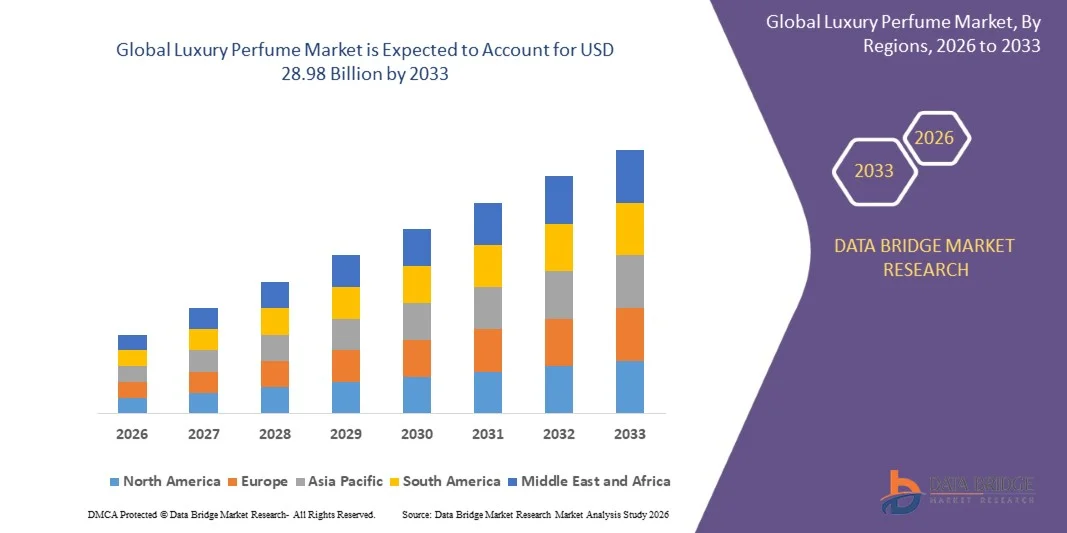
- Como por Data Bridge Market Research Analysis o tamanho global do mercado de perfumes de luxo foi avaliado em17,91 mil milhões de USD em 2025e espera-se alcançar28,98 mil milhões de USD até 2033, em umaCAGR de 6,20%durante o período de previsão
- O crescimento do mercado é amplamente alimentado pelo aumento da preferência do consumidor por fragrâncias premium e nicho, juntamente com o aumento dos rendimentos disponíveis e uma inclinação crescente para produtos de cuidados pessoais de luxo em mercados desenvolvidos e emergentes
- Além disso, o desejo de exclusividade, perfis de perfume sofisticados e experiências marcadas está impulsionando a demanda por perfumes de luxo, estabelecendo-os como símbolos de status e estilo de vida essenciais. Esses fatores estão acelerando a adoção de fragrâncias de ponta, aumentando significativamente o crescimento da indústria
Tamanho e previsão do mercado
- Valor de mercado global (2025):17,91 mil milhões de USD em 2025
- Valor de mercado previsto (2033):28,98 mil milhões de USD até 2033
- Previsões CAGR (2026-2033):6.20%
Análise de mercado de perfume de luxo
- Perfumes de luxo, oferecendo experiências de perfume de alta qualidade, longa duração e muitas vezes assinatura, são cada vez mais considerados componentes essenciais de higiene pessoal e expressão de estilo de vida em ambientes residenciais e sociais, devido à sua exclusividade, prestígio marca, e perfis olfativos distintivos
- A crescente demanda por perfumes de luxo é alimentada principalmente pelo aumento da conscientização da marca, expansão dos canais de varejo e e-commerce, crescimento da cultura do dom, e uma tendência crescente para nichos e fragrâncias artesanais que atendem às preferências do consumidor em evolução
- América do Norte dominado mercado de perfume de luxo com uma quota de 37,3% em 2025,devido à alta renda disponível, forte conscientização da marca, e crescente demanda por produtos de cuidados pessoais premium
- Asia-Pacific é esperado para ser a região de crescimento mais rápido no mercado de perfumes de luxo durante o período de previsão devido ao aumento da renda disponível, urbanização e estilos de vida aspiracionais crescentes em países como China, Japão e Índia
- O segmento Eau de parfum dominou o mercado com uma quota de mercado de 47,5% em 2025, devido ao seu perfil de fragrância de longa duração e maior concentração de compostos aromáticos. Os consumidores preferem frequentemente Eau de Parfum pelo seu aroma e versatilidade mais ricos, tanto para o dia como para a noite. O segmento também se beneficia de forte promoção da marca e embalagem premium, aumentando seu apelo entre compradores de perfumes de luxo
Denunciar escopo e segmentação de mercado de perfume de luxo
|
Atributos |
Perfume de luxo importante mercado Insights |
|
Segmentos Cobertos |
|
|
Países abrangidos |
América do Norte
Europa
Ásia- Pacífico
Médio Oriente e África
América do Sul
|
|
Jogadores do mercado chave |
|
|
Oportunidades de Mercado |
|
|
Informações sobre o Valor Adicionado |
Além dos insights sobre cenários de mercado, como valor de mercado, taxa de crescimento, segmentação, cobertura geográfica e principais atores, os relatórios de mercado curados pela Data Bridge Market Research também incluem análise de especialistas em profundidade, análise de preços, análise de compartilhamento de marca, inquérito ao consumidor, análise demografia, análise da cadeia de suprimentos, análise da cadeia de valor, visão geral da matéria-prima/consumíveis, critérios de seleção de fornecedores, Análise de PESTLE, Análise de Porter e marco regulatório. |
Qual é a tendência chave no mercado de perfumes de luxo
“Exigência crescente de Niche e Fragrâncias Artisanais”
- Uma tendência significativa no mercado de perfumes de luxo é a crescente preferência do consumidor por nichos e fragrâncias artesanais, impulsionada pelo desejo crescente de experiências personalizadas, exclusivas e únicas de perfume. Essa tendência está incentivando as marcas a desenvolverem perfumes de edição limitada, coleções de pequenos lotes e perfis olfativos de assinatura que atendam aos gostos dos consumidores em evolução
- Por exemplo, Le Labo, sob Estée Lauder Companies Inc., oferece fragrâncias à mão em quantidades limitadas, enfatizando a personalização e ingredientes raros, o que reforçou seu apelo entre os entusiastas de perfumes de luxo em busca de perfumes distintivos
- A adoção de perfumes de nicho também está se expandindo entre segmentos de consumidores mais jovens e ricos, influenciados pelas mídias sociais, endossos de celebridades e campanhas de marketing digital destacando o artesanato artesanal. Isto é posicionar perfumes de luxo como declarações de estilo de vida em vez de meros produtos de cuidados pessoais
- Casas de perfumes de luxo, como Hermès e Byredo, inovam com composições criativas de perfumes que mesclam notas clássicas e contemporâneas, atendendo às crescentes expectativas de originalidade e qualidade premium. Esta inovação está promovendo o crescimento no segmento de fragrância de ponta globalmente
- O mercado está testemunhando maior interesse em ingredientes raros, fornecimento sustentável e contar histórias por trás de fragrâncias, que está reforçando a lealdade do consumidor e criando oportunidades para as marcas se diferenciarem em um mercado lotado
- Varejistas e boutiques estão cada vez mais curando experiências exclusivas na loja e consultas personalizadas para perfumes de nicho, melhorando a experiência global do consumidor e fortalecendo o posicionamento da marca no segmento premium
Dinâmica de mercado de perfume de luxo
Controlador
“Crescimento de Preferência do Consumidor para Perfumes Premium e Branded”
- A crescente demanda global por perfumes premium e de marca está impulsionando o mercado de perfumes de luxo, pois os consumidores associam cada vez mais marcas conhecidas com status, qualidade e sofisticação. Esta preferência está motivando as empresas líderes a expandir portfólios de produtos e fortalecer os esforços de marketing
- Por exemplo, a Chanel continua a alavancar a sua icónica marca No. 5 e lançamentos de edição limitada, como o No. 5 L’Eau Drop, para atrair consumidores leais e novos, reforçando o domínio da marca no sector dos perfumes de luxo
- A expansão dos canais de comércio electrónico e das campanhas de marketing digital por marcas como a Dior e a Gucci estão ainda a permitir aos consumidores aceder convenientemente a perfumes de luxo, apoiando assim um crescimento consistente do mercado
- O foco em coleções exclusivas, conjuntos de presentes e lançamentos sazonais de empresas como Estée Lauder e Puig está criando engajamento contínuo com consumidores, alimentando compras repetidas e reforçando a expansão do mercado
- O aumento da sensibilização para as tendências mundiais do luxo, combinado com o aumento dos rendimentos disponíveis em mercados emergentes, como a China e a Índia, está a aumentar o apelo aos perfumes premium, apoiando ainda mais o crescimento do mercado
Restrição/Desafio
“Alto preço e acessibilidade limitada em mercados emergentes”
- O mercado de perfumes de luxo enfrenta desafios devido ao alto custo das fragrâncias premium, o que limita a acessibilidade entre segmentos de consumo mais amplos em regiões emergentes. Estas barreiras aos preços podem restringir a adopção e reduzir a penetração potencial no mercado
- Por exemplo, a disponibilidade limitada de marcas como Guerlain e Byredo em certos mercados asiáticos e africanos afeta o acesso do consumidor a fragrâncias de ponta, criando dependência em viagens internacionais de varejo ou comércio eletrônico para compras
- Os custos de produção relacionados com ingredientes raros, artesanato artesanal e embalagens premium contribuem para preços de varejo elevados, impactando a acessibilidade e adoção mais ampla
- O crescimento do mercado também pode ser dificultado por desafios regulamentares, direitos de importação e impostos sobre bens de luxo em várias economias emergentes, que aumentam o custo global do produto e afetam o posicionamento competitivo
- Esses fatores criam, coletivamente, uma barreira para a aquisição de novos consumidores e limitam a capacidade das marcas de se expandirem rapidamente em todas as regiões globais, especialmente onde o rendimento disponível e a consciência de luxo ainda estão em desenvolvimento
Escopo de mercado de perfume de luxo
O mercado é segmentado com base no tipo de produto, gênero, família de fragrâncias e canal de distribuição.
• Por tipo de produto
Com base no tipo de produto, o mercado de perfumes de luxo é segmentado em Eau de Parfum, Eau de Toilette, Parfum, Eau Fraiche e Colônia. O segmento Eau de Parfum dominou o mercado com a maior quota de receita de mercado de 47,5% em 2025, impulsionada pelo seu perfil de fragrância de longa duração e maior concentração de compostos aromáticos. Os consumidores preferem frequentemente Eau de Parfum pelo seu aroma e versatilidade mais ricos, tanto para o dia como para a noite. O segmento também se beneficia de forte promoção da marca e embalagem premium, aumentando seu apelo entre compradores de perfume de luxo.
Prevê-se que o segmento Parfum testemunhe a taxa de crescimento mais rápida de 18,9% de 2026 a 2033, alimentada pelo aumento da demanda entre indivíduos e colecionadores de alto valor líquido. Parfum oferece a experiência de fragrância mais concentrada, exigindo apenas uma pequena aplicação para alcançar um efeito duradouro. Aumentar a consciência da perfumaria premium e nicho, combinada com lançamentos exclusivos de marcas como Chanel e Dior, é esperado para impulsionar sua adoção.
• Por Sexo
Com base no gênero, o mercado de perfumes de luxo é segmentado em fragrâncias masculinas, femininas e unissex. O segmento feminino teve a maior quota de receita de mercado em 2025, impulsionada por uma maior variedade de ofertas e maior engajamento do consumidor em compras de fragrância premium. As mulheres frequentemente exploram várias opções de fragrâncias, apoiando compras repetidas e lealdade às marcas de luxo. Campanhas de marketing dirigidas às mulheres consumidoras e lançamentos sazonais também contribuem para o seu domínio sustentado.
Espera-se que o segmento unissex testemunhe o CAGR mais rápido de 2026 a 2033, impulsionado pela evolução das preferências do consumidor para fragrâncias neutras e versáteis. Por exemplo, marcas como Tom Ford popularizaram perfumes unissex que apelam para um público amplo. Tendências sociais que promovem inclusividade e minimalismo no cuidado pessoal são susceptíveis de impulsionar as vendas de perfume unissex em canais on-line e offline.
• Por Família Fragrância
Com base na família de fragrâncias, o mercado de perfumes de luxo é segmentado em florais, lenhosos, orientais, frescos e citrinos. O segmento floral dominou o mercado com a maior quota de receita em 2025, impulsionada pelo seu apelo intemporal e forte associação com elegância e feminilidade. Fragrâncias florais são amplamente preferidos para o desgaste diário, presentes e ocasiões especiais, tornando-os um grampo em coleções de perfume de luxo. A disponibilidade de sub-variedades como rosa, jasmim e peônia reforça ainda mais sua posição de mercado.
O segmento lenhoso é esperado para testemunhar a taxa de crescimento mais rápida de 2026 a 2033, alimentado pelo aumento do interesse do consumidor em aromas mais profundos e sofisticados. Por exemplo, marcas como Creed e Jo Malone oferecem fragrâncias lenhosas que atendem aos consumidores masculinos e femininos em busca de perfumes de longa duração. Espera-se que a crescente tendência de nicho e perfumaria artesanal, enfatizando notas de madeira naturais e exóticas, promova ainda mais o seu crescimento.
• Por Canal de Distribuição
Com base no canal de distribuição, o mercado de perfumes de luxo é segmentado em varejo online, lojas de departamento, lojas especializadas, boutiques de perfume e supermercados. O segmento de lojas de departamento teve a maior participação de receita de mercado em 2025, impulsionada pela sua capacidade de oferecer experiências imersivas de marca e consultas personalizadas. Lojas de departamento muitas vezes mostram uma grande variedade de marcas premium, aumentando as oportunidades de venda cruzada e engajamento do consumidor. Promoções sazonais e lançamentos exclusivos na loja também ajudam a manter seu domínio de mercado.
Espera-se que o segmento de varejo online testemunhe o CAGR mais rápido de 2026 a 2033, impulsionado pela crescente preferência por conveniência e entrega domiciliar entre consumidores de luxo. Por exemplo, plataformas de comércio eletrônico como Sephora e FragranceNet expandiram sua presença online para oferecer consultas de fragrância virtual e lançamentos online exclusivos. A penetração crescente desmartphonese portais de pagamento seguros são esperados para acelerar ainda mais as vendas on-line de perfumes de luxo.
Qual região detém a maior parte do mercado de perfumes de luxo
- A América do Norte dominou o mercado de perfumes de luxo com a maior parcela de receita de 37,3% em 2025, impulsionada por altos rendimentos disponíveis, forte consciência da marca e crescente demanda por produtos premium de cuidados pessoais
- Os consumidores da região valorizam muito a exclusividade, ingredientes de alta qualidade e experiências únicas de fragrância oferecidas por perfumes de luxo de marcas globais estabelecidas
- Esta adoção generalizada é ainda apoiada pela infraestrutura de varejo avançada, fortes canais de distribuição online e offline, e pela tendência crescente de doar perfumes de luxo, estabelecendo-os como uma escolha preferencial entre consumidores ricos
U.S. Luxury Perfume Market Insight
O mercado de perfumes de luxo dos EUA capturou a maior parte de receita em 2025 na América do Norte, alimentada pela rápida expansão dos canais premium de varejo e e-commerce. Os consumidores estão cada vez mais buscando fragrâncias icônicas de longa duração e coleções de perfumaria de nicho. A tendência crescente de perfumes personalizados e de edição limitada, combinada com a crescente influência de endossos de celebridades e campanhas de marketing, impulsiona ainda mais o mercado. Além disso, a integração de estratégias de varejo omnicanal e experiências de marca de luxo está contribuindo significativamente para o crescimento do mercado.
Europe Luxury Perfume Market Insight
Prevê-se que o mercado europeu de perfumes de luxo se expanda num CAGR substancial ao longo do período de previsão, impulsionado principalmente pela elevada consciência da moda e por um forte património da perfumaria em países como a França e a Itália. Urbanização, crescente turismo e a presença de marcas de perfume icônicas promovem a adoção de fragrâncias de luxo. Os consumidores europeus também são atraídos por aromas sofisticados, de design e ingredientes sustentáveis de alta qualidade. A região está experimentando um crescimento significativo em lojas de varejo premium, boutiques especializadas e canais on-line, aumentando a acessibilidade da marca.
U.K. Luxury Perfume Market Insight
O mercado de perfumes de luxo do Reino Unido está previsto para crescer em um CAGR notável durante o período de previsão, impulsionado por uma crescente preferência por fragrâncias premium e cultura de presenteamento. Aumentar o conhecimento do consumidor sobre marcas exclusivas e composições de perfume inovadoras é encorajador para compras de lojas físicas e online. A bem estabelecida infraestrutura de comércio eletrônico e varejo do país deve continuar apoiando as vendas de perfumes de luxo. Além disso, a demanda por nichos e perfumes unissex está influenciando a dinâmica do mercado na região.
Alemanha Luxury Perfume Market Insight
Espera-se que o mercado alemão de perfumes de luxo se expanda em um considerável CAGR durante o período de previsão, alimentado pelo aumento da conscientização sobre cuidados pessoais premium e marcas de luxo internacionais. O foco da Alemanha na qualidade, sustentabilidade e inovação em produtos de consumo promove a adoção de perfumes de luxo, especialmente entre populações urbanas ricas. A integração de fragrâncias com opções de doações personalizadas e experiências de varejo exclusivas está impulsionando o crescimento. O mercado está testemunhando crescente demanda por perfumes clássicos e contemporâneos em lojas de varejo e especialidades.
Asia-Pacific Luxury Perfume Market Insight
O mercado de perfumes de luxo Ásia-Pacífico está preparado para crescer no CAGR mais rápido durante o período de previsão de 2026 a 2033, impulsionado pelo aumento da renda disponível, urbanização e estilos de vida aspiracionais em países como China, Japão e Índia. A crescente exposição a marcas e tendências globais através de mídias sociais e marketing digital está impulsionando a adoção. Além disso, a expansão dos canais de varejo online, a disponibilidade de perfumes internacionais e uma crescente preferência por doações premium estão contribuindo para o rápido crescimento do mercado.
Japão Luxury Perfume Market Insight
O mercado japonês de perfumes de luxo está ganhando impulso devido à alta consciência da moda, estilos de vida urbanos e demanda por fragrâncias sofisticadas. Os consumidores japoneses mostram forte preferência por marcas de grife e aromas de nicho que refletem estilo pessoal. O crescimento de boutiques especializadas e plataformas online aumenta a acessibilidade a perfumes de luxo. Além disso, espera-se que o aumento das oportunidades de oferta e lançamentos sazonais estimulem ainda mais a expansão do mercado.
China Perfume de luxo Market Insight
O mercado de perfumes de luxo da China representou a maior parte de receita de mercado na Ásia-Pacífico em 2025, atribuída à crescente classe média, crescente população urbana e crescente conscientização das marcas internacionais de luxo. Os perfumes premium estão se tornando um símbolo de status em ocasiões de uso pessoal e presentes. As iniciativas governamentais que promovem o crescimento do varejo de luxo e a proliferação de plataformas de comércio eletrônico que oferecem fragrâncias internacionais autênticas são fatores fundamentais para a expansão do mercado.
Quais são as principais empresas no mercado de perfumes de luxo
A indústria de perfumes de luxo é liderada principalmente por empresas bem estabelecidas, incluindo:
- Chanel SA(França)
- LVMH Moët Hennessy Louis Vuitton SE (França)
- Mirtilos(U.K.)
- Estée Lauder Inc. (EUA)
- Elizabeth Arden, Inc. (EUA)
- Beleza Dolce & Gabbana(Itália)
- Tommy Hilfiger Licensing, LLC (EUA)
- Lancôme (França)
- NARS (EUA)
- Christian Dior SE (França)
- Charlotte Tilbury Beauty Ltd.
- Chanel (França)
- Estée Lauder Companies Inc. (EUA)
- L’Oréal S.A. (França)
- Giorgio Armani S.p.A. (Itália)
- Bioterma (França)
- Guerlain (França)
- Shiseido Company Limited (Japão)
- Givenchy (França)
- Yves Saint Laurent Beauté (França)
- Puig SL (Espanha)
Quais são os recentes desenvolvimentos no mercado global de perfumes de luxo
- Em dezembro de 2025, Coty anunciou um acordo de licenciamento de longo prazo para desenvolver, produzir e distribuir fragrâncias Swarovski “Pop Luxury”, marcando uma expansão estratégica no segmento de perfumes de luxo, alavancando o reconhecimento global da marca Swarovski para diversificar as ofertas de produtos e impulsionar o crescimento em mercados-chave, como as Américas, EMEA e Ásia – um movimento esperado para fortalecer o portfólio de perfumes de luxo da Coty e posicionamento competitivo através de 2026 e além
- Em fevereiro de 2025, Puig relatou um aumento de 14% no lucro líquido para o ano anterior, refletindo um forte desempenho de suas marcas de perfumes de luxo, como Rabanne e Carolina Herrera, enquanto também previu um crescimento mais lento da receita (6–8%) em 2025 devido à moderação nos segmentos de maquiagem e cuidados com a pele e potenciais tarifas dos EUA – um resultado que indica resiliência na receita de perfumes, mas desafios à frente em categorias de beleza mais amplas
- Em Fevereiro de 2024, a Hermès lançou o Oud Alezan, uma nova adição à sua colecção Hermessence que combina o som terroso com água de rosa e óxido de rosa, com um preço premium de USD 371. Este lançamento reforçou o compromisso da Hermès com fragrâncias de nicho de ponta e contribuiu para reforçar o interesse do consumidor em fragrâncias de luxo conhecidas por sofisticação e exclusividade
- Em Junho de 2024, a CHANEL marcou mais de um século do seu icónico No. 5 com a edição limitada Chanel No. 5 L’Eau Drop garrafa coleccionável preço USD 188. Esta edição especial refrescou o engajamento do consumidor com uma interpretação mais leve e infundida em citrinos do perfume clássico, estimulando o interesse entre colecionadores e compradores de luxo mais jovens em busca de reviravoltas modernas sobre perfumes de herança
- Em maio de 2024, a Coty Inc. e a Marni anunciaram uma parceria inovadora de licenciamento de longo prazo com o objetivo de lançar uma nova linha de fragrâncias e produtos de beleza a partir de 2026 — uma aliança estratégica que deverá ampliar a presença da Coty no mercado de fragrâncias de ponta, combinando a identidade artística da Marni com a experiência de desenvolvimento de beleza da Coty
SKU-
Obtenha acesso online ao relatório sobre a primeira nuvem de inteligência de mercado do mundo

- Painel interativo de análise de dados
- Painel de análise da empresa para oportunidades de elevado potencial de crescimento
- Acesso de analista de pesquisa para personalização e customização. consultas
- Análise da concorrência com painel interativo
- Últimas notícias, atualizações e atualizações Análise de tendências
- Aproveite o poder da análise de benchmark para um rastreio abrangente da concorrência
Metodologia de Investigação
A recolha de dados e a análise do ano base são feitas através de módulos de recolha de dados com amostras grandes. A etapa inclui a obtenção de informações de mercado ou dados relacionados através de diversas fontes e estratégias. Inclui examinar e planear antecipadamente todos os dados adquiridos no passado. Da mesma forma, envolve o exame de inconsistências de informação observadas em diferentes fontes de informação. Os dados de mercado são analisados e estimados utilizando modelos estatísticos e coerentes de mercado. Além disso, a análise da quota de mercado e a análise das principais tendências são os principais fatores de sucesso no relatório de mercado. Para saber mais, solicite uma chamada de analista ou abra a sua consulta.
A principal metodologia de investigação utilizada pela equipa de investigação do DBMR é a triangulação de dados que envolve a mineração de dados, a análise do impacto das variáveis de dados no mercado e a validação primária (especialista do setor). Os modelos de dados incluem grelha de posicionamento de fornecedores, análise da linha de tempo do mercado, visão geral e guia de mercado, grelha de posicionamento da empresa, análise de patentes, análise de preços, análise da quota de mercado da empresa, normas de medição, análise global versus regional e de participação dos fornecedores. Para saber mais sobre a metodologia de investigação, faça uma consulta para falar com os nossos especialistas do setor.
Personalização disponível
A Data Bridge Market Research é líder em investigação formativa avançada. Orgulhamo-nos de servir os nossos clientes novos e existentes com dados e análises que correspondem e atendem aos seus objetivos. O relatório pode ser personalizado para incluir análise de tendências de preços de marcas-alvo, compreensão do mercado para países adicionais (solicite a lista de países), dados de resultados de ensaios clínicos, revisão de literatura, mercado remodelado e análise de base de produtos . A análise de mercado dos concorrentes-alvo pode ser analisada desde análises baseadas em tecnologia até estratégias de carteira de mercado. Podemos adicionar quantos concorrentes necessitar de dados no formato e estilo de dados que procura. A nossa equipa de analistas também pode fornecer dados em tabelas dinâmicas de ficheiros Excel em bruto (livro de factos) ou pode ajudá-lo a criar apresentações a partir dos conjuntos de dados disponíveis no relatório.











