



Global Metabolic Testing Market Segmentation, By Product (CPET Systems, Metabolic Carts, ECG and EKG Systems, Body Composition Analyzers, and Software), Application (Lifestyle Diseases, Critical Care, Human Performance Testing, Dysmetabolic Syndrome X, and Metabolic Disorders), Technology (VO2 Max Analysis, RMR Analysis, and Body Composition Analysis), End User (Hospitals, Laboratories, Sports Training Centers, and Gyms) - Industry Trends and Forecast to 2032
Qual é o tamanho do mercado de testes metabólicos e taxa de crescimento
- De acordo com Data Bridge Market Research Analysis the os testes metabólicos globais foram avaliados emUSD 726,20 milhões em 2024e espera-se alcançar1339,18 milhões de USD até 2032, em umaCAGR de 7,95%durante o período de previsão
- Esse crescimento é impulsionado por fatores como o envelhecimento da população, o aumento da prevalência de doenças oculares e o avanço daoftalmologiatecnologia
Tamanho e previsão do mercado
- Valor de mercado global (2024):726,20 milhões de USD
- Valor de mercado previsto (2032):1339,18 milhões de USD
- Previsões CAGR (2024-2032):7.95%
Quais são as principais takeaways do mercado de testes metabólicos
- Testes metabólicos envolvem avaliar a taxa metabólica de um indivíduo, que é a taxa em que seu corpo queima calorias e converte alimentos em energia
- Este teste pode fornecer insights sobre a eficiência do metabolismo de alguém, ajudando a adaptar os planos de nutrição e exercício paragestão do peso, otimização do desempenho atlético, ou condições médicas, tais como distúrbios metabólicos
- Espera-se que a América do Norte domine o mercado de testes metabólicos com 47,2% devido aos fortes desempenhos comerciais de diagnósticos de CMP nos EUA. Alta carga de doenças, crescente conscientização dos consumidores, avanços tecnológicos, medidas governamentais proativas e melhorias na infraestrutura de saúde são alguns dos principais contribuintes do crescimento do mercado
- Espera-se que a Ásia-Pacífico seja a região de crescimento mais rápido no mercado de testes metabólicos durante o período de previsão devido ao aumento dos gastos em saúde e desenvolvimento de infraestrutura
- Espera-se que o segmento de Doenças do Estilo de Vida domine o mercado devido à sua alta prevalência de doenças e utilização máxima de analitos. Anomalias renais podem surgir de outras comorbidades, como diabetes e hipertensão arterial
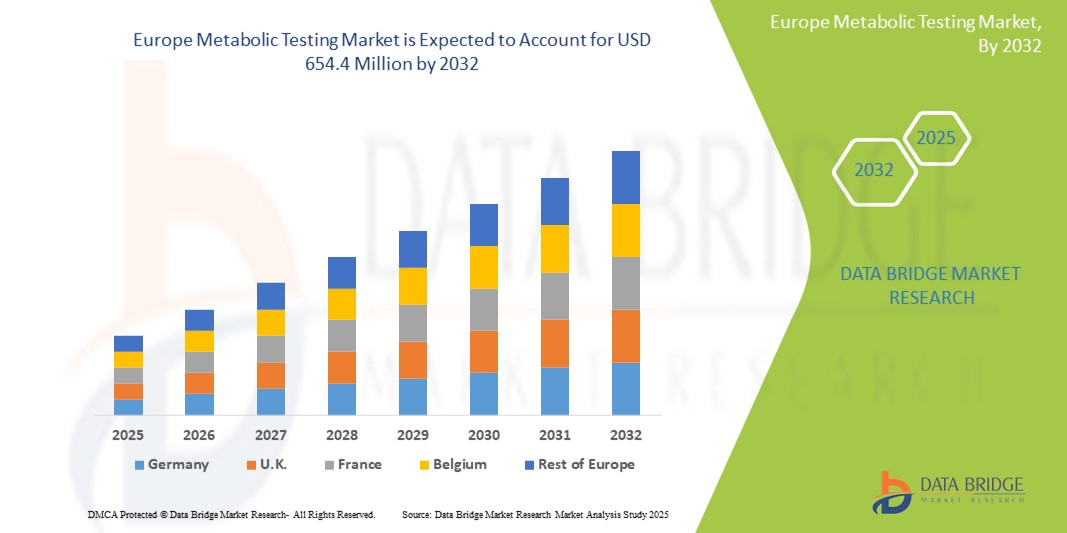
Escopo do relatório e segmentação do mercado de testes metabólicos
|
Atributos |
Metabólico Testing Principais Perspectivas do Mercado |
|
Segmentos Cobertos |
|
|
Países abrangidos |
América do Norte
Europa
Ásia- Pacífico
Médio Oriente e África
América do Sul
|
|
Jogadores do mercado chave |
|
|
Oportunidades de Mercado |
|
|
Informações sobre o Valor Adicionado |
|
Qual é a tendência chave no mercado de testes metabólicos
“Integração com Soluções Digitais de Saúde”
- A integração de testes metabólicos com dispositivos wearable e aplicações móveis permite o monitoramento contínuo de parâmetros metabólicos, permitindo o rastreamento de saúde em tempo real e feedback personalizado
- Análise avançada de dados e inteligência artificial (AI) estão sendo utilizadas para analisar grandes conjuntos de dados a partir de testes metabólicos, fornecendo insights que informam decisões de saúde e otimizam planos de tratamento
- Os consumidores estão cada vez mais adotando soluções digitais de saúde, buscando maior controle sobre sua saúde e bem-estar, o que impulsiona a demanda por ferramentas integradas de testes metabólicos
- Plataformas digitais facilitam o acesso a serviços de testes metabólicos em áreas remotas ou carentes, superando lacunas na prestação de cuidados de saúde
- A convergência dos testes metabólicos com as tecnologias digitais de saúde está expandindo o mercado para além dos cenários clínicos tradicionais em domínios pessoais de gestão e fitness em saúde
Dinâmica do mercado de testes metabólicos
Controlador
“Prevalência crescente de doenças crônicas”
- O aumento global de doenças crônicas, como diabetes, obesidade e doenças cardiovasculares, está impulsionando significativamente a demanda por testes metabólicos
- Testes metabólicos permitem a identificação precoce de distúrbios metabólicos, permitindo intervenção oportuna e manejo de doenças crônicas
- Os custos crescentes dos cuidados de saúde associados às doenças crônicas estão levando os sistemas de saúde a adotar medidas preventivas, como testes metabólicos para reduzir os gastos a longo prazo
- Iniciativas governamentais e programas de saúde pública estão cada vez mais incorporando testes metabólicos para monitorar e controlar a disseminação de doenças crônicas
- A crescente conscientização do público sobre os riscos das doenças crônicas está levando os indivíduos a buscarem testes metabólicos como parte da gestão proativa da saúde
Oportunidade
“Expansão em Mercados Emergentes”
- Mercados emergentes apresentam oportunidades significativas de crescimento para testes metabólicos devido ao aumento dos investimentos em saúde e desenvolvimento de infraestrutura
- À medida que cresce a consciência da saúde metabólica nessas regiões, há uma crescente demanda por ferramentas diagnósticas, como testes metabólicos
- Governos em economias emergentes estão implementando programas de saúde que incorporam testes metabólicos para combater o aumento das taxas de distúrbios metabólicos
- A adoção de tecnologias móveis de saúde e plataformas digitais em mercados emergentes facilita a prestação de serviços de testes metabólicos a uma população mais ampla
- Empresas em expansão para esses mercados podem capitalizar a crescente demanda por serviços e produtos de testes metabólicos
Restrição/Desafio
“Conformidade regulatória e normalização”
- A falta de normas regulamentares uniformes em diferentes regiões dificulta a aprovação e implementação de dispositivos de testes metabólicos
- Requisitos regulamentares rigorosos podem levar a atrasos na introdução de novas tecnologias de testes metabólicos no mercado
- Garantir qualidade e precisão consistentes em dispositivos de testes metabólicos é um desafio sem protocolos padronizados
- Navegar por paisagens regulatórias complexas pode dificultar o acesso ao mercado para empresas que buscam introduzir soluções inovadoras de testes metabólicos
- A falta de padronização pode afetar a confiança do consumidor na confiabilidade e eficácia dos produtos de teste metabólico
Como é segmentado o mercado de testes metabólicos
O mercado é segmentado com base no produto, aplicação, tecnologia e usuário final
|
Segmentação |
Subsegmentação |
|
Por Produto |
|
|
Por Aplicação |
|
|
Por Tecnologia |
|
|
Por Usuário Final |
|
Em 2025, projeta-se que a doença do Estilo de Vida domine o mercado com maior participação no segmento de aplicação
Espera-se que o segmento de doença renal domine o mercado de testes metabólicos devido à sua alta prevalência de doença e utilização máxima de analitos. Anomalias renais podem surgir de outras comorbidades, como diabetes e hipertensão arterial.
Prevê-se que os analisadores de composição corporal representem a maior parte durante o período previsto no mercado do produto
Em 2025, espera-se que o segmento de analisadores de composição corporal domine o mercado com maior participação de mercado de 78,2% devido à sua consciência e versatilidade. São sistemas modulares equipados com uma variedade de instrumentos de testes metabólicos que podem facilmente ser levados para os locais dos pacientes.
Que região detém a maior parte do mercado de testes metabólicos
“A América do Norte detém a maior parte no mercado de testes metabólicos”
- A América do Norte detém a maior parte do mercado global de testes metabólicos com 47,2%, impulsionado pela infraestrutura avançada de saúde e altos níveis de consciência da saúde
- A região apresenta alta incidência de condições relacionadas ao estilo de vida, como obesidade, diabetes e doenças cardiovasculares, aumentando a demanda por testes metabólicos
- A América do Norte beneficia da adoção de tecnologias de ponta, incluindo monitores metabólicos wearable e plataformas de saúde digital, aumentando a acessibilidade e a precisão das avaliações metabólicas
- Políticas de promoção de cuidados de saúde preventivos e apoio ao reembolso de serviços de diagnóstico têm reforçado o crescimento do mercado de testes metabólicos na região
- A presença de empresas líderes como GE HealthCare, Abbott e KORR Medical Technologies contribui para o domínio do mercado da região
“A Ásia-Pacífico está projetada para registrar o CAGR mais alto no mercado de testes metabólicos”
- Países como China, Índia e Japão estão passando por um crescimento econômico significativo, levando ao aumento dos gastos em saúde e desenvolvimento de infraestrutura
- Há uma crescente conscientização das questões metabólicas de saúde, levando os indivíduos a buscar medidas preventivas e serviços de diagnóstico
- Iniciativas voltadas à modernização dos sistemas de saúde e à promoção do cuidado preventivo estão acelerando a adoção de tecnologias de testes metabólicos
- A integração de soluções digitais de saúde e dispositivos vestíveis está a aumentar a acessibilidade e a conveniência dos testes metabólicos na região
- A região Ásia-Pacífico deverá testemunhar a maior taxa de crescimento no mercado de testes metabólicos, impulsionada por estes factores.
Quais são as principais empresas no mercado de testes metabólicos
O cenário competitivo do mercado fornece detalhes por concorrente. Detalhes incluídos são visão geral da empresa, finanças da empresa, receita gerada, potencial de mercado, investimento em pesquisa e desenvolvimento, novas iniciativas de mercado, presença global, locais de produção e instalações, capacidades de produção, pontos fortes e fracos da empresa, lançamento do produto, largura e amplitude do produto, dominância da aplicação. Os pontos de dados acima fornecidos estão relacionados apenas com o foco das empresas relacionados com o mercado.
Os principais líderes de mercado que operam no mercado são:
- Tecnologias médicas KORR(EUA)
- GE HealthCare(EUA)
- Geratherm Medical AG(Alemanha)
- MGC Diagnostics Corporation(EUA)
- AEI Technologies, Inc.. (EUA)
- COSMED srl (Itália)
- Microlife Medical Home Solutions (Suíça)
- Parvo Medics (EUA)
- Cortex Biophysik GmbH (Alemanha)
- VacuMed (EUA)
- Abbott (EUA)
- Promega Corporation (EUA)
- VYAIRE (EUA)
- Koninklijke Philips N.V. (Países Baixos)
Quais são as últimas evoluções no mercado de testes metabólicos
- Em Maio de 2024,Nova Biomédicorecebeu autorização da FDA para o seu analisador Stat Profile Prime Plus, melhorando os testes diagnósticos de cuidados críticos. Este analisador agora suporta o modo de amostra micro-capilar, exigindo apenas 90 microlitros de sangue capilar para um painel de 11 testes ou 135 microlitros para um perfil de 22 testes
- Em dezembro de 2022,Rutgers UniversidadeeCiências do Coraçãolançou uma colaboração multi-ano para desenvolver algoritmos de ECG baseados em IA para melhorar a detecção de doenças cardíacas e expandir o valor clínico de um ECG para detecção de doenças cardíacas de baixo custo
- Em setembro de 2022,Fitbitlançou seus três novos rastreadores de fitness, Fitbit Versa 4, Fitbit Sense 2 relógios de fitness e Fitbit Inspire 4 rastreador de fitness na Índia. Todos os três modelos esporte um design melhorado e prometem oferecer melhor desempenho. Os wearables têm um sensor de frequência cardíaca, monitor SpO2, monitor de estresse e muito mais
- Em dezembro de 2021,Diagnósticos de Buscao principal provedor de serviços de informação diagnóstica da nação anunciou que adquiriu substancialmente todos os ativos da Labtech Diagnostics, um provedor independente de laboratório de diagnóstico clínico que atende médicos e pacientes principalmente no sul e norte da Carolina, Geórgia e Flórida. Com a aquisição, Quest amplia o acesso à inovação diagnóstica e insights capacitando melhor saúde para mais comunidades do Sudeste
- Em abril de 2020,Nova Biomédicaanunciou que a Food and Drug Administration (FDA) dos EUA liberou o seu Stat Profile Prime Plus, analisador de gases sanguíneos de cuidados críticos para uso ponto de cuidado (POC). Essa liberação permite que o pessoal do POC realize testes de cuidados críticos à beira do leito com resultados de qualidade de laboratório em apenas um minuto. Prime Plus oferece tecnologia de sensores sem manutenção para fornecer 19 testes essenciais de cuidados críticos, incluindo gases sanguíneos, eletrólitos, metabólitos, hematologia e co-oximetria, proporcionando aos clínicos um perfil diagnóstico rápido e detalhado, incluindo um painel metabólico abrangente
SKU-
Obtenha acesso online ao relatório sobre a primeira nuvem de inteligência de mercado do mundo

- Painel interativo de análise de dados
- Painel de análise da empresa para oportunidades de elevado potencial de crescimento
- Acesso de analista de pesquisa para personalização e customização. consultas
- Análise da concorrência com painel interativo
- Últimas notícias, atualizações e atualizações Análise de tendências
- Aproveite o poder da análise de benchmark para um rastreio abrangente da concorrência
Metodologia de Investigação
A recolha de dados e a análise do ano base são feitas através de módulos de recolha de dados com amostras grandes. A etapa inclui a obtenção de informações de mercado ou dados relacionados através de diversas fontes e estratégias. Inclui examinar e planear antecipadamente todos os dados adquiridos no passado. Da mesma forma, envolve o exame de inconsistências de informação observadas em diferentes fontes de informação. Os dados de mercado são analisados e estimados utilizando modelos estatísticos e coerentes de mercado. Além disso, a análise da quota de mercado e a análise das principais tendências são os principais fatores de sucesso no relatório de mercado. Para saber mais, solicite uma chamada de analista ou abra a sua consulta.
A principal metodologia de investigação utilizada pela equipa de investigação do DBMR é a triangulação de dados que envolve a mineração de dados, a análise do impacto das variáveis de dados no mercado e a validação primária (especialista do setor). Os modelos de dados incluem grelha de posicionamento de fornecedores, análise da linha de tempo do mercado, visão geral e guia de mercado, grelha de posicionamento da empresa, análise de patentes, análise de preços, análise da quota de mercado da empresa, normas de medição, análise global versus regional e de participação dos fornecedores. Para saber mais sobre a metodologia de investigação, faça uma consulta para falar com os nossos especialistas do setor.
Personalização disponível
A Data Bridge Market Research é líder em investigação formativa avançada. Orgulhamo-nos de servir os nossos clientes novos e existentes com dados e análises que correspondem e atendem aos seus objetivos. O relatório pode ser personalizado para incluir análise de tendências de preços de marcas-alvo, compreensão do mercado para países adicionais (solicite a lista de países), dados de resultados de ensaios clínicos, revisão de literatura, mercado remodelado e análise de base de produtos . A análise de mercado dos concorrentes-alvo pode ser analisada desde análises baseadas em tecnologia até estratégias de carteira de mercado. Podemos adicionar quantos concorrentes necessitar de dados no formato e estilo de dados que procura. A nossa equipa de analistas também pode fornecer dados em tabelas dinâmicas de ficheiros Excel em bruto (livro de factos) ou pode ajudá-lo a criar apresentações a partir dos conjuntos de dados disponíveis no relatório.











