



Segmentação do mercado global de petróleo e gás por processo de refinação (Hydrocracking, Destilação, Cracking Catalítico e Reforma), Tipo de Produto (Gasolina, Diesel, Combustível a Jato e Gás de Petróleo Liquefeito), Canal de Distribuição (Vendas Diretas, Distribuidores e Varejo), Setor de Uso Final (Transporte, Residencial e Industrial) - Tendências e Previsão da Indústria para 2033
O que é o tamanho do mercado de petróleo e gás a jusante e taxa de crescimento
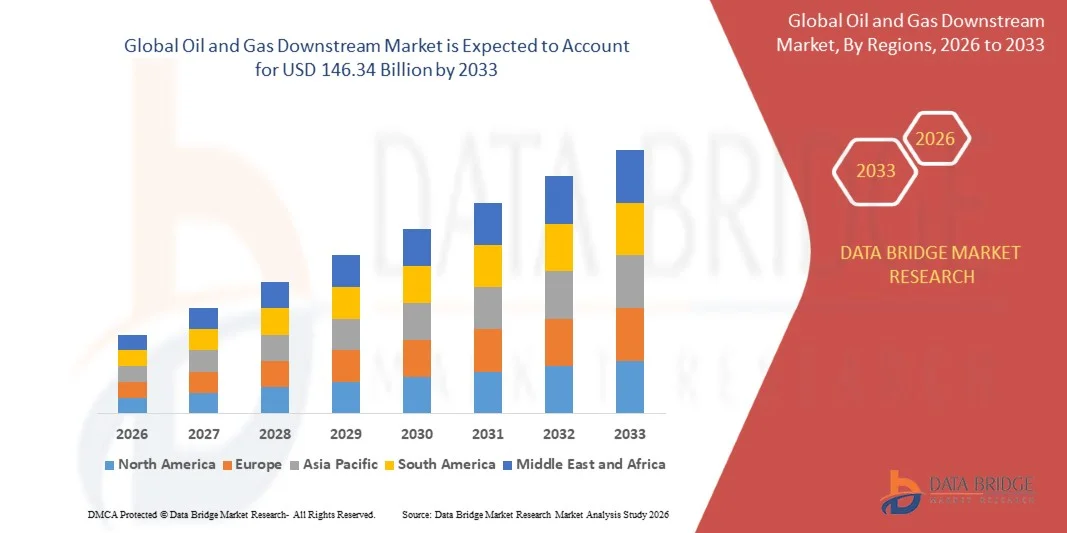
- De acordo com a Data Bridge Market Research Analysis, o tamanho do mercado de petróleo e gás foi avaliado emUSD 105,3 mil milhões em 2025e espera-se alcançarUSD 146,34 mil milhões até 2033, em umaCAGR de 4,20%durante o período de previsão
- Aumento da procura global de produtos petrolíferos refinados, aumento do consumo de combustível entre os setores de transporte e industrial, expansão da produção petroquímica, acréscimos de capacidade nas refinarias e crescentes investimentos na modernização da infraestrutura de refino e processamento são fatores fundamentais para o crescimento do mercado a jusante de petróleo e gás
Tamanho e previsão do mercado
- Valor de Mercado Global (2025): USD105,3 mil milhões
- Valor de mercado esperado (2033): USD146,34 mil milhões
- Previsões CAGR (2026-2033):4.20%
O que são as principais takeaways do mercado de petróleo e gás a jusante
- Aumento da procura energética das economias emergentes, expansão dos complexos de refinação e petroquímica, aumento da produção de combustíveis mais limpos e crescentes investimentos em projectos de modernização e melhoria da eficiência estão a criar oportunidades de crescimento significativas no mercado a jusante do petróleo e do gás
- Prevê-se que os elevados requisitos de investimento de capital, a flutuação dos preços do petróleo bruto, a regulamentação ambiental rigorosa e as complexidades operacionais associadas à refinação e distribuição actuem como restrições fundamentais para o crescimento do mercado a jusante do petróleo e do gás
- A Ásia-Pacífico dominou o mercado a jusante do petróleo e do gás com uma quota de receita estimada em 44,2% em 2025, impulsionada pela rápida expansão da capacidade de refino, forte crescimento do consumo de combustível e investimentos em larga escala em infraestruturas petroquímicas e a jusante em toda a China, Índia, Japão, Coreia do Sul e Sudeste Asiático
- A América do Norte é projetada para registrar o CAGR mais rápido de 6,95% de 2026 a 2033, impulsionado pela modernização de refinarias, crescente investimento petroquímico e crescente demanda por produtos refinados mais limpos e de valor agregado
- O segmento de destilação dominou o mercado com uma quota de receita estimada em 42,6% em 2025, pois constitui a etapa fundamental no refino de petróleo bruto e é essencial para separar o bruto em frações utilizáveis como nafta, querosene e gasóleo
Segmentação do mercado de petróleo e gás a jusante
|
Atributos |
Insights sobre o mercado chave de petróleo e gás a jusante |
|
Segmentos Cobertos |
|
|
Países abrangidos |
América do Norte
Europa
Ásia- Pacífico
Médio Oriente e África
América do Sul
|
|
Jogadores do mercado chave |
|
|
Oportunidades de Mercado |
|
|
Informações sobre o Valor Adicionado |
Além dos insights sobre cenários de mercado, como valor de mercado, taxa de crescimento, segmentação, cobertura geográfica e principais atores, os relatórios de mercado curados pela Data Bridge Market Research também incluem análise de especialistas em profundidade, análise de preços, análise de compartilhamento de marca, inquérito ao consumidor, análise demografia, análise da cadeia de suprimentos, análise da cadeia de valor, visão geral da matéria-prima/consumíveis, critérios de seleção de fornecedores, Análise de PESTLE, Análise de Porter e marco regulatório. |
Qual é a tendência chave no mercado de petróleo e gás a jusante
“Aumento da mudança para a digitalização, eficiência energética e operações de refinação de baixo carbono“
- O mercado a jusante de petróleo e gás está testemunhando uma forte mudança para as operações de refinaria digital, impulsionada pela adoção de IA, IoT, análise avançada e monitoramento em tempo real para otimizar as atividades de refino, distribuição e marketing
- Os refinadores estão cada vez mais implementando sistemas inteligentes de controle de processos, ferramentas de manutenção preditivas e gêmeos digitais para melhorar a eficiência operacional, reduzir o tempo de inatividade não planejado e melhorar a utilização de ativos
- A pressão crescente para reduzir as emissões e os custos operacionais está acelerando os investimentos em tecnologias de refino eficientes em termos energéticos, integração de hidrogênio e soluções de captura de carbono
- Por exemplo, os principais jogadores a jusante, como Saudi Aramco, Shell, BP, ExxonMobil e Reliance Industries, estão investindo em refinarias digitais, automação avançada de processos e produção de combustível de baixo carbono
- A concentração crescente nos biocombustíveis, no combustível de aviação sustentável (SAF) e nas misturas de combustível mais limpas está a remodelar globalmente as carteiras a jusante
- À medida que os esforços de controlo regulamentar e de transição energética se intensificam, as operações a jusante, digitais e de baixa emissão, continuarão a ser um foco estratégico central
Quais são os principais condutores de petróleo e gás Downstream Market
- Aumentar a demanda global por combustíveis de transporte, petroquímicos e produtos refinados, especialmente em economias emergentes, está apoiando a expansão contínua a jusante
- Por exemplo, durante 2024-2025, os refinadores líderes aumentaram as expansões de capacidade e projetos de integração petroquímica para atender à crescente demanda de plásticos e produtos químicos especiais
- Aumentar os investimentos em modernização de refinarias, melhorias de capacidade e unidades complexas de refino estão melhorando a flexibilidade de produtividade e qualidade do produto
- Forte crescimento na urbanização, industrialização e propriedade de veículos na Ásia-Pacífico e Oriente Médio continua a impulsionar o consumo de combustível
- Avanços na otimização de processos, tecnologias catalisadoras e integração de refinarias estão aumentando margens e eficiência operacional
- Apoiado pela procura de energia a longo prazo e pelo crescimento petroquímico, espera-se que o mercado a jusante do petróleo e do gás mantenha uma dinâmica de crescimento estável
Que fator está desafiando o crescimento do mercado a jusante do petróleo e do gás
- A volatilidade dos preços do petróleo bruto tem um impacto significativo nas margens de refinação e na rendibilidade a jusante
- Por exemplo, durante 2024-2025, a flutuação dos preços das matérias-primas e as tensões geopolíticas aumentaram as incertezas de custos para os operadores a jusante
- A regulamentação ambiental e as normas relativas às emissões estão a aumentar a conformidade e os requisitos em matéria de despesas de capital
- Altos custos associados com upgrades de refinarias, tecnologias de descarbonização e desafios de manutenção
- A crescente concorrência das energias renováveis, dos veículos eléctricos e dos combustíveis alternativos está a afectar gradualmente as perspectivas da procura de combustível a longo prazo
- Para mitigar esses desafios, os jogadores a jusante estão focando na diversificação em petroquímicos, combustíveis mais limpos, otimização digital e operações econômicas
Como é o petróleo e gás Downstream Mercado Segmentado
O mercado é segmentado com base emprocessos de refinação, tipo de produto, canal de distribuição e setor de uso final.
• Por processos de refinação
Com base nos processos de refinação, o mercado a jusante do petróleo e do gás é segmentado em hidrocracking, destilação, cracking catalítico e reforma. O segmento de destilação dominou o mercado com uma participação de receita estimada em 42,6% em 2025, pois constitui a etapa fundamental no refino de petróleo bruto e é essencial para separar o bruto em frações utilizáveis como nafta, querosene e gasóleo. Sua adoção generalizada em todas as configurações de refinaria e complexidade operacional relativamente menor suportam seu domínio.
Espera-se que o segmento de hidrocracking registre o crescimento mais rápido de 2026 para 2033, impulsionado pelo aumento da demanda por combustíveis mais limpos, maior rendimento de destilados médios e flexibilidade no processamento de óleos brutos pesados e azedos. O aumento da pressão regulamentar para os combustíveis de baixo teor de enxofre e o aumento dos investimentos em projetos de modernização de refinaria estão acelerando as adições de capacidade de hidrocracking globalmente.
• Por tipo de produto
Com base no tipo de produto, o mercado é segmentado em gasolina, diesel, combustível a jato e gás de petróleo liquefeito (GPL). O segmento diesel detinha o maior market share de cerca de 38,9% em 2025, apoiado pela forte demanda dos setores de transporte comercial, máquinas industriais, agricultura e geração de energia. A alta densidade energética da Diesel e o seu uso generalizado nas economias em desenvolvimento continuam a manter o seu domínio.
O segmento de combustível a jato é projetado para testemunhar o CAGR mais rápido durante 2026-2033, impulsionado pela recuperação e expansão das viagens aéreas globais, crescimento na aviação de carga e aumento dos investimentos em infraestrutura aeroportuária. O aumento da concentração nas misturas sustentáveis de combustível da aviação está a apoiar ainda mais as perspectivas de crescimento a longo prazo deste segmento.
• Por Canal de Distribuição
Com base no canal de distribuição, o mercado a jusante do petróleo e do gás é segmentado em vendas diretas, distribuidores e varejo. O segmento varejista dominou o mercado com uma participação de 44,3% em 2025, devido a extensas redes de estações de combustível, alta dependência do consumidor para combustíveis de transporte e demanda consistente de proprietários de veículos individuais e comerciais. Os estabelecimentos retalhistas beneficiam igualmente de serviços de valor acrescentado e de vantagens de marca.
Espera-se que o segmento de vendas diretas cresça ao ritmo mais rápido ao longo do período de previsão, apoiado por contratos de fornecimento a longo prazo com usuários industriais, companhias aéreas, companhias de navegação e grandes operadores de frota. Os acordos de fornecimento em massa, a transparência dos preços e a redução dos custos intermédios são factores fundamentais para o crescimento das vendas directas.
• Por Setor de Uso Final
Com base no setor de uso final, o mercado é segmentado em transporte, residencial e industrial. O segmento de transporte dominou o mercado com uma receita estimada em 46,7% em 2025, impulsionada pelo alto consumo de gasolina, diesel e combustível a jato em toda estrada, aviação e transporte marítimo. O aumento da propriedade dos veículos e a circulação de mercadorias continuam a apoiar a procura.
Espera-se que o segmento industrial testemunhe o crescimento mais rápido de 2026 para 2033, alimentado pelo crescente uso de produtos refinados na fabricação, petroquímica, geração de energia e atividades de construção. A expansão da industrialização nas economias emergentes é um contributo fundamental para esta trajetória de crescimento.
Que região detém a maior parte do mercado de petróleo e gás a jusante
- A Ásia-Pacífico dominou o mercado a jusante do Petróleo e Gás com uma quota de receita estimada em 44,2% em 2025, impulsionada pela rápida expansão da capacidade de refino, forte crescimento do consumo de combustível e investimentos em larga escala em infraestruturas petroquímicas e a jusante em toda a China, Índia, Japão, Coreia do Sul e Sudeste Asiático. A crescente demanda por combustíveis para transporte, energia industrial e matérias-primas petroquímicas continua a apoiar o crescimento robusto do mercado
- Ampla presença de grandes centros de refino, complexos petroquímicos integrados e iniciativas de segurança energética apoiadas pelo governo estão acelerando a expansão a jusante em toda a região. A crescente urbanização, penetração de veículos e industrialização reforçam ainda mais a liderança da Ásia-Pacífico
- Aumentar o foco na modernização da capacidade, na produção de combustível mais limpo e na integração das tecnologias digitais de refinarias reforça o crescimento a jusante a longo prazo em todo o Ásia-Pacífico
China Oil and Gas Downstream Market Insight
A China é o maior contribuinte da Ásia-Pacífico, apoiada pela capacidade de refino maciça, forte integração petroquímica e crescente demanda interna de combustível. Investimentos contínuos em atualizações de refinarias, produção de combustível de baixo teor de enxofre e matérias-primas químicas impulsionam expansão sustentada do mercado.
Índia Oil and Gas Downstream Market Insight
A Índia está testemunhando um forte crescimento impulsionado pela expansão da capacidade de refinaria, aumento do consumo de combustível e iniciativas governamentais de apoio ao desenvolvimento de infraestrutura energética. O crescimento do transporte, da atividade industrial e da demanda petroquímica suporta a expansão a jusante.
Japão Oil and Gas Downstream Market Insight
O Japão mostra um crescimento constante apoiado por tecnologias avançadas de refino, forte foco na eficiência de combustível e demanda consistente dos setores de transporte e industrial.
América do Norte Mercado a jusante de petróleo e gás
A América do Norte é projetada para registrar o CAGR mais rápido de 6,95% de 2026 a 2033, impulsionado pela modernização de refinarias, crescente investimento petroquímico e crescente demanda por produtos refinados mais limpos e de valor agregado. Forte foco na eficiência operacional, soluções de refinaria digital e produção de combustível orientada para exportação suporta o crescimento acelerado.
U.S. Oil and Gas Downstream Market Insight
Os EUA lideram o crescimento regional com infraestrutura avançada de refino, forte disponibilidade de matéria-prima baseada em xisto e crescente exportação de produtos refinados. Investimentos em melhorias de refinarias e integração petroquímica continuam a impulsionar a expansão do mercado.
Canadá Oil and Gas Downstream Market Insight
O Canadá contribui de forma constante, apoiado pela integração a jusante com recursos a montante, desenvolvimento de infraestrutura e crescente demanda dos setores industrial e de transporte.
Quais são as principais empresas no mercado a jusante de petróleo e gás
A indústria a jusante do petróleo e do gás é liderada principalmente por empresas bem estabelecidas, incluindo:
- Reliance Industries Limited (Índia)
- BP Plc (U.K.)
- Saudi Aramco (Arábia Saudita)
- China National Petroleum Corporation (China)
- Chevron Corporation (EUA)
- Índia Oil Corporation Limited (Índia)
- Royal Dutch Shell Plc. (U.K.)
- ExxonMobil (EUA)
- Delek U.S. Holdings (EUA)
- Valero Energy Corporation (EUA)
- Marathon Petroleum Corporation (EUA)
Quais são os recentes desenvolvimentos no mercado a jusante do petróleo e do gás
- Em outubro de 2025, a Chevron Corporation completou sua aquisição de US$ 53 bilhões da Hess Corporation, expandindo significativamente seu portfólio a jusante, refinando a integração e a pegada operacional global, fortalecendo sua competitividade a longo prazo e escala no mercado de petróleo e gás.
- Em setembro de 2025, o Energy Transfer LP finalizou uma aquisição de USD 2,3 bilhões da WTG Midstream, aumentando a logística de petróleo bruto e produtos refinados nas principais bacias produtoras de xisto, melhorando a eficiência da cadeia de suprimentos e capacidade de distribuição a jusante
- Em agosto de 2025, a Veren Inc. fundiu-se com a Whitecap Resources em uma transação de US$ 15 bilhões, aumentando a disponibilidade de petróleo pesado para refinarias norte-americanas, apoiando a segurança de matéria-prima e estabilidade de processamento a jusante
- Em julho de 2025, a Saudi Aramco anunciou um projeto de expansão de 8 bilhões de dólares, acrescentando 250.000 barris por dia em sua instalação Motiva Texas, com forte foco na integração petroquímica, reforçando a diversificação a jusante e o crescimento da produção de valor agregado
SKU-
Obtenha acesso online ao relatório sobre a primeira nuvem de inteligência de mercado do mundo

- Painel interativo de análise de dados
- Painel de análise da empresa para oportunidades de elevado potencial de crescimento
- Acesso de analista de pesquisa para personalização e customização. consultas
- Análise da concorrência com painel interativo
- Últimas notícias, atualizações e atualizações Análise de tendências
- Aproveite o poder da análise de benchmark para um rastreio abrangente da concorrência
Metodologia de Investigação
A recolha de dados e a análise do ano base são feitas através de módulos de recolha de dados com amostras grandes. A etapa inclui a obtenção de informações de mercado ou dados relacionados através de diversas fontes e estratégias. Inclui examinar e planear antecipadamente todos os dados adquiridos no passado. Da mesma forma, envolve o exame de inconsistências de informação observadas em diferentes fontes de informação. Os dados de mercado são analisados e estimados utilizando modelos estatísticos e coerentes de mercado. Além disso, a análise da quota de mercado e a análise das principais tendências são os principais fatores de sucesso no relatório de mercado. Para saber mais, solicite uma chamada de analista ou abra a sua consulta.
A principal metodologia de investigação utilizada pela equipa de investigação do DBMR é a triangulação de dados que envolve a mineração de dados, a análise do impacto das variáveis de dados no mercado e a validação primária (especialista do setor). Os modelos de dados incluem grelha de posicionamento de fornecedores, análise da linha de tempo do mercado, visão geral e guia de mercado, grelha de posicionamento da empresa, análise de patentes, análise de preços, análise da quota de mercado da empresa, normas de medição, análise global versus regional e de participação dos fornecedores. Para saber mais sobre a metodologia de investigação, faça uma consulta para falar com os nossos especialistas do setor.
Personalização disponível
A Data Bridge Market Research é líder em investigação formativa avançada. Orgulhamo-nos de servir os nossos clientes novos e existentes com dados e análises que correspondem e atendem aos seus objetivos. O relatório pode ser personalizado para incluir análise de tendências de preços de marcas-alvo, compreensão do mercado para países adicionais (solicite a lista de países), dados de resultados de ensaios clínicos, revisão de literatura, mercado remodelado e análise de base de produtos . A análise de mercado dos concorrentes-alvo pode ser analisada desde análises baseadas em tecnologia até estratégias de carteira de mercado. Podemos adicionar quantos concorrentes necessitar de dados no formato e estilo de dados que procura. A nossa equipa de analistas também pode fornecer dados em tabelas dinâmicas de ficheiros Excel em bruto (livro de factos) ou pode ajudá-lo a criar apresentações a partir dos conjuntos de dados disponíveis no relatório.











