


Global Polyisoprene Market Segmentation, By Type (Synthetic Polyisoprene and Natural Polyisoprene), Polymerization Process (Solution Polymerization and Emulsion Polymerization), Grade (High Cis Polyisoprene, Low Cis Polyisoprene, and Very Low Cis Polyisoprene), Application (Medical Gloves, Condoms, Medical Balloons, Catheters, and Adhesives), End-Use (Medical, Consumer Goods, and Industrial)- Industry Trends and Forecast to 2033
O que é o tamanho e visão geral do mercado Polyisoprene
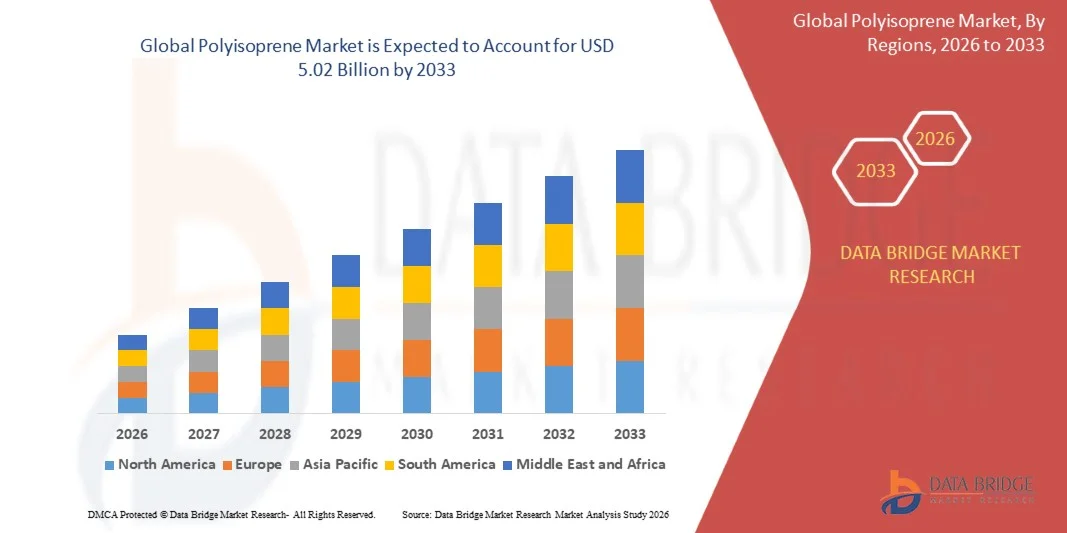
- Conforme a Análise de Pesquisa de Mercado Data Bridge A dimensão global do mercado de poliisopreno foi avaliada emUSD 2,66 mil milhões em 2025e espera-se alcançarUSD 5,02 mil milhões até 2033, em umaCAGR de 8,25%durante o período de previsão
- O crescimento do mercado é amplamente alimentado pela crescente demanda de produtos médicos e de saúde, incluindo luvas e cateteres, onde o poliisopreno oferece elasticidade superior, propriedades hipoalergênicas e conforto em comparação com a borracha natural
- Aumentar as aplicações emautomóvel, adesivos e indústrias de calçado também estão impulsionando a demanda, pois o poliisopreno proporciona flexibilidade, durabilidade e resistência ao desgaste
Tamanho e previsão do mercado
Valor de Mercado Global (2025): USD 2,66 mil milhões
Valor de mercado previsto (2033): 5,02 mil milhões de USD
Previsões CAGR (2026-2033):8,25%
Quais são as principais takeaways do mercado de poliisopreno
- O mercado caracteriza-se por avanços tecnológicos em processos de produção de poliisopreno, incluindo métodos sintéticos e bio-baseados, melhorando a qualidade do produto e escalabilidade
- A adoção crescente em indústrias de uso final, juntamente com regulamentos governamentais de apoio sobre os padrões de segurança e desempenho de dispositivos médicos, está reforçando o crescimento constante no mercado global de poliisopreno
- O mercado europeu de poli-isopreno dominou o mercado de poli-isopreno com a maior quota de receita de 51,4% em 2025, impulsionada principalmente pela expansão nos setores de saúde e bens de consumo. Aumentar a adoção de dispositivos médicos e luvas baseados em poliisopreno, juntamente com a conscientização sobre materiais sustentáveis e ecológicos, está promovendo a demanda
- A região Ásia-Pacífico deverá testemunhar a taxa de crescimento mais elevada do poliisopreno global mercado, impulsionado pela urbanização rápida, expansão da base de fabricação, aumento da renda disponível, e crescente demanda por luvas médicas, adesivos e elastômeros industriais
- O segmento de poliisopreno sintético detinha a maior quota de receita de mercado em 2025, impulsionada por sua qualidade consistente, propriedades controladas e ampla adoção em aplicações médicas e industriais. O poliisopreno sintético é preferido em aplicações de alto desempenho devido à sua estrutura molecular uniforme e características mecânicas confiáveis. Também oferece resistência química superior, processabilidade e durabilidade a longo prazo em comparação com variantes naturais. Os fabricantes adotam cada vez mais poliisopreno sintético para atender exigências regulatórias rigorosas em saúde e produtos de consumo
Âmbito do relatório eSegmentação de Mercado de Poliisopreno
Atributos |
Perspectivas do mercado chave de poliisopreno |
|
Segmentos Cobertos |
|
|
Países abrangidos |
América do Norte
Europa
Ásia- Pacífico
Médio Oriente e África
América do Sul
|
|
Jogadores do mercado chave |
|
|
Oportunidades de Mercado |
|
|
Informações sobre o Valor Adicionado |
Além dos insights sobre cenários de mercado, como valor de mercado, taxa de crescimento, segmentação, cobertura geográfica e principais atores, os relatórios de mercado curados pela Data Bridge Market Research também incluem análise de importação, visão geral da capacidade de produção, análise do consumo de produção, análise de tendências de preços, cenário de mudança climática, análise da cadeia de suprimentos, análise da cadeia de valor, visão geral da matéria-prima/consumíveis, critérios de seleção de fornecedores, Análise de PESTLE, Análise de Porter e quadro regulatório. |
Qual é a tendência chave no mercado de poliisopreno
“Demanda crescente em aplicações médicas e industriais”
• A crescente ênfase em produtos médicos e de saúde está moldando significativamente o mercado de poliisopreno, já que os consumidores e fabricantes preferem cada vez mais poliisopreno sintético e natural para luvas, cateteres e outros dispositivos médicos. A excelente elasticidade, biocompatibilidade e conforto da Polyisoprene estão impulsionando sua adoção em setores médicos, automotivos e industriais, incentivando os fabricantes a inovar com notas de maior desempenho e novas formulações
• A crescente utilização em aplicações automotivas e industriais acelerou a procura de poliisopreno em vedações, juntas e adesivos. O desenvolvimento de infraestrutura crescente, a produção de veículos e a automação industrial estão levando os fabricantes a priorizar materiais que ofereçam durabilidade, flexibilidade e custo-efetividade. Isso também levou a colaborações entre fornecedores e fabricantes para melhorar os benefícios funcionais e de desempenho
• As normas regulamentares e as considerações ambientais estão influenciando as escolhas materiais, com os fabricantes focando no poliisopreno sintético que atende aos requisitos rigorosos de qualidade e segurança. Esses fatores ajudam as marcas a diferenciar produtos em mercados competitivos e manter a conformidade, enquanto conduzem a P&D para soluções mais sustentáveis e de alto desempenho
• Por exemplo, em 2024, Top Glove na Malásia e Ansell nos EUA expandiram as capacidades de produção para atender à crescente demanda global de luvas de poliisopreno de grau médico. Essas expansões foram em resposta ao aumento das necessidades de saúde e aplicações industriais, com distribuição nos mercados médico, industrial e consumidor. Os movimentos reforçaram a presença do mercado e garantiram fornecimento confiável para aplicações críticas
• Embora a demanda por poliisopreno esteja crescendo, a expansão sustentada do mercado depende de produção econômica, fabricação escalável e inovação contínua. Os fabricantes estão focados em melhorar a qualidade do material, eficiência da cadeia de suprimentos e sustentabilidade ambiental para manter a vantagem competitiva e atender aos requisitos em evolução de diversas indústrias de uso final
Dinâmica do Mercado de Poliisopreno
“Crescimento da demanda em aplicações médicas e industriais”
• A crescente procura de produtos de qualidade médica, tais como luvas, cateteres e instrumentos cirúrgicos, é um importante condutor do mercado de poliisopreno. Os fabricantes estão cada vez mais investindo em poliisopreno sintético de alta qualidade para atender rigorosos padrões de saúde e garantir a segurança do paciente, enquanto se expandem para novas aplicações nos setores industrial e automotivo
• A expansão das aplicações em automóveis, adesivos e bens de consumo está a alimentar ainda mais o crescimento do mercado. A elasticidade, resistência química e durabilidade do poliisopreno tornam-no um material preferido para vedações, juntas e componentes moldados. A crescente utilização nos sectores industriais emergentes reforça ainda mais esta tendência
• A inovação material e as colaborações entre fornecedores e fabricantes estão promovendo a adoção de produtos baseados em poliisopreno. Esses esforços são apoiados pelo crescente foco na qualidade, desempenho e conformidade regulatória, incentivando a produção sustentável e aumentando a confiança global do mercado
• Por exemplo, em 2023, Bridgestone no Japão e Top Glove na Malásia relataram maior utilização de poliisopreno em produtos industriais e de saúde. Isso seguiu uma maior demanda global por aplicações médicas e automotivas, direção de pedidos repetidos, diferenciação de produtos e confiabilidade na oferta
• Embora a crescente demanda médica e industrial apoie o crescimento, a adoção mais ampla depende da disponibilidade de matéria-prima, otimização de custos e tecnologias de produção escaláveis. Investimento em fornecimento sustentável, manufatura avançada e P&D será fundamental para atender à demanda global e manter a liderança de mercado
Restrição/Desafio
“Alto custo de produção e volatilidade de matéria-prima”
• O custo relativamente elevado do poliisopreno em comparação com outros elastómeros continua a ser um desafio fundamental, limitando a adopção entre os fabricantes sensíveis aos preços. Os métodos complexos de síntese e processamento contribuem para um elevado preço, afetando a penetração do mercado nas regiões emergentes. Altos custos de produção também restringem os fabricantes menores de operações de escala, tornando difícil competir com alternativas mais acessíveis em indústrias orientadas para os custos
• A disponibilidade flutuante de matérias-primas naturais e sintéticas pode afetar ainda mais a estabilidade de custos e a confiabilidade do fornecimento. O acesso limitado a matérias-primas de alta qualidade pode retardar a produção e restringir a expansão do mercado. Além disso, fatores geopolíticos, variabilidade climática e restrições comerciais podem agravar a escassez de matérias-primas, criando incertezas no planejamento a longo prazo para fabricantes e fornecedores
• A sensibilização para o mercado e o saber-fazer técnico também têm impacto na adopção, em especial nas regiões em desenvolvimento onde estão a surgir aplicações especializadas. A compreensão limitada das vantagens funcionais restringe a captação em determinados setores industriais. Esta falta de conhecimento resulta frequentemente numa integração mais lenta do poliisopreno em aplicações inovadoras, atrasando o crescimento potencial do mercado e reduzindo as oportunidades para segmentos de produtos premium
• Por exemplo, em 2024, alguns fabricantes de luvas no Sudeste Asiático relataram menor utilização de capacidade devido à escassez de matérias-primas e altos custos de produção, afetando tanto a visibilidade quanto a eficiência da cadeia de suprimentos. As perturbações também conduziram a um aumento dos prazos de entrega e a um aumento das despesas operacionais, com impacto nos preços e na competitividade. As empresas tiveram que implementar práticas estratégicas de gerenciamento de estoque e estoque para mitigar esses desafios
• Superar estes desafios exigirá investimento em produção eficiente em termos de custos, fornecimento de matérias-primas e I&D para graus de desempenho mais elevados. O reforço das redes de cadeia de abastecimento e a promoção da sensibilização técnica serão essenciais para sustentar o crescimento a longo prazo no mercado global de poliisoprenos. Além disso, colaborações com fornecedores de matérias-primas, adoção de matérias-primas alternativas e otimização de processos podem ajudar a reduzir os custos, estabilizar a oferta e melhorar a qualidade do produto em aplicações
Como é o mercado de poliisopreno segmentado
O mercado é segmentado com base no tipo,processo de polimerização, grau, aplicação e utilização final.
• Por tipo
Com base no tipo, o mercado de poliisopreno é segmentado em poliisopreno sintético e poliisopreno natural. O segmento de poliisopreno sintético detinha a maior quota de receita de mercado em 2025, impulsionada por sua qualidade consistente, propriedades controladas e ampla adoção em aplicações médicas e industriais. O poliisopreno sintético é preferido em aplicações de alto desempenho devido à sua estrutura molecular uniforme e características mecânicas confiáveis. Também oferece resistência química superior, processabilidade e durabilidade a longo prazo em comparação com variantes naturais. Os fabricantes adotam cada vez mais poliisopreno sintético para atender exigências regulatórias rigorosas em saúde e produtos de consumo.
Espera-se que o segmento natural de poliisopreno testemunhe a taxa de crescimento mais rápida de 2026 a 2033, impulsionada pelo aumento da procura de elastómeros ecológicos e bio-baseados. O poliisopreno natural é particularmente popular em aplicações médicas e de bens de consumo devido à sua biocompatibilidade, elasticidade e origem renovável. A crescente sensibilização para os materiais sustentáveis e a preferência por alternativas à base de plantas estão a impulsionar a adopção. Além disso, o poliisopreno natural está ganhando tração em produtos industriais premium onde o desempenho e a flexibilidade são críticos.
• Por processo de polimerização
Com base no processo de polimerização, o mercado é segmentado em polimerização de solução e polimerização de emulsão. A polimerização da solução dominou o mercado em 2025 devido à sua capacidade de produzir poliisopreno de alta pureza com peso molecular controlado, adequado para produtos de grau médico. Também é preferida em aplicações que exigem propriedades mecânicas precisas, como luvas, preservativos e cateteres. O segmento beneficia da forte experiência da indústria e das cadeias de abastecimento estabelecidas. A inovação contínua em técnicas de polimerização de soluções está impulsionando melhorias no desempenho do produto.
Espera-se que a polimerização da emulsão testemunhe a taxa de crescimento mais rápida entre 2026 e 2033, devido à sua relação custo-eficácia, escalabilidade e adequação para aplicações industriais como adesivos, produtos de borracha e revestimentos. A polimerização por emulsão permite produção de grande volume e adaptabilidade a diferentes requisitos de uso final. Sua adoção crescente é apoiada pela crescente demanda de poliisopreno em bens automotivos, de construção e de consumo. Além disso, avanços na tecnologia de emulsão estão permitindo graus de pureza mais elevados para aplicações de nicho.
• Por Grau
Com base no grau, o mercado é segmentado em alto cis poliisopreno, baixo cis poliisopreno, e muito baixo cis poliisopreno. O poliisopreno cis elevado foi responsável pela maior participação em 2025 devido à sua elasticidade, resistência e resiliência superiores, tornando-o ideal para luvas médicas, preservativos e componentes de precisão. Sua alta resistência à tração, durabilidade e excelente resistência à fadiga são fundamentais para aplicações intensivas em desempenho. O alto cis poliisopreno também permite que os fabricantes cumpram rigorosos padrões de segurança e qualidade em saúde.
Segmentos baixos de cis e muito baixos de poliisopreno cis devem registrar crescimento significativo de 2026 a 2033, impulsionados por suas aplicações especializadas em adesivos, balões e outros produtos industriais que exigem propriedades mecânicas personalizadas. Estes graus oferecem rigidez única, resistência química e vantagens de processamento. Expandir a demanda de segmentos industriais de nicho e de produtos de consumo está impulsionando o crescimento. A capacidade de personalizar conteúdo cis permite que os fabricantes criem poliisopreno para requisitos de desempenho específicos de uso final.
• Por Aplicação
Com base na aplicação, o mercado de poliisopreno é segmentado em luvas médicas, preservativos, balões médicos, cateteres e adesivos. O segmento de luvas médicas teve a maior participação de mercado em 2025, alimentada pelo aumento da conscientização em saúde, regulamentos rigorosos de higiene e aumento da demanda por luvas descartáveis em hospitais e clínicas. A pandemia de COVID-19 acelerou ainda mais a procura de luvas de alta qualidade, criando um crescimento sustentado do mercado. As inovações em luvas de poliisopreno, como variantes livres de pó e hipoalergênicas, também estão impulsionando a adoção.
Espera-se que os segmentos de preservativos e adesivos testemunhem a taxa de crescimento mais rápida entre 2026 e 2033, apoiada pelo aumento da conscientização do consumidor, expansão do uso industrial e aumento dos requisitos de segurança e desempenho. Os balões e cateteres médicos estão ganhando tração devido ao seu papel crítico em cirurgias minimamente invasivas e procedimentos cardiovasculares. O mercado também está se beneficiando da expansão global das indústrias farmacêutica e de dispositivos médicos. Desenvolvimento contínuo de produtos e foco na qualidade premium estão impulsionando a adoção entre as aplicações.
• Por Uso Final
Com base na utilização final, o mercado é segmentado em bens médicos, de consumo e industriais. O segmento médico dominou o mercado em 2025 devido ao uso extensivo de poliisopreno em luvas, cateteres e outros produtos de saúde. O aumento dos requisitos de segurança dos doentes, a regulamentação rigorosa em matéria de cuidados de saúde e o aumento da sensibilização para a higiene são factores determinantes do crescimento. O segmento também se beneficia de avanços tecnológicos em dispositivos médicos que requerem elastômeros de alto desempenho.
Espera-se que os bens de consumo e segmentos industriais testemunhem o crescimento mais rápido de 2026 para 2033, impulsionado pelo aumento da demanda em equipamentos esportivos, adesivos e outras aplicações elastoméricas especializadas. O crescimento dos setores automotivo, eletrônico e de construção também está impulsionando a adoção industrial. A expansão de produtos de consumo de alto desempenho e aplicações inovadoras em adesivos e revestimentos está apoiando ainda mais o crescimento do mercado. É provável que uma maior concentração na sustentabilidade e nos materiais renováveis nos bens de consumo aumente a adopção de poliisopreno.
Análise regional do mercado de poliisopreno
- O mercado europeu de poli-isopreno dominou o mercado de poli-isopreno com a maior quota de receita de 51,4% em 2025, impulsionada principalmente pela expansão nos setores de saúde e bens de consumo. Aumentar a adoção de dispositivos médicos e luvas baseados em poliisopreno, juntamente com a conscientização sobre materiais sustentáveis e ecológicos, está promovendo a demanda
- Fortes infra-estruturas industriais, avanços tecnológicos e apoio governamental à fabricação de serviços de saúde estão alimentando ainda mais a expansão do mercado na região
Alemanha Poliisopreno Market Insight
O mercado alemão de poli-isopreno dominou o mercado europeu de poli-isopreno com a maior quota de receitas em 2025, alimentado por uma maior sensibilização para os produtos médicos e industriais de alta qualidade. A adoção de poliisopreno em balões médicos, cateteres e bens de consumo está aumentando devido à elasticidade e biocompatibilidade superiores. O foco da Alemanha na inovação, infraestrutura de saúde robusta e capacidades industriais de fabricação apoiam ainda mais a expansão do mercado.
U.K. Poliisoprene Market Insight
Espera-se que o mercado de poliisopreno do Reino Unido testemunhe um crescimento robusto entre 2026 e 2033, impulsionado pela crescente demanda por luvas e adesivos médicos de alto desempenho. A crescente prevalência de doenças crônicas e procedimentos cirúrgicos vem impulsionando o consumo no setor saúde. Além disso, as crescentes iniciativas de investigação e desenvolvimento, juntamente com uma ênfase no poliisopreno sintético para aplicações industriais, estão a estimular o crescimento do mercado.
América do Norte Poliisopreno Market Insight
A América do Norte deverá testemunhar um crescimento robusto entre 2026 e 2033, impulsionado pela alta demanda de luvas médicas, adesivos e aplicações industriais. Os fortes setores automotivo e de saúde da região, juntamente com a infraestrutura de fabricação bem estabelecida, estão apoiando o consumo consistente de poliisopreno sintético e natural. A presença de indústrias de saúde e automotivas bem estabelecidas, juntamente com a crescente conscientização sobre produtos à base de látex, está incentivando o crescimento do mercado. Altos rendimentos disponíveis, capacidades de fabricação avançadas e forte infraestrutura de I&D apoiam a adoção de poliisopreno sintético e natural em vários setores.
U.S. Polyisoprene Market Insight
O mercado de poliisopreno dos EUA capturou a maior parte de receita da América do Norte em 2025, alimentada pelo crescente uso de luvas de grau médico, preservativos e cateteres no setor de saúde. Aumentar a conscientização sobre a qualidade do produto, segurança e conformidade com regulamentos rigorosos da FDA está impulsionando a demanda. Além disso, a crescente preferência por poliisopreno sintético em aplicações industriais devido à sua elasticidade superior e durabilidade impulsiona ainda mais o crescimento do mercado.
Visão do mercado de poliisopreno asiático-pacífico
Espera-se que o mercado de poliisopreno Ásia-Pacífico testemunhe a taxa de crescimento mais rápida entre 2026 e 2033, impulsionada pela crescente demanda por luvas médicas, adesivos e preservativos em países como China, Índia e Japão. A rápida urbanização, a expansão da infraestrutura de saúde e o aumento do rendimento disponível estão impulsionando a adoção. Além disso, o surgimento da APAC como um centro de fabricação de produtos de poliisopreno está melhorando a acessibilidade e acessibilidade, alimentando o consumo generalizado em aplicações médicas, de consumo e industriais.
Japão Poliisopreno Market Insight
O mercado japonês de poliisopreno deverá testemunhar um crescimento significativo de 2026 para 2033 devido a elevados padrões de saúde, avanços tecnológicos e crescente utilização de poliisopreno sintético em dispositivos médicos. Uma população envelhecida e crescente conscientização sobre a segurança do produto estão impulsionando a demanda por luvas médicas, cateteres e balões. A integração do poliisopreno nas aplicações industriais e de consumo contribui ainda mais para a expansão do mercado.
China Poliisoprene Market Insight
O mercado de poliisopreno da China representou a maior parte de receita de mercado na Ásia-Pacífico em 2025, atribuída à crescente demanda nos setores de saúde, bens de consumo e indústria. A urbanização rápida, a crescente população de classe média e as iniciativas governamentais de apoio à fabricação de dispositivos médicos são os principais motores. Além disso, a posição da China como um importante centro de fabricação de poliisopreno sintético e natural garante uma oferta confiável e soluções econômicas, apoiando o crescimento do mercado a longo prazo.
Poliisopreno Market Share
A indústria de poliisopreno é liderada principalmente por empresas bem estabelecidas, incluindo:
- Braskem(Brasil)
- The Goodyear Tire and Rubber Company (EUA)
- SIBUR (Rússia)
- INDÚSTRIAS FINETÉTICAS LIMITADAS (Índia)
- ZEON Corporation (Japão)
- Ningbo Jinhai Chenguang Chemical Corporation (China)
- Haihang Industry Co., Ltd. (China)
- FORTREC PTE LTD. (Cingapura)
- Chevron Phillips Chemical Company (EUA)
- Bridgestone Corporation (Japão)
- Michelin (França)
- Continental AG (Alemanha)
- Sumitomo Rubber Industries Ltd (Japão)
- Sinopec (China)
- Dow (EUA)
Mais recentes desenvolvimentos no mercado global de poliisopreno
- Em outubro de 2023, a Goodyear Tire & Rubber Company, parceria estratégica, fez parceria com a Visolis para produzir isopreno bio-baseado por meio de upcycling de biomassa e resíduos agrícolas não comestíveis. Esta iniciativa aproveita a tecnologia inovadora da Visolis para converter matérias-primas lignocelulósicas em isopreno de alta qualidade, apoiando a fabricação sustentável. Espera-se que a colaboração reduza a dependência de matérias-primas à base de petróleo, melhore o portfólio de produtos ecológicos da Goodyear e estimule o crescimento no mercado global de poliisoprenos, alinhando-se às tendências de sustentabilidade
- Em abril de 2023, Kuraray Co., Ltd., expansão de plantas, iniciou operações em sua nova instalação baseada na Tailândia para produtos relacionados com isoprene. A planta foi projetada para atender à demanda crescente de materiais avançados, incluindo resina de poliamida resistente ao calor PA9T (Genestar), elastómero estirênico hidrogenado HSBC (SEPTON) e derivado de isobutileno MPD. Esta expansão fortalece a capacidade de produção da Kuraray, garante fornecimento confiável de elastômeros de alto desempenho e posiciona a empresa para capturar uma maior participação do mercado global de poliisoprenos em meio a aplicações industriais e de consumo crescentes
SKU-
Obtenha acesso online ao relatório sobre a primeira nuvem de inteligência de mercado do mundo

- Painel interativo de análise de dados
- Painel de análise da empresa para oportunidades de elevado potencial de crescimento
- Acesso de analista de pesquisa para personalização e customização. consultas
- Análise da concorrência com painel interativo
- Últimas notícias, atualizações e atualizações Análise de tendências
- Aproveite o poder da análise de benchmark para um rastreio abrangente da concorrência
Metodologia de Investigação
A recolha de dados e a análise do ano base são feitas através de módulos de recolha de dados com amostras grandes. A etapa inclui a obtenção de informações de mercado ou dados relacionados através de diversas fontes e estratégias. Inclui examinar e planear antecipadamente todos os dados adquiridos no passado. Da mesma forma, envolve o exame de inconsistências de informação observadas em diferentes fontes de informação. Os dados de mercado são analisados e estimados utilizando modelos estatísticos e coerentes de mercado. Além disso, a análise da quota de mercado e a análise das principais tendências são os principais fatores de sucesso no relatório de mercado. Para saber mais, solicite uma chamada de analista ou abra a sua consulta.
A principal metodologia de investigação utilizada pela equipa de investigação do DBMR é a triangulação de dados que envolve a mineração de dados, a análise do impacto das variáveis de dados no mercado e a validação primária (especialista do setor). Os modelos de dados incluem grelha de posicionamento de fornecedores, análise da linha de tempo do mercado, visão geral e guia de mercado, grelha de posicionamento da empresa, análise de patentes, análise de preços, análise da quota de mercado da empresa, normas de medição, análise global versus regional e de participação dos fornecedores. Para saber mais sobre a metodologia de investigação, faça uma consulta para falar com os nossos especialistas do setor.
Personalização disponível
A Data Bridge Market Research é líder em investigação formativa avançada. Orgulhamo-nos de servir os nossos clientes novos e existentes com dados e análises que correspondem e atendem aos seus objetivos. O relatório pode ser personalizado para incluir análise de tendências de preços de marcas-alvo, compreensão do mercado para países adicionais (solicite a lista de países), dados de resultados de ensaios clínicos, revisão de literatura, mercado remodelado e análise de base de produtos . A análise de mercado dos concorrentes-alvo pode ser analisada desde análises baseadas em tecnologia até estratégias de carteira de mercado. Podemos adicionar quantos concorrentes necessitar de dados no formato e estilo de dados que procura. A nossa equipa de analistas também pode fornecer dados em tabelas dinâmicas de ficheiros Excel em bruto (livro de factos) ou pode ajudá-lo a criar apresentações a partir dos conjuntos de dados disponíveis no relatório.











