


Global Preclinical Respiration and Inhalation Lab Equipment Market Segmentation, By Type (Respiration Equipment and Inhalation Equipment), End User (CROs and Academic Institutes and Pharma and Biotech Companies) – Industry Trends and Forecast to 2032
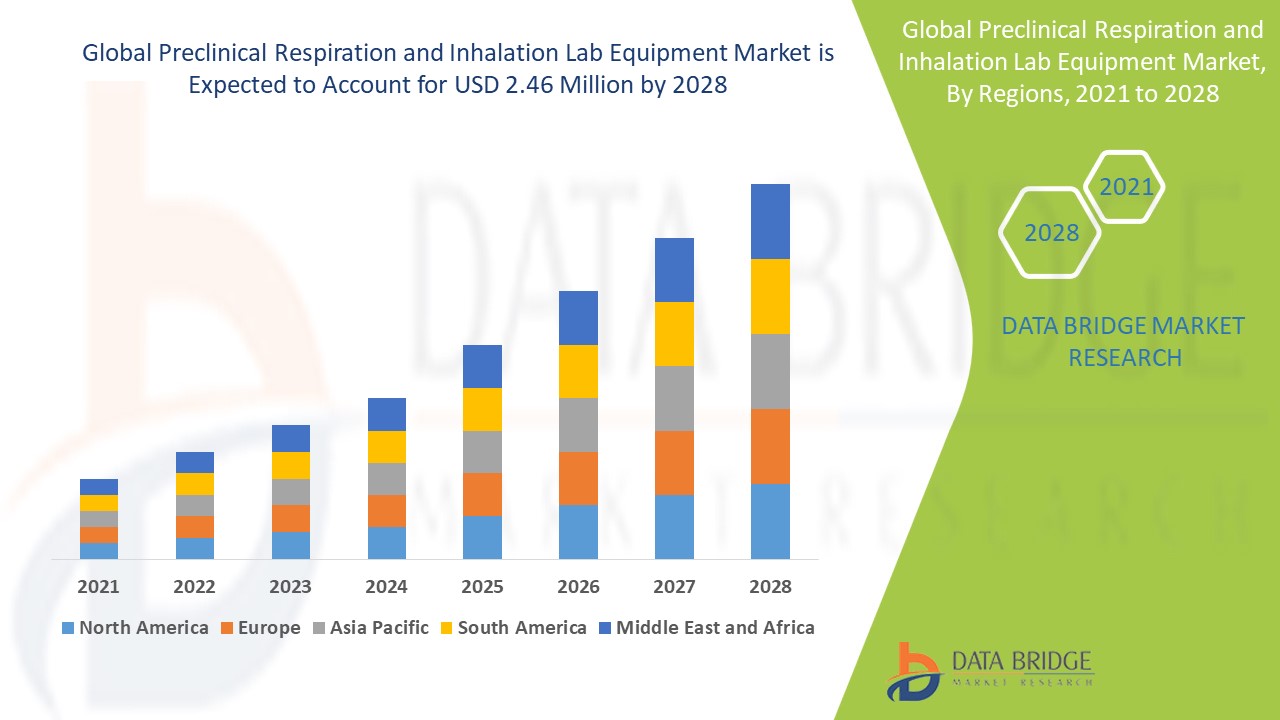
Preclinical Respiration and Inhalation Lab Equipment Market Analysis
The preclinical respiration and inhalation lab equipment market is experiencing significant growth, driven by advancements in medical research and increasing demand for effective respiratory therapies. This market plays a crucial role in preclinical studies, enabling the development of new drugs and therapies for respiratory diseases by providing accurate measurements of respiratory function and inhalation dynamics. Key factors contributing to the market's growth include the rising prevalence of respiratory disorders, such as asthma and COPD, and the increasing focus on personalized medicine. Recent advancements in technology have revolutionized preclinical respiration and inhalation equipment. For instance, the integration of advanced sensors, real-time data analytics, and automated systems allows for more precise and efficient respiratory studies. Additionally, the development of portable and user-friendly devices has improved the accessibility and convenience of conducting preclinical trials, especially in remote areas. The market is also supported by the growing healthcare infrastructure, particularly in emerging regions such as Asia-Pacific, which is expected to see substantial growth due to improving research capabilities and investments in medical technologies. As research institutions and pharmaceutical companies continue to invest in respiratory-related R&D, the preclinical respiration and inhalation lab equipment market is poised for continued expansion.
Preclinical Respiration and Inhalation Lab Equipment Market Size
The global Preclinical Respiration and Inhalation Lab Equipment market size was valued at USD 2.18 million in 2024 and is projected to reach USD 2.76 million by 2032, with a CAGR of 2.95% during the forecast period of 2025 to 2032. In addition to the insights on market scenarios such as market value, growth rate, segmentation, geographical coverage, and major players, the market reports curated by the Data Bridge Market Research also include depth expert analysis, patient epidemiology, pipeline analysis, pricing analysis, and regulatory framework.
Preclinical Respiration and Inhalation Lab Equipment Market Trends
“Rising Automation and Integration of Advanced Technologies”
The preclinical respiration and inhalation lab equipment market is witnessing a significant trend toward automation and integration of advanced technologies. With the growing demand for precision in respiratory studies, companies are incorporating real-time data analytics and automated systems into their equipment. This trend enhances the accuracy and efficiency of preclinical trials, enabling researchers to collect detailed respiratory data with minimal manual intervention. For instance, systems that automatically monitor inhalation patterns and adjust exposure levels to inhaled substances are being increasingly adopted, streamlining the research process. This is particularly beneficial in studies related to chronic respiratory diseases such as asthma and COPD, where precise measurement of respiratory function is critical. Additionally, the integration of AI and machine learning algorithms is allowing for more predictive modeling and analysis, further improving the speed and reliability of results. As the market continues to expand, these innovations in automation are set to play a key role in accelerating drug development and improving the overall efficacy of respiratory treatments.
Report Scope and Preclinical Respiration and Inhalation Lab Equipment Market Segmentation
|
Attributes |
Preclinical Respiration and Inhalation Lab Equipment Key Market Insights |
|
Segments Covered |
|
|
Countries Covered |
U.S., Canada and Mexico in North America, Germany, France, U.K., Netherlands, Switzerland, Belgium, Russia, Italy, Spain, Turkey, Rest of Europe in Europe, China, Japan, India, South Korea, Singapore, Malaysia, Australia, Thailand, Indonesia, Philippines, Rest of Asia-Pacific (APAC) in the Asia-Pacific (APAC), Saudi Arabia, U.A.E., South Africa, Egypt, Israel, Rest of Middle East and Africa (MEA) as a part of Middle East and Africa (MEA), Brazil, Argentina and Rest of South America as part of South America |
|
Key Market Players |
4DMedical (Australia), CH Technologies (U.S.), Columbus Instruments (U.S.), emka TECHNOLOGIES (France), EMMS (U.K.), Harvard Bioscience, Inc. (U.S.), IN-TOX PRODUCTS, LLC (U.S.), Lab Products, LLC. (U.S.), Sable Systems International (U.S.), TSE Systems (Germany), General Electric Company (U.S.), Medtronic (Ireland), Koninklijke Philips N.V. (Netherlands), and Precision Medical, Inc. (U.S.) |
|
Market Opportunities |
|
|
Value Added Data Infosets |
In addition to the insights on market scenarios such as market value, growth rate, segmentation, geographical coverage, and major players, the market reports curated by the Data Bridge Market Research also include depth expert analysis, patient epidemiology, pipeline analysis, pricing analysis, and regulatory framework. |
Preclinical Respiration and Inhalation Lab Equipment Market Definition
Preclinical respiration and inhalation lab equipment refers to specialized tools and devices used in research settings to simulate, measure, and analyze respiratory functions and inhalation processes during the development of new drugs or therapies. These instruments are primarily employed in preclinical studies to evaluate the effects of inhaled substances, such as pharmaceuticals, on respiratory health before clinical trials.
Preclinical Respiration and Inhalation Lab Equipment Market Dynamics
Drivers
- Rising Prevalence of Chronic Respiratory Diseases
The rising prevalence of chronic respiratory diseases, such as asthma, chronic obstructive pulmonary disease (COPD), and bronchitis, is a major driver for the preclinical respiration and inhalation lab equipment market. According to the World Health Organization (WHO), COPD is the third leading cause of death worldwide, affecting over 250 million people globally, while asthma impacts approximately 262 million people. These conditions are driving an urgent need for new, effective treatments, especially inhalable therapies, which rely on precise preclinical testing to ensure their safety and efficacy. The growing burden of respiratory diseases is compelling pharmaceutical companies and research institutions to invest in advanced lab equipment to simulate and analyze inhalation processes. This increased focus on respiratory research, in turn, fuels the demand for specialized preclinical equipment such as spirometers, inhalation exposure systems, and mechanical ventilators. As such, the rising prevalence of respiratory diseases directly contributes to the growth of the preclinical respiration and inhalation lab equipment market.
- Growing Investment in Pharmaceutical Research and Development (R&D)
Growing investment in pharmaceutical research and development (R&D) is a key driver for the preclinical respiration and inhalation lab equipment market. Pharmaceutical companies are significantly increasing their focus on developing new respiratory treatments, especially inhalable medications, to address the rising global prevalence of diseases such as asthma, COPD, and pulmonary fibrosis. In 2020 alone, global spending on pharmaceutical R&D reached over USD 200 billion, with a large portion directed toward respiratory drug development. For instance, leading companies such as GSK and AstraZeneca are investing heavily in the research of novel inhaled therapies, such as biologics and corticosteroid alternatives. This surge in R&D activities requires sophisticated preclinical equipment, including inhalation exposure systems and mechanical ventilators, to test the safety, dosage, and delivery mechanisms of these therapies in lab settings before advancing to clinical trials. As pharmaceutical companies ramp up efforts to develop effective inhaled treatments, the demand for precise and advanced preclinical lab equipment continues to rise, making investment in R&D a major market driver.
Opportunities
- Growing Technological Advancements in Respiratory Research
Advancements in respiratory research are driving significant demand for advanced preclinical equipment, as the focus on drug discovery for respiratory diseases intensifies. Technologies such as real-time data monitoring, automation, and AI integration are revolutionizing the way respiratory studies are conducted, making them more precise, efficient, and capable of yielding faster results. For instance, companies such as 3M are leveraging AI in their research to optimize the delivery of inhaled drugs and predict patient responses more accurately. The use of automated systems for monitoring inhalation patterns, airflow, and lung function allows for continuous and more accurate data collection, enhancing the reliability of preclinical trials. Furthermore, AI-powered predictive models help researchers identify potential drug candidates for respiratory diseases such as COPD or asthma, reducing the time and cost of bringing new therapies to market. These technological advancements present a significant market opportunity for companies offering cutting-edge preclinical respiration and inhalation lab equipment, as the demand for more sophisticated tools to support innovative respiratory drug research continues to grow.
- Increasing Expansion of Healthcare and Research Infrastructure
The expansion of healthcare and research infrastructure, particularly in emerging markets such as Asia-Pacific, is creating substantial growth opportunities in the preclinical respiration and inhalation lab equipment market. As countries such as China and India increase investments in healthcare, research facilities, and biotech sectors, the demand for advanced preclinical equipment has surged. For instance, China’s healthcare spending is expected to exceed USD 1 trillion by 2025, with a significant portion allocated to improving medical research and developing advanced pharmaceutical technologies. This rapid growth is driving the need for sophisticated respiratory lab technologies to support drug development, especially for inhaled therapies targeting diseases such as asthma and COPD. Enhanced research capabilities in these regions allow pharmaceutical companies and academic institutions to conduct more extensive preclinical studies, further increasing the demand for high-precision equipment, such as inhalation exposure systems and spirometers. As a result, the expansion of healthcare infrastructure in emerging markets presents a significant market opportunity for companies offering cutting-edge preclinical respiratory equipment.
Restraints/Challenges
- High Development and Maintenance Costs
The high development and maintenance costs associated with advanced respiration and inhalation lab equipment pose a significant market challenge, particularly for smaller or independent research facilities with limited budgets. Developing cutting-edge equipment, such as precision inhalation exposure systems for preclinical studies, requires substantial investment in research, design, and prototyping. Once developed, ongoing calibration, software updates, and technical support are essential to maintain the equipment's accuracy and functionality, further driving up costs. For instance, a complex inhalation exposure chamber, used for testing aerosol delivery systems in respiratory studies, requires regular maintenance to ensure precise particle size distribution and controlled environmental conditions. These high operational costs can strain the budgets of smaller labs, making it difficult for them to afford or maintain such equipment, limiting access to critical tools needed for research. This financial burden impedes the growth of smaller research labs and creates an opportunity for the market to explore cost-effective, scalable solutions to make advanced equipment more accessible across different lab sizes.
- Rigorous Requirements to Ensure the Safety, Efficacy, and Reliability of Equipment
Regulatory compliance is a major challenge in the preclinical respiration and inhalation lab equipment market, as equipment used in research must adhere to stringent standards set by regulatory bodies such as the FDA or EMA. These agencies impose rigorous requirements to ensure the safety, efficacy, and reliability of equipment used in preclinical studies, which can make the approval process both time-consuming and costly. For instance, a company developing an inhalation exposure system for drug testing must meet FDA Good Laboratory Practice (GLP) standards, ensuring that the system provides accurate, reproducible results under controlled conditions. Navigating these complex regulations often involves extensive documentation, clinical trials, and repeated inspections, which can be especially burdensome for smaller companies or start-ups with limited resources. This regulatory hurdle increases the time-to-market, driving up costs and potentially limiting innovation from smaller players. As a result, regulatory compliance remains a key market challenge, creating opportunities for streamlined compliance solutions or regulatory consultancy services to assist new entrants in meeting these requirements efficiently.
This market report provides details of new recent developments, trade regulations, import-export analysis, production analysis, value chain optimization, market share, impact of domestic and localized market players, analyses opportunities in terms of emerging revenue pockets, changes in market regulations, strategic market growth analysis, market size, category market growths, application niches and dominance, product approvals, product launches, geographic expansions, technological innovations in the market. To gain more info on the market contact Data Bridge Market Research for an Analyst Brief, our team will help you take an informed market decision to achieve market growth.
Preclinical Respiration and Inhalation Lab Equipment Market Scope
The market is segmented on the basis of type and end user. The growth amongst these segments will help you analyse meagre growth segments in the industries and provide the users with a valuable market overview and market insights to help them make strategic decisions for identifying core market applications.
Type
- Respiration Equipment
- Inhalation Equipment
End User
- CROs (Contract Research Organizations) and Academic Institutes
- Pharma and Biotech Companies
The market is analysed and market size insights and trends are provided by country, type, and end user as referenced above.
The countries covered in the market report are U.S., Canada and Mexico in North America, Germany, France, U.K., Netherlands, Switzerland, Belgium, Russia, Italy, Spain, Turkey, Rest of Europe in Europe, China, Japan, India, South Korea, Singapore, Malaysia, Australia, Thailand, Indonesia, Philippines, Rest of Asia-Pacific (APAC) in the Asia-Pacific (APAC), Saudi Arabia, U.A.E., South Africa, Egypt, Israel, Rest of Middle East and Africa (MEA) as a part of Middle East and Africa (MEA), Brazil, Argentina and Rest of South America as part of South America.
North America leads the preclinical respiration and inhalation lab equipment market due to its robust research and development infrastructure and a high volume of clinical trials conducted in the region. The presence of numerous pharmaceutical and biotech companies accelerates innovation and testing of new respiratory treatments. Additionally, strong government support for scientific research and the demand for advanced medical devices contribute to the market's dominance. This combination of factors establishes North America as a hub for preclinical respiratory and inhalation equipment.
Asia-Pacific is projected to experience substantial growth in the preclinical respiration and inhalation lab equipment market from 2025 to 2032, driven by the ongoing improvement of healthcare infrastructure across the region. Increasing investments in medical research and the expansion of healthcare facilities in countries such as China and India are key factors fueling this growth. The rising demand for advanced respiratory equipment, along with the growing focus on preclinical studies, further supports market expansion. These developments position the Asia-Pacific region as a rapidly evolving market for respiratory and inhalation lab equipment.
The country section of the report also provides individual market impacting factors and changes in regulation in the market domestically that impacts the current and future trends of the market. Data points such as down-stream and upstream value chain analysis, technical trends and porter's five forces analysis, case studies are some of the pointers used to forecast the market scenario for individual countries. Also, the presence and availability of global brands and their challenges faced due to large or scarce competition from local and domestic brands, impact of domestic tariffs and trade routes are considered while providing forecast analysis of the country data.
Preclinical Respiration and Inhalation Lab Equipment Market Share
The market competitive landscape provides details by competitor. Details included are company overview, company financials, revenue generated, market potential, investment in research and development, new market initiatives, global presence, production sites and facilities, production capacities, company strengths and weaknesses, product launch, product width and breadth, application dominance. The above data points provided are only related to the companies' focus related to market.
Preclinical Respiration and Inhalation Lab Equipment Market Leaders Operating in the Market Are:
- 4DMedical (Australia)
- CH Technologies (U.S.) (U.S.)
- Columbus Instruments (U.S.)
- emka TECHNOLOGIES (France)
- EMMS (U.K.)
- Harvard Bioscience, Inc. (U.S.)
- IN-TOX PRODUCTS, LLC (U.S.)
- Lab Products, LLC. (U.S.)
- Sable Systems International (U.S.)
- TSE Systems (Germany)
- General Electric Company (U.S.)
- Medtronic (Ireland)
- Koninklijke Philips N.V. (Netherlands)
- Precision Medical, Inc. (U.S.)
Latest Developments in Preclinical Respiration and Inhalation Lab Equipment Market
- In May 2022, 3M announced plans to expand its operations in Valley, Nebraska, aiming to boost the production of hearing and respiratory protection products
- In June 2022, Avon Protection Plc, previously known as Avon Rubber Plc, introduced a new line of EXOSKINTM CBRN gloves and boots, designed to provide respiratory protection for military personnel
- In September 2022, Dräger launched its new Powered Air-Purifying Respirator System, featuring headpieces with enhanced technical capabilities to filter hazardous substances from the ambient air, offered at a competitive price
SKU-
Obtenha acesso online ao relatório sobre a primeira nuvem de inteligência de mercado do mundo

- Painel interativo de análise de dados
- Painel de análise da empresa para oportunidades de elevado potencial de crescimento
- Acesso de analista de pesquisa para personalização e customização. consultas
- Análise da concorrência com painel interativo
- Últimas notícias, atualizações e atualizações Análise de tendências
- Aproveite o poder da análise de benchmark para um rastreio abrangente da concorrência
Metodologia de Investigação
A recolha de dados e a análise do ano base são feitas através de módulos de recolha de dados com amostras grandes. A etapa inclui a obtenção de informações de mercado ou dados relacionados através de diversas fontes e estratégias. Inclui examinar e planear antecipadamente todos os dados adquiridos no passado. Da mesma forma, envolve o exame de inconsistências de informação observadas em diferentes fontes de informação. Os dados de mercado são analisados e estimados utilizando modelos estatísticos e coerentes de mercado. Além disso, a análise da quota de mercado e a análise das principais tendências são os principais fatores de sucesso no relatório de mercado. Para saber mais, solicite uma chamada de analista ou abra a sua consulta.
A principal metodologia de investigação utilizada pela equipa de investigação do DBMR é a triangulação de dados que envolve a mineração de dados, a análise do impacto das variáveis de dados no mercado e a validação primária (especialista do setor). Os modelos de dados incluem grelha de posicionamento de fornecedores, análise da linha de tempo do mercado, visão geral e guia de mercado, grelha de posicionamento da empresa, análise de patentes, análise de preços, análise da quota de mercado da empresa, normas de medição, análise global versus regional e de participação dos fornecedores. Para saber mais sobre a metodologia de investigação, faça uma consulta para falar com os nossos especialistas do setor.
Personalização disponível
A Data Bridge Market Research é líder em investigação formativa avançada. Orgulhamo-nos de servir os nossos clientes novos e existentes com dados e análises que correspondem e atendem aos seus objetivos. O relatório pode ser personalizado para incluir análise de tendências de preços de marcas-alvo, compreensão do mercado para países adicionais (solicite a lista de países), dados de resultados de ensaios clínicos, revisão de literatura, mercado remodelado e análise de base de produtos . A análise de mercado dos concorrentes-alvo pode ser analisada desde análises baseadas em tecnologia até estratégias de carteira de mercado. Podemos adicionar quantos concorrentes necessitar de dados no formato e estilo de dados que procura. A nossa equipa de analistas também pode fornecer dados em tabelas dinâmicas de ficheiros Excel em bruto (livro de factos) ou pode ajudá-lo a criar apresentações a partir dos conjuntos de dados disponíveis no relatório.











