



Segmentação global de proteínas recombinantes não glicosiladas por produto (hormônio do crescimento humano recombinante, fator estimulador de colônias de granulócitos, insulina e interferon), aplicação (oncologia, doenças crônicas, doenças autoimunes, distúrbios sanguíneos, deficiência de hormônio do crescimento, doenças infecciosas e outras doenças) - Tendências e previsões do setor até 2033
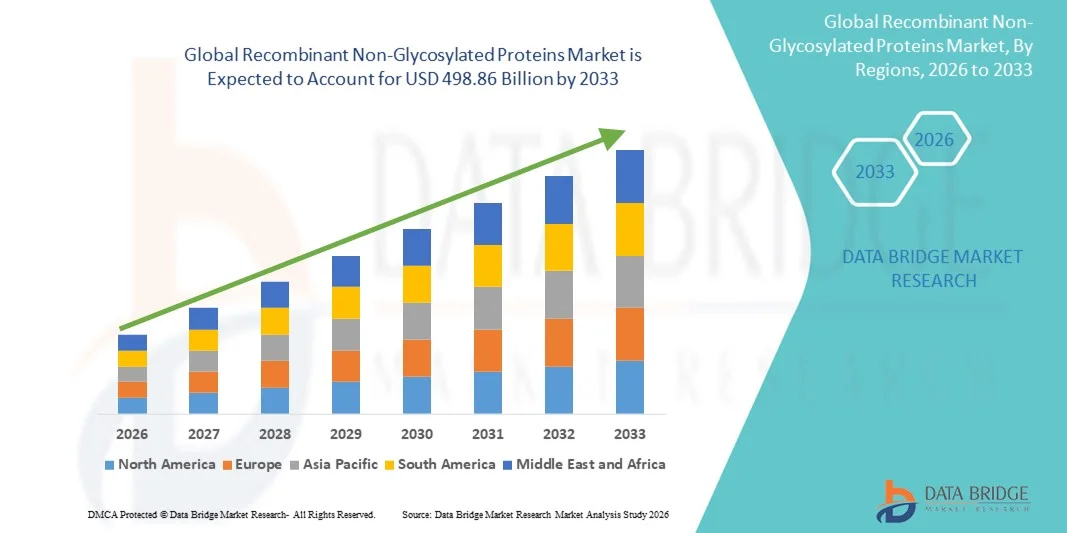
Tamanho do mercado de proteínas recombinantes não glicosiladas
- O mercado global de proteínas recombinantes não glicosiladas foi avaliado em US$ 283,28 bilhões em 2025 e deverá atingir US$ 498,86 bilhões em 2033 , com uma taxa de crescimento anual composta (CAGR) de 7,33% durante o período de previsão.
- O crescimento do mercado é impulsionado principalmente pelo uso crescente de proteínas recombinantes não glicosiladas na fabricação biofarmacêutica , em diagnósticos e em aplicações de pesquisa, sustentado por avanços em engenharia genética, sistemas de expressão microbiana e tecnologias de fermentação em larga escala.
- Além disso, a crescente demanda por proteínas terapêuticas e de pesquisa de alta pureza e baixo custo, aliada à expansão de suas aplicações em vacinas, produção de enzimas e terapias baseadas em proteínas, está consolidando as proteínas recombinantes não glicosiladas como uma solução preferencial nas indústrias farmacêutica e biotecnológica. Esses fatores convergentes estão acelerando a adoção de soluções de proteínas recombinantes não glicosiladas, impulsionando significativamente o crescimento do setor.
Análise do mercado de proteínas recombinantes não glicosiladas
- Proteínas recombinantes não glicosiladas, amplamente utilizadas em terapêutica, diagnóstico, vacinas e aplicações de pesquisa, desempenham um papel crucial no desenvolvimento biofarmacêutico moderno devido à sua alta pureza, consistência e adequação para produção em larga escala utilizando sistemas de expressão microbiana, como a E. coli.
- A crescente demanda por proteínas recombinantes não glicosiladas é impulsionada principalmente pela prevalência cada vez maior de doenças crônicas, pelo uso crescente de terapias baseadas em proteínas, pela demanda crescente por enzimas e hormônios e pela expansão das atividades de pesquisa em biotecnologia e ciências da vida.
- A América do Norte dominou o mercado de proteínas recombinantes não glicosiladas, com a maior participação na receita, de aproximadamente 38,9% em 2025, impulsionada por uma forte indústria biofarmacêutica, altos investimentos em P&D, capacidades avançadas de fabricação e a presença de grandes empresas de biotecnologia e farmacêuticas. Os EUA continuam liderando a adoção devido à extensa pesquisa clínica e comercialização de terapias recombinantes.
- A região Ásia-Pacífico deverá ser a de crescimento mais rápido no mercado de proteínas recombinantes não glicosiladas durante o período de previsão, registrando uma alta taxa de crescimento anual composta (CAGR) devido ao aumento da produção biofarmacêutica, ao crescimento dos gastos com saúde, à expansão das organizações de fabricação por contrato (CMOs) e aos crescentes investimentos nos setores de biotecnologia na China, Índia e Coreia do Sul.
- O segmento de Doenças Crônicas representou a maior fatia da receita de mercado, com cerca de 41,2% em 2025, impulsionado pelo uso extensivo de proteínas recombinantes não glicosiladas, como insulina e interferon, no tratamento de doenças crônicas.
Escopo do relatório e segmentação do mercado de proteínas recombinantes não glicosiladas
|
Atributos |
Principais informações de mercado sobre proteínas recombinantes não glicosiladas |
|
Segmentos abrangidos |
|
|
Países abrangidos |
América do Norte
Europa
Ásia-Pacífico
Oriente Médio e África
Ámérica do Sul
|
|
Principais participantes do mercado |
|
|
Oportunidades de mercado |
|
|
Conjuntos de informações de dados de valor agregado |
Além das informações sobre cenários de mercado, como valor de mercado, taxa de crescimento, segmentação, cobertura geográfica e principais participantes, os relatórios de mercado elaborados pela Data Bridge Market Research também incluem análises aprofundadas de especialistas, epidemiologia de pacientes, análise de projetos em desenvolvimento, análise de preços e estrutura regulatória. |
Tendências do mercado de proteínas recombinantes não glicosiladas
Avanços nas tecnologias de expressão recombinante e na eficiência de fabricação
- Uma tendência significativa e crescente no mercado global de proteínas recombinantes não glicosiladas é o avanço contínuo em sistemas de expressão de DNA recombinante e tecnologias de biofabricação escaláveis. Aprimoramentos em plataformas de expressão microbiana, como os sistemas de *E. coli* e levedura, estão possibilitando maiores rendimentos, pureza aprimorada e prazos de produção mais rápidos para proteínas não glicosiladas utilizadas em aplicações terapêuticas, diagnósticas e de pesquisa.
- Por exemplo, diversos fabricantes biofarmacêuticos têm otimizado cada vez mais os sistemas de expressão baseados em E. coli para aumentar a eficiência do dobramento de proteínas e reduzir as impurezas relacionadas à produção, melhorando assim a consistência do produto para proteínas recombinantes comercialmente importantes, como insulina, interferons e fatores de crescimento. Esses avanços reduzem significativamente os custos de fabricação, ao mesmo tempo que melhoram a reprodutibilidade dos lotes.
- Inovações de processo, como fermentação de alta densidade celular, bioprocessamento contínuo e técnicas aprimoradas de purificação a jusante, estão aumentando ainda mais a eficiência da produção. Resinas cromatográficas avançadas e tecnologias de filtração permitem taxas de recuperação mais altas e reduzem a agregação de proteínas, o que é particularmente crítico para manter a integridade estrutural de proteínas não glicosiladas.
- A adoção de ferramentas de automação e monitoramento digital de bioprocessos também está aprimorando a escalabilidade da produção e o controle de qualidade. Análises em tempo real e tecnologias analíticas de processo (PAT) permitem que os fabricantes monitorem de perto parâmetros críticos, reduzam falhas em lotes e garantam a conformidade regulatória em instalações de produção em larga escala.
- Essa tendência em direção a uma produção de proteínas recombinantes mais eficiente, escalável e com melhor custo-benefício está remodelando a concorrência no mercado. Consequentemente, empresas como Thermo Fisher Scientific, Merck KGaA e GenScript estão investindo fortemente em plataformas de expressão avançadas e em capacidades de fabricação por contrato para fortalecer seus portfólios de proteínas recombinantes e atender à crescente demanda global.
- O crescente foco na otimização de processos e em sistemas de produção de alta eficiência está impulsionando a expansão de proteínas recombinantes não glicosiladas em aplicações terapêuticas, diagnósticas e de pesquisa, reforçando as perspectivas de crescimento do mercado a longo prazo.
Dinâmica do mercado de proteínas recombinantes não glicosiladas
Motorista
Crescente demanda por biofármacos e terapias à base de proteínas
- A crescente prevalência de doenças crônicas como diabetes, câncer, doenças autoimunes e deficiências hormonais, aliada ao aumento global no desenvolvimento de medicamentos biológicos, é um dos principais impulsionadores da crescente demanda por proteínas recombinantes não glicosiladas. Essas proteínas desempenham um papel crucial em aplicações terapêuticas devido às suas estruturas bem caracterizadas, desempenho consistente e produção com boa relação custo-benefício.
- Por exemplo, em março de 2024, diversas empresas biofarmacêuticas expandiram a capacidade de produção de insulina recombinante e terapias baseadas em citocinas para atender ao aumento da população de pacientes e à crescente demanda global. Espera-se que essas expansões acelerem significativamente o crescimento do mercado de Proteínas Recombinantes Não Glicosiladas durante o período de previsão.
- Proteínas recombinantes não glicosiladas são amplamente utilizadas em medicamentos biológicos aprovados, vacinas, diagnósticos e pesquisas in vitro devido ao seu comportamento previsível e menores riscos imunogênicos quando adequadamente modificadas. Sua ampla aplicação em ambientes clínicos e laboratoriais continua a impulsionar a demanda do mercado.
- Além disso, o rápido crescimento dos biossimilares e a crescente ênfase na fabricação de produtos biológicos com boa relação custo-benefício tornam as proteínas recombinantes não glicosiladas uma opção atraente para empresas farmacêuticas que buscam soluções escaláveis e economicamente viáveis.
- O ecossistema de pesquisa em biotecnologia em expansão, o aumento dos gastos em P&D e a crescente colaboração entre instituições acadêmicas e empresas biofarmacêuticas contribuem ainda mais para o forte dinamismo do mercado. A crescente adoção por organizações de pesquisa e fabricação por contrato (CROs e CMOs) também sustenta a expansão do mercado.
Restrição/Desafio
Processos de fabricação complexos e desafios de conformidade regulatória
- Apesar do robusto potencial de crescimento, o mercado de proteínas recombinantes não glicosiladas enfrenta desafios consideráveis relacionados a fluxos de trabalho de fabricação complexos e requisitos regulatórios rigorosos. Manter o correto enovelamento, a estabilidade e a atividade biológica das proteínas durante a produção em larga escala continua sendo tecnicamente complexo.
- Por exemplo, variações nas condições de expressão ou nas etapas de purificação podem levar à degradação ou agregação de proteínas, afetando a eficácia do produto e aumentando os custos de produção. Esses desafios técnicos podem limitar a escalabilidade, principalmente para fabricantes menores com capacidades limitadas de otimização de processos.
- A conformidade regulatória adiciona outra camada de complexidade, visto que as proteínas recombinantes destinadas ao uso terapêutico devem atender a rigorosos padrões de qualidade, segurança e consistência estabelecidos pelas autoridades regulatórias. São necessárias extensas medidas de validação, documentação e controle de qualidade, o que aumenta o tempo de lançamento no mercado e os custos gerais de desenvolvimento.
- Além disso, o investimento de capital relativamente alto exigido para equipamentos avançados de bioprocessamento, infraestrutura de testes de qualidade e mão de obra qualificada pode representar uma barreira para novos participantes e empresas em regiões em desenvolvimento. Embora os avanços tecnológicos estejam reduzindo gradualmente os custos de produção, o ônus do investimento inicial permanece significativo.
- Abordar esses desafios por meio da otimização de processos, aprimoramento das técnicas de engenharia de proteínas, treinamento da força de trabalho e harmonização regulatória será essencial para garantir a competitividade a longo prazo e o crescimento sustentável no mercado de proteínas recombinantes não glicosiladas.
Escopo do mercado de proteínas recombinantes não glicosiladas
O mercado está segmentado com base no produto e na aplicação.
- Por produto
Com base no produto, o mercado de Proteínas Recombinantes Não Glicosiladas é segmentado em Hormônio do Crescimento Humano Recombinante, Fator Estimulador de Colônias de Granulócitos (G-CSF), Insulina, Interferon e outros. O segmento de Insulina dominou a maior participação na receita de mercado, com aproximadamente 38,6% em 2025, impulsionado pela crescente prevalência global de diabetes e pela longa tradição de utilizar insulina recombinante para o controle glicêmico eficaz. Os produtos de insulina recombinante não glicosilada são amplamente adotados devido à sua alta pureza, farmacocinética previsível e produção em larga escala com baixo custo, utilizando sistemas de expressão microbiana. A forte demanda tanto de economias desenvolvidas quanto emergentes, apoiada pelo aumento do acesso à saúde e pela cobertura de reembolso, reforça ainda mais a dominância do segmento. Inovações contínuas de produtos, incluindo análogos de insulina de ação rápida e de ação prolongada, estão aprimorando os resultados do tratamento e a adesão do paciente. Além disso, a expansão do mercado de insulina biossimilar está melhorando a acessibilidade, principalmente em regiões sensíveis a preços, impulsionando assim o consumo geral. A presença de grandes fabricantes farmacêuticos com portfólios consolidados de insulina e redes de distribuição robustas continua a solidificar a posição de liderança da insulina no mercado de proteínas recombinantes não glicosiladas.
O segmento de Hormônio de Crescimento Humano Recombinante (rhGH) deverá apresentar a taxa de crescimento anual composta (CAGR) mais rápida, de 9,8%, entre 2026 e 2033, impulsionado pelo aumento das taxas de diagnóstico de deficiência de hormônio do crescimento em populações pediátricas e adultas. A crescente conscientização sobre distúrbios hormonais, a melhoria das capacidades de diagnóstico e a expansão das aplicações terapêuticas do rhGH além do tratamento clássico da deficiência estão sustentando o rápido crescimento do mercado. Os avanços tecnológicos na expressão e formulação de proteínas recombinantes estão aprimorando a segurança, a eficácia e a vida útil dos produtos de rhGH. Além disso, a crescente adoção em mercados emergentes, apoiada pela melhoria da infraestrutura de saúde e da cobertura de planos de saúde, está acelerando significativamente a demanda. O aumento das atividades de pesquisa focadas em formulações de hormônio do crescimento de longa duração também está aprimorando a adesão ao tratamento e os resultados clínicos. A crescente ênfase na medicina personalizada e no cuidado endócrino a longo prazo deverá impulsionar ainda mais a expansão do segmento de rhGH durante o período de previsão.
- Por meio de aplicação
Com base na aplicação, o mercado de Proteínas Recombinantes Não Glicosiladas é segmentado em Oncologia, Doenças Crônicas, Doenças Autoimunes, Distúrbios Sanguíneos, Deficiência de Hormônio do Crescimento, Doenças Infecciosas e Outras Doenças. O segmento de Doenças Crônicas representou a maior participação na receita do mercado, com cerca de 41,2% em 2025, impulsionado pelo uso extensivo de proteínas recombinantes não glicosiladas, como insulina e interferon, no tratamento de doenças crônicas. O crescente impacto global do diabetes, anemia e deficiências hormonais tem levado a uma demanda sustentada por produtos biológicos à base de proteínas que oferecem eficácia terapêutica consistente. Esses produtos são preferidos devido aos seus perfis clínicos bem estabelecidos, produção em larga escala e adequação a regimes de tratamento prolongados. A forte dependência dos pacientes em relação à terapia biológica contínua, juntamente com políticas de reembolso favoráveis em mercados desenvolvidos, reforça ainda mais a dominância do segmento. Além disso, a crescente prevalência de doenças crônicas em populações idosas aumentou significativamente o volume de tratamentos em todo o mundo. As melhorias contínuas na estabilidade da formulação e nos métodos de administração estão a apoiar ainda mais a adoção a longo prazo em diversas indicações de doenças crónicas.
Prevê-se que o segmento de Oncologia apresente o crescimento mais rápido, com uma taxa composta de crescimento anual (CAGR) de 10,4% entre 2026 e 2033, impulsionado pelo aumento do uso de proteínas recombinantes, como interferons e fatores estimuladores de colônias, no tratamento e nos cuidados paliativos do câncer. O aumento da incidência global de câncer, aliado à crescente adoção de terapias biológicas para o controle de complicações induzidas pela quimioterapia, está acelerando o crescimento do mercado. Proteínas recombinantes não glicosiladas desempenham um papel crucial na modulação imunológica, na prevenção de infecções e na recuperação hematopoiética em pacientes oncológicos. O aumento do investimento em pesquisa oncológica, combinado com a crescente aplicação clínica de produtos biológicos em terapias direcionadas e no suporte à imunoterapia, está impulsionando ainda mais a demanda. A expansão do acesso ao tratamento oncológico em economias emergentes e a melhoria das taxas de sobrevida também contribuem para maiores volumes de uso. À medida que as terapias paliativas baseadas em produtos biológicos se tornam parte integrante dos protocolos abrangentes de tratamento do câncer, espera-se que o segmento de aplicações oncológicas apresente um crescimento robusto ao longo do período de previsão.
Análise Regional do Mercado de Proteínas Recombinantes Não Glicosiladas
- A América do Norte dominou o mercado de proteínas recombinantes não glicosiladas, com a maior participação na receita, de aproximadamente 38,9% em 2025 , impulsionada por um ecossistema biofarmacêutico robusto, altos investimentos em P&D, infraestrutura de fabricação avançada e a presença de empresas líderes em biotecnologia e farmacêuticas. Os EUA representam a maior parte dessa participação de mercado devido à extensa pesquisa clínica, à rápida comercialização de terapias recombinantes e à adoção precoce de produtos biológicos inovadores, como insulina, hormônios de crescimento e interferons.
- A crescente prevalência de doenças crônicas e raras, aliada a políticas regulatórias favoráveis que apoiam aprovações aceleradas e o desenvolvimento de medicamentos órfãos, impulsiona ainda mais o crescimento do mercado. O foco crescente em medicina personalizada e terapias direcionadas está estimulando investimentos significativos na produção de proteínas recombinantes não glicosiladas.
- Além disso, as colaborações entre instituições de pesquisa, CMOs (Organizações de Fabricação por Contrato) e empresas farmacêuticas estão fortalecendo as cadeias de suprimentos, melhorando a acessibilidade e acelerando a penetração no mercado. A infraestrutura de saúde bem estabelecida, a forte proteção da propriedade intelectual e os altos gastos com saúde fazem da América do Norte um importante polo global para o desenvolvimento e a comercialização de proteínas recombinantes não glicosiladas.
Panorama do Mercado de Proteínas Recombinantes Não Glicosiladas nos EUA:
O mercado de proteínas recombinantes não glicosiladas nos EUA detinha a maior participação de receita na América do Norte em 2025, impulsionado por seu extenso portfólio de terapias recombinantes não glicosiladas para diversas indicações, como diabetes, deficiência de hormônio do crescimento e tratamentos oncológicos. A alta adoção de novos produtos biológicos, estruturas de reembolso favoráveis e financiamento robusto para P&D em biotecnologia contribuem para a expansão constante do mercado. Os principais players estão focados na comercialização de análogos de insulina, fatores estimuladores de colônias de granulócitos e interferons, atendendo tanto pacientes com doenças crônicas quanto raras. Os EUA também se beneficiam de fortes capacidades de fabricação por contrato e bioprocessamento, permitindo a produção e distribuição eficientes em larga escala de proteínas recombinantes. Incentivos governamentais para medicamentos órfãos e a facilitação regulatória por meio do processo acelerado do FDA permitem uma entrada mais rápida no mercado. Além disso, colaborações estratégicas e acordos de licenciamento entre empresas de biotecnologia e farmacêuticas globais aprimoram a transferência de tecnologia, a inovação de produtos e o alcance de mercado. O mercado americano também é favorecido pela crescente conscientização dos pacientes, centros de saúde especializados e um ecossistema de pesquisa clínica consolidado.
O mercado europeu de proteínas recombinantes não glicosiladas
deverá expandir a uma taxa de crescimento anual composta (CAGR) substancial durante o período de previsão , impulsionado por polos biofarmacêuticos consolidados em países como Alemanha, Suíça e França. O crescimento do mercado é sustentado por rigorosos marcos regulatórios que garantem a segurança dos produtos, pela crescente prevalência de doenças crônicas e pelo forte financiamento governamental para pesquisa em biotecnologia. Países em toda a Europa estão testemunhando uma alta adoção de terapias recombinantes, particularmente em oncologia, tratamento de diabetes e distúrbios de crescimento. A presença de organizações avançadas de fabricação por contrato e cadeias de suprimentos integradas facilita a escalabilidade da produção e o rápido acesso ao mercado. Além disso, a crescente colaboração entre instituições de pesquisa acadêmica e empresas farmacêuticas está impulsionando a inovação no desenvolvimento de proteínas recombinantes não glicosiladas. O aumento dos gastos com saúde, a maior conscientização dos pacientes e os programas de saúde apoiados pelo governo aumentam ainda mais a acessibilidade. A região também está recebendo investimentos em tecnologias avançadas de fabricação, como biorreatores de uso único e processamento contínuo, melhorando a eficiência da produção e a relação custo-benefício.
Panorama do Mercado de Proteínas Recombinantes Não Glicosiladas no Reino Unido:
Prevê-se que o mercado de proteínas recombinantes não glicosiladas no Reino Unido cresça a uma taxa composta de crescimento anual (CAGR) notável , impulsionado por pesquisas ativas em terapias com proteínas recombinantes, parcerias biofarmacêuticas estratégicas e adoção precoce de produtos biológicos inovadores. A crescente incidência de doenças crônicas e raras, aliada a uma infraestrutura de saúde robusta, facilita a penetração no mercado. O Reino Unido está testemunhando um crescimento na produção de insulina recombinante, fatores estimuladores de colônias de granulócitos e interferons, impulsionado principalmente pela alta conscientização dos pacientes e por estruturas de reembolso bem estabelecidas. Iniciativas governamentais que promovem a biotecnologia, o acesso a mão de obra qualificada e a presença de instituições de pesquisa de classe mundial fortalecem ainda mais o crescimento do mercado. Além disso, o aumento da terceirização para organizações de fabricação por contrato garante a produção escalável e com boa relação custo-benefício de proteínas recombinantes não glicosiladas.
O mercado alemão de proteínas recombinantes não glicosiladas
deverá expandir-se a uma taxa composta de crescimento anual (CAGR ) considerável , impulsionado por um forte setor biotecnológico e farmacêutico, elevados gastos com saúde e a adoção de terapias recombinantes em hospitais e clínicas. O país beneficia-se do avanço tecnológico em bioprocessamento, do apoio regulatório e de uma infraestrutura robusta para pesquisa clínica. A Alemanha apresenta uma crescente demanda por proteínas recombinantes no tratamento de doenças crônicas, oncologia e endocrinologia. Os esforços colaborativos entre startups de biotecnologia e empresas farmacêuticas multinacionais aprimoram a inovação e a eficiência da produção. O foco na medicina de precisão e em opções de tratamento personalizadas também contribui para o aumento da adoção de proteínas recombinantes não glicosiladas.
Análise do Mercado de Proteínas Recombinantes Não Glicosiladas na Ásia-Pacífico:
O mercado de proteínas recombinantes não glicosiladas na Ásia-Pacífico deverá ser a região de crescimento mais rápido , registrando uma alta taxa de crescimento anual composta (CAGR) durante o período de previsão, impulsionado pelo aumento da produção biofarmacêutica, pelo crescimento dos gastos com saúde e pela expansão das organizações de fabricação por contrato (CMOs) em países como China, Índia e Coreia do Sul. O aumento da população de pacientes, a conscientização sobre doenças crônicas e raras e o apoio governamental ao desenvolvimento da biotecnologia são importantes fatores que impulsionam esse crescimento. A região está testemunhando uma rápida adoção de proteínas recombinantes para o tratamento de diabetes, distúrbios de crescimento e tratamentos oncológicos. Os crescentes investimentos em infraestrutura biotecnológica, as melhorias na logística da cadeia de frio e a disponibilidade de terapias acessíveis estão facilitando um maior acesso. Além disso, o aumento das colaborações com empresas farmacêuticas globais está aprimorando a transferência de tecnologia, a eficiência da produção e as capacidades de fabricação locais, tornando a Ásia-Pacífico um polo chave para o fornecimento global de proteínas recombinantes.
Panorama do Mercado Japonês de Proteínas Recombinantes Não Glicosiladas:
O mercado japonês de proteínas recombinantes não glicosiladas apresenta crescimento constante devido à infraestrutura de saúde avançada, à crescente prevalência de doenças crônicas e raras e à alta adoção de terapias recombinantes inovadoras. Colaborações estratégicas entre empresas de biotecnologia locais e multinacionais farmacêuticas estão acelerando a expansão do mercado. O país prioriza o desenvolvimento e a produção de insulina recombinante, fatores estimuladores de colônias de granulócitos e interferons. A alta conscientização dos pacientes, as políticas de reembolso favoráveis e os marcos regulatórios de apoio contribuem para a expansão da participação de mercado do Japão. Além disso, o aumento dos investimentos em pesquisa biotecnológica e ensaios clínicos garante a introdução contínua de terapias avançadas.
Panorama do Mercado de Proteínas Recombinantes Não Glicosiladas na China:
O mercado de proteínas recombinantes não glicosiladas na China representou a maior fatia da receita na região Ásia-Pacífico em 2025 , impulsionado pela rápida urbanização, expansão dos gastos com saúde, aumento da prevalência de doenças crônicas e raras e fortes iniciativas governamentais de apoio ao desenvolvimento da biotecnologia. O país se tornou um polo global para a fabricação de proteínas recombinantes, com crescente adoção em hospitais, clínicas e centros de atendimento especializado. Empresas farmacêuticas e de biotecnologia nacionais estão investindo cada vez mais em pesquisa, desenvolvimento e comercialização de proteínas recombinantes não glicosiladas. Melhorias nos marcos regulatórios, maior conscientização dos pacientes e expansão das redes de distribuição também contribuem para o crescimento do mercado.
Participação de mercado de proteínas recombinantes não glicosiladas
O setor de proteínas recombinantes não glicosiladas é liderado principalmente por empresas consolidadas, incluindo:
• Eli Lilly and Company (EUA)
• Sanofi SA (França)
• Pfizer Inc. (EUA)
• F. Hoffmann-La Roche Ltd. (Suíça)
• Amgen Inc. (EUA)
• Merck & Co., Inc. (EUA)
• Bristol Myers Squibb Company (EUA)
• AbbVie Inc. (EUA)
• Biogen Inc. (EUA)
• Genentech, Inc. (EUA)
• Teva Pharmaceutical Industries Ltd. (Israel)
• Dr. Reddy's Laboratories Ltd. (Índia)
• Biocon Limited (Índia)
• Celltrion, Inc. (Coreia do Sul)
Últimos desenvolvimentos no mercado global de proteínas recombinantes não glicosiladas
- Em julho de 2021, a Biocon Biologics anunciou a aprovação pela FDA (Food and Drug Administration) dos EUA para o Semglee (insulina glargina-yfgn), o primeiro biossimilar de insulina intercambiável nos Estados Unidos. O Semglee é uma insulina recombinante produzida utilizando sistemas de expressão microbiana e representa uma importante terapia proteica não glicosilada. A aprovação marcou um importante marco, possibilitando a substituição em farmácias, melhorando o acesso dos pacientes à insulina a preços acessíveis e fortalecendo o papel das proteínas recombinantes não glicosiladas no tratamento do diabetes. Esse desenvolvimento aumentou significativamente a competitividade no mercado de insulina e impulsionou a adoção mais ampla de terapias baseadas em proteínas recombinantes.
- Em dezembro de 2022, a FDA (Food and Drug Administration) dos EUA aprovou o Rezvoglar (insulina glargina-AGLR), desenvolvido pela Eli Lilly e Boehringer Ingelheim, como um biossimilar de insulina intercambiável. O Rezvoglar é uma proteína totalmente recombinante e não glicosilada, projetada para igualar a eficácia clínica e o perfil de segurança dos produtos de insulina glargina de referência. Essa aprovação ampliou ainda mais as opções de tratamento para pacientes com diabetes e reforçou a crescente dependência de tecnologias de fabricação de proteínas recombinantes. O lançamento também destacou a confiança regulatória em produtos biossimilares de proteínas não glicosiladas.
- Em agosto de 2023, a Viatris e a Biocon Biologics receberam aprovações regulatórias ampliadas em diversas regiões para o Fulphila (pegfilgrastim-jmdb), um fator estimulador de colônias de granulócitos (G-CSF) recombinante. O G-CSF recombinante é uma proteína não glicosilada amplamente utilizada para reduzir o risco de infecção em pacientes com câncer submetidos à quimioterapia. As aprovações ampliadas fortaleceram a disponibilidade global dessa terapia e demonstraram a inovação e a expansão contínuas na produção de proteínas recombinantes. Esse desenvolvimento apoiou uma adoção mais ampla de fatores de crescimento não glicosilados em cuidados de suporte oncológico.
- Em fevereiro de 2025, a FDA (Food and Drug Administration) dos EUA aprovou o Merilog (insulina aspart-SZJJ), um biossimilar de insulina recombinante de ação rápida, ampliando as opções de tratamento para o controle do diabetes. O Merilog é produzido utilizando tecnologia de DNA recombinante e classificado como uma proteína não glicosilada. A aprovação enfatizou os avanços contínuos no desenvolvimento de biossimilares e na eficiência de fabricação. Esse lançamento contribuiu para o aumento da concorrência em terapias com insulina de ação rápida e destacou a inovação constante em formulações de proteínas recombinantes não glicosiladas, visando melhorar o controle glicêmico e o acesso dos pacientes ao tratamento.
SKU-
Obtenha acesso online ao relatório sobre a primeira nuvem de inteligência de mercado do mundo

- Painel interativo de análise de dados
- Painel de análise da empresa para oportunidades de elevado potencial de crescimento
- Acesso de analista de pesquisa para personalização e customização. consultas
- Análise da concorrência com painel interativo
- Últimas notícias, atualizações e atualizações Análise de tendências
- Aproveite o poder da análise de benchmark para um rastreio abrangente da concorrência
Metodologia de Investigação
A recolha de dados e a análise do ano base são feitas através de módulos de recolha de dados com amostras grandes. A etapa inclui a obtenção de informações de mercado ou dados relacionados através de diversas fontes e estratégias. Inclui examinar e planear antecipadamente todos os dados adquiridos no passado. Da mesma forma, envolve o exame de inconsistências de informação observadas em diferentes fontes de informação. Os dados de mercado são analisados e estimados utilizando modelos estatísticos e coerentes de mercado. Além disso, a análise da quota de mercado e a análise das principais tendências são os principais fatores de sucesso no relatório de mercado. Para saber mais, solicite uma chamada de analista ou abra a sua consulta.
A principal metodologia de investigação utilizada pela equipa de investigação do DBMR é a triangulação de dados que envolve a mineração de dados, a análise do impacto das variáveis de dados no mercado e a validação primária (especialista do setor). Os modelos de dados incluem grelha de posicionamento de fornecedores, análise da linha de tempo do mercado, visão geral e guia de mercado, grelha de posicionamento da empresa, análise de patentes, análise de preços, análise da quota de mercado da empresa, normas de medição, análise global versus regional e de participação dos fornecedores. Para saber mais sobre a metodologia de investigação, faça uma consulta para falar com os nossos especialistas do setor.
Personalização disponível
A Data Bridge Market Research é líder em investigação formativa avançada. Orgulhamo-nos de servir os nossos clientes novos e existentes com dados e análises que correspondem e atendem aos seus objetivos. O relatório pode ser personalizado para incluir análise de tendências de preços de marcas-alvo, compreensão do mercado para países adicionais (solicite a lista de países), dados de resultados de ensaios clínicos, revisão de literatura, mercado remodelado e análise de base de produtos . A análise de mercado dos concorrentes-alvo pode ser analisada desde análises baseadas em tecnologia até estratégias de carteira de mercado. Podemos adicionar quantos concorrentes necessitar de dados no formato e estilo de dados que procura. A nossa equipa de analistas também pode fornecer dados em tabelas dinâmicas de ficheiros Excel em bruto (livro de factos) ou pode ajudá-lo a criar apresentações a partir dos conjuntos de dados disponíveis no relatório.











