



Global Reduced Fat Packaged Food Market Segmentation, By Product Type (Dairy Products, Bakery Products, Cereals, Meat, Fish and Poultry Products, and Confectionary Products), Distribution Channel (Supermarket/Hypermarket, Convenience Store, Specialty Stores, Online Sale, and Others) - Industry Trends and Forecast to 2033
O que é o tamanho e a taxa de crescimento do mercado alimentar reduzido global
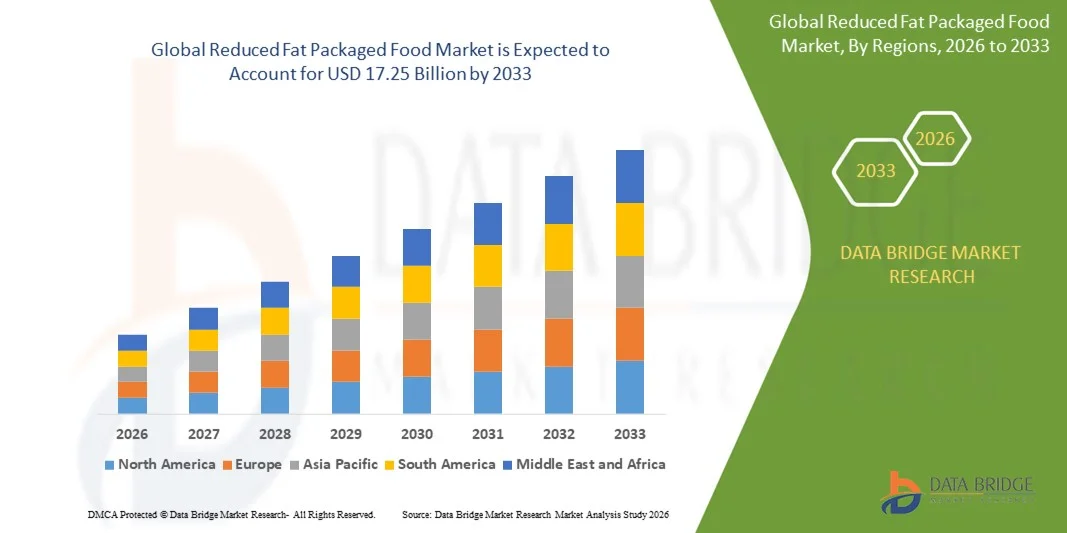
- De acordo com Data Bridge Market Research Analysis the o tamanho do mercado mundial de alimentos embalados com gordura reduzida foi avaliado em11,07 mil milhões de USD em 2025e espera-se alcançar17,25 mil milhões de USD até 2033, em umaCAGR de 5,7%durante o período de previsão
- O principal factor de crescimento no sentido da redução do mercado de alimentos embalados com gorduras é o aumento da tendência de alimentos prontos para consumo
- Além disso, espera-se que o aumento dos gastos dos consumidores, juntamente com o aumento da prevalência de obesidade e doenças relacionadas ou distúrbios que obriguem as pessoas a tomar refeições com baixas calorias e lanches com baixas calorias aumentem também a procura global de alimentos embalados com gorduras reduzidas.
Tamanho e previsão do mercado
- Valor de mercado global (2025):11,07 mil milhões de USD
- Valor de mercado previsto (2033):17,25 mil milhões de USD
- Previsões CAGR (2026-2033):5.7%
Quais são os principais takeaways do reduzido mercado de alimentos embalados com gordura
- Prevê-se também que o aumento do rendimento disponível e o aumento da procura de produtos alimentares biológicos sirvam de motores principais para o reduzido mercado alimentar embalado com gorduras a nível mundial
- Além disso, o aumento do número de consumidores que participam em actividades de fitness e o rápido aumento da indústria da carne em todo o mundo também está a aumentar o crescimento do mercado reduzido de alimentos embalados com gorduras
- A América do Norte dominou a redução do mercado de alimentos embalados com gordura, com uma quota de receita de 42,36% em 2025, impulsionada pela elevada conscientização dos consumidores em relação à nutrição, aumento da prevalência de obesidade e doenças cardiovasculares, e forte demanda por baixo teor de gordura ealimentos com rótulo limpoprodutos em todos os EUA e Canadá
- Asia-Pacific é projetado para registrar o CAGR mais rápido de 10,36% de 2026 a 2033, impulsionado pela urbanização rápida, aumento de renda disponível, e crescente consciência de problemas de saúde relacionados ao estilo de vida em toda a China, Índia, Japão, Coreia do Sul e Sudeste Asiático
- O segmento de produtos lácteos dominou o mercado com 34,6% de participação em 2025, impulsionado pela forte demanda do consumidor por leite desnatado reduzido, iogurte, queijo e bebidas lácteas aromatizadas
Denunciar escopo e redução da gordura embalado mercado de alimentos
Atributos |
Reduzido gordura empacotado alimentos principais do mercado |
|
Segmentos Cobertos |
|
|
Países abrangidos |
América do Norte
Europa
Ásia- Pacífico
Médio Oriente e África
América do Sul
|
|
Jogadores do mercado chave |
|
|
Oportunidades de Mercado |
|
|
Informações sobre o Valor Adicionado |
Além dos insights sobre cenários de mercado, como valor de mercado, taxa de crescimento, segmentação, cobertura geográfica e principais atores, os relatórios de mercado curados pela Data Bridge Market Research também incluem análise de especialistas em profundidade, análise de preços, análise de compartilhamento de marca, inquérito ao consumidor, análise demografia, análise da cadeia de suprimentos, análise da cadeia de valor, visão geral da matéria-prima/consumíveis, critérios de seleção de fornecedores, Análise de PESTLE, Análise de Porter e marco regulatório. |
Qual é a tendência chave no mercado de alimentos embalados com gordura reduzida
Crescendo a mudança do consumidor em direção à saúde orientada, limpa-label, e alimentos embalados de baixa calorias
- O reduzido mercado de alimentos embalados com gordura está assistindo à crescente demanda por produtos formulados com menor teor de gordura, calorias reduzidas e perfis nutricionais equilibrados, impulsionados pelo aumento da consciência de saúde e preocupações relacionadas com o estilo de vida
- Os fabricantes estão focando em formulações de rótulo limpo, substitutos de gordura natural e ingredientes funcionais para manter o sabor, textura e estabilidade da prateleira, ao mesmo tempo em que reduzem o conteúdo global de gordura
- A preferência crescente por produtos alimentares de conveniência, prontos para comer e controlados por porções está acelerando a adoção em lares urbanos, profissionais de trabalho e consumidores conscientes de fitness
- Por exemplo, empresas como Nestlé, Danone, Kraft Heinz e General Mills expandiram seus portfolios de lanches, laticínios e refeições com receitas reformuladas e marcas nutritivas
- A influência crescente dos regulamentos de rotulagem nutricional, das alegações da frente da embalagem e das campanhas de sensibilização para a saúde digital está a reforçar a procura de alternativas embaladas com gorduras reduzidas
- Como os consumidores priorizam cada vez mais o bem-estar sem comprometer a comodidade, espera-se que os alimentos embalados com gordura reduzida permaneçam centrais nos hábitos alimentares modernos e nas estratégias alimentares de varejo
Quais são os principais drivers do mercado de alimentos embalados com gordura reduzida
- O aumento da prevalência de obesidade, doenças cardiovasculares e distúrbios do estilo de vida está levando o consumidor a mudar para opções de alimentos com baixo teor de gordura e mais saudáveis
- Por exemplo, em 2025, os principais fabricantes de alimentos, incluindo a PepsiCo, a Conagra Brands e a Arla Foods intensificaram os investimentos na reformulação dos produtos existentes para atender às normas de redução de gordura e nutrição
- Aumento da procuraalimentos funcionais, lanches fortificados e refeições melhores para você está impulsionando a adoção de produtos em toda a América do Norte, Europa e Ásia-Pacífico
- Avanços nas tecnologias de processamento de alimentos, miméticos de gordura, emulsificação e técnicas de aprimoramento de sabor melhoraram a qualidade do produto e aceitação do consumidor
- Aumentar a disponibilidade de alimentos embalados com gorduras reduzidas através de varejo moderno, comércio eletrônico e canais direto ao consumidor está fortalecendo a penetração no mercado
- Apoiado pelo aumento da sensibilização para a saúde, apoio regulatório e inovação contínua de produtos, o mercado de alimentos embalados com gordura reduzida está preparado para um crescimento constante a longo prazo
Que fator está desafiando o crescimento do mercado de alimentos embalados com gordura reduzida
- Manter o gosto, a sensação oral e a textura enquanto reduz o teor de gordura continua a ser um grande desafio para os fabricantes, afetando muitas vezes as compras repetidas
- Por exemplo, durante 2024-2025, flutuações nos custos de matéria-prima e aumento dos preços de substitutos de gordura natural aumentaram os custos de formulação e produção para várias marcas mundiais de alimentos
- Ceticismo do consumidor em relação aos aditivos artificiais, estabilizadores e processamento excessivo limita a aceitação de certos produtos embalados com gorduras reduzidas
- Consciência limitada em mercados emergentes em relação à rotulagem nutricional, diferenciação do conteúdo de gordura e benefícios à saúde retardam a adoção
- Competição intensa de produtos premium de gordura total, alimentos frescos e preferências de refeições caseiras exerce pressão de preços e posicionamento
- Para superar esses desafios, as empresas estão enfatizando a otimização sensorial, rotulagem transparente, formulações limpas e educação do consumidor para expandir a adoção de alimentos embalados com gordura reduzida
Como é segmentado o mercado de alimentos embalados com gordura reduzida
O mercado é segmentado com base emtipo de produto e canal de distribuição.
- Por tipo de produto
Com base no tipo de produto, o mercado de alimentos embalados com gordura reduzida é segmentado em produtos lácteos, produtos de padaria, cereais, carne, peixes e produtos de aves e produtos de confeitaria. O segmento Laticínios dominou o mercado com uma participação de 34,6% em 2025, impulsionado pela forte demanda do consumidor por leite desnatado, iogurte, queijo e bebidas lácteas aromatizadas. Aumentar a consciência da sensibilidade à lactose, aumentar as preocupações com o colesterol e a disponibilidade generalizada de variantes de leite com baixo teor de gordura nos canais de varejo continuam a apoiar a dominância do segmento. As principais empresas de alimentos estão reformulando ativamente os portfólios de leite utilizando tecnologias de redução de gordura, preservando o sabor e a textura.
Espera-se que o segmento de produtos da padaria cresça no CAGR mais rápido de 2026 para 2033, apoiado pela crescente demanda por pães, biscoitos, bolos e itens de café da manhã de baixa gordura. A urbanização crescente, a cultura de lanches e as inovações de padarias limpas utilizando gorduras alternativas e embalagens controladas por porção estão acelerando a adoção, particularmente entre millennials conscientes da saúde e profissionais de trabalho.
- Por Canal de Distribuição
Com base no canal de distribuição, o mercado reduzido de alimentos embalados com gordura é segmentado em Supermercados/Hypermarkets, Convenience Stores, Specialty Stores, Vendas Online e Outros. O segmento Supermercado/Hypermarket dominou o mercado com uma participação de 41,2% em 2025, devido à ampla variedade de produtos, forte visibilidade da marca, preços competitivos e promoções na loja. Esses canais permitem que os consumidores comparem rótulos nutricionais, conteúdo de gordura e alegações de produtos, tornando-os o ponto de compra preferido para alimentos embalados com gordura reduzida globalmente.
O segmento de Vendas Online é projetado para crescer no CAGR mais rápido de 2026 para 2033, impulsionado pelo aumento da penetração de e-commerce, plataformas de supermercado digital e marcas de alimentos direto para consumo. Recomendações personalizadas, ofertas de alimentos saudáveis baseadas em assinaturas e crescente preferência pela entrega de porta estão fortalecendo a adoção online. Aumentar o acesso à Internet e os hábitos de compras móveis nas economias emergentes apoiam ainda mais a rápida expansão dos canais.
Qual região detém a maior parte do mercado de alimentos embalados com gordura reduzida
- A América do Norte dominou o reduzido mercado de alimentos embalados com gordura, com uma quota de receita de 42,36% em 2025, impulsionado pela alta consciência do consumidor em relação à nutrição, aumento da prevalência de obesidade e doenças cardiovasculares, e forte demanda por produtos alimentares de baixo teor de gordura e rótulo limpo em todos os EUA e Canadá. Ampla disponibilidade de leite desnatado reduzido, padaria, lanches e refeições prontas para comer através de canais de varejo organizados suporta forte consumo regional
- Os principais fabricantes de alimentos na América do Norte estão reformulando ativamente os produtos, reduzindo o teor de gordura saturada e introduzindo embalagens controladas por porção para atender às diretrizes alimentares em evolução e regulamentos de rotulagem
- Forte poder de compra, infraestrutura avançada de processamento de alimentos e inovação contínua em alimentos embalados funcionais e orientados para a saúde reforçam ainda mais a liderança regional no mercado
U.S. Reduced Fat Packaged Food Market Insight
Os EUA são o maior contribuinte na América do Norte, apoiado pelo crescente comportamento consciente do consumidor, adoção generalizada de rótulos nutricionais e forte presença de marcas mundiais de alimentos. A crescente procura de leite desnatado reduzido, cereais, snacks e refeições congeladas é impulsionada pelo aumento do foco na gestão do peso e saúde do coração. A penetração no varejo extensa, as ofertas de rótulo privado fortes, e a adoção crescente do mercado on-line aceleram ainda mais o crescimento do mercado.
Canadá Redução de gordura embalado mercado alimentar
O Canadá contribui significativamente para o crescimento regional, apoiado pelo aumento da demanda por alimentos embalados mais saudáveis, programas de conscientização nutricional apoiados pelo governo e a ampliação da disponibilidade de produtos de gordura reduzida em supermercados e lojas de saúde especiais. A crescente concentração em dietas equilibradas e cuidados de saúde preventivos reforça a adopção a longo prazo do mercado.
Asia-Pacific reduzido gordura embalado mercado de alimentos
Asia-Pacific é projetado para registrar o CAGR mais rápido de 10,36% de 2026 a 2033, impulsionado pela urbanização rápida, aumento de renda disponível, e crescente consciência de problemas de saúde relacionados ao estilo de vida em toda a China, Índia, Japão, Coreia do Sul e Sudeste Asiático. Mudar padrões alimentares, aumentar o consumo de alimentos embalados e expandir os canais de varejo modernos estão aumentando a demanda por alternativas de gordura reduzida. O crescimento das populações de classe média e a influência da dieta ocidental aceleram ainda mais a expansão do mercado regional.
China reduzido gordura embalado mercado de alimentos
A China é o maior contribuinte na Ásia-Pacífico, apoiado pelo aumento da conscientização sobre a saúde, rápido crescimento do consumo de alimentos embalados e crescente demanda por laticínios, lanches e refeições prontas. Fortes capacidades de fabricação doméstica e expansão das redes de varejo impulsionam a adoção generalizada.
Japão Redução de gordura embalado mercado de alimentos
O Japão mostra crescimento constante devido ao forte foco na nutrição equilibrada, necessidades populacionais de envelhecimento e alta demanda por produtos alimentares funcionais e com baixo teor de gordura. A ênfase no controle de porções e ingredientes de qualidade suporta o desenvolvimento sustentado do mercado.
Índia Redução da gordura embalado mercado alimentar
A Índia está emergindo como um mercado de crescimento chave, impulsionado por estilos de vida urbanos crescentes, crescente consciência da obesidade e rápida expansão do varejo organizado e do comércio eletrônico. A crescente demanda por lanches embalados e produtos lácteos mais saudáveis apoia a adoção acelerada.
South Korea Reduced Fat Packaged Food Market Insight
Coreia do Sul contribui constantemente devido à alta consciência de saúde, forte consumo de alimentos embalados, e crescente preferência por produtos alimentares de baixa gordura e funcionais. A inovação na formulação de produtos e ofertas premium apoia o crescimento contínuo do mercado.
Quais são as principais empresas no mercado de alimentos embalados com gordura reduzida
A reduzida indústria de alimentos embalados com gorduras é liderada principalmente por empresas bem estabelecidas, incluindo:
- General Mills Inc. (EUA)
- Kellogg's Company (EUA)
- Mondelez International (EUA)
- Tesco PLC (U.K.)
- A Companhia Kraft Heinz (EUA)
- Nestlé (Suíça)
- Cargill, Incorporated (EUA)
- Danone (França)
- A EMPRESA HESHEY (EUA)
- Tyson Foods, Inc. (EUA)
- Conagra Brands, Inc. (EUA)
- Arla Foods amba (Dinamarca)
- DFM Foods Ltd (Índia)
- PepsiCo (EUA)
SKU-
Obtenha acesso online ao relatório sobre a primeira nuvem de inteligência de mercado do mundo

- Painel interativo de análise de dados
- Painel de análise da empresa para oportunidades de elevado potencial de crescimento
- Acesso de analista de pesquisa para personalização e customização. consultas
- Análise da concorrência com painel interativo
- Últimas notícias, atualizações e atualizações Análise de tendências
- Aproveite o poder da análise de benchmark para um rastreio abrangente da concorrência
Metodologia de Investigação
A recolha de dados e a análise do ano base são feitas através de módulos de recolha de dados com amostras grandes. A etapa inclui a obtenção de informações de mercado ou dados relacionados através de diversas fontes e estratégias. Inclui examinar e planear antecipadamente todos os dados adquiridos no passado. Da mesma forma, envolve o exame de inconsistências de informação observadas em diferentes fontes de informação. Os dados de mercado são analisados e estimados utilizando modelos estatísticos e coerentes de mercado. Além disso, a análise da quota de mercado e a análise das principais tendências são os principais fatores de sucesso no relatório de mercado. Para saber mais, solicite uma chamada de analista ou abra a sua consulta.
A principal metodologia de investigação utilizada pela equipa de investigação do DBMR é a triangulação de dados que envolve a mineração de dados, a análise do impacto das variáveis de dados no mercado e a validação primária (especialista do setor). Os modelos de dados incluem grelha de posicionamento de fornecedores, análise da linha de tempo do mercado, visão geral e guia de mercado, grelha de posicionamento da empresa, análise de patentes, análise de preços, análise da quota de mercado da empresa, normas de medição, análise global versus regional e de participação dos fornecedores. Para saber mais sobre a metodologia de investigação, faça uma consulta para falar com os nossos especialistas do setor.
Personalização disponível
A Data Bridge Market Research é líder em investigação formativa avançada. Orgulhamo-nos de servir os nossos clientes novos e existentes com dados e análises que correspondem e atendem aos seus objetivos. O relatório pode ser personalizado para incluir análise de tendências de preços de marcas-alvo, compreensão do mercado para países adicionais (solicite a lista de países), dados de resultados de ensaios clínicos, revisão de literatura, mercado remodelado e análise de base de produtos . A análise de mercado dos concorrentes-alvo pode ser analisada desde análises baseadas em tecnologia até estratégias de carteira de mercado. Podemos adicionar quantos concorrentes necessitar de dados no formato e estilo de dados que procura. A nossa equipa de analistas também pode fornecer dados em tabelas dinâmicas de ficheiros Excel em bruto (livro de factos) ou pode ajudá-lo a criar apresentações a partir dos conjuntos de dados disponíveis no relatório.











