


Segmentação global do mercado de uísque escocês, por tipo de produto (Blended, Single Malt, Single Grain, Blended Malt, Blended Grain, e outros), Preços (Standard, Premium, and Luxury), Tipo de embalagem (Glass Garrafas, Plastic Garrafas, e outros), Gênero (Male e Feminino), Grupo de idade (18-30, 31–44 e 45+), Usuário final (Consumidores individuais e Estabelecimentos Comerciais), Canal de Vendas (On-Trade e Off-Trade) - Tendências da indústria e previsão para 2033
Qual é o Global Scotch Whisky Market Tamanho e taxa de crescimento
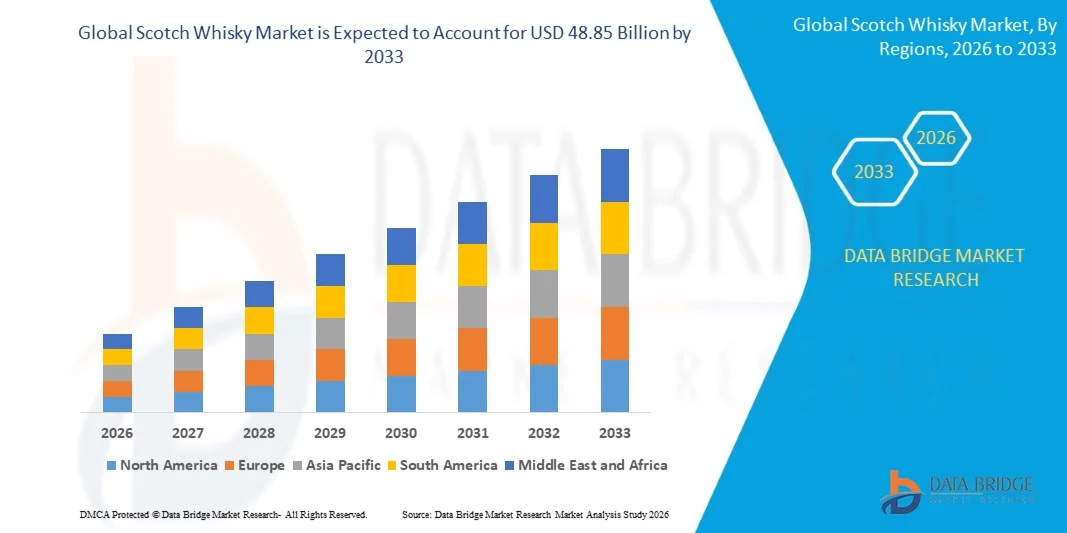
- De acordo com a análise Data Bridge Market Research, o tamanho global do mercado de uísque uísque foi avaliado em36,47 mil milhões de dólares em 2025e espera-se alcançar48,85 mil milhões de USD até 2033, em umaCAGR de 6,02%durante o período de previsão
- O crescimento do mercado é impulsionado pelo aumento da demanda mundial por bebidas alcoólicas premium e de luxo, preferência crescente por uísques de malte idosos e solteiros, forte demanda de exportação da Europa, América do Norte e Ásia-Pacífico, expansão das vendas de varejo duty-free e viagens, e crescente consumo entre os mais jovens demográficos em busca de espíritos autênticos e ricos em patrimônio
Tamanho e previsão do mercado
- Valor de mercado (2025):USD 36,47 Bilhões
- Valor de mercado previsto (2033):USD 48,85 Bilhões
- Previsão CAGR:6.02%
O que são as principais takeaways do Scotch Whisky Market
- O aumento do rendimento disponível, as tendências de prémio, a expansão da cultura de cocktails e a crescente procura de mercados emergentes como a Índia, a China e o Sudeste Asiático estão a criar oportunidades de crescimento significativas para os fabricantes de uísque escocês
- No entanto, fatores como regulamentos rigorosos sobre o álcool, altos impostos especiais de consumo, restrições na cadeia de abastecimento relacionadas com as exigências de envelhecimento e flutuação dos custos das matérias-primas podem atuar como fatores de restrição para o crescimento global do mercado de uísque escocês
- A Europa dominou o mercado do uísque escocês com uma quota de 39,6% em 2025, impulsionada pela forte presença de países produtores tradicionais de uísque, destilarias bem estabelecidas e cultura de consumo de uísque de raiz profunda em todo o Reino Unido, França, Alemanha e Espanha
- Espera-se que a América do Norte registre o CAGR mais rápido de 8,88% de 2026 a 2033, impulsionado pela rápida premiação, aumento do rendimento disponível e aumento da preferência dos consumidores por bebidas espirituosas de alta e alta qualidade nos EUA e Canadá
- O segmento de uísque escocês Blended dominou o mercado com uma participação de aproximadamente 52,6% em 2025, devido à sua ampla aceitação do consumidor, perfil de sabor consistente e preços competitivos
Relatório Escopo e Scotch Whisky Mercado Segmentação
|
Atributos |
Scotch Whisky Key Market Insights |
|
Segmentos Cobertos |
|
|
Países abrangidos |
América do Norte
Europa
Ásia- Pacífico
Médio Oriente e África
América do Sul
|
|
Jogadores do mercado chave |
|
|
Oportunidades de Mercado |
|
|
Informações sobre o Valor Adicionado |
Além dos insights sobre cenários de mercado, como valor de mercado, taxa de crescimento, segmentação, cobertura geográfica e principais atores, os relatórios de mercado curados pela Data Bridge Market Research também incluem análise de especialistas em profundidade, análise de preços, análise de compartilhamento de marca, inquérito ao consumidor, análise demografia, análise da cadeia de suprimentos, análise da cadeia de valor, visão geral da matéria-prima/consumíveis, critérios de seleção de fornecedores, Análise de PESTLE, Análise de Porter e marco regulatório. |
Qual é a tendência chave no mercado de uísque escocês
“Aumentando a mudança para a premiação, inovação artesanal e uísque escocês sustentável“
- O mercado de uísque escocês está testemunhando uma forte mudança para uísques premium, super-premium e single malt, impulsionados pela evolução das preferências do consumidor para autenticidade, patrimônio e perfis de gosto superior
- Os destiladores estão cada vez mais focados na produção de batch pequeno, edições limitadas e uísques de idade, aumentando a exclusividade da marca e percepção de valor
- A ênfase crescente nas práticas de destilação sustentáveis, incluindo o uso de energia renovável, eficiência hídrica e embalagens ecológicas, está moldando estratégias de desenvolvimento de produtos
- Por exemplo, empresas como Diageo, Pernod Ricard, Edrington Group e William Grant & Sons estão expandindo portfólios premium e investindo em destilarias neutras em carbono e fornecimento sustentável
- Aumento da demanda por consumo experiencial, incluindo turismo de destilaria, degustações de uísque e lançamentos de colecionadores, está fortalecendo o engajamento global da marca
- Como os consumidores associam cada vez mais uísque com artesanato e luxo, a prémio continuará a ser uma tendência determinante para o crescimento do mercado a longo prazo
O que são os Key Drivers do Scotch Whisky Market
- Aumento do consumo global de bebidas alcoólicas premium, apoiado pelo aumento dos rendimentos disponíveis e das melhorias de estilo de vida
- Por exemplo, em 2024-2025, os principais produtores, como Diageo e Pernod Ricard, expandiram a distribuição de uísques escoceses premium e idosos na Ásia-Pacífico e América do Norte
- A crescente popularidade do malte único e uísques de malte misturados entre millennials e consumidores de alta renda está aumentando a demanda categoria
- A expansão do comércio livre de direitos de venda a retalho, das plataformas de comércio electrónico e dos canais comerciais está a melhorar a acessibilidade dos produtos
- O aumento da procura de exportação dos mercados emergentes, em particular da Índia, da China e do Sudeste Asiático, está a reforçar os volumes de vendas mundiais
- Apoiado por marca forte, posicionamento do patrimônio e inovação, o mercado de uísque escocês é esperado para testemunhar crescimento constante a longo prazo
Que fator está desafiando o crescimento do mercado de uísque escocês
- Altos custos de produção associados com ciclos de envelhecimento prolongado, aquisição de casco de carvalho e requisitos de armazenamento aumentam a intensidade de capital
- Por exemplo, durante 2024-2025, flutuações nos preços da cevada, custos de embalagem de vidro e despesas logísticas pressionaram margens de lucro para vários destiladores
- Quadros regulamentares rigorosos, impostos especiais de consumo e restrições à publicidade ao álcool limitam a penetração do mercado em determinadas regiões
- Os desequilíbrios entre oferta e procura causados por restrições de envelhecimento podem restringir a escalabilidade rápida dos segmentos premium e idosos de uísque
- Competição de outras bebidas espirituosas premium, tais como bourbon, uísque irlandês e uísque japonês, intensifica os desafios de fixação de preços e diferenciação de marcas
- Para enfrentar esses desafios, os produtores estão focados na diversificação de portfólio, eficiência operacional e gestão de custos sustentável para fortalecer a competitividade global
Como está o mercado de uísque escocês segmentado
O mercado é segmentado com base emtipo de produto, preços, tipo de embalagem, sexo, faixa etária, usuário final e canal de vendas.
- Por tipo de produto
Com base no tipo de produto, o mercado do uísque é segmentado em mistura, malte único, grão único, malte misturado, grão misturado, etc. O segmento de uísque escocês Blended dominou o mercado com uma participação de aproximadamente 52,6% em 2025, devido à sua ampla aceitação do consumidor, perfil de sabor consistente e preços competitivos. Os uísques misturados são amplamente preferidos entre as categorias de mercado de massas e de prémios e gozam de uma forte penetração através de canais de comércio e off-trade globalmente. Sua acessibilidade e disponibilidade fazem deles o tipo de uísque escocês mais consumido em todo o mundo.
Espera-se que o segmento Single Malt cresça no CAGR mais rápido de 2026 para 2033, impulsionado pelo aumento da premiação, aumento do interesse em espíritos artesanais e crescente demanda de consumidores e colecionadores de alta renda. Expansão do turismo de destilaria, lançamentos de edição limitada, e forte demanda de exportação da Ásia-Pacífico e América do Norte continuam a apoiar o crescimento a longo prazo de malte único.
- Por Preços
Baseado em preços, o mercado de uísque é segmentado em categorias Standard, Premium e Luxury. O segmento Standard de preços detinha a maior quota de mercado de cerca de 46,8% em 2025, apoiada por elevados volumes de consumo, forte presença em uísques misturados e ampla disponibilidade em canais de varejo e hospitalidade. Uísque escocês a preço padrão apelam aos consumidores sensíveis aos preços e permanecem populares em mercados emergentes onde a acessibilidade impulsiona decisões de compra.
O segmento de luxo é projetado para testemunhar o crescimento mais rápido durante o período de previsão, alimentado pelo aumento da renda disponível, crescimento da cultura do dom, e crescente demanda por uísques escoceses idosos, raros e de edição limitada. Indivíduos e colecionadores de alto valor estão cada vez mais investindo em ofertas de ultra-premium, particularmente na Ásia-Pacífico, Europa, e canais de varejo duty-free. Contagem de histórias de marca, posicionamento do patrimônio e exclusividade reforçam ainda mais as perspectivas de crescimento no segmento de luxo.
- Por tipo de embalagem
Com base no tipo de embalagem, o mercado é segmentado em garrafas de vidro, garrafas de plástico e outros. O segmento Garrafas de Vidro dominou o mercado com mais de 88% de participação em 2025, pois o vidro continua a ser o material de embalagem preferido devido ao seu apelo premium, preservação da integridade do sabor e forte associação com autenticidade e patrimônio. Os uísques Scotch Premium e de luxo são quase exclusivamente embalados em garrafas de vidro, reforçando o valor da marca e a confiança do consumidor.
Espera-se que o segmento Outros, incluindo formatos de embalagem inovadores e sustentáveis, cresça o mais rápido possível no CAGR, impulsionado pelo aumento da conscientização ambiental e experimentação com materiais ecológicos. No entanto, as garrafas de plástico permanecem limitadas à seleção de ofertas de baixo custo e varejo de viagens, com penetração mínima em categorias premium.
- Por Sexo
Com base no gênero, o mercado de uísque é segmentado em consumidores masculinos e femininos. O segmento masculino dominou o mercado com uma participação de aproximadamente 68,4% em 2025, sustentada por padrões de consumo de longa data, forte associação de uísque com configurações sociais e culturais tradicionais orientadas para o sexo masculino e maior frequência de consumo.
O segmento feminino está previsto para crescer no CAGR mais rápido de 2026 para 2033, impulsionado pela mudança de normas sociais, marketing direcionado, perfis de sabor mais suave, e aumento da participação das mulheres no consumo de bebidas espirituosas premium. As marcas estão cada vez mais lançando variantes acessíveis e campanhas centradas no estilo de vida para atrair consumidores femininas globalmente.
- Por grupo etário
Com base na faixa etária, o mercado é segmentado em 18-30, 31-44 e 45+. A faixa etária com mais de 45 anos representou a maior participação de mercado de cerca de 41,7% em 2025, impulsionada por maior poder aquisitivo, preferência por uísques idosos e premium, e forte lealdade à marca. Este grupo valoriza o patrimônio, a qualidade e a autenticidade, tornando-o uma base de consumo fundamental para marcas de uísque escocês premium.
Espera-se que a faixa etária de 31 a 44 anos registre o crescimento mais rápido, apoiado pelo aumento do rendimento disponível, tendências de premiação e crescente interesse pelo consumo experiencial, como degustações e visitas à destilaria. Os consumidores mais jovens estão cada vez mais a negociar entre as bebidas espirituosas em massa e as ofertas de uísque premium.
- Por Usuário Final
Com base no usuário final, o mercado de uísque é segmentado em consumidores individuais e estabelecimentos comerciais. O segmento Consumidores Individuais dominou o mercado com uma participação de cerca de 57,3% em 2025, impulsionado por vendas off-trade fortes, tendências de consumo doméstico, cultura de dom e crescimento de plataformas de álcool de comércio eletrônico.
O segmento de Estabelecimentos Comerciais é projetado para crescer no CAGR mais rápido, apoiado pela recuperação do setor de hospitalidade, expansão de bares premium, hotéis, lounges e crescente demanda de uísque escocês na cultura de coquetéis e ambientes de jantar fino.
- Por Canal de Vendas
Com base no canal de vendas, o mercado é segmentado em On-Trade e Off-Trade. O segmento Off-Trade dominou o mercado com aproximadamente 62,1% de participação em 2025, impulsionado por supermercados, lojas de bebidas especiais, lojas duty-free e plataformas de varejo de álcool online. Conveniência, promoções de preços e maior disponibilidade de produtos apoiam o domínio off-trade.
Espera-se que o segmento On-Trade cresça no CAGR mais rápido de 2026 para 2033, alimentado por reavivamento de bares e restaurantes, premiação na hospitalidade e crescente preferência do consumidor pelo consumo experiencial de uísque.
Qual região detém a maior parte do mercado de uísque escocês
- A Europa dominou o mercado do uísque escocês com uma quota de receita de 39,6% em 2025, impulsionada pela forte presença de países tradicionais produtores de uísque, destilarias bem estabelecidas e cultura de consumo de uísque de raiz profunda em todo o Reino Unido, França, Alemanha e Espanha. A Escócia continua a ser o centro de produção global de uísque escocês, apoiado pelo património de destilação centenário, pelo estatuto de indicação geográfica protegida (IG) e por uma infra-estrutura de exportação robusta. O elevado consumo interno, a lealdade à marca e as fortes vendas orientadas para o turismo reforçam ainda mais a liderança do mercado europeu
- Os principais produtores de uísque escocês na Europa continuam a investir em expressões envelhecidas, edições limitadas, práticas de destilação sustentáveis e embalagens premium para manter a competitividade global. Fortes redes de distribuição em canais de varejo, hospitalidade e duty-free reforçam a demanda constante em toda a região
- Conscientização madura dos consumidores, quadros regulamentares fortes e inovação contínua nas ofertas de uísque de luxo e de prémio apoiam ainda mais o domínio da Europa no mercado global de uísque escocês
U.K. Scotch Whisky Market Insight
O Reino Unido é o maior contribuinte na Europa, liderado pelas destilarias reconhecidas mundialmente pela Escócia e pela capacidade de produção orientada para as exportações. Forte demanda por malte único e uísques escoceses misturados, extenso turismo de destilaria e investimento contínuo em instalações de maturação impulsionam a estabilidade do mercado. O papel do Reino Unido como produtor e exportador garante uma oferta global consistente e a liderança da marca.
França Scotch Whisky Market Insight
A França representa um dos maiores mercados de consumo de uísque escocês na Europa. Alto consumo per capita, forte presença de varejo off-trade, e crescente preferência por uísques premium e idosos impulsionam a demanda sustentada. O país também desempenha um papel fundamental como um centro de distribuição de uísque escocês premium em toda a Europa continental.
América do Norte Scotch Whisky Market
Espera-se que a América do Norte registre o CAGR mais rápido de 8,88% de 2026 a 2033, impulsionado pela rápida premiação, aumento do rendimento disponível, e aumento da preferência do consumidor por bebidas espirituosas de alta e alta qualidade nos EUA e Canadá. O crescente interesse em maltes únicos, lançamentos de edição limitada e uísque escocês colecionável está acelerando o crescimento do mercado. Expansão de lojas de bebidas especiais, plataformas de e-commerce e varejo duty-free impulsiona ainda mais as vendas regionais.
U.S. Scotch Whisky Market Insight
Os EUA são o maior contribuinte para a América do Norte, apoiado pela forte demanda de uísques escoceses premium e de luxo, a evolução da cultura de coquetéis e o crescimento das comunidades entusiastas do uísque. O aumento do consumo nos centros urbanos, o aumento da cultura do dom e a forte recuperação no comércio entre bares e restaurantes impulsionam o crescimento sustentado.
Canadá Scotch Whisky Market Insight
O Canadá contribui de forma constante, impulsionado pelo crescente interesse em espíritos premium, vendas off-trade fortes e canais de hospitalidade em expansão. O aumento da exposição dos consumidores às marcas globais de uísque e a crescente demanda por bebidas espirituosas importadas de alta qualidade apoiam a expansão do mercado a longo prazo.
Quais são as principais empresas no mercado de uísque escocês
A indústria do uísque é liderada principalmente por empresas bem estabelecidas, incluindo:
- Diageo plc(U.K.)
- Pernod Ricard S.A. (França)
- Edrington Group Ltd. (U.K.)
- William Grant & Sons Ltd.(U.K.)
- A Glenmorangie Company Ltd.(U.K.)
- International Beverage Holdings Ltd.(Hong Kong)
- Ian Macleod Distillers Ltd. (U.K.)
- Douglas Laing & Co. Ltd.(U.K.)
- J&G Grant (Destilaria Glenfarclas) (U.K.)
- Gordon & MacPhail (U.K.)
- Bladnoch Distillery Ltd. (U.K.)
- Arran Distillers Ltd. (U.K.)
- Wemyss Malts (Wemyss Development Co. Ltd.) (U.K.)
- Adelphi Distillery Ltd. (U.K.)
- Whisky Scotch Investments B.V. (Países Baixos)
- InchDairnie Distillery Company Ltd. (U.K.)
- A empresa Borders Distillery Company Ltd. (U.K.)
- Kingsbarns Destillery (Wemyss Development) (U.K.)
- Duncan Taylor Scotch Whisky Ltd. (U.K.)
- A Glasgow Distillery Company Ltd. (U.K.)
Quais são os desenvolvimentos recentes no mercado global de uísque escocês
- Em março de 2025, Johnnie Walker lançou a experiência do Vault, oferecendo serviços de mistura de uísque escocês sob medida a partir de 50.000 libras esterlinas e visando indivíduos ultra- high-net-worth buscando ofertas de luxo altamente personalizadas, fortalecendo o posicionamento da marca em espíritos experienciais e ultra-premium
- Em novembro de 2024, a Diageo introduziu a tecnologia FlavorPrintConnect, combinando kits de degustação de uísque curado com masterclasses digitais habilitadas por IA para oferecer experiências personalizadas ao consumidor, melhorando o engajamento direto ao consumidor através da inovação digital
- Em outubro de 2024, Johnnie Walker desvelou projetos de garrafas alimentadas por IA em colaboração com o artista Andy Gellenberg, lançando 5.000 garrafas colecionáveis exclusivas exclusivamente na Alemanha, demonstrando personalização avançada e diferenciação de marca liderada por tecnologia
- Em abril de 2023, a Royal Salute lançou dois uísques Scotch misturados de luxo, a Platinum Jubilee Edition e a House of Quinn decanter, e os apresentou na loja duty-free de partidas do Aeroporto Internacional Chhatrapati Shivaji Maharaj em Mumbai, reforçando sua presença de luxo e visibilidade no mercado indiano
- Em setembro de 2022, Thirstie lançou uma plataforma de e-commerce licor em parceria com a Benriach single malt Scotch Whisky, permitindo compras on-line em todos os EUA através de colaborações integradas de varejo, acelerando a adoção de vendas digitais e experiências de consumo omnicanal
SKU-
Obtenha acesso online ao relatório sobre a primeira nuvem de inteligência de mercado do mundo

- Painel interativo de análise de dados
- Painel de análise da empresa para oportunidades de elevado potencial de crescimento
- Acesso de analista de pesquisa para personalização e customização. consultas
- Análise da concorrência com painel interativo
- Últimas notícias, atualizações e atualizações Análise de tendências
- Aproveite o poder da análise de benchmark para um rastreio abrangente da concorrência
Metodologia de Investigação
A recolha de dados e a análise do ano base são feitas através de módulos de recolha de dados com amostras grandes. A etapa inclui a obtenção de informações de mercado ou dados relacionados através de diversas fontes e estratégias. Inclui examinar e planear antecipadamente todos os dados adquiridos no passado. Da mesma forma, envolve o exame de inconsistências de informação observadas em diferentes fontes de informação. Os dados de mercado são analisados e estimados utilizando modelos estatísticos e coerentes de mercado. Além disso, a análise da quota de mercado e a análise das principais tendências são os principais fatores de sucesso no relatório de mercado. Para saber mais, solicite uma chamada de analista ou abra a sua consulta.
A principal metodologia de investigação utilizada pela equipa de investigação do DBMR é a triangulação de dados que envolve a mineração de dados, a análise do impacto das variáveis de dados no mercado e a validação primária (especialista do setor). Os modelos de dados incluem grelha de posicionamento de fornecedores, análise da linha de tempo do mercado, visão geral e guia de mercado, grelha de posicionamento da empresa, análise de patentes, análise de preços, análise da quota de mercado da empresa, normas de medição, análise global versus regional e de participação dos fornecedores. Para saber mais sobre a metodologia de investigação, faça uma consulta para falar com os nossos especialistas do setor.
Personalização disponível
A Data Bridge Market Research é líder em investigação formativa avançada. Orgulhamo-nos de servir os nossos clientes novos e existentes com dados e análises que correspondem e atendem aos seus objetivos. O relatório pode ser personalizado para incluir análise de tendências de preços de marcas-alvo, compreensão do mercado para países adicionais (solicite a lista de países), dados de resultados de ensaios clínicos, revisão de literatura, mercado remodelado e análise de base de produtos . A análise de mercado dos concorrentes-alvo pode ser analisada desde análises baseadas em tecnologia até estratégias de carteira de mercado. Podemos adicionar quantos concorrentes necessitar de dados no formato e estilo de dados que procura. A nossa equipa de analistas também pode fornecer dados em tabelas dinâmicas de ficheiros Excel em bruto (livro de factos) ou pode ajudá-lo a criar apresentações a partir dos conjuntos de dados disponíveis no relatório.











