



Global Squash Drinks Market Segmentation, By Product Type (No Added Sugars and Added Sugars), Nature (Regular and Blended), Base Types (Citrus Fruits, Berry, Tropical & Exotic Fruits, and Mixed Fruit), Distribution Channels (Super/Hypermarket, Convenience Stores, Independent Grocery Stores, and Online Retailers) - Industry Trends and Forecast to 2033
O que é o Squash Drinks Market Tamanho e taxa de crescimento
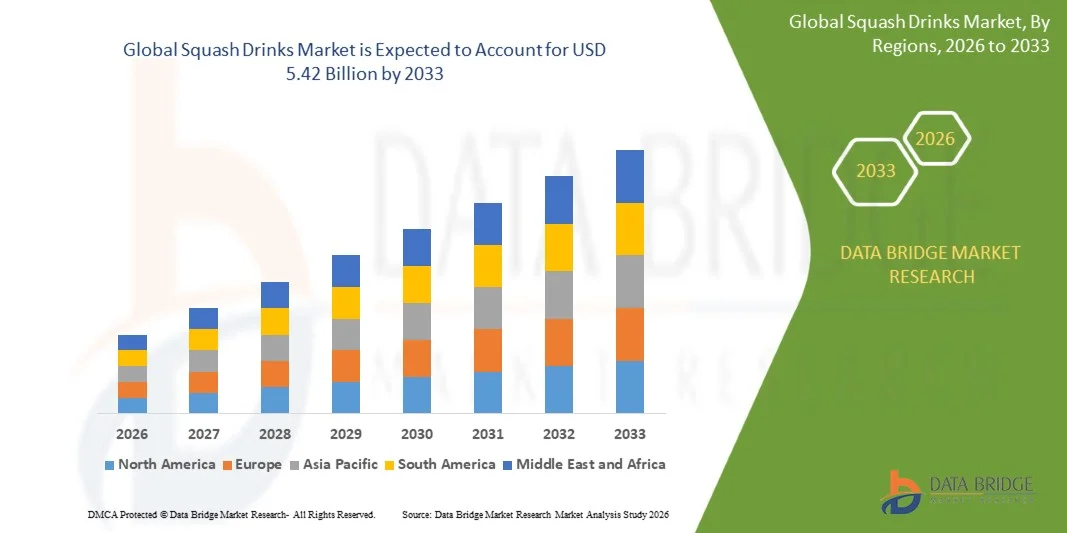
- Conforme a Data Bridge Market Research Analysis, o tamanho global das bebidas de squash foi avaliado em3,67 mil milhões de dólares em 2025e espera-se alcançar5,42 mil milhões de dólares em 2033, em umaCAGR de 5,00%durante o período de previsão
- O crescimento do mercado é em grande medida alimentado pela crescente preferência do consumidor por bebidas convenientes e prontas para beber
- Aumentar a consciência de saúde entre os consumidores, levando a uma maior demanda por bebidas de abóbora com baixo açúcar, frutas e ingredientes naturais
Tamanho e previsão do mercado
- Valor de mercado global (2025):3,67 mil milhões de USD
- Valor de mercado previsto (2033):5,42 mil milhões de dólares
- Previsões CAGR (2026-2033):5.00%
Quais são as principais opções do mercado de bebidas Squash
- O mercado está testemunhando inovação em sabores, ingredientes naturais e aditivos funcionais, aumentando o apelo do consumidor
- Expandir canais de distribuição, incluindo supermercados, varejo online e lojas de conveniência, estão apoiando maior disponibilidade e adoção de produtos
- A América do Norte dominou o mercado de bebidas de squash com a maior parcela de receita de 38,5% em 2025, impulsionada pela crescente conscientização da saúde, demanda por opções de bebidas convenientes e adoção crescente de bebidas aromatizadas e funcionais
- A região Ásia-Pacífico deverá testemunhar a maior taxa de crescimento no mundobebidas de abóboramercado, impulsionado pela urbanização rápida, aumento da população de classe média, adoção crescente de bebidas aromatizadas e prontas para mistura, e expansão das redes de distribuição através do varejo e canais online
- O segmento de Açúcar Adicionado teve a maior participação de receita de mercado em 2025, impulsionado pela preferência do consumidor por bebidas tradicionais adoçadas e pela disponibilidade de uma ampla gama de sabores. Bebidas adicionadas de açúcar squash são amplamente consumidas pelo seu gosto, conveniência e longa vida útil, tornando-os uma escolha básica para as famílias
Denunciar Escopo e Segmentação de Mercado de Bebidas de Squash
|
Atributos |
Squash Drinks Key Market Insights |
|
Segmentos Cobertos |
|
|
Países abrangidos |
América do Norte
Europa
Ásia- Pacífico
Médio Oriente e África
América do Sul
|
|
Jogadores do mercado chave |
|
|
Oportunidades de Mercado |
|
|
Informações sobre o Valor Adicionado |
Além dos insights sobre cenários de mercado, como valor de mercado, taxa de crescimento, segmentação, cobertura geográfica e principais atores, os relatórios de mercado curados pela Data Bridge Market Research também incluem análise de especialistas em profundidade, análise de preços, análise de compartilhamento de marca, inquérito ao consumidor, análise demografia, análise da cadeia de suprimentos, análise da cadeia de valor, visão geral da matéria-prima/consumíveis, critérios de seleção de fornecedores, Análise de PESTLE, Análise de Porter e marco regulatório. |
Qual é a tendência chave no mercado de bebidas squash
Necessidade crescente de bebidas convenientes e orientadas para a saúde
- O crescente foco em bebidas prontas para beber e funcionais está moldando significativamente o mercado de bebidas de abóbora, pois os consumidores preferem cada vez mais produtos que são fáceis de preparar, saborosos e enriquecidos com extratos naturais de frutas. As bebidas de squash estão ganhando força devido à sua versatilidade na preparação de bebidas e potencial para variantes de baixo açúcar ou fortificadas, fortalecendo a adoção através do varejo, serviço alimentar e consumo doméstico
- Aumentar a consciência em torno da saúde, bem-estar e nutrição equilibrada acelerou a demanda de bebidas de abóbora com açúcar reduzido, sabores naturais e vitaminas adicionadas. Consumidores conscientes da saúde estão buscando ativamente produtos que se alinham às preferências alimentares, levando as marcas a inovar com formulações mais saudáveis e opções de embalagem convenientes
- Tendências de conveniência e inovação de sabor estão influenciando as decisões de compra, com os fabricantes enfatizando opções prontas para mistura, ingredientes naturais e rotulagem transparente. Esses fatores ajudam as marcas a diferenciar produtos em um mercado competitivo e construir confiança no consumidor, enquanto campanhas de marketing destacam benefícios como refresco, hidratação e conteúdo de frutas naturais
- Por exemplo, em 2024, a Britvic no Reino Unido e a Dabur na Índia expandiram seus portfólios de produtos, introduzindo novas variantes de squash com sabor a frutas e açúcar baixo. Esses lançamentos foram em resposta à crescente preferência do consumidor por bebidas convenientes, saborosas e orientadas para a saúde, com distribuição em varejo, comércio eletrônico e canais especiais. Os produtos também foram promovidos como escolhas saudáveis, aumentando a lealdade da marca e repetindo compras
- Enquanto a demanda por bebidas de squash está crescendo, a expansão sustentada do mercado depende da inovação contínua do produto, dos preços competitivos e da manutenção de padrões de sabor e qualidade. Os fabricantes também estão focando em expandir as redes de distribuição, melhorar a vida útil e desenvolver formulações que equilibrem o gosto, nutrição e conveniência para adoção mais ampla
Squash Drinks Market Dynamics
Controlador
Preferência crescente para bebidas convenientes e orientadas para a saúde
- A demanda crescente do consumidor por bebidas prontas para mistura, saborosas e com baixo teor de açúcar é um dos principais motores do mercado de bebidas de squash. Os fabricantes estão cada vez mais introduzindo variantes naturais, baseadas em frutas e funcionais para atender as expectativas de saúde e conveniência, melhorar o apelo ao produto e cumprir as tendências de rotulagem
- A expansão das aplicações nos setores de famílias, restaurantes, cafés e serviços alimentares está influenciando o crescimento do mercado. As bebidas de squash melhoram o refresco e o sabor, permitindo uma preparação fácil, permitindo que os fabricantes atendam aos estilos de vida dos consumidores em evolução. O foco crescente nas dietas conscientes da saúde globalmente reforça ainda mais esta tendência
- Os fabricantes de bebidas estão promovendo ativamente formulações baseadas em bebidas de squash através da inovação de produtos, campanhas de marketing e parcerias estratégicas. Esses esforços são apoiados pela crescente preferência do consumidor por bebidas naturais, de baixo teor de açúcar e funcionais, e também incentivam colaborações entre fornecedores de ingredientes e marcas para melhorar a qualidade e reduzir a pegada ambiental
- Por exemplo, em 2023, a Coca-Cola nos EUA e Rasna na Índia relatou aumento da incorporação de concentrados de frutas e formulação de açúcar reduzido em bebidas de abóbora. Esta expansão seguiu a maior demanda do consumidor por bebidas convenientes, orientadas para a saúde e saborosas, conduzindo compras repetidas e diferenciação de produtos. Ambas as empresas também destacaram ingredientes naturais e conveniência em campanhas de marketing para fortalecer a confiança do consumidor e lealdade da marca
- Embora as crescentes tendências de saúde e conveniência apoiem o crescimento, a adoção mais ampla depende de otimização de custos, fornecimento de ingredientes e processos de produção escaláveis. Investimento em eficiência da cadeia de suprimentos, fornecimento sustentável e tecnologia de inovação sabor será fundamental para atender à demanda global e manter a vantagem competitiva
Restrição/Desafio
Alta Competição e Sensibilidade a Preços
- A presença de inúmeras marcas estabelecidas e produtos de marca privada aumenta a concorrência no mercado, limitando o poder de preços para alguns fabricantes e desafiando novos operadores. As pressões de preços competitivos podem afectar as margens e a rendibilidade
- A sensibilidade dos preços no consumidor continua a ser elevada em certas regiões, especialmente nos mercados em desenvolvimento, onde as famílias conscientes do orçamento podem preferir alternativas de baixo custo. Isso pode restringir a adoção de bebidas de squash premium ou fortificadas, apesar da crescente conscientização da saúde
- Os desafios da cadeia de suprimentos e distribuição também impactam o crescimento do mercado, pois as bebidas de squash requerem qualidade consistente de ingredientes, confiabilidade de embalagens e entrega oportuna. Complexidades logísticas, especialmente para concentrados perecíveis ou aromatizados, aumentam os custos operacionais
- Por exemplo, em 2024, os distribuidores do Sudeste Asiático e da África relataram uma absorção mais lenta de bebidas de squash com sabor a fruta premium devido a preços mais elevados e a uma consciência limitada de benefícios nutricionais reforçados. Isto afetou a alocação de espaço de prateleira nos pontos de venda, limitando a visibilidade e as vendas
- Superar esses desafios exigirá estratégias de preços competitivos, redes de distribuição robustas e iniciativas de marketing direcionadas para consumidores e varejistas. Colaboração com operadores de serviços alimentares, plataformas de comércio eletrônico e fornecedores de ingredientes podem ajudar a desbloquear o potencial de crescimento a longo prazo do mercado global de bebidas de squash. Além disso, a inovação de sabor contínuo e as formulações de valor acrescentado serão essenciais para a adopção generalizada
Como é o mercado de bebidas Squash segmentado
O mercado é segmentado com base no tipo de produto, natureza, tipos de base e canais de distribuição
• Por tipo de produto
Com base no tipo de produto, o mercado de bebidas de squash é segmentado em Açúcares Não Adicionados e Açúcares Adicionados. O segmento de Açúcar Adicionado teve a maior participação de receita de mercado em 2025, impulsionado pela preferência do consumidor por bebidas tradicionais adoçadas e pela disponibilidade de uma ampla gama de sabores. Bebidas adicionadas de açúcar squash são amplamente consumidas pelo seu gosto, conveniência e longa vida útil, tornando-os uma escolha básica para as famílias.
Espera-se que o segmento No Added Sugars testemunhe a taxa de crescimento mais rápida de 2026 a 2033, impulsionada pelo aumento da consciência de saúde e da demanda por alternativas hipocalóricas. Nenhuma adição de açúcar squash bebidas estão ganhando popularidade entre consumidores conscientes da saúde e entusiastas da aptidão, muitas vezes promovido como uma opção melhor para você sem comprometer o sabor.
• Por Natureza
Com base na natureza, o mercado é segmentado em Regular e Misturado. O segmento Regular teve a maior participação de receita de mercado em 2025, devido à sua ampla disponibilidade e perfil de sabor consistente que atrai os consumidores tradicionais. As bebidas regulares de squash são comumente usadas para consumo diário e uso doméstico.
O segmento Blended é projetado para registrar o maior crescimento entre 2026 e 2033, apoiado pela crescente demanda por combinações de sabores inovadoras e opções de bebidas funcionais. Bebidas de squash misturadas muitas vezes combinam vários extratos de frutas, aumentando o valor nutricional e atendendo às preferências de sabor evoluindo
• Por Tipos de Base
Com base em tipos de base, o mercado é segmentado em Citrus Fruits, Berry, Tropical & Exotic Fruits, e Mixed Fruit. O segmento Citrus Fruits dominou o mercado em 2025, impulsionado pela preferência do consumidor por sabores picantes e refrescantes e pela ampla disponibilidade de produtos à base de citrinos. As bebidas de squash de citrinos são comumente consumidas para hidratação e como uma opção de bebida refrescante.
Espera-se que o segmento de frutas tropicais e exóticas cresça ao ritmo mais rápido de 2026 para 2033, alimentado pelo crescente interesse em sabores exóticos e variedades de frutas premium. Bebidas de squash de frutas tropicais e exóticas muitas vezes visam os consumidores de nicho buscando experiências de gosto únicas e maior qualidade percebida.
• Por canais de distribuição
Com base nos canais de distribuição, o mercado é segmentado em Super / Hypermarket, Convenience Stores, Independent Grocery Stores e Online Retailers. O segmento Super/Hypermarket detinha a maior quota de mercado em 2025, devido à ampla disponibilidade de produtos, atividades promocionais e preços competitivos. Estes canais são preferidos pelos consumidores para compras a granel e variedade de opções.
Espera-se que o segmento de varejistas online testemunhe o crescimento mais rápido de 2026 para 2033, impulsionado pela crescente adoção de e-commerce, conveniência de entrega domiciliar e expansão de portfólios de produtos online. As plataformas online oferecem aos consumidores acesso fácil a uma ampla gama de variantes de squash e ofertas exclusivas.
Qual região detém a maior parte do mercado de bebidas de squash
- A América do Norte dominou o mercado de bebidas de squash com a maior parcela de receita de 38,5% em 2025, impulsionada pela crescente conscientização da saúde, demanda por opções de bebidas convenientes e adoção crescente de bebidas aromatizadas e funcionais
- Os consumidores da região preferem produtos que ofereçam sabor, refresco e benefícios nutricionais, tornando as bebidas de squash uma escolha popular para as famílias e consumo em curso
- Essa adoção generalizada é ainda apoiada por altos rendimentos disponíveis, estilos de vida movimentados, e pela crescente preferência por bebidas de baixa calorias e sem adição de açúcar, estabelecendo bebidas de squash como uma opção favorecida entre os canais de varejo e online
U.S. Squash Drinks Market Insight
O mercado de bebidas de squash dos EUA capturou a maior parte de receita em 2025 na América do Norte, alimentada pela crescente demanda por bebidas aromatizadas e sem açúcar. Os consumidores procuram cada vez mais opções de bebida convenientes e saudáveis para consumo diário. A crescente preferência por bebidas à base de frutas e funcionais, combinada com forte distribuição através de supermercados e varejo online, impulsiona ainda mais o mercado. Além disso, as inovações de produtos, como os sabores de frutas misturadas e exóticas, contribuem significativamente para a expansão do mercado.
Europa Squash Drinks Market Insight
Espera-se que o mercado europeu de bebidas de squash testemunhe a taxa de crescimento mais rápida de 2026 para 2033, impulsionada principalmente pelo aumento da consciência de saúde, pelo aumento do rendimento disponível e pela procura de opções de bebidas com baixo teor de açúcar. O aumento na urbanização e nos estilos de vida movimentados está incentivando a adoção de bebidas convenientes e prontas para misturar. Os consumidores europeus também são atraídos por sabores naturais de frutas, variantes orgânicas e bebidas funcionais, impulsionando o crescimento através do varejo, serviço alimentar e canais online.
U.K. Squash Drinks Market Insight
Espera-se que o mercado de bebidas britânicas de squash testemunhe a taxa de crescimento mais rápida de 2026 a 2033, impulsionada pelo aumento da consciência da saúde e pela preferência por bebidas ricas em nutrientes e com baixo açúcar. Os consumidores estão cada vez mais optando por bebidas sabor squash que oferecem sabor sem comprometer a saúde. Além disso, o crescente sector do comércio electrónico e a penetração a retalho estão a aumentar ainda mais a disponibilidade e a adopção dos produtos.
Alemanha Squash Drinks Market Insight
Espera-se que o mercado alemão de squash drinks testemunhe a taxa de crescimento mais rápida de 2026 a 2033, alimentada pela preferência do consumidor por bebidas saudáveis, naturais e funcionais. A urbanização crescente, os estilos de vida movimentados e uma forte inclinação para misturas de frutas inovadoras encorajam o crescimento do mercado. A demanda por embalagens convenientes e opções de prateleira-estável também suporta a adoção em canais de varejo e online.
Asia-Pacific Squash Drinks Market Insight
Espera-se que o mercado de bebidas de squash Ásia-Pacífico testemunhe a taxa de crescimento mais rápida de 2026 para 2033, impulsionada pelo aumento do rendimento disponível, pela urbanização rápida e pelo aumento da consciência da saúde em países como China, Japão e Índia. A crescente preferência da região por bebidas convenientes e saborosas, apoiada pela expansão do varejo moderno e do comércio eletrônico, está impulsionando a adoção. Além disso, a disponibilidade de diversas bases de fruta e preços competitivos está a ajudar as bebidas de abóbora a atingir uma base de consumo mais ampla.
Japão Squash Drinks Market Insight
Espera-se que o mercado japonês de bebidas de squash testemunhe a taxa de crescimento mais rápida de 2026 a 2033 devido à alta demanda do consumidor por bebidas de baixo açúcar, funcionais e sabor. Os consumidores japoneses procuram cada vez mais opções de bebida convenientes e nutritivas para consumo doméstico e em curso. As inovações de produtos, tais como sabores de fruta misturados e formatos prontos para mistura, juntamente com forte penetração de varejo e comércio eletrônico, estão alimentando o crescimento do mercado.
China Squash bebe por dentro do mercado
O mercado de bebidas de squash da China representou a maior quota de receita de mercado na Ásia-Pacífico em 2025, atribuída à classe média em expansão, aumentando a conscientização da saúde e aumentando a demanda por bebidas à base de frutas. As bebidas de squash estão se tornando cada vez mais populares nas casas, varejo e canais online. A tendência crescente de bebidas aromatizadas e funcionais, combinada com forte fabricação local e preços competitivos, está impulsionando a expansão do mercado.
Quais são as principais empresas no mercado de bebidas Squash
A indústria Squash Drinks é liderada principalmente por empresas bem estabelecidas, incluindo:
Aqui está a lista atualizada com 14 empresas, sem links e sede entre parênteses, conforme solicitado:
- Unilever (U.K./Países Baixos)
- CLP Britvic (U.K.)
- Hamdard (Índia)
- A Companhia Coca-Cola (EUA)
- Rasna (índia)
- Prigat (Israel)
- Primor (Israel)
- LIMITAÇÕES DE SUNTORIA (Japão)
- Sunquick (U.K.)
- PepsiCo (EUA)
- Nestlé (Suíça)
- Dabur (Índia)
- Cott Corporation (Canadá)
- Refresco (Países Baixos)
Quais são as últimas evoluções no mercado de bebidas Squash
- Em abril de 2025, Capri-Sun expandiu seu portfólio de bebidas lançando uma nova gama de produtos de squash. A gama inclui uma versão melhorada do seu tradicional Squash laranja e dois sabores inovadores, Monster Alarm e Jungle Drink. Este lançamento foi projetado para atrair consumidores mais jovens e diversificar as ofertas da marca. O movimento reforça a presença do mercado de Capri-Sun e ajuda a capturar uma parte maior do segmento de squash drinks
- Em março de 2025, Nichols introduziu Vimto Wonderfuel, uma variante funcional de squash sob sua marca Vimto visando o segmento de café da manhã. O produto é enriquecido com vitaminas B, C e D, juntamente com ferro e zinco. Visa proporcionar benefícios nutricionais adicionais e apelar aos consumidores conscientes da saúde. Este lançamento deverá aumentar a procura na categoria de bebidas funcionais de squash e aumentar o valor da marca
- Em outubro de 2024, a marca Robinsons da Britvic PLC reforçou sua presença no mercado introduzindo duas variantes de squash inspiradas no musical Wicked. O lançamento adiciona sabores únicos e aumenta a diversidade do produto. Ele envolve fãs da franquia enquanto atrai novos consumidores. Espera-se que a iniciativa aumente as vendas e reforce a posição dos Robinsons no mercado de squash drinks
SKU-
Obtenha acesso online ao relatório sobre a primeira nuvem de inteligência de mercado do mundo

- Painel interativo de análise de dados
- Painel de análise da empresa para oportunidades de elevado potencial de crescimento
- Acesso de analista de pesquisa para personalização e customização. consultas
- Análise da concorrência com painel interativo
- Últimas notícias, atualizações e atualizações Análise de tendências
- Aproveite o poder da análise de benchmark para um rastreio abrangente da concorrência
Metodologia de Investigação
A recolha de dados e a análise do ano base são feitas através de módulos de recolha de dados com amostras grandes. A etapa inclui a obtenção de informações de mercado ou dados relacionados através de diversas fontes e estratégias. Inclui examinar e planear antecipadamente todos os dados adquiridos no passado. Da mesma forma, envolve o exame de inconsistências de informação observadas em diferentes fontes de informação. Os dados de mercado são analisados e estimados utilizando modelos estatísticos e coerentes de mercado. Além disso, a análise da quota de mercado e a análise das principais tendências são os principais fatores de sucesso no relatório de mercado. Para saber mais, solicite uma chamada de analista ou abra a sua consulta.
A principal metodologia de investigação utilizada pela equipa de investigação do DBMR é a triangulação de dados que envolve a mineração de dados, a análise do impacto das variáveis de dados no mercado e a validação primária (especialista do setor). Os modelos de dados incluem grelha de posicionamento de fornecedores, análise da linha de tempo do mercado, visão geral e guia de mercado, grelha de posicionamento da empresa, análise de patentes, análise de preços, análise da quota de mercado da empresa, normas de medição, análise global versus regional e de participação dos fornecedores. Para saber mais sobre a metodologia de investigação, faça uma consulta para falar com os nossos especialistas do setor.
Personalização disponível
A Data Bridge Market Research é líder em investigação formativa avançada. Orgulhamo-nos de servir os nossos clientes novos e existentes com dados e análises que correspondem e atendem aos seus objetivos. O relatório pode ser personalizado para incluir análise de tendências de preços de marcas-alvo, compreensão do mercado para países adicionais (solicite a lista de países), dados de resultados de ensaios clínicos, revisão de literatura, mercado remodelado e análise de base de produtos . A análise de mercado dos concorrentes-alvo pode ser analisada desde análises baseadas em tecnologia até estratégias de carteira de mercado. Podemos adicionar quantos concorrentes necessitar de dados no formato e estilo de dados que procura. A nossa equipa de analistas também pode fornecer dados em tabelas dinâmicas de ficheiros Excel em bruto (livro de factos) ou pode ajudá-lo a criar apresentações a partir dos conjuntos de dados disponíveis no relatório.











