



Segmentação do mercado global de rádios táticos por tipo (montados em veículos e portáteis), tipo de plataforma (terrestre, naval e aérea) e aplicação (Exército, Marinha, Força Aérea, Exército e Forças de Operações Especiais) - Tendências e previsões do setor até 2033.
Tamanho tático do mercado de rádios
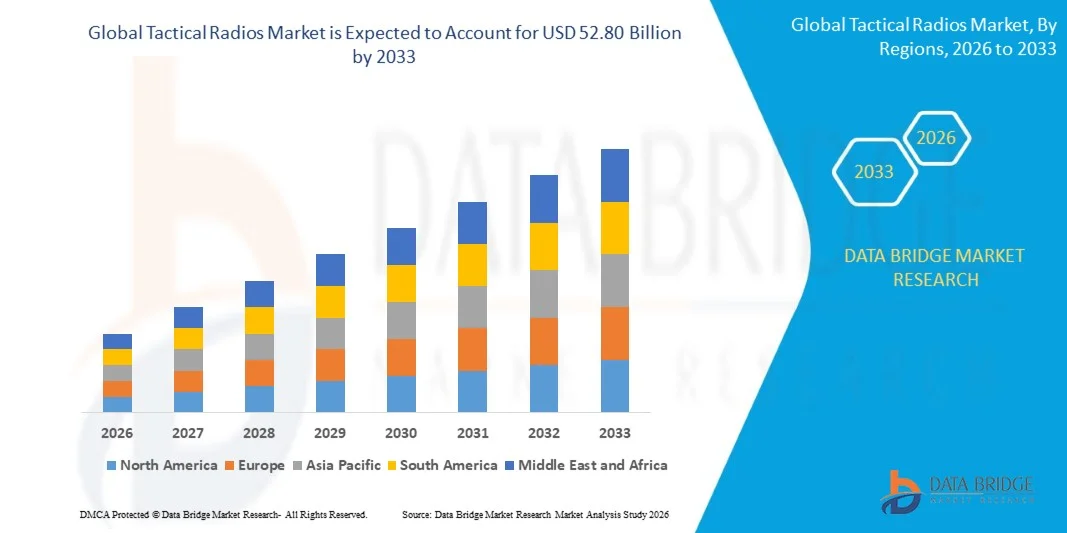
- Conforme a Data Bridge Market Research Analysis, o tamanho global do mercado de rádios táticas foi avaliado em19,58 mil milhões de dólares em 2025e espera-se alcançar52,80 mil milhões de USD até 2033, em umaCAGR de 13,20%durante o período de previsão
- O crescimento do mercado é impulsionado, em grande parte, pelo aumento das iniciativas de modernização da defesa e pela crescente necessidade de sistemas de comunicação seguros, confiáveis e em tempo real em operações militares, apoiando uma maior coordenação e conscientização situacional em ambientes complexos de combate
- Além disso, a crescente ênfase na guerra centrada na rede, interoperabilidade entre forças aliadas e avanços em criptografia e tecnologias de rádio definidas por software estão acelerando a adoção de rádios táticos, fortalecendo significativamente o crescimento global do mercado
Tamanho e previsão do mercado
- Valor de mercado global (2025):19,58 mil milhões de USD
- Valor de mercado previsto (2033):52,80 mil milhões de USD
- Previsões CAGR (2026-2033):13.20%
Análise Táctica do Mercado de Rádios
- Os rádios táticos, permitindo uma comunicação segura de voz e dados em plataformas terrestres, aéreas e navais, tornaram-se componentes críticos das modernas infraestruturas de comunicação militar e de defesa devido às suas capacidades de resiliência, mobilidade e transmissão criptografada
- A crescente demanda por rádios táticos é principalmente alimentada pelo aumento de tensões geopolíticas, expansão de operações militares e investimentos contínuos em sistemas avançados de comunicação para melhorar o comando, controle e eficácia operacional
- América do Norte domina o mercado de rádios táticas com uma quota superior a 40%em 2025, devido aos gastos de alta defesa, modernização contínua dos sistemas de comunicação militar, e forte foco na guerra centrada na rede
- Asia-Pacific é esperado para ser a região de crescimento mais rápido no mercado de rádios táticas durante o período de previsão devido ao aumento dos gastos de defesa, preocupações de segurança regional e esforços de modernização militar
- O segmento montado em veículos dominou o mercado com uma quota de mercado de 47% em 2025, devido ao seu amplo uso em veículos blindados, veículos de comando e frotas logísticas para comunicação segura e de longo alcance. Esses rádios oferecem maior potência de transmissão, maior estabilidade do sinal e a capacidade de integração com sistemas de gerenciamento de batalha a bordo, o que os torna críticos para operações militares coordenadas. As forças de defesa priorizam os rádios táticos montados em veículos devido à sua robustez, confiabilidade em terrenos severos e capacidade de suportar comunicações contínuas durante missões prolongadas. Sua compatibilidade com múltiplas bandas de frequência e padrões de criptografia reforça ainda mais seu domínio em plataformas militares modernas
Âmbito do relatório e Segmentação do Mercado de Rádios Táticas
|
Atributos |
Análises do mercado chave das rádios táticas |
|
Segmentos Cobertos |
|
|
Países abrangidos |
América do Norte
Europa
Ásia- Pacífico
Médio Oriente e África
América do Sul
|
|
Jogadores do mercado chave |
|
|
Oportunidades de Mercado |
|
|
Informações sobre o Valor Adicionado |
Além dos insights sobre cenários de mercado, como valor de mercado, taxa de crescimento, segmentação, cobertura geográfica e principais atores, os relatórios de mercado curados pela Data Bridge Market Research também incluem análise de especialistas em profundidade, produção e capacidade em termos geográficos representadas pela empresa, layouts de redes de distribuidores e parceiros, análise detalhada e atualizada da tendência de preços e análise de déficit da cadeia de suprimentos e demanda. |
Tendências do mercado de rádios táticas
A adoção crescente de rádios táticas definidas por software e interoperáveis
- Uma das principais tendências que moldam o mercado de rádios táticas é a adoção crescente de sistemas de rádio definidos por software e interoperáveis, impulsionados pela crescente necessidade de soluções de comunicação militar flexíveis, atualizáveis e prontas para o futuro. Esses rádios permitem que as forças armadas reconfigurem frequências, formas de onda e funcionalidades através de atualizações de software, melhorando a adaptabilidade em diversos ambientes de missão
- Por exemplo, empresas como L3Harris e Thales estão fornecendo ativamente rádios táticos definidos por software que suportam a interoperabilidade entre forças aliadas e múltiplos domínios operacionais. Tais soluções reforçam a coordenação durante as missões conjuntas e asseguram a compatibilidade com as redes de comunicação legados e de próxima geração
- A mudança para operações multidomínio está acelerando a demanda por rádios táticos interoperáveis que podem conectar perfeitamente as unidades terrestres, aéreas e navais. Essa tendência está fortalecendo o papel dos rádios táticos como elementos centrais das estratégias de guerra centradas na rede
- As forças de defesa estão cada vez mais priorizando rádios que suportam transmissão segura de dados, voz e vídeo para melhorar a consciência situacional e a eficiência de comando. Isso está reforçando a adoção de recursos avançados de criptografia e gerenciamento dinâmico do espectro dentro de sistemas de rádio táticos
- A integração de rádios táticos com sistemas de gerenciamento de campo de batalha e plataformas de comando digital está ampliando ainda mais essa tendência. Essas integrações permitem o compartilhamento de dados em tempo real e a tomada de decisões mais rápida em cenários de combate de alto risco
- No geral, a crescente ênfase na flexibilidade, interoperabilidade e conectividade de campo de batalha digital está posicionando rádios táticos definidos por software como um driver de crescimento crítico dentro das modernas arquiteturas de comunicação de defesa
Dinâmica do Mercado de Rádios Táticas
Controlador
Aumentar a Modernização da Defesa e a Exigência de Comunicação Militar Segura
- O mercado de rádios táticas é fortemente impulsionado pelo aumento de programas de modernização de defesa com o objetivo de atualizar a infraestrutura de comunicação legado entre as forças armadas globais. Militares modernos exigem sistemas de comunicação seguros, resilientes e em tempo real para suportar ambientes operacionais complexos e de rápida evolução
- Por exemplo, organizações de defesa em todos os EUA, Europa e Ásia-Pacífico estão investindo em rádios táticos criptografados para melhorar a segurança de comunicação no campo de batalha e impedir a interceptação de sinais. Estes investimentos estão a acelerar a aquisição de sistemas de rádio avançados com reforçoanti-jamminge capacidades de rede seguras
- O aumento das tensões geopolíticas e das preocupações em matéria de segurança nas fronteiras reforça ainda mais a necessidade de sistemas de comunicação militares avançados. Os governos estão priorizando os rádios táticos como ferramentas essenciais para melhorar as capacidades de prontidão e resposta
- O crescente foco nas operações conjuntas e de coalizão também está impulsionando a demanda por soluções de comunicação padronizadas e interoperáveis. Rádios táticos que atendem aos padrões internacionais de defesa estão ganhando adoção mais forte
- Coletivamente, os gastos de defesa sustentados e a necessidade crítica de comunicação segura estão reforçando este motorista e apoiando o crescimento a longo prazo do mercado de rádios táticas
Restrição/Desafio
Custos de aquisição elevados e integração complexa do sistema
- O mercado de rádios táticas enfrenta desafios relacionados aos altos custos de aquisição associados a sistemas avançados de comunicação que incorporam criptografia, arquitetura definida por software e recursos de multibandas. Esses fatores de custo podem limitar a adoção, particularmente entre países com orçamentos de defesa limitados
- Por exemplo, integrar rádios táticos de última geração em redes de comunicação militares existentes muitas vezes requer investimentos adicionais em infraestrutura, treinamento e personalização do sistema. Essa complexidade aumenta os custos totais de propriedade para organizações de defesa
- Os desafios da integração do sistema surgem ao alinhar novos rádios com plataformas legadas,veículos, e sistemas de comando. Garantir uma interoperabilidade perfeita sem perturbar as operações existentes aumenta a dificuldade de implantação
- Os custos de manutenção e de gestão do ciclo de vida associados aos rádios táticos avançados também contribuem para as pressões orçamentais. Atualizar o software e garantir a compatibilidade do sistema a longo prazo exige investimento contínuo
- Como resultado, equilibrar o avanço tecnológico com a acessibilidade e a viabilidade de integração continua a ser um desafio fundamental para influenciar as decisões de compra no mercado de rádios táticas
Âmbito de mercado das rádios táticas
O mercado é segmentado com base no tipo, tipo de plataforma e aplicação.
• Por tipo
Com base no tipo, o mercado de rádios táticas é segmentado em veículos montados e portáteis ou rádios portáteis. O segmento montado em veículos dominou o mercado com a maior parcela de receita de 47% em 2025, impulsionada pelo seu uso extensivo em veículos blindados, veículos de comando e frotas logísticas para comunicação segura e de longo alcance. Esses rádios oferecem maior potência de transmissão, maior estabilidade do sinal e a capacidade de integração com sistemas de gerenciamento de batalha a bordo, o que os torna críticos para operações militares coordenadas. As forças de defesa priorizam os rádios táticos montados em veículos devido à sua robustez, confiabilidade em terrenos severos e capacidade de suportar comunicações contínuas durante missões prolongadas. Sua compatibilidade com múltiplas bandas de frequência e padrões de criptografia fortalece ainda mais seu domínio em plataformas militares modernas.
O segmento portátil ou portátil é esperado para testemunhar o crescimento mais rápido de 2026 para 2033, alimentado pelo aumento da demanda por sistemas de comunicação leves e flexíveis para soldados desmontados. Esses rádios suportam a transmissão de voz e dados em tempo real, permitindo maior mobilidade durante patrulhas, reconhecimento e operações especiais. Avanços na eficiência da bateria, miniaturização e recursos de rede seguros estão acelerando a adoção, particularmente entre unidades de infantaria e forças especiais operando em ambientes de combate dinâmicos.
• Por Tipo de Plataforma
Com base no tipo de plataforma, o mercado de rádios táticas é segmentado em plataforma terrestre, plataforma naval e plataforma aérea. O segmento de plataforma terrestre dominou o mercado em 2025, devido à sua ampla implantação nas forças terrestres, unidades blindadas e operações de segurança nas fronteiras. Os rádios táticos em plataformas terrestres permitem uma comunicação segura entre centros de comando, veículos e soldados, garantindo coordenação operacional e conscientização situacional. A sua escalabilidade, facilidade de integração com a infra-estrutura militar existente e adaptabilidade a diversos terrenos contribuem significativamente para a sua grande quota de mercado.
Espera-se que o segmento de plataforma aérea registre a taxa de crescimento mais rápida durante o período de previsão, impulsionado pelo aumento dos investimentos em aeronaves militares, helicópteros e veículos aéreos não tripulados. Os rádios táticos de transporte aéreo são críticos para manter comunicações seguras ar-terra e ar-ar, especialmente durante missões de vigilância, apoio de combate e reconhecimento. A crescente ênfase na guerra centrada na rede e no intercâmbio de dados em tempo real está acelerando ainda mais a demanda por sistemas avançados de comunicação aérea.
• Por Aplicação
Com base na aplicação, o mercado de rádios táticas é segmentado em exército, marinha, força aérea, terra e força de operação especial (SOP). O segmento do exército manteve a quota de mercado dominante em 2025 devido ao uso extensivo de rádios táticos em unidades de infantaria, divisões blindadas e operações terrestres. Exércitos dependem fortemente de sistemas de comunicação seguros e resilientes para coordenar movimentos de tropas, compartilhar inteligência de campo de batalha e manter o controle de comando em ambientes hostis. Programas contínuos de modernização e implantação em larga escala de redes táticas de comunicação apoiam a posição de liderança do segmento.
O segmento de força de operação especial (SOP) é projetado para testemunhar o crescimento mais rápido de 2026 para 2033, impulsionado pelo crescente foco em contraterrorismo, missões secretas e operações de resposta rápida. As unidades SOP requerem rádios compactos, altamente seguros e interoperáveis que funcionem de forma confiável em cenários remotos e de alto risco. A crescente necessidade de sistemas de comunicação criptografados de baixa detecção está aumentando significativamente a adoção dentro deste segmento de aplicação.
Análise regional do mercado de rádios táticas
- A América do Norte dominou o mercado de rádios táticas com a maior parte de receita de mais de 40% em 2025, impulsionada por gastos de alta defesa, modernização contínua de sistemas de comunicação militar e forte foco na guerra centrada na rede
- Forças armadas na região enfatizam soluções de comunicação seguras, criptografadas e interoperáveis para apoiar operações conjuntas em plataformas terrestres, aéreas e navais
- Essa dominância é reforçada pela infraestrutura de defesa avançada, adoção precoce de tecnologias de comunicação de próxima geração e investimentos em andamento na atualização de sistemas de rádio táticos legados para maior conectividade no campo de batalha
U.S. Tactical Radios Market Insight
O mercado de rádios táticas dos EUA representou a maior parte da receita da América do Norte em 2025, apoiada por investimentos sustentados do Departamento de Defesa em sistemas avançados de comunicação e comando. Os militares dos EUA priorizam rádios táticos resilientes, resistentes e criptografados para permitir uma coordenação perfeita em operações de múltiplos domínios. A crescente implantação de rádios definidos por software e integração com sistemas de gerenciamento de campo de batalha continua impulsionando o crescimento do mercado. Além disso, fortes fabricantes de defesa doméstica e iniciativas contínuas de P&D contribuem significativamente para a expansão do mercado de rádios táticas nos EUA.
Visão do mercado das rádios táticas da Europa
O mercado de rádios táticas da Europa está projetado para crescer em um CAGR constante durante o período de previsão, impulsionado pelo aumento dos programas de modernização da defesa e aumento da cooperação militar transfronteiriça. As nações europeias estão a investir em sistemas de comunicação seguros para reforçar a interoperabilidade entre as forças aliadas. O crescente foco na transformação do campo de batalha digital e na transmissão segura de dados está incentivando a adoção de rádios táticos avançados em plataformas terrestres, navais e aéreas.
U.K. Tactical Radios Market Insight
Espera-se que o mercado de rádios táticas do Reino Unido registre notável crescimento ao longo do período de previsão, apoiado por iniciativas de modernização da defesa e ênfase aumentada em comunicações militares seguras. As forças armadas do Reino Unido estão atualizando as redes táticas de comunicação para melhorar a consciência situacional em tempo real e a eficácia da missão. A participação em operações lideradas pela NATO e a necessidade de sistemas interoperáveis estimulam ainda mais a procura de rádios tácticos avançados.
Por Dentro do Mercado de Rádios Táticas Alemanha
Prevê-se que o mercado de rádios táticas da Alemanha se expanda em um considerável CAGR, impulsionado pelo aumento dos orçamentos de defesa e modernização de sistemas de comunicação terrestres e conjuntos. A Alemanha coloca forte ênfase em tecnologias de comunicação seguras, confiáveis e padronizadas alinhadas com os requisitos da OTAN. A integração de rádios táticos com plataformas de comando e controle digitais está acelerando a adoção em aplicações militares.
Visão do mercado de rádios táticas Ásia-Pacífico
Espera-se que o mercado de rádios táticas Ásia-Pacífico cresça o mais rápido possível durante o período de previsão de 2026 a 2033, impulsionado pelo aumento dos gastos de defesa, preocupações de segurança regional e esforços de modernização militar. Os países de toda a região estão investindo fortemente em sistemas avançados de comunicação para reforçar a segurança das fronteiras e combater a prontidão. A expansão das capacidades de fabricação de defesa nacional ainda apoia o crescimento do mercado na Ásia-Pacífico.
Visão do mercado de rádios táticas do Japão
O mercado de rádios táticas do Japão está testemunhando crescimento constante, apoiado pelo crescente foco na preparação para a defesa e infraestrutura de comunicação avançada. O Japão enfatiza sistemas de comunicação tática seguros e confiáveis para melhorar a coordenação entre as forças de defesa terrestre, marítima e aérea. A adoção de rádios tecnologicamente avançados alinhados com as estratégias de defesa modernas continua a abastecer a expansão do mercado.
China Tactical Radios Market Insight
O mercado de rádios táticas da China teve a maior participação de receita na Ásia-Pacífico em 2025, impulsionada por programas de modernização militar em larga escala e investimentos significativos em tecnologias de defesa indígenas. O foco da China no fortalecimento de redes de comunicação seguras em todos os ramos militares está aumentando a demanda por rádios táticos avançados. A presença de fabricantes domésticos fortes e crescente ênfase em sistemas de defesa auto-suficientes mais crescimento do mercado propulsor.
Quota de Mercado de Rádios Táticas
A indústria tática de rádios é liderada principalmente por empresas bem estabelecidas, incluindo:
- RTX Corporation (EUA)
- General Dynamics Corporation (EUA)
- Northrop Grumman Corporation (EUA)
- 3M (EUA)
- Sistemas BAE plc (U.K.)
- Grupo Thales (França)
- L3Harris Technologies Inc. (EUA)
- Motorola Solutions Inc. (EUA)
- Elbit Systems Ltd. (Israel)
- Bose Corporation (EUA)
- Leonardo DRS Inc. (EUA)
- Curtiss-Wright Corporation (EUA)
- Viasat Inc. (EUA)
- Rohde & Schwarz GmbH KG & Co (Alemanha)
- Cobham Limited (U.K.)
- ASELSAN A.S. (Turquia)
- Iridium Communications Inc. (EUA)
- Sepura Limited (U.K.)
- Codan Limited (Austrália)
- Savox Communications Ltd. (Finlândia)
- Thuraya Telecommunications Company (EUA)
- Silynx Communications Inc. (EUA)
- Radmor S. A. (Polónia)
- Rolta India Limited (Índia)
- Television Equipment Associates Inc. (EUA)
Mais recentes desenvolvimentos no mercado global de rádios táticas
- Em outubro de 2025, a BAE Systems (U.K.) anunciou a expansão de seu portfólio de comunicações táticas através do lançamento de uma plataforma de rádio avançada definida por software adaptada para operações conjuntas e de coalizão. Este desenvolvimento reforça a posição da BAE Systems no mercado de rádios táticas, abordando a crescente demanda por soluções de comunicação interoperáveis e atualizáveis. O movimento aumenta a capacidade da empresa de apoiar as necessidades de guerra centradas na rede, reforçando sua competitividade entre as forças de defesa buscando sistemas de comunicação prontos para o futuro
- Em setembro de 2025, a L3Harris Technologies (EUA) introduziu uma nova gama de rádios táticas projetadas para apoiar operações multidomínio em domínios terrestres, aéreos, marítimos, espaciais e cibernéticos. Este lançamento tem um impacto significativo no mercado, atendendo à crescente necessidade de interoperabilidade entre as forças aliadas. Ao alinhar sua estratégia de produtos com os modernos requisitos de guerra, a L3Harris reforça sua posição de liderança e amplia sua presença no mercado em soluções de comunicação táticas avançadas
- Em agosto de 2025, o Thales Group (FR) entrou em uma parceria estratégica com um grande fornecedor de telecomunicações para co-desenvolver sistemas de comunicação tática de próxima geração. Essa colaboração aumenta a posição do mercado da Thales acelerando a inovação e permitindo a entrega de soluções de comunicação mais integradas e resilientes. A parceria destaca a importância crescente da colaboração entre a indústria para atender às necessidades de comunicação militar em evolução e expandir o alcance global do mercado
- Em julho de 2025, a General Dynamics (EUA) finalizou a aquisição de uma empresa de tecnologia de nicho especializada em sistemas de comunicação de inteligência artificial. Esta aquisição reforça a posição competitiva da General Dynamics ao permitir uma maior integração das capacidades de IA em rádios táticos. O desenvolvimento reflete uma mudança mais ampla do mercado para soluções de comunicação inteligentes e adaptativas que melhoram a eficácia operacional e a diferenciação a longo prazo no mercado de rádios táticas
- Em agosto de 2022, a Motorola Solutions (EUA) adquiriu Barrett Communications (Austrália), um fornecedor especializado de comunicações de rádio de alta frequência e de alta frequência. Esta aquisição estratégica melhora o portfólio da Motorola integrando os sistemas de comunicação independentes de infraestrutura de Barrett, ideais para segurança, manutenção de paz e operações humanitárias. O movimento amplia o alcance global da Motorola, particularmente na região Ásia-Pacífico, e fortalece sua posição nas comunicações críticas à missão. Ao adicionar as capacidades de Barrett, a Motorola visa apoiar operações especializadas e esforços de resposta a desastres, alinhando com seu compromisso com a inovação e liderança em segurança pública e segurança empresarial
SKU-
Obtenha acesso online ao relatório sobre a primeira nuvem de inteligência de mercado do mundo

- Painel interativo de análise de dados
- Painel de análise da empresa para oportunidades de elevado potencial de crescimento
- Acesso de analista de pesquisa para personalização e customização. consultas
- Análise da concorrência com painel interativo
- Últimas notícias, atualizações e atualizações Análise de tendências
- Aproveite o poder da análise de benchmark para um rastreio abrangente da concorrência
Metodologia de Investigação
A recolha de dados e a análise do ano base são feitas através de módulos de recolha de dados com amostras grandes. A etapa inclui a obtenção de informações de mercado ou dados relacionados através de diversas fontes e estratégias. Inclui examinar e planear antecipadamente todos os dados adquiridos no passado. Da mesma forma, envolve o exame de inconsistências de informação observadas em diferentes fontes de informação. Os dados de mercado são analisados e estimados utilizando modelos estatísticos e coerentes de mercado. Além disso, a análise da quota de mercado e a análise das principais tendências são os principais fatores de sucesso no relatório de mercado. Para saber mais, solicite uma chamada de analista ou abra a sua consulta.
A principal metodologia de investigação utilizada pela equipa de investigação do DBMR é a triangulação de dados que envolve a mineração de dados, a análise do impacto das variáveis de dados no mercado e a validação primária (especialista do setor). Os modelos de dados incluem grelha de posicionamento de fornecedores, análise da linha de tempo do mercado, visão geral e guia de mercado, grelha de posicionamento da empresa, análise de patentes, análise de preços, análise da quota de mercado da empresa, normas de medição, análise global versus regional e de participação dos fornecedores. Para saber mais sobre a metodologia de investigação, faça uma consulta para falar com os nossos especialistas do setor.
Personalização disponível
A Data Bridge Market Research é líder em investigação formativa avançada. Orgulhamo-nos de servir os nossos clientes novos e existentes com dados e análises que correspondem e atendem aos seus objetivos. O relatório pode ser personalizado para incluir análise de tendências de preços de marcas-alvo, compreensão do mercado para países adicionais (solicite a lista de países), dados de resultados de ensaios clínicos, revisão de literatura, mercado remodelado e análise de base de produtos . A análise de mercado dos concorrentes-alvo pode ser analisada desde análises baseadas em tecnologia até estratégias de carteira de mercado. Podemos adicionar quantos concorrentes necessitar de dados no formato e estilo de dados que procura. A nossa equipa de analistas também pode fornecer dados em tabelas dinâmicas de ficheiros Excel em bruto (livro de factos) ou pode ajudá-lo a criar apresentações a partir dos conjuntos de dados disponíveis no relatório.











