


What is the Asia-Pacific Acute Respiratory Distress Syndrome (ARDS) Market Size and Growth Rate ?
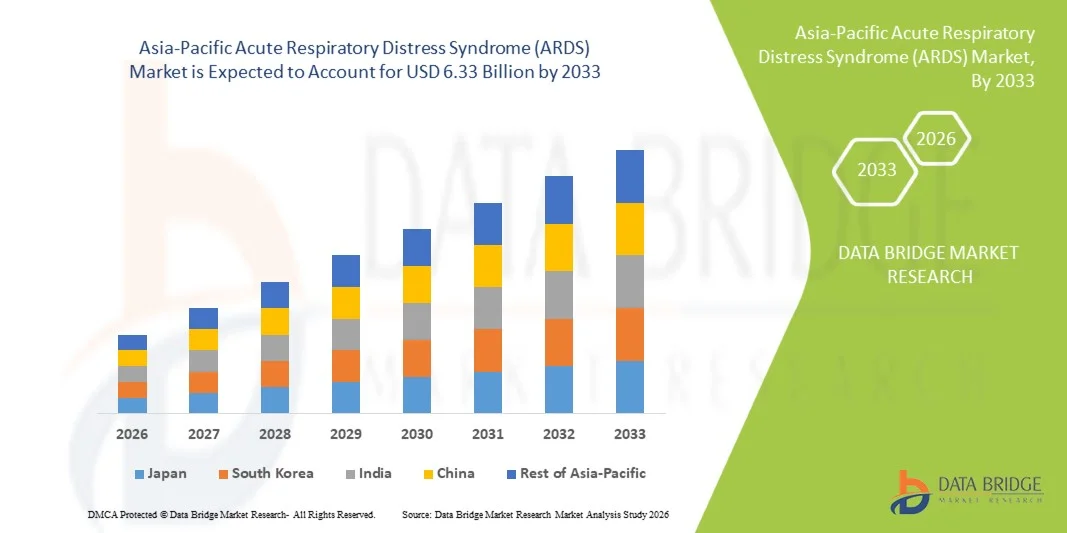
- As per Data Bridge Market Research Analysis the Asia-Pacific Acute Respiratory Distress Syndrome (ARDS) market size was valued at USD 2.73 billion in 2025and is expected to reach USD 6.33 billion by 2033, at a CAGR of 11.1% during the forecast period
- The market growth is primarily driven by the rising incidence of severe respiratory infections, increasing prevalence of chronic pulmonary diseases, and the growing burden of critical care admissions across hospitals and intensive care units in the region
- Furthermore, advancements in ventilatory support systems, expanding healthcare infrastructure, and increasing awareness regarding early diagnosis and treatment of acute respiratory complications are positioning ARDS therapies and management solutions as essential components of modern critical care. These combined factors are significantly accelerating the growth of the Asia-Pacific ARDS market
Market Size & Forecast
- Global Market Value (2025): USD 2.73 billion
- Expected Market Value (2033): USD 6.33 billion
- Forecast CAGR (2026–2033): 11.1%
What are the Major Takeaways of Asia-Pacific Acute Respiratory Distress Syndrome (ARDS) Market?
- Acute Respiratory Distress Syndrome (ARDS), a severe lung condition characterized by widespread inflammation and impaired oxygen exchange, is becoming an increasingly important area within critical care management across Asia-Pacific due to the growing burden of respiratory infections and intensive care admissions
- The increasing demand in the Asia-Pacific Acute Respiratory Distress Syndrome (ARDS) market is primarily driven by the rising prevalence of sepsis, severe pneumonia, COVID-19-related respiratory complications, and growing awareness regarding early intervention and advanced respiratory support therapies
- China dominated the Asia-Pacific Acute Respiratory Distress Syndrome (ARDS) market with the largest revenue share of 38.7% in 2025, supported by its expanding healthcare infrastructure, large critical care patient population, and increasing adoption of advanced diagnostic technologies and treatment approaches for severe respiratory disorders
- India is expected to be the fastest growing country in the Asia-Pacific Acute Respiratory Distress Syndrome (ARDS) market during the forecast period due to rising healthcare expenditure, improving access to intensive care services, and increasing incidence of respiratory illnesses and infectious diseases across the region
- Treatment segment dominated the Asia-Pacific Acute Respiratory Distress Syndrome (ARDS) market with a market share of 61.4% in 2025, driven by the growing utilization of supportive therapies, parenteral medications, and critical care interventions for the management of severe respiratory distress and associated complications
Report Scope and Asia-Pacific Acute Respiratory Distress Syndrome (ARDS) Market Segmentation
|
Attributes |
Asia-Pacific Acute Respiratory Distress Syndrome (ARDS) Key Market Insights |
|
Segments Covered |
|
|
Countries Covered |
Asia-Pacific
|
|
Key Market Players |
|
|
Market Opportunities |
· The increasing adoption of extracorporeal membrane oxygenation (ECMO) systems · Rising investments by regional governments in expanding intensive care infrastructure and emergency preparedness following the COVID-19 pandemic |
|
Value Added Data Infosets |
In addition to the insights on market scenarios such as market value, growth rate, segmentation, geographical coverage, and major players, the market reports curated by the Data Bridge Market Research also include in-depth expert analysis, patient epidemiology, pipeline analysis, pricing analysis, and regulatory framework |
What is the Key Trend in the Asia-Pacific Acute Respiratory Distress Syndrome (ARDS) Market ?
“Advancements in Critical Care Technologies and Respiratory Support Systems”
- A significant and accelerating trend in the Asia-Pacific Acute Respiratory Distress Syndrome (ARDS) market is the increasing adoption of advanced respiratory support technologies and intensive care monitoring systems across hospitals and emergency care facilities. This integration of technologies is significantly improving patient management and treatment outcomes in severe respiratory conditions
- For instance, advanced ventilator systems and extracorporeal membrane oxygenation (ECMO) platforms are being increasingly utilized across tertiary hospitals in China, Japan, and South Korea, enabling healthcare professionals to provide continuous respiratory support and real-time patient monitoring in critical care settings
- The integration of advanced monitoring technologies in ARDS management enables healthcare providers to assess oxygen saturation, lung compliance, and respiratory distress indicators more accurately while supporting personalized treatment strategies. For instance, some modern ICU monitoring systems utilize AI-assisted analytics to identify early signs of respiratory deterioration and generate intelligent alerts for clinicians. Furthermore, remote monitoring capabilities offer healthcare providers the ability to track critically ill patients continuously across intensive care units and emergency departments
- The seamless integration of respiratory support devices with hospital information systems and digital healthcare platforms facilitates centralized patient management across critical care departments. Through a unified interface, healthcare professionals can manage ventilators, infusion systems, and patient monitoring devices simultaneously, creating a more coordinated and efficient critical care environment
- This trend toward more advanced, connected, and technology-driven respiratory care systems is fundamentally reshaping critical care treatment standards across Asia-Pacific. Consequently, companies such as Fisher & Paykel Healthcare are developing advanced respiratory humidification and ventilation technologies designed to improve respiratory support and intensive care management for ARDS patients
- The demand for advanced ARDS treatment technologies and integrated respiratory care systems is growing rapidly across hospitals and critical care centers, as healthcare providers increasingly prioritize improved patient outcomes and efficient intensive care management
- The growing adoption of tele-ICU platforms and digitally connected intensive care solutions is further enhancing clinical decision-making capabilities, enabling healthcare providers to improve treatment coordination and optimize respiratory care delivery for critically ill patients
Asia-Pacific Acute Respiratory Distress Syndrome (ARDS) Market Dynamics
Driver
“Growing Need Due to Rising Incidence of Severe Respiratory Diseases and Expanding Critical Care Infrastructure”
- The increasing prevalence of severe respiratory infections, sepsis, and chronic pulmonary disorders, coupled with the expansion of critical care infrastructure across Asia-Pacific, is a significant driver for the heightened demand for ARDS diagnosis and treatment solutions
- For instance, in March 2025, Nihon Kohden Corporation announced advancements in its critical care monitoring technologies aimed at improving respiratory management and intensive care support for patients suffering from severe pulmonary complications. Such strategies by key companies are expected to drive the Asia-Pacific Acute Respiratory Distress Syndrome (ARDS) industry growth during the forecast period
- As healthcare providers become more focused on reducing mortality associated with respiratory failure and intensive care complications, ARDS treatment solutions offer advanced features such as continuous respiratory monitoring, ventilatory support, and rapid clinical intervention capabilities, providing substantial improvements in critical patient management
- Furthermore, the growing investment in hospital infrastructure and intensive care facilities is making advanced ARDS management systems an integral component of modern healthcare delivery, offering seamless integration with critical care monitoring equipment and emergency treatment protocols
- The increasing availability of advanced ventilators, parenteral therapies, and supportive respiratory treatment options for critically ill patients are key factors propelling the adoption of ARDS management solutions in hospitals and specialty care centers. The trend toward modernization of healthcare systems and the growing focus on emergency preparedness further contribute to market growth
- Addressing the rising burden of respiratory diseases through improved intensive care capabilities, technological advancements, and increasing healthcare investments will continue to support sustained market expansion across the Asia-Pacific Acute Respiratory Distress Syndrome (ARDS) market
- The growing number of government initiatives aimed at strengthening emergency preparedness and critical care response systems is further accelerating investments in advanced respiratory treatment infrastructure across the region
- Increasing awareness regarding the importance of early ARDS diagnosis and timely respiratory intervention among healthcare professionals is contributing to higher adoption of advanced monitoring and treatment solutions in intensive care settings
Restraint/Challenge
“High Treatment Costs and Limited Access to Advanced Critical Care Facilities”
- Concerns surrounding the high cost of advanced respiratory support systems and limited accessibility to specialized intensive care facilities pose a significant challenge to broader market expansion. As ARDS treatment often requires sophisticated ventilators, ECMO systems, and prolonged ICU admissions, healthcare systems in several developing countries face difficulties in ensuring widespread access to advanced treatment options
- For instance, disparities in healthcare infrastructure and limited availability of specialized intensive care units across rural and lower-income regions have made access to advanced ARDS treatment challenging for a considerable patient population within Asia-Pacific
- Addressing these treatment accessibility concerns through expanded healthcare funding, improved hospital infrastructure, and increased availability of trained critical care professionals is crucial for improving patient outcomes. Companies such as Drägerwerk AG and Getinge AB emphasize advanced respiratory care technologies and integrated ICU solutions to support hospitals in managing severe respiratory distress cases more effectively
- In addition, the relatively high operational costs associated with advanced respiratory support technologies compared to conventional treatment methods can be a barrier to adoption for resource-constrained healthcare facilities, particularly in developing economies
- While healthcare investments are gradually increasing, the substantial financial burden associated with intensive care treatment and respiratory support technologies can still hinder widespread adoption, especially for smaller hospitals and underfunded healthcare systems that lack advanced critical care resources
- Overcoming these challenges through enhanced healthcare accessibility, expansion of intensive care infrastructure, and development of more cost-effective respiratory care technologies will be vital for sustained market growth across the Asia-Pacific Acute Respiratory Distress Syndrome (ARDS) market
- Inconsistent reimbursement policies and limited insurance coverage for advanced intensive care procedures and respiratory therapies may create additional financial pressure on patients and healthcare providers, restricting broader adoption of specialized ARDS treatment solutions
How is the Asia-Pacific Acute Respiratory Distress Syndrome (ARDS) Market Segmented ?
The market is segmented on the basis of cause, type, route of administration, end user, and distribution channel.
- By Cause
On the basis of cause, the Asia-Pacific Acute Respiratory Distress Syndrome (ARDS) market is segmented into Coronavirus Disease 2019 (COVID-19), sepsis, inhalation of harmful substances, severe pneumonia, and others. The sepsis segment dominated the market with the largest market revenue share in 2025, driven by the high incidence of systemic infections and the increasing number of critically ill patients admitted to intensive care units across Asia-Pacific countries. Sepsis is one of the leading causes of respiratory failure and multi-organ complications, significantly increasing the risk of ARDS development among hospitalized patients. The growing burden of hospital-acquired infections, rising elderly population, and increasing prevalence of chronic diseases such as diabetes and cardiovascular disorders are further contributing to the segment’s dominance. Healthcare providers are increasingly focusing on early sepsis detection and advanced critical care interventions to reduce mortality rates associated with ARDS complications. In addition, advancements in intensive care monitoring systems and supportive respiratory therapies are supporting the effective management of sepsis-related ARDS cases across major healthcare facilities in the region.
The Coronavirus Disease 2019 (COVID-19) segment is expected to witness the fastest growth rate from 2026 to 2033, fueled by the long-term respiratory complications observed among post-COVID patients and increasing awareness regarding advanced respiratory care management. The COVID-19 pandemic significantly accelerated investments in intensive care infrastructure, ventilators, and extracorporeal membrane oxygenation (ECMO) systems across Asia-Pacific healthcare systems. Healthcare providers continue to monitor and manage severe respiratory distress cases associated with viral infections and post-viral pulmonary complications. Governments and healthcare institutions are also emphasizing pandemic preparedness and emergency response strategies, driving the demand for advanced ARDS treatment solutions. Furthermore, increasing research activities focused on respiratory disease management and critical care optimization are expected to contribute to the rapid growth of the COVID-19-related ARDS segment during the forecast period.
- By Type
On the basis of type, the Asia-Pacific Acute Respiratory Distress Syndrome (ARDS) market is segmented into diagnosis and treatment. The treatment segment dominated the market with the largest market revenue share of 61.4% in 2025, driven by the growing demand for ventilatory support systems, parenteral therapies, and advanced respiratory management solutions for critically ill patients. ARDS treatment requires continuous monitoring and intensive supportive care, resulting in increased utilization of advanced ICU equipment and respiratory support technologies across hospitals and specialty care centers. The rising incidence of severe respiratory infections, sepsis, and pneumonia is further increasing the demand for effective treatment solutions across the region. In addition, the growing adoption of extracorporeal membrane oxygenation (ECMO), oxygen therapy, and corticosteroid-based therapies is strengthening the segment’s market position. Increasing healthcare investments and modernization of critical care infrastructure across emerging Asia-Pacific economies are also contributing to the segment’s dominance.
The diagnosis segment is expected to witness the fastest CAGR from 2026 to 2033, driven by increasing emphasis on early disease detection and rapid respiratory assessment in critical care settings. Healthcare providers are increasingly adopting advanced diagnostic imaging systems, blood gas analyzers, and AI-assisted monitoring technologies to improve the identification and management of ARDS cases. Early diagnosis plays a crucial role in reducing mortality rates and improving treatment outcomes among critically ill patients suffering from respiratory failure. The increasing integration of digital healthcare technologies and real-time patient monitoring systems is also enhancing diagnostic efficiency across intensive care units. Furthermore, growing awareness regarding the importance of timely respiratory intervention and the expansion of healthcare infrastructure across Asia-Pacific countries are expected to accelerate the growth of the diagnosis segment during the forecast period.
- By Route of Administration
On the basis of route of administration, the Asia-Pacific Acute Respiratory Distress Syndrome (ARDS) market is segmented into oral, parenteral, and others. The parenteral segment dominated the market with the largest market revenue share in 2025, driven by the extensive use of intravenous medications, sedatives, corticosteroids, and supportive therapies in intensive care treatment settings. ARDS patients often require immediate therapeutic intervention and rapid drug delivery, making parenteral administration the preferred route in emergency and critical care environments. The growing utilization of injectable antibiotics, vasopressors, and anti-inflammatory agents for managing severe respiratory complications is further supporting segment growth. Hospitals and critical care centers across Asia-Pacific are increasingly adopting advanced infusion systems and supportive care technologies to improve patient outcomes. In addition, the rising number of ICU admissions and severe respiratory disease cases are contributing significantly to the dominance of the parenteral administration segment.
The oral segment is expected to witness the fastest growth rate from 2026 to 2033, fueled by the increasing use of supportive oral medications during post-intensive care recovery and long-term respiratory management. Oral therapies are gaining traction due to their ease of administration, lower healthcare costs, and growing adoption in outpatient and rehabilitation care settings. Healthcare providers are increasingly focusing on improving long-term respiratory health and reducing complications among recovering ARDS patients through oral supportive treatment approaches. The expanding availability of oral anti-inflammatory therapies and respiratory support medications is also contributing to market growth. Furthermore, increasing awareness regarding post-critical care rehabilitation and improving healthcare accessibility across developing Asia-Pacific countries are expected to support the rapid growth of the oral administration segment during the forecast period.
- By End User
On the basis of end user, the Asia-Pacific Acute Respiratory Distress Syndrome (ARDS) market is segmented into hospitals, specialty clinics, home healthcare, and others. The hospitals segment dominated the market with the largest market revenue share in 2025, driven by the high volume of intensive care admissions and the availability of advanced respiratory support infrastructure within hospital settings. Hospitals remain the primary treatment centers for ARDS patients due to the requirement for continuous monitoring, ventilatory support, and multidisciplinary critical care management. The increasing number of severe respiratory infection cases and expanding ICU capacities across Asia-Pacific healthcare systems are further contributing to segment dominance. Healthcare institutions are also investing heavily in advanced ventilators, patient monitoring systems, and extracorporeal membrane oxygenation (ECMO) technologies to improve patient survival outcomes. In addition, rising healthcare expenditure and government initiatives aimed at strengthening emergency and critical care infrastructure are supporting the growth of the hospital segment.
The home healthcare segment is expected to witness the fastest CAGR from 2026 to 2033, driven by the growing preference for post-hospitalization respiratory care and remote patient monitoring solutions. Advancements in portable oxygen therapy systems, telehealth platforms, and home-based respiratory support devices are enabling patients recovering from ARDS to receive continued care outside hospital environments. The increasing burden on hospital infrastructure and rising healthcare costs are encouraging the adoption of home healthcare services across Asia-Pacific countries. Healthcare providers are also focusing on reducing hospital readmission rates through remote respiratory monitoring and rehabilitation programs. Furthermore, the growing aging population and increasing awareness regarding home-based chronic respiratory management are expected to accelerate the growth of the home healthcare segment during the forecast period.
- By Distribution Channel
On the basis of distribution channel, the Asia-Pacific Acute Respiratory Distress Syndrome (ARDS) market is segmented into direct tender, hospital pharmacy, retail pharmacy, online pharmacy, and others. The hospital pharmacy segment dominated the market with the largest market revenue share in 2025, driven by the high dependency on hospital-based medication dispensing and critical care drug administration for ARDS patients. Hospital pharmacies play a crucial role in ensuring the availability of emergency medications, injectable therapies, and respiratory support drugs required in intensive care treatment settings. The increasing number of ICU admissions and severe respiratory disease cases across hospitals in Asia-Pacific is significantly contributing to segment growth. In addition, healthcare institutions are strengthening hospital pharmacy operations to improve medication management and treatment efficiency for critically ill patients. The expansion of healthcare infrastructure and growing investments in hospital-based critical care services are also supporting the dominance of the hospital pharmacy segment.
The online pharmacy segment is expected to witness the fastest growth rate from 2026 to 2033, fueled by increasing digitalization of healthcare services and growing consumer preference for convenient medicine procurement platforms. Online pharmacies are gaining popularity due to their ease of access, home delivery services, and expanding availability of respiratory care medications across urban and semi-urban regions. The increasing adoption of telemedicine and digital healthcare platforms is further accelerating the integration of online pharmaceutical services into respiratory disease management. Healthcare providers and patients are also utilizing online channels for follow-up therapies and long-term medication support following hospital discharge. Furthermore, improving internet penetration and rising investments in digital healthcare infrastructure across Asia-Pacific countries are expected to support rapid growth of the online pharmacy segment during the forecast period
Which Region Holds the Largest Share of the Asia-Pacific Acute Respiratory Distress Syndrome (ARDS) Market?
- China dominated the Asia-Pacific Acute Respiratory Distress Syndrome (ARDS) market with the largest revenue share of 38.7% in 2025, supported by its expanding healthcare infrastructure, large critical care patient population, and increasing adoption of advanced diagnostic technologies and treatment approaches for severe respiratory disorders
- Healthcare providers in the country highly prioritize advanced respiratory support systems, intensive care monitoring technologies, and early diagnosis solutions to improve patient outcomes and manage the growing burden of acute respiratory complications
- This widespread market growth is further supported by a large patient population, increasing adoption of advanced ventilators and extracorporeal membrane oxygenation (ECMO) systems, and the growing focus on strengthening emergency and intensive care capabilities, establishing advanced ARDS management solutions as essential components of modern critical care treatment across China
China Acute Respiratory Distress Syndrome (ARDS) Market Insight
The China Acute Respiratory Distress Syndrome (ARDS) market captured the largest revenue share in 2025 within Asia-Pacific, fueled by the rising prevalence of severe respiratory infections and the rapid expansion of critical care infrastructure across major healthcare institutions. Healthcare providers are increasingly prioritizing advanced respiratory support systems, intensive care monitoring technologies, and extracorporeal membrane oxygenation (ECMO) solutions to improve patient outcomes. The growing burden of chronic respiratory diseases, sepsis, and pneumonia cases, combined with increasing healthcare expenditure and government investments in hospital modernization, further propels the ARDS industry. Moreover, the increasing adoption of AI-enabled monitoring systems and advanced ventilatory technologies is significantly contributing to the market’s expansion.
Japan Acute Respiratory Distress Syndrome (ARDS) Market Insight
The Japan Acute Respiratory Distress Syndrome (ARDS) market is gaining momentum due to the country’s advanced healthcare infrastructure, aging population, and increasing prevalence of chronic respiratory conditions. The Japanese market places significant emphasis on critical care innovation, and the adoption of advanced respiratory monitoring and ventilatory support systems is driven by the growing need for effective intensive care management. The integration of digital healthcare technologies with respiratory care devices, such as AI-assisted ICU monitoring systems and connected ventilators, is fueling growth. Moreover, Japan's strong focus on healthcare research and technological advancement is likely to spur demand for more efficient and precise ARDS treatment solutions in hospitals and specialty care centers.
India Acute Respiratory Distress Syndrome (ARDS) Market Insight
The India Acute Respiratory Distress Syndrome (ARDS) market accounted for the largest market revenue share in Asia-Pacific in 2025, attributed to the country's expanding healthcare infrastructure, increasing burden of respiratory infections, and growing access to intensive care services. India stands as one of the fastest growing markets for critical care technologies, and ARDS treatment solutions are becoming increasingly important across hospitals, specialty clinics, and emergency care facilities. The push toward healthcare modernization and the increasing availability of advanced ventilators, oxygen therapy systems, and parenteral treatment options, alongside strong government initiatives to improve critical care access, are key factors propelling the market in India.
South Korea Acute Respiratory Distress Syndrome (ARDS) Market Insight
The South Korea Acute Respiratory Distress Syndrome (ARDS) market is expected to expand at a considerable CAGR during the forecast period, fueled by increasing investments in advanced healthcare technologies and the growing adoption of digital intensive care solutions. South Korea’s highly developed healthcare infrastructure, combined with strong government support for medical innovation and emergency preparedness, promotes the adoption of advanced ARDS diagnosis and treatment systems across hospitals and specialty care centers. The integration of smart ICU technologies, remote patient monitoring platforms, and AI-assisted respiratory care solutions is also becoming increasingly prevalent, with healthcare providers focusing on improving critical care efficiency and patient outcomes.
Which are the Top Companies in Asia-Pacific Acute Respiratory Distress Syndrome (ARDS) Market?
The Asia-Pacific Acute Respiratory Distress Syndrome (ARDS) industry is primarily led by well-established companies, including:
- Merck & Co., Inc. (U.S.)
- Baxter (U.S.)
- Medtronic (Ireland)
- Drägerwerk AG & Co. KGaA (Germany)
- Getinge AB (Sweden)
- Fisher & Paykel Healthcare Limited (New Zealand)
- NIHON KOHDEN CORPORATION (Japan)
- Koninklijke Philips N.V. (Netherlands)
- ResMed (U.S.)
- Hamilton Medical AG (Switzerland)
- Aerogen (Ireland)
- Smiths Group plc (U.K.)
- Air Liquide Healthcare (France)
- Vyaire Medical, Inc. (U.S.)
- GE HealthCare (U.S.)
- Mindray DS USA, Inc. (U.S.)
- Noccarc (India)
- Zuventus Healthcare Ltd. (India)
- InflaRx N.V. (Germany)
- Healios K.K. (Japan)
What are the Recent Developments in Asia-Pacific Acute Respiratory Distress Syndrome (ARDS) Market?
- In April 2025, Healios K.K. announced plans to apply for approval of its regenerative cell therapy candidate HLCM051 for Acute Respiratory Distress Syndrome (ARDS) in Japan and initiate a global Phase 3 clinical trial within 2025. The therapy is designed to treat severe respiratory failure caused by pneumonia and related complications, highlighting growing investments in advanced ARDS treatment solutions across Asia-Pacific
- In March 2025, Healios K.K. reported peer-reviewed publication results from its ONE-BRIDGE trial in Japan, demonstrating that invimestrocel showed improved ventilator-free days and survival benefits in patients suffering from pneumonia-induced ARDS. The findings reinforced the growing clinical interest in regenerative medicine approaches for severe respiratory distress management in Asia-Pacific healthcare systems
- In May 2024, MiNK Therapeutics presented clinical data at the American Thoracic Society (ATS) Annual Meeting highlighting the activity of AgenT-797 in a severe ARDS patient with immune complications. The company emphasized the potential of invariant natural killer T (iNKT) cell therapies to improve outcomes in severe respiratory distress cases, supporting innovation in ARDS treatment development
- In February 2024, MiNK Therapeutics announced the publication of Phase 1/2 clinical study results in Nature Communications showing that AgenT-797 demonstrated improved survival and reduced secondary infections in patients with moderate-to-severe ARDS secondary to SARS-CoV-2 infection. The development highlighted increasing research focus on advanced immunotherapy-based respiratory treatment solutions
- In December 2023, Kingsway Hospitals organized a specialized workshop in India focused on Extracorporeal Membrane Oxygenation (ECMO) technology for severe respiratory failure and ARDS management. The initiative emphasized the growing adoption of ECMO as a lifesaving respiratory support technology across Asia-Pacific critical care centers for patients suffering from severe pneumonia and respiratory distress conditions

- Interactive Data Analysis Dashboard
- Company Analysis Dashboard for high growth potential opportunities
- Research Analyst Access for customization & queries
- Competitor Analysis with Interactive dashboard
- Latest News, Updates & Trend analysis
- Harness the Power of Benchmark Analysis for Comprehensive Competitor Tracking
Data collection and base year analysis are done using data collection modules with large sample sizes. The stage includes obtaining market information or related data through various sources and strategies. It includes examining and planning all the data acquired from the past in advance. It likewise envelops the examination of information inconsistencies seen across different information sources. The market data is analysed and estimated using market statistical and coherent models. Also, market share analysis and key trend analysis are the major success factors in the market report. To know more, please request an analyst call or drop down your inquiry.
The key research methodology used by DBMR research team is data triangulation which involves data mining, analysis of the impact of data variables on the market and primary (industry expert) validation. Data models include Vendor Positioning Grid, Market Time Line Analysis, Market Overview and Guide, Company Positioning Grid, Patent Analysis, Pricing Analysis, Company Market Share Analysis, Standards of Measurement, Global versus Regional and Vendor Share Analysis. To know more about the research methodology, drop in an inquiry to speak to our industry experts.
Data Bridge Market Research is a leader in advanced formative research. We take pride in servicing our existing and new customers with data and analysis that match and suits their goal. The report can be customized to include price trend analysis of target brands understanding the market for additional countries (ask for the list of countries), clinical trial results data, literature review, refurbished market and product base analysis. Market analysis of target competitors can be analyzed from technology-based analysis to market portfolio strategies. We can add as many competitors that you require data about in the format and data style you are looking for. Our team of analysts can also provide you data in crude raw excel files pivot tables (Fact book) or can assist you in creating presentations from the data sets available in the report.












