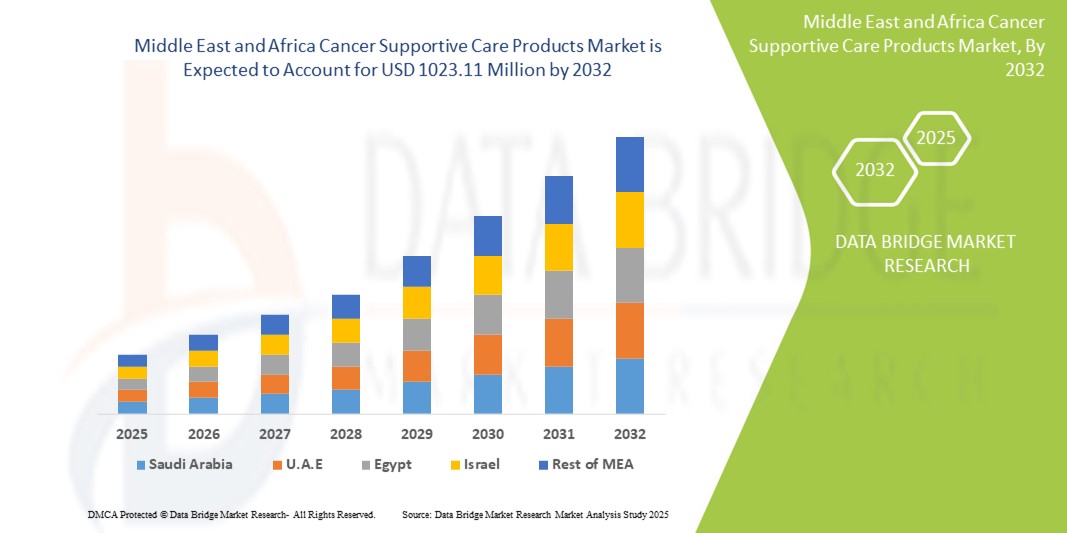
Cancer Supportive Care Products Market Size
- The Asia-Pacific Cancer Supportive Care Products Market size was valued at USD 4.43 billion in 2024 and is expected to reach USD 7.07 billion by 2032, at a CAGR of 6.0% during the forecast period
- The market growth is primarily driven by the rising incidence of cancer across the region, leading to increased demand for supportive care therapies that manage the side effects of cancer treatment, such as pain, anemia, and nausea.
- Additionally, improved healthcare access, expanding cancer treatment infrastructure, and rising awareness of palliative care options are supporting the broader adoption of supportive care products. These factors, combined with the increased availability of generics and favorable government initiatives, are expected to accelerate market expansion throughout the forecast period.
Cancer Supportive Care Products Market Analysis
- Cancer supportive care products, including analgesics, anti-emetics, hematopoietic agents, and anti-inflammatories, are essential in alleviating the adverse effects of cancer therapies, significantly enhancing the quality of life for patients undergoing chemotherapy, radiation, and immunotherapy.
- The growing demand for these products is primarily driven by the rising incidence of cancer in Asia-Pacific, increasing access to oncology treatments, and expanding patient awareness of supportive care options.
- Japan dominates the Asia-Pacific cancer supportive care products market with a revenue share of over thirty percent (30.0%) in 2025, driven by its aging population, advanced healthcare infrastructure, and widespread adoption of international cancer treatment protocols.
- India and Southeast Asian nations are projected to witness the fastest growth in the region, with a CAGR exceeding 7.5% during the forecast period, fueled by healthcare infrastructure expansion, rising cancer screening programs, and improved affordability of generics.
- The Granulocyte Colony Stimulating Factor (GCSFs) segment is expected to hold the largest market share of 28.3% in 2025, driven by its pivotal role in managing chemotherapy-induced neutropenia and the growing penetration of biosimilar variants across both developed and emerging economies in the region.
Report Scope and Cancer Supportive Care Products Market Segmentation
|
Attributes |
Cancer Supportive Care Products Key Market Insights |
|
Segments Covered |
|
|
Countries Covered |
Asia-Pacific
|
|
Key Market Players |
|
|
Market Opportunities |
|
|
Value Added Data Infosets |
In addition to the insights on market scenarios such as market value, growth rate, segmentation, geographical coverage, and major players, the market reports curated by the Data Bridge Market Research also include in-depth expert analysis, pricing analysis, brand share analysis, consumer survey, demography analysis, supply chain analysis, value chain analysis, raw material/consumables overview, vendor selection criteria, PESTLE Analysis, Porter Analysis, and regulatory framework. |
Cancer Supportive Care Products Market Trends
“Increased Uptake of Biosimilars and Generics in Oncology Supportive Care”
- A notable and growing trend in the Asia-Pacific cancer supportive care products market is the widening acceptance and adoption of biosimilars and generics, especially in resource-constrained healthcare settings. These cost-effective alternatives are improving access to essential supportive care therapies such as granulocyte colony stimulating factors (GCSFs), erythropoietin stimulating agents (ESAs), and anti-emetics.
- For instance, India and China have seen increased production and regulatory approvals for biosimilars, enabling wider distribution in both domestic and export markets. Companies like Dr. Reddy’s Laboratories and Biocon are leading players offering oncology biosimilars that match global standards in efficacy and safety.
- The use of biosimilars not only reduces treatment costs but also alleviates pressure on healthcare systems by ensuring consistent availability of supportive therapies. This trend is especially prominent in public hospital settings, where affordability and accessibility are critical concerns.
- Furthermore, government efforts to streamline regulatory pathways, such as Japan’s PMDA and South Korea’s MFDS, have accelerated biosimilar market penetration across the region.
- This increased availability and physician trust in biosimilars is shifting the competitive landscape, encouraging multinational pharma companies to expand local partnerships or manufacture region-specific versions to remain competitive.
- As the burden of cancer rises and demand for cost-effective care intensifies, biosimilars are expected to play a central role in shaping the market's future trajectory, especially across low- and middle-income countries in the region.
Cancer Supportive Care Products Market Dynamics
Driver
“Rising Cancer Burden Coupled with Growing Awareness of Supportive Care Therapies”
- The increasing incidence of cancer across the Asia-Pacific region—driven by aging populations, urban lifestyles, and improved diagnostic rates—is a major factor propelling demand for supportive care products.
- According to regional cancer registries, lung, breast, and gastrointestinal cancers account for the majority of new cases, many of which require extensive supportive treatment to manage chemotherapy-induced side effects such as pain, nausea, anemia, and neutropenia.
- Growing patient and caregiver awareness about the benefits of supportive care therapies in enhancing quality of life is translating into higher treatment adherence and demand for products like opioid analgesics, anti-emetics, and NSAIDs.
- Public and private initiatives aimed at integrating palliative and supportive care into national cancer strategies, such as those by the WHO Western Pacific Regional Office, are also contributing to increased access and market expansion.
- Furthermore, the expansion of cancer treatment infrastructure in countries such as India, Indonesia, and Vietnam, along with higher healthcare investments and private oncology chains, is creating new avenues for supportive care product penetration beyond Tier-1 cities.
- Pharmaceutical companies are responding with region-specific strategies, including affordable product portfolios, local partnerships, and targeted awareness programs to maximize reach and impact.
Restraint/Challenge
“Limited Reimbursement and Accessibility in Low-Income Areas”
- One of the most pressing challenges in the Asia-Pacific cancer supportive care products market is the lack of comprehensive reimbursement policies and uneven access to these therapies across the region.
- Many low- and middle-income countries still face significant out-of-pocket healthcare expenses, which restricts patients from initiating or continuing supportive care treatments, especially with higher-priced branded drugs.
- In rural and under-resourced areas, the availability of supportive care drugs is often limited, compounded by supply chain inefficiencies and a shortage of trained oncology professionals who can administer or recommend appropriate care regimens.
- For instance, while Japan and South Korea offer broader insurance coverage, countries like Bangladesh, Myanmar, and parts of Southeast Asia continue to face affordability barriers that limit market growth.
- Additionally, the perceived secondary importance of supportive care—compared to curative treatment—leads to its underutilization in some public hospital settings.
- Addressing these challenges requires collaborative efforts involving government subsidies, international aid programs, public-private partnerships, and greater education of healthcare providers on the importance of holistic cancer care.
- Enhancing distribution networks, expanding digital health platforms, and promoting generic/biosimilar adoption can also play a pivotal role in bridging access gaps across the Asia-Pacific region.
Cancer Supportive Care Products Market Scope
The market is segmented on the basis of drug type, type, cancer type, end user, and distribution channel.
• By Drug Type
On the basis of drug type, the market is segmented into Granulocyte Colony Stimulating Factor (GCSFs), Erythropoietin Stimulating Agents (ESA’s), Opioid Analgesics, Monoclonal Antibodies, Nonsteroidal Anti-Inflammatory Drugs (NSAIDs), Bisphosphonates, Anti-Emetics, Antihistamines, and Others. The GCSFs segment dominates the largest market revenue share of 28.3% in 2025, driven by their critical role in managing chemotherapy-induced neutropenia and improving patient outcomes during high-dose chemotherapy. Widespread physician adoption and the increasing availability of biosimilars across countries such as Japan, India, and China are further contributing to segment growth.
The Anti-Emetics segment is anticipated to witness the fastest CAGR of 7.4% from 2025 to 2032, as nausea and vomiting remain common and distressing side effects of chemotherapy and radiation therapy. The segment benefits from rising patient awareness, physician preference for preventative therapy, and the increasing introduction of fixed-dose combinations with improved tolerability.
• By Type
On the basis of type, the market is segmented into Branded and Generics. The Generics segment is expected to account for the largest revenue share in 2025, owing to the growing demand for cost-effective treatment options and the increasing penetration of generic oncology supportive care drugs in emerging markets such as India, Indonesia, and the Philippines. Local manufacturing and regulatory support are playing a key role in improving availability.
The Branded segment is projected to register a steady CAGR over the forecast period due to continued demand in developed markets such as Japan and South Korea, where patients often prefer high-assurance therapies with robust clinical trial backing.
• By Cancer Type
On the basis of cancer type, the market is segmented into Lung Cancer, Breast Cancer, Prostate Cancer, Liver Cancer, Bladder Cancer, Leukaemia, Melanoma, Ovarian Cancer, and Other Cancers.
The Lung Cancer segment held the largest market share in 2025, driven by the high incidence and mortality rates associated with lung cancer across Asia-Pacific, particularly in China, India, and Southeast Asia. Patients with lung cancer often undergo aggressive treatment regimens, increasing the need for supportive care interventions.
The Breast Cancer segment is anticipated to witness the fastest CAGR from 2025 to 2032, supported by the increasing implementation of screening programs, greater awareness among women, and the rising use of hormone and chemotherapy therapies that require adjunct supportive treatment.
• By End User
On the basis of end user, the market is segmented into Hospitals, Clinics, Hospitals & Academic Institutions, and Others.
The Hospitals segment dominates the market in 2025, accounting for the largest revenue share, as hospitals remain the primary point of care for cancer patients in the region. Hospitals provide integrated access to oncologists, treatment protocols, and supportive therapy, supported by better infrastructure and access to a full drug formulary.
The Hospitals & Academic Institutions segment is projected to grow at the fastest CAGR, as these centers increasingly participate in clinical trials and adopt advanced treatment regimens that incorporate supportive care protocols.
• By Distribution Channel
On the basis of distribution channel, the market is segmented into Hospital Pharmacies, Retail Pharmacies, and Compounding Pharmacies.
Hospital Pharmacies lead the market with the largest share in 2025, owing to their close alignment with oncology departments and the availability of a broad range of approved supportive care drugs for inpatient and outpatient use.
The Retail Pharmacies segment is expected to grow at the highest CAGR from 2025 to 2032, fueled by the expanding number of cancer patients seeking post-hospitalization care and the growing availability of prescription supportive care drugs at retail outlets, especially in urban and semi-urban areas.
Cancer Supportive Care Products Market Regional Analysis
- Japan dominates the Asia-Pacific cancer supportive care products market with the largest revenue share of over 30.0% in 2025, driven by its aging population, advanced cancer care infrastructure, and strong adoption of supportive therapies aligned with global oncology protocols.
- Patients and healthcare providers in Japan prioritize high-quality, clinically validated supportive care options, particularly for managing chemotherapy-induced side effects such as neutropenia, nausea, and pain, contributing to consistent demand across branded and biosimilar products.
- The market is further strengthened by robust reimbursement frameworks, high cancer awareness levels, and a strong presence of leading pharmaceutical companies offering comprehensive oncology portfolios. These factors make Japan a key contributor to regional growth and a preferred market for product launches and clinical collaborations.
Asia-Pacific Cancer Supportive Care Products Market Insight
The Asia-Pacific Cancer Supportive Care Products Market is poised to grow at a CAGR of 6.0% during the forecast period, driven by a rising cancer burden, growing awareness of supportive care therapies, and expanding healthcare infrastructure in emerging economies such as India, Vietnam, and Indonesia.
The increasing availability of biosimilars and generics, coupled with government efforts to improve cancer care access, is significantly enhancing affordability and treatment adherence. Furthermore, the region is witnessing a shift toward integrated oncology care models, where supportive care is embedded into primary treatment protocols, boosting product demand across public and private healthcare settings.
Japan Cancer Supportive Care Products Market Insight
The Japan Cancer Supportive Care Products Market accounted for the largest revenue share in Asia-Pacific in 2025, supported by the country’s aging population, advanced healthcare infrastructure, and widespread availability of branded and biosimilar supportive therapies.
The Japanese healthcare system places a strong emphasis on comprehensive cancer management, which includes the routine use of GCSFs, ESA’s, anti-emetics, and pain management medications to improve patient outcomes. Additionally, favorable reimbursement policies, a well-established oncology network, and physician familiarity with global guidelines are driving consistent demand for high-quality supportive care products.
India Cancer Supportive Care Products Market Insight
The India Cancer Supportive Care Products Market is projected to witness the highest CAGR in the Asia-Pacific region, exceeding 7.5% during the forecast period, fueled by rising cancer incidence, increasing healthcare expenditure, and expanding awareness of supportive treatments.
India’s growing acceptance of generic and biosimilar alternatives, along with government-backed programs for cancer care (such as Ayushman Bharat), is making these products more accessible to a broader population. Moreover, private oncology chains and diagnostic networks are playing a vital role in expanding supportive care services across Tier 2 and Tier 3 cities, contributing to rapid market expansion.
Cancer Supportive Care Products Market Share
The Cancer Supportive Care Products industry is primarily led by well-established companies, including:
- Amgen Inc. (U.S.)
- Janssen Pharmaceuticals, Inc. (a subsidiary of Johnson & Johnson Services, Inc.) (U.S.)
- Pfizer Inc. (U.S.)
- Novartis AG (Switzerland)
- F. Hoffmann-La Roche Ltd (Switzerland)
- Baxter (U.S.)
- Bayer AG (Germany)
- Helsinn Healthcare SA (Switzerland)
- Kyowa Kirin Co., Ltd. (Japan)
- Spectrum Pharmaceuticals, Inc. (U.S.)
- Merck Sharp & Dohme Corp. (a subsidiary of Merck & Co., Inc.) (U.S.)
- Sun Pharmaceutical Industries Ltd. (India)

- Interactive Data Analysis Dashboard
- Company Analysis Dashboard for high growth potential opportunities
- Research Analyst Access for customization & queries
- Competitor Analysis with Interactive dashboard
- Latest News, Updates & Trend analysis
- Harness the Power of Benchmark Analysis for Comprehensive Competitor Tracking
Data collection and base year analysis are done using data collection modules with large sample sizes. The stage includes obtaining market information or related data through various sources and strategies. It includes examining and planning all the data acquired from the past in advance. It likewise envelops the examination of information inconsistencies seen across different information sources. The market data is analysed and estimated using market statistical and coherent models. Also, market share analysis and key trend analysis are the major success factors in the market report. To know more, please request an analyst call or drop down your inquiry.
The key research methodology used by DBMR research team is data triangulation which involves data mining, analysis of the impact of data variables on the market and primary (industry expert) validation. Data models include Vendor Positioning Grid, Market Time Line Analysis, Market Overview and Guide, Company Positioning Grid, Patent Analysis, Pricing Analysis, Company Market Share Analysis, Standards of Measurement, Global versus Regional and Vendor Share Analysis. To know more about the research methodology, drop in an inquiry to speak to our industry experts.
Data Bridge Market Research is a leader in advanced formative research. We take pride in servicing our existing and new customers with data and analysis that match and suits their goal. The report can be customized to include price trend analysis of target brands understanding the market for additional countries (ask for the list of countries), clinical trial results data, literature review, refurbished market and product base analysis. Market analysis of target competitors can be analyzed from technology-based analysis to market portfolio strategies. We can add as many competitors that you require data about in the format and data style you are looking for. Our team of analysts can also provide you data in crude raw excel files pivot tables (Fact book) or can assist you in creating presentations from the data sets available in the report.