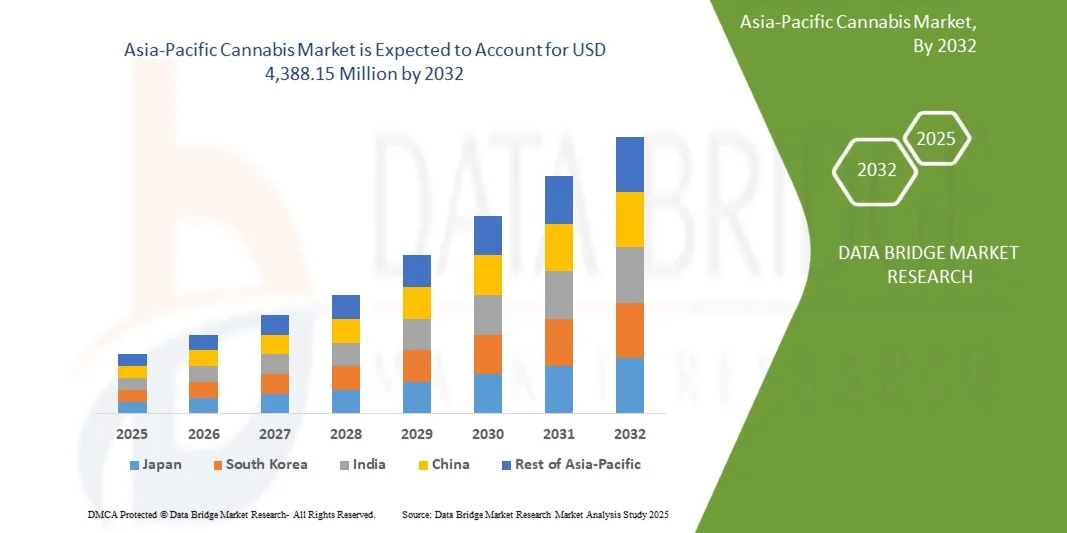
Asia-Pacific Cannabis Market Size
- The Asia-Pacific cannabis market size was valued at USD 568.68 million in 2024 and is expected to reach USD 4,388.15 million by 2032, at a CAGR of 29.1% during the forecast period
- The market growth is largely fuelled by the increasing legalization of medical and recreational cannabis in multiple regions, rising awareness of the therapeutic benefits of cannabis, and growing consumer demand for cannabis-based wellness products
- In addition, drivers include advancements in cannabis cultivation and extraction technologies, increasing investments by pharmaceutical and consumer goods companies, and the expanding range of cannabis-derived products such as oils, edibles, and topicals
Asia-Pacific Cannabis Market Analysis
- The global cannabis market is witnessing strong growth due to progressive regulatory changes and increasing acceptance of both medical and recreational use in key markets
- Pharmaceutical applications, including pain management, mental health treatments, and chronic disease therapies, are driving the adoption of cannabis-based products
- China cannabis market accounted for the largest revenue share in Asia-Pacific in 2024, driven by the country’s large population, growing awareness of medicinal and wellness benefits, and increasing adoption of CBD-based products
- Japan is expected to witness the highest compound annual growth rate (CAGR) in the Asia-Pacific cannabis market due to growing acceptance of medical cannabis, supportive regulatory developments, and rising demand for wellness and therapeutic products
- The Flowers segment held the largest market revenue share in 2024, driven by consumer preference for traditional consumption methods and high demand in both medicinal and recreational use. Flower products are often favored for their versatility in dosing, ease of use, and cultural familiarity, making them a popular choice among adult consumers and patients
Report Scope and Asia-Pacific Cannabis Market Segmentation
|
Attributes |
Asia-Pacific Cannabis Key Market Insights |
|
Segments Covered |
|
|
Countries Covered |
Asia-Pacific
|
|
Key Market Players |
|
|
Market Opportunities |
|
|
Value Added Data Infosets |
In addition to the insights on market scenarios such as market value, growth rate, segmentation, geographical coverage, and major players, the market reports curated by the Data Bridge Market Research also include in-depth expert analysis, pricing analysis, brand share analysis, consumer survey, demography analysis, supply chain analysis, value chain analysis, raw material/consumables overview, vendor selection criteria, PESTLE Analysis, Porter Analysis, and regulatory framework. |
Asia-Pacific Cannabis Market Trends
“Rising Adoption of Medical and Recreational Cannabis Products”
- The increasing legalization of medical and recreational cannabis is transforming the global cannabis market by enabling wider access to cannabis-based treatments and wellness products. This expansion allows consumers and healthcare providers to make timely choices regarding treatment and personal wellness
- The high demand for ready-to-use cannabis products such as oils, edibles, and topicals is accelerating adoption, particularly in regions where traditional pharmaceutical or wellness-grade cannabis access was limited. These products offer convenience, standardized dosing, and enhanced safety for consumers
- The affordability, consistency, and ease of use of modern cannabis products are making them attractive for both medicinal and recreational use, resulting in broader acceptance and adoption. Consumers benefit from increased accessibility without navigating complex regulatory or supply challenges
- For instance, in 2023, several wellness companies have reported higher patient adherence to cannabinoid-based therapies after introducing pre-measured oil tinctures and edible formulations, which allow for precise dosing and improve treatment outcomes. This approach has also helped standardize care and enhance overall product safety
- While the market is expanding rapidly, its growth depends on continued product innovation, regulatory clarity, and education. Manufacturers must focus on localized development, consumer awareness, and safe usage practices to fully capitalize on this growing demand
Asia-Pacific Cannabis Market Dynamics
Driver
“Rising Consumer Awareness and Health-Focused Adoption”
- Increasing awareness about the therapeutic benefits of cannabis is prompting both governments and private players to prioritize its integration into healthcare and wellness sectors. Conditions such as chronic pain, anxiety, and sleep disorders are driving interest in cannabinoid-based interventions. This trend is also fueling investment in research and development of novel formulations to meet growing medical demand
- Consumers are increasingly aware of the potential health benefits and financial implications of using regulated cannabis products over unregulated alternatives. This has encouraged regular usage, especially among wellness-conscious populations. In addition, demand for standardized, lab-tested products is rising to ensure safety, efficacy, and legal compliance
- Public sector initiatives, research grants, and educational campaigns are strengthening market credibility and encouraging adoption. From policy reforms to medical cannabis programs, supportive frameworks are helping consumers and patients make informed choices. These programs are also assisting healthcare professionals in integrating cannabis-based treatments into standard therapeutic protocols
- For instance, in 2022, expansion of medical cannabis access in multiple markets has boosted demand for standardized oils, capsules, and other formulations across clinics and pharmacies. Such growth has encouraged partnerships between producers and distributors to improve accessibility and ensure consistent patient adherence
- While awareness and institutional support are fueling market growth, there remains a need to improve consumer education, address stigma, and ensure consistent quality to sustain long-term adoption. Continuous training programs and awareness campaigns are required to build trust and encourage responsible usage across diverse demographic groups.
Restraint/Challenge
“Regulatory Complexity and High Costs of Quality Cannabis Products”
- The regulatory landscape for cannabis remains complex and fragmented across regions, making compliance expensive and time-consuming for manufacturers. Licensing, testing, and quality assurance requirements contribute to high product costs, limiting access for price-sensitive consumers. This complexity often slows product launches and discourages small and medium enterprises from entering the market
- Many regions lack adequate infrastructure for production, distribution, and retail, which restricts consistent product availability. Smaller producers and dispensaries face barriers in scaling operations due to compliance burdens and capital requirements. In addition, logistics challenges such as temperature-controlled transport and secure storage further increase operational costs
- Market penetration is also hindered by consumer hesitancy and cultural stigma in regions where cannabis adoption is still emerging. This can slow demand and delay the expansion of legal supply chains. Misconceptions about safety, efficacy, and legal risks continue to affect adoption rates, even in regions with progressive policies
- For instance, in 2023, reports have highlighted that a significant portion of potential consumers are unable to access licensed cannabis products due to high prices and restrictive regulations. The lack of affordable, standardized products is limiting both medicinal and recreational uptake, leaving a large untapped market
- While product innovation and market legalization continue, addressing regulatory hurdles, pricing, and infrastructure gaps is crucial. Stakeholders must focus on cost-effective production, distribution networks, and clear guidelines to unlock the market’s full potential. Strategic collaborations between governments, producers, and distributors are also essential to create sustainable growth and equitable access
Asia-Pacific Cannabis Market Scope
The market is segmented on the basis of product type, compound, crop variety, application, and distribution channel.
• By Product Type
On the basis of product type, the Asia-Pacific cannabis market is segmented into Flowers, Concentrates, and Other Product Types. The Flowers segment held the largest market revenue share in 2024, driven by consumer preference for traditional consumption methods and high demand in both medicinal and recreational use. Flower products are often favored for their versatility in dosing, ease of use, and cultural familiarity, making them a popular choice among adult consumers and patients.
The Concentrates segment is expected to witness the fastest growth rate from 2025 to 2032, driven by their higher potency, convenient dosing formats, and increasing adoption in modern wellness and therapeutic applications. Concentrates such as oils, tinctures, and extracts are particularly appealing for medical users seeking precise cannabinoid intake and for consumers looking for more discreet and controlled consumption methods.
• By Compound
On the basis of compound, the market is segmented into Tetrahydrocannabinol (THC)-dominant, Cannabidiol (CBD)-dominant, and Balanced THC and CBD. The CBD-dominant segment held the largest revenue share in 2024 due to growing awareness of its therapeutic benefits without psychoactive effects. CBD products are widely used for wellness, pain management, and anxiety relief, supporting their strong adoption across the region.
The THC-dominant segment is expected to witness the fastest growth rate from 2025 to 2032, driven by rising acceptance of recreational cannabis and demand for products with psychoactive effects. THC-dominant formulations are also seeing increasing interest in regulated markets for medical applications such as chronic pain and appetite stimulation.
• By Crop Variety
On the basis of crop variety, the market is segmented into Cannabis Indica, Cannabis Sativa, and Others. Cannabis Sativa held the largest revenue share in 2024, supported by its stimulating effects and higher THC content, which appeals to recreational users and certain medical applications. Sativa-based products are increasingly incorporated into oils, edibles, and vape formulations for versatile consumption.
The Cannabis Indica segment is expected to witness the fastest growth rate from 2025 to 2032, driven by its relaxing effects and use in medical treatments for insomnia, anxiety, and chronic pain. Indica varieties are often preferred for evening or therapeutic consumption, contributing to steady market adoption.
• By Application
On the basis of application, the market is segmented into Medical and Recreational. The Medical segment dominated the market in 2024, propelled by increasing legalization of medical cannabis, rising patient awareness, and growing acceptance among healthcare providers. Medical cannabis is primarily used for managing chronic pain, neurological disorders, and other therapeutic purposes, ensuring consistent demand.
The Recreational segment is expected to witness the fastest growth rate from 2025 to 2032, fueled by expanding legalization, lifestyle adoption, and demand for wellness-oriented recreational products. Recreational use is increasingly supported by social acceptance and the availability of diverse product formats such as edibles, concentrates, and pre-rolled options.
• By Distribution Channel
On the basis of distribution channel, the market is segmented into Physical, Digital, and Others. The Physical segment held the largest market revenue share in 2024, driven by well-established dispensaries, specialty stores, and pharmacies offering in-person consultations and product selections. Physical stores remain important for consumer trust, immediate availability, and education on safe usage.
The Digital segment is expected to witness the fastest growth rate from 2025 to 2032, supported by rising e-commerce adoption, mobile ordering, and delivery services in regulated markets. Online platforms provide convenience, discrete purchasing options, and access to a wider variety of products, making them increasingly attractive for tech-savvy consumers.
Asia-Pacific Cannabis Market Regional Analysis
- China cannabis market accounted for the largest revenue share in Asia-Pacific in 2024, driven by the country’s large population, growing awareness of medicinal and wellness benefits, and increasing adoption of CBD-based products
- Domestic cultivation and processing facilities are expanding to meet both medical and wellness demand
- Regulatory initiatives to standardize product quality and safety, along with growing investments in research and development, are further supporting market growth
Japan Cannabis Market Insight
The Japan cannabis market is expected to witness the fastest growth rate from 2025 to 2032. Rising interest in medical cannabis for pain management, neurological disorders, and general wellness is driving adoption. Japan’s high consumer awareness, technological advancement, and emergence of domestic manufacturers are accelerating the introduction of standardized cannabis products. The aging population also favors convenient and controlled dosage formats, further fueling market potential.
Asia-Pacific Cannabis Market Share
The Asia-Pacific cannabis industry is primarily led by well-established companies, including:
- Althea Group (Australia)
- Cann Group Limited (Australia)
- Little Green Pharma (Australia)
- Medlab Clinical (Australia)
- Neurotech International (Australia)
- Botanix Pharmaceuticals (Australia)
- Avata Biosciences (Australia)
- Green House Thailand (Thailand)
- PTT Public Company Limited (Thailand)
- AeroFarms Asia-Pacific (Singapore)
Latest Developments in Asia-Pacific Cannabis Market
- In April 2023, Aurora Cannabis, Inc. partnered with MedReleaf Australia to launch IndiMed Tempo 26, a new line of dried cannabis products with higher THC content. The launch under the MedReleaf Concession Scheme (MCS) expanded prescription options for medical practitioners, offering patients access to a broader range of treatments and enhancing the overall medical cannabis portfolio. This development is expected to strengthen market offerings and support patient-centered care
- In February 2023, Awshad, a Delhi-NCR-based cannabis wellness startup, organized a medical cannabis workshop at the PHD Chamber in New Delhi. The workshop aimed to educate healthcare professionals on the therapeutic applications of CBD, increasing awareness and understanding among medical practitioners. This initiative supports knowledge dissemination and encourages the adoption of cannabis-based wellness solutions in the Indian market
- In June 2022, CHARLOTTE’S WEB signed a distribution agreement with Energy Hemp Biotechnology Ltd., granting exclusive rights to distribute its CBD products in the Greater China region. This agreement expanded the company’s market reach, ensuring availability of premium CBD products and driving growth in the regional wellness and therapeutic cannabis market
- In March 2021, Tilray obtained approvals from New Zealand’s Health Ministry and the Medicinal Cannabis Agency to supply medicinal cannabis products in New Zealand. This regulatory clearance enabled the company to enter new markets, provide patients with approved cannabis therapies, and support the growth of the medicinal cannabis sector in the region

- Interactive Data Analysis Dashboard
- Company Analysis Dashboard for high growth potential opportunities
- Research Analyst Access for customization & queries
- Competitor Analysis with Interactive dashboard
- Latest News, Updates & Trend analysis
- Harness the Power of Benchmark Analysis for Comprehensive Competitor Tracking
Asia Pacific Cannabis Market, Supply Chain Analysis and Ecosystem Framework
To support market growth and help clients navigate the impact of geopolitical shifts, DBMR has integrated in-depth supply chain analysis into its Asia Pacific Cannabis Market research reports. This addition empowers clients to respond effectively to global changes affecting their industries. The supply chain analysis section includes detailed insights such as Asia Pacific Cannabis Market consumption and production by country, price trend analysis, the impact of tariffs and geopolitical developments, and import and export trends by country and HSN code. It also highlights major suppliers with data on production capacity and company profiles, as well as key importers and exporters. In addition to research, DBMR offers specialized supply chain consulting services backed by over a decade of experience, providing solutions like supplier discovery, supplier risk assessment, price trend analysis, impact evaluation of inflation and trade route changes, and comprehensive market trend analysis.
Data collection and base year analysis are done using data collection modules with large sample sizes. The stage includes obtaining market information or related data through various sources and strategies. It includes examining and planning all the data acquired from the past in advance. It likewise envelops the examination of information inconsistencies seen across different information sources. The market data is analysed and estimated using market statistical and coherent models. Also, market share analysis and key trend analysis are the major success factors in the market report. To know more, please request an analyst call or drop down your inquiry.
The key research methodology used by DBMR research team is data triangulation which involves data mining, analysis of the impact of data variables on the market and primary (industry expert) validation. Data models include Vendor Positioning Grid, Market Time Line Analysis, Market Overview and Guide, Company Positioning Grid, Patent Analysis, Pricing Analysis, Company Market Share Analysis, Standards of Measurement, Global versus Regional and Vendor Share Analysis. To know more about the research methodology, drop in an inquiry to speak to our industry experts.
Data Bridge Market Research is a leader in advanced formative research. We take pride in servicing our existing and new customers with data and analysis that match and suits their goal. The report can be customized to include price trend analysis of target brands understanding the market for additional countries (ask for the list of countries), clinical trial results data, literature review, refurbished market and product base analysis. Market analysis of target competitors can be analyzed from technology-based analysis to market portfolio strategies. We can add as many competitors that you require data about in the format and data style you are looking for. Our team of analysts can also provide you data in crude raw excel files pivot tables (Fact book) or can assist you in creating presentations from the data sets available in the report.