


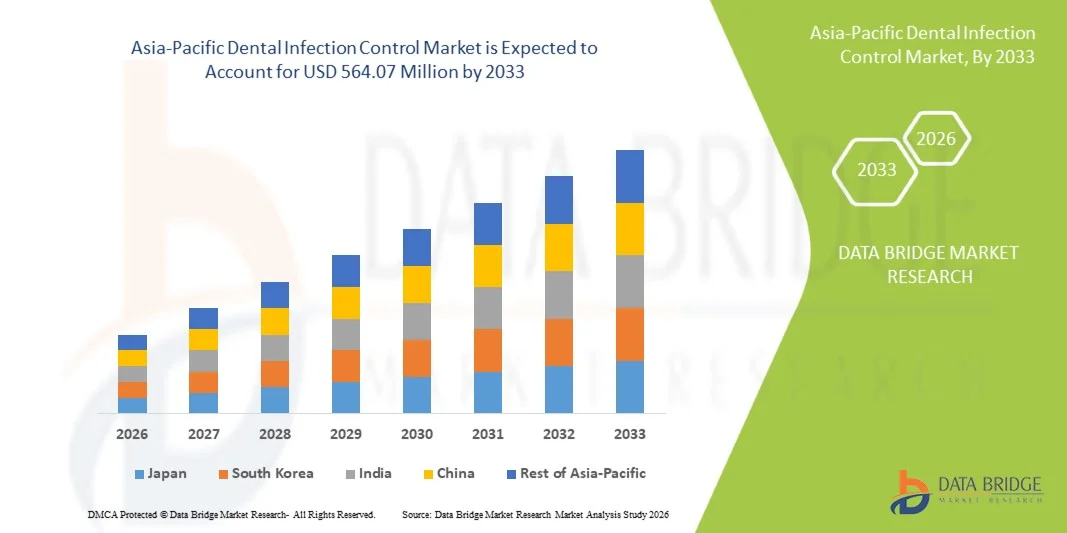
Asia-Pacific Dental Infection Control Market Size
- The Asia-Pacific dental infection control market size was valued at USD 340.83 million in 2025 and is expected to reach USD 564.07 million by 2033, at a CAGR of 6.5% during the forecast period
- The market growth is largely fueled by the growing adoption of dental care services, rising prevalence of periodontal and oral conditions, and technological progress in dental infection‑control solutions across both dental clinics and hospitals in the Asia‑Pacific region
- Furthermore, rising consumer demand for secure, user‑friendly, and integrated infection‑control solutions in dental settings increasing regulatory emphasis on sterilisation, surface disinfection, and single‑use consumables is establishing modern infection‑control products as the standard in dental practices. These converging factors are accelerating the uptake of dental infection‑control solutions, thereby significantly boosting the industry’s growth
Asia-Pacific Dental Infection Control Market Analysis
- Dental infection‑control solutions, including sterilization equipment, disinfectants, personal protective equipment (PPE), and single‑use barriers, are increasingly vital in dental clinics and laboratories across Asia‑Pacific due to rising procedure volumes, stricter hygiene regulations, and growing patient safety concerns
- The escalating demand for dental infection‑control products is primarily fueled by increased access to dental care, rising prevalence of dental and periodontal diseases, growing awareness of cross‑contamination risks, and wider adoption of modern dental practices
- China dominated the Asia‑Pacific dental infection control market with the largest revenue share of 38.5% in 2025, driven by expanding dental infrastructure, a large patient base, and strong manufacturing capabilities
- India is expected to be the fastest growing country in the dental infection control market during the forecast period, supported by rapid urbanization, increasing disposable incomes, and government initiatives promoting oral healthcare and infection‑control standards
- The consumables segment dominated the dental infection control market with a market share of 46.7% in 2025, driven by a shift toward higher hygiene standards, cost‑effectiveness, and ease of implementation in dental practices
Report Scope and Asia-Pacific Dental Infection Control Market Segmentation
|
Attributes |
Asia-Pacific Dental Infection Control Key Market Insights |
|
Segments Covered |
|
|
Countries Covered |
Asia-Pacific
|
|
Key Market Players |
|
|
Market Opportunities |
|
|
Value Added Data Infosets |
In addition to the insights on market scenarios such as market value, growth rate, segmentation, geographical coverage, and major players, the market reports curated by the Data Bridge Market Research also include in-depth expert analysis, patient epidemiology, pipeline analysis, pricing analysis, and regulatory framework |
Asia-Pacific Dental Infection Control Market Trends
“Adoption of Digital and Chairside Sterilization Solutions”
- A significant trend in the Asia‑Pacific dental infection control market is the increasing adoption of digital sterilization equipment and chairside sterilization systems, enhancing operational efficiency and reducing cross-contamination risks in dental clinics
- For instance, the Midmark M11 UltraClave and W&H Lisa Touch autoclave systems allow rapid chairside sterilization of instruments, improving patient throughput and compliance with hygiene standards
- Integration of advanced sensors and IoT-enabled monitoring in sterilization devices enables real-time tracking of sterilization cycles, predictive maintenance, and automated alerts for instrument readiness
- The seamless integration of infection control products with clinic management software facilitates centralized monitoring of sterilization status, PPE usage, and surface disinfection schedules, supporting a safer and more efficient workflow
- This trend toward smarter, faster, and more interconnected infection control systems is reshaping expectations for dental hygiene practices, with companies such as SciCan and DentalEZ developing IoT-enabled sterilizers and digital monitoring solutions
- The demand for digital and chairside sterilization systems is growing rapidly across both private and institutional dental clinics, as practitioners increasingly prioritize patient safety, regulatory compliance, and operational efficiency
Asia-Pacific Dental Infection Control Market Dynamics
Driver
“Rising Awareness and Regulatory Compliance”
- The growing awareness of cross-infection risks among patients and dental professionals, coupled with stricter regulatory standards for dental hygiene, is a key driver for the rising demand for infection control solutions
- For instance, in 2025, the Chinese National Health Commission and India’s Dental Council updated guidelines emphasizing mandatory sterilization and single-use protocols in dental clinics, boosting adoption of modern sterilization equipment and PPE
- Dental infection control products, such as autoclaves, disinfectants, and PPE, provide effective mitigation of infection risks, offering a compelling reason for clinics to upgrade from traditional methods
- Furthermore, the increasing focus on infection prevention in dental hospitals and academic institutions is driving integration of advanced sterilization technologies alongside routine clinical practices
- The convenience, reliability, and regulatory compliance offered by modern infection control solutions, along with rising dental procedure volumes, are major factors propelling market growth in the Asia‑Pacific region
Restraint/Challenge
“High Costs and Training Requirements”
- The relatively high upfront cost of advanced sterilization equipment and digital monitoring systems can be a barrier for small clinics or budget-conscious dental practices in developing regions
- For instance, premium autoclaves and digital sterilization units from brands such as Midmark, W&H, and SciCan often carry prices significantly above basic equipment, limiting adoption in smaller clinics
- In addition, proper usage of advanced infection control devices requires training and adherence to protocols, which can pose operational challenges for clinics with limited staff or resources
- Overcoming these challenges through affordable, scalable solutions, hands-on training programs, and financing options is crucial for broader adoption and sustained market growth in Asia‑Pacific
- While prices are gradually decreasing and training programs are expanding, smaller clinics may still perceive advanced infection control systems as premium investments, potentially slowing adoption rates despite regulatory mandates
- Limited availability of high-quality infection control consumables in remote or rural areas can hinder consistent adoption of proper protocols across the region, affecting market penetration
- Variability in regulatory enforcement and standards between countries in Asia-Pacific can create uncertainty for manufacturers and dental clinics, slowing investment in advanced infection control solutions
Asia-Pacific Dental Infection Control Market Scope
The market is segmented on the basis of product and end user.
- By Product
On the basis of product, the Asia-Pacific dental infection control market is segmented into consumables and equipment. Consumables dominated the market with the largest revenue share of 46.7% in 2025. This segment includes gloves, masks, sterilization wraps, disinfectants, waterline cleaners, and single-use barriers. Consumables are widely used in daily dental procedures across hospitals, clinics, and laboratories, as they provide a cost-effective, easy-to-implement solution for infection prevention. The high turnover of consumables ensures recurring demand, making it a stable revenue generator for manufacturers. In addition, growing patient awareness of hygiene and the emphasis on regulatory compliance in dental practices further boost the demand for consumables. The segment benefits from continuous innovation, including eco-friendly and biodegradable options, meeting both environmental and clinical standards.
Equipment is anticipated to witness the fastest growth rate of 7.5% from 2026 to 2033, driven by increasing adoption of advanced autoclaves, ultrasonic cleaners, chairside sterilizers, and digital monitoring systems in dental facilities. Equipment provides long-term benefits, ensuring consistent sterilization quality and regulatory compliance. With rising investments in modern dental clinics and hospitals, practitioners prefer high-efficiency sterilization units that reduce procedural downtime. IoT-enabled and automated sterilization devices offer real-time monitoring and alerts, enhancing workflow efficiency and patient safety. The growing focus on modernizing dental practices and integrating infection control technologies accelerates the demand for equipment.
- By End User
On the basis of end user, the Asia-Pacific dental infection control market is segmented into dental hospitals, dental clinics, dental research institutes and academics, and dental laboratories. Dental Clinics dominated the market with the largest revenue share of 41.3% in 2025. Clinics form the backbone of dental services in the region, performing the highest volume of procedures requiring strict infection control protocols. The demand is driven by small to mid-sized private clinics investing in both consumables and basic sterilization equipment to ensure patient safety and regulatory compliance. Routine patient flow and recurring procedures make consumables a continuous requirement, while smaller autoclaves and chairside sterilizers are increasingly installed to enhance operational efficiency. The rising awareness among patients about hygiene standards further encourages clinics to adopt advanced infection control measures.
Dental Hospitals are expected to witness the fastest CAGR of 8.1% from 2026 to 2033, fueled by large-scale infrastructure investments, high patient footfall, and advanced procedural requirements. Hospitals require sophisticated sterilization equipment and bulk consumables to manage complex procedures and ensure compliance with stringent healthcare regulations. The integration of digital sterilization systems, IoT monitoring, and centralized infection control management makes hospitals key adopters of cutting-edge solutions. In addition, hospitals serve as referral centers for specialized dental care, further increasing the need for high-efficiency infection control systems. Government initiatives promoting oral healthcare and mandatory infection control protocols accelerate the adoption in hospital settings.
Asia-Pacific Dental Infection Control Market Regional Analysis
- China dominated the Asia‑Pacific dental infection control market with the largest revenue share of 38.5% in 2025, driven by expanding dental infrastructure, a large patient base, and strong manufacturing capabilities
- Dental clinics, hospitals, and laboratories in the region increasingly prioritize stringent sterilization practices, advanced PPE usage, and single-use consumables to ensure patient safety and regulatory compliance, fueling market growth
- This widespread adoption is further supported by rising disposable incomes, increasing awareness of oral hygiene, and government initiatives promoting dental healthcare standards, establishing infection control solutions as a critical component in both private and institutional dental settings
The China Dental Infection Control Market Insight
The China dental infection control market captured the largest revenue share of 38.5% in 2025, driven by the rapid expansion of dental infrastructure, high patient volumes, and stringent adherence to sterilization and hygiene protocols. Dental clinics and hospitals increasingly invest in advanced autoclaves, digital monitoring systems, and single-use consumables to ensure patient safety and regulatory compliance. Government initiatives promoting oral healthcare, coupled with rising disposable incomes and growing patient awareness of infection risks, are further propelling market growth. In addition, China’s role as a manufacturing hub for dental equipment and consumables is improving accessibility and affordability, encouraging widespread adoption.
Japan Dental Infection Control Market Insight
The Japan dental infection control market is witnessing steady growth due to a high-tech healthcare ecosystem, aging population, and emphasis on patient safety. Japanese dental facilities prioritize advanced sterilization equipment, chairside sterilizers, and consumables to maintain strict hygiene standards. Integration of digital monitoring systems with clinic management software enables real-time tracking of sterilization cycles, enhancing operational efficiency. The growing number of dental clinics and connected dental facilities supports adoption, while consumer expectations for safe, high-quality dental care drive demand for innovative infection control solutions.
India Dental Infection Control Market Insight
The India dental infection control market accounted for the largest market revenue share in Asia-Pacific after China in 2025, attributed to rapid urbanization, an expanding middle class, and rising dental procedure volumes. Increased awareness of cross-infection risks and adoption of modern dental practices are driving demand for consumables such as gloves, masks, sterilization wraps, and disinfectants, as well as high-efficiency sterilization equipment. Government programs promoting oral healthcare, coupled with affordable equipment options from domestic manufacturers, are boosting adoption in both private clinics and institutional hospitals. The rise of multi-specialty dental chains and dental education institutes further supports market expansion.
Australia Dental Infection Control Market Insight
The Australia dental infection control market is experiencing steady growth, supported by a strong regulatory framework and high standards of patient safety. Dental hospitals, clinics, and research institutes in the country are increasingly investing in advanced sterilization equipment, digital monitoring systems, and single-use consumables to meet strict hygiene requirements. Growing patient awareness of infection risks and rising dental procedure volumes are key drivers. In addition, government initiatives promoting infection control compliance in dental practices, combined with technological adoption in urban centers, are contributing to market expansion.
Asia-Pacific Dental Infection Control Market Share
The Asia-Pacific Dental Infection Control industry is primarily led by well-established companies, including:
- 3M (U.S.)
- Dentsply Sirona (U.S.)
- GC Corporation (Japan)
- COLTENE Corporation (Switzerland)
- A-dec Inc. (U.S.)
- Henry Schein, Inc. (U.S.)
- Crosstex International, Inc. (U.S.)
- Young Innovations, Inc. (U.S.)
- Kerr Corporation (U.S.)
- Medicom (Canada)
- Septodont. Holding (India)
- Hu-Friedy Mfg. Co., LLC (U.S.)
- VOCO GmbH (Germany)
- Bio Hygiene International Pty. Ltd (Australia)
- Whiteley (Australia)
- Cantel Medical (U.S.)
- Dentisan (U.K.)
- Schülke & Mayr GmbH (U.K.)
- ASA Dental (Italy)
- BMS Dental S.r.l. (Italy)
What are the Recent Developments in Asia-Pacific Dental Infection Control Market?
- In May 2025, idsMED Singapore in collaboration with Singapore Dental Association (SDA) hosted an infection‑prevention‑control event at the idsMED Learning Academy in Singapore for dental professionals. Such collaborations raise awareness, promote adoption of best‑practice equipment and workflows, and can stimulate demand for infection‑control devices and consumables in dental clinics across the region
- In May 2025, A study published in The Lancet linked eight deaths from neuromyelitis (brain infection) to a dental clinic in Vaniyambadi, Tamil Nadu (India), due to un‑sterile practices including reuse of a saline bottle. Following this, the Tamil Nadu Dental Council initiated a formal probe
- In June 2024, Henry Schein Australia announced a partnership with MELAG Medizintechnik GmbH & Co. KG (a world‑leader in infection‑control products) to introduce MELAG’s autoclave range in Australia. The partnership broadens access to advanced sterilisation technologies (premium‑class autoclaves) for dental clinics in the region, encouraging more clinics to invest in higher‑end infection‑control equipment
- In May 2023, Cranberry Global introduced a biodegradable nitrile powder‑free examination glove for dental and medical environments, targeting increasing demand for eco‑friendly infection control consumables. The move reflects a shift in Asia‑Pacific dental settings toward sustainable single‑use items, in line with rising regulatory and patient expectations for hygiene and environmental performance
- In January 2023, W&H Dentalwerk Bürmoos GmbH (an Austrian dental‑equipment vendor) launched two new infection‑control products: the Lexa Plus Class B steriliser and Assistina One single‑port maintenance device, part of its hygiene portfolio. The addition of advanced sterilisation equipment addresses the demand in dental practices for faster, more reliable sterilisers and higher infection‑control standards

- Interactive Data Analysis Dashboard
- Company Analysis Dashboard for high growth potential opportunities
- Research Analyst Access for customization & queries
- Competitor Analysis with Interactive dashboard
- Latest News, Updates & Trend analysis
- Harness the Power of Benchmark Analysis for Comprehensive Competitor Tracking
Data collection and base year analysis are done using data collection modules with large sample sizes. The stage includes obtaining market information or related data through various sources and strategies. It includes examining and planning all the data acquired from the past in advance. It likewise envelops the examination of information inconsistencies seen across different information sources. The market data is analysed and estimated using market statistical and coherent models. Also, market share analysis and key trend analysis are the major success factors in the market report. To know more, please request an analyst call or drop down your inquiry.
The key research methodology used by DBMR research team is data triangulation which involves data mining, analysis of the impact of data variables on the market and primary (industry expert) validation. Data models include Vendor Positioning Grid, Market Time Line Analysis, Market Overview and Guide, Company Positioning Grid, Patent Analysis, Pricing Analysis, Company Market Share Analysis, Standards of Measurement, Global versus Regional and Vendor Share Analysis. To know more about the research methodology, drop in an inquiry to speak to our industry experts.
Data Bridge Market Research is a leader in advanced formative research. We take pride in servicing our existing and new customers with data and analysis that match and suits their goal. The report can be customized to include price trend analysis of target brands understanding the market for additional countries (ask for the list of countries), clinical trial results data, literature review, refurbished market and product base analysis. Market analysis of target competitors can be analyzed from technology-based analysis to market portfolio strategies. We can add as many competitors that you require data about in the format and data style you are looking for. Our team of analysts can also provide you data in crude raw excel files pivot tables (Fact book) or can assist you in creating presentations from the data sets available in the report.













