


What is the Asia-Pacific (APAC) Dermatology Treatment Devices Market Size and Growth Rate?
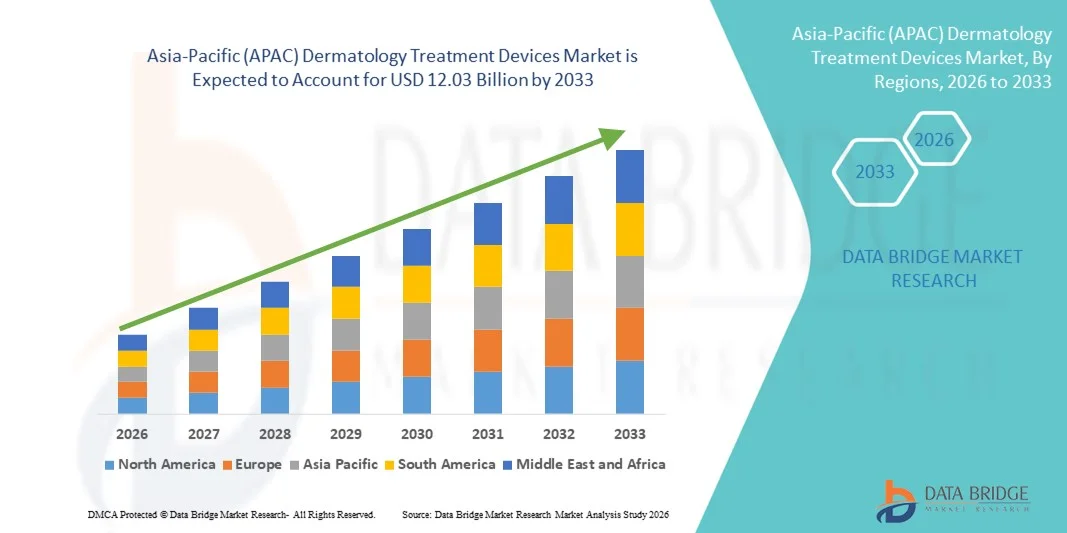
- As per Data Bridge Market Research Analysis the Asia-Pacific (APAC) dermatology treatment devices market size was valued at USD 4.06 billion in 2025 and is expected to reach USD 12.03 billion by 2033, at a CAGR of 14.55% during the forecast period
- The market growth is largely fueled by increasing awareness of skin health, rising prevalence of dermatological conditions, and the growing adoption of advanced cosmetic and therapeutic devices across countries such as China, Japan, and India
- Furthermore, expanding medical infrastructure, rising disposable income, and consumer preference for minimally invasive and technologically advanced treatments are driving demand for dermatology treatment devices. These factors are accelerating the adoption of innovative solutions in both clinical and aesthetic settings, thereby significantly boosting the market’s growth
Market Size & Forecast
- Market Value (2025): USD 4.06 billion
- Expected Market Value (2033): USD 12.03 billion
- Forecast CAGR (2026–2033): 14.55%
Asia-Pacific (APAC) Dermatology Treatment Devices Market Analysis
- Dermatology treatment devices, offering advanced therapeutic and cosmetic solutions for skin conditions, are increasingly essential in both clinical and aesthetic settings due to their efficacy, minimally invasive nature, and integration with modern treatment protocols
- The escalating demand for dermatology treatment devices is primarily driven by rising prevalence of skin disorders, increasing awareness of skin health, and growing consumer preference for non-invasive and technologically advanced treatments
- Japan dominated the APAC dermatology treatment devices market with the largest revenue share of 38.5% in 2025, attributed to advanced healthcare infrastructure, high adoption of medical technologies, and a strong presence of leading dermatology device manufacturers, with substantial growth in both therapeutic and cosmetic procedures
- China is expected to be the fastest growing country in the APAC dermatology treatment devices market during the forecast period due to rising urbanization, increasing disposable incomes, expanding healthcare infrastructure, and growing medical tourism
- Laser segment dominated the APAC dermatology treatment devices market with a market share of 41.7% in 2025, driven by their effectiveness, safety profile, and widespread adoption in both clinical dermatology and cosmetic procedures
Report Scope and Asia-Pacific (APAC) Dermatology Treatment Devices Market Segmentation
|
Attributes |
Asia-Pacific (APAC) Dermatology Treatment Devices Key Market Insights |
|
Segments Covered |
|
|
Countries Covered |
Asia-Pacific
|
|
Key Market Players |
|
|
Market Opportunities |
|
|
Value Added Data Infosets |
In addition to the insights on market scenarios such as market value, growth rate, segmentation, geographical coverage, and major players, the market reports curated by the Data Bridge Market Research also include in-depth expert analysis, patient epidemiology, pipeline analysis, pricing analysis, and regulatory framework |
What is the Key Trend in the Asia-Pacific (APAC) Dermatology Treatment Devices Market?
Advancements Through AI-Powered and Multi-Functional Devices
- A significant and accelerating trend in the APAC dermatology treatment devices market is the integration of artificial intelligence (AI) with advanced therapeutic and cosmetic devices, enhancing treatment precision and personalization
- For instance, the Fotona Dynamis Pro laser system utilizes AI-driven settings to automatically adjust energy parameters based on skin type and condition, improving treatment safety and efficacy
- AI integration enables features such as real-time skin analysis, automated treatment optimization, and predictive outcome simulations, allowing dermatologists to deliver more effective and customized procedures. For instance, Lumenis M22 platforms use AI to optimize multi-application treatments while reducing patient downtime
- The seamless integration of devices with digital patient management systems allows centralized monitoring of treatment progress and data tracking across clinics, facilitating improved patient outcomes and streamlined workflow
- This trend towards intelligent, multi-functional dermatology devices is reshaping treatment protocols and patient expectations. For instance, companies such as Cynosure are developing AI-enabled lasers that combine hair removal, skin rejuvenation, and pigmentation treatments in a single platform
- The demand for AI-powered, multi-functional, and user-friendly dermatology devices is growing rapidly across cosmetic clinics and hospital dermatology departments, as patients increasingly seek safer, efficient, and customized skin treatments
- Rising medical tourism in APAC countries such as Thailand and South Korea is creating opportunities for advanced dermatology treatments, with clinics investing in cutting-edge devices to attract international patients
Asia-Pacific (APAC) Dermatology Treatment Devices Market Dynamics
Driver
Increasing Prevalence of Skin Disorders and Growing Cosmetic Awareness
- The rising incidence of skin conditions such as acne, pigmentation, and dermatological disorders, coupled with growing consumer awareness of aesthetic treatments, is a significant driver for the heightened demand for dermatology treatment devices
- For instance, in March 2025, Cutera launched AI-assisted laser solutions in India targeting pigmentation and acne scars, improving treatment precision and patient satisfaction
- As patients become more conscious of skin health and cosmetic appearance, devices offering minimally invasive procedures with measurable outcomes provide a compelling alternative to traditional therapies
- Furthermore, the expanding adoption of cosmetic procedures in dermatology clinics and hospitals is making advanced devices essential, integrating multiple treatment functionalities into single platforms for clinical efficiency
- The convenience of faster procedures, reduced recovery time, and precise targeting of dermatological conditions through smart devices are key factors propelling adoption in both urban hospitals and aesthetic clinics. The increasing availability of user-friendly and portable devices further supports market growth
- Rising investments in R&D by device manufacturers to develop safer and more effective treatment technologies are driving adoption of next-generation dermatology devices
- Government initiatives and reimbursement policies in countries such as Japan and Australia to support dermatological care and cosmetic procedures are encouraging clinics to adopt advanced treatment devices
Restraint/Challenge
High Costs and Regulatory Compliance Barriers
- The high initial investment required for advanced dermatology treatment devices, coupled with stringent regulatory approvals in countries such as Japan, Australia, and South Korea, poses a challenge to broader market penetration
- For instance, expensive laser systems from companies such as Lumenis or Fotona may limit adoption in small clinics or price-sensitive regions within APAC
- Addressing these cost and regulatory barriers through device leasing models, financing options, and compliance with regional medical device regulations is crucial to encourage wider adoption
- In addition, concerns over treatment safety, device misuse, and potential side effects can make patients and clinics hesitant to adopt new devices. For instance, improper use of high-intensity lasers without professional training has led to regulatory scrutiny in some markets
- Overcoming these challenges through affordable device solutions, clinician training programs, and stringent regulatory compliance will be vital for sustained growth in the APAC dermatology treatment devices market
- Limited availability of skilled dermatologists and trained operators in certain APAC regions can slow device adoption and clinic expansion
- Competition from low-cost, non-certified devices may create market confusion and affect trust in advanced dermatology equipment, challenging premium device manufacturers
Asia-Pacific (APAC) Dermatology Treatment Devices Market Scope
The market is segmented on the basis of product, application, and end user.
- By Product
On the basis of product, the APAC dermatology treatment devices market is segmented into lasers, light therapy devices, cryotherapy devices, microdermabrasion devices, energy-based therapy devices, and microneedling devices. The laser devices segment dominated the market with the largest market revenue share of 41.7% in 2025, driven by their versatility in treating multiple skin conditions such as pigmentation, hair removal, and skin resurfacing. Laser devices are widely adopted in both clinical dermatology and aesthetic clinics due to their precision, effectiveness, and ability to deliver minimally invasive treatments with predictable outcomes. Furthermore, ongoing technological advancements in laser platforms, including AI-assisted settings and multi-wavelength capabilities, have increased their appeal among dermatologists. The availability of multiple laser types for specific indications, such as fractional, CO₂, and Nd:YAG lasers, further reinforces their dominance. Their compatibility with integrated patient management systems and data tracking enhances workflow efficiency and patient satisfaction, consolidating their market position.
The microneedling devices segment is expected to witness the fastest growth from 2026 to 2033, driven by rising demand for minimally invasive skin rejuvenation and scar treatments. Microneedling offers a cost-effective, low-downtime solution for collagen induction, making it highly popular in dermatology clinics and aesthetic centers. The segment growth is also supported by the increasing availability of combination devices that integrate radiofrequency or PRP delivery for enhanced outcomes. In addition, the trend of at-home microneedling kits and portable professional devices is expanding the user base, especially in urban APAC markets.
- By Application
On the basis of application, the APAC dermatology treatment devices market is segmented into skin resurfacing, skin rejuvenation, hair removal, psoriasis, scar treatment, warts and skin tags, skin lesions, pigmented and vascular lesion removal, acne, tattoo removal, and hyperhidrosis. The hair removal segment dominated the market with the largest revenue share in 2025 due to the high prevalence of unwanted hair concerns and increasing aesthetic consciousness across APAC countries. Hair removal devices, primarily laser-based, offer permanent or long-term solutions with minimal downtime, making them highly attractive in both dermatology clinics and cosmetic centers. The segment is further supported by strong demand in urban centers, growing disposable incomes, and rising medical tourism in countries such as South Korea and Thailand. In addition, innovations in pain-free and faster hair removal technologies have improved patient comfort and expanded adoption.
The scar treatment segment is expected to witness the fastest growth from 2026 to 2033, driven by increasing awareness of advanced treatment options for acne scars, surgical scars, and burn scars. Rising adoption of combination therapies involving microneedling, fractional lasers, and energy-based devices enhances treatment effectiveness and fuels demand. Social media influence and growing patient preference for aesthetic improvement are also accelerating market growth. Furthermore, insurance coverage and reimbursement policies for therapeutic dermatology procedures in some APAC countries are encouraging clinics to invest in scar treatment devices.
- By End User
On the basis of end user, the APAC dermatology treatment devices market is segmented into hospitals, SPA clinics, dermatology clinics, and surgical centers. The dermatology clinics segment dominated the market with the largest revenue share in 2025, owing to the specialized expertise, dedicated infrastructure, and high patient volumes for cosmetic and therapeutic procedures. Clinics offer a broad range of device-based treatments such as laser therapy, microneedling, and energy-based procedures, making them the preferred choice for both medical and aesthetic skin care. Dermatology clinics benefit from repeat visits, personalized treatment plans, and patient trust, further strengthening their market position.
The SPA clinics segment is expected to witness the fastest growth from 2026 to 2033, driven by increasing demand for non-medical aesthetic treatments and wellness-focused skin therapies. SPA clinics are increasingly integrating professional dermatology devices for skin rejuvenation, anti-aging, and pigmentation treatments to attract a broader consumer base. Rising disposable incomes, lifestyle trends, and the popularity of premium wellness services in APAC countries such as Japan, China, and India are supporting this growth. The segment also benefits from flexible service models, shorter treatment durations, and marketing strategies targeting younger consumers seeking cosmetic enhancements.
Asia-Pacific (APAC) Dermatology Treatment Devices Market Regional Analysis
- Japan dominated the APAC dermatology treatment devices market with the largest revenue share of 38.5% in 2025, attributed to advanced healthcare infrastructure, high adoption of medical technologies, and a strong presence of leading dermatology device manufacturers, with substantial growth in both therapeutic and cosmetic procedures
- Consumers and clinics in the region prioritize precision, safety, and effectiveness in treatments, favoring devices such as lasers and energy-based therapy systems for both therapeutic and cosmetic application
- This widespread adoption is further supported by rising disposable incomes, increasing urbanization, growing medical tourism, and government support for dermatological care, establishing advanced dermatology devices as a preferred solution across hospitals, dermatology clinics, and aesthetic centers
The Japan Dermatology Treatment Devices Market Insight
The Japan dermatology treatment devices market is gaining momentum due to the country’s advanced healthcare infrastructure, high awareness of cosmetic procedures, and growing demand for minimally invasive treatments. Adoption is driven by the increasing number of dermatology clinics offering laser, energy-based, and microneedling treatments, as well as integration with digital patient monitoring systems. Moreover, Japan’s aging population is likely to spur demand for devices that provide easier, safer, and precise skin care solutions in both clinical and aesthetic settings.
China Dermatology Treatment Devices Market Insight
The China dermatology treatment devices market is poised for rapid growth during the forecast period, fueled by rising disposable incomes, urbanization, and increasing prevalence of skin conditions such as acne, pigmentation, and scars. Hospitals and dermatology clinics are adopting advanced laser, light therapy, and microneedling devices to meet growing patient demand. Government initiatives promoting healthcare modernization, coupled with growing medical tourism and private clinic expansions, are further driving market adoption.
India Dermatology Treatment Devices Market Insight
The India dermatology treatment devices market accounted for the largest revenue share in APAC in 2025, attributed to rapid urbanization, rising disposable incomes, and increasing awareness of cosmetic and therapeutic skin treatments. India stands as one of the fastest-growing markets for aesthetic and clinical dermatology procedures, with hospitals, dermatology clinics, and SPA centers adopting advanced lasers, microneedling, and energy-based devices. The push towards smart clinics, growing medical tourism, and availability of cost-effective devices from domestic and international manufacturers are key factors propelling market growth in India.
South Korea Dermatology Treatment Devices Market Insight
The South Korea dermatology treatment devices market is expected to grow significantly due to the country’s strong cosmetic culture, high disposable incomes, and increasing demand for non-invasive skin treatments. Clinics and hospitals are increasingly adopting laser, energy-based, and combination devices for skin rejuvenation, scar treatment, and hair removal. South Korea’s emphasis on beauty and wellness, combined with technological innovation in medical devices, is accelerating adoption across both clinical and aesthetic settings.
Which are the Top Companies in Asia-Pacific (APAC) Dermatology Treatment Devices Market?
The Asia-Pacific (APAC) Dermatology Treatment Devices industry is primarily led by well-established companies, including:
- Alma Lasers (Israel)
- Candela Corporation (U.S.)
- Cutera Inc. (U.S.)
- Lumenis Ltd. (Israel)
- FotoFinder Systems GmbH (Germany)
- Leica Microsystems (Germany)
- Maruho Co., Ltd. (Japan)
- Allergan Plc (Ireland)
- Merz Pharma (Germany)
- Sinclair Pharma (U.K.)
- Cynosure, Inc. (U.S.)
- Biofrontera AG (Germany)
- Valeant Pharmaceuticals International Inc. (Canada)
- Beijing Toplaser Technology Co., Ltd. (China)
- Avita Medical (Australia)
- Heine Optotechnik GmbH & Co. KG (Germany)
- Canfield Scientific, Inc. (U.S.)
- Samsung Medison Co., Ltd. (South Korea)
- FUJIFILM Holdings Corporation (Japan)
- Hitachi, Ltd. (Japan)
What are the Recent Developments in Asia-Pacific (APAC) Dermatology Treatment Devices Market?
- In November 2025, Canfield Scientific’s VISIA® Facial Skin Analysis system was named Best Imaging Device in MedEsthetics’ Readers’ Choice Awards, highlighting its enhanced AI‑driven imaging and analysis capabilities that are increasingly used in dermatology practices across APAC to assess skin conditions with high precision
- In August 2025, MTG Co. launched a portable microneedling device in Japan designed for professional and potential home use, aimed at stimulating collagen production and improving skin tightening with reduced discomfort
- In January 2025, DermaSensor’s handheld AI‑powered skin cancer evaluation device, which uses optical spectroscopy, received broader regulatory recognition and was supported by pivotal clinical data showing high skin cancer detection performance, paving the way for adoption in clinical settings across regions (including APAC via CE marking and global distribution)
- In October 2024, Japanese beauty‑tech company Ya‑Man announced the launch of 24K gold‑coated microneedle skin care products, reflecting innovation in microneedle‑based dermatology devices aimed at anti‑aging and skin health enhancement in the APAC consumer market
- In October 2023, Sinclair Pharma launched the Préime DermaFacial, a multi‑technology aesthetic facial device, in partnership with The Aivee Clinic in the Philippines, enhancing skin rejuvenation and tightening treatments across ASEAN dermatology and aesthetic practices

- Interactive Data Analysis Dashboard
- Company Analysis Dashboard for high growth potential opportunities
- Research Analyst Access for customization & queries
- Competitor Analysis with Interactive dashboard
- Latest News, Updates & Trend analysis
- Harness the Power of Benchmark Analysis for Comprehensive Competitor Tracking
Data collection and base year analysis are done using data collection modules with large sample sizes. The stage includes obtaining market information or related data through various sources and strategies. It includes examining and planning all the data acquired from the past in advance. It likewise envelops the examination of information inconsistencies seen across different information sources. The market data is analysed and estimated using market statistical and coherent models. Also, market share analysis and key trend analysis are the major success factors in the market report. To know more, please request an analyst call or drop down your inquiry.
The key research methodology used by DBMR research team is data triangulation which involves data mining, analysis of the impact of data variables on the market and primary (industry expert) validation. Data models include Vendor Positioning Grid, Market Time Line Analysis, Market Overview and Guide, Company Positioning Grid, Patent Analysis, Pricing Analysis, Company Market Share Analysis, Standards of Measurement, Global versus Regional and Vendor Share Analysis. To know more about the research methodology, drop in an inquiry to speak to our industry experts.
Data Bridge Market Research is a leader in advanced formative research. We take pride in servicing our existing and new customers with data and analysis that match and suits their goal. The report can be customized to include price trend analysis of target brands understanding the market for additional countries (ask for the list of countries), clinical trial results data, literature review, refurbished market and product base analysis. Market analysis of target competitors can be analyzed from technology-based analysis to market portfolio strategies. We can add as many competitors that you require data about in the format and data style you are looking for. Our team of analysts can also provide you data in crude raw excel files pivot tables (Fact book) or can assist you in creating presentations from the data sets available in the report.













