Asia-Pacific Guitar Market Size
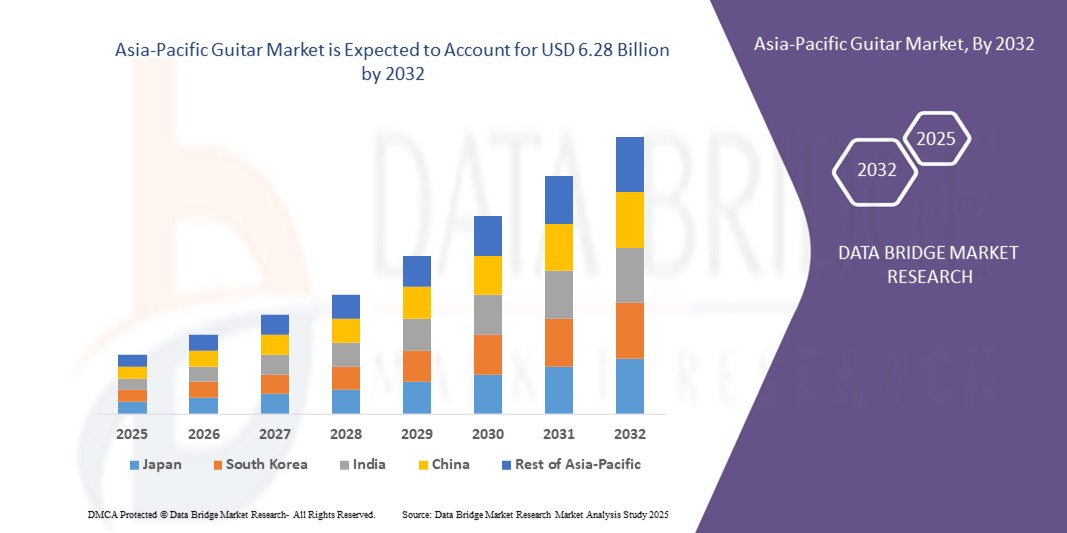
- The Asia-Pacific guitar market size was valued at USD 4.31 billion in 2024 and is projected to reach USD 6.28 billion by 2032, with a CAGR of 4.81% during the forecast period of 2025 to 2032
- The market growth is primarily driven by the rising interest in music education, increased popularity of Western music genres, and the expanding influence of social media and online music platforms that are encouraging amateur and professional musicians alike.
- Additionally, growing disposable incomes and a surge in demand for premium, customizable, and digitally integrated instruments are further supporting market expansion. These trends, coupled with technological innovations and broader accessibility through e-commerce, are contributing to the sustained growth of the guitar market in the region.
Asia-Pacific Guitar Market Analysis
- Guitars, encompassing acoustic, electric, and classical variants, continue to be integral to the region's music culture, with growing adoption among beginners, hobbyists, and professionals fueled by increasing interest in musical self-expression, online tutorials, and influencer-driven trends.
- The rising popularity of live music performances, school music programs, and online music creation platforms has significantly contributed to the escalating demand for guitars across key Asia-Pacific markets.
- China held the largest revenue share in the Asia-Pacific guitar market with the largest revenue share of 38.7% in 2024 attributed to its expanding middle class, growing music education infrastructure, and strong domestic manufacturing capabilities that support both affordable and premium guitar segments.
- Japan is expected to be the fastest growing region in the Asia-Pacific guitar market during the forecast period, driven by a strong music culture, increased disposable income, and robust online retail channels that enhance accessibility to a wide range of instruments for both amateur and professional musicians. Acoustic guitar segment dominated the Asia-Pacific guitar market with a market share of 46.5%. in 2024 driven by its affordability, ease of use for beginners, and widespread popularity across diverse musical genres and educational settings.
Report Scope and Market Segmentation
|
Attributes |
Guitar Ingredients Key Market Insights |
|
Segments Covered |
|
|
Countries Covered |
|
|
Key Market Players |
|
|
Market Opportunities |
|
|
Value Added Data Infosets |
In addition to the insights on market scenarios such as market value, growth rate, segmentation, geographical coverage, and major players, the market reports curated by the Data Bridge Market Research also include in-depth expert analysis, pricing analysis, brand share analysis, consumer survey, demography analysis, supply chain analysis, value chain analysis, raw material/consumables overview, vendor selection criteria, PESTLE Analysis, Porter Analysis, and regulatory framework. |
Asia-Pacific Guitar Market Trends
Digital Integration and Online Learning Fueling Guitar Adoption
- A key and rapidly evolving trend in the Asia-Pacific guitar market is the growing convergence of digital technology with traditional instruments, along with the rise of online learning platforms and virtual music communities that are reshaping how guitars are learned, played, and purchased.
- For example, Yamaha’s Smart Guitar and Fender’s digital learning app, Fender Play, provide interactive lessons and real-time feedback, making guitar learning more accessible and engaging for beginners. These tools are especially popular among younger demographics across countries like India, China, and Indonesia, where mobile-first behavior dominates.
- Integration of Bluetooth and mobile app connectivity in guitars allows users to access tuners, effects, and lesson plans directly through their smartphones, while digital amps and USB-enabled guitars support at-home recording and content creation. These features cater to the growing community of bedroom musicians and online creators.
- Online marketplaces and e-commerce platforms like Alibaba, Amazon, and Flipkart are also streamlining guitar accessibility, offering a wide range of affordable options and enabling consumers from smaller cities to easily purchase and learn instruments without visiting physical stores.
- The COVID-19 pandemic accelerated this shift, with many first-time players turning to YouTube tutorials, virtual classes, and social media platforms like TikTok and Instagram to share progress and connect with fellow learners—driving sustained demand even post-pandemic.
- As digital literacy grows and internet penetration deepens across the region, manufacturers are increasingly investing in smart, app-connected guitars and bundling them with subscription-based learning services. This digital learning trend is expected to continue influencing market growth and redefining guitar adoption across the Asia-Pacific .
Asia-Pacific Guitar Market Dynamics
Driver
Rising Music Education, Cultural Influence, and Digital Access to Instruments
- The growing emphasis on music education in schools, rising cultural appreciation for musical instruments, and increased exposure to global music trends are key drivers propelling the Asia-Pacific guitar market forward.
- For instance, several government-led and private educational initiatives across countries like China, South Korea, and India have incorporated music programs into school curricula, driving early interest in learning instruments such as the guitar.
- The widespread popularity of Western and K-pop music, coupled with influencer and celebrity endorsements on platforms like YouTube and TikTok, has further encouraged guitar adoption, especially among youth and amateur musicians.
- The rise of digital learning platforms and mobile apps offering step-by-step tutorials, virtual instructors, and practice tools have made guitar learning more accessible and self-paced, eliminating the need for formal lessons and allowing broader participation across age groups and geographies.
- Additionally, growing e-commerce penetration has enabled easier access to a wide range of guitars—from affordable entry-level models to premium brands—fueling market growth across urban and semi-urban regions.
- This combination of educational initiatives, cultural trends, and digital access is making guitar playing more mainstream and attainable, driving steady growth across the Asia-Pacific region.
Restraint/Challenge
Affordability Constraints and Lack of Standardized Learning Infrastructure
- One of the primary challenges facing the Asia-Pacific guitar market is the affordability barrier for quality instruments, particularly in emerging economies where purchasing power is limited and musical instruments are still considered luxury or non-essential goods.
- For instance, premium guitar brands such as Fender and Gibson remain out of reach for many first-time buyers, especially in rural or lower-income urban areas, despite rising interest in music. Local brands have filled some of this gap, but issues with quality and durability persist, which can discourage long-term learning or progression.
- Another key challenge is the lack of standardized and accessible learning infrastructure outside major urban centers. While online tutorials and apps are growing in popularity, not all consumers have access to reliable internet or digital devices, limiting the reach of these platforms.
- Furthermore, the absence of formal training institutions or certified instructors in many regions can make it difficult for learners to receive structured, high-quality guidance, slowing skill development and reducing retention among new players.
- Addressing these challenges through affordable instrument production, government and private sector support for music education, and investment in both online and offline learning infrastructure will be essential for ensuring sustainable market growth across diverse demographics.
Asia-Pacific Guitar Market Scope
The market is segmented on the basis of type, wood material, covers, tailpiece, neck shape, number of strings, string material, music type, color, distribution channel, and application.
- By Type
On the basis of type, the Asia-Pacific guitar market is segmented into Acoustic Guitar, Electric Guitar, Electric-Acoustic Guitar, Classical Guitar, Bass Guitar, Resonator, Extended Range Electric Guitar, Lap Steel Guitar, Double Neck Guitar, and Others. The Acoustic Guitar segment held the largest market revenue share in 2024, owing to its popularity among both beginners and seasoned musicians. Acoustic guitars are versatile, affordable, and widely used across genres such as folk, pop, and country, making them the most accessible option for learners. Their portability and simplicity further enhance their appeal, as they do not require external amplification. Continuous innovation in design and materials has also improved sound quality and durability, ensuring sustained demand.
The Electric Guitar segment is expected to witness the fastest growth rate from 2025 to 2032, supported by its dominance in genres such as rock, blues, and metal. Electric guitars offer a wide tonal range and compatibility with amplifiers, pedals, and digital effects, making them a preferred choice for professional performers and experimental musicians. Their popularity is further amplified by cultural influence, online tutorials, and endorsements from leading artists. Manufacturers are also introducing lightweight models and extended-range versions to attract new players. This combination of creativity, versatility, and cultural relevance is driving growth in this segment.
- By Wood Material
On the basis of wood material, the Asia-Pacific guitar market is segmented into Solid and Laminate. The Solid segment dominated the market in 2024 due to its premium tonal quality and resonance, making it a top choice for professionals and enthusiasts. Solid wood guitars improve in tone over time, which adds value for serious players. While more expensive, they are seen as long-term investments for quality sound production. Leading brands frequently use solid woods such as mahogany, spruce, and rosewood to enhance tonal depth and sustain. This preference continues to secure demand in the premium segment.
The Laminate segment is expected to witness the fastest growth rate from 2025 to 2032, driven by affordability and resilience to environmental changes. Laminate guitars are less prone to warping or cracking, making them ideal for beginners and casual players. They are lighter in weight, easy to maintain, and widely available across mass-market channels. Their cost-effectiveness makes them highly attractive in the student and entry-level category. With growing demand for budget-friendly instruments, laminate guitars are playing a key role in expanding the user base worldwide.
- By Covers
On the basis of covers, the Asia-Pacific guitar market is segmented into Solid Body, Semi-Hollow Body, Hollow Body, and Others. The Solid Body segment accounted for the largest revenue share in 2024, as these guitars are durable and suitable for high-volume performances. Solid body guitars minimize feedback, which makes them particularly favored for live shows and heavy music genres. Their structural integrity allows for advanced hardware and pickup integration. They also support innovative designs and custom finishes, appealing to a wide audience. Strong demand among rock and metal players has cemented their dominance in the market.
The Semi-Hollow Body segment is expected to witness the fastest growth rate from 2025 to 2032, supported by its unique tonal balance between acoustic warmth and electric sharpness. These guitars are popular among jazz and blues musicians who value resonance and versatility. Their lightweight design also makes them comfortable for extended use. The rising popularity of cross-genre experimentation has further increased their relevance in modern music. With players seeking hybrid sound experiences, semi-hollow body guitars are gaining notable traction.
- By Tailpiece
On the basis of tailpiece, the Asia-Pacific guitar market is segmented into Vibrato Arms, Floating Tailpiece, Hard Tail, and String-Through Body. The Hard Tail segment held the largest share in 2024, attributed to its tuning stability and ease of use. Hard tail designs are straightforward, require minimal maintenance, and are reliable for long-term play. They are widely favored by beginners for their simplicity and by professionals for consistency in live performances. Their durability and resistance to string slippage further support their adoption. Overall, this design continues to dominate the mainstream guitar market.
The Vibrato Arms segment is expected to witness the fastest growth rate from 2025 to 2032, as musicians increasingly prefer expressive features for bending pitch and creating dynamic effects. Vibrato arms allow for enhanced creativity, especially in genres such as rock and metal. Their popularity has surged with the growth of solo performances and experimental music. Manufacturers are also introducing advanced vibrato mechanisms to improve tuning stability. This trend is expected to keep driving adoption among both professionals and enthusiasts.
- By Neck Shape
On the basis of neck shape, the Asia-Pacific guitar market is segmented into C Necks, U Necks, V Necks, and Others. The C Necks segment dominated the market in 2024, due to its ergonomic design and wide acceptance among players of all levels. Known for its comfort, the C shape supports long practice sessions without causing strain. It has become a standard in modern guitars and is especially favored by manufacturers for its universal appeal. Beginners often prefer this design due to its ease of playability. Its popularity across acoustic and electric guitars ensures continued dominance in the market.
The V Necks segment is expected to witness the fastest growth rate from 2025 to 2032, driven by its appeal among vintage guitar enthusiasts. This shape offers a distinct grip and tactile feel, making it attractive for players seeking traditional playing experiences. Many collectors and professionals prefer V necks for their historical association with iconic guitar models. While less common in modern mass production, its niche appeal is growing steadily. Rising demand for retro-style instruments is further fueling this trend.
- By Number of Strings
On the basis of number of strings, the Asia-Pacific guitar market is segmented into Six Strings, Eight Strings, Twelve Strings, and More Than Twelve Strings. The Six Strings segment dominated the market in 2024, being the most widely used configuration across genres and skill levels. It is considered the standard for beginners and professionals alike, offering familiarity and ease of learning. Its versatility in producing a wide tonal range ensures popularity across acoustic and electric models. Manufacturers also focus on producing affordable six-string variants for mass adoption. This segment is expected to maintain its leading position throughout the forecast period.
The Eight Strings segment is expected to witness the fastest growth rate from 2025 to 2032, supported by its rising use in progressive and experimental music. Musicians favor extended-range guitars for their ability to cover deeper tones and complex compositions. This configuration appeals to players seeking innovation and distinct soundscapes. With the growth of niche music genres, demand for eight-string guitars is expanding steadily. Increasing endorsements by professional artists are further boosting interest among advanced learners and enthusiasts.
- By String Material
On the basis of string material, the Asia-Pacific guitar market is segmented into Steel, Nylon, and Others. The Steel segment held the largest revenue share in 2024, driven by its bright, powerful tone and widespread use in popular genres such as rock, pop, and metal. Steel strings are durable and deliver louder projection, making them ideal for both studio and live performances. Their compatibility with acoustic and electric guitars further reinforces demand. Steel remains the first choice for professionals and enthusiasts aiming for sharp tonal clarity. Its continued dominance is supported by consistent innovation in coated and long-life variants.
The Nylon segment is expected to witness the fastest growth rate from 2025 to 2032, largely due to its adoption in classical, flamenco, and folk music. Nylon strings produce a softer, mellower sound, making them beginner-friendly and ideal for fingerstyle techniques. They are also easier on the fingers, attracting new learners and casual hobbyists. Growing global interest in traditional and acoustic genres is further fueling this demand. Manufacturers are introducing hybrid nylon strings to expand appeal across diverse player groups.
- By Music Type
On the basis of music type, the Asia-Pacific guitar market is segmented into Rock, Blues, Pop, Metal, Jazz, Electronica, Traditional, and Others. The Rock segment accounted for the largest market share in 2024, reflecting the guitar’s iconic status in this genre. Rock continues to drive consistent sales of electric guitars, amplifiers, and accessories. Its influence on culture and media ensures ongoing relevance. The genre’s global fan base provides stable long-term demand. Manufacturers also align marketing strategies around rock legends and performances, further sustaining this segment’s dominance.
The Pop segment is expected to witness the fastest growth rate from 2025 to 2032, as guitars are increasingly integrated into mainstream and contemporary music. Pop culture’s influence across social media and streaming platforms is fueling this adoption. Rising collaborations between guitar brands and popular artists further boost sales. Affordable entry-level models marketed toward youth audiences have strengthened accessibility. With pop music’s mass appeal, this segment is expected to see robust growth in the coming years.
- By Color
On the basis of color, the Asia-Pacific guitar market is segmented into Black, Brown, Red, Light Tan, Light Yellow, Amber, and Others. The Black segment dominated the market in 2024, owing to its classic, professional, and versatile aesthetic. Black guitars are widely popular across all genres and skill levels. They are also favored by manufacturers for their timeless appeal in both acoustic and electric designs. The segment continues to attract consistent demand due to its universal acceptance. Enduring popularity ensures its leading position in the market.
The Red segment is expected to witness the fastest growth rate from 2025 to 2032, driven by rising demand for bold, visually distinctive instruments. Red guitars appeal to younger audiences seeking individuality and stage presence. Their eye-catching design makes them a favorite for performances and artist endorsements. Manufacturers are increasingly introducing red finishes in multiple models to cater to this trend. Growing consumer preference for personalization and stylish instruments is driving momentum in this segment.
- By Distribution Channel
On the basis of distribution channel, the Asia-Pacific guitar market is segmented into Specialty Stores/Music Stores, E-Commerce, Supermarkets/Hypermarkets, and Others. The Specialty Stores/Music Stores segment captured the largest market share in 2024, as these outlets offer personalized consultation, product trials, and expert guidance. They also provide after-sales services such as maintenance and repairs, which enhance customer trust. Many players prefer in-person testing of instruments before purchase, supporting demand for offline retail. Exclusive launches and promotional events further strengthen their position. This segment is expected to remain dominant due to the hands-on experience it offers.
The E-Commerce segment is expected to witness the fastest growth rate from 2025 to 2032, supported by growing digital adoption and consumer preference for convenience. Online platforms provide a wider product range, competitive pricing, and home delivery options. Detailed reviews, video demonstrations, and virtual try-out features have improved buyer confidence. Rising adoption of smartphones and secure payment systems is also fueling growth in online sales. As digital platforms expand globally, e-commerce is set to transform the distribution landscape for guitars.
- By Application
On the basis of application, the Asia-Pacific guitar market is segmented into Professional Performance, Learning and Training, and Individual Amateurs. The Professional Performance segment accounted for the largest revenue share in 2024, reflecting demand from touring artists, studio musicians, and live events. Professional players drive consistent sales of high-end models and custom instruments. The segment benefits from artist endorsements, global concerts, and professional associations. It also creates aspirational value for younger audiences. Strong demand in this category is expected to sustain its leading market position.
The Learning and Training segment is expected to witness the fastest growth rate from 2025 to 2032, supported by the rapid rise of online tutorials and music education platforms. Affordable entry-level guitars, combined with structured digital lessons, are encouraging more beginners to take up the instrument. Schools, academies, and e-learning providers are driving structured adoption in this category. Interactive learning tools and gamified applications further enhance student engagement. This segment is emerging as a major driver of long-term guitar adoption.
Asia-Pacific Guitar Market Regional Analysis
- China is expected to dominate the market owing to its deep-rooted musical culture and strong heritage that continues to shape modern consumer preferences.
- The country has a long-standing tradition of string instruments, which has naturally supported the acceptance and popularity of guitars among diverse consumer groups, from students and hobbyists to professional musicians.
- Moreover, China is home to several leading global and regional guitar manufacturers that provide a wide range of high-quality instruments, from affordable entry-level models to premium, customized guitars.
Japan Guitar Market Insights
The Japan guitar market is expected to witness significant growth from 2025 to 2032, driven by the country’s rich music culture, rising disposable income, and expanding online retail ecosystem. Japanese consumers have a strong affinity for both traditional and modern music styles, which is fueling the demand for guitars across various demographics, from beginners to professional artists. The market is also benefiting from the presence of globally renowned Japanese guitar brands, known for their precision craftsmanship and technological innovation, which attract both domestic buyers and international enthusiasts.
South Korea Guitar Market Insights
The South Korea guitar market is gaining momentum, driven by the global influence of K-pop, indie bands, and contemporary music trends. Rising youth participation in music, coupled with increasing adoption of both acoustic and electric guitars, is fueling demand. Expanding music education programs, digital learning platforms, and strong social media influence are further promoting guitar adoption. The country’s technologically advanced retail ecosystem and rising consumer preference for innovative guitar models are set to accelerate market growth.
India Guitar Market Insights
The India guitar market is expected to witness substantial growth, supported by the rising popularity of Western music, indie rock, and fusion genres among the country’s large youth population. Increasing focus on music education, online tutorials, and after-school training programs is driving demand for beginner-friendly instruments, while interest in premium handcrafted models is also expanding. Rapid e-commerce penetration, growing disposable income, and the influence of music festivals are expected to further boost the adoption of guitars across urban and semi-urban regions.
South Korea Guitar Market Insights
The South Korea guitar market is gaining momentum, driven by the global influence of K-pop, indie bands, and contemporary music trends. Rising youth participation in music, coupled with increasing adoption of both acoustic and electric guitars, is fueling demand. Expanding music education programs, digital learning platforms, and strong social media influence are further promoting guitar adoption. The country’s technologically advanced retail ecosystem and rising consumer preference for innovative guitar models are set to accelerate market growth.
Asia-Pacific Guitar Market Share
Asia-Pacific Guitar Market Leaders Operating in the Market Are:
- Fender Musical Instruments Corporation (U.S.),
- Gibson Inc.(U.S.),
- PRS Guitars (U.S.),
- B.C. Rich Guitars.(U.S.),
- C.F. Martin & Co. Inc. (U.S.),
- The ESP Guitar Company (U.S.),
- Godin Guitars (Canada),
- Schecter Guitar Research (U.S.),
- TAYLOR-LISTUG, INC. (U.S.),
- Michael Kelly Guitar Co. (U.S.),
- Yamaha Corporation of America and Yamaha Corporation (U.S.)
Recent Developments in the Global Guitar Market
- In April 2023, Yamaha Corporation, a global leader in musical instruments, launched the Revstar Professional series, an upgraded line of electric guitars aimed at professional musicians. Featuring enhanced circuitry, premium tonewoods, and improved ergonomics, the series reflects Yamaha's commitment to innovation and quality. This release strengthens Yamaha’s position in the high-end electric guitar segment, catering to the evolving demands of modern performers seeking both style and superior sound performance.
- In March 2023, Fender Musical Instruments Corporation introduced the Player Plus Meteora series, expanding its popular Player Plus line. This futuristic guitar model combines distinctive design with advanced playability and noiseless pickups. The launch underscores Fender’s strategy to attract a new generation of players looking for unique aesthetics and versatile tones, reinforcing its influence in the mid-to-premium guitar market.
- In February 2023, Gibson Brands, Inc. announced the revival of its iconic Maestro brand with the launch of a new line of affordable effects pedals. Designed for guitarists seeking vintage-inspired tones at accessible prices, the range includes distortion, delay, and modulation options. This move aligns with Gibson’s efforts to diversify its product portfolio and tap into the growing market of tone-conscious hobbyists and gigging musicians.
- In February 2023, Cort Guitars unveiled its redesigned KX700 EverTune model, integrating the EverTune bridge system to maintain perfect intonation and tuning stability. Aimed at metal and rock players, the guitar emphasizes performance and durability. This development reflects Cort’s focus on technological enhancements that cater to genre-specific needs while reinforcing its reputation for delivering quality instruments at competitive prices.
- In January 2023, PRS Guitars introduced the SE DGT model, a signature guitar for artist David Grissom, under its more affordable SE series. The release brings PRS’s renowned craftsmanship and tonal versatility to a broader audience. By offering signature features at lower price points, PRS continues to expand its global market presence and appeal to emerging and semi-professional guitarists seeking premium-quality instruments.

- Interactive Data Analysis Dashboard
- Company Analysis Dashboard for high growth potential opportunities
- Research Analyst Access for customization & queries
- Competitor Analysis with Interactive dashboard
- Latest News, Updates & Trend analysis
- Harness the Power of Benchmark Analysis for Comprehensive Competitor Tracking
Data collection and base year analysis are done using data collection modules with large sample sizes. The stage includes obtaining market information or related data through various sources and strategies. It includes examining and planning all the data acquired from the past in advance. It likewise envelops the examination of information inconsistencies seen across different information sources. The market data is analysed and estimated using market statistical and coherent models. Also, market share analysis and key trend analysis are the major success factors in the market report. To know more, please request an analyst call or drop down your inquiry.
The key research methodology used by DBMR research team is data triangulation which involves data mining, analysis of the impact of data variables on the market and primary (industry expert) validation. Data models include Vendor Positioning Grid, Market Time Line Analysis, Market Overview and Guide, Company Positioning Grid, Patent Analysis, Pricing Analysis, Company Market Share Analysis, Standards of Measurement, Global versus Regional and Vendor Share Analysis. To know more about the research methodology, drop in an inquiry to speak to our industry experts.
Data Bridge Market Research is a leader in advanced formative research. We take pride in servicing our existing and new customers with data and analysis that match and suits their goal. The report can be customized to include price trend analysis of target brands understanding the market for additional countries (ask for the list of countries), clinical trial results data, literature review, refurbished market and product base analysis. Market analysis of target competitors can be analyzed from technology-based analysis to market portfolio strategies. We can add as many competitors that you require data about in the format and data style you are looking for. Our team of analysts can also provide you data in crude raw excel files pivot tables (Fact book) or can assist you in creating presentations from the data sets available in the report.