


Asia-Pacific Hemp Seed Market Size
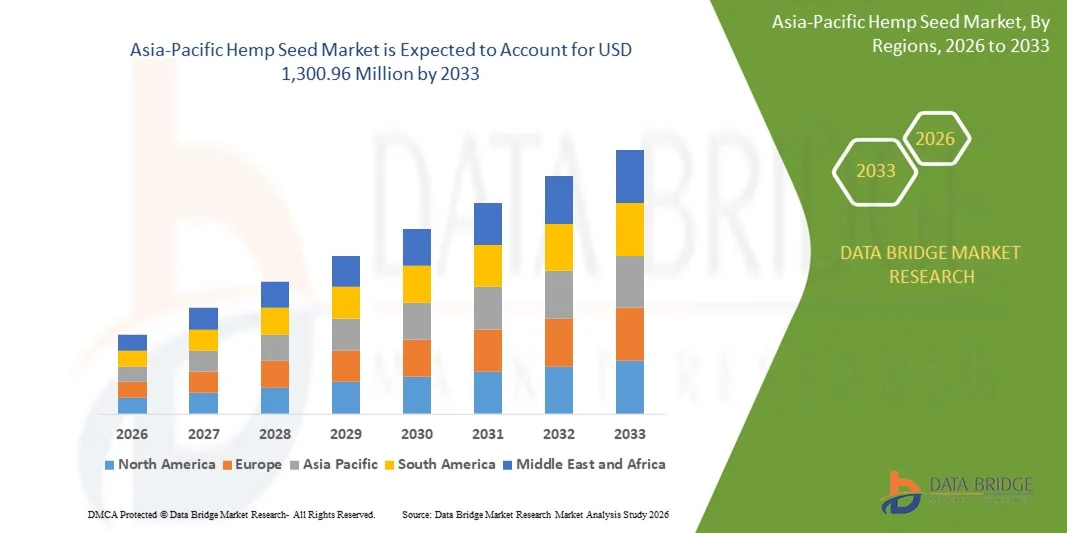
- The Asia-Pacific hemp seed market size was valued at USD 346.10 million in 2025 and is expected to reach USD 1,300.96 million by 2033, at a CAGR of 18.00% during the forecast period
- The market growth is largely fuelled by increasing awareness of hemp seeds as a nutrient-rich food source and their growing adoption in health and wellness products
- Rising demand for plant-based protein, dietary supplements, and functional foods is further boosting market expansion
Asia-Pacific Hemp Seed Market Analysis
- The market is witnessing significant growth due to increasing consumer preference for natural and organic food products, particularly in urban areas
- Growing applications of hemp seeds in food, beverages, cosmetics, and nutraceuticals are driving product diversification and market penetration
- China hemp seed market captured the largest revenue share in Asia-Pacific in 2025, fueled by rapid urbanization, a growing middle-class population, and increasing awareness of functional foods
- Japan is expected to witness the highest compound annual growth rate (CAGR) in the Asia-Pacific hemp seed market due to rising health consciousness, growing demand for plant-based nutrition, increasing adoption of functional foods and dietary supplements, and an aging population seeking nutrient-rich plant-based foods
- The regular seed segment held the largest market revenue share in 2025, driven by its widespread cultivation, higher yield potential, and suitability for multiple end-use applications such as food and nutraceutical products. Regular seeds are preferred by farmers and manufacturers for consistent quality and ease of processing
Report Scope and Asia-Pacific Hemp Seed Market Segmentation
|
Attributes |
Asia-Pacific Hemp Seed Key Market Insights |
|
Segments Covered |
|
|
Countries Covered |
Asia-Pacific
|
|
Key Market Players |
• Yunnan Hua Fang Industrial Hemp Co., Ltd (China) |
|
Market Opportunities |
|
|
Value Added Data Infosets |
In addition to the insights on market scenarios such as market value, growth rate, segmentation, geographical coverage, and major players, the market reports curated by the Data Bridge Market Research also include in-depth expert analysis, pricing analysis, brand share analysis, consumer survey, demography analysis, supply chain analysis, value chain analysis, raw material/consumables overview, vendor selection criteria, PESTLE Analysis, Porter Analysis, and regulatory framework. |
Asia-Pacific Hemp Seed Market Trends
Rising Adoption of Hemp Seeds in Food and Nutraceutical Applications
- The increasing incorporation of hemp seeds into food and nutraceutical products is transforming the Asia-Pacific market by providing a nutrient-dense, plant-based ingredient. Hemp seeds are rich in protein, omega fatty acids, and essential minerals, making them attractive for functional foods, snacks, and dietary supplements. This trend is enhancing consumer health benefits, supporting weight management, and driving market expansion across urban and semi-urban populations
- Growing demand for convenient and healthy food options in urban areas is accelerating the adoption of hemp-based ingredients. Ready-to-eat snacks, protein powders, and fortified beverages incorporating hemp seeds are gaining traction among health-conscious consumers. In addition, the rise of e-commerce platforms and health-focused retail chains is facilitating easier access to hemp-based products, further boosting consumption
- The versatility and ease of integrating hemp seeds into various product formats make them appealing for manufacturers aiming to diversify their portfolios. Hemp seeds are being used in bakery products, cereals, dairy alternatives, and beverages, boosting product innovation and availability. Manufacturers are also exploring blends with other superfoods to enhance nutritional profiles and attract premium consumers
- For instance, in 2023, food manufacturers in Australia and China launched hemp-enriched snacks and protein powders, driving strong consumer adoption and positive market response. Promotional campaigns highlighting health benefits, sustainability, and plant-based nutrition reinforced consumer confidence and accelerated sales. These launches also encouraged competitors to expand hemp-based offerings
- While the popularity of hemp seeds continues to rise, sustained growth depends on improving supply chain efficiency, processing technology, and regulatory support. Continued awareness campaigns, collaborations with health influencers, and product innovation will be crucial to maximize market potential and establish long-term consumer trust
Asia-Pacific Hemp Seed Market Dynamics
Driver
Increasing Health Consciousness and Demand for Plant-Based Nutrition
- Rising consumer awareness regarding the nutritional benefits of hemp seeds is driving market growth. Hemp seeds are increasingly recognized for their high protein content, essential fatty acids, and micronutrients, encouraging adoption in health-focused diets. The trend is further fueled by increasing fitness culture, wellness programs, and the demand for functional food ingredients in urban populations
- Consumers in urban and semi-urban areas are actively seeking plant-based alternatives to traditional protein sources. This shift is supported by increasing interest in vegan and vegetarian diets, as well as functional foods and dietary supplements. The preference for sustainable and eco-friendly products further reinforces the move toward hemp-based nutrition
- Government initiatives promoting organic farming, health nutrition, and dietary diversification are boosting hemp seed cultivation and consumption. Policies supporting plant-based nutrition and sustainable agriculture are encouraging manufacturers to expand hemp-based offerings. Supportive subsidies and incentives also lower production costs, making hemp products more affordable and widely accessible
- For instance, in 2022, the Indian government introduced incentives for hemp cultivation and processing, contributing to increased availability of hemp seeds for food and nutraceutical applications. Such initiatives are complemented by educational campaigns and research programs that promote the health benefits of hemp consumption
- While health consciousness continues to drive the market, there is a need for consistent quality standards, processing infrastructure, and public awareness to ensure sustained adoption and long-term market growth. Standardized certifications, quality testing, and stronger regulatory frameworks will be critical to maintain consumer confidence and support market expansion
Restraint/Challenge
Regulatory Restrictions and Limited Processing Infrastructure
- Strict regulatory frameworks and restrictions on hemp cultivation in certain Asia-Pacific countries limit the availability of hemp seeds. Compliance with legal standards remains a significant barrier for new entrants and existing manufacturers. These regulations can delay product launches, restrict innovation, and slow down regional market penetration
- In many regions, limited processing and value-addition infrastructure restricts the development of ready-to-use hemp-based products. The lack of advanced extraction and packaging facilities affects product quality and market penetration. Investments in cold-press extraction, protein isolation, and shelf-stable packaging are required to scale the market effectively
- Supply chain inefficiencies, including transportation and storage challenges, further hinder consistent availability of hemp seeds across urban and rural markets. These factors slow down commercialization and scalability. Seasonal cultivation cycles, coupled with logistical constraints, create supply-demand mismatches that affect product pricing and market growth
- For instance, in 2023, small-scale hemp farmers in Southeast Asia reported challenges in accessing certified processing facilities, impacting their ability to meet growing demand. Limited access to technology and quality assurance testing delayed product readiness for commercial distribution, affecting market competitiveness
- Addressing regulatory hurdles, investing in processing infrastructure, and establishing efficient distribution channels are crucial for bridging supply gaps and unlocking the full growth potential of the Asia-Pacific hemp seed market. Collaboration between governments, industry players, and research institutions will be key to creating a sustainable and scalable hemp ecosystem
Asia-Pacific Hemp Seed Market Scope
The market is segmented on the basis of seed type, category, form, and applications
- By Seed Type
On the basis of seed type, the Asia-Pacific hemp seed market is segmented into regular, auto-flowering, and feminine. The regular seed segment held the largest market revenue share in 2025, driven by its widespread cultivation, higher yield potential, and suitability for multiple end-use applications such as food and nutraceutical products. Regular seeds are preferred by farmers and manufacturers for consistent quality and ease of processing.
The auto-flowering segment is expected to witness the fastest growth rate from 2026 to 2033, driven by its shorter cultivation cycle and adaptability to diverse climatic conditions. Auto-flowering hemp seeds enable multiple harvests per year and are increasingly adopted by commercial growers to meet rising demand in food, personal care, and dietary supplement sectors.
- By Category
On the basis of category, the market is segmented into inorganic and organic. The organic segment accounted for the largest market share in 2025 due to growing consumer preference for chemical-free, sustainable, and health-oriented products. Organic hemp seeds are widely used in premium food, beverage, and personal care applications.
The inorganic segment is expected to grow steadily from 2026 to 2033, supported by large-scale commercial cultivation and competitive pricing. Inorganic hemp seeds are commonly used in animal feed, industrial applications, and cost-sensitive food products, contributing to consistent market demand.
- By Form
On the basis of form, the market is segmented into dehulled and hulled. The dehulled segment held the largest share in 2025, driven by higher digestibility, improved taste, and enhanced nutritional value, making it suitable for inclusion in snacks, bakery items, and protein powders. Dehulled seeds are increasingly preferred in functional food and dietary supplement formulations.
The hulled segment is expected to witness rapid growth from 2026 to 2033 due to its minimal processing requirements and use in raw food products, smoothies, and animal feed. Hulled hemp seeds provide an economical option for manufacturers while maintaining essential nutrients and versatility in applications.
- By Applications
On the basis of applications, the market is segmented into food, personal care, animal feed, cosmetics, beverages, dietary supplements, and others. The food segment held the largest market share in 2025, fueled by rising consumer awareness of plant-based nutrition, functional foods, and protein-rich diets. Hemp seeds are increasingly incorporated into bakery products, cereals, snacks, and dairy alternatives.
The dietary supplements segment is expected to witness the fastest growth rate from 2026 to 2033, driven by rising demand for plant-based proteins, omega fatty acids, and micronutrients. The increasing adoption of hemp seed powders, oils, and extracts in nutraceutical formulations is contributing to significant market expansion across the Asia-Pacific region.
Asia-Pacific Hemp Seed Market Regional Analysis
- China hemp seed market captured the largest revenue share in Asia-Pacific in 2025, fueled by rapid urbanization, a growing middle-class population, and increasing awareness of functional foods
- Consumers are adopting hemp seeds in bakery products, snacks, dairy alternatives, and dietary supplements due to their high protein, omega fatty acid, and micronutrient content
- Government initiatives promoting hemp cultivation and functional food development, along with strong domestic manufacturing capabilities, are driving market expansion
Japan Hemp Seed Market Insight
The Japan hemp seed market is expected to witness the fastest growth rate from 2026 to 2033, driven by rising health consciousness, increasing demand for plant-based nutrition, and the growing popularity of functional foods and dietary supplements. The integration of hemp seeds into beverages, snacks, bakery items, and nutraceutical products is gaining traction. In addition, Japan’s aging population is boosting demand for nutrient-rich, easily digestible plant-based foods, further supporting market growth.
Asia-Pacific Hemp Seed Market Share
The Asia-Pacific hemp seed industry is primarily led by well-established companies, including:
• Yunnan Hua Fang Industrial Hemp Co., Ltd (China)
• Liaoning Qiaopai Biotech Co., Ltd (China)
• Hemp Foods Australia (Australia)
• Asia‑Pacific Hemp And Grain Co (Australia)
• Tianjin Huge Roc Enterprises Co., Ltd (China)
• Sinohemp (China)
• DALIAN SPRING AGRICULTURAL PRODUCTS CO., LTD (China)
• Midlands Holdings (Australia)
• The Pahari Life (India)
• Himalayan Root (India)
• HighKeyHerb (China)
• Hemp New Zealand (New Zealand)
• ORGANICWAY (India)
• CBD Seed Co. (Australia)
• Suyash Herbs (India)

- Interactive Data Analysis Dashboard
- Company Analysis Dashboard for high growth potential opportunities
- Research Analyst Access for customization & queries
- Competitor Analysis with Interactive dashboard
- Latest News, Updates & Trend analysis
- Harness the Power of Benchmark Analysis for Comprehensive Competitor Tracking
Asia Pacific Hemp Seed Market, Supply Chain Analysis and Ecosystem Framework
To support market growth and help clients navigate the impact of geopolitical shifts, DBMR has integrated in-depth supply chain analysis into its Asia Pacific Hemp Seed Market research reports. This addition empowers clients to respond effectively to global changes affecting their industries. The supply chain analysis section includes detailed insights such as Asia Pacific Hemp Seed Market consumption and production by country, price trend analysis, the impact of tariffs and geopolitical developments, and import and export trends by country and HSN code. It also highlights major suppliers with data on production capacity and company profiles, as well as key importers and exporters. In addition to research, DBMR offers specialized supply chain consulting services backed by over a decade of experience, providing solutions like supplier discovery, supplier risk assessment, price trend analysis, impact evaluation of inflation and trade route changes, and comprehensive market trend analysis.
Data collection and base year analysis are done using data collection modules with large sample sizes. The stage includes obtaining market information or related data through various sources and strategies. It includes examining and planning all the data acquired from the past in advance. It likewise envelops the examination of information inconsistencies seen across different information sources. The market data is analysed and estimated using market statistical and coherent models. Also, market share analysis and key trend analysis are the major success factors in the market report. To know more, please request an analyst call or drop down your inquiry.
The key research methodology used by DBMR research team is data triangulation which involves data mining, analysis of the impact of data variables on the market and primary (industry expert) validation. Data models include Vendor Positioning Grid, Market Time Line Analysis, Market Overview and Guide, Company Positioning Grid, Patent Analysis, Pricing Analysis, Company Market Share Analysis, Standards of Measurement, Global versus Regional and Vendor Share Analysis. To know more about the research methodology, drop in an inquiry to speak to our industry experts.
Data Bridge Market Research is a leader in advanced formative research. We take pride in servicing our existing and new customers with data and analysis that match and suits their goal. The report can be customized to include price trend analysis of target brands understanding the market for additional countries (ask for the list of countries), clinical trial results data, literature review, refurbished market and product base analysis. Market analysis of target competitors can be analyzed from technology-based analysis to market portfolio strategies. We can add as many competitors that you require data about in the format and data style you are looking for. Our team of analysts can also provide you data in crude raw excel files pivot tables (Fact book) or can assist you in creating presentations from the data sets available in the report.













