


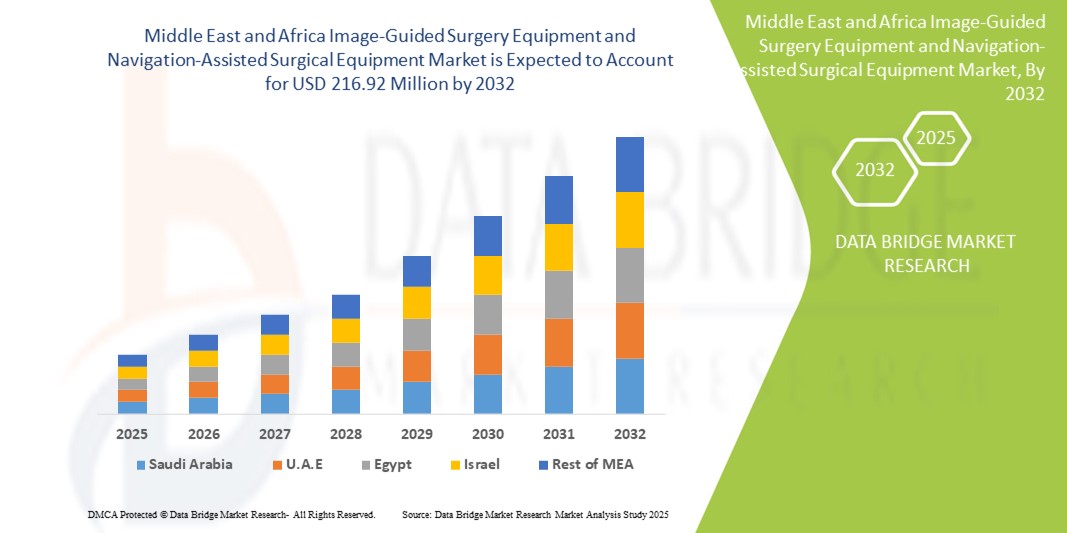
Image-Guided Surgery Equipment and Navigation-Assisted Surgical Equipment Market Size
- The Asia-Pacific image-guided surgery equipment and navigation-assisted surgical equipment market size was valued at USD 2.01 billion in 2024 and is expected to reach USD 3.83 billion by 2032, at a CAGR of 8.40% during the forecast period
- The market growth is largely fueled by the growing adoption of advanced surgical technologies and ongoing innovations in image-guided and navigation-assisted systems, leading to enhanced precision, reduced procedural risks, and improved patient outcomes in both hospital and outpatient settings
- Furthermore, rising demand from healthcare providers for minimally invasive procedures, higher surgical accuracy, and real-time intraoperative guidance is accelerating the adoption of Image-Guided Surgery Equipment and Navigation-Assisted Surgical Equipment solutions. Integration with robotics, AI-based analytics, and advanced imaging modalities is further enhancing procedural efficiency. These converging factors are significantly boosting the industry's growth and driving investments in the development and deployment of next-generation surgical navigation technologies
Image-Guided Surgery Equipment and Navigation-Assisted Surgical Equipment Market Analysis
- Image-Guided Surgery Equipment and Navigation-Assisted Surgical Equipment (IGS & NAS) are increasingly critical in modern surgical procedures, offering enhanced precision, reduced invasiveness, and improved patient outcomes across neurosurgery, orthopedic surgery, and ENT procedures. These technologies assist surgeons with real-time imaging, navigation, and positioning, reducing surgical errors and improving procedural efficiency
- The escalating demand for IGS & NAS equipment is primarily fueled by the rising prevalence of chronic diseases, an aging population, and the growing adoption of minimally invasive surgical procedures. In addition, increasing investments in hospital infrastructure, technological advancements, and rising awareness about the benefits of navigation-assisted surgeries are driving market growth
- Japan dominated the image-guided surgery equipment and navigation-assisted surgical equipment market with the largest revenue share of 44.3% in 2024, driven by early adoption of advanced surgical technologies, a highly developed healthcare infrastructure, and strong government support for precision medicine
- China is expected to be the fastest-growing country in the image-guided surgery equipment and navigation-assisted surgical equipment market, with a CAGR of 10.2% from 2025 to 2032, driven by increasing healthcare expenditure, rising patient awareness, and rapid expansion of hospitals and diagnostic centers
- The reusable segment dominated the image-guided surgery equipment and navigation-assisted surgical equipment market with a market revenue share of 61.5% in 2024, as reusable instruments and devices offer long-term cost efficiency and sustainability for hospitals
Report Scope and Image-Guided Surgery Equipment and Navigation-Assisted Surgical Equipment Market Segmentation
|
Attributes |
Image-Guided Surgery Equipment and Navigation-Assisted Surgical Equipment Key Market Insights |
|
Segments Covered |
|
|
Countries Covered |
Asia-Pacific
|
|
Key Market Players |
|
|
Market Opportunities |
|
|
Value Added Data Infosets |
In addition to the insights on market scenarios such as market value, growth rate, segmentation, geographical coverage, and major players, the market reports curated by the Data Bridge Market Research also include in-depth expert analysis, pricing analysis, brand share analysis, consumer survey, demography analysis, supply chain analysis, value chain analysis, raw material/consumables overview, vendor selection criteria, PESTLE Analysis, Porter Analysis, and regulatory framework. |
Image-Guided Surgery Equipment and Navigation-Assisted Surgical Equipment Market Trends
Growing Adoption of Precision and Minimally Invasive Surgical Procedures
- A significant and accelerating trend in the Japan Image-Guided Surgery Equipment and Navigation-Assisted Surgical Equipment market is the rising adoption of precision and minimally invasive surgical procedures across hospitals and specialty clinics. Surgeons are increasingly relying on advanced imaging and navigation-assisted systems to improve accuracy, reduce complications, and enhance patient recovery
- For instance, hospitals in Tokyo and Osaka have integrated advanced navigation-assisted orthopedic and neurosurgical equipment, enabling complex procedures such as spinal fusions and cranial tumor resections with improved precision. These systems provide real-time 3D imaging and instrument tracking, allowing surgeons to operate with higher confidence and reduced intraoperative risk
- Navigation-assisted surgical equipment enables features such as improved anatomical visualization, enhanced surgical planning, and intraoperative guidance, which significantly reduce errors and operative time. These benefits have led to higher adoption rates among high-volume surgical centers and academic hospitals
- The integration of image-guided and navigation-assisted equipment with hospital information systems and PACS (Picture Archiving and Communication Systems) allows centralized monitoring, streamlined workflow, and improved surgical efficiency. Surgeons and radiologists can collaborate more effectively, enhancing procedural outcomes and patient safety
- Manufacturers are introducing modular and customizable IGS & NAS solutions, enabling healthcare facilities to upgrade or expand systems as needed. This adaptability ensures that hospitals can adopt advanced technology without complete system overhauls, reducing capital expenditure
- The trend toward precision-guided surgeries is fundamentally reshaping clinical expectations and standards of care. As a result, hospitals and specialty clinics prioritize investments in navigation-assisted systems to enhance their reputation, attract skilled surgeons, and provide superior patient care
- The demand for image-guided and navigation-assisted surgical equipment is growing rapidly in both public and private healthcare sectors, as institutions increasingly prioritize surgical accuracy, reduced patient recovery time, and improved clinical outcomes
Image-Guided Surgery Equipment and Navigation-Assisted Surgical Equipment Market Dynamics
Driver
Growing Need Due to Rising Demand for Precision and Minimally Invasive Surgeries
- The increasing adoption of precision-guided and minimally invasive surgical procedures across hospitals and specialty clinics is a significant driver for the heightened demand for Image-Guided Surgery Equipment and Navigation-Assisted Surgical Equipment
- For instance, in March 2024, a leading Japanese medical device manufacturer announced the expansion of its navigation-assisted orthopedic surgery solutions, incorporating enhanced imaging and instrument tracking capabilities. Such strategic advancements by key companies are expected to drive the IGS & NAS market growth during the forecast period
- As hospitals and surgical centers seek to improve procedural accuracy, reduce complications, and enhance patient recovery, navigation-assisted surgical systems offer advanced features such as real-time 3D imaging, intraoperative guidance, and improved anatomical visualization, providing a compelling upgrade over conventional surgical tools
- Furthermore, the growing emphasis on complex procedures in neurosurgery, orthopedics, and cardiovascular interventions is increasing the adoption of image-guided systems, enabling surgeons to perform high-precision operations with reduced intraoperative risk
- The integration of IGS & NAS systems with hospital information networks, PACS, and surgical planning software facilitates streamlined workflows, collaboration between surgical teams, and centralized monitoring, supporting overall operational efficiency in medical facilities
- The convenience of modular, scalable, and customizable systems allows hospitals to expand capabilities without full system replacement, providing cost-effective solutions for high-volume surgical centers and specialty hospitals
- The trend toward minimally invasive and high-precision surgeries is fundamentally reshaping clinical expectations and standards of care. Hospitals prioritize investments in navigation-assisted equipment to enhance clinical outcomes, attract skilled surgeons, and improve patient satisfaction
- The demand for Image-Guided Surgery Equipment and Navigation-Assisted Surgical Equipment is growing rapidly across both public and private healthcare institutions, driven by the focus on enhanced surgical precision, reduced recovery time, and improved overall healthcare quality
Restraint/Challenge
High Initial Costs and Infrastructure Requirements
- The high initial investment required for advanced image-guided and navigation-assisted surgical equipment poses a challenge for adoption, particularly among smaller healthcare facilities and hospitals in developing regions. Procurement costs for the hardware, software, and maintenance are substantial
- In addition, specialized training is required for surgeons and operating room staff to effectively use these systems, which can delay adoption and increase operational costs
- While technological advancements have made the systems more efficient and reliable, budget constraints and limited reimbursement policies in some regions can hinder widespread deployment
- Upgrading existing surgical infrastructure to integrate these advanced systems often requires modifications to operating rooms and IT networks, further adding to the costs
- Despite these challenges, ongoing efforts to improve affordability, provide structured training programs, and offer flexible financing solutions are expected to support market expansion. Collaborative initiatives between equipment manufacturers and healthcare providers are helping mitigate cost barriers and streamline integration
- Overcoming these challenges through cost-effective solutions, government incentives, and targeted training programs will be vital for sustaining growth in the Image-Guided Surgery Equipment and Navigation-Assisted Surgical Equipment market
Image-Guided Surgery Equipment and Navigation-Assisted Surgical Equipment Market Scope
The market is segmented on the basis of type, application, procedure type, work flow, usability, modality, end user, and distribution channel.
- By Type
On the basis of type, the image-guided surgery equipment and navigation-assisted surgical equipment market is segmented into systems, instruments and accessories, and services and software. The systems segment held the largest market revenue share in 2024, accounting for 48.3%, driven by its ability to provide comprehensive, integrated solutions that combine imaging, navigation, and procedural guidance. Hospitals and surgical centers prefer systems as they enable accurate real-time decision-making, reduce surgical errors, and improve intraoperative precision. Systems are particularly essential in complex surgeries like neurology, spine, and orthopedic interventions, where precision is critical. The integration with robotic platforms and AI-driven analytics further enhances operational efficiency.
The instruments and accessories segment is expected to witness the fastest CAGR of 11.2% from 2025 to 2032, fueled by growing demand for procedure-specific tools compatible with multiple systems. Hospitals seek specialized instruments for neurosurgery, orthopedics, and minimally invasive procedures to enhance precision and ergonomics. These instruments provide better tactile feedback, surgeon comfort, and compatibility with navigation software. Technological innovations like smart sensors and modular designs enhance efficiency and safety. Instruments are often upgraded more frequently than systems, creating recurring demand.
- By Application
On the basis of application, the image-guided surgery equipment and navigation-assisted surgical equipment market is segmented into neurology, otorhinolaryngology, cardiology, spine surgery, orthopedic trauma surgery, urology, oral-maxillofacial medicine and dentistry, oncology, gynecology, thoracic surgery, abdominal surgery, ophthalmology, respiratory, minimally invasive revascularization surgery, and other surgeries. The spine surgery segment dominated with a revenue share of 22.5% in 2024, supported by increasing cases of spinal disorders, trauma, and degenerative conditions in aging populations. Image-guided and navigation-assisted systems enhance precision in screw placement, vertebral alignment, and nerve protection. Minimally invasive spine procedures rely heavily on real-time guidance, which reduces complications, shortens operative time, and improves patient outcomes. Hospitals benefit from standardized procedures, higher throughput, and improved patient satisfaction.
The neurosurgery segment is expected to register the fastest CAGR of 12.1% from 2025 to 2032, driven by rising incidence of brain and central nervous system disorders and adoption of advanced navigation-assisted systems. Real-time imaging, 3D visualization, and AI-driven planning improve surgical precision and reduce intraoperative risks. Integration with robotic platforms accelerates minimally invasive neurosurgical procedures. Investment in research hospitals, specialized training programs, and growing awareness of advanced neurosurgical options are supporting rapid growth. Government initiatives promoting healthcare innovation in countries such as China, Japan, and India also play a key role. Increasing patient demand for safe, minimally invasive brain procedures fuels expansion in this segment.
- By Procedure Type
On the basis of procedure type, the image-guided surgery equipment and navigation-assisted surgical equipment market is segmented into minimally invasive and open surgery. The minimally invasive segment dominated with a 56.8% market share in 2024, as these procedures reduce hospital stays, lower infection risks, and accelerate recovery. Surgeons rely on navigation-assisted systems for enhanced precision in small operative fields during spine, orthopedic, and cardiovascular procedures. Hospitals benefit from lower postoperative costs, higher patient throughput, and improved outcomes. Technological innovations like 3D visualization and augmented reality overlays strengthen adoption.
The open surgery segment is expected to witness the fastest CAGR of 10.5% from 2025 to 2032, driven by complex surgical cases requiring open approaches that benefit from navigation-assisted systems. These systems enhance accuracy in large anatomical fields, particularly in oncology and orthopedic procedures. Hospitals adopt these solutions to reduce intraoperative errors, blood loss, and recovery time. Integration with hybrid operating rooms, augmented guidance, and advanced imaging supports adoption. Rising healthcare spending, surgical center expansion, and technological innovations in APAC fuel growth. Surgeons benefit from improved precision and workflow optimization.
- By Work Flow
On the basis of work flow, the image-guided surgery equipment and navigation-assisted surgical equipment market is segmented into surgical procedures, preoperative imaging, and surgical planning. The surgical procedures segment dominated the market in 2024, holding a revenue share of 49.2%, as the use of image-guided and navigation-assisted systems directly during surgery ensures real-time precision and reduces the risk of complications. Hospitals and surgical centers prioritize systems that seamlessly integrate with intraoperative imaging, robotic assistance, and navigation technologies. Dominance is driven by high surgical volumes in spine, orthopedic, and neurosurgical interventions, where accuracy is critical. These systems enhance patient safety, reduce operative time, and allow minimally invasive approaches.
The surgical planning segment is expected to witness the fastest CAGR of 11.8% from 2025 to 2032, fueled by growing demand for preoperative planning tools that optimize surgical accuracy. Advanced planning systems enable virtual simulation of procedures, risk assessment, and customized surgical approaches. Hospitals and specialized centers increasingly adopt these solutions for complex procedures, including neurosurgery and orthopedic trauma surgery. Integration with PACS, EMR, and AI-driven analytics enhances efficiency and reduces intraoperative surprises. APAC’s rising investment in healthcare IT infrastructure, along with the adoption of advanced imaging technologies in tier-2 and tier-3 cities, accelerates growth. Surgeons benefit from reduced errors, optimized incision planning, and better patient outcomes.
- By Usability
On the basis of usability, the image-guided surgery equipment and navigation-assisted surgical equipment market is segmented into reusable and non-reusable. The reusable segment held the largest market revenue share of 61.5% in 2024, as reusable instruments and devices offer long-term cost efficiency and sustainability for hospitals. These devices are compatible with multiple procedures, reducing the need for frequent procurement, and are sterilizable, ensuring compliance with strict infection control standards. Hospitals and surgical centers prioritize reusable equipment for high-volume procedures in spine, neurosurgery, and orthopedic interventions. The segment’s dominance is reinforced by long-term contracts with manufacturers, reduced operational costs, and the ability to integrate with advanced navigation systems. APAC hospitals increasingly prefer reusable devices for both open and minimally invasive procedures. Surgeons appreciate the reliability, precision, and ergonomic design of reusable instruments.
The non-reusable segment is expected to witness the fastest CAGR of 12.3% from 2025 to 2032, driven by rising demand for single-use instruments to minimize infection risk and streamline workflow. Hospitals increasingly adopt disposable tools for high-risk surgeries, reducing sterilization requirements and turnaround times. Non-reusable devices are favored for specialized procedures in neurosurgery, oncology, and minimally invasive interventions. The segment benefits from technological advances in lightweight, single-use materials and integrated sensors. APAC’s expanding surgical infrastructure, growing awareness of infection prevention, and regulatory support for disposable instruments fuel rapid adoption. Surgeons value convenience, hygiene, and ease of use, particularly in outpatient and ambulatory surgical centers.
- By Modality
On the basis of modality, the image-guided surgery equipment and navigation-assisted surgical equipment market is segmented into portable, compact, standalone, and handheld. The standalone segment dominated with a 52.7% revenue share in 2024, as standalone systems provide comprehensive navigation and imaging capabilities within a single platform. Hospitals and surgical centers prefer these systems for complex procedures requiring high precision and multi-procedure adaptability. Standalone systems integrate well with robotic platforms, PACS, and intraoperative imaging devices, enhancing workflow and patient safety.
The handheld segment is expected to witness the fastest CAGR of 13.0% from 2025 to 2032, fueled by demand for compact, user-friendly devices that allow precise navigation in confined surgical areas. Handheld modalities are increasingly used in minimally invasive procedures, allowing surgeons enhanced dexterity and real-time imaging feedback. APAC’s growing adoption of outpatient surgeries and procedure-specific interventions supports segment growth. Lightweight design, intuitive interface, and integration with mobile planning software make handheld devices appealing for hospitals with limited space.
- By End User
On the basis of end user, the image-guided surgery equipment and navigation-assisted surgical equipment market is segmented into hospitals, ambulatory surgical centers, cardiac cath labs, clinics, and others. The hospitals segment dominated with a 63.4% revenue share in 2024, driven by high surgical volumes, advanced infrastructure, and capability to perform complex procedures requiring navigation-assisted systems. Hospitals benefit from integration of imaging, planning, and surgical workflow optimization, improving patient outcomes and efficiency. Dominance is reinforced by government funding, private hospital investments, and partnerships with global RIS and navigation system providers. High adoption in neurosurgery, orthopedic, and cardiology interventions further strengthens the segment. Surgeons and administrators prioritize accuracy, safety, and scalability of systems.
The ambulatory surgical centers segment is expected to witness the fastest CAGR of 12.7% from 2025 to 2032, fueled by the growing number of outpatient surgeries and minimally invasive interventions. These centers increasingly adopt compact and handheld navigation-assisted devices to improve precision and patient throughput. APAC’s expanding surgical infrastructure, government support for outpatient care, and rising awareness about minimally invasive procedures contribute to rapid growth. Surgeons benefit from enhanced workflow, reduced operation time, and improved procedural safety. Integration with imaging and planning software supports efficiency. Cost-effective adoption, space optimization, and growing patient preference for outpatient procedures further accelerate segment growth.
- By Distribution Channel
On the basis of distribution channel, the image-guided surgery equipment and navigation-assisted surgical equipment market is segmented into direct tender and retail sales. The direct tender segment dominated with a 57.8% revenue share in 2024, as hospitals and surgical centers prefer bulk procurement contracts that ensure consistent supply, favorable pricing, and post-sales support. Direct tender agreements facilitate long-term planning, maintenance, and training programs, ensuring maximal utilization of navigation-assisted systems. Dominance is fueled by high-value purchases for neurosurgery, spine, and orthopedic applications. Manufacturers benefit from predictable revenue and deeper engagement with institutional clients.
The retail sales segment is expected to witness the fastest CAGR of 11.9% from 2025 to 2032, driven by small clinics and outpatient centers purchasing standalone or compact navigation-assisted devices. Growth is fueled by increasing awareness of advanced surgical technologies and the rising availability of user-friendly systems through specialized distributors. APAC’s emerging hospitals and surgical centers in tier-2 and tier-3 cities are adopting retail-purchased systems for cost efficiency. Manufacturers are expanding retail channels to reach smaller healthcare providers. Surgeons benefit from direct access to technology without complex procurement, enhancing procedural efficiency and patient care.
Image-Guided Surgery Equipment and Navigation-Assisted Surgical Equipment Market Regional Analysis
- The Asia-Pacific image-guided surgery equipment and navigation-assisted surgical equipment market is poised to grow at a CAGR of during the forecast period of 2025 to 2032, driven by increasing urbanization, rising healthcare expenditure, and rapid expansion of modern hospitals and diagnostic centers
- Technological advancements in surgical imaging, navigation-assisted systems, and minimally invasive procedures are key factors propelling market growth. The region is witnessing a surge in investments toward precision medicine, orthopedic and neurological care, and advanced surgical infrastructure
- Growing patient awareness, demand for improved surgical outcomes, and adoption of image-guided technologies in both public and private healthcare facilities are further boosting market expansion
Japan Image-Guided Surgery Equipment and Navigation-Assisted Surgical Equipment Market Insight
The Japan image-guided surgery equipment and navigation-assisted surgical equipment market dominated the Asia-pacific market with the largest revenue share of 44.3% in 2024, driven by early adoption of advanced surgical technologies, a highly developed healthcare infrastructure, and strong government support for precision medicine. Japanese hospitals and specialized surgical centers actively implement navigation-assisted systems to improve surgical accuracy, reduce operative risks, and enhance patient outcomes. The presence of leading medical technology companies, robust R&D capabilities, and high patient demand for minimally invasive procedures further reinforce Japan’s leadership in the market. Additionally, Japan’s focus on surgical training, integration of advanced imaging modalities, and commitment to innovation in healthcare delivery contribute significantly to market dominance.
China Image-Guided Surgery Equipment and Navigation-Assisted Surgical Equipment Market Insight
The China image-guided surgery equipment and navigation-assisted surgical equipment market is expected to be the fastest-growing country in the Asia-pacific market, with a CAGR of 10.2% from 2025 to 2032. This growth is fueled by increasing healthcare expenditure, rising patient awareness, and rapid expansion of hospitals and diagnostic centers. Government initiatives promoting precision medicine, collaborations between local manufacturers and global technology providers, and a large patient population with orthopedic and neurological disorders are accelerating adoption. The rising number of minimally invasive surgical procedures, along with investments in advanced imaging and navigation systems, supports the rapid expansion of the market. Additionally, development of modern surgical facilities in tier-2 and tier-3 cities, combined with increasing medical insurance coverage, further drives market penetration.
Image-Guided Surgery Equipment and Navigation-Assisted Surgical Equipment Market Share
The image-guided surgery equipment and navigation-assisted surgical equipment industry is primarily led by well-established companies, including:
- Brainlab (Germany)
- General Electric Company (U.S.)
- Medion (Germany)
- Stereotaxis, Inc. (U.S.)
- Renishaw plc. (U.K.)
- Intuitive Surgical (U.S.)
- Zimmer Biomet (U.S.)
- Siemens Healthineers AG (Germany)
- Medtronic (Ireland)
- Hitachi Ltd. (Japan)
- Integra LifeSciences Corporation (U.S.)
- Smith+ Nephew (U.K.)
- Koninklijke Philips N.V. (Netherlands)
- ICU Medical, Inc. (U.S.)
- Stryker (U.S.)
- Johnson & Johnson and its affiliates (U.S.)
Latest Developments in Asia-Pacific Image-Guided Surgery Equipment and Navigation-Assisted Surgical Equipment Market
- In March 2025, CMR Surgical, a UK-based surgical robotics company, explored a potential USD4 billion sale. The company secured an additional USD 200 million in funding following FDA approval of its Versius Surgical System for gallbladder surgeries in the U.S. Versius has been used in over 30,000 surgical cases across 30 countries and is undergoing further approval processes in major Asian markets
- In May 2025, surgeons at Sancheti Hospital in Pune, India, successfully utilized advanced navigation-guided endoscopic technology to perform minimally invasive spine surgeries. This innovative technique incorporated real-time 3D mapping and infrared-guided trackers, significantly reducing radiation exposure and eliminating the need for post-operative CT or MRI scans. The method proved effective for treating conditions such as large lumbar disc extrusions, with patients experiencing swift recovery

- Interactive Data Analysis Dashboard
- Company Analysis Dashboard for high growth potential opportunities
- Research Analyst Access for customization & queries
- Competitor Analysis with Interactive dashboard
- Latest News, Updates & Trend analysis
- Harness the Power of Benchmark Analysis for Comprehensive Competitor Tracking
Data collection and base year analysis are done using data collection modules with large sample sizes. The stage includes obtaining market information or related data through various sources and strategies. It includes examining and planning all the data acquired from the past in advance. It likewise envelops the examination of information inconsistencies seen across different information sources. The market data is analysed and estimated using market statistical and coherent models. Also, market share analysis and key trend analysis are the major success factors in the market report. To know more, please request an analyst call or drop down your inquiry.
The key research methodology used by DBMR research team is data triangulation which involves data mining, analysis of the impact of data variables on the market and primary (industry expert) validation. Data models include Vendor Positioning Grid, Market Time Line Analysis, Market Overview and Guide, Company Positioning Grid, Patent Analysis, Pricing Analysis, Company Market Share Analysis, Standards of Measurement, Global versus Regional and Vendor Share Analysis. To know more about the research methodology, drop in an inquiry to speak to our industry experts.
Data Bridge Market Research is a leader in advanced formative research. We take pride in servicing our existing and new customers with data and analysis that match and suits their goal. The report can be customized to include price trend analysis of target brands understanding the market for additional countries (ask for the list of countries), clinical trial results data, literature review, refurbished market and product base analysis. Market analysis of target competitors can be analyzed from technology-based analysis to market portfolio strategies. We can add as many competitors that you require data about in the format and data style you are looking for. Our team of analysts can also provide you data in crude raw excel files pivot tables (Fact book) or can assist you in creating presentations from the data sets available in the report.













