


What is the Asia-Pacific Interstitial Cystitis Market Size and Growth Rate ?
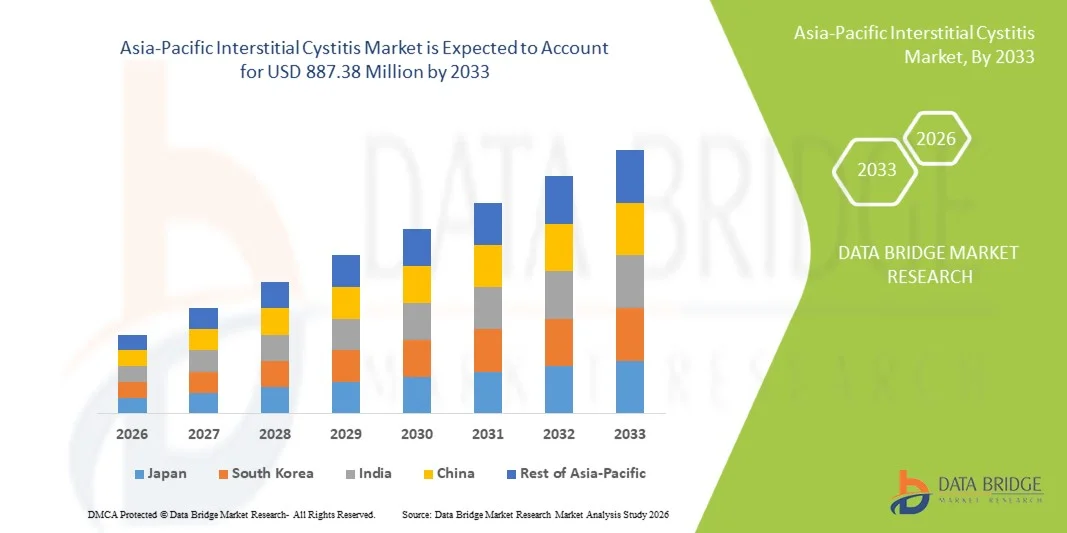
- As per Data Bridge Market Research Analysis the Asia-Pacific Interstitial Cystitis Market size was valued at USD 355.85 Million in 2025 and is expected to reach USD 887.38 Million by 2033, at a CAGR of 12.10% during the forecast period
- The market growth is largely fueled by the rising prevalence of chronic bladder pain syndrome, increasing awareness regarding early diagnosis of urinary disorders, and continuous advancements in treatment options, leading to improved patient management across hospitals and specialty urology centers
- Furthermore, growing demand for effective pain management therapies, increasing focus on improving quality of life for patients, and expanding access to minimally invasive treatment solutions are establishing Interstitial Cystitis solutions as an important component of modern urology care. These converging factors are accelerating the uptake of Interstitial Cystitis solutions, thereby significantly boosting the industry's growth
Market Size & Forecast
- Global Market Value (2025): USD 355.85 Million
- Expected Market Value (2033): USD 887.38 Million
- Forecast CAGR (2026–2033): 12.10%
What are the Major Takeaways of Asia-Pacific Interstitial Cystitis Market ?
- Interstitial Cystitis solutions, including oral therapies, bladder instillations, neuromodulation devices, pelvic floor therapy, and pain management treatments, are increasingly vital components of modern urology care due to their role in reducing chronic bladder pain, urinary urgency, and improving patient quality of life
- The escalating demand for Interstitial Cystitis solutions is primarily fueled by the rising prevalence of chronic pelvic pain disorders, growing awareness regarding bladder health, increasing diagnosis rates among women, and continuous advancements in targeted therapeutic approaches
- China dominated the Asia-Pacific Interstitial Cystitis Market in Asia-Pacific with the largest revenue share of approximately 36.7% in 2025, characterized by expanding healthcare infrastructure, rising awareness levels, growing presence of pharmaceutical companies, increasing diagnosis rates, and improving patient access to specialized urology care across major urban centers
- India is expected to be the fastest-growing market in the Interstitial Cystitis sector during the forecast period, projected to register a CAGR of approximately 9.1%, due to improving healthcare infrastructure, rising awareness of chronic bladder disorders, growing healthcare expenditure, increasing female patient population, and expanding access to advanced diagnostic and treatment options
- The adults segment dominated the largest market revenue share of 88.5% in 2025, driven by significantly higher diagnosis prevalence among adult populations, particularly women
Report Scope and Asia-Pacific Interstitial Cystitis Market Segmentation
|
Attributes |
Interstitial Cystitis Key Market Insights |
|
Segments Covered |
|
|
Countries Covered |
Asia-Pacific
|
|
Key Market Players |
|
|
Market Opportunities |
|
|
Value Added Data Infosets |
In addition to the insights on market scenarios such as market value, growth rate, segmentation, geographical coverage, and major players, the market reports curated by the Data Bridge Market Research also include in-depth expert analysis, patient epidemiology, pipeline analysis, pricing analysis, and regulatory framework. |
What is the Key Trend in the Asia-Pacific Interstitial Cystitis Market ?
“Rising Awareness, Improved Diagnosis, and Expansion of Multimodal Therapies”
- A significant and accelerating trend in the Asia-Pacific Interstitial Cystitis Market is the growing awareness of chronic bladder pain disorders and the increasing rate of diagnosis of interstitial cystitis/bladder pain syndrome (IC/BPS). Greater patient education, advocacy initiatives, and improved recognition among urologists and gynecologists are helping identify previously undiagnosed cases
- For instance, therapies such as pentosan polysulfate sodium, bladder instillation treatments, neuromodulation devices, antihistamines, and pelvic floor physical therapy are increasingly used in combination to manage symptoms such as pelvic pain, urinary urgency, and frequent urination. Leading healthcare centers in the United States and Canada are adopting individualized treatment pathways to improve long-term patient outcomes
- Advancements in diagnostic approaches, including cystoscopy, symptom scoring systems, urine testing, and exclusion-based clinical evaluation, are enabling earlier and more accurate differentiation of interstitial cystitis from urinary tract infections, overactive bladder, and gynecologic conditions
- Another important trend is the increasing adoption of multimodal and personalized treatment strategies, where physicians combine oral medications, behavioral therapy, dietary modification, stress management, and procedural interventions based on disease severity and patient response
- The region is also witnessing greater investment in research focused on novel pain management therapies, regenerative medicine, and biomarker discovery aimed at improving disease understanding and reducing delays in diagnosis
- Demand for effective, long-term, and quality-of-life-focused treatment options is rising steadily across Asia-Pacific as more patients seek specialized care for chronic bladder pain conditions
Asia-Pacific Interstitial Cystitis Market Dynamics
Driver
“Growing Need Due to Rising Prevalence of Chronic Pelvic Pain Disorders and Strong Healthcare Access”
- The increasing prevalence of chronic pelvic pain disorders, urinary dysfunction conditions, and associated women’s health concerns is a major driver for the Asia-Pacific Interstitial Cystitis Market. Strong healthcare infrastructure and better access to specialists are supporting higher diagnosis and treatment rates
- For instance, the United States has a large patient population seeking care for unexplained bladder pain and urinary urgency, while Canadian healthcare systems are expanding access to urology and pain management services. These factors are expected to drive market growth during the forecast period
- As awareness grows among primary care physicians and specialists, more patients are being referred for evaluation and long-term symptom management, thereby increasing demand for pharmaceuticals, procedures, and supportive therapies
- Growing acceptance of minimally invasive therapies such as sacral nerve stimulation, bladder hydrodistension, and intravesical instillation treatments is further supporting market expansion
- In addition, increasing mental health awareness related to chronic pain disorders is encouraging integrated care models that combine physical and psychological support, improving treatment adherence and patient satisfaction
Restraint/Challenge
“Complex Diagnosis, Limited Curative Options, and High Treatment Burden”
- Interstitial cystitis remains difficult to diagnose because symptoms often overlap with urinary tract infections, endometriosis, overactive bladder, and prostatitis. This diagnostic complexity can delay treatment initiation and frustrate patients
- For instance, many patients undergo multiple consultations and repeated testing before receiving a confirmed diagnosis, leading to prolonged discomfort and increased healthcare costs. Delayed diagnosis remains a key challenge across the region
- Another major restraint is the lack of a universally effective curative therapy. Most available treatments focus on symptom control rather than disease resolution, and patient response can vary significantly
- Long-term management may also require multiple medications, dietary restrictions, physical therapy sessions, and repeat procedures, creating financial and emotional burdens for patients
- Safety concerns related to prolonged medication use and inconsistent insurance coverage for certain therapies can further limit treatment uptake
- Overcoming these barriers through faster diagnostics, broader reimbursement support, patient-centered care pathways, and development of targeted next-generation therapies will be vital for sustained market growth
How is the Asia-Pacific Interstitial Cystitis Market Segmented ?
The market is segmented on the basis of severity, treatment type, route of administration, mode of purchase, patient type, end user, and distribution channel.
• By Severity
On the basis of severity, the Asia-Pacific Interstitial Cystitis Market is segmented into mild to moderate and moderate to severe. The mild to moderate segment dominated the largest market revenue share of 58.3% in 2025, driven by the higher proportion of diagnosed patients presenting early-stage symptoms such as pelvic discomfort, urinary urgency, and frequency. Many patients seek treatment during initial symptom progression, leading to greater prescription volumes and routine follow-up care. Rising awareness campaigns and improved diagnosis rates support early intervention. Primary care physicians increasingly refer suspected patients to specialists. Oral medications and lifestyle management are commonly used in this stage. Lower hospitalization requirements also support outpatient treatment demand. Women represent a significant diagnosed population, further boosting segment size. Expanding healthcare access in developing countries supports earlier detection. Recurrent but manageable symptoms generate recurring therapy demand. Digital symptom tracking tools are improving treatment continuity. Insurance coverage for early-stage management supports utilization. These factors sustain segment dominance globally.
The moderate to severe segment is projected to grow at the fastest CAGR of 9.7% from 2026 to 2033, owing to rising recognition of chronic untreated cases and demand for advanced therapies. Patients with severe pain and bladder dysfunction often require multi-modal treatment strategies. Growing specialist referrals are increasing diagnosis of complex cases. Bladder instillations, nerve stimulation, and surgical interventions support revenue growth. Improved awareness among urologists is reducing underdiagnosis rates. Aging populations are contributing to chronic disease burden. New pain management approaches are expanding treatment options. Hospitals are investing in advanced urology care programs. Better reimbursement for complex procedures supports uptake. Rising patient advocacy initiatives encourage timely treatment seeking. Expansion of specialty clinics further accelerates care access. These factors drive fastest segment growth.
• By Treatment Type
On the basis of treatment type, the Asia-Pacific Interstitial Cystitis Market is segmented into medication, bladder instillations, botulinum toxin A, nerve stimulation, and surgery. The medication segment accounted for the largest market revenue share of 46.9% in 2025, driven by its position as first-line therapy for symptom relief and long-term disease management. Oral pain relievers, antihistamines, and bladder-protective agents are widely prescribed. Medication remains the most accessible treatment option across regions. Physicians prefer pharmacological management before invasive procedures. Recurring prescriptions generate stable market demand. Increasing patient awareness supports earlier treatment initiation. Retail pharmacy availability improves access to therapy. Expansion of generic options enhances affordability. Combination drug regimens are gaining popularity for persistent symptoms. Teleconsultation services are supporting refill continuity. Strong outpatient treatment trends reinforce segment leadership. These factors maintain dominance worldwide.
The nerve stimulation segment is projected to grow at the fastest CAGR of 10.8% from 2026 to 2033, owing to rising adoption of neuromodulation therapies for refractory cases. Patients unresponsive to conventional medications increasingly seek advanced symptom control solutions. Sacral nerve stimulation has shown promising clinical outcomes. Minimally invasive treatment preference is supporting adoption. Hospitals are expanding functional urology programs globally. Technological advancements are improving device precision and patient comfort. Greater physician familiarity is increasing recommendation rates. Chronic pain management trends also support demand. Favorable reimbursement in developed markets boosts procedures. Rising severe case diagnosis strengthens candidate pool. Research into next-generation stimulation systems supports innovation. These factors accelerate rapid growth.
• By Route Of Administration
On the basis of route of administration, the Asia-Pacific Interstitial Cystitis Market is segmented into oral, parenteral, intravesical, topical, and others. The oral segment held the largest market revenue share of 51.6% in 2025, driven by convenience, ease of long-term use, and broad physician preference. Most first-line therapies are administered orally for symptom management. Patients favor tablets and capsules for home-based treatment. Lower administration costs compared with procedures support adoption. High prescription renewal rates create recurring demand. Strong pharmacy networks improve accessibility globally. Oral therapy is commonly used in mild to moderate disease. Improved adherence through once-daily formulations supports outcomes. Generic availability enhances affordability in emerging markets. Telemedicine prescribing trends further support use. Physicians often combine oral therapies with behavioral management. These factors sustain segment leadership.
The intravesical segment is projected to grow at the fastest CAGR of 11.2% from 2026 to 2033, owing to increasing demand for targeted bladder therapies in persistent disease. Intravesical administration delivers medication directly to the bladder lining. This approach can improve local efficacy while reducing systemic exposure. Urology specialists increasingly recommend instillation therapies for refractory symptoms. Rising severe patient populations support demand growth. Hospital and clinic procedure capacity is expanding. Improved catheter technologies enhance patient comfort. New formulations are being developed for sustained release. Greater awareness among patients is improving acceptance. Insurance support for specialty procedures aids uptake. Research into regenerative bladder therapies adds momentum. These factors drive fastest CAGR expansion.
• By Mode Of Purchase
On the basis of mode of purchase, the Asia-Pacific Interstitial Cystitis Market is segmented into over the counter and prescription. The prescription segment accounted for the largest revenue share of 67.8% in 2025, driven by the need for physician-guided treatment and specialized medications. Most effective therapies for interstitial cystitis require formal diagnosis and monitoring. Urologists often tailor treatment based on symptom severity. Chronic patients rely on repeat prescriptions for ongoing management. Insurance reimbursement commonly favors prescribed therapies. Rising specialist consultations support segment demand. Prescription channels ensure safer use of pain medications. Hospitals and clinics remain major sources of treatment initiation. Expanding digital prescription systems improve convenience. Better diagnostic awareness is increasing treated patient numbers. Complex cases require controlled therapy adjustments. These factors reinforce segment dominance.
The over the counter segment is projected to grow at the fastest CAGR of 8.9% from 2026 to 2033, owing to increasing consumer preference for self-management of mild symptoms. Patients often use OTC pain relief and urinary comfort products before specialist visits. Growing awareness through online health platforms supports demand. Convenience and immediate access drive purchasing behavior. Retail pharmacies are expanding women’s urinary health offerings. Lower cost compared with prescriptions supports adoption. Mild symptom sufferers increasingly choose supportive products. E-commerce channels are widening product reach. Natural supplements and bladder wellness products are gaining popularity. Urbanization supports retail availability growth. Brand marketing strategies are improving visibility. These trends support steady segment expansion.
• By Patient Type
On the basis of patient type, the Asia-Pacific Interstitial Cystitis Market is segmented into paediatric and adults. The adults segment dominated the largest market revenue share of 88.5% in 2025, driven by significantly higher diagnosis prevalence among adult populations, particularly women. Most interstitial cystitis cases are identified between middle age and older adulthood. Hormonal, autoimmune, and chronic pain associations support higher adult incidence. Adults are more likely to seek specialist care and receive treatment. Long-term therapy use generates recurring revenues. Better awareness among adult women supports diagnosis rates. Comorbidities often require ongoing symptom management. Established reimbursement systems support adult care utilization. Hospitals and clinics prioritize adult urology services. Growing aging populations further expand patient numbers. Telehealth follow-up improves retention in care pathways. These factors sustain market leadership.
The paediatric segment is projected to grow at the fastest CAGR of 9.5% from 2026 to 2033, owing to rising recognition of previously underdiagnosed urinary pain disorders in children. Pediatric specialists are improving awareness of bladder pain syndromes. Earlier referrals are increasing treatment initiation rates. Specialized diagnostic protocols are enhancing case detection. Family support improves therapy adherence and follow-up. Children's hospitals are expanding pediatric urology services. Non-invasive treatment approaches support acceptance. Research into pediatric symptom patterns is improving management. Better healthcare access in developed regions aids growth. School health awareness also contributes to referrals. New pediatric-friendly formulations support adoption. These factors accelerate segment expansion.
• By End User
On the basis of end user, the Asia-Pacific Interstitial Cystitis Market is segmented into hospitals, clinics, home healthcare, and others. The clinics segment accounted for the largest revenue share of 44.2% in 2025, driven by high volumes of outpatient consultations and long-term symptom management visits. Most patients receive diagnosis and follow-up care in urology or gynecology clinics. Clinics provide cost-effective treatment compared with hospitals. Regular bladder therapy sessions support recurring patient traffic. Growing private specialty clinic networks increase access. Faster appointment availability encourages patient preference. Clinics commonly manage medication titration and symptom monitoring. Expansion of urban healthcare centers boosts segment size. Specialist-led care improves treatment outcomes. Lower infrastructure costs support efficient service delivery. Rising awareness increases first-time consultations. These factors sustain clinic dominance.
The home healthcare segment is projected to grow at the fastest CAGR of 10.4% from 2026 to 2033, owing to increasing preference for convenient chronic care management at home. Patients with recurring symptoms favor reduced travel burden. Telehealth enables remote consultations and therapy monitoring. Home delivery of medicines supports adherence. Elderly patients especially benefit from home-based support. Digital symptom diaries improve physician oversight. Rising healthcare costs encourage decentralized care models. Chronic pain management programs are expanding into home settings. Better caregiver education improves outcomes. Insurance providers are recognizing homecare benefits. Urban populations increasingly demand convenience-focused services. These factors drive rapid growth.
• By Distribution Channel
On the basis of distribution channel, the Asia-Pacific Interstitial Cystitis Market is segmented into direct tender, retail sales, and others. The retail sales segment accounted for the largest revenue share of 53.1% in 2025, driven by recurring purchases of prescription refills, OTC products, and supportive care items. Retail pharmacies remain the most accessible channel for chronic patients. Broad geographic presence supports consistent availability. Pharmacist counseling improves medication adherence. Growth of chain pharmacies boosts consumer convenience. Women’s health product sections support visibility. Prescription renewals generate stable traffic. Urbanization is increasing organized pharmacy penetration. Competitive pricing supports consumer preference. Integration with digital ordering apps improves access. Strong product variety further enhances demand. These factors maintain segment leadership.
The direct tender segment is projected to grow at the fastest CAGR of 9.2% from 2026 to 2033, owing to increasing procurement by hospitals and public healthcare systems. Large institutions purchase therapies in bulk for outpatient and inpatient use. Centralized procurement improves pricing efficiency. Government healthcare expansion supports tender volumes. Hospitals increasingly source specialty bladder treatment products directly. Predictable contracts attract manufacturers. Improved supply chain management supports consistent delivery. Emerging markets are strengthening institutional procurement systems. Specialty clinics linked to hospital networks also contribute. Rising diagnosis rates increase institutional demand. Multi-year contracts improve revenue visibility. These factors support strong future growth.
Which Region Holds the Largest Share of the Asia-Pacific Interstitial Cystitis Market ?
- The Asia-Pacific Interstitial Cystitis Market is poised to grow at a strong CAGR during the forecast period of 2026 to 2033, driven by improving healthcare infrastructure, rising healthcare expenditure, increasing awareness regarding chronic bladder disorders, and expanding access to specialized urology care in countries such as China, India, Japan, and South Korea
- The region’s growing female patient population, increasing diagnosis rates, and improving availability of advanced treatment options are supporting market expansion
- Furthermore, strengthening hospital networks, rising pharmaceutical investments, and greater focus on women’s health are accelerating adoption of interstitial cystitis therapies across Asia-Pacific
China Asia-Pacific Interstitial Cystitis Market Insight
The China Asia-Pacific Interstitial Cystitis Market accounted for the largest market revenue share of approximately 36.7% in Asia-Pacific in 2025, attributed to expanding healthcare infrastructure, rising awareness levels, and growing presence of pharmaceutical companies. Increasing diagnosis rates and improving patient access to specialized urology care across major urban centers are strengthening market demand. Government efforts to improve healthcare accessibility, along with rising investments in advanced diagnostic technologies and treatment availability, are key factors propelling the market in China.
India Asia-Pacific Interstitial Cystitis Market Insight
The India Asia-Pacific Interstitial Cystitis Market is gaining momentum due to improving healthcare infrastructure, growing awareness regarding bladder pain disorders, and increasing access to specialist consultations. Rising healthcare expenditure and the expanding female patient population are creating higher demand for effective diagnosis and treatment solutions. Growth in private hospitals, specialty clinics, and availability of advanced therapies is further supporting market expansion. Moreover, increasing focus on women’s health and chronic disease management is expected to accelerate adoption across the country.
Which are the Top Companies in Asia-Pacific Interstitial Cystitis Market ?
The Interstitial Cystitis industry is primarily led by well-established companies, including:
- Pfizer Inc. (U.S.)
- Johnson & Johnson Services, Inc. (U.S.)
- Viatris Inc. (U.S.)
- AbbVie Inc. (U.S.)
- Teva Pharmaceutical Industries Ltd. (Israel)
- Sun Pharmaceutical Industries Ltd. (India)
- Dr. Reddy’s Laboratories Ltd. (India)
- GlaxoSmithKline plc (U.K.)
- Sanofi S.A. (France)
- Bayer AG (Germany)
- AstraZeneca PLC (U.K.)
- Astellas Pharma Inc. (Japan)
- Endo International plc (Ireland)
- Zydus Lifesciences Ltd. (India)
- Cipla Limited (India)
- Lupin Limited (India)
- Ferring Pharmaceuticals (Switzerland)
- Hisamitsu Pharmaceutical Co., Inc. (Japan)
- Recordati S.p.A. (Italy)
- Hikma Pharmaceuticals PLC (U.K.)
What are Latest Developments in Asia-Pacific Interstitial Cystitis Market ?
- In June 2022, Technavio reported that the global Interstitial Cystitis Drugs Market was expanding steadily through 2025, driven by rising disease prevalence, growing awareness, and increasing use of oral and intravesical therapies. The report highlighted continued reliance on Elmiron (pentosan polysulfate sodium) as the only FDA-approved oral therapy for interstitial cystitis/bladder pain syndrome (IC/BPS)
- In April 2024, Glycologix, Inc. announced that results from its multicenter Phase 1b trial of GLX-100 for Interstitial Cystitis/Bladder Pain Syndrome (IC/BPS) would be presented at the American Urological Association Annual Meeting, marking progress in novel bladder-protective biopolymer therapies for IC treatment
- In March 2025, Hyloris Pharmaceuticals reported a positive interim review for its ALENURA clinical trial, with the Independent Data Monitoring Committee recommending continuation of the study. ALENURA, a lidocaine + heparin therapy, is being developed as a potential first-line treatment for interstitial cystitis, with patient enrollment expected to conclude by the end of 2025.
- In March 2025, Imbrium Therapeutics, a subsidiary of Purdue Pharma, announced completion of the final patient visit in its Phase 1b clinical trial of Sunobinop (V117957) for interstitial cystitis/bladder pain syndrome. The therapy is an investigational oral candidate aimed at addressing pain and urinary symptoms associated with IC/BPS
- In August 2025, DelveInsight stated that the global Asia-Pacific Interstitial Cystitis Market was projected to grow at a CAGR of around 4% during 2020–2034, supported by pipeline therapies such as ALENURA, ONO-1110, SI-722, Sunobinop, and AKP-021, reflecting renewed innovation in a market historically limited by few approved therapies
- In September 2025, patient advocacy organizations marked Interstitial Cystitis Awareness Month, increasing global attention on unmet medical needs, delayed diagnosis, and the need for safer long-term therapies. Awareness initiatives also renewed scrutiny of existing therapies such as Elmiron due to safety concerns linked to retinal toxicity
- In October 2025, updated pipeline assessments indicated that more than 10 emerging therapies from 8+ companies were under active development globally for interstitial cystitis, including programs from UCB Pharma, Lipella Pharma, Allergan, PureTech Health, and Imbrium Therapeutics, signaling broader pharmaceutical interest in the disorder
- In November 2025, growing real-world and legal scrutiny around Elmiron continued to reshape prescribing patterns in the Asia-Pacific Interstitial Cystitis Market, as physicians increasingly evaluated alternative oral, intravesical, and combination therapies due to ongoing concerns over pigmentary maculopathy and long-term ocular safety

- Interactive Data Analysis Dashboard
- Company Analysis Dashboard for high growth potential opportunities
- Research Analyst Access for customization & queries
- Competitor Analysis with Interactive dashboard
- Latest News, Updates & Trend analysis
- Harness the Power of Benchmark Analysis for Comprehensive Competitor Tracking
Data collection and base year analysis are done using data collection modules with large sample sizes. The stage includes obtaining market information or related data through various sources and strategies. It includes examining and planning all the data acquired from the past in advance. It likewise envelops the examination of information inconsistencies seen across different information sources. The market data is analysed and estimated using market statistical and coherent models. Also, market share analysis and key trend analysis are the major success factors in the market report. To know more, please request an analyst call or drop down your inquiry.
The key research methodology used by DBMR research team is data triangulation which involves data mining, analysis of the impact of data variables on the market and primary (industry expert) validation. Data models include Vendor Positioning Grid, Market Time Line Analysis, Market Overview and Guide, Company Positioning Grid, Patent Analysis, Pricing Analysis, Company Market Share Analysis, Standards of Measurement, Global versus Regional and Vendor Share Analysis. To know more about the research methodology, drop in an inquiry to speak to our industry experts.
Data Bridge Market Research is a leader in advanced formative research. We take pride in servicing our existing and new customers with data and analysis that match and suits their goal. The report can be customized to include price trend analysis of target brands understanding the market for additional countries (ask for the list of countries), clinical trial results data, literature review, refurbished market and product base analysis. Market analysis of target competitors can be analyzed from technology-based analysis to market portfolio strategies. We can add as many competitors that you require data about in the format and data style you are looking for. Our team of analysts can also provide you data in crude raw excel files pivot tables (Fact book) or can assist you in creating presentations from the data sets available in the report.












